Girl Faces Expulsion for Being a Victim of Bullying

November 28, 2013


van

A perfect example of how a poor school culture encourages students to bully others. A girl’s mother complains to the school because her daughter is being mocked for her distinctive hairstyle. The school’s response: She should have a haircut or face expulsion.

You are supposed to be deterring bullies not validating them!

An African-American girl could be expelled unless she cuts her hair.

On Monday, WKMG reported that 12-year-old Vanessa VanDyke was told she has a week to decide whether to cut her natural hair or leave Faith Christian Academy in Orlando, Fla.

“It says that I’m unique,” VanDyke said. “First of all, it’s puffy and I like it that way. I know people will tease me about it because it’s not straight. I don’t fit in.”

VanDyke’s mom, Sabrina Kent, said her daughter has had the same hairstyle since the beginning of the school year, but school officials only became concerned after Kent complained to them about her daughter being teased.

“There have been people teasing her about her hair, and it seems to me that they’re blaming her,” Kent said.

Faith Christian Academy did not immediately return a call for comment from The Huffington Post nor did the school answer any questions from WKMG.

Kent said officials told her VanDyke’s hair is a “distraction.”


Click on the link to read Cancer Sufferer Claims she was Banned from Daughter’s School Because of her “Smell”

Click on the link to read Top 10 Most Unusual School Bans

Click on the link to read Rules that Restrict the Teacher and Enslave the Student

Click on the link to read This is What I Think of the No Hugging Rule at Schools

Click on the link to read Political Correctness at School

Click on the link to read What Are We Doing to Our Kids?

Why Isn’t There Tougher Penalties for Teachers who Abuse their Students?

November 27, 2013


mad

Every day whilst looking for topical news stories in education I am forced to sift through the myriad of articles relating to teachers who have sexually groomed and assaulted their students. To say this is a heinous crime is a gross understatement.

But how are we as a society supposed to adequately safeguard our precious children when many of these convicted criminals are spared any jail time at all!

Take this case for example:

A St. Charles County teacher accused of molesting students four different times will not spend time in prison.

Joseph Maddock, 34, is out on the streets, free to walk, but he is now a registered sex offender, has lost his teaching license and will be monitored for the next five years. Also, the victim’s mother is okay with all of this.

Prosecutors say Joseph Maddock has a pattern of “grooming” young boys that he teaches, not fully sexually abusing them, but getting too close to them and touching them.

Maddock has taught in 11 different schools mostly in the St. Louis area, but most recently at Andrews Academy and Dynamic Pathways both of Lake St. Louis.

Prosecutors say the “grooming” has happened four times, once in Florida, twice in the St. Louis area, but most recently in St. Charles County, where he has been charged and convicted of the sexual act. On Monday, he was sentenced to five years probation and no jail time.

“He needs to be in jail because children are very susceptible to grown ups and what they think is right and wrong and this was definitely wrong,” said Brian Voss, a St. Charles resident.

“I hate to say it, but it sounds fair to me because nothing really happened,” said Patti Bussgude, another resident.

St. Charles County assistant prosecutor Jillian Anderson says they had to make a decision.

“Perhaps we do not file it at all because we don’t have the full commission of sexual abuse or perhaps we decide that the community is best served by intervening early and doing something,” said Anderson.

She says no, this sentence is not as severe as it would be if the assault had been worse. If Maddock had fully sexually assaulted the child, jail time would have most likely been given. For this prosecuting attorney’s office, doing nothing is not an option.

“We certainly don’t want to be in a position and are not going to be in a position in our office where we wait, we sit back and we don’t file charges until this defendant or any other defendant actually fully commits the crime of sexual abuse,” said Anderson.


Monitored for the next five years? Come on! After four separate offenses? He should be monitored to his dying breath!


Click on the link to read Teacher Allegedly Published the Grades of her Students by Writing on their Foreheads

Click on the link to read You Can’t Foster Tolerance With Racist Teachers

Click on the link to read The Teacher that Defended Hitler and Child Abuse and Advocated Porn

Click on the link to read The Worst Thing a Teacher Can Ever Say to a Student

Click on the link to read A Teacher Who Beds their Teenage Student Should be Jailed

Click on the link to read My Teacher, the Pedophile

Click on the link to read Teacher Strip Searches Students in a Bid to Catch them Cheating

Tips for Managing Workplace Bullying

November 26, 2013


work

As teaching are considered one of the most bullied professions these tips by Regina Paul for the broader workplace are extremely worthwhile:

1. Decide if the job is worth keeping. It may be that it is not worth it to you to stay in such a hostile environment, while the bully or bullies as the case may be set out to destroy you and your career. If it is not worth keeping, then begin seeking another job or give two weeks notice if you have the financial resources to quit before you find another job.

2. No matter what you decide whether to leave or stay, keep a journal of all contacts with the bully or bullies. Write down the dates, and times, and exactly what was said by both you and the tormentor(s). This is both to protect you and your fellow workers. You never know when someone in the future may file a lawsuit against the bully or the company stating hostile work environment, and it may be that your testimony is needed. Having it all down in a journal helps everyone. It also helps if you decide to go to Human Resources and can state dates, times and incidents. Also, copies can be made for your and the abuser’s file as well. That may be all that happens but at least if you leave and someone else is targeted, or you are not the only that has filed a complaint, it lends credence for the future.

3. For the rest of the time you are at the company, don’t respond negatively to the bully. If the bully or bullies continue to target you, respond mildly rather than openly getting upset. The person or group of bullies wants to get a negative reaction from you. If they do then they feel they’ve won by making you lose control, and therefore in their minds they have gained control over you. Don’t give it to him/her or them. This is hard to do, I’m not suggesting that it is not, and you will find that bullies will escalate when you respond mildly. However, if you continue to respond mildly and they are getting more and more out of control or even violent, be prepared for that, it is they who look bad, not you.

4. Another option and again be prepared for a violent reaction to this, is when the bully is finished talking look at him/her/them and ask, “Really, well let’s see what so, and so thinks about that.” Then call over a fellow employee whom you trust and when the employee arrives ask, “So, am to understand that you are saying…….” Make the bully repeat what he has been saying to you in the presence of others. Solicit others whose opinions you trust to hear what the bully is saying. Put the bully on the spot. Again this can be very difficult to do, but doing so gives you back the control which in reality you have in the first place. Bullies want you to believe they are in control, but this is false. You always have free choice no matter what the bully says.

5. If you have been working a lot of overtime, taking on a lot of extra projects and in general doing the work of more than one person, STOP! Go back to your regular eight hour day, refuse extra projects. Only do the work of one person which is what you were hired for. Under the law companies cannot expect employees to do more work than they can handle unless you signed something upon hiring saying that you agreed to a lot of overtime and that they could work you like a dog. In most cases this isn’t the case, you may have agreed to occasional overtime such as during tax season for example if you work for a company that prepares taxes, but rarely does anyone sign something giving up a lot of their free time for overtime. So, stop doing overtime, and stop taking on extra projects. There is nothing wrong with saying no. Employees are often afraid to say no, particularly in the case of a bully because bullies like to use the threat of demotion, or job loss to force you to do what they want. In reality you have rights as an employee and one of them is not to be overworked. While most companies make you sign a paper stating they can let you go without reason, the longer you are at a company the harder it is for them to be able to do that. For one thing when you apply for unemployment if the unemployment office doesn’t think your being let go was for a valid reason, they can actually force the company to hire you back.

6. Take care of yourself both physically and mentally. Bullies want to drag you down, make you so tired and stressed out that you cannot function properly because it makes them feel powerful and in control. So, get 8 hours of sleep a night, eat healthy foods, exercise, and do things you enjoy. I always suggest to those who ask me what they can do to maintain their mental health during a stressful job situation to take a Yoga class, or rent a video and start practicing Yoga. Yoga reduces stress and teaches you how to breath so that you are less stressed. It worked wonders for me when I was in a similar situation.

The important thing to keep in mind is that bullies are about control, so don’t give yours up to them. Whatever you decide, to leave or to stick it out, keep in mind that you are in control of your destiny, not the bully.

Click on the link to read 12,000 Students a Year Change Schools Due to Bullying

Click on the link to read The Devastating Effects of Bullying (Video)

Click on the link to read Sickening Video of Girl Being Bullied for Having Ginger Hair

Click on the link to read Our Young Children Shouldn’t Even Know What a Diet Is?

Click on the link to read Charity Pays for Teen’s Plastic Surgery to Help Stop Bullying

Click on the link to read Most People Think This Woman is Fat

Valuable Tips for Teaching Children With Autism

November 26, 2013


ism

Courtesy of blog.gryphonhouse.com:

1. Remember that autism is a spectrum disorder.

Children with autism display a range of behaviors and abilities, and they exhibit symptoms that range from very mild to quite severe. The word autism can describe a child who fits anywhere within that range.

2. Always use child-first language when describing the child.

The child with autism who is in your classroom is just that—a child with autism, not an “autistic child.” Child-first language helps others see that you view the child first and the disability second.

3. Focus on the child’s interests.

When trying to encourage a child with autism to play, focus on the interests of the child and make interactions with others as natural as possible.

4. Remember that novel situations can be overwhelming.

Recognize that children with autism may have difficulty adjusting to new play situations and new play materials.

5. Recognize that the environment is important.

Children with autism need a special place in the room where they can go without distraction and without all the sensory input they receive elsewhere.

6. Begin social-skills training early.

Learning how to respond in social situations should begin as early as possible. It is a critical skill for children to possess and enables them to interact with others more easily.

7. View parents as partners.

Parents often agree that the one thing a teacher can do to understand their perspective is to be respectful of their opinions and treat them as valued contributors.

8. Value the uniqueness of each child.

Each child is unique, and while she may have characteristics typical of other children with autism, she will have other characteristics that are not.

9. Remember that there is no one single method that works.

There is no magic pill or specific program that can “cure” or “fix” autism. While many programs and methods have been tried and are successful with some children, they may not be successful with others. Look for methods with a solid research base.

10. Consider that learning about autism is a process.

Learning about autism is not about a product; it is about a process of gathering information and making informed choices, based on the needs of the individual child.


Click on the link to read my post on Autistic Boy Gives an Inspiring Graduation Speech

Click on the link to read my post on Girl Banned from Museum because Her Wheelchair May Dirty Their Carpet

Click on the link to read my post on Disabled Children: A Missed Opportunity for Us All

Click on the link to read my post on Meet the 14-Year-Old on his Way to Becoming a Nobel Prize Winner (Video)

Click on the link to read my post on Treatment of Autistic Children Says a Lot About Our Failing System

The New York Public Library’s 100 Most Requested Children’s Books

November 24, 2013


tied

Don’t listen to anyone that tells you books no longer make a good Christmas gift. Below are some of the most popular current titles to help you re-engage younger readers:

New York Public Library’s new list of the century’s 100 best kids’ books
“Alexander and the Terrible, Horrible, No Good, Very Bad Day” by Judith Viorst, illustrated by Ray Cruz (1972)
“All-of-a-Kind Family” by Sydney Taylor, illustrations by Helen John (1951)
“Amelia Bedelia” by Peggy Parish, illustrated by Fritz Siebel (1963)
“The Arrival” by Shaun Tan (2006)
“Bark, George” by Jules Feiffer (1999)
“Because of Winn-Dixie” by Kate DiCamillo (2000)
“Ben’s Trumpet” by Rachel Isadora (1979)
“Big Red Lollipop” by Rukhsana Khan, illustrated by Sophie Blackall (2010)
“The Birchbark House” by Louise Erdrich (1999)
“The Book of Three” by Lloyd Alexander (1964)
“The Bossy Gallito / El Gallo De Bodas: A Traditional Cuban Folktale” by Lucia M. Gonzalez
“Bread and Jam for Frances” by Russell Hoban, illustrated by Lillian Hoban (1964)
“Bridge to Terabithia” by Katherine Paterson (1977)
“Brown Bear, Brown Bear, What Do You See?” by Bill Martin Jr., illustrated by Eric Carle (1967)
“Caps for Sale” by Esphyr Slobodkina (1947)
“The Cat in the Hat” by Dr. Seuss (1957)
“Chains” by Laurie Halse Anderson (2008)
“A Chair For My Mother” by Vera B. Williams (1982)
“Charlotte’s Web” by E.B. White, illustrated by Garth Williams (1952)
“Chicka Chicka Boom Boom” by Bill Martin Jr. and John Archambault, illustrated by Lois Ehlert (1989)
“Corduroy” by Donald Freeman (1976)
“Curious George” by H.A. Rey (1941)
“Don’t Let the Pigeon Drive the Bus” by Mo Willems (2003)
“Esperanza Rising” by Pam Muoz Ryan (2000)
“Freight Train” by Donald Crews (1978)
“Frog and Toad Are Friends” by Arnold Lobel (1970)
“From the Mixed-Up Files of Mrs. Basil E. Frankweiler” by E.L. Konigsburg (1967)
“George and Martha” by James Marshall (1972)
“The Giver” by Lois Lowry (1993)
“Go Away, Big Green Monster!” by Ed Emberley (1992)
“Go, Dog, Go!” by P.D. Eastman (1961)
“Goodnight Moon” by Margaret Wise Brown, illustrated by Clement Hurd (1947)
“Grandfather’s Journey” by Allen Say (1993)
“The Graveyard Book” by Neil Gaiman (2008)
“Green Eggs and Ham” by Dr. Seuss (1960)
“Harold and the Purple Crayon” by Crockett Johnson (1955)
“Harriet the Spy” by Louise Fitzhugh (1964)
“Harry Potter and the Sorcerer’s Stone” by J.K. Rowling (1997)
“Hatchet” by Gary Paulsen (1989)
“The Hobbit” by J.R.R. Tolkien (1937)
“Holes” by Louis Sachar (1998)
“Honey I Love, and Other Poems” by Eloise Greenfield; ill. by Leo& Diane Dillon
“Ingri and Edgar Parin D’Aulaires Book of Greek Myths” by Ingri and Edgar Parin D’Aulaire (1962)
“The Invention of Hugo Cabret” by Brian Selznick (2007)
“Joseph Had a Little Overcoat” by Simms Taback (1999)
“Jumanji” by Chris Van Allsburg (1981)
“Lilly’s Purple Plastic Purse” by Kevin Henkes (1996)
“The Lion and the Mouse” by Jerry Pinkney (2009)
“The Lion, the Witch and the Wardrobe” by C.S. Lewis (1950)
#50 Little House in the Big Woods by Laura Ingalls Wilder, illustrated by Garth Williams (1932)
“The Little Prince” by Antoine de Saint-Exupery (1943)
“Lon Po Po: A Red-Riding Hood Story From China” by Ed Young (1989)
“Madeline” by Ludwig Bemelmans (1939)
“Make Way for Ducklings” by Robert McCloskey (1941)
“Matilda” by Roald Dahl, illustrated by Quentin Blake (1988)
“Meet Danitra Brown” by Nikki Grimes, illustrated by Floyd Cooper (1994)
“Mike Mulligan’s Steam Shovel” by Virginia Lee Burton (1939)
“Millions of Cats” by Wanda Gag (1928)
“Miss Nelson is Missing!” by Harry Allard, illustrated by James Marshall (1977)
“Mr. Popper’s Penguins” by Richard and Florence Atwater; illustrated by Robert Lawson
“Mrs. Frisby and the Rats of NIMH” by Robert C. O’Brien (1971)
“Mufaro’s Beautiful Daughters” by John Steptoe (1987)
“My Father’s Dragon” by Ruth Stiles Gannett, illustrated by Ruth Chrisman Gannett (1948)
“My Name is Yoon” by Helen Recorvits, illustrated by Gabi Swiatkowska (2003)
“Olivia” by Ian Falconer (2000)
“One Crazy Summer” by Rita Williams Garcia (2010)
“The People Could Fly” by Virginia Hamilton, illustrated by Leo & Diane Dillon (2004)
“The Phantom Tollbooth” by Norton Juster, illustrated by Jules Feiffer (1961)
“Pierre” by Maurice Sendak (1962)
“Pink and Say” by Patricia Polacco (1994)
“Pippi Longstocking” by Astrid Lindgren (1950)
“Pyramid” by David Macaulay (1975)
“Ramona the Pest” by Beverly Cleary (1968)
“Rickshaw Girl” by Mitali Perkins, illustrated by Jamie Hogan (2007)
“Roll of Thunder, Hear My Cry” by Mildred Taylor (1976)
“Rumpelstiltskin” by Paul O. Zelinsky (1986)
“A Sick Day for Amos McGee” by Philip Stead, illustrated by Erin E. Stead (2010)
“The Snowy Day” by Ezra Jack Keats (1962)
“Stone Soup” by Marcia Brown (1947)
“The Stories Julian Tells” by Ann Cameron, illustrated by Ann Strugnell (1981)
“The Story of Ferdinand” by Munro Leaf, illustrated by Robert Lawson (1936)
“Strega Nona” by Tomie de Paola (1975)
“Swimmy” by Leo Lionni (1963)
“Sylvester and the Magic Pebble” by William Steig (1969)
“Tales of a Fourth Grade Nothing” by Judy Blume (1972)
“Tar Beach” by Faith Ringgold (1991)
“The Tales of Uncle Remus: The Adventures of Brer Rabbit” by Julius Lester, illustrated by Jerry Pinkney (1987)
“Ten Nine Eight” by Molly Bang (1983)
“Tomie dePaola’s Mother Goose” by Tomie dePaola (1985)
“The True Story of the Three Little Pigs” by Jon Scieszka, illustrated by Lane Smith (1989)
“Tuesday” by David Wiesner (1991)
“The Very Hungry Caterpillar” by Eric Carle (1979)
“The Watsons Go to Birmingham, 1963” by Christopher Paul Curtis (1995)
“The Westing Game” by Ellen Raskin (1978)
“When You Reach Me” by Rebecca Stead (2009)
“Where Is the Green Sheep?” by Mem Fox, illustrated by Judy Horacek (2004)
“Where the Wild Things Are” by Maurice Sendak (1963)
“Why Mosquitoes Buzz in People’s Ears” by Verna Aardema, illustrated by Leo and Diane Dillon (1975)
“Winnie-the-Pooh” by A.A. Milne, illustrated by E.H. Shepard (1926)
“A Wrinkle in Time” by Madeleine L’Engle (1962)


Click on the link to read Stunning Photographs of the Most Beautiful Libraries in the World

Click on the link to read The Call to Stop Kids From Reading Books they Actually Enjoy

Click on the link to read The Classic Children’s Books they Tried to Ban

Click on the link to read How Spelling Mistakes can Turn a Compliment into Something Quite Different.

Click on the link to read Why Spelling is Important at Starbucks

Click on the link to read The Ability to Spell is a Prerequisite for Getting a Tattoo (Photos)

Click on the link to read This is What Happens When You Rely on Spell Check


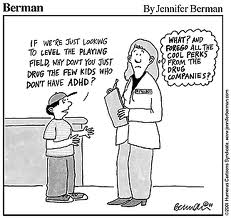
More than 1 in 10 U.S. Children Diagnosed with ADHD!

November 23, 2013


perks

Does anyone actually believe this figure is a true reflection of how many children actually legitimately suffer from the condition?

The number of U.S. children with attention deficit hyperactivity disorder continues to rise but may be leveling off a bit, a new survey shows.

More than 1 in 10 children has been diagnosed with it, according to the Centers for Disease Control and Prevention, which surveyed more than 95,000 parents in 2011.

ADHD diagnoses have been rising since at least 1997, according to CDC data. Experts think that’s because more doctors are looking for ADHD, and more parents know about it.

The condition makes it hard for kids to pay attention and control impulsive behaviors. It’s often treated with drugs, behavioral therapy, or both.

The latest survey found about 11 percent of children ages 4 through 17 had been diagnosed with ADHD. That translates to nearly 6 ½ million children. Half of children are diagnosed by age 6, the study found.

A 2007 survey put ADHD diagnoses at 9.5 percent of kids.

The CDC survey asked parents if a health care provider told them their child had ADHD. It’s not known how thorough the assessment was to reach that conclusion.

ADHD diagnoses were increasing at a rate of about 6 percent a year in the mid-2000s, but slowed to 4 percent a year from 2007 to 2011. That may reflect that doctors are closer to diagnosing most of the kids with the condition, said the CDC’s Susanna Visser, the study’s lead author.


Click on the link to read my post on Doctors are Hypocrites When it Comes to ADHD

Click on the link to read my post on Shock Horror: Sleep Deprived Children Diagnosed with ADHD Instead!

Click on the link to read my post on ‘If my Son was a Dog, I’d Have him Put Down’: Mother of ADHD Child

Click on the link to read my post on Why Are There So Many Children Exposed to Prescription Drugs?

Click on the link to read School Nurse Arrested for Stealing Students’ ADD Pills

Click on the link to read The Rampant Misuse of ADHD Pills

8 Year Old Indian Girl Divorces her 14 Year Old Husband

November 20, 2013

fatima

I try to understand and appreciate different customs and traditions, but I can’t pretend to approve of arranged child marriages like this one:

An eight year old girl has become the youngest person ever to be divorced in India after she was married off aged just four.

Fatima Mangre was given away by her father Anil, from the Shravasti district of Uttar Pradesh state, in an arranged a marriage with 10-year-old Arjun Bakridi.

However when the boy arrived four years later to take his new bride away, Anil said he wanted the girl to wait until she was 18 before leaving.

He said: ‘I finally realised that this practice of marrying off daughters so young was wrong and that she should have a childhood, and that it was my duty to provide that.’

However Arjun’s father Dipak was unhappy with the decision, and an argument broke out after which Anil filed for divorce.

Click on the link to read Meet the Ten Year Old Girl Who has had a Thousand Criminals Arrested

Click on the link to read Tips For Kids in Dealing With Exams

Click on the link to read The Harmful Effects of Yelling at Students

Click on the link to read First Prize for a Primary School Raffle: A Rifle

Click on the link to read Another Reason why Television is Unealthy for Children

Click on the link to read The Spoiled Twins with their £70k First Birthday Party (Photos)

How Life Changes When You Become a Parent (Video)

November 19, 2013


As much as I enjoyed comedian Michael McIntyre‘s hilarious take on the differences between being post and pre-parenthood, I couldn’t help thinking about one crucial fact – as hard as it is being a parent, boy it’s worth it!


Click on the link to read How to Spend Time With Your Kids When You Have No Time

Click on the link to read The Meaning of Being a Father (Video)

Click on the link to read 24 Signs You Are a Mother

Click on the link to read A Father’s Priceless Reaction to his Son’s Report Card (Video)

Click on the link to read A New Way to Get Kids to Brush Their Teeth

Click on the link to read Tips to Help Parents Control Their Kids’ TV Habits

Click on the link to read 10 Steps Parents Can Take if their Child is Being Bullied

Teaching Kids the Importance of Hard Work

November 18, 2013


Watch how this father makes his young children literally scale the wall for a piece of candy. I bet those chocolate bars never tasted so good!


Click on the link to read Young Love Elementary School Style

Click on the link to read What Age Should Children Start School At?

Click on the link to read Fun Facts about Children

Click on the link to read Teaching Children to be Honest Yet Respectful

Click on the link to read The Children of Today Show a Lack of Respect For Authority

Click on the link to read Is There Anything Better than an Inspirational Child? (Video)

Eight Fundamentals that Every Student Deserves

November 17, 2013


bag

Courtesy of the great site justintarte.com:

1). Every student deserves to have someone who won’t give up on them; someone who will encourage them, support them, and reassure them that there are those who believe in them. #youmatter

2). Every student deserves to have the appropriate tools and resources available to them that will allow them to find success. We are rightfully obligated to provide the necessary tools for our students, and this must be a part of the bigger picture when it comes to available resources and personnel.

3). Every student deserves to have similar and equal opportunities that others may have; the opportunity gap we have in education is broadening the gap between the ‘educated’ and the ‘non-educated.’ We can’t continue to allow this to happen when we are talking about access to learning.
4). Every student deserves the benefit of the doubt. Far too often we assume students are doing something wrong and not doing what they are supposed to be doing. When we assume, we tend to be incorrect.

5). Every student deserves a teacher who believes that what’s been done in the past is not the only factor when determining what to do in the present and what to do in the future. The choices we make affect our students… we can’t hold them back because we are scared to do something we aren’t comfortable with.

6). Every student deserves the opportunity to design, create, and explore. We must create a safe environment for our students to feel comfortable with doing things they have never done before. This level of comfort and trust makes everything else possible.

7). Every student deserves to have the best teacher. Far too often we put our newest and least experienced teachers with our most challenging and most at-risk students. Shouldn’t we have the best teachers and most experienced teachers working with our students who can most benefit from their skills?

8). Every student deserves a teacher who is willing to take a risk and take a chance. Sometimes it’s appropriate to play it safe, while other times it’s necessary to take a chance and step outside the box. Students all need someone who is willing to be different and someone who is willing to travel this journey with them…


Click on the link to read 21 Reasons to Become a Teacher

Click on the link to read  25 Amusing Signs You Might Be a 21st Century Teacher

Click on the link to read  20 Questions Teachers Should Be Asking Themselves

Click on the link to read School Official Allegedly told a Teacher to Train her Breasts to not Make Milk at Work

Click on the link to read 12 Tips for Managing Time in the Classroom