Posts Tagged ‘Children’

The Normalisation of Cyber Bullying

October 21, 2013


scalp

Cyberbullying has become a normal practice and it’s all our fault. Parents, teachers and school administrators have completely dropped the ball on this one. Cyberbullying is a significant issue and it requires all its stakeholders to assume responsibility and work together. We must focus on this issue before it gets even worse:

More than half of children and young people in England accept cyber-bullying as a part of everyday life, a new survey has found.

But parents and teachers say they do not feel they are equipped to deal with the growing problem of internet abuse.

Campaigners warned that cyber bullying had become ‘an everyday problem for today’s children’ and demanded better education to tackle the phenomenon.

More than half of children polled – 55 per cent – said cyber-bullying had become a part of life for children and young people, while 60.5 per cent of parents also said it had.

Keeping their children safe online is a major worry for parents, with 49 per cent complaining that the amount of access their child has to the internet leaves them struggling to monitor their behaviour online.

And 51 per cent say this makes them scared for the safety of their child.

However, the poll suggests that many families would struggle to respond if their child did fall victim to internet abuse.

Some 40 per cent of parents said they would not know how to respond if their child fell victim to cyber-bullies or how to set up filters on computers, tablets and mobile phones that could protect their children.

There were growing calls for online safety to be taught in more schools, with 69 per cent of teachers and 40 per cent of young people calling for it to be included in the national curriculum.

Nearly half of teachers – 43 per cent – admitted their school did not currently teach anything about cyber-bullying and online safety and 44 per cent admitted they did not know how to respond to cyber-bullying.

Almost a third – 32.1 per cent – of young people said that teaching schools, parents and children about internet safety would be the biggest step that can be taken to tackle cyber-bullying, yet just a fifth of children felt they were taught enough about it at school.

The major new survey, commissioned by the Anti-Bullying Alliance, underlines the struggle many families face trying to protect their children on the internet.

Click on the link to read The Explosion of Online Bullying

Click on the link to read The Researchers into Cyberbullying Should Review Their Findings

Click on the link to read A Positive Approach to Tackling Cyberbullying

A New Way to Get Kids to Brush Their Teeth

October 7, 2013


http://www.youtube.com/watch?v=XTxmk9Xv3Io


OK, perhaps this wont catch on:

These unique photos capture the moment a boy has his teeth picked clean by amazing underwater shrimp.

These fascinating creatures spend their lives diving inside the mouths of fish to remove the parasites that lurk there.

Russell Laman imitated the behaviour of the surrounding fish swarm to entice the cleaner shrimp into his mouth whilst snorkelling with his father Tim Laman in Bali, Indonesia.

The 13-year-old queued with the waiting fish and then opened his mouth when the shrimps came near.

The shrimp then incredibly started to clean Russell’s mouth and remove food from between the boys teeth whilst Tim took photographs.

Russell Laman, from Lexington, Massachusetts, said: ‘It felt like tiny little dentists picking away at my teeth and scuttling around my mouth, it tickled a little but not too badly.

‘I had watched fish getting cleaned at cleaning stations before and decided to try it out myself.

‘I thought it would be really cool to experience shrimp in my mouth first hand.

Russell who has been diving with his father for seven years is unfazed by the dangers of holding his mouth open underwater.

He learnt how to get the shrimp out of his mouth when he needs to breathe, by imitating the behaviour of the fish.

Russell said: ‘I observed that the shrimp are always keeping an eye on the mouth of the fish and as soon as it starts to close they shoot out.


teeth1


Click on the link to read Tips to Help Parents Control Their Kids’ TV Habits

Click on the link to read 10 Steps Parents Can Take if their Child is Being Bullied

Click on the link to read School Holidays are Very Hard for Many Parents (Video)

Click on the link to read 20 Reassuring Things Every Parent Should Hear

Click on the link to read 10 Tips for Nurturing Independence Among Children

Click on the link to read Seven Valuable Tips for Raising Your Child’s Self-Esteem

Click on the link to read Top Ten Compliments Your Children Need to Hear

The Call to Stop Kids From Reading Books they Actually Enjoy

October 7, 2013

The Hunger Games

At a time when just getting kids to read a book is the stuff of small miracles, why would anyone want to make books less accessible to children. I am sure The Hunger Games will never go down a classic of literature but I really don’t care. The objective of books is to entertain, inspire and transport its readers to distant places, cultures, traditions and experiences.  If the children of the day find that The Hunger Games achieves this goal then its up to us, the educators, to get in touch with them rather than the other way around.

I am a literature major at University. I studies every period of literature dating back from Chaucer onwards. And guess what? I find many so-called classics to be utterly tedious. My tutor was gobsmacked when I told him that I found Robinson Crusoe boring.

“How can you not like Robinson Crusoe? It is the most printed book behind the bible!”

His argument didn’t wash. I am never going to like a book just because it is deemed a classic or it has had multiple reprints.

And the same goes with Shakespeare. People are aghast when I say that Shakespeare should not be a compulsory fixture in the high school curriculum. How many people that strongly believe in studying Shakespeare in High School have a copy of one of his plays on their bedside table? How many of them are ever likely to read Macbeth or Hamlet for pleasure? When is the last time you ever had a deep urge to reread The Tempest?

We are hypocrites if we subject children to the types of books we are glad we no longer have to read ourselves. If we are ever going to get children to read we must employ the same criteria for reading as we have when we search for a book. Our students must find the subject matter topical, interesting, amusing, dramatic and most of all – ENTERTAINING:

Joanna Trollope says children should be taught literary classics in school because they spend too much time reading fantasy books, such as The Twilight Saga. 

The novelist said fantasy teen fiction, such as the hugely popular Hunger Games series, fails to give children an insight into reality or guidance in moral dilemmas. 

The Rector’s Wife author said youngsters should be encouraged to read the likes of Jane Austen, George Eliot and the Bronte sisters.

However, she admitted her 12-year-old grandson loves The Hunger Games, about a post-apocalyptic nation in which two children are selected to compete to the death in an annual televised battle.

Trollope told The Sunday Times: ‘I feel children are missing out on an enormous amount.

‘The consolation to be found in the classics is absolutely infinite and greater than fantasy novels. Fantasy doesn’t relate to the real world.’

The author, who used to be a teacher, said using popular culture can be a useful tool to lead children towards the classics.

She said she gave her class The Beatles lyrics to study in one English poetry class before giving them Robert Frost to read.

Last year, the three Hunger Games books were in the top 10 bestsellers list with more than 2.1million sold.

Click on the link to read The Classic Children’s Books they Tried to Ban

Click on the link to read How Spelling Mistakes can Turn a Compliment into Something Quite Different.

Click on the link to read Why Spelling is Important at Starbucks

Click on the link to read The Ability to Spell is a Prerequisite for Getting a Tattoo (Photos)

Click on the link to read This is What Happens When You Rely on Spell Check

Click on the link to read Hilarious Menu Items Lost in Translation

Click on the link to read The 15 Most Commonly Misspelled Words in the English Language

Click on the link to read Who Said Grammar Isn’t Important?

Kids Asked About Social Media: Funny Clip

September 30, 2013


Am I the only one that is glad there are still children around that have no idea what Facebook is?


Click on the link to read 5 Tips to Help Your Children Use Social Networking Safely

Click on the link to read Monitoring Children’s Social Networking Activities Proving too Difficult for Parents

Click on the link to read Parents and Teachers Should Not Be Facebook Friends

Click on the link to read Introducing the App that will Give Parents Nightmares

Click on the link to read Facebook’s Ugly Little Secret

Click on the link to read Who Needs Real Friends When You Have Facebook Friends?

Tips For Kids in Dealing With Exams

September 30, 2013

exam2I must confess to being quite overwhelmed when sitting for exams. I often froze and perhaps occasionally sabotaged a few times by allowing the mental demons to overcome me.

I hope these tips help others to manage their exam stresses:


Dr Friedland explains that in order to fail forward, people need to learn from their so-called failures and use them as stepping stones to future success.

“I’d advise students to throw away all thoughts of a number and change their definition of success, so instead they strive to give their studies their all and know they’re going to walk away having learned something,” he says.

“Don’t be driven by self-esteem. Instead let yourself have some self-compassion. Look after yourself, treat yourself well – success comes from that.”

Encourage them to look at the bigger picture

Ask a student to identify the most important thing they hope to achieve from an exam, assessment or the academic year, and they’ll say a good mark.

Dr Friedland admits it can be hard for young people to see the wood for the trees because getting a good score can seem like the most important thing in the world – their defining achievement.

He advises parents to gently help their kids see how other aspects of their life are important and he alludes to that oft-quoted mantra that it’s about the journey, not the destination.

“Encourage them to reflect on what truly matters in their life. Help them see that getting a great big number won’t necessarily lead to happiness and fulfilment, but the process of trying to get it might if they’re learning along the way and also nourishing themselves,” he says.

“Going into an exam with a ‘do or die’ attitude is counter-productive. The stress will become overwhelming and few people can thrive if they’re feeling like that. Give each exam the importance it deserves in the whole bigger picture.

“We all need to focus on taking care of ourselves – mind, body and soul.”

Click on the link to read The Harmful Effects of Yelling at Students

Click on the link to read First Prize for a Primary School Raffle: A Rifle

Click on the link to read Another Reason why Television is Unealthy for Children

Click on the link to read The Spoiled Twins with their £70k First Birthday Party (Photos)

Click on the link to read 5 Tips to Help Children Cope With Stress

Click on the link to read Seven Valuable Tips for Raising Your Child’s Self-Esteem

Click on the link to read Top Ten Compliments Your Children Need to Hear

Discussing Mental Illness with Children

September 29, 2013


mental


Valuable information courtesy of aacap.org:


Kids are naturally curious and have questions about mental illnesses. Understanding mental illnesses can be challenging for adults as well as for children. Myths, confusion, and misinformation about mental illnesses cause anxiety, create stereotypes, and promote stigma. During the past 50 years, great advances have been made in the areas of diagnosis and treatment of mental illnesses. Parents can help children understand that these are real illnesses that can be treated.

In order for parents to talk with a child about mental illnesses, they must be knowledgeable and reasonably comfortable with the subject. Parents should have a basic understanding and answers to questions such as, what are mental illnesses, who can get them, what causes them, how are diagnoses made, and what treatments are available. Some parents may have to do a little homework to be better informed.

When explaining to a child about how a mental illness affects a person, it may be helpful to make a comparison to a physical illness. For example, many people get sick with a cold or the flu, but only a few get really sick with something serious like pneumonia. People who have a cold are usually able to do their normal activities. However, if they get pneumonia, they will have to take medicine and may have to go to the hospital. Similarly, feelings of sadness, anxiety, worry, irritability, or sleep problems are common for most people. However, when these feelings get very intense, last for a long period of time and begin to interfere with school, work, and relationships, it may be a sign of a mental illness that requires treatment.

Parents should be aware of their child’s needs, concerns, knowledge, and experience with mental illnesses. When talking about mental illnesses, parents should:

  • communicate in a straightforward manner
  • communicate at a level that is appropriate to a child’s age and development level
  • have the discussion when the child feels safe and comfortable
  • watch their child’s reaction during the discussion
  • slow down or back up if the child becomes confused or looks upset

Considering these points will help any child to be more relaxed and understand more of the conversation.

Pre-School Age Children

Young children need less information and fewer details because of their more limited ability to understand. Preschool children focus primarily on things they can see, for example, they may have questions about a person who has an unusual physical appearance, or is behaving strangely. They would also be very aware of people who are crying and obviously sad, or yelling and angry.

School-Age Children

Older children may want more specifics. They may ask more questions, especially about friends or family with emotional or behavioral problems. Their concerns and questions are usually very straightforward. “Why is that person crying? Why does Daddy drink and get so mad? Why is that person talking to herself?” They may worry about their safety or the safety of their family and friends. It is important to answer their questions directly and honestly and to reassure them about their concerns and feelings.

Teenagers

Teenagers are generally capable of handling much more information and asking more specific and difficult questions. Teenagers often talk more openly with their friends and peers than with their parents. As a result, some teens may have already have misinformation about mental illnesses. Teenagers respond more positively to an open dialogue which includes give and take. They are not as open or responsive when a conversation feels one-sided or like a lecture.

Talking to children about mental illnesses can be an opportunity for parents to provide their children with information, support, and guidance. Learning about mental illnesses can lead to improved recognition, earlier treatment, greater understanding and compassion, as well as decreased stigma.


Click on the link to read Tips to Help Parents Control Their Kids’ TV Habits

Click on the link to read 10 Steps Parents Can Take if their Child is Being Bullied

Click on the link to read School Holidays are Very Hard for Many Parents (Video)

Click on the link to read 20 Reassuring Things Every Parent Should Hear

Click on the link to read 10 Tips for Nurturing Independence Among Children

Click on the link to read 4 Tips for Getting Your Kids up in the Morning

Click on the link to read Seven Valuable Tips for Raising Your Child’s Self-Esteem

Click on the link to read Top Ten Compliments Your Children Need to Hear


Tips to Help Parents Control Their Kids’ TV Habits

September 17, 2013


bears

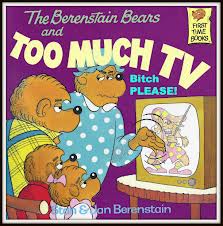
One of the most original and innovative ideas my mother had came about when she realised that I was spending far too much time watching TV and the problem required a change of policy in form of a proposal. The proposal was that I could watch 3 episodes a week on a school night as long as it the show had educational merit. So instead of watching a chat show or sitcom, I watched documentaries and current affair programs. I  remember watching shows on criminology, science, politics and history – all of which would have been ignored were it not for the rule. To this day, my TV tastes have been radically altered because of that rule.

Of course not all children would respond to such an arrangement. So courtesy of parentsforhealth.org, here are 12 more tips:

1. Get the TV out of the Bedroom!

Having a TV in the bedroom may keep your kids quiet, but you lose control over what and how much they watch. A recent study found that children who had a TV in their bedroom watched more TV and performed worse in school tests.

If your child already has a TV in their bedroom, you may have a job on your hands to get it out. We recommend that you just remove the TV and explain your reasons to your child. Be prepared for protests, but remember that you are acting in the best interests of your child, and that you are the boss!

2. Don’t have the TV on in the Background

If no-one’s watching it, turn the telly off! TV has an amazing effect on us. We instinctively pay attention to moving images, so when a television is on it is difficult to concentrate on other things. Remember, the “off” button is there for a reason.

3. Don’t Allow Unsupervised Access

Do you really know what the kids are watching? Many studies have shown that children can be exposed to violent and sexual imagery that is inappropriate for their age. Keep track of what your kids are watching, and avoid having loads of TV sets around the house.

4. Agree Programmes

Buy a TV guide, and agree in advance which programmes your children will watch. This won’t take long, and will save your children from hours of zombie-like channel surfing. Most Sunday newspapers have a weekly TV guide included. Set rules for acceptable programmes together, and develop a list of programmes to be watched.

5. Agree TV Time

Agree with your children how much time the family will spend watching TV during the week. Remember to be firm during the negotiations. Your kids need to know that you are the boss – much easier with younger children.

If your children are massive telly addicts, you will need to reduce their screen time gradually. The most important thing for telly addicts is to replace TV time with something else, so you might need to think about active hobbies for your kids.

6. Assess the Situation

Keep a TV log for a week, and work out how much time you and your children spend in front of the box. Just write down the number of hours of TV you’ve watched – you may find this surprising.

7. Record Programmes

Record movies and programmes that you like, and watch them at convenient times. This can help to minimise the effect that TV has on your family’s sleeping and eating patterns.

8. Discuss the Plan

Explain to your children the reason why too much TV is a bad idea, and get their opinions. This is crucial, since you want your children to develop good TV habits that they will take with them into adulthood. Don’t be too dictatorial, and explain your actions. Your children will get into the habit of being discerning viewers.

You’re the boss, and you need to take a lead, but you have to bring your children with you. If your children are very young, this will not be a problem – they will just accept your rules as being normal.

9. Encourage Rebellion!

Your kids are going to rebel against something so why not make this rebellion a positive process? Point out to your child or young adult that the TV keeps them passive and under control. Your children probably won’t like the idea of being passive zombies controlled by others.

10. Cut the Cable…

…or get rid of the dish. Why not get rid of your satellite TV and with the money you save, rent the odd movie that you’re really keen on? You’ll be able to watch your movie at a more convenient time, you won’t be bombarded with adverts, and you will probably save money.

11. TV Dinners

Don’t eat in front of the telly! When you are looking at the box, you find it harder to keep track of how full you are. For this reason people tend to overeat when they are watching television.

When children routinely eat meals in front of the TV they are more likely to become overweight. The odd bit of popcorn during a movie is OK, but in general don’t let your family eat meals in front of the TV.

12. Keep Perspective

You don’t have to ditch the TV completely, although believe it or not some people take this option and live perfectly normal lives. TV isn’t all bad…you can see great movies, there are fantastic educational documentaries, and there are great comedy and entertainment shows. Just make sure that you control the TV, and the TV doesn’t control you!


Click on the link to read 10 Steps Parents Can Take if their Child is Being Bullied

Click on the link to read School Holidays are Very Hard for Many Parents (Video)

Click on the link to read 20 Reassuring Things Every Parent Should Hear

Click on the link to read 10 Tips for Nurturing Independence Among Children

Click on the link to read 4 Tips for Getting Your Kids up in the Morning

Click on the link to read Seven Valuable Tips for Raising Your Child’s Self-Esteem

Click on the link to read Top Ten Compliments Your Children Need to Hear
 

This is What I Think of the No Hugging Rule at Schools

September 14, 2013


hug1


It is becoming all the rage to ban children from hugging each other at recess. This is what I think of the rule:


hug2


hug3


hug4


hug5


hug6


hug7


hug8


hug9

Click on the link to read Political Correctness at School

Click on the link to read What Are We Doing to Our Kids?

Click on the link to read Stop Banning Our Kids From Being Kids

Click on the link to read Banning Home-Made Lunches is a Dreadful Policy

Click on the link to read School Using Bomb As Bell

Another Reason why Television is Unealthy for Children

August 28, 2013

remote


Beyond the obvious physical health ramifications, it seems that excessive television watching among children can impact their mental health as well:

Children are becoming increasingly anxious due to too much time in front of TV and computer screens, according to a Government briefing paper.

Inactive lifestyles are also to blame for the negative impact on children’s wellbeing, said the document from Public Health England.

It said higher levels of TV viewing are having a negative effect on children’s wellbeing, including lower self-worth, lower self-esteem and lower levels of self-reported happiness.

Children who spend more time on computers, watching TV and playing video games also tend to experience higher levels of emotional distress, anxiety and depression, it said.

Last week, a study found half of all seven-year-olds do not get enough exercise – and girls are far less active than boys.

Only 51 per cent of all seven-year-olds in the UK achieve the recommended hour of exercise every day, with the figure being just 38 per cent in girls compared with 63 per cent in boys.

Half of this age group is also sedentary for an average of 6.4 hours or more every day, experts found.

Click on the link to read The Spoiled Twins with their £70k First Birthday Party (Photos)

Click on the link to read 5 Tips to Help Children Cope With Stress

Click on the link to read Seven Valuable Tips for Raising Your Child’s Self-Esteem

Click on the link to read Top Ten Compliments Your Children Need to Hear

Click on the link to read Tips For Parents of Kids Who “Hate School”

Click on the link to read 20 Reassuring Things Every Parent Should Hear

Click on the link to read Parents and Teachers Should Not Be Facebook Friends

My Teacher, the Pedophile

July 24, 2013

icky

Today, 25 years after my pedophile teacher abused my friends, he has finally been sentenced for his heinous crimes.

I was only 10 when I was first subjected to a teacher that would later be exposed as an evil pedophile. He taught me for 2 years, and I am relieved to say that I cannot recall being personally abused by him.

But my friends have been devastated by this man. One such victim, who has a daughter in my daughter’s class, has received ongoing therapy for assaults at the hand of this awful excuse of a human being.

Whilst I wasn’t old enough to know what a pedophile was and although I never liked the guy, I wasn’t aware he was abusing my friends until he fled the country in controversial circumstances. I do remember vividly him organising a party as a treat for us, purportedly due to our good behaviour. He arranged for the use of a classmates pool whilst the classmate’s parents were at work. We were so excited. Excursions tended to be of a boring, strictly educational nature. The thought of spending the morning swimming was so new and exciting for all of us.

I remember him getting in the pool with us and playing around in a jovial and almost immature fashion (very different from the type of teacher he was in the classroom). I also remember him instructing us to freely undress together and that we should embrace our naked bodies as it is natural.  To demonstrate he stripped off in front of us in a casual and carefree manner. For some reason I have never felt comfortable displaying my naked body in public and I was a bit bothered by my teacher’s open display of nudity. I remember thinking it was weird for a teacher to be acting in this way. I was one of two children who decided not to undress in front of him and opted for a private spot instead.

When his secret was exposed and he fled the country, I remember my parents reaction. They sat me down in the lounge room with concerned expressions on their faces. They asked me if this teacher had touched me in a certain way or acted towards me in an inappropriate or threatening manner. I answered then, as I do now, that I cannot recall any such treatment. Unfortunately, some of my friends were not so lucky.

The truth is, that we were raised to have total reverence for our teachers and see them as perfect. I fear that I would have let my teacher do as he wanted with me had he tried. I did not know what a pedophile was and in those days parents didn’t discuss personal space and molestation avoidance with their children.

Today my teacher received a minimum sentence of 18 months and, after time already served in custody, he is eligible for parole in just three months! Try breaking that news to his victims who have waited for justice all these years.

The threat of such instances has made it difficult to be a male primary teacher. The constant stories of male teachers who have abused their responsibilities and offended against their students is a reminder to parents to stay alert. It means that we have to be more careful than our female colleagues when it comes to interactions and must avoid being alone in the classroom with a student.

But this is a necessary safeguard. Just think of the poor victims.