What Age Should Children Start School At?

September 12, 2013


bell


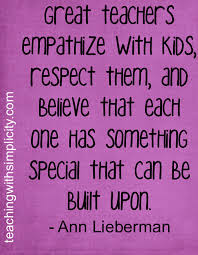
Prolonging the commencement of school by 2 years is a nonsense. There is nothing wrong with the current system when it comes to the school age requirement. However, there is a great deal wrong with the system when it comes to helping support children through the transition and developing an environment which is just as determined to boost a child’s sense of self as it is their grade average. Better they work on reinvigorating the current system instead of changing it radically:

Children should not start primary school until they are six or seven-years-old, according to a coalition of education experts who warn of the damaging pressure to perform in class at a young age.

A letter written by 130 teachers, academics and authors said the UK should follow the Scandinavian model and put off formal lessons for two years.

Under the UK’s current system, children start full-time schooling at the age of four or five.

Experts say this is causing ‘profound damage’ in a generation which is not encouraged to learn through play.

But the call was last night dismissed by as ‘misguided’ by a spokesman for the Education Secretary Michael Gove.

Children in the UK are obliged by law to be in school aged five, which the lobby group said is creating a ‘too much, too soon’ culture.

The warning singled out recent government proposals which mean five year olds could be formally tested from the beginning of their schooling.

Under the current system, children are first assessed at the age of seven. But under Deputy Prime Minister Nick Clegg’s proposals, a ‘baseline’ test could be introduced in the first year of primary school.

The group of experts warned that monitoring a pupil’s progress from such a young age promotes stress and fear around learning.


Click on the link to read Fun Facts about Children

Click on the link to read Teaching Children to be Honest Yet Respectful

Click on the link to read The Children of Today Show a Lack of Respect For Authority

Click on the link to read Is There Anything Better than an Inspirational Child? (Video)

A Teacher Who Beds their Teenage Student Should be Jailed

September 11, 2013

eppie

Here’s a pointer: A teacher should never be intimate with their students. Additionally, a child who can’t clean his own room without creating a stir and running away from home is probably not going to last long in any serious relationship:

A teacher put on the sex offenders’ register over an affair with a 17-year-old pupil is now living with him in her home.

Eppie Sprung Dawson, 27, lost her job and her marriage ended after police found her half-naked with Matthew Robinson in her car after a Christmas school dance.

In July she pleaded guilty to sexual activity with the lad while in a position of trust and narrowly escaped jail.

But last week she moved Matthew, now 18, into her house after he left home over a row about tidying his room.

His mum Sheree said: “He rang Eppie to pick him up. We don’t know what she’s after.”

Sprung Dawson was sacked by St Joseph’s College in Dumfries and split from teacher husband Ranald.

She is serving a community order and undergoing counselling after telling the town’s court she was attacked by an older man at 13.

She was unavailable for comment at her home yesterday.

Click on the link to read My Teacher, the Pedophile

Children Suspended for a Week Because Parents Missed an Information Session

September 10, 2013


banned


Are schools not designed to serve the interests of its students? How on earth is it in a child’s best interests to be banned from school for a week just because his parents failed to turn up to a meeting?

Schools ought to stop being so inflexible and process driven and start to show a bit more concern for their major stakeholders – their students!

Children were left in ‘floods of tears’ after they were banned from starting primary school for a week because their parents missed compulsory meetings on health and safety and child protection.

As many as nine children, some aged just four or five, were banned for a week from Briscoe Primary School, in Pitsea, Basildon, Essex, after their parents missed the sessions.

The children will be allowed back to school next Tuesday if their parents attend specially-arranged sessions.

Headteacher Debbie Rogan said she was ‘mystified’ as to why the parents did not attend the sessions and she was ‘disappointed’ the children would not be able to start school with the other pupils.

Mother Kaily Barnard, 38, said her son was turned away from the gates after she took him to the school yesterday.

She said: ‘I got my son dressed and took him to the school, I didn’t think they would turn him away at the gate while he was in his uniform, but a teacher said his name was on a list of children who were not allowed in.

‘I missed one session but it’s not like I would have come away with a BSc in pre-school science.

‘My son is not traumastised but some of the children were.

‘There are decent parents at that school and the head is trying to make an example of us – she can do that if she wants to, but not at the expense of my four-year-old son.’


Would I have attended such a meeting at my daughter’s school? Of course I would. But don’t for a second believe that this meeting was worth suspending kids for. At best it was slightly useful. At worst, it was a snore-a-thon!


Click on the link to read School Bans Girls Leggings Because the Boys are Getting Too Distracted

Click on the link to read Student Suspended for Disarming Teen Who Had Gun On School Bus (Video)

Click on the link to read Attack of the Crazy Suspension Addicted Schools

Click on the link to read The Hugging Rule: Another Example of Running Schools Like Prisons

Click on the link to read Students Are Not Allowed Opinions Anymore

Click on the link to read Humiliation Solves Nothing (Video)

Teachers are Extremely Vulnerable to False Accusations

September 9, 2013

As serious as it is when a child accuses his/her teacher of inappropriate behaviour, it is essential that the teacher gets the opportunity to respond to the allegations without being judged. Unfortunately, teachers are often subject to false allegations and excessive reactions on the part of the parents:

Simone Baker, 25, confronted her son’s teacher on Thursday about 5.30pm over claims by the boy that she had scratched his neck, KCTV5 reported.

Baker, of Kansas City, grew irate after the teacher told her to schedule a meeting with the principal the following day, according to a Kansas City Police Department report.

She headed to the principal’s office before returning to the classroom where she allegedly hit the teacher in the face five to 10 times as she held the woman’s arm down.

Baker allegedly then grabbed the teacher by her hair and rammed her head against a filing cabinet two times.

“You better not touch my kid again,” Baker allegedly told the teacher, before fleeing the classroom.

The woman was treated at hospital for bruising to her arm and some redness and swelling on her face.

District officials said the six-year-old boy’s father brought his son into Truman Elementary School on Friday and that boy had recanted his story.

The teacher could not be reached for comment but a local school district spokesman said they would be pursuing legal action against Baker.

“The administration did everything they do to keep her calm. They asked her to leave,” the spokesman said.

“We’re very concerned about this measure and we’re doing everything we possibly can to ensure the safety of our staff and the students.”

Baker was issued a municipal citation for inflicting bodily harm and is due in court on October 22.

Click on the link to read Top 10 Ways of Dealing with Teacher Burnout

Click on the link to read Tips For Teachers for Managing Stress

Click on the link to read I Also Had a Student Hold a Toy Gun to my Face

How Should Teachers Dress?

September 8, 2013

board

While I am against the idea of making teachers wear a school uniform, it is important that teachers abide by a sensible dress code. I think that teachers should ostensibly be able to wear what they feel comfortable in, but at the same time, teachers can do without their spandex leggings:

It used to be the students that needed a dress code, but now a school district in Arkansas has drafted a formal set of guidelines for it’s teachers.

Listed in the four page document is the new requirement that staff must wear underwear.

Little Rock School District’s new superintendent Dr Dexter Suggs refers to underwear as ‘foundation garments’ in the document. 

The guidelines don’t stop there. Some of the other rules include the banishment of spandex leggings and hip-hugging jeans.

Teachers are required to find the happy medium between ‘excessively tight’ pants and those that are ‘sagging’.

Some of the rules seem perfectly reasonable in a school setting – like the banning of clothing which advertises alcohol, drugs or cigarettes.

But others seem over-the-top and obvious.

In addition to underwear requirement, teachers’ hair ‘must be clean, neat and well-groomed’ and shoes ‘must be worn at all times’.

In the letter dressed to the school district’s teachers, Dr Suggs doesn’t cite any particular incident that lead him to believe an official dress code needed to be made.

He only wrote that ‘the district’ believes an  ‘appropriately dressed employee is seen as a more suitable role model’.

Dr Suggs and union president Cathy Koehler released the rules at the end of August, but the rules won’t officially be district policy until the 2014-2015 school year to give time for teachers to transition to the new system

Ms Koehler admits that many union members voiced their distaste for the new regulations.


Click on the link to read The Rise of the Insensitive School

Click on the link to read The Worst School Rule I Have Ever Come Across

Click on the link to read If Schools Care Then They Must Prove It

Click on the link to read Kids as Young as 3 are Getting Tutors

The Harmful Effects of Yelling at Students

September 8, 2013

yell


I have yelled before and will probably yell again at some point. Not only is it detrimental to my voice but it is utterly useless in changing behaviour and asserting control”

Sticks and stones indeed break bones — but words can cause real harm to kids, too, a new study says. And bullies in the school yard aren’t the only ones to blame.

“Harsh verbal discipline” on the part of a parent increases a child’s risk for depression and aggressive behavior, and is “not uncommon,” according to the research, which was published online earlier this week in Child Development. The disciplinary techniques in question include yelling, cursing and humiliation — defined as “calling the child dumb, lazy, or something similar.”

The study even suggests that verbal reprimands can have the same impact on children as physical punishment: “the negative effects of verbal discipline within the two-year period of [the] study were comparable to the effects shown over the same period of time in other studies that focused on physical discipline,” a press release from the University of Pittsburgh, where the study’s lead author is an assistant professor, explains.

The study followed 976 Pennsylvania 13- and 14-year-olds and their parents for the 7th and 8th grade years, and found that the depression or poor behavior increased in the children who were exposed to harsh verbal discipline. Instead of serving to remedy the issue, verbal discipline tactics seemed to provoke the unwanted behavior.

“Adolescence is a very sensitive period when [kids] are trying to develop their self-identities,” study leader Ming-Te Wang told the Wall Street Journal. “When you yell, it hurts their self image. It makes them feel they are not capable, that they are worthless and are useless.”

Wang added to NPR that the study was “a reminder to [parents] that we need to stay calm,” going on to recommend “two-way interventions for parents and kids.”

Neil Bernstein, author of How to Keep Your Teenager Out of Trouble and What to Do if You Can’t, agreed with the study’s implications, he told USA TODAY, arguing: “Extremes of parenting don’t work. The put-down parent is no more effective than the laissez-faire parent who is totally chill and sets no limits on their children’s behavior.”

The study’s authors explored more than the effects of harshness alone; they also measured whether “parental warmth,” or the degree of love, emotional support and affection between parents and adolescents, counteracted the effects of verbal discipline — and concluded it does not.

“Even lapsing only occasionally into the use of harsh verbal discipline can still be harmful,” Wang said in the study’s press release. “Even if you are supportive of your child, if you fly off the handle it’s still bad.”

“Harsh verbal discipline deserves greater attention in both research and practice,” the researchers conclude in the study’s Discussion. “The majority of research conducted on harsh discipline has focused on physical discipline in early childhood. However, given that parents tend to resort to verbal discipline as their children mature (Sheehan & Watson, 2008), it is important that researchers and parents are aware that harsh verbal discipline is ineffective at reducing conduct problems and, in fact, leads to increased adolescent conduct problems and depressive symptoms.”


Click on the link to read First Prize for a Primary School Raffle: A Rifle

Click on the link to read Another Reason why Television is Unealthy for Children

Click on the link to read The Spoiled Twins with their £70k First Birthday Party (Photos)

Click on the link to read 5 Tips to Help Children Cope With Stress

Click on the link to read Seven Valuable Tips for Raising Your Child’s Self-Esteem

Click on the link to read Top Ten Compliments Your Children Need to Hear
Click on the link to read Tips For Parents of Kids Who “Hate School”


5 Ways to Identify a Great Teacher

September 4, 2013


great


Courtesy of Deborah Chang

1. Great teachers are not superheroes; they are everyday heroes.
Teachers should not be expected to work miracles in miserable conditions. They are everyday heroes who want to be working sustainably and joyfully every day. Robert Hawke, a principal-in-residence at Achievement First, puts it eloquently when he says, “Teachers are also mothers, and husbands, and people who need to go grocery shopping and would occasionally like to spend some time volunteering at church or — gasp — reading. Yes, we should expect that they do their jobs the best they can and yes, this job requires much more than eight hours per day, but they won’t be able to continue doing these things beyond a couple of years if we also expect them to put their outside-of-their-job lives completely on hold.”

2. Great teachers are not saviors; they are inspirers.
Children are strong, magnificent human beings who are not waiting to be rescued, they are bursting to grow. Children also come from families and communities with strengths, culture, and knowledge that great teachers affirm, learn from, and celebrate. Great teachers do not swoop into children’s lives thinking that they have all the answers. Instead, great teachers inspire children to draw on their own strengths, interests, and communities to accomplish great things.

3. Great teachers are not magicians; they are practitioners.
The work great teachers accomplish — whether it is teaching a first grader how to read, conducting a middle school orchestra in a masterful rendition of a challenging piece, or helping a high school senior land his first internship — is the very opposite of illusion. What great teachers do to accomplish that work should be on display, deconstructed, and shared to improve everyone’s practice. Books like The Skillful Teacher and online networks like Classroom 2.0 are a more accurate depiction of the skills great teachers work to hone over years than movies like Stand and Deliver, which, while enjoyable, show very little in the way of good instruction.

4. Great teachers are not interchangeable; they are individuals.
Teachers have strengths and weaknesses, preferences and interests. A teacher who thrives in one particular situation might not thrive in another. Teachers are most successful and happy when they work in the subject, school, context, and communities that best fit them. Questions we need to ask when we talk about teachers include:

    • What kinds of schools do teachers work in? What are the schools’ systems for planning, instruction, and discipline?


    • What kind of professional relationships are supported by their schools? How are teachers expected to interact with administrators and with one another?


    • What are the cultural and economic backgrounds of their students and their students’ families?


  • What are the teacher’s responsibilities? Review their actual task lists and calendars to see just how different specific schedules and those specific tasks are across schools, subjects, grades, and districts.

5. Great teachers are not lone rangers, they are team builders.
Behind every great teacher, is a great mentor, and behind every great teacher who loves teaching, is a great team. Great teachers are a product of other great teachers who have built them up. They are hard to find in schools with dysfunctional adult cultures because when the adult culture is bad, teachers leave. And, while good teachers do amazing things in their own classrooms, great teachers extend their influence by partnering with the people most important to their students lives, whether they are siblings, parents, grandparents, coaches, or other teachers. Great teachers do not work alone.

Bottom line, it’s dangerous and destructive to talk about great teachers like they are superheroes, saviors, magicians, interchangeable, or lone rangers. Narratives like these prevent us from dealing adequately with real issues, such as the need to make teaching more sustainable, financially and psychologically, and the challenge of evaluating teachers amidst a great variety of different contexts. Practice recognizing and counteracting these narratives when you come across them, the teacher in your life will thank you for it.


Click on the link to read Principal Rewards Students for Reaching Reading Goals

Click on the link to read Proof that Teachers Care

Click on the link to read The Short Video You MUST Watch!

Click on the link to read Is There a Greater Tragedy than a School Tragedy?

Click on the link to read School Shooting Showcases the Heroic Nature of Brilliant Teachers

Click on the link to read Meet the Armless Math Teacher


Things Children can Teach us About Happiness

September 3, 2013


kids


Courtesy of Melissa Sher:

1. They go with their gut. Small children don’t spend a lot of time fretting over whether they made the right decision. They’d much prefer to spend time fretting over whether you gave them the right color of cup at lunch.

2. They live in the moment. They don’t dwell in the past. They don’t worry about the future — unless they are being told that it’s almost bedtime.

3. They believe. Little children believe in the Tooth Fairy, Santa Claus and the power of Band-Aids. If nothing else, trying to peel the backing off the adhesive distracts kids from what ails them. When all else fails, put a Band-Aid on it.

4. They make stuff. They draw. They sculpt. They glue. They paint. They cut anything they can get their hands on. Seriously, keep your scissors hidden and don’t say you weren’t warned.

5. They dance. Do you know the expression, “Dance like nobody’s watching”? They do that. Except for the all the times when they want to make damn sure that someone is watching.

6. They sing. They break into song at the drop of a hat. Anytime. Anywhere. Even in the bathroom. Who are we kidding? Especially in the bathroom.

7. They hum. Little children hum to themselves quite a bit. Why do they hum? Because they can’t whistle.

8. They say what they mean. They speak their mind. They don’t need to get anything off their chests because they’ve already said everything they needed to in the first place. If adults did that, there would be a lot less drinking at Thanksgiving.

9. They get excited. They get so excited! (But have a hard time understanding the “future,” so be careful when you tell your son his birthday is coming up… in a couple months.)

10. They don’t care if it’s new. A child’s favorite movies are the ones she’s seen again and again. Her favorite books are the ones she’s been read over and over. And if she has a favorite dress, she’ll want to wear it every day. But adults? We’re obsessed with new. We want to be the first to eat in a new restaurant, see a new movie or wear a designer’s new “It” bag. Adults are really annoying like that.

11. They stop and smell the roses. They’re big on smelling things. Of course, the irony is that so many small children aren’t potty trained and don’t seem to give a sh*t about their own you-know-what.

12. They don’t discriminate. Until taught otherwise, they’re accepting of everyone. Well, everyone except babies. The number one insult from a small child is being called a “baby.”

13. They admit when they’re scared. This lets us help them alleviate their fears. Sometimes, the solution is as easy as turning on a night-light. If only all of our fears could be solved by turning on a night-light.

14. They accept compliments. When you give a child a compliment, she’ll probably answer with either “thank you,” or “I know.”

15. They nap. They may go into it kicking and screaming, but most little children nap and wake up new-and-improved. We’d all be a little better off if we napped. (And richer, too, since we’d spend a whole lot less money at Starbucks.)

16. They go to bed early. But it’s not by choice and it takes a lot of effort on our part because they actually believe the expression “you snooze, you lose.”

17. They engage. Psychologist Mihaly Czikszentmihalyi calls immersing oneself fully into an activity the secret to happiness. He calls it “flow.” Children often become so deeply engrossed in what they’re doing that they don’t hear you when you call them. Tip: If they don’t answer to their name, try whispering the words “chocolate chip cookie.”

18. They march to the beat of their own drum. Literally. Little kids can often be found marching around their houses banging on things.


Click on the link to read School Holidays are Very Hard for Many Parents (Video)

Click on the link to read 20 Reassuring Things Every Parent Should Hear

Click on the link to read 10 Tips for Nurturing Independence Among Children

Click on the link to read The Spoiled Twins with their £70k First Birthday Party (Photos)

Click on the link to read 4 Tips for Getting Your Kids up in the Morning

Click on the link to read Seven Valuable Tips for Raising Your Child’s Self-Esteem

Click on the link to read Top Ten Compliments Your Children Need to Hear



10 Important Tips for New Teachers

September 2, 2013


new


Courtesy of Alex Quigley at huntingenglish.com:

1. Expectation is everything. Call it a self-fulfilling prophesy or the ‘Pygmalion effect‘ – but it is simple common sense that the expectations a teacher has for their students has a huge impact upon how they will go on to perform. New teachers need to possess an infinite capacity for hope and optimism: despite the challenging students, the bad days at the whiteboard and the energy whittling workload. Such optimism helps us to retain high expectations in the face of such spirit-sapping salvos. Couple high expectations with both determination and perseverance and you have the qualities to survive and thrive in teaching.

2. ‘The Rule’: ‘No speaking when I’m speaking’. If one small ring can rule Middle Earth, then one simple rule can surely spread orderliness in our classrooms. Novice teachers often take for granted that students understand what we mean by the simple act of listening. They don’t. Show them what ‘active listening‘ looks like and feels like. Hold onto this one rule like a wild dog with lock-jaw. They need to listen to you and others – unequivocally. Explain, repeat and reiterate exactly why listening makes for successful learning. Expect it and demand it consistently.

3. Consistency is king. Good teaching is all about consistency. Forget about brass band parades that masquerade as outstanding lessons. Great teachers grind away at challenging learning; they have clear classroom rules and they use them consistently and with unstinting fairness. Students may not like your rules, or the challenge presented by your towering standards, but if you are consistent and relentless they will respect you. Execute your three Rs: relentless and rigorous routines. You can smile before Christmas (a smile is an excellent behaviour management tool) or whenever you like, just be consistent.

4. Focus on feedback. I will spare you the catalog of research, but feedback matters. It works. Formative assessment is the daddy, so ensure your written feedback is top notch (I have written a post with some tips here) and don’t forget how crucial oral feedback can be for developing the knowledge and understanding in every lesson (once more, I have a doc for that! See here).

5. Ask great questions. Sometimes even the best of teachers are distracted by shiny new teaching tools or the latest acronym driven craze to sweep the teaching nation. Effective teaching comes down to what effective teaching has been built upon since Socrates was busy corrupting the youth of Athens – great questions! We want students to hoover up knowledge and understanding and asking great questions lets us know exactly what they know and what they need to know. Probe and prize away at your little cherubs to help them succeed. This post of mine hopefully (my most popular) can give you a few further tips for great questioning – see here.

6. Know thy student. Relationships matter. In most classes many students spend hours with their teacher but they actually spend little time speaking directly to them. We need to develop our knowledge of students so that we can develop our relationships and best help them learn. As stated in tip 5, we need to know what they know and what they need to know. We also need to know the nuances of their character: who they work well with, why they are in a sleepy stupor when they should be slaving away, or what books they enjoy reading. Don’t be frightened of data. It helps. Own the data and don’t let it own you. All this information connects to successful learning. I won’t go into the nuances of differentiation and all that jazz, but that is about knowing your students too. The better we know the students in front of us the better we can help them learn. Simple.

7. Make lists. Make a list of your lists! Being an NQT can be a confusing storm of activity. Any given Monday can be a dizzying barrage of lessons, meetings, data management jobs etc etc etc. So make lists. Identify priorities on those lists (I suggest your lesson planning and marking are high on the priority agenda) and manage them as best you can. Allocate colour codes, timings, deadlines, or whatever helps you to get the job done.

8. Ask lots of questions. The best teachers were never the most assured novices. They were/are humble enough to know they need help and support. They ask lots of great questions. The seek out knowledge and ask politely for help. Don’t worry if your mentor or Subject Leader appear snowed under, it is their professional responsibility to guide you. Not asking questions will likely cause you and them more work and heartache in the long run!

9. Learn to say no. By all means get involved in the social life of the school. Build support networks, make friends and keep what is the crumbling semblance of a personal life, but also learn to say no. Being a new teacher is incredibly hard. Select a school trip perhaps, but don’t book a season ticket for such trips. Read a good book, but don’t look to run the book club. What you are aiming for is that pot of gold at the end of the rainbow – a work/life balance. If you find it please let me know and we can share the patent!

10. Build a memory palace. This a cracking revision strategy for students – see here – but my version is one where you build a palace where you store rooms full of positive fragments from your novice teaching experiences. Those moments to actively remember are that make the crappy days tolerable. The moment diffident David bellows out an inspired answer like a modern day eureka, or when your resident hardened crim’ solves a quadratic equation or unpicks a Hamlet soliloquy. Place the small card at Christmas from the unassuming quiet kid on the mantle-piece of your memory palace. Remember and revisit the good stuff. The fragments we shore against our ruin. They make perseverance possible. They pave the pathway from novice to toughened expert.


I particularly like points 6 and 8.


Click on the link to read my post, Do experienced teachers give enough back to the profession?
 
Click on the link to read, ‘Teachers Trained Very Well to Teach Very Poorly

Click on the link to read my post 25 Characteristics of a Successful Teacher

First Prize for a Primary School Raffle: A Rifle

September 1, 2013

What the?

A North Carolina elementary school has come under fire for choosing to raffle off a rifle at an upcoming school fundraiser.

Lucama Elementary School in Wilson County will hold the fundraiser at an event called Fun Fest, according to local outlet The Wilson Times. The Delta Waterfowl Foundation, a nonprofit that aims “[t]o secure the future of waterfowl and waterfowl hunting,” donated the gun. The district’s superintendent approved the gun as an item for auction on the condition that it would never be on campus, reports the outlet.

“The gun will never see Lucama Elementary,” said Ryan Beamon, chairman of a regional chapter of Delta Waterfowl, according to The Wilson Times. “It will never be within 10 miles of the school.”

Students will not be permitted to purchase or distribute tickets for the raffle, reports local outlet WRAL-TV. Nevertheless, some parents question the district’s decision to raffle the gun.

“With everything that’s been going on, it does seem a little inappropriate,” parent Tim Langley told news station WTVD-TV.

It’s a gun. A gun is a gun,” parent Sonya Bullock said to the outlet. “If I would have known, I wouldn’t be selling tickets for my girls.”

Others think the controversial raffle item is a good idea.

“With it being an elementary school and the gun is not going to be on campus, from what I understand, I don’t really have a problem with it,” parent Karen Williams told WRAL.

Chris Williams, regional director of Delta Waterfowl, told WRAL the auction item is fitting for the community.

“We’re in a farming community. We’re a hunting community. It’s the culture,” said Williams. “I’ve had the question asked to me, ‘Well, why aren’t you giving a TV or iPad away?’ That isn’t the means that we have.”

Despite the debate, the district has no plans of changing the raffle.

“We understand it’s an unusual prize. We’ve got some concerned parents but there are also parents who are in support of it. It’s important to remember this is a community that clearly understands the distinction between responsible gun ownership and gun violence,” district spokesperson Amber Whitley told WTVD.

Click on the link to read Another Reason why Television is Unealthy for Children

Click on the link to read The Spoiled Twins with their £70k First Birthday Party (Photos)

Click on the link to read 5 Tips to Help Children Cope With Stress

Click on the link to read Top Ten Compliments Your Children Need to Hear

Click on the link to read Tips For Parents of Kids Who “Hate School”

Click on the link to read 20 Reassuring Things Every Parent Should Hear