Posts Tagged ‘technology’

Why I Won’t Be Celebrating Facebook’s 10th Anniversary

February 5, 2014


http://www.youtube.com/watch?v=9AObQbTtwkQ


Facebook has proven not only an extraordinarily popular success but also an enduring one. In the ten years the social medium has been in circulation Facebook have become only stronger rather than a passing fad that one could be forgiven for assuming they would be.

But for all the good that Facebook offers, let’s not forget about the negative aspects.

1. Cyberbullying – Facebook has become the place for cyberbullies to insult and intimidate their victims. Even though Facebook claims to be vigilant when it comes to bullying, time and time again we have seen evidence to the contrary.

2. Privacy and Stalking – Unfortunately,  we constantly warn children about using the privacy settings because there are sick people out there who can potentially exploit them through their Facebook page. Nothing is private anymore.

3. Self-Esteem – Studies have shown that Facebook makes people feel worse about themselves.

4. Trivialising the concept of “Friends” – The meaning of the word “friend” has been greatly devalued thanks to Facebook.

5. Too Easy for Young Kids to Access – It might say you have to be 13 but a startling number of under aged children have their own Facebook page.


Click on the link to read If You Ever Wondered How Some Kids Become Bullies …

Click on the link to read The Researchers into Cyberbullying Should Review Their Findings

Click on the link to read The Use of Facebook in Cyberbullying Activity

Click on the link to read A Positive Approach to Tackling Cyberbullying

Kids Can Operate an iPad but Can’t Tie their Shoelaces

January 27, 2014


pad

Adults that marvel at how confidently kids can navigate the web or use the iPad should consider holding off their applause.  It seems that our tech savvy kids have let some fundamental skills go to the wayside whilst perfecting their technological prowess.

Kids in my generation knew how to fold, make the bed, wash and dry dishes properly (yes, both sides of the plate!) and of course, we quickly developed skills in tying our shoelaces.

But the same doesn’t apply to the kids of today:

TECHNO KIDS can use iPads but increasing numbers of children are unable to tie their shoelaces in time for the first day of school.

Shoe retailers and experts have revealed children as old as 10 were yet to learn the skill and opting for the easier velcro option.

“We notice more and more that younger kids can’t manage the laces as early on anymore,” Sophie McLellan, podiatrist and co-owner of Little Big Shoes at Kenmore, told The Courier-Mail.

“Certainly there are more and more kids wanting velcro and not laces. Usually when kids enter Grade One most schools want them in a lace-up shoe. However we’re finding lots of kids in Prep, (grade) One, Two, even going into Grade Three are still having trouble with laces.


Perhaps they should develop an app that teaches kids how to tie their laces … and clean the dishes … both sides.


Click on the link to read What is the Difference Between Over-Praising Children and Lying to Them?

Click on the link to read The Skills Kids Can Learn from Traditional Board Games

Click on the link to read Our Impressionable Children are Desperately Looking for Positive Rolemodels

Click on the link to read The Plus Sized Barbie Debate Misses the Point

Click on the link to read Study Claims that Being Attractive can give you Better Grades

Where iPads Fall Short in a Child’s Education

December 2, 2013


scrab

We hear a great deal about the benefits of iPads in the classroom, but not often do we get to hear about some of the negative effects:

Toddlers these days are barely out of nappies before they are playing with touch-screen toys and fiddling with iPads.

And now, it seems, they are paying the price – because when they arrive at nursery they are apparently struggling to pick up basic fine-motor skills such as holding pencils, pens and crayons.

Some nurseries have installed interactive ‘smartboards’, digital cameras and touch-screen computers to try to expose children to gadgets at an early age.

One of the learning goals in the revised Early Years Foundation Stage (EYFS) is that ‘children recognise that a range of technology is used in places such as homes and school’.

Under a section on Understanding the World, youngsters must also find out about and ‘identify the uses of everyday technology and use information and communication technology (ICT) and programmable toys to support their learning’.

Some nurseries have prioritised ICT as a result and ploughed resources into improving their facilities.

Jeff Stanford from Asquith Day Nurseries – which has invested £4million in digital technology – defended the move, saying: ‘It makes children comfortable and familiar with the technology and that is extremely useful when they start school.’

But literacy expert Sue Palmer said: ‘I think what children really need up to the age of seven is real life in real space and real time, which means three-dimensional experiences.

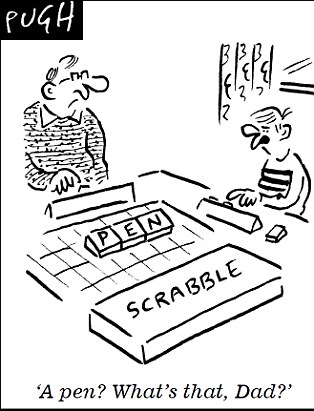
‘We already have problems with children not being able to hold a pen or pencil.

And Felicity Marrian, from Iverna Gardens Montessori in London, said: ‘If our children are in fact the most sedentary generation ever, according to the medical authorities, and already spend more time watching television than they do in school, do we really need to add computers and other screen-based devices to the nursery environment?’

A survey of 806 parents and early years staff carried out by website daynurseries.co.uk found that only 26 per cent believed that being exposed to technology actually benefits children in nurseries.

Davina Ludlow, director of daynurseries.co.uk, added: ‘Children are increasingly exposed to an overwhelming amount of technology at an early age.

‘The use of iPads in nurseries, which are displacing the traditional methods of learning and playing activities is concerning.

‘This poll shows that the majority of people clearly want to see early education and childhood play protected from this technological creep.’

Ms Palmer who is also the author of Toxic Childhood added:‘I think what children really need up to the age of seven is real life in real space and real time, which means three dimensional experiences.


Click on the link to read 5 Great Spelling Apps for Tablets and Smartphones

Click on the link to read Are Educators Being Conned by the i-Pad?

Click on the link to read The Best Phonics Apps for iPads

Click on the link to read Should Teachers be able to Text Students?

Click on the link to read 50 Ways To Use Skype In Your Classroom

Click on the link to read Top 10 Educational i-Pad Apps

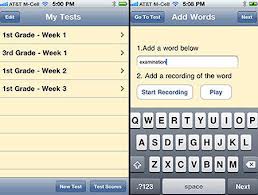
5 Great Spelling Apps for Tablets and Smartphones

August 24, 2013


spell

Courtesy of howtolearn.com:

  • Alpha Writer, by Montessorium

Alpha Writer is a stylish and effective Montessori-style app teaches kids letters and how they form words in four activities.  Kids can practice reading, writing, and spelling in the first two activities, create and read their own stories, and play the Alpha-Spy game (an interactive I-spy game).  This app teaches kids to:

✴ Read, write, and spell phonetically

✴ Pronunciation and composition of letters and words

✴ Fine motor skills

✴ Identification of letters as consonants or vowels

✴ Creativity as they write, create, and read their own stories

Users can also choose between three internationally acclaimed artists, Zeptonn, Mike Lowery and Marloes de Vries, for the graphics and illustrations.

  • C is for Cow by Forge

C is for Cow is a simple but effective app that is perfect for your youngest children.  This is the second of the 5 best spelling apps for smartphones and tablets and it teaches basic letter and word recognition, phonetics, and draws a connection to corresponding animals.  Choose from two modes: alphabetical  (which goes through animals in alphabetical order) or random (animals are tested in a random order, which helps kids exercise their knowledge).  Children are able to see and hear letters and words while enjoying the animal fun!

  • TeachMe: Kindergarten & TeachMe: 1st Grade by 24x7digital LL

The two TeachMe apps are sophisticated, award-winning apps that cover math, sight words, and spelling.  Each subject has five levels that children can advance through as they can handle the increased difficulties.  The interactive teacher, Mimi Mouse gives feedback and instructions to fully interact with kids and make learning fun.   Parents can even set the app to give out virtual rewards whenever children get a certain number of questions correct!  In addition, unique user accounts can be made for up to twenty different children.  Once children have mastered TeachMe: Kindergarten, they can advance to the next level of TeachMe: 1st Grade which is why this is one of the five best spelling apps for smartphones and tablets.

  • Montessori Crosswords by L’Escapadou

This award-winning app helps kids develop reading, writing, and spelling skills with activities that use phonics and graphics to create words.  Young children learn the fundamentals of writing and spelling while older children are challenged with complex crosswords in the three more difficult levels.  Customizable in many different ways, the app uses animations, interactive effects, and sounds to keep kids interested while a bank of over ten thousand words is available throughout the different levels.

  • The Electric Company Wordball! by PBS Kids

The Electric Company Wordball is certainly one of the 5 best spelling apps for smartphones and tables as well as an interactive phonics game that is based off of the popular PBS show, The Electric Company.  The app uses a series of educational videos that allow kids to interact as kids collect wordballs of letters.  In the second part of the game, kids use their previously collected wordballs to complete and create words for points.  The level of difficulty and need for dexterity makes this app better for kids who are at a higher level.  The Electric Company Wordball! is available for iPhone, iPad, and iPod Touch and is completely free!


Click on the link to read Are Educators Being Conned by the i-Pad?

Click on the link to read The Best Phonics Apps for iPads

Click on the link to read Should Teachers be able to Text Students?

Click on the link to read 50 Ways To Use Skype In Your Classroom

Click on the link to read Top 10 Educational i-Pad Apps

Click on the link to read Top 10 Math Apps for Children


Are Educators Being Conned by the i-Pad?

July 29, 2013

new age

There is no doubt that the i-Pad is a handy tool to have in the classroom.  But is it really essential? Essential to the point that if schools don’t supply them they are doing a disservice to their students?

It is my opinion that i-Pads are merely icing on the cake. Without a great teacher and a dynamic and engaging curriculum the i-Pad is just a costly tool with negligible impact. My fear of recent reports spruiking i-Pads in the classroom is that the education system may be being conned by a cleverly constructed marketing campaign and that teachers might make the i-Pad the focus of their lessons rather than a complimentary resource.

Remember the pressure on schools to fit every classroom with an interactive whiteboard? What did that ultimately do to student performance and their digital nous? Arguably not very much. Many teachers still struggle to use their SmartBoards effectively, with some using it for not much more than a big screen to play movies off.

There is no doubt that i-pads can be a valuable tool for teachers, but are schools and parents that can’t afford them doing a disservice to their children?

Children risk falling behind other pupils at school because of a ‘digital divide’ caused by parents having to invest in tablet computers.

The devices, such as iPads, are increasingly considered an essential part of education by headteachers.

But the cost – typically several hundred pounds – means parents already struggling with tight family budgets have to rent or buy them in monthly instalments.

Those that are unable to afford them at all face the problem of their children missing out on the benefits of technology.

Headteachers are keen on the devices as they believe they can save money on equipment such as books and are a convenient way of researching or storing work.

Earlier this month a survey revealed free education was a myth as parents typically spend tens of thousands of pounds putting their children through the state system.

This includes £130 on technology for every child each year – and the sum is likely to keep rising.


Click on the link to read The Best Phonics Apps for iPads

Click on the link to read Should Teachers be able to Text Students?

Click on the link to read 50 Ways To Use Skype In Your Classroom

Click on the link to read Top 10 Educational i-Pad Apps

Click on the link to read Top 10 Math Apps for Children

Click on the link to read The Pros and Cons of iPads in the Classroom

The Pajamas that Reads Bedtime Stories to Kids

April 28, 2013


I know finding the time to read to your kids can be difficult, but surely this is not an activity you would wish to palm off to a garment?

Now, children can “wear their bedtime stories” with these smart pajamas from a US-based company.

The smart pajamas, made by Idaho-based Smart PJs, have printed dots that work like QR codes and unlock stories on a mobile device, Mashable reported.

Using a smartphone, parents can scan the dot patterns on their child’s pajamas, unlocking a story with pictures and words on the screen. What’s more, a free companion app can even recite the tales aloud,” it said.

The pajamas cost $25 each and are available for both boys and girls aged 1 to 8.

But Mashable also cautioned users on using smartphones before bed, saying they can affect the body’s sleep cycle.

Smart PJs described itself as “an innovative company with the distinction of creating the ‘Worlds first and only interactive Pajamas!”

“We have children ourselves and understand how important a bedtime story is for kids, and how important a quality pair of pajamas is for parents, so we have combined them both into one EASY and FUN to use product that every kid and parent will LOVE!” it said.

Click on the link to read Why Spelling is Important at Starbucks

Click on the link to read The Ability to Spell is a Prerequisite for Getting a Tattoo (Photos)

Click on the link to read This is What Happens When You Rely on Spell Check

Click on the link to read Hilarious Menu Items Lost in Translation

Click on the link to read The 15 Most Commonly Misspelled Words in the English Language

Click on the link to read Who Said Grammar Isn’t Important?

Parents Failing to Protect their Young Children from Porn

December 9, 2012

comp

The internet has made the job of parents a great deal harder:

More than four in ten parents say that their children have been exposed to internet porn, an official survey reveals.

Almost a third say their sons or daughters have received sexually explicit emails or texts and a quarter say they have been bullied online or on their phones.

Many others have been exposed to websites promoting anorexia, self-harm and even suicide.

The frightening insight is contained in a round-up of responses to a Department for Education consultation on parental internet controls obtained by this paper.

Click on the link to read A Case of Parenting at It’s Worst

Click on the link to read The Most Popular Lies that Parents Tell their Children

Click on the link to read Dad’s Letter to 13-Year Old Son after Discovering he had been Downloading from Porn Sites

Click on the link to read A Parent that Means Well Doesn’t Always Do Well

Click on the link to read A Joke at the Expense of Your Own Child


Parents Shouldn’t Be in Denial Over This Very Real Addiction

November 28, 2012

As addictions go, internet addiction is relatively new. Since we all love to spend time surfing the net and we see it as a natural and normal form of relaxation many ignore what is becoming a very serious problem. Children are spending far too long in front of a screen, often skipping meals, becoming sleep deprived and sometimes even defecating in their pants in order to avoid missing precious minutes of a peer-to-peer game or social chat session.

ONE in five Aussie kids spend so much time surfing the internet that they miss out on meals and sleep, a study shows.

Edith Cowan University researchers have revealed that “excessive internet use” is twice as common in Australian children as British kids.

A fifth of the Australian children surveyed said they had “gone without eating or sleeping because of the internet”.

More than half confessed they waste so much time online that they “have spent less time than I should have” with family, friends or doing homework.

Sixty per cent said they had caught themselves surfing when they were “not really interested”.

And half “felt bothered” when they could not get online.

Internet obsession appears to peak at the age of 13 to 14, the study shows, as children start high school and use the internet more for homework and social networking with friends.

Click on the link to read Video Game Addiction is Real and Very Serious!

Click on the link to read Internet Addiction and our Children

Click on the link to read Issues Relating to Kids and Video Games

Click on the link to read Are you Addicted to the Internet?

Should Teachers be able to Text Students?

November 4, 2012

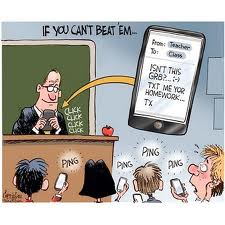
I completely agree with Alan Howe, who argues that it should be a crime for teachers to text a student without sending the same message to the parents of the child.

Some recent court cases have me thinking that we should update another Victorian law – as quickly as we can.

A scan of the evidence given in a series of trials over the last seven years involving predatory teachers abusing children in their care shows an alarming correlation.

Eltham North physical education teacher Karen Ellis had sex with a 15-year-old student of hers. She said she was in love with him. She was then married, with three children.

You’d reckon a part-time job and three kids would keep a young mum busy enough, but multi-tasking Ellis found time to send one young man 499 text messages in three months.

They had sex six times before the boy’s mother worked things out.

Ellis, sounding as dumb as she looks, said that she might have still been with the boy had he been older and the circumstances different. But he wasn’t, and they weren’t.

After lenient County Court judge John Smallwood suspended her sentence, three Court of Appeal judges more sensibly decided Ellis should be jailed.

Another female phys ed teacher, Belinda Campbell, was suspended from teaching after being found to have kissed a boy to whom she sent 200 text messages.

The trend is as clear as your ring tone: predatory teachers are using text messages to criminally prepare kids for sex that not only disrupts their school years, but can scar them for life.

They prefer text messaging for several reasons:

It doesn’t involve a ringing phone that could attract a parent’s attention – you know, like the way you might ask your son why his phone had just gone off 1000 times.

A silent communication can also be made at any hour.

Unlike an email, of which there might be a physical manifestation such as a printout – a text message is slyly elusive.

And unlike a family laptop, the mobile is not a shared device. It’s in your pocket.

The problem is obvious, and so is the solution.

Any Victorian teacher sending a text message to a child under their care, supervision or authority should be required to copy in that student’s parent or guardian.

Not to do so should be a criminal offence.

There will be a small degree of inconvenience in this, like there is in passing through security at the airport.

But it will do the trick in an instant.

The Victorian Institute of Teachers disciplinary panel found her guilty of serious misconduct, but suspended her for only a year.

Click on the link to read 50 Ways To Use Skype In Your Classroom

Click on the link to read Top 10 Educational i-Pad Apps

Click on the link to read Top 10 Math Apps for Children

Click on the link to read The Pros and Cons of iPads in the Classroom

The Toothbrush that Makes Sure Your Kids Brush Properly

October 10, 2012


So much for the speedy lackluster brush to satisfy your nagging mother:

The Beam toothbrush might be a boon to parents who are trying to get their children to brush, and it may inspire every owner to take more care of their pearls.

But be warned, if you shun your teeth too much – the device could let your dentist know you have been bunking off.

The device connects wirelessly to your phone, literally putting the ‘tooth’ into ‘Bluetooth’.

The reluctant brusher can then time their strokes and monitor their daily progress – although be warned that the toothbrush is not electric, so you still have to do the manual brushing yourself.

The makers said: ‘Today, the average person brushes their teeth for only 46 seconds, but is 50 per cent more likely to brush their teeth for a full two minutes by using just a simple timer.

‘Oral care is considered patient-centered, since oral health is impacted significantly by your daily hygiene habits.

‘Data from the Beam Brush is designed to raise awareness for your oral care.’