Posts Tagged ‘life’

Why You’ve Stopped Believing Classroom Management Advice Can Help You

July 14, 2026

If you’ve quietly stopped clicking on classroom management videos, stopped reading the PD slides, stopped hoping the next staff training will actually change anything, this post is for you. Not because you’ve given up on getting better. Because the advice has given up on you first.

The pattern you’ve probably noticed

Search “classroom management” and you’ll find two kinds of content.

The first kind makes you feel understood. It tells you that difficult students had a rough morning, that behaviour isn’t personal, that you’re not failing, you’re human. It’s warm, and it’s not wrong. But watch until the end and count how many actual, repeatable actions you were given. Usually one or two, and they’re often the same ones you already knew: stay calm, build relationships, don’t take it personally.

The second kind gives you a technique with no explanation underneath it. Lower your voice. Pause before responding. Address it privately. All genuinely useful. But try one of these in a real classroom, with thirty teenagers watching and one of them testing exactly how far they can push you, and it often falls apart, because you were handed the move without ever being told why it works, or what to do the moment it doesn’t.

Neither of these is dishonest. But neither of them is enough. And after a few years of trying both, a lot of teachers quietly conclude the same thing: maybe this just isn’t fixable through advice.

Why that conclusion is wrong, but understandable

Here’s the distinction that matters. You haven’t stopped wanting to get better at this. You’ve stopped trusting that the next piece of advice will actually hold up under pressure. Those are two very different things, and mixing them up matters, because one leads to giving up, and the other leads to being more selective about what you’re willing to try.

The strategies that actually work under pressure aren’t secret. They’re grounded in something specific: an understanding of what’s happening in a dysregulated nervous system, yours and the student’s, in the moment things start to go sideways. Without that grounding, a technique is just a script, and scripts break the second a student doesn’t follow them.

With it, you’re not memorising a line to say. You understand why silence works better than a snap response, why lowering your voice when a student raises theirs changes the physiology of the room, why the goal in a heated moment isn’t to win the exchange but to end it without anyone needing to save face in front of an audience. Once you understand the mechanism, you can adapt on the spot, which is the one thing a script can never do for you.

What’s actually missing from most advice

Three things, consistently.

The psychology underneath the technique. Most classroom management content tells you what to do. Almost none of it tells you what’s happening physiologically, in you and in the student, that makes one response work and another backfire. Without that, you’re following instructions. With it, you’re making judgment calls, which is what the job actually requires.

A next step, not just a feeling. Validation matters. Feeling understood after a brutal day matters. But validation without a testable next action leaves you exactly where you started tomorrow morning, just a little more comforted about it.

Proof that this is learnable, not innate. A lot of advice implicitly suggests that calm, controlled teachers were simply born that way, and the rest of us are trying to fake it. That’s not true, and it’s worth saying plainly: the ability to stay regulated under pressure, to de-escalate instead of escalate, is a skill that gets built the same way any skill gets built, through understanding, small deliberate practice, and enough early wins to start believing it’s possible.

Where that leaves you

If you’ve been feeling like the problem is too big for advice to touch, that’s not a personal failing, and it’s not really about you at all. It’s a reasonable response to years of content that diagnoses well and solves poorly.

The actual fix isn’t more validation, and it isn’t a longer list of tips. It’s strategies that are explained, not just issued, tried once in a low-stakes moment, and allowed to become evidence. Not evidence for a video or a PD session. Evidence for you, that tomorrow’s lesson really can go differently than today’s.

That belief doesn’t come from being told it’s possible. It comes from trying one thing, on purpose, and watching it work.

If you’re ready to test that for yourself, the CALM Method is where I’d start. It’s not another list of tips, it’s the framework underneath the ones that actually work, free to download, built to be tried tomorrow, not just read tonight.
The Short Video You MUST Watch!

January 27, 2013


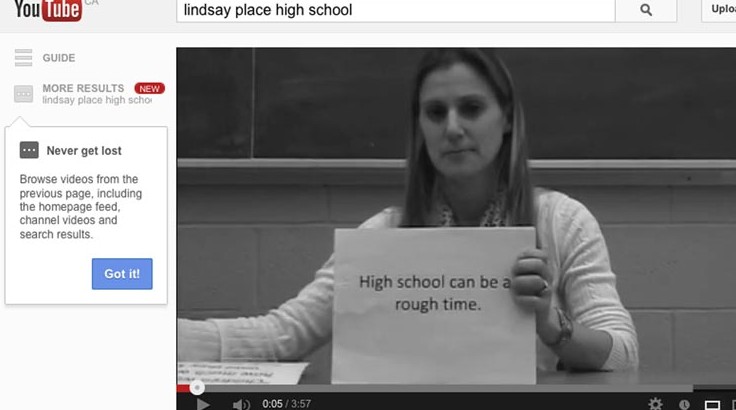
The teacher that had the courage and drive to make this heartfelt and inspirational video must be congratulated. Catherine Hogan, a teacher from Lindsay Place, has captured the very essence of what drives a caring, passionate teacher and her message is bound to alter some misconceptions felt by many students and parents. I was deeply moved and touched by this poignant and heartwarming clip.

Please watch this video and get your friends and family to do the same. Please notify others about its existence on Facebook and other social media devices. Only 12,624 have watched it from YouTube as I write this. This number doesn’t properly do justice to the quality and raw power of the clip.

lindsay

Click on the link to read Dying Teacher on Journey to Find Out if he Made a Difference

Click on the link to read Introducing the World’s Oldest Teacher

Click on the link to read School Shooting Showcases the Heroic Nature of Brilliant Teachers

Click on the link to read Meet the Armless Math Teacher

Click on the link to read The Case of a Teacher Suspended for Showing Integrity

Click on the link to read Teaching is Worth It!

Girl Writes Cute Note to the Queen

December 7, 2012

I love a bit of assertiveness. To a child, even the Queen of England is only a letter away.


queen

Click on the link to read Teachars Cant Spel

Click on the link to read This is What Happens When You Rely on Spell Check

Click on the link to read The 15 Most Commonly Misspelled Words in the English Language

Click on the link to read Who Said Grammar Isn’t Important?

Click on the link to read Why Spelling is Important


Our Young Children Shouldn’t Even Know What a Diet Is?

November 28, 2012

Message: Negative imagery painted with words like these are looked at by 500,000 people per year, a study has found

Our generation took body consciousness to a whole new level, with quite devastating results. We were taught to judge others not by the breadth of their character but by the size and shape of their bodies. It saddens me that this obsessive desire to look a certain way has seemingly overridden the desire of being a good person, resisting to gossip, being truthful and loyal to the people around us and acting with integrity. We live in a society where people would sell their souls for a preferred dress size and confidence is based on form and complexion over character development.

What has this philosophy provided us with?

Depression, peer pressure, cosmetic surgery addiction, diet crazes, suicide, bullying, anorexia and bulimia.

And what are we doing about it?

Passing the sickness on to our very young:

The internet is awash with pro-anorexia websites which thousands of girls – some as young as six – are using to compete against each other in deadly starvation games, a study has found.

More than 500 of these ‘gruesome’ sites exist and encourage vulnerable young women to barely eat and just drink coffee, smoke and take diet pills to look like a ‘goddess’.

Using the phrase ‘starving for perfection’ they say users should eat no more than 500 calories a day – the recommended level is 2,000 for women and 2,500 for men.

They also include ‘thinspiration’ sections with images of super-slim women and in the last year 500,000 girls have admitted visiting them, and one in five were aged between six and 11.

University Campus Suffolk in Ipswich has carried out research into the issue and found than many of these websites are set up by people with anorexia and other eating disorders.

‘It starts with an individual who wants to share their experience and as they get a following they set themselves up as almost Goddess-like,’ researcher Dr Emma Bond, senior lecturer in childhood and youth studies said.

‘When I started this research last January I came across a website set up by a girl who was disgusted with herself because she had put on a few pounds at Christmas. She planned to fast for three days and regain control.

‘In under two hours, she had 36 followers saying things like “You’re wonderful, you’re an inspiration to me, I’m only fasting because of you”.’

Some of the people are even posting pictures of themselves in very few clothes on thousands of blogs and on social media like Twitter.

Official figures show that one in 200 women and one in 2,000 men have anorexia – which means they starve themselves or exercise excessively to stay slim – although some experts believe the true number is much higher.

Around eight per cent of women and one per cent of men develop bulimia at some point. They binge on excessive amounts of food then make themselves sick or use laxatives to stop gaining weight.

Many sufferers of eating disorders hide their problem from family and friends by pretending they have already eaten to avoid meals and wearing baggy clothes to conceal their skeletal shape.

Doctors believe that anorexia or bulimia is more common in people who are perfectionists, tend to worry a lot or are often depressed.

Click on the link to read Charity Pays for Teen’s Plastic Surgery to Help Stop Bullying

Click on the link to read Most People Think This Woman is Fat

Click on the link to read It’s Time to Change the Culture of the Classroom

Click on the link to read Sparing Young Children the Affliction of Body Image

Parents Shouldn’t Be in Denial Over This Very Real Addiction

November 28, 2012

As addictions go, internet addiction is relatively new. Since we all love to spend time surfing the net and we see it as a natural and normal form of relaxation many ignore what is becoming a very serious problem. Children are spending far too long in front of a screen, often skipping meals, becoming sleep deprived and sometimes even defecating in their pants in order to avoid missing precious minutes of a peer-to-peer game or social chat session.

ONE in five Aussie kids spend so much time surfing the internet that they miss out on meals and sleep, a study shows.

Edith Cowan University researchers have revealed that “excessive internet use” is twice as common in Australian children as British kids.

A fifth of the Australian children surveyed said they had “gone without eating or sleeping because of the internet”.

More than half confessed they waste so much time online that they “have spent less time than I should have” with family, friends or doing homework.

Sixty per cent said they had caught themselves surfing when they were “not really interested”.

And half “felt bothered” when they could not get online.

Internet obsession appears to peak at the age of 13 to 14, the study shows, as children start high school and use the internet more for homework and social networking with friends.

Click on the link to read Video Game Addiction is Real and Very Serious!

Click on the link to read Internet Addiction and our Children

Click on the link to read Issues Relating to Kids and Video Games

Click on the link to read Are you Addicted to the Internet?

Is Online Pornography to Blame for Young Rapists?

November 19, 2012

I was staggered to read of the rising numbers of underage rapists, some of which are as young as 10 years-old. How can this be happening? As a Primary School teacher it is absolutely unfathomable that children that young could commit such an atrocious act.

Surely online pornography is just a quick and easy excuse. It must be more complicated than that:

Children as young as ten are being arrested on suspicion of rape amid fears that online pornography is twisting their view of sex and relationships.

The scale of sexual offences committed by primary school children was revealed in disturbing figures from police forces across the country.

Twenty-four forces arrested children under 13 for suspected rape in the past year while seven detained at least one ten year old.

The figures, obtained by the Daily Mail under a Freedom of Information request, highlight growing concerns at the influence of online pornography on impressionable young minds.

Yesterday NSPCC spokesman Jon Brown said there was ‘undoubtedly’ a link between children carrying out sexual assaults and easy access to online pornography, which gives them a ‘distorted picture of what sexual relationships should be about’.

John Carr, from the Children’s Charities’ Coalition on Internet Safety, said: ‘There is already a widespread feeling that the internet is playing an unhealthy part in the early sexualisation of children and these revelations about the arrests of ten-year-olds for rape will add fuel to the flames.’

The figures were uncovered in a survey of all 52 police forces across Britain.

Of the 39 that responded, 31 forces had arrested children between the ages of ten and 13 on suspicion of rape in the past year.

Seven said the youngest child arrested for rape was aged just ten while six said the youngest was 11, and 11 forces said the youngest suspect was 12.

Forces reported only the age of the youngest child they had arrested for the crime, meaning the actual number of very young children detained in each age group could be much higher.

According to the figures, 357 children aged 18 and under were found guilty of a range of sex crimes including rape, sexual assaults on other children, grooming, incest and taking or possessing indecent photographs of minors.

November 11, 2012

A funny post by a teacher quite sick of the same old questions.

The Psychological Impact of Divorce on Children

November 8, 2012

Many in society figure that since divorce is very common nowadays that the effects on children are far reduced. This is not the case. A child can be in a classroom full of children from broken homes. It doesn’t make their personal pain any less tangible:

Family breakdown is as devastating for today’s children as it was when divorce was a source of social disgrace, a state-backed report warned yesterday. 

Even though divorce is no longer considered ‘shameful’ – as it was until the 1970s – the children of broken families continue to suffer destructive effects throughout their lives, the report said.

The paper, produced by a team of senior academics, found that the damage caused to a child by divorce continues to blight his or her life as far as old age.

It said parental separation in childhood was ‘consistently associated with psychological distress in adulthood during people’s early 30s’.

The report added: ‘This seems to be true even across different generations, which suggests that as divorce and separation have become more common, their impact on mental health has not reduced.’

It comes a week after figures were published showing that almost half of all children have now seen their parents break up by the time they are 15.

The report said that good health depends on lifestyle conditions that it termed ‘social medicines’. Key among these is a stable family background.

The findings undermine the claims of politicians, lawyers and activists who have argued for years that divorce causes no harm to children if parents part amicably and without conflict.

‘Family life has undergone dramatic changes over recent decades,’ the report, produced by a team led by Professor Mel Bartley, said.

‘Families no longer have to have two parents, they can contain children from different parents, and parents no longer have to be of different genders.’

But it warned: ‘More freedom also means less certainty, and this has led to concerns about the impact of family stability on the health and well-being of both children and adults.

‘Family living arrangements are related to children’s physical health.

Click on the link to read Research Suggests That There’s no Such Thing as a Good Divorce
Click on the link to read The Role of Teacher in Helping Students Deal With Divorce
Click on the link to read Don’t Dismiss the Effect of Divorce on a Child
Click on the link to read Teaching Union Wants Porn on the National Curriculum

Teachers Continue to Fail the Common Sense Test

October 28, 2012

Why are there so many immature, irresponsible and downright twisted teachers around?

Two drama teachers were sacked for allowing GCSE students perform in a play involving depictions of rape, oral sex and child abuse within a family in front of their parents and classmates.

The play – which even featured a pupil acting out the role of a father sexually abusing his daughter – shocked teachers, upset parents and left children sobbing and vomiting in distress.

Complaints were made and the two unnamed teachers, who were supervising the 15 and 16-year-olds who wrote and acted in the play, were sacked by the school for gross misconduct.

They are now pursuing unfair dismissal claims – but the Employment Appeal Tribunal (EAT) ruled this week that a previous decision in their favour was ‘perverse’ and that their cases must be re-heard.

The teachers taught drama at an unidentified school. One was head of the department – and they were responsible for supervising GCSE students in writing, rehearsal, production and performance.

The ‘age-inappropriate’ material included graphic descriptions of sex, rape, oral sex between father and daughter, child abuse between parents and children, and group sex within a family, EAT judge Lady Smith said.

A showcase of the work was held in front of friends and relatives, but the department head failed to warn those invited of the potentially disturbing nature of the production.

Even the headteacher of the school was not told about the content and was unaware of what the students had been involved in until after the showcase, Lady Smith said.

Teachars Cant Spel

October 21, 2012

It seems like poor spelling doesn’t stop with the students:

TEACHERS are filling lessons, report cards and letters home with errors, including SMS-style spelling, grammatical mistakes and misspelt spelling lists, parents have claimed.

A survey of 480 people about the literacy skills of the nation’s teachers found half thought the quality was poor.

More than 40 per cent had noticed spelling or grammatical errors on letters sent home from school and 35 per cent had seen mistakes in report cards and marked assignments.

Other parents claimed their child’s teachers lacked passion and skill, taught incorrect information and provided misspelt word lists for children to learn from. Some had even noticed teachers using SMS-style spellings, like l8r (later) and coz (because).

The “must do better” grading comes as the federal government reveals current teachers will be given specialist training to make sure future educators get better mentoring.Current and ex-teachers who took the survey were among those who complained about substandard quality, saying it was depressing.

One teacher from a state high school said many graduate teachers lacked a basic understanding of grammar, spelling and punctuation through their own schooling.

“It’s those 20-somethings who just missed out and I’m scared that they’re going to be teaching my kids,” she said.

Click on the link to read Who Corrects Our Spelling Mistakes?

Click on the link to read This is What Happens When You Rely on Spell Check

Click on the link to read The 15 Most Commonly Misspelled Words in the English Language

Click on the link to read Who Said Grammar Isn’t Important?

Click on the link to read Why Spelling is Important