Posts Tagged ‘Education’

The Explosion of Online Bullying

August 7, 2013

hannah

Some very worrying numbers as a result of possibly the most difficult form of bullying to eliminate:

British children are suffering thanks to an epidemic of online bullying – with the number of calls to ChildLine from victims almost doubling in just one year.

In 2012/13, a total of 4,507 children – around 12 a day – rang the helpline to complain they were being abused by peers on social networking sites.

That is up a startling 87 per cent from the 2,410 calls the year before, with the head of the NSPCC revealing many were ringing in ‘utter panic’ after suffering months of ‘torment’.

Girls are three times more likely to call than boys and, worryingly, one in six calls are received from children aged 11 or younger.

The revelation follows the death of 14-year-old Hannah Smith, who hanged herself on Friday after months of abuse on the internet.

Her father said he had found bullying posts on his daughter’s ask.fm page from people telling her to die.

She had been urged to ‘drink bleach’ by her anonymous tormentors and taunted over her weight, the death of an uncle and an apparent propensity to self-harm.The notorious ask.fm website – described as a ‘stalker’s paradise’ – has been linked to at least four teenage deaths over the past year.

Now an analysis of calls received by ChildLine show that these victims are far from alone – and that cyberbullying is now one of the fastest growing issues young people contract them about.

The Call to Scrap Spelling Lessons Due to Smartphone Auto Correct Function

August 5, 2013


Perhaps we should stop teaching grammar because of computerised grammar corrections, or teaching languages because of Google Translate, or maths because of the calculator, or anything at all because of Wikipedia.

The proposal to cease teaching spelling in schools is absolutely ludicrous:

Spelling lessons should be scrapped because children can correct mistakes on their mobile phone or computer, a university professor has claimed.

Sugata Mitra, professor of educational technology at Newcastle University, said that good grammar was necessary ‘maybe 100 years ago’ but ‘not right now’.

He said that traditional spelling classes are unnecessary when students have constant access to state-of-the-art technology.

Professor Mitra said that pupils should be encouraged not to rely on linguistic rules but to try and express themselves in new ways such as using mobile phone text messaging.

The professor spoke out as the Government introduces a drive aimed at improving educational standards that will see pupils tested on spelling 200 complex words by the end of primary school.

Alternative: Professor Mitra has said that youngsters should be encouraged to communicate in other ways such as via text messaging

A separate test in spelling, punctuation and grammar was introduced in England for 11-year-olds this year.

GCSE students have also been told that they will be docked marks in exams if they do not use accurate English.

Professor Mitra said in an interview with the Times that emphasising spelling and grammar in the classroom is: ‘a bit unnecessary because they are skills that were very essential maybe 100 years ago but they are not right now.

‘Firstly, my phone corrects my spelling so I don’t really need to think about it and, secondly, because I often skip grammar and write in a cryptic way.’

The professor won the $1million TED Prize to create ‘cloud schools’ where children learn from each other and retired experts.

Despite his claims, the National Association for the Teaching of English, defended teaching correct grammar in schools.

Joe Walsh said that electronic devices ‘cannot think for you’.

Click on the link to read How Spelling Mistakes can Turn a Compliment into Something Quite Different.

Click on the link to read Why Spelling is Important at Starbucks

Click on the link to read The Ability to Spell is a Prerequisite for Getting a Tattoo (Photos)

Click on the link to read This is What Happens When You Rely on Spell Check

Click on the link to read Hilarious Menu Items Lost in Translation

Click on the link to read The 15 Most Commonly Misspelled Words in the English Language

Click on the link to read Hilarious Spelling Mistake

Click on the link to read Why Spelling is Important


4 Tips for Getting Your Kids up in the Morning

August 1, 2013

bed

Getting children ready for school on time is a real and extremely difficult challenge for many parents. Below are some tips courtesy of blogger Sue Kirchner”

1. Wake up, Little Susie 

    Analyze your kids’ morning routine. Some kids need time to come awake while others snap to it. For those sleepy heads, you may need to set the alarm early enough to accommodate some sitting-and-staring-into-space time. Or, try setting two alarms, one on the opposite side of the room. Having to physically get up and turn off the clock means your child is that much closer to being awake. Play around with the alarm itself. See if setting the alarm to a radio station works better at encouraging your kids to get up than just a buzzer. Experiment to see which method works best and then overestimate the time your child needs to get ready so there are no last minute morning panic attacks. That’s no way to start the day.

2. Rise and Shine                                        

    Try waking your kids up with their nose. Use favorite smells to lure them out of bed, such as cinnamon-raisin toast, crispy bacon frying, or maybe even coffee brewing for teens. I’m not above bribing my kids to get out of bed with one of their favorite breakfast meals. Sure, I may need to get up a little earlier to cook something, but it’s worth it to get everyone to willingly show up to breakfast and skip the nagging.

While I personally am not this dedicated, I did read a tip from a Mom who on cold winter mornings would throw her kids clothes into the dryer for a few minutes. She felt pulling on warm clothes helps inspire her kids to leave their warm bed. Try it and let me know if it works.

3. Early to bed, early to rise 

Tell your child that you will keep pushing bedtime earlier and earlier in the evening, until they are able to wake up on time. The thought of having to go to bed at 7:30 p.m. may be just the thing to motivate them to wake up in the morning. Getting a good night’s sleep, as simple as it sounds, may solve the problem, too. Get the family into a routine to guarantee a good 8 – 10 hours of sleep for your child.

4. Eliminate distractions

Your kids need to wind down and relax so they can fall asleep faster and feel rested. So, give your kids the opportunity to relax and unclutter their mind before bed. When they are young, read a goodnight story together. As they get a little older, have them read chapter books to you or read on their own. Don’t schedule activities too late in the evening so they are too wired to sleep. For tweens and teens, have them plug their cell phones into the charger in the kitchen before going to bed and leave them there. No texting until all hours late at night! According to this article from MSNBC and the BBC, teens texting at night causes sleep deprivation and memory loss. Sleep deprivation is very dangerous for teens, according to this article by the Mayo Clinic.

Same thing is true in the morning. Once your kids are up, no TV, no computers, no cell phones until they are dressed, have eaten breakfast, prepared their lunch, or packed up their backpack. Eliminating distractions before their chores are done can help keep the morning moving smoothly.

Hopefully these tips will help get your kids up and out the door in time for school. Now go have a cup of coffee and a deep breath!


Click on the link to read Seven Valuable Tips for Raising Your Child’s Self-Esteem

Click on the link to read Top Ten Compliments Your Children Need to Hear

Click on the link to read Tips For Parents of Kids Who “Hate School”

Click on the link to read 20 Reassuring Things Every Parent Should Hear

Click on the link to read Parents and Teachers Should Not Be Facebook Friends

Click on the link to read Introducing the App that will Give Parents Nightmares

The Importance of a Second Chance

July 31, 2013


allison

Our students must see that we are all human and make mistakes. Likewise, they should be aware that it isn’t making a mistake that makes one a failure, but rather an ability to learn from our mistakes.

I feel great sympathy for this woman’s mistake and I believe that had she been given another chance a more positive message would have been sent to students about the opportunities presented with a second chance:

A primary school dinner lady has been sacked for accidentally serving pork to a Muslim pupil.

Alison Waldock, 51, ‘forgot’ the seven-year-old dietary needs when she asked if the schoolgirl wanted gammon and the youngster said yes.

The school’s headteacher spotted the mistake as the youngster was about to tuck into the meat and swept the plate away from her.

The girl’s parents were then told how close their daughter had come to eating the meat, which is banned in their religion.

They complained to the school’s catering firm and Ms Waldock, a dinner lady for 11 years, was suspended pending an investigation.

She insisted she had made an honest mistake and had simply lost track of all the dietary requirements of the children at Queen Edith Primary School in Cambridge.

But she was dismissed a month later for gross misconduct due to ‘negligence, carelessness or idleness’.

Ms Waldock, a mother-of-two, said: ‘I feel the school and catering company made me a scapegoat so they can’t be seen as politically incorrect.

‘I was really upset when I found out what I’d done. I’d never have done something like this on purpose. It was a simple mistake – I was so gutted with the school’s reaction.


Click on the link to read I Also Had a Student Hold a Toy Gun to my Face

Click on the link to read Who is Going to Stand Up For Bullied Teachers?

Click on the link to read 12 Tips for Managing Time in the Classroom

Click on the link to read If Teachers Were Paid More I Wouldn’t Have Become One

Click on the link to read Different Professions, Same Experiences

Click on the link to read Our Pay Isn’t the Problem


Tips for Catering for the Visual Learner

July 31, 2013


visual

One of the most frustrating trends in education is the lack of support given to visual learners. Whilst visual learners constitute over 60% of the student population, many are mistakenly thought of as developmentally slow or suffering from a learning difficulty. The truth is, many teachers either have little idea how to cater for a visual learner or simply find it difficult to adequately accommodate them.

Below are some tips that may prove useful:

  • provide visual cues or prompts to aid memory of visual learners
  • help visual learners by providing a visual cue at the same time as another learning style cue (such as auditory or kinesthetic)
  • provide visual learners with displays of information that they can take in as their eyes stroll around the room while you are speaking (posters, displays, language learning tip sheets)
  • provide extensive practise and recall opportunities to encourage learners to consolidate their learning into their long term memory, regardless of the learning styles they prefer
  • talk to students about learning styles, and making them aware of the different ways that people often prefer to take in information
  • remember that any good lesson, regardless of learning styles, includes reminders about what has been covered previously, an outline of upcoming content, and ample revision and practise of skills.


Click on the link to read Student Rant Goes Viral

Click on the link to read Could This be the Most Violent High School Test Question Ever?

Click on the link to read Six Valuable Steps to Making Positive Changes in Your Teaching

Click on the link to read 10 Art Related Games for the Classroom

Click on the link to read 5 Rules for Rewarding Students

Click on the link to read Tips for Engaging the Struggling Learner

5 Internet Safety Rules to Share With Your Kids

July 29, 2013


cyber

Courtesy of Millionaire Hoy:


1. Never give out any personal information

The internet can be a very misleading place for a child. When they think of the internet, they think of games, funny video and pictures, and having a great time; not internet predators. Internet predators leverage the happy perception children have of the internet and come off as nice people in order to pry information from unsuspecting children. Let your children know that they should never share their real name, address, school, city, parent’s information, or any clues that can lead an identity thief or pedophile to your child.

2. Downloading is off limits without supervision

Downloading is one of the most popular activities on the internet, but it can be dangerous. Make sure your children understand that while downloading wanted files, they might be downloading unwanted things as well. Virus authors, identity thieves, and online con artists know that parents are hip to most of their tricks and are now targeting free children’s gaming sites, because they can easily fool children. Let your children know that they never allowed to download files unless you are there to monitor their downloading.

3. Strangers are still strangers even if they are online

As I stated earlier, children look at the internet in a very different way than adults and children make friends very easily. It’s likely that your children know not to talk to strangers in the real world, but online adults can pose as children. It may be hard for your children to understand this and they might not even be aware why an adult would want to pose as a child. Let your children know to be suspicious when making friends online and tell them to let you know any time they make a new friend.

4. Keep your passwords private

If your child makes a friend online, they might be led to do things that they wouldn’t do, if not for the sake of friendship. A child might feel that they are betraying their child if they don’t do what’s asked and online predators will take advantage of this situation. It’s important that your child never reveal their online passwords because online scammers can compromise their accounts and gain private information associated with the account.

5. Bring any suspicious or uncomfortable information to your parents

If your child encounters something online that makes them feel uncomfortable or someone that makes them feel pressured, it’s important that they know to bring it to your attention immediately. If your child is sent pictures in poor taste, contacted by someone that’s asking uncomfortable questions, see something disturbing online, or are linked to a strange website, they need to know to stop what they are doing immediately and let you know about the situation.


Click on the link to read Introducing the App that will Give Parents Nightmares

Click on the link to read Teachers Who Rely on Free Speech Shouldn’t be Teachers

Click on the link to read Bullying is Acceptable when it’s Directed to a Teacher

Click on the link to read Punish Bullies and Then Change Your Culture

Are Educators Being Conned by the i-Pad?

July 29, 2013

new age

There is no doubt that the i-Pad is a handy tool to have in the classroom.  But is it really essential? Essential to the point that if schools don’t supply them they are doing a disservice to their students?

It is my opinion that i-Pads are merely icing on the cake. Without a great teacher and a dynamic and engaging curriculum the i-Pad is just a costly tool with negligible impact. My fear of recent reports spruiking i-Pads in the classroom is that the education system may be being conned by a cleverly constructed marketing campaign and that teachers might make the i-Pad the focus of their lessons rather than a complimentary resource.

Remember the pressure on schools to fit every classroom with an interactive whiteboard? What did that ultimately do to student performance and their digital nous? Arguably not very much. Many teachers still struggle to use their SmartBoards effectively, with some using it for not much more than a big screen to play movies off.

There is no doubt that i-pads can be a valuable tool for teachers, but are schools and parents that can’t afford them doing a disservice to their children?

Children risk falling behind other pupils at school because of a ‘digital divide’ caused by parents having to invest in tablet computers.

The devices, such as iPads, are increasingly considered an essential part of education by headteachers.

But the cost – typically several hundred pounds – means parents already struggling with tight family budgets have to rent or buy them in monthly instalments.

Those that are unable to afford them at all face the problem of their children missing out on the benefits of technology.

Headteachers are keen on the devices as they believe they can save money on equipment such as books and are a convenient way of researching or storing work.

Earlier this month a survey revealed free education was a myth as parents typically spend tens of thousands of pounds putting their children through the state system.

This includes £130 on technology for every child each year – and the sum is likely to keep rising.


Click on the link to read The Best Phonics Apps for iPads

Click on the link to read Should Teachers be able to Text Students?

Click on the link to read 50 Ways To Use Skype In Your Classroom

Click on the link to read Top 10 Educational i-Pad Apps

Click on the link to read Top 10 Math Apps for Children

Click on the link to read The Pros and Cons of iPads in the Classroom

Women Teachers Lack Confidence in Teaching PE: Lord Coe

July 28, 2013


coe


Was Lord Coe being sexist or merely relating the findings of research? You be the judge:

Lord Coe was plunged into a sexism row last night after saying that most women teachers lack the confidence to take PE lessons in primary schools.

The former London 2012 chairman blamed their failings on training colleges that offer only six to ten hours of sports tuition over two years.

Although he was simply highlighting research carried out by a sports charity, his comments drew an angry backlash.

‘It is entirely unacceptable to be peddling such sexist nonsense,’ said Christine Blower, general secretary of the National Union of Teachers.

‘I’m sure Jessica Ennis and all those other female Olympians would be outraged by such views. To imply that female primary school teachers don’t have as much ability as men to teach sport isn’t right.’

But Lord Coe, the Government’s Olympic legacy ambassador, insisted it was not a question of ability, but one of training.

‘I was shocked by how little they get,’ he said.

‘Eight out of ten teachers in primary schools are women. And this is not remotely pejorative but I think that something like 80 per cent of them said they just did not feel confident taking physical education.

‘I am guessing that there will be a lot of men who will feel the same way.’

Lord Coe has long emphasised the ‘crucial’ need to provide better PE teaching in primary schools.

Click on the link to read my post, Do experienced teachers give enough back to the profession?
Click on the link to read, ‘Teachers Trained Very Well to Teach Very Poorly
Click on the link to read my post 25 Characteristics of a Successful Teacher


Nine-Year-Old Stands Up for His School (Video)

July 26, 2013

bow


Asean Johnson, take a bow!

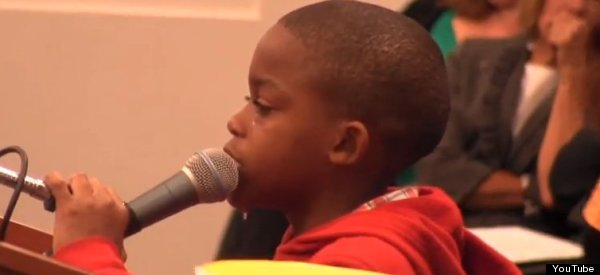
In less than two minutes, nine-year-old Chicago Public School student Asean Johnson on Wednesday unloaded a heartfelt plea to save teachers while excoriating the Board of Education that signed off on last week’s massive budget cuts and teacher layoffs.

“One thing I don’t about this board is that you only give us two minutes to speak and you give these corporate businesses, what, an hour to speak?” the student said during his emotional speech (embedded above).

The Marcus Garvey Elementary student first roused school closing protesters during three days of rallies in May when he gave a blistering speech that decried the school closings as racist while imploring school officials to invest in and support schools rather than close them.

Johnson spoke during the public comments portion of the Board of Education’s monthly meeting, part of day-long protests by Teachers Union members, parents and students.

With tears sliding down his cheeks Johnson told the school board, “You are slashing our education. You’re pulling me down. You’re taking our educational opportunities away.”

Johnson called for parents and teachers to be in control of the board and for their voices to be heard. “Don’t let the bank control this board,” the 9-year-old pleaded. “You are saying this is all about the kids … I’m a student myself and I’m pleading and begging that you help these parents who are low-income. Give them what the need. Give them these schools.”

A tear fell from Johnson’s chin after the moderator asked him to wrap up his remarks. Before departing the podium, Johnson advised the board, “You need to go tell the mayor to just quit his job.”


Click on the link to read Inspiring Kids who Look After a Sick Parent

Click on the link to read The Perfect Example of Courage and Self-Respect

Click on the link to read Woman Re-Mortagages Her House To Feed School Kids

Click on the link to read Insensitive ‘Parent Bashers’ Take Aim at Grieving Colorado Parents

My Teacher, the Pedophile

July 24, 2013

icky

Today, 25 years after my pedophile teacher abused my friends, he has finally been sentenced for his heinous crimes.

I was only 10 when I was first subjected to a teacher that would later be exposed as an evil pedophile. He taught me for 2 years, and I am relieved to say that I cannot recall being personally abused by him.

But my friends have been devastated by this man. One such victim, who has a daughter in my daughter’s class, has received ongoing therapy for assaults at the hand of this awful excuse of a human being.

Whilst I wasn’t old enough to know what a pedophile was and although I never liked the guy, I wasn’t aware he was abusing my friends until he fled the country in controversial circumstances. I do remember vividly him organising a party as a treat for us, purportedly due to our good behaviour. He arranged for the use of a classmates pool whilst the classmate’s parents were at work. We were so excited. Excursions tended to be of a boring, strictly educational nature. The thought of spending the morning swimming was so new and exciting for all of us.

I remember him getting in the pool with us and playing around in a jovial and almost immature fashion (very different from the type of teacher he was in the classroom). I also remember him instructing us to freely undress together and that we should embrace our naked bodies as it is natural.  To demonstrate he stripped off in front of us in a casual and carefree manner. For some reason I have never felt comfortable displaying my naked body in public and I was a bit bothered by my teacher’s open display of nudity. I remember thinking it was weird for a teacher to be acting in this way. I was one of two children who decided not to undress in front of him and opted for a private spot instead.

When his secret was exposed and he fled the country, I remember my parents reaction. They sat me down in the lounge room with concerned expressions on their faces. They asked me if this teacher had touched me in a certain way or acted towards me in an inappropriate or threatening manner. I answered then, as I do now, that I cannot recall any such treatment. Unfortunately, some of my friends were not so lucky.

The truth is, that we were raised to have total reverence for our teachers and see them as perfect. I fear that I would have let my teacher do as he wanted with me had he tried. I did not know what a pedophile was and in those days parents didn’t discuss personal space and molestation avoidance with their children.

Today my teacher received a minimum sentence of 18 months and, after time already served in custody, he is eligible for parole in just three months! Try breaking that news to his victims who have waited for justice all these years.

The threat of such instances has made it difficult to be a male primary teacher. The constant stories of male teachers who have abused their responsibilities and offended against their students is a reminder to parents to stay alert. It means that we have to be more careful than our female colleagues when it comes to interactions and must avoid being alone in the classroom with a student.

But this is a necessary safeguard. Just think of the poor victims.