Posts Tagged ‘Teaching’

Up to 1 in 10 US Students Have an Inappropriate Relationship With Their Teacher

August 16, 2014

andrea connersSurely there aren’t as many student/teacher relationships as suggested in this article. If it is anywhere near as bad as that, it is a terrible indictment on our profession:


Critics suggest that as many as one in 10 U.S. public school students — or about 4.5 million children — are involved in some kind of inappropriate teacher-student relationship.

But it’s not easy to identify — accusations involve everything from physical contact to inappropriate comments or looks — and can have a crippling effect not only on those involved but on the student body and their parents and educators.

“It’s devastating to the rest of our students,” said Dan Unger, president of the Northwest Local School District Board of Education. Two of the three teachers from his district have already been convicted and this year imprisoned. The third case is pending.

“When (the other students) think about the accomplishments of the class of 2014, they’ll think about that. This is what they will remember,” Unger said.

It’s become easier in a digital world where smart phones can dominate conversation, for teachers and students to communicate. That’s good when it’s used to discuss school work. But sometimes it can turn criminal.

“The biggest reason this occurs now is social media,” Abbott said.

A text, Facebook post, Instagram or Snapchat message can give teachers and students greater access to each other than ever before. All three of the Northwest Local School educators relied heavily on Snapchat, Facebook and text messages to communicate with the victimized students.

“It seems to be when the conversation goes private like that, the teacher says and does outrageous and outlandish things they’d never say in person,” Abbott said.

Those private contacts allow predatory educators to exploit students, enhancing the control teachers have over their students. Students want to be liked by or get attention from the educator.


Click on the link to read Facebook Exposes Yet Another Bad Teacher

Click on the link to read Why I Won’t Be Celebrating Facebook’s 10th Anniversary

Click on the link to read If You Ever Wondered How Some Kids Become Bullies …

Click on the link to read The Researchers into Cyberbullying Should Review Their Findings

Click on the link to read The Use of Facebook in Cyberbullying Activity

Click on the link to read A Positive Approach to Tackling Cyberbullying

Things Teachers Wish Parents Knew Before the School Year Begins

August 13, 2014

great listA great list courtesy of Lisa Flam:

1. Happy parents make happy teachers.

“Keeping parents happy is definitely the hardest part of the job for teachers,” said Adam Scanlan, who teaches fifth grade at E. W. Luther Elementary School in South Milwaukee, Wisconsin. “We have 25 sets of parents in our classes, many of whom want different outcomes from one another.” The need to please parents, more than anyone else, he says, is “constantly in the back of your mind,” he said. “I think a lot of parents expect perfection from teachers but in reality, we’re humans, too, and we do the best we can.”

2. Give new teachers a chance.

Have you crossed your fingers wishing your child would not get the newbie teacher? Kristina Hambrock was nervous as she made her teaching debut a year ago. She was often still working in her classroom until 9 p.m., hoping to create an environment where parents would be happy to send their children every day. “What I lack in experience, I can make up in the amount of time I can dedicate to your student,” she said, adding that newbies like her bring enthusiasm, motivation and excitement to their jobs. “Trust them, give them the benefit of the doubt,” she urges parents. “As hard as it is, they’re going to work twice as hard to earn your trust and respect.”

3. Embrace new ways of teaching.

The way kids are taught today is different from how it was even several years ago, let alone how different it was when their parents went through school. Teachers wish parents would embrace the changes more. “Our kids don’t bring home folders because they’re all on the computer,” says Laura Kerrigan, who teaches at Bay Lane Middle School in Muskego, Wisconsin. Supporting your child today means reading a classroom blog or checking your child’s Google Drive. “Embrace those avenues of learning,” Kerrigan says. “Sometimes it’s hard for parents to wrap their minds around.” She urges parents to “get comfortable with this changing environment. It’s not going away.

4. It’s okay for kids to fail (especially in middle school). 

Parents don’t want kids to fail, period. But teachers say there is time and place for that: middle school. “This is a safe place to fail because we’re here to support it,” Kerrigan said. “Let’s teach them how to get back up for when they don’t have as many support systems in places like high school and college.” But just as kids need to learn to pick themselves back up, they also need to speak up for themselves more often. Students “should be the ones to ask the questions or tell me they’re stuck, instead of the parent because the parent has already gone through seventh grade.”

5. Testing is not the end-all be-all.

As a former teacher who is starting his first year as a principal, Todd Nesloney wants parents to know that for him, education is about much more than a test score. “Sometimes, with the constant conversation of testing and scores and accountability, parents begin to think that we are just here to get their kid to pass a test.” Yes, the principal of Navasota Intermediate School in Navasota, Texas, does want his students to do well on state tests. But his overall goal is to encourage kids to enjoy learning. “We just want parents to know that we deeply care about their children, and we are trying to prepare them for a crazy world out there, and that’s not all about this testing.”

6. Be a good listener.

It can be hard for parents to hear that their child is having a social or academic problem, but Scanlan urges parents to be willing to listen. “Know that every child and adult, myself as well, needs improvement and not to come in thinking it’s teacher against parents,” he said. “It’s not a battle. It’s trying to work together to help the child succeed.”

7. Your child’s homework is not your responsibility – it’s theirs.

Scanlan heaps on the praise when his students take responsibility for something like forgetting to bring their homework, rather than shifting the blame. He urges parents to stop making excuses for their kids by saying things like homework didn’t get done because of football practice. “You’re not modeling good acceptance of responsibility,” he says. “You’re telling your kid there’s always an excuse for something.” 

8. Stay involved, even when your kids are in high school.

Parents may have dutifully attended every back-to-school night and stayed in close contact with teachers when their kids attended elementary and middle school but find themselves pulling back during high school. Don’t, advises Michael Woods, a special education science teacher at Santaluces Community High School in Lantana, Florida.

High schoolers may tell their parents they don’t need them, but Woods says, “That couldn’t be further from the truth.

“Everything in high school is credit-driven, test-driven,” Woods says. “It’s a lot of pressure, and they need a team — the parents and teachers.” He urges parents to meet the teachers and get in touch before progress report or report card time. “I celebrate when a parent calls me or emails me,” says Woods, who is starting his 22nd year as a teacher.

9. Teachers get sick, too.

No parent is happy to hear that a child’s teacher was out — again. But teachers need to be operating at “110 percent,” Hambrock says, and don’t take sick days lightly. “It’s way more work to get a sub and plan for the sub because you want your kids to be taken care of,” she says. “When we get sick, we’re really sick.”

10.  Shhhh  don’t let kids hear negative talk.

When you’re dishing about school, make sure your kids are out of earshot. “Your child’s opinion is affected by yours,” Weidmann says. “So please make sure that if you discuss any negative feelings toward classmates or teachers, that your child is not listening. We can always tell when it’s coming from the parents.”


Click on the link to read The Worst Parent in the World May be an Australian

Click on the link to read 10-Year-Old’s Marriage Advice to His Teacher

Click on the link to read The Science of Parenting

Click on the link to read Why the Call to Fine Parents for Not Reading to Their Children is Utter Stupidity

Click on the link to read Children are Precious!

Click on the link to read Is it Ever OK to Lie to Your Kids?

10 Tips for Dealing With Difficult Parents

August 3, 2014

difficult

Courtesy of teacher.net:


1. Let upset parents know that your goal is to help every child succeed. Look for ways to find common ground. Tell parents that both of you want what’s best for their child and that you want to find ways to work together. When parents are able to look at the big picture and realize that you are on the same side, you can begin to work together to help their child succeed.


2. Be sensitive! No matter how tense a situation becomes, always remember that your student is someone’s precious baby. Open your conversation with parents by acknowledging the child’s strengths before you focus on areas of concern.


3. Good records that document dates, times, notes and decisions about students can be invaluable if problems arise. Keep track of communication you’ve had with parents throughout the school year. Make a set of parent communication folders by labeling file folders with the names of your students. Staple a few blank sheets of paper inside each folder. Use these folders to jot notes with details of important conversations and keep notes from parents organized. Inside each folder, write the date, name of the parent with whom you spoke, and any actions that need to be taken. Make sure to date notes that you receive from parents before you file them in the folders. If you respond to a parent’s note in writing, make a copy of your response and staple it to the parent’s note. After making phone calls to parents to discuss problems, take a few minutes to record any important information that was discussed. Parent Communication Files come in handy if you ever need to document how you’ve involved and informed parents after an incident at school. Keep these important folders inside the front of your desk drawer so they are at your fingertips instantly.


4. Be proactive! Contact parents as soon as you see academic problems or negative behavior patterns develop. You’ll have a better chance to change these patterns if you catch them early. Here are some things to discuss with parents:


  • areas where their child excels
  • if their child is attentive during lessons
  • where their child stands academically
  • specific areas where their child experiences difficulties
  • specific ways they can help their child at home
  • how well their child gets along with classmates
  • how long homework should take to complete
  • allow parents to share their concerns and ask questions
  • if you are unsure what a parent asks about, request specific examples


5. Be prepared to give specific examples to illustrate the points you make. Show parents examples of average and above average work for your grade level. White out the names on papers and use actual samples of students’ work to clearly illustrate typical work for the grade level. The idea isn’t to compare students to one another, it’s to give parents a clear idea of exactly what your expectations are for students in your class.


6. Have you ever been caught off guard by a parent and answered a question in a way that you regret later? If a parent asks you a question that floors you, don’t be put on the spot. It’s fine to let parents know that you need some time to reflect on their question before you respond. Let them know that you’ll get back to them in a day or two. Relax—you’ve just bought yourself time to explore options and perhaps bounce ideas off of a colleague before you respond to the parents.


7. Don’t be afraid to end a meeting with parents who become confrontational. Sometimes, the best thing to do is to provide an opportunity for all parties to cool down and reflect on the issues at hand by bringing the meeting to a close. Set a time and date to meet again. If you feel threatened, ask your principal, vice principal or school counselor attend the next conference.


8. It’s awkward when parents share too much information with you. While it’s helpful to know things that directly impact a student, it can be problematic when parents disclose too much personal information. It’s not your job to be their therapist. Remind parents that during the limited time you have to speak with them, that you need to focus on their child and not on them.


9. Sometimes neighborhood issues spill over into the classroom. Don’t let yourself get dragged into disputes between families of children in your class. Problems escalate quickly if it’s perceived that you’re siding with other parents. When parents begin to share information about neighborhood squabbles, jump right in and tell them that it’s information that you don’t need to hear. Let parents know that you’re receptive to their thoughts and ideas about their child, but you must stay out of personal issues between the families.


10. Watch for parents who hover relentlessly. I had a parent my second year of teaching who expected to volunteer in my classroom all day every day. I welcome parent volunteers, but this was ridiculous! She actually burst into tears when I told her she could only work in my room for an hour or two each week. I let her know that her daughter needed the space to develop social skills and gain independence. Then I told her about all of the other volunteer opportunities available at the school. Before long she was busy helping in the library and active in the PTA.


Click on the link to read 5 Helpful Tips for a Better Parent-Teacher Conference

Click on the link to read The Cafeteria Controversy

Click on the link to read Insensitive ‘Parent Bashers’ Take Aim at Grieving Colorado Parents

Click on the link to read Mother Films Her Kids Fighting and Posts it on Facebook

Click on the link to read It’s Not Spying on Your Children, It’s Called Parenting


Tips for Teaching an Overcrowded Classroom

July 30, 2014

crowd

Courtsey of Rebecca Alber from the fabulous website edutopia.org:

Tip #1: Don’t Give up on Collaborative Grouping

Students need opportunities to check in with each other around their learning, ask questions, guide each other and reflect together. And this is even more crucial with a large class. If a tight classroom space won’t allow for quick triads or quad grouping, use “elbow partners” — two students in close proximity. Do this often. As we know, with large class sizes, quiet students tend to get even less airtime. With less one-on-one time with small groups and individual students, teachers need to keep that large number of kids talking and being listened to!

Tip #2: Accept that Things Take Longer

Know that a learning objective that maybe took 20 minutes with that smaller class in the past, might take twice as long with this larger group. You might also be lamenting over the days when you could whip around the room and spend a few quality moments with each student or group. Or when you could offer immediate and thorough support. Unfortunately, if you did that now with 35 in the room, you’d find yourself out of time before coming close to accomplishing the daily learning objective.

One remedy, especially when it comes to checking for understanding? Strategies like thumbs up/thumbs down, or having students hold 1 to 3 fingers on their chest to let you know how well they understand (3 is, “I’ve got it!) Other quicky formative assessments, such as sentence starters, can help beat that Time Thief in the room. You can also use exit slips to see if they “got it,” asking one strategic question about the day’s learning.

Tip #3: Find New Ways to Know Students

Unfortunately, the larger the class size, the more the relationships with students suffer. Consider creating surveys once or twice a week where students can answer questions on a likert scale and also ask questions of you. Invite students to write you a letter about their learning, their accomplishments, challenges, and interests.

You can also rotate your focus every few days to 5-6 different students. That way, no one will slip through the cracks. Often with large class sizes, the squeaky wheels, so to speak, are the one’s that receive much of the teacher’s time. Make sure you check in regularly with your “proficient” students, and continue to create differentiated assignments for those gifted kids in the room.

Tip #4: Be Okay with Loud and Letting Go

Start saying this mantra immediately, “just because it’s loud doesn’t mean they aren’t learning, just because it’s loud…” Somewhere along road, we began to attribute silence to deep thought and high-level learning. It’s more often just a sign of kids being compliant. So go ahead, take those 37 kids and put them in groups! Give them a challenging task and some supplies. Let it be loud! Roam from group to group and if your door suddenly swings open to visitors from the district… Let them get an eye full of engaged, enthusiastic learners!

As for the letting go, if you are still passing out papers, collecting supplies, stamping homework all on your own — stop. Assign students “jobs” immediately. By giving up these managerial tasks, you will have more time free to check in with a child who has been absent a lot, add a step to an assignment for that advanced student, crack a joke with the quiet, moody teen who avoids others, or pose a strategic inquiry question to the whole class.


Click on the link to read The Most Over-Crowded Classroom in the World (Photo)

Click on the link to read Meet the School Consisting of Only 1 Teacher and 1 Student

Click on the link to read Classroom Free Schools

Click on the link to read Teaching 150 Students in the One Classroom!

Click on the link to read What is the Perfect Class Size?

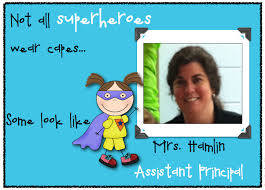
The Teacher as Superhero

July 29, 2014

super


The Top 10 Teacher Super Powers courtesy of Annie Condron. Love the one about the bladder!


X-Ray Vision

Superman’s X-ray vision has nothing on you. You can see eyes roving onto their neighbor’s test, covert texts, uniform infractions or a dozing student from a mile away.

Super Educational Gadgets

Batman’s known for his gadgets, just like those techie teachers who rock the projectors, interactive whiteboards and all things e-learning to live up to 21st century expectations… and beyond.

Elasti-teacher

Physics can’t explain how you’ve stretched yourself to do everything a crazy classroom requires – from differentiating instruction for every student, finishing mountains of paperwork in a single bound, keeping in touch with parents, researching new teaching tools and techniques, attending innumerable meetings and much more.

Bladders of Steel

Lifting heaving objects might be impressive for some superheroes, but not nearly as impressive as holding it from 8-3 after your large morning coffee (because the caffeine fix isn’t an option).

The Firestarter

You light the spark of learning that is the most important tool for young students. Once you light the fire, you extend those super powers to your students as they learn and grow.

Power of Super Patience

Thought not as glamorous as invisibility or flying, the indestructible patience you show in class is more important and more challenging than lifting an 18-wheeling over your head.

Webs of Knowledge

Take notes, Spidey! Students can’t help but be caught up in the enticing web of knowledge you create with engaging lessons, fun projects and boundless enthusiasm.

The Hammer of Teacher

Keeping discipline and rogue classroom behavior in check is your super skill. Like Thor, you can’t be afraid to bring down the hammer when necessary.

Super Distraction Deflectors

While Wonder Woman used her magic gold bracelets to deflect attacks, you use your super wit and classroom command to deflect distractions and students trying to get you off topic.

The Powerful Protector

You’ve created a safe classroom environment that welcomes students, no matter what they experience outside your doors, to create a force field around them while they learn (and hopefully outside the classroom too).


Click on the link to read I Wish All Principals Could Be Like This

Click on the link to read The 6 Most Inspiring Teachers of 2013

Click on the link to read Brilliant Teacher Alert! (Video)

Click on the link to read Teachers are Better with a Sense of Humour (Photo)

When Teachers Prank Their Students (Video)

July 28, 2014


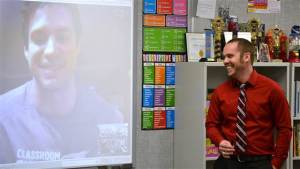
I just love it when teachers go to the trouble to make their students laugh. Laughter in the classroom, when it isn’t at someone’s expense, adds so much to the environment.

Take the above April Fools Day prank this teacher organised.


Click on the link to read 18 Tips For Getting the Best Out of Your Students

Click on the link to read Michael Michalko’s 7 Principles of Creative Thinking

Click on the link to read Why Many Teachers Don’t Bother Making Their Lessons Interesting

Click on the link to read Why is it Always the Kids’ Fault?

Click on the link to read Student Shot by Teacher Protests His Sacking

Click on the link to read Science Not For the Faint Hearted (Video)

18 Tips For Getting the Best Out of Your Students

July 17, 2014

Courtesy of teachthought.com:


reach


Click on the link to read Michael Michalko’s 7 Principles of Creative Thinking

Click on the link to read Why Many Teachers Don’t Bother Making Their Lessons Interesting

Click on the link to read Why is it Always the Kids’ Fault?

Click on the link to read Student Shot by Teacher Protests His Sacking

Click on the link to read Science Not For the Faint Hearted (Video)

Click on the link to read 7 Tips for Building a Better School Day

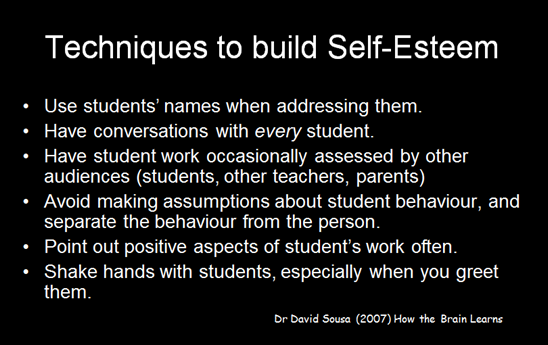
Sousa’s Techniques to Build Self-Esteem

July 15, 2014

Courtesy of

self

I agree with nearly all these tips, especially the first one which is absolutely crucial from my experience. However, I do not advise teachers to shake their students’ hands. It is not appropriate and I would recommend teachers should desist from doing it.


Click on the link to read Why I Believe Classrooms Should Be Fitted With Video Cameras

Click on the link to read Are We Doing Enough to Make Our Children Happy?

Click on the link to read Why Getting Our Kids to Toughen Up is a Flawed Theory
Click on the link to read  Stop Pretending and Start Acting!

Click on the link to read  Some Principals Seem to Be Ignorant About Bullying

Click on the link to read Teaching Kids to be Competitive Often Leads to Needless Pain

Instructing Teachers to be Frauds

July 1, 2014

morpurgo

A good teacher relies on a relationship with their students built on trust. Our students will only take appropriate risks and be sufficiently motivated if they trust that the teacher is genuine and dependable.

I don’t care how well intentioned the cause may be, I am not about to pretend, cheat or con my students about anything. If a book I am reading makes me emotional, my students will notice. If it doesn’t resonate with me, I will most certainly not pretend it does:


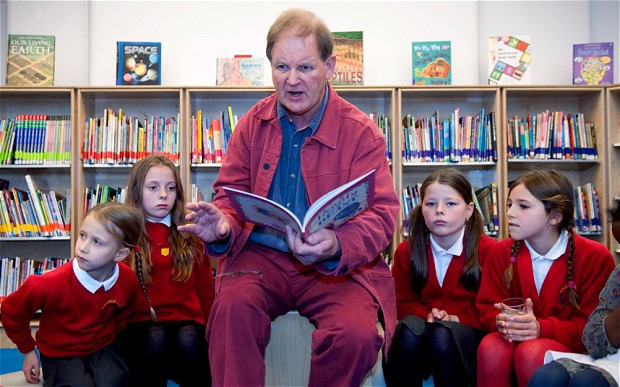
Teachers should let themselves cry in class when reading poignant stories to help teach children that books matter, the author Michael Morpurgo has said.

Morpurgo, the former children’s laureate and writer of War Horse, said showing emotion in schools when reading sad tales should not be avoided, being an essential part of being a “good teacher”.

Speaking at the Chalke Valley History Festival, where he discussed his First World War novels, he added it was important to let children see stories can touch the adults around them, to help them learn the value of literature.

His novels, including War Horse and Private Peaceful, are known for their emotive subject matters and tell the often distressing stories about the First World War.

Speaking in front of an audience of children, Morpurgo argued it was essential to tell them the truth about life, without patronising them by “wrapping everything up in a little pink bow”.


Click on the link to read 10 Questions to Get Kids Thinking Deeper About their Books.

Click on the link to read 24 Books to Get Your Children Reading

Click on the link to read 17 Children’s Books You Still Love as an Adult

Click on the link to read The Telegraph’s Best Children’s Book of All Time

Click on the link to read The New York Public Library’s 100 Most Requested Children’s Books

Click on the link to read Stunning Photographs of the Most Beautiful Libraries in the World

Why the Call to Fine Parents for Not Reading to Their Children is Utter Stupidity

June 17, 2014


sir michael wilshaw

Every parent should be reading to their kids. We all know that. Even those parents that don’t do it know they should. But should we be fining parents that don’t?

Of course we shouldn’t!

There are two very important points to make on this insane proposal.

1. If we as teachers are any chance of helping our students reach their potential we must work with, not against, their parents. We must be offering support to them whilst also regularly communicating and encouraging them. The best outcomes take place when teachers don’t judge the habits of parents but actively work to help refocus and empower them.

2. Teachers need to stop whinging and making excuses. Our students come to us from all kind of environments and family backgrounds. In any given class a teacher must expect that some students will be well adjusted and well trained whilst others may have issues and complicated home lives. This is the norm, and it is about time we embraced it. It’s part of what makes our job challenging, yet also potentially exciting.  It is because of this reality that teachers should never assume that their set homework will come back complete or that for example, a single mother with multiple kids will have the time to read with all her children on a regular basis. But you know what? That’s OK. We teachers are well equipped to overcome any such deficiency and help that child make up from any lost ground. Whinging and excuse making only serve to prevent the teacher from being accountable for the job they are doing with their struggling students.

“Don’t blame me for Tommy’s lack of progress. His parents don’t read to him!”

That’s why the insane idea of fining parents for not reading to their children is potentially quite destructive. It encourages bad vibes between crucial stakeholders and let’s the very focus, the children, suffer whilst the teacher and parents fight it out:


Parents who do not read to their children should be fined, the chief inspector of schools suggested yesterday. 

Sir Michael Wilshaw also called for headteachers to have the power to punish parents who miss school events or allow their child’s homework to go undone. 

The head of Ofsted railed against ‘bad parents’ who were not supporting their children’s education. 

Sir Michael, 67, accused white working class families of no longer regarding doing well at school as the way to improve their family’s future. 

Instead, pupils from migrant families were outperforming white British counterparts in the classroom because many held a deep cultural belief in the value of education, he claimed. 

Talking about his own days running a school, Sir Michael told The Times: ‘I was absolutely clear with parents; if they weren’t doing a good job, I would tell them so. 

‘It’s up to headteachers to say quite clearly, “You’re a poor parent”. 

‘If parents didn’t come into school, didn’t come to parents’ evening, didn’t read with their children, didn’t ensure they did their homework, I would tell them they were bad parents. 

‘Headteachers should have the power to fine them. It’s sending the message that you are responsible for your children no matter how poor you are.’

Click on the link to read Children are Precious!

Click on the link to read Is it Ever OK to Lie to Your Kids?

Click on the link to read 9 Characteristics of a Great Teacher According to Parents

Click on the link to read 9 Secrets for Raising Happy Children

Click on the link to read Brilliant Prank Photos Show Parenting at its Worst

Click on the link to read Little Girl’s Delightful “Brake Up” Note