Posts Tagged ‘Parenting’

The Psychological Impact of Divorce on Children

November 8, 2012

Many in society figure that since divorce is very common nowadays that the effects on children are far reduced. This is not the case. A child can be in a classroom full of children from broken homes. It doesn’t make their personal pain any less tangible:

Family breakdown is as devastating for today’s children as it was when divorce was a source of social disgrace, a state-backed report warned yesterday. 

Even though divorce is no longer considered ‘shameful’ – as it was until the 1970s – the children of broken families continue to suffer destructive effects throughout their lives, the report said.

The paper, produced by a team of senior academics, found that the damage caused to a child by divorce continues to blight his or her life as far as old age.

It said parental separation in childhood was ‘consistently associated with psychological distress in adulthood during people’s early 30s’.

The report added: ‘This seems to be true even across different generations, which suggests that as divorce and separation have become more common, their impact on mental health has not reduced.’

It comes a week after figures were published showing that almost half of all children have now seen their parents break up by the time they are 15.

The report said that good health depends on lifestyle conditions that it termed ‘social medicines’. Key among these is a stable family background.

The findings undermine the claims of politicians, lawyers and activists who have argued for years that divorce causes no harm to children if parents part amicably and without conflict.

‘Family life has undergone dramatic changes over recent decades,’ the report, produced by a team led by Professor Mel Bartley, said.

‘Families no longer have to have two parents, they can contain children from different parents, and parents no longer have to be of different genders.’

But it warned: ‘More freedom also means less certainty, and this has led to concerns about the impact of family stability on the health and well-being of both children and adults.

‘Family living arrangements are related to children’s physical health.

Click on the link to read Research Suggests That There’s no Such Thing as a Good Divorce
Click on the link to read The Role of Teacher in Helping Students Deal With Divorce
Click on the link to read Don’t Dismiss the Effect of Divorce on a Child
Click on the link to read Teaching Union Wants Porn on the National Curriculum

Helping Kids Cope in the Aftermath of Sandy

November 6, 2012

Courtesy of cnn.com:

1. Children need to be with their family and to feel safe.

Physical reassurance is a great comfort for children. You can give your child a sense of security by physically holding and reassuring them. Use simple sentences, such as, “We are all safe now” or “I will take care of you.”

If your family is in a shelter or somewhere other than home, it’s important to remain together so children feel safe and secure. Displaced children will require more physical comforting and reassurance.

2. Children regain a sense of control by talking about the disaster.

Refrain from telling your child the disaster is “nothing to be afraid of.” Instead, listen to their worries and acknowledge their feelings.

You may gently express your own concerns: “I was worried too when the lights went out” — but follow up with comforting words, such as: “But I was glad we had a flashlight.” Children need to know that their parents understand and share their worries, but it’s best to wrap up the conversation in a positive way.

Katrina, Joplin survivors offer advice to Sandy victims

3. It’s important to talk to children honestly.

At the same time, too much information can be scary and confusing to young children.

Since parents and caregivers often have their own feelings to deal with, this can be a delicate issue. Parents must distinguish between their own and their children’s feelings. It is essential that children are not burdened with the full extent of their parents’ or caregivers’ worries. Share worries in an age-appropriate way.

4. Remain as calm as possible; maintain routines as much as you can.

Adult conversations about the disaster should be reserved for after children have gone to bed or out of their earshot.

Observe usual meal and bedtime rituals, even if there is no light or water. Routines can help provide a sense of security.

If children’s schools and daycare centers are open, keep their routine. Do not keep children at home, but expect them to be more clingy and suffer from more separation anxiety.

5. Expect regressive behavior.

Children may begin sucking their thumbs, wetting the bed, and they may become afraid of being left alone. In general, regressive behaviors will go away in the days, weeks and months following the disaster.

If children’s fears or anxious behaviors persist or if children suffer from delayed reactions, parents should seek professional counseling.


Click on the link to read Explaining Hurricane Sandy To Kids

Click here to read ‘Helping Our Children Make Sense of Natural Disasters’.

Sometimes the Union Makes me Embarrassed to Call Myself a Teacher

November 5, 2012

I know that is it very unpopular for a teacher to be criticising the Education Union and I invite my readers who have been assisted by the union to defend them if they wish.

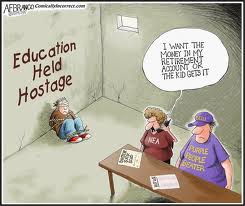
I was angered to hear that teachers through the union have been sending notes home to parents stating that they will not be writing end of year reports for their students. Why? Because they haven’t been paid enough money. Well, any teacher who abides by this nonsensical ruling doesn’t deserve to get paid a cent more!

I believe that teachers should be paid more than they do, but what a teacher gets paid is not as urgent as their duty to put their students first. Teachers and nurses do a fine job and deserve more than what they are earning. But we knew when we signed up for the job that the pay wasn’t fantastic. Yet, we still chose to become teachers and nurses. Why?

I hope the answer is because we felt that making a difference was more important than making a fortune.

The union have blinkered our teachers. Instead of helping us to nurture and inspire our students they have tried to make us selfish and unprofessional. Writing reports is a professional duty. Giving parents current and comprehensive feedback on the progress of their children is of paramount importance. Failing to do so on account of a few dollars is outrageous!

The children are not the ones underpaying us. The parents are not the ones to blame either. Leave them out of this. We are supposed to put them first. We are not supposed to lose sight of what we are trying to achieve here.

The unions are a shameless bunch. They have a record of bullying non member teachers (like myself) and through their greed have turned a sympathetic public well and truly off our cause.

I realise that many (if not all) will disagree with me. I encourage them to do so. This blog is about giving everyone the opportunity to debate the issues that effect education in a robust and thorough fashion.

I just can’t help but agree with the assessment of this parent who wrote of her outrage at receiving one of these letters:

I received late last week from my children’s school indicating that their teachers will not be writing any comments (apart from general behavioural ones) in the end of year reports this year. This means that students will have a very scant record of the year’s work particularly when it comes to specialist areas like LOTE and art. I have a son in prep so his end of year report for this year is pretty important.

I think asking students to forgo feedback for the year so that teachers can get a few more dollars shows a breathtaking lack of professionalism on the part of the teachers and an entitlement mentality that is just extraordinarily arrogant. If I had tried this sort of tactic in the private sector – refusing to complete reports for clients because I wanted more money – I would certainly have been sacked (and rightfully so).

Click on the link to read If Teachers Were Paid More I Wouldn’t Have Become One

Click on the link to read Pressure in the Workplace

Click on the link to read Sick Teachers Need to be Arrested not Fired!

Click on the link to read Teaching Union Wants Porn on the National Curriculum

7 Rules for Raising Kids: Economist

November 4, 2012

Plenty of so-called experts have documented their rules for raising kids. Most of these lists are just common sense, some are controversial and a few are just plain loopy.

But how often do economists chime in with some rules of their own?

Rule 1: Limit Their Options

We don’t offer a weekly allowance. If our kids want anything beyond basics, they have to earn the money. Make sure to set firm limits on TV watching and keep just one small-screen TV in the house (which discourages the adults from watching, too). And impose tight restrictions on silly video/computer games.

Rule 2: Economic Incentives — Offer Plenty of Jobs

Teach kids chores at an early age and pay them reasonable rates. For us, the seemingly endless loads of dishes — about three every day — became the main chore. Even small children can handle dishwasher take-out loads, at least if you first remove the sharp knives and use plastic glasses. And to them, it is a new learning experience. 

Not tall enough? Just have a sturdy stepping stool and allow them to climb up on the counter to reach most shelves. If they still cannot reach safely, let them stack dishes neatly on the counter.

Seasonal outdoor job have included weeding (a great chore for anyone old enough to enjoy digging with a plastic shovel.) Explain why the root of the dandelion and plantain weed has to be dug up. Ten cents can be reasonable per weed, with extra bonus for big roots. Soon enough they learn not just biology but counting, too, as they see how much more they need in order to afford that toy at the store.

If you live near a town center, older children can be offered work running errands — buying a few items at the corner grocery store, picking up the Chinese food or taking a package to the post office.

Rule 3: Bidding/Auctions

For that run-of-the-mill dishwasher job, we typically had a set price — somewhere between $1 and $1.50 per load — on a come-first basis for getting the job. But at times, there were suddenly many kids competing for the dishwasher job. What to do? Economics offers a good solution: bidding, where the kids put in lower and lower bids for the job, ending when nobody wanted to go below the latest bid.

And if nobody wanted to take out the dishes, the remuneration offered would go higher and higher until there was a taker. But the pay never reached ridiculously high levels, for at some point the dishes would just sit around for a bit longer or a parent would do it. (Perhaps surprisingly, there never appeared to be any collusion among the children to try to get the pay up.)

Rule 4: Encourage Your Kids to Come Up with Ideas

Let them use their own imagination of what they can handle and what might be needed for the household. This works especially well with older kids, who might suggest steam cleaning, window washing or an indoor or outdoor paint job.

On one occasion, I remember the project turned out to be an adventure of sorts. It all started with a contractor bid on some various tree work, including a medium-sized tree to be cut down for the sum of $100. The two oldest boys, in their teens, got the bright idea of proposing to do the work themselves at the same price, using our simple hand saw and ladder. Indeed they did, toiling away some fifteen hours or so between themselves but seemed to have lots of fun in the process.

Rule 5: Respect for Property Rights

The family provides basic family games that anybody can use — chess, Monopoly etc. Beyond that, games and toys are viewed as a luxury and can be accumulated by saving up and buying them or maybe receiving them as gifts one day. However, there naturally arises an asymmetry where the older ones possess much more than the younger ones.

Should the oldest be obligated to share with multiple little siblings, or should the younger ones have to wait until they have saved up to buy their own? Some people might argue that, out of fairness, the older child should share his ample possessions. But if he had to work hard, doing dishwasher loads etc. to buy himself the games, is it really so fair that his siblings would share in the fruits of his labor?

The solution? The budding entrepreneurs figured this one out by themselves: a fee for rental.

Parental monitoring might needed if siblings are a bit too young to understand exactly how much they are charged. The fee can be translated into something easy to comprehend, such as the equivalent of dishwasher loads or weeds pulled.

Actually, there are even more benefits to allowing the pay-to-play setup. Expecting a possible rental market with younger siblings, older ones figured they could recoup some of the purchase price for a new game, possibly even making a profit. That made them consider the tastes of their siblings — i.e. potential customers — when considering investing in new games.

And it went even beyond than that in creativity. Our oldest son even conjured up elaborate board games of his very own, with his younger siblings liking them enough to pay to play.

Property rights also mean you are free to sell off a game or toy to a sibling, as long as the buyer fully understands the consequences of the deal.

Rule 6: The Importance of Long-term Contracts

I confess, it was tempting to hold the seven-year-old to his promise made a year earlier that if he could have a younger sibling, he would change the diapers. Alas, they do have to be a bit older to enter into detailed, long-term contracts.

The twelve-year old wanting cats, however, presented itself with a perfect situation for drawn-out contract negotiations. In the end, we committed to pay the financial expenses but he would perform all the routine care. And we were to care for the cats during college while he would take the cats with him wherever he went after college.

Rule 7: Justice: You Do Bad things, You Suffer in the Pocket Book 

Most families seem to practice “time-out” as punishment. But that requires considerable monitoring and fails to give restitution to the victim. And holding long moral lectures is boring, both for the parent and the child.

Imposing fines instead worked very well. Most cases were trivial and routine. Such a minor offense as saying “bad words” resulted in a quick judgement of a small fine to the household.

A few cases though called for a full hearing in “Mom’s Court,” with plaintiff, defendant and possible witnesses. Hit your sibling, and you end up paying a hefty fine for inflicting suffering.

When fights involved only the younger ones, the responsibility for being judge was sometimes delegated to the oldest child, with some limited right to appeals.

So over the years, all these ways have evolved naturally. We’d like to believe it has contributed not just to make the household run a bit easier but also to instill some work ethic and develop a sense of taking initiative. We never had any talk about “self-esteem” or other psycho-babble, but think the children naturally gained self-esteem from learning how to do tasks, even if menial, and see how it helped out the household.

Click on the link to read Hilarious Parenting Checklist

Click on the link to read Hilarious Video of Twin Toddlers Sleeping at the Table

Click on the link to read Dad’s Letter to 13-Year Old Son after Discovering he had been Downloading from Porn Sites

Click on the link to read Potty Training at a Restaurant Table!

Click on the link to read Mother Shaves Numbers Into Quadruplets Heads So People Can Tell Them Apart

Click on the link to read A Joke at the Expense of Your Own Child

Trick, Treat or Cocaine?

November 2, 2012

This is why I wrote a post on safety tips during Halloween:

A man has been charged with possession of class-A drugs after children out trick-or-treating for Halloween were given bags of cocaine.

Snap bags containing the white powder were handed to youngsters taking part in traditional Halloween fun in Royton, Greater Manchester, at around 7.50pm on Wednesday evening.

The bags were taken to police and examined and confirmed to contain cocaine.

Donald Junior Green, 23, has been charged with possession of class-A drugs and is due before Oldham magistrates’ court on Friday morning.

A 21-year-old woman was arrested on suspicion of possession of class-A drugs and was later released without charge.

Superintendent Catherine Hankinson, of Greater Manchester police, said: “The parents and police acted quickly when this report was made, in the interests of public safety.

“We understand this to be an isolated incident.”

Click on the link to read Tips for Keeping Children Safe During Halloween

Click on the link to read Hilarious Parenting Checklist

Click on the link to read Hilarious Video of Twin Toddlers Sleeping at the Table

Click on the link to read Dad’s Letter to 13-Year Old Son after Discovering he had been Downloading from Porn Sites

Click on the link to read Potty Training at a Restaurant Table!

Click on the link to read Mother Shaves Numbers Into Quadruplets Heads So People Can Tell Them Apart


What’s Next? A No Breathing Rule?

November 1, 2012

Let’s examine the hopelessly inept WA Education Department policy on hugging. They have decided to impose a zero tolerance “no hugging rule” for the following two reasons:

1. Some children in the past had been left bruised from a hugging encounter;

2. Some children felt left out.

Firstly, a hug does not lead to a bruise. A bruise comes about from an unruly rough act. Any child who is recklessly rough should be punished according regardless if they were hugging, squeezing, punching or kicking. This consequence should not disqualify genuine “huggers” from showing their affection.

And secondly, a hug is merely a symbol of admiration and friendship. It is not the difference between an inclusive and exclusive school environment. Whilst schools may try to ban outward expressions of friendship, it will never stop marginalised children from feeling left out or isolated. Just because the outward expression of friendship is banned does not change the way a child perceives another child.

Now let’s examine the consequences for contravening this nonsensical, knee-jerk reaction of a policy. A detention is given. That’s right, the child is kept out of class the outrageous act of hugging a friend. This could be the first time in history that a school could be forced to close down because its students were sent from the classroom on mass for showing an appreciation for one another.

Think about it. The child that punches another in the face is given the same punishment as the child who hugs her friend.

They say that school represents a microcosm of society. That was once true, but society is now well and truly a far more friendly and free place to be in.

A MOTHER in Western Australia is demanding an apology from her kids’ school after her 12-year-old daughter was given a detention for hugging a classmate.

Heidi Rome’s daughter Amber was punished at the Adam Road Primary School in Bunbury for giving her friend a quick hug after the school bell rang.

Apparently that violated the school’s no-hugging policy, a “blanket rule” which was brought in last year.

The WA Education Department today confirmed the school’s policy. It was introduced after “excessive hugging” left some students with bruises and others feeling left out.

A teacher told Ms Rome she had to make example of Amber and her friend, who were “caught” hugging just hours after a school address on the ban.

Ms Rome is angry her daughter, a high achiever and a “bright, caring person who her teacher thinks highly of” has become a victim of a “silly, ridiculous rule”.

Hug away children, hug away!


Click on the link to read Mum Taken to Court for Letting Son Miss School to Attend Her Wedding

Click on the link to read Never Mistake Compassion with the Threat of a Lawsuit

Click on the link to read How Do They Come Up With These Ideas?

Click on the link to read Potty Training at a Restaurant Table!

Click on the link to read Mother Shaves Numbers Into Quadruplets Heads So People Can Tell Them Apart

Tips for Keeping Children Safe During Halloween

November 1, 2012

Courtesy of wndu.com:

• Younger children should be accompanied by an adult when “Trick-or-Treating”, older children should go with friends.

• Parents should know the route taken by older children, and stay in neighborhoods known to them.

• Only approach homes that are well-lit, inside and out.

• Children should only enter homes known to them and with prior approval by parents.

• Children should wear reflective clothing and carry a flashlight or glow stick.

• Costumes should always be flame-resistant. Stay clear of luminaries or candle-lit jack-o-lanterns.

• Make sure any masks worn allow for clear visibility and breathing.

• Don’t eat any treats until they can be inspected for tampering. Look for tears and even pin size holes in the wrappers. Don’t eat homemade treats from any strangers. Make sure kids have a good meal before they head out so that they are not snacking on their Halloween treats before they get home.

• Stay in well-lit areas, never take shortcuts or go into isolated areas.

• Where there are no sidewalks, walk close to curb facing oncoming traffic, never with your back to traffic

• Cross only at crosswalks, don’t walk between parked cars.

• Adults should never ask a child for help, they should ask other adults.

• NEVER approach a vehicle, even if it appears unoccupied.

• If someone tries to take a child (or anyone) scream, kick, run away, grab something large like a trash can, light pole, anything that makes it harder to be pushed into a vehicle.

• Report any suspicious people/activity to parents, police.

• Practice with children what to do when in danger.

I wish you a safe and fun-filled holiday!

The Era of Protecting the Criminal and Leaving the Victim High and Dry

October 30, 2012


A scandal erupts where a child care worker allegedly rapes a young child. Were the parents who send their children to this center informed?

Of course not!

That would be acting transparently and we can’t have that! Fancy putting the interests of the victim over the welfare of the accused:

POLICE reject claim by Education Minister Grace Portolesi that they advised against telling parents that an out-of-hours school care program staff member sexually assaulted a child in his care.

Mark Christopher Harvey, of Largs North, was convicted in February this year of unlawful sexual intercourse with a young girl in 2010 while she was attending his out-of-hours school care program in the northwestern suburbs.

However, a mother of children who also used the program – who did not want to be named – has said parents were never informed.

Ms Portolesi emphatically told Parliament yesterday the decision to keep the information from parents had been “on the advice of SAPOL”.

However, a statement released last night by SA Police said the principal of the school involved was “advised by police that she should consult with DECS (the Education Department) to formulate a method of advising the school community what had occurred”.

Ms Portolesi refused to respond to the statement and stood by her earlier comments in Parliament.

The mother who spoke yesterday said her two children only told her there was a problem after a school friend saw Harvey on the TV news.

Her children were interviewed this year by police after raising their own concerns about Harvey.

At no time since his arrest had the school or the  notified parents oEducation Department apologised and no counselling had been offered, the mother said.

“I just want to know why we weren’t advised,” she said.

“I think it’s our right. I feel like a failure as a mother because I was not advised of this and was not able to help my children from the start.”

In Parliament, Ms Portolesi said that Harvey’s employment was “immediately terminated” on discovering his offence.

Opposition education spokesman David Pisoni told Parliament Harvey had been employed by the department for a month after his arrest.

“Why has the community not been officially notified?” he said.

Click on the link to read Just Wait a Minute! This isn’t Madagascar!

Preschool Presidential Debate

October 30, 2012

Whilst I believe that healthy debate is vital for democracy, there are times when politics can lead to division and unruly behaviour.

Click on the link to read Kid’s Cute Note to the Tooth Fairy

Click on the link to read ‘Love’ as Defined by a 5-Year Old

Click on the link to read The Innocence of Youth

Click on the link to read Letting Kids Take Risks is Healthy for Them

Click on the link to read Study Reveals Children Aren’t Selfish After All

Brilliant Intiative for Supporting Hungry Students

October 29, 2012


What a fabulous idea. I hope this initiative takes off:

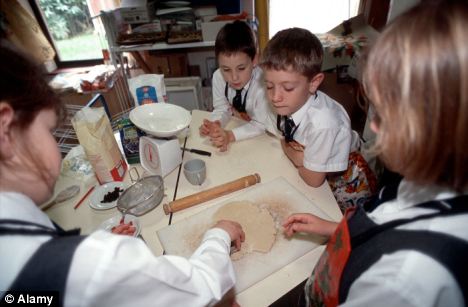
Hungry children from families too poor to eat are being taught cookery at school on Fridays so they have food to take home for the weekend.

Shocking figures have also revealed the number of Britons relying on emergency food handouts has soared to record levels – with charities warning the grim situation is going to get worse.

One in seven children regularly go without a hot meal, according to the Unite union, and in Bradford, West Yorkshire, a handful of schools are getting pupils to cook a high-carbohydrate, nutritious meal before heading home for the weekends.

The Trussell Trust, which runs a nationwide network of 270 foodbanks, said nearly 110,000 people turned to it for help between April and September – compared to 128,697 over the last financial year.

The organisation is expecting to feed more than 200,000 hungry mouths by the end of this financial year, with food prices likely to rise further and fuel bills increase by nearly 10%.