Posts Tagged ‘Parenting’

Parents Failing to Protect their Young Children from Porn

December 9, 2012

comp

The internet has made the job of parents a great deal harder:

More than four in ten parents say that their children have been exposed to internet porn, an official survey reveals.

Almost a third say their sons or daughters have received sexually explicit emails or texts and a quarter say they have been bullied online or on their phones.

Many others have been exposed to websites promoting anorexia, self-harm and even suicide.

The frightening insight is contained in a round-up of responses to a Department for Education consultation on parental internet controls obtained by this paper.

Click on the link to read A Case of Parenting at It’s Worst

Click on the link to read The Most Popular Lies that Parents Tell their Children

Click on the link to read Dad’s Letter to 13-Year Old Son after Discovering he had been Downloading from Porn Sites

Click on the link to read A Parent that Means Well Doesn’t Always Do Well

Click on the link to read A Joke at the Expense of Your Own Child


Girl Writes Cute Note to the Queen

December 7, 2012

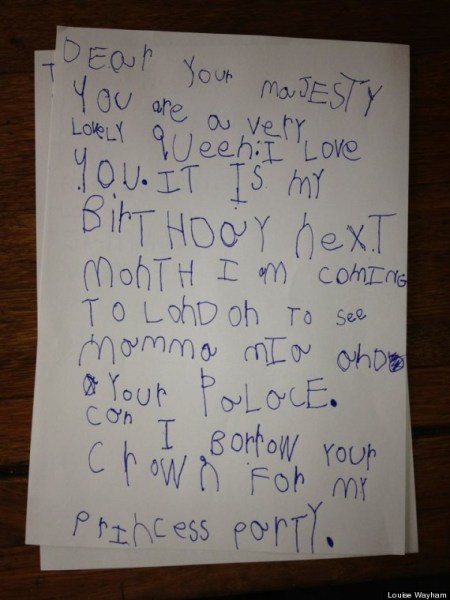
I love a bit of assertiveness. To a child, even the Queen of England is only a letter away.


queen

Click on the link to read Teachars Cant Spel

Click on the link to read This is What Happens When You Rely on Spell Check

Click on the link to read The 15 Most Commonly Misspelled Words in the English Language

Click on the link to read Who Said Grammar Isn’t Important?

Click on the link to read Why Spelling is Important


Teachers Drag a Blind Boy by the Legs Down Corridor (Video)

December 6, 2012

Two teachers physically drag a blind boy down the corridor without realising that their actions are being filmed by the surveillance cameras.

What was the boy’s crime, you may ask.

Did he violently approach his teachers with a knife?

Did he hit them?

Did he threaten the safety of other students?

Nope. All he did was refuse to go to the next class!

Surveillance video showing two teachers dragging a blind 6-year-old by the legs has gone viral and outraged online viewers — and has now brought action from the school district.

In the video, a special education teacher grabs the boy by his ankles and drags him down a hallway on his back. A second teacher joins in to take the boy’s other leg as a third watches from behind.

The Santa Fe educator at primarily responsible for the incident has been placed on administrative leave from the Gonzales Community School, police told KOB.

The teacher told police she physically moved the the boy because he didn’t want to go to another classroom when told to do so, according to the Santa Fe New Mexican. Sgt. Andrea Dobyns of the Santa Fe Police Department said officials do not believe there was malintent.

“We don’t believe the teacher was intentionally trying to hurt the child, but our problem is the blatant neglect for his safety,” Dobyns told KOB.

The boy has complained about head pain after the incident, according to the Santa Fe New Mexican, and both teachers who laid hands on the student face child abuse charges. Live witnesses could face misdemeanor charges for failing to report the incident, the paper reports.

Dozens of families across the country have filed complaints against schools and districts for employing physical disciplinary tactics that have injured or killed children. In an incident much like the one in Santa Fe, a Georgia teacher was caught on surveillance video slapping and dragging a kindergartener across the school gym. That teacher was allowed to keep her job after a 30-day unpaid suspension.

According to a federal report released in March, schools physically restrained students 39,000 times during the 2009-2010 school year, and 70 percent of those cases involved students with special needs. Just 17 states have laws that specifically limit the use of physical discipline.

Lucky this was caught on film. Now that it has, it will allow the authorities to decide (pending a full investigation) whether or not they deserve the privilege of being teachers.

This makes me wonder about all the abuse that must happen that goes undetected. I am starting to favour surveillance cameras in classrooms. Ultimately, a child’s welfare is more important than a teacher’s right to privacy.

Click on the link to read The Most Sickening Abuse I Have Ever Seen a Teacher Commit

Click on the link to read Brawl Between Student and Teacher Goes Viral (Video)

Click on the link to read Teachers Continue to Fail the Common Sense Test

Click on the link to read Useful Resources to Assist in Behavioural Management

Click on the link to read When Something Doesn’t Work – Try Again Until it Does

Strategies for Helping Children Deal With Mistakes

December 5, 2012

mistakes

Courtesy of Dr. Robyn Silverman:

  1. Encourage healthy risk-taking: A sad sight is a child who stands on the sidelines of life because they are so afraid to try and fail. Talk to your children about taking healthy risks that push them out of their comfort zone and provide learning, fun and growth. Support them by saying things like; “The most important thing is that you try!” “If at first you don’t succeed, try, try again!” “You’ll never know unless you try!” and “Everything you love to do began when you took a risk and tried!”
  2. Applaud the chutzpah, effort and character rather than just the result: If it’s all about the win, the A, the goal scored or the lead in the play, fear of trying certainly can follow. Instead, celebrate the courage it took to try. Applaud the effort it took to achieve. Highlight the character it took to persevere and stay focused. Say; “one thing I know about you is that when you decide on a goal, you go all the way. You stay on track and keep going until you get there—and I, for one, think that is AMAZING!”
  3. Let them know mistakes are normal and an important part of learning! Assure your children that making mistakes is OK. Most things are not done perfectly the first time—even when you’re an adult. It doesn’t mean “the end of the world” and there is no reason to be embarrassed. Ask them; what does this mistake teach you? What will you know for next time? What will you know next time that you didn’t know before? Mistakes make you wiser not lesser!
  4. Share your mistakes with them: I’m not talking about full disclosure of every bad thing you’ve done. However, you can share mistakes you made when you were young, how you handled them and what you learned from them. You can also share how these mistakes prepared you for the next time you were faced with a similar challenge or choice. Children often think their parents are perfect—we must show that we are not infallible…and that we can still be successful anyway!
  5. Apologize & show accountability in action: One of the most powerful things we can do when we make a mistake is to show our children how to be accountable for it, apologize, and do what we can to fix the problem we created. By doing so, we show our children that everyone is in charge of “cleaning up their own messes;” even adults. We demonstrate that making things better is within our power and making mistakes is not the end of the world.
  6. Teach them to look back: Young children aren’t really skilled in answering “why” questions so inquiring “why” they did something often results in the fruitless answer; “I don’t know.” Instead, ask these two “what” questions when they make a mistake: “What did you do?” (so they can claim ownership and responsibility) and “What happened when you did that?” (so they can understand cause and effect). When they can tell you what happened and how it affected them and others, they are taking the first step towards being accountable: admitting their contribution to the problem.
  7. Teach them to look forward: Children need to learn to take action when they make a mistake or contribute to a problem. The mistake isn’t the end, but rather, the beginning of the learning.  You get a bad grade on a test—>study longer, get extra help, study differently.  You break something—>apologize, ask for forgiveness, ask how you can make it better. I tell my children; “the most important part of making a mistake is cleaning up your mess once you make it…that’s what it means to have character.” Ask these two questions: “What are you going to do?” and “By when are you going to do it?” When they come up with a plan and have a date or deadline, they are more likely to stay accountable.
  8. Ensure that they have an accountability partner: Whether we are speaking about a child, a teen or an adult, people work best when they are accountable to others. You can be your children’s accountability partner or someone else they know such as an older sibling, grandparent, coach, or mentor can assume that position. Ask them; “How will your accountability partner know that you did what you said you were going to do?” They can tell, text, write, call or check something off a list when the task has been completed.
  9. Create the teachable moment if you have to do it: Many children strive to be perfect. They avoid mistakes at all costs. The older children get without making mistakes, the bigger an impact it can make when they finally do. Sometimes it’s necessary to put your children in a position of making a likely mistake so that they can experience it, rectify it and learn for themselves that mistakes are OK. We want them to make mistakes when stakes are low so they know what to do when they are older and the stakes are higher. Encourage them to try the sport they’ve never tried. Have them take a test that they are likely to fail. Once they don’t succeed, teach them to try again and point out that perfection is not the goal.
  10. Thank them for admitting their mistake and coming to you: It can be tough to admit wrongdoing—so when your children come to you with the truth, commend them for it. You are setting up an expectation on both sides that you want them to come to you when they need help or when things aren’t going right and that you will be there when they are truly in need. Sometimes you will simply need to be a coach—reflecting what they are saying, asking powerful questions and brainstorming possible solutions. Other times you will be a source of advice. Still other times, you may simply be a shoulder to cry on or a wall to bounce ideas off of—our role may not be “savior” but that doesn’t mean we don’t play a role in our children’s learning and growth. We most certainly do.

Click on the link to read Teaching Perfectionists

Click on the link to read The Most Popular Lies that Parents Tell their Children

Click on the link to read Dad’s Letter to 13-Year Old Son after Discovering he had been Downloading from Porn Sites

Click on the link to read A Parent that Means Well Doesn’t Always Do Well

Click on the link to read A Joke at the Expense of Your Own Child

Children with Cancer are Being Bullied by Classmates: Study

December 4, 2012

cancer

I just can’t believe it! There is scarcely anything more tragic than a young child suffering with cancer. How anyone can see this as an opportunity to bully astounds me. What kind of society are we if the results of this study is accurate?

Children with cancer are being bullied by their classmates, losing friends and risk falling behind at school, research suggests.

The illness can significantly disrupt a child’s education as well as their ability to make and keep friends, according to a report by a UK children’s cancer charity.

The CLIC Sargent study reveals youngsters with the disease have been bullied by their classmates because they have lost their hair or gained weight – with some even being told they are going to die.

The report, based on a survey and interviews with children with cancer and parents, looked at the impact of the disease on children in primary education.

More than a third (35 per cent) of parents said their child had been bullied or teased when they returned to school because of their cancer diagnosis, or the effects of treatment, such as losing their hair or gaining weight due to steroids.

One parent told researchers that some of their son’s classmates tried to steal his hat and another said that their daughter was picked on because she had lost her hair and gained weight.

Another parent said: ‘James used to have friends at school but the ones closest to him started to be really cruel and nasty to him when he returned after his main cancer treatment.

‘There were occasions when older kids would laugh at him and tell him he was going to die.’

The report, published to mark Childhood Cancer Awareness Month in the UK, found that almost half of parents (47 per cent) said their child had grown apart from their friends.

The same proportion said their child’s school did not help maintain contact with classmates and friends while their son or daughter was off.

About 15 per cent of parents said their child felt different from their classmates and 13 per cent said their youngster felt isolated and excluded.

The study also reveals concerns about the level of education children receive while receiving treatment, and the help they get when they return to school.

About 70 per cent of parents said their child had some form of education when they were off school but just a third (36 per cent) said the primary school kept in regular contact with the hospital school.

The majority of families said they did not feel they were kept well-informed about their child’s education when their youngster was being taught in hospital.

Of all the stories I have covered on this blog, this one has upset me the most. What are schools doing to help with the social challenges that kids with cancer evidently face?

Surely any school worth their salt will invest a considerable amount of time into students with cancer, ensuring that they are coping with the added stresses and burdens. This would certainly include educating the other students and observing social interactions.


Click on the link to read Humiliation Solves Nothing (Video)

Click on the link to read What Principal Would Ever Approve of this Kind of Bullying?

Click on the link to read Bullies Should Not Be Treated Like Students With Incorrect Uniform

Click on the link to read Social Media: A Playground for Bullies

Click on the link to read Charity Pays for Teen’s Plastic Surgery to Help Stop Bullying


A Toilet Break is a Right Not a Privilege

December 3, 2012

pass

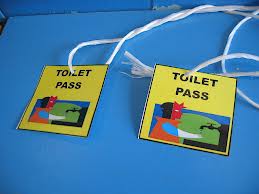
It is absolutely bewildering to me how obsessive some teachers get about toilet breaks. Sure, they can be a disturbance to class and it can get very annoying to have a student ask to go to the toilet only minutes after recess, but you just don’t interfere with a child’s need to go to the toilet.

I wouldn’t dare stop a child who badly needs to go to the toilet from going:

The mother of a seven-year-old boy at an elementary school in Irving, Texas says her son wet his pants in class because he hadn’t accumulated enough good behavior credits to secure a trip to the bathroom.

The teacher at J.O. Davis Elementary rewards students for good behavior with “Boyd Bucks,” reports KXAS-TV5 in Dallas-Fort Worth. Her students can use the restroom outside of three scheduled breaks throughout the day, but the price of each trip is two Boyd Bucks.

Sonja Cross’s son was fresh out of Boyd Bucks on Thursday afternoon when nature called urgently. When the boy’s teacher denied his request to use the facilities, he sat back down.

“He tried to hold it as much as he could, but he just couldn’t,” Cross told the NBC affiliate. “He came home from school, and he was crying and really upset.”

“I was absolutely appalled,” Cross told the NBC affiliate. “I could not believe it.”

Cross initially took up her complaint directly with the teacher, who is reportedly in her first year with the school. However, Cross said, she wasn’t satisfied with the outcome of that conversation.

“Originally when I first spoke with the teacher, she was just going to show my son special treatment, but then I said, ‘That’s just not good enough. I need for you to stop this for all the children,’” Cross explained.


Sticking Troubled Children in Isolation Booths is a Disgrace

December 2, 2012

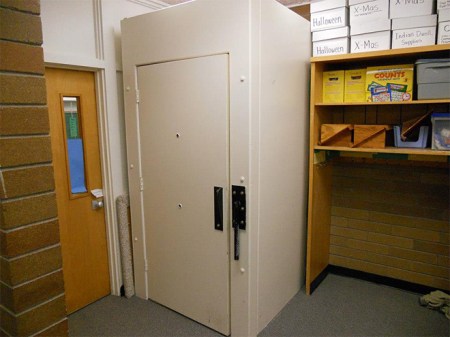
Besides the fact that isolation booths represent the height of cruelty, one wonders how in the age of instant lawsuits and strict health and safety regulations such a monstrosity could ever be used by schools.

Can you imagine the lawsuit that would arise if a child got overheated or had a panic attack in one of those things?

And looking at the contraption, I can’t help but wonder how expensive it would be to get one. How can schools complain about funding when they spend their finances on a booth that will likely emotionally scar its students?

A concerned mother who posted photos of an “isolation booth” in a Longview elementary school on Facebook said she wanted other parents to know how the school uses the space.

Ana Bate said her son saw the booth in use at Mint Valley Elementary School, and had questions.

The school principal said the padded room is used for students who have behavioral disabilities.

Parents of eight or nine students at the school have given permission for their kids to be placed in the booth if necessary.

“How come they’re not providing documentation about how this ‘therapeutic booth’ is beneficial?” said Bate. “Show me some real numbers. Show me something from the medical community that says more times than not and all the documentation that backs it up. Don’t tell me ‘well, their parents said we could do it.’”

The superintendent of Longview Public Schools said the booth is an effective therapy tool for students with special needs, and has been for years.

District spokeswoman Sandy Catt told KATU News students whose parents gave permission are placed in the booth when they are acting in a way that could be harmful to themselves or others.

None of the parents who gave the district permission to place their kids in the booth has complained, Catt said. But because of the many complaints from other parents, the district is reviewing how the booth is used.

“I believe that room has served a good therapeutic purpose and there may be improvements,” said Catt. “I think we need to look at the information that’s been gathered to determine where to go from here.”

Therapy? You have got to be kidding! Successful therapy changes habits and behaviours. This doesn’t change the way children behave. All this does is keeps them in a holding cell so that the teacher can deal with the problem easily and expediently.

But guess what? Education isn’t just about what’s easiest for the teacher. Sure. it’s important that teachers get the support that they need to handle difficult situations, but there is something just, if not more important, than the teacher’s welfare – the students’ welfare.

These booths need to be tossed in the scrap heap. They need to be replaced with people. Councillors, Principals, Aides etc.

An isolation booth further reinforces that the child is different and a problem. Most of these children act the way they do because of real issues they are confronting in their lives. These issues can only properly be worked through by people, not booths.

booth

Click on the link to read The Dog Eat Dog Style of Education

Click on the link to read Problem Kids, Suspensions and Revolving Doors

Click on the link to read You Don’t Get Respect From Punishing Every Disorderly Act

Click on the link to read When Something Doesn’t Work – Try Again Until it Does

Humiliation Solves Nothing (Video)

December 1, 2012

The popular method of punishing disobedient students with humiliation is a very poor one. It doesn’t bother to get to the crux of the problem and it turns human beings who have made poor choices into show ponies.

I expect that the Principal that dealt with a fistfight by handcuffing its student fighters to each other in a public place, will be praised for his innovative approach. Whilst I love innovation in education, I will not be among those that applaud this stunt.

A first-year principal in Mesa, Ariz., has been thrown into the spotlight for employing a controversial — yet apparently effective — method of student discipline.

When two Westwood High School students got in a fist fight during class this week, Principal Tim Richards gave the teens an choice: suspension or public humiliation — by sitting next to each other holding hands in the school courtyard.

The students chose the latter, hanging their heads as peers watched and taunted them from all sides. Westwood students found the stunt funny.

“Kids were laughing at them and calling them names asking, ‘Are you gay?'” student Brittney Smyers told ABC 15.

My first objection to this method is that it continues the cycle of bullying. By parading these two publicly and submitting them to public humiliation and taunting, the punishment becomes nothing more than a case of turning the ‘bullies’ into the ‘bullied’. Any sensible and authentic punishment wouldn’t have exposed these 2 to the hectoring that they were subjected to.

Additionally, it is the schools job to turn its students into responsible and respectful human beings. Any consequence has to be measured against this objective. Does humiliation make a person want to make good decisions? Does it make them regret their actions? Prevention is important but changing ones mindset is much more important.

Is that easy to achieve? Of course not. But at least it isn’t the cop-out a public humiliation is.

humiliation

Click on the link to read What Principal Would Ever Approve of this Kind of Bullying?

Click on the link to read Bullies Should Not Be Treated Like Students With Incorrect Uniform

Click on the link to read Social Media: A Playground for Bullies

Click on the link to read Charity Pays for Teen’s Plastic Surgery to Help Stop Bullying
Students are Continually Treated Like Prisoners

November 29, 2012

One of my biggest goals since entering teaching was that my students appreciate my classes enough to actually want to attend them.

My dream is to have my students wake up on a school morning and say:

“Hey, I’ve got school today, and that’s OK”.

Fundamentally, it is the job of the educator to teach well enough to engage their students. We have to do better than forcing our children to attend school, we have got to find a way to make them feel comfortable with going out of their own volition.

Fitting GPS tracking devices to their IDs is sending the message that our system has given up trying. It has decided that it hasn’t got the time, energy or creativity to make school palatable, so it has no choice but to make prisoners out of the school population.

Students will therefore be getting the following message:

1. School is tedious;

2. The school administration think of us like prisoners;

3. The school administration don’t trust us;

4. We ate just a number. Just a blip on a computer screen. We are not unique, special or important. Just a sheep being watched over by a duty bound shepard.

To 15-year-old Andrea Hernandez, the tracking microchip embedded in her student ID card is a “mark of the beast,” sacrilege to her Christian faith – not to mention how it pinpoints her location, even in the school bathroom.

But to her budget-reeling San Antonio school district, those chips carry a potential $1.7 million in classroom funds.

Starting this fall, the fourth-largest school district in Texas is experimenting with “locator” chips in student ID badges on two of its campuses, allowing administrators to track the whereabouts of 4,200 students with GPS-like precision. Hernandez’s refusal to participate isn’t a twist on teenage rebellion, but has launched a debate over privacy and religion that has forged a rare like-mindedness between typically opposing groups.

Click on the link to read What’s Next? A No Breathing Rule?

Click on the link to read Never Mistake Compassion with the Threat of a Lawsuit

Click on the link to read How About Punishing the Students Who do Something Wrong?

Click on the link to read Potty Training at a Restaurant Table!

Click on the link to read Mother Shaves Numbers Into Quadruplets Heads So People Can Tell Them Apart

Our Young Children Shouldn’t Even Know What a Diet Is?

November 28, 2012

Message: Negative imagery painted with words like these are looked at by 500,000 people per year, a study has found

Our generation took body consciousness to a whole new level, with quite devastating results. We were taught to judge others not by the breadth of their character but by the size and shape of their bodies. It saddens me that this obsessive desire to look a certain way has seemingly overridden the desire of being a good person, resisting to gossip, being truthful and loyal to the people around us and acting with integrity. We live in a society where people would sell their souls for a preferred dress size and confidence is based on form and complexion over character development.

What has this philosophy provided us with?

Depression, peer pressure, cosmetic surgery addiction, diet crazes, suicide, bullying, anorexia and bulimia.

And what are we doing about it?

Passing the sickness on to our very young:

The internet is awash with pro-anorexia websites which thousands of girls – some as young as six – are using to compete against each other in deadly starvation games, a study has found.

More than 500 of these ‘gruesome’ sites exist and encourage vulnerable young women to barely eat and just drink coffee, smoke and take diet pills to look like a ‘goddess’.

Using the phrase ‘starving for perfection’ they say users should eat no more than 500 calories a day – the recommended level is 2,000 for women and 2,500 for men.

They also include ‘thinspiration’ sections with images of super-slim women and in the last year 500,000 girls have admitted visiting them, and one in five were aged between six and 11.

University Campus Suffolk in Ipswich has carried out research into the issue and found than many of these websites are set up by people with anorexia and other eating disorders.

‘It starts with an individual who wants to share their experience and as they get a following they set themselves up as almost Goddess-like,’ researcher Dr Emma Bond, senior lecturer in childhood and youth studies said.

‘When I started this research last January I came across a website set up by a girl who was disgusted with herself because she had put on a few pounds at Christmas. She planned to fast for three days and regain control.

‘In under two hours, she had 36 followers saying things like “You’re wonderful, you’re an inspiration to me, I’m only fasting because of you”.’

Some of the people are even posting pictures of themselves in very few clothes on thousands of blogs and on social media like Twitter.

Official figures show that one in 200 women and one in 2,000 men have anorexia – which means they starve themselves or exercise excessively to stay slim – although some experts believe the true number is much higher.

Around eight per cent of women and one per cent of men develop bulimia at some point. They binge on excessive amounts of food then make themselves sick or use laxatives to stop gaining weight.

Many sufferers of eating disorders hide their problem from family and friends by pretending they have already eaten to avoid meals and wearing baggy clothes to conceal their skeletal shape.

Doctors believe that anorexia or bulimia is more common in people who are perfectionists, tend to worry a lot or are often depressed.

Click on the link to read Charity Pays for Teen’s Plastic Surgery to Help Stop Bullying
Click on the link to read Most People Think This Woman is Fat

Click on the link to read It’s Time to Change the Culture of the Classroom

Click on the link to read Sparing Young Children the Affliction of Body Image