Posts Tagged ‘kids’

Eight Fundamentals that Every Student Deserves

November 17, 2013


bag

Courtesy of the great site justintarte.com:

1). Every student deserves to have someone who won’t give up on them; someone who will encourage them, support them, and reassure them that there are those who believe in them. #youmatter

2). Every student deserves to have the appropriate tools and resources available to them that will allow them to find success. We are rightfully obligated to provide the necessary tools for our students, and this must be a part of the bigger picture when it comes to available resources and personnel.

3). Every student deserves to have similar and equal opportunities that others may have; the opportunity gap we have in education is broadening the gap between the ‘educated’ and the ‘non-educated.’ We can’t continue to allow this to happen when we are talking about access to learning.
4). Every student deserves the benefit of the doubt. Far too often we assume students are doing something wrong and not doing what they are supposed to be doing. When we assume, we tend to be incorrect.

5). Every student deserves a teacher who believes that what’s been done in the past is not the only factor when determining what to do in the present and what to do in the future. The choices we make affect our students… we can’t hold them back because we are scared to do something we aren’t comfortable with.

6). Every student deserves the opportunity to design, create, and explore. We must create a safe environment for our students to feel comfortable with doing things they have never done before. This level of comfort and trust makes everything else possible.

7). Every student deserves to have the best teacher. Far too often we put our newest and least experienced teachers with our most challenging and most at-risk students. Shouldn’t we have the best teachers and most experienced teachers working with our students who can most benefit from their skills?

8). Every student deserves a teacher who is willing to take a risk and take a chance. Sometimes it’s appropriate to play it safe, while other times it’s necessary to take a chance and step outside the box. Students all need someone who is willing to be different and someone who is willing to travel this journey with them…


Click on the link to read 21 Reasons to Become a Teacher

Click on the link to read  25 Amusing Signs You Might Be a 21st Century Teacher

Click on the link to read  20 Questions Teachers Should Be Asking Themselves

Click on the link to read School Official Allegedly told a Teacher to Train her Breasts to not Make Milk at Work

Click on the link to read 12 Tips for Managing Time in the Classroom

How to Spend Time With Your Kids When You Have No Time

November 15, 2013


time

In Australia many working parents rely on before and after school care facilities to help supervise their children while they go off to work. Before care starts at about 7.30 am and after school care finishes as late as 6pm – quite a long day!

It must be hard for parents who have worked slavishly for the entire day to afford the time and energy to spend ‘quality time’ with their children (taking into account preparing dinner, washing up, bathing the kids and helping with homework).

Here are 4 suggestions courtesy of Erin Kurt:

1. One-on-one time: Alone time with your child is best when you are doing something you both enjoy. With one family it may be the time when Dad takes the baby so Mom can spend time with the older child. This could mean going to a movie, going to the local theater to see Cinderella, or just sitting at the park on a bench and talking. The frequency of one-on-one time is up to you, but the children I interviewed said at least once a month is the minimum. If you are a single mother with more than one child you could arrange it so that each Saturday you spend quality time with one of your children and the last Saturday of the month you spend quality time as a family.

Marking your dates down on a calendar is a great idea and shows your children you make this time a priority.

2. Integrate Together Time into Your Daily Schedule: Children love to help. Do you have a mailing to do? Have them put the stamps on the envelopes. Need to go shopping? Make grocery shopping “fun time” with you. Need to make dinner? Let them help you by contributing to the preparation process. While it might be messier and it may time more time in the beginning, you will see that the children will become your greatest helpers and they will look back and remember that “before dinner” was always special time with you.

3. Phantom Time: Don’t have a moment to spare until about 3 a.m.? You can still let your children know that you care. Write notes and drop them into their lunch boxes. This was one of the top ten things children told me made them feel loved and cared for by their parent. Other ideas would be to record a short video for them using a camera and leaving it for them at the breakfast table. Be creative here!

4. Break time: Everyone is busy. Some parents are busier than others. Slide in a “break time” so that you and your children can spend 15 minutes or a half hour together. Set a timer if you need to so that everyone knows when “break time” starts and finishes. Give warnings to your children when 2 minutes are left so that it doesn’t come as a surprise. Don’t even have break time available? Wake your child up 15 minutes early so that you can spend a little extra time doing something fun in the morning. You might not think that 15 minutes is any significant time at all, but to a child, it is 15 extra minutes with you.

Spending time with your children provides them with opportunities to learn and to be heard. Most of all, it provides you and your children with time to connect. It’s these connections that make your children feel loved. So leave the beds unstripped for another few minutes and put the coffee on an automatic timer. Take those extra moments to spend with your children. When you look back, you will be thankful for the memories.


To be honest I find the 4th suggestion a bit depressing. Setting a timer so that your child knows when their time with you is up sounds very wrong.


Click on the link to read The Meaning of Being a Father (Video)

Click on the link to read 24 Signs You Are a Mother

Click on the link to read A Father’s Priceless Reaction to his Son’s Report Card (Video)

Click on the link to read A New Way to Get Kids to Brush Their Teeth

Click on the link to read Tips to Help Parents Control Their Kids’ TV Habits

Click on the link to read 10 Steps Parents Can Take if their Child is Being Bullied

Click on the link to read School Holidays are Very Hard for Many Parents (Video)

Tips to get Children to Eat Better and Exercise More Often

November 10, 2013


hole

Courtesy of leading nutrition experts:

Plan healthy, tasty breakfasts. Offer children a lean protein at breakfast such as eggs, string cheese, Canadian bacon, turkey bacon or hummus, Sothern says. Serve them fresh fruit such as berries. Or whole-grain cereal with nuts is another option. Top off the meal with a glass of fat-free or 1% low-fat milk or a carton of low-fat yogurt, she says.

Discourage mindless munching. Don’t let kids eat in front of the TV or computer and gradually restrict all eating and drinking, except for water, to the kitchen counter, table or dining room, Sothern says.

Get them involved. Take kids to the grocery store. Skip the soda, cookie and candy aisles and have children select one fruit and vegetable to try each week. At home, include children in lunch and dinner preparation, Sothern says.

Reinstate family traditions. Insist on family dinners, set the table with real cloth napkins, light candles and play soft music in the background to encourage discussion. Compliment the children on their healthy food selections, cooking and manners, she says.

Get some shut-eye. Allow kids no more than one hour of media time before bedtime. Try to make sure they get the required 9 to 10 hours of sleep a night. Research shows that lack of sleep equals unwanted weight gain, behavioral problems and difficulty concentrating the next day, Sothern says.

Offer a nutritious starter course. Pennsylvania State University research shows that adults who eat a broth-based bowl of vegetable soup; a large, low-calorie, lettuce-based salad; or an apple before a meal consume about 110 to 190 fewer calories at the meal, including the calories in that first course. The same idea could work with kids, says Barbara Rolls, a professor of nutritional sciences at Penn State. They’ll not only fill up on fewer calories, but they’ll be eating a healthy first course.

Trick their tummies. Add their favorite fiber-rich vegetables — such as spinach, zucchini, yellow squash, broccoli, carrots, peppers and onions — to lasagna, casseroles, pasta dishes and pizza. The veggies lower the calories and increase the nutrients in each bite, Rolls says. Also increase the proportion of vegetables in stir-fry dishes, broth-based soups and stews and extra vegetables to sandwiches. Substitute vegetable or fruit purees for half or even two-thirds of the added fat in quick breads and muffins, she says.

Use smaller plates. A study of first-graders showed that most kids served themselves more at lunch (about 90 calories more) when they used adult-sized dinner plates compared with using child-sized plates, which is about the size of an adult salad plate. “We know that adults over-serve themselves with larger plates, and this study says the same holds true for children. Using smaller plates at home may promote healthy child portion sizes,” says Jennifer Orlet Fisher, an associate professor of public health at Temple University in Philadelphia.

Teach kids to dance. Tell them you’re playing Dancing with the Stars and let them waltz, do the cha-cha-cha or swing dance, Sothern says. This active time will burn four to five times more calories than sitting and improve their overall health.

Swap sedentary time for active time. Kids only burn 30 to 50 calories when they are sitting for an hour, but they burn 400 to 500 calories in an hour if they are playing tag, dancing or doing field sports, she says. The government’s physical activity guidelines say children and teens should do an hour or more of moderate-intensity to vigorous aerobic physical activity each day. Sothern recommends they do at least two hours of physical activity a day.

Play outside with your children. Moms and dads should teach their kids to throw, pitch, catch, pass, jump and ride a bike because their kids may not be learning these important skills at school.

Encourage physical-activity breaks. “There is a lot of evidence that kids should not sit still for more than 60 minutes at a time,” says Penny Gordon-Larsen, a professor of nutrition at the University of North Carolina, Chapel Hill. When kids are doing their homework or on the computer, they need to get up regularly and move around or consider standing while they are working, she says. Every little bit of activity counts. Have them do at least 20 to 30 minutes of physical activity after school, such as shooting hoops, biking, playing soccer, jumping rope, dancing, walking or playing a fitness-related video game, Gordon-Larsen says.

Steer clear of sugary drinks. This includes regular sodas, sweet teas, high-calorie specialty coffees, energy drinks and juices, Gordon-Larsen says. “It’s such an easy way to cut out excess sugar and calories,” she says. Instead offer water and low-fat milk, even low-fat chocolate milk.


Click on the link to read 10 Tips for Promoting Kids’ Healthy Eating

Click on the link to read my post on Tips For Parents on Packing a Healthy Lunch Box

Click on the link to read my post on Getting Kids to Eat Healthy Food

Click on the link to read my post on 6 Strategies for Promoting Healthy Food to Kids.

Click on the link to read 5 Ways to Get Kids Active

Click on the link to read Food Giants Marketing Unhealthy Kids Foods as Healthy
24 Signs You Are a Mother

November 7, 2013

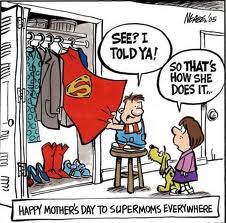
mom

A very perceptive list by Ulli Appelbaum and Mark Simmons:


1. Instead of running from projectile vomit, you run towards it.

2. You do more in seven minutes than most people do all day.

3. Happy hour has become the 60 minutes between your kids going to bed and you going to bed.

4. A night of drinking requires more recovery time than minor surgery.

5. A glass of wine counts as a serving of fruit.

6. You have mini-therapy sessions all day long with anyone who will listen.

7. Going to the grocery store by yourself is a vacation.

8. You can experience heaven and hell at the same time.

9. You think of physical pain on three levels: pain, excruciating pain and stepping on a Lego.

10. You have the ability to hear a sneeze through closed doors in the middle of the night, two bedrooms away, while your SO snores next to you.

11. You’d rather have a 103 degree fever than watch one of your kids suffer with it.

12. You’d rather go to sleep than have sex.

13. A 15-minute shower with the door locked feels like a day at the spa.

14. Peeing with an audience is part of the daily routine.

15. You use baby wipes to clean up random spills and the dash of your car.

16. You lock yourself in the bathroom and pretend to have diarrhea just to get a break.

17. You love Moms’ Night Out and Date Night with the Hubs.

18. You have a secret chocolate stash because frankly, you’re sick of sharing.

19. You’ve been washing the same load of laundry for three days because you forgot to dry it.

20. You realize you’ve been watching Nick Jr. alone, even though your kids have been in bed for over 30 minutes.

21. You can cook dinner, breastfeed, talk on the phone and yell at the kids, all without breaking stride or missing any of the TV show you are watching.

22. You get more excited about the Mini Boden Catalogue than J Crew’s.

23. You decide to stick with your car for the next decade because a) you can’t afford to switch and b) you haven’t found a car wash that knows how to get all the milk stains and glitter removed.

24. By the end of the day, brushing your teeth feels like a huge accomplishment.


Click on the link to read A Father’s Priceless Reaction to his Son’s Report Card (Video)

Click on the link to read A New Way to Get Kids to Brush Their Teeth

Click on the link to read Tips to Help Parents Control Their Kids’ TV Habits

Click on the link to read 10 Steps Parents Can Take if their Child is Being Bullied

Click on the link to read School Holidays are Very Hard for Many Parents (Video)

Click on the link to read 20 Reassuring Things Every Parent Should Hear

Click on the link to read 10 Tips for Nurturing Independence Among Children

Proof that the Goodness of Our Youth Cannot be Underestimated (Video)

November 2, 2013


kayla

What an incredible gesture. A far cry from the selfish, spoiled, competitive animals our kids are children are often portrayed as:


Click on the link to read Teaching Kids to be Competitive Often Leads to Needless Pain

Click on the link to read Two High School Athletes Brawl During Race (Video)

Click on the link to read Tips for Teaching Your Children How to Lose

Click on the link to read Preparing Students for the Real World

Click on the link to read Is Competition in the Classroom a Good Thing?

The Normalisation of Cyber Bullying

October 21, 2013


scalp

Cyberbullying has become a normal practice and it’s all our fault. Parents, teachers and school administrators have completely dropped the ball on this one. Cyberbullying is a significant issue and it requires all its stakeholders to assume responsibility and work together. We must focus on this issue before it gets even worse:

More than half of children and young people in England accept cyber-bullying as a part of everyday life, a new survey has found.

But parents and teachers say they do not feel they are equipped to deal with the growing problem of internet abuse.

Campaigners warned that cyber bullying had become ‘an everyday problem for today’s children’ and demanded better education to tackle the phenomenon.

More than half of children polled – 55 per cent – said cyber-bullying had become a part of life for children and young people, while 60.5 per cent of parents also said it had.

Keeping their children safe online is a major worry for parents, with 49 per cent complaining that the amount of access their child has to the internet leaves them struggling to monitor their behaviour online.

And 51 per cent say this makes them scared for the safety of their child.

However, the poll suggests that many families would struggle to respond if their child did fall victim to internet abuse.

Some 40 per cent of parents said they would not know how to respond if their child fell victim to cyber-bullies or how to set up filters on computers, tablets and mobile phones that could protect their children.

There were growing calls for online safety to be taught in more schools, with 69 per cent of teachers and 40 per cent of young people calling for it to be included in the national curriculum.

Nearly half of teachers – 43 per cent – admitted their school did not currently teach anything about cyber-bullying and online safety and 44 per cent admitted they did not know how to respond to cyber-bullying.

Almost a third – 32.1 per cent – of young people said that teaching schools, parents and children about internet safety would be the biggest step that can be taken to tackle cyber-bullying, yet just a fifth of children felt they were taught enough about it at school.

The major new survey, commissioned by the Anti-Bullying Alliance, underlines the struggle many families face trying to protect their children on the internet.

Click on the link to read The Explosion of Online Bullying

Click on the link to read The Researchers into Cyberbullying Should Review Their Findings

Click on the link to read A Positive Approach to Tackling Cyberbullying

A New Way to Get Kids to Brush Their Teeth

October 7, 2013


OK, perhaps this wont catch on:

These unique photos capture the moment a boy has his teeth picked clean by amazing underwater shrimp.

These fascinating creatures spend their lives diving inside the mouths of fish to remove the parasites that lurk there.

Russell Laman imitated the behaviour of the surrounding fish swarm to entice the cleaner shrimp into his mouth whilst snorkelling with his father Tim Laman in Bali, Indonesia.

The 13-year-old queued with the waiting fish and then opened his mouth when the shrimps came near.

The shrimp then incredibly started to clean Russell’s mouth and remove food from between the boys teeth whilst Tim took photographs.

Russell Laman, from Lexington, Massachusetts, said: ‘It felt like tiny little dentists picking away at my teeth and scuttling around my mouth, it tickled a little but not too badly.

‘I had watched fish getting cleaned at cleaning stations before and decided to try it out myself.

‘I thought it would be really cool to experience shrimp in my mouth first hand.

Russell who has been diving with his father for seven years is unfazed by the dangers of holding his mouth open underwater.

He learnt how to get the shrimp out of his mouth when he needs to breathe, by imitating the behaviour of the fish.

Russell said: ‘I observed that the shrimp are always keeping an eye on the mouth of the fish and as soon as it starts to close they shoot out.


teeth1


Click on the link to read Tips to Help Parents Control Their Kids’ TV Habits

Click on the link to read 10 Steps Parents Can Take if their Child is Being Bullied

Click on the link to read School Holidays are Very Hard for Many Parents (Video)

Click on the link to read 20 Reassuring Things Every Parent Should Hear

Click on the link to read 10 Tips for Nurturing Independence Among Children

Click on the link to read Seven Valuable Tips for Raising Your Child’s Self-Esteem

Click on the link to read Top Ten Compliments Your Children Need to Hear

The Call to Stop Kids From Reading Books they Actually Enjoy

October 7, 2013

The Hunger Games

At a time when just getting kids to read a book is the stuff of small miracles, why would anyone want to make books less accessible to children. I am sure The Hunger Games will never go down a classic of literature but I really don’t care. The objective of books is to entertain, inspire and transport its readers to distant places, cultures, traditions and experiences.  If the children of the day find that The Hunger Games achieves this goal then its up to us, the educators, to get in touch with them rather than the other way around.

I am a literature major at University. I studies every period of literature dating back from Chaucer onwards. And guess what? I find many so-called classics to be utterly tedious. My tutor was gobsmacked when I told him that I found Robinson Crusoe boring.

“How can you not like Robinson Crusoe? It is the most printed book behind the bible!”

His argument didn’t wash. I am never going to like a book just because it is deemed a classic or it has had multiple reprints.

And the same goes with Shakespeare. People are aghast when I say that Shakespeare should not be a compulsory fixture in the high school curriculum. How many people that strongly believe in studying Shakespeare in High School have a copy of one of his plays on their bedside table? How many of them are ever likely to read Macbeth or Hamlet for pleasure? When is the last time you ever had a deep urge to reread The Tempest?

We are hypocrites if we subject children to the types of books we are glad we no longer have to read ourselves. If we are ever going to get children to read we must employ the same criteria for reading as we have when we search for a book. Our students must find the subject matter topical, interesting, amusing, dramatic and most of all – ENTERTAINING:

Joanna Trollope says children should be taught literary classics in school because they spend too much time reading fantasy books, such as The Twilight Saga. 

The novelist said fantasy teen fiction, such as the hugely popular Hunger Games series, fails to give children an insight into reality or guidance in moral dilemmas. 

The Rector’s Wife author said youngsters should be encouraged to read the likes of Jane Austen, George Eliot and the Bronte sisters.

However, she admitted her 12-year-old grandson loves The Hunger Games, about a post-apocalyptic nation in which two children are selected to compete to the death in an annual televised battle.

Trollope told The Sunday Times: ‘I feel children are missing out on an enormous amount.

‘The consolation to be found in the classics is absolutely infinite and greater than fantasy novels. Fantasy doesn’t relate to the real world.’

The author, who used to be a teacher, said using popular culture can be a useful tool to lead children towards the classics.

She said she gave her class The Beatles lyrics to study in one English poetry class before giving them Robert Frost to read.

Last year, the three Hunger Games books were in the top 10 bestsellers list with more than 2.1million sold.

Click on the link to read The Classic Children’s Books they Tried to Ban

Click on the link to read How Spelling Mistakes can Turn a Compliment into Something Quite Different.

Click on the link to read Why Spelling is Important at Starbucks

Click on the link to read The Ability to Spell is a Prerequisite for Getting a Tattoo (Photos)

Click on the link to read This is What Happens When You Rely on Spell Check

Click on the link to read Hilarious Menu Items Lost in Translation

Click on the link to read The 15 Most Commonly Misspelled Words in the English Language

Click on the link to read Who Said Grammar Isn’t Important?

Kids Asked About Social Media: Funny Clip

September 30, 2013


Am I the only one that is glad there are still children around that have no idea what Facebook is?


Click on the link to read 5 Tips to Help Your Children Use Social Networking Safely

Click on the link to read Monitoring Children’s Social Networking Activities Proving too Difficult for Parents

Click on the link to read Parents and Teachers Should Not Be Facebook Friends

Click on the link to read Introducing the App that will Give Parents Nightmares

Click on the link to read Facebook’s Ugly Little Secret

Click on the link to read Who Needs Real Friends When You Have Facebook Friends?

Tips For Kids in Dealing With Exams

September 30, 2013

exam2I must confess to being quite overwhelmed when sitting for exams. I often froze and perhaps occasionally sabotaged a few times by allowing the mental demons to overcome me.

I hope these tips help others to manage their exam stresses:


Dr Friedland explains that in order to fail forward, people need to learn from their so-called failures and use them as stepping stones to future success.

“I’d advise students to throw away all thoughts of a number and change their definition of success, so instead they strive to give their studies their all and know they’re going to walk away having learned something,” he says.

“Don’t be driven by self-esteem. Instead let yourself have some self-compassion. Look after yourself, treat yourself well – success comes from that.”

Encourage them to look at the bigger picture

Ask a student to identify the most important thing they hope to achieve from an exam, assessment or the academic year, and they’ll say a good mark.

Dr Friedland admits it can be hard for young people to see the wood for the trees because getting a good score can seem like the most important thing in the world – their defining achievement.

He advises parents to gently help their kids see how other aspects of their life are important and he alludes to that oft-quoted mantra that it’s about the journey, not the destination.

“Encourage them to reflect on what truly matters in their life. Help them see that getting a great big number won’t necessarily lead to happiness and fulfilment, but the process of trying to get it might if they’re learning along the way and also nourishing themselves,” he says.

“Going into an exam with a ‘do or die’ attitude is counter-productive. The stress will become overwhelming and few people can thrive if they’re feeling like that. Give each exam the importance it deserves in the whole bigger picture.

“We all need to focus on taking care of ourselves – mind, body and soul.”

Click on the link to read The Harmful Effects of Yelling at Students

Click on the link to read First Prize for a Primary School Raffle: A Rifle

Click on the link to read Another Reason why Television is Unealthy for Children

Click on the link to read The Spoiled Twins with their £70k First Birthday Party (Photos)

Click on the link to read 5 Tips to Help Children Cope With Stress

Click on the link to read Seven Valuable Tips for Raising Your Child’s Self-Esteem

Click on the link to read Top Ten Compliments Your Children Need to Hear