Engaging in Gossiping Isn’t as Pleasurable as it Seems

August 15, 2013


face

Not enough is done to confront the issue of gossiping at classroom level, even though it is a significant factor in bullying (cyber related bullying in particular). Gossiping does monumental harm in the classroom. It is divisive, negative and presents enormous problems for a teacher trying to improve the mood of the class and confidence levels of each student.

It is important to draw attention to a recent study showing that engaging in gossiping isn’t as pleasurable as it first seems:

It is used by millions of people to stay in touch with friends and family.

But far from brightening their day, Facebook could be making its users more unhappy.

Scientists have found the more time individuals spend on the social networking site, the worse they subsequently feel.

More than one in three Britons use Facebook every day, with 24 million logging on to share their latest goings on.

‘On the surface, Facebook provides an invaluable resource for fulfilling the basic human need for social connection,’ said lead researchers Dr Ethan Kross, a psychologist at the University of Michigan.

‘But rather than enhance well-being, we found that Facebook use predicts the opposite result – it undermines it.’ Research carried out earlier this year at the University of Chester suggested Facebook friends are no substitute for the real thing.

It found people are happier and laugh 50 per cent more when talking face-to-face with friends or via webcam than when they use social networking sites.

And the current study backed these findings, with participants who had direct interactions with other people feeling better over time.

In contrast, the more individuals used Facebook during the period, the greater the reduction in their life satisfaction levels.

‘This is a result of critical importance because it goes to the very heart of the influence that social networks may have on people’s lives,’ said co-author John Jonides, a cognitive neuroscientist at the University of Michigan.

The research, published in the journal Public Library of Science ONE, looked at the browsing habits of 82 young adults, all of whom had smartphones and Facebook accounts.

Fun Facts about Children

August 15, 2013


cat

Courtesy of 10-facts-about.com:

Fact 1:
The average age children begin to use a microwave is seven.

Fact 2:
A 3-year old Boy’s voice is louder than 200 adults in a crowded restaurant.

Fact 3:
Fathers tend to determine the height of their child, mothers their weight.

Fact 4:
On average, a 4-year-old child asks 437 questions a day.

Fact 5:
Watching television can act as a natural painkiller for children.

Fact 6:
In ancient Greece, children of wealthy families were dipped in olive oil at birth to keep them hairless throughout their lives.

Fact 7:
The great pharaoh Ramses II who fathered over 160 children.

Fact 8:
Children’s kneecaps only start to turn bony at 3 years of age, until that they are made of cartilage.

Fact 9:
Both boys and girls in 1600s England and New England wore dresses until they were about seven years old.

Fact 10:
Children under the age of six are at the greatest risk for crushing or burning injuries of the hand.

Click on the link to read Teaching Perfectionists

I Bet this Guy Used to Lose his Notebooks

August 12, 2013


My students are notorious for losing their jumpers, hats, pencils and notebooks. Sometimes I wonder what they will be like when they grow up. I hope they don’t end up losing their wedding ring in a river:

The jubilant moment a relieved groom found his wedding ring after he lost it in a river has been captured on camera.

Richard Ford’s cherished platinum band slipped off his finger while he was paddleboarding with a group of friends along the River Tame, in Tamworth, Staffordshire, on July 14.

The 30-year-old, from Tamworth, who got married last August to primary school teacher Jen, also 30, only discovered the ring was missing when he had travelled half-a-mile down the river.

Richard and his friends then spent 24 hours scouring the bottom of the river bed to try and find it.

Richard, a joiner, explained said: ‘We were on the river when I realised it was missing. I was devastated – I’m not into jewellery, but it is so special to me, it felt like I had lost part of my soul.


ring1

7 Tips for Building a Better School Day

August 11, 2013


yay

Courtesy of parade.com:

1. Begin the Day “Over Easy”—with Breakfast

At Ellis Elementary in Denver, teachers are reinventing homeroom as a morning meeting over eggs and toast. “When students eat a good, nutritious breakfast, they can hit the ground running,” said Mayor Michael Hancock during a visit to the school last year—yet a 2011 survey found that though 77 percent of young children eat breakfast every day, only 50 percent of middle schoolers and 36 percent of high schoolers get a regular morning meal. According to nutrition researcher Gail C. Rampersaud of the University of Florida, “breakfast consumption may improve cognitive function and school attendance,” and Ellis principal Khoa Nguyen notes that tardiness and missed school days have dropped off significantly since the program began. And he’s noticed other benefits. “Both the kids and teachers know that they will have a few minutes every morning where they can eat, chat about what’s happening that day, and not be rushed,” he says.

2. Emphasize Learning, Not Testing

As a result of government policies like No Child Left Behind—which requires schools to improve on students’ standardized test performance year over year—educators are overwhelmed with testing and test prep. And that has contributed to an increasingly dysfunctional public school system, says Diane Ravitch, Ph.D., research professor of education at New York University and author of the upcoming book Reign of Error. “Schools and teachers are under so much pressure to get students to pass that most of the school day is spent teaching to the test. Subjects that don’t appear on the tests—art, foreign languages, even science and history—are being dropped from the curriculum,” she says. The result, says journalist Paul Tough, author of How Children Succeed, is that we’re producing many grads who are great test takers but not great learners. “Students don’t know how to deal well with confrontation, bounce back from defeat, see two different sides of a problem,” he says, “things that are essential not just in adulthood but in continuing your education past high school. It turns out the students who are most likely to graduate from college aren’t necessarily the ones who do best on the standardized tests, but the ones who are able to develop these other qualities.”

3. Teach 21st-Century Skills

In a Gallup poll this year of 1,014 young adults, those who said they had learned “21st-century skills” (like developing solutions to real-world problems) during their last year in high school were twice as likely to describe themselves as successful in the workplace. How can we get students to develop such talents?

Three ideas:

a. Emphasize long-term projects. Consider the way most professional jobs work, says Tough. “You’re probably not working on one assignment today, and another one tomorrow, and another one the day after that. Instead, you’re working on a project over a period of time—revising it, perfecting it, presenting your findings to others.” Those are precisely the skills that students need to develop, he says.

b. Use technology. How can schools get kids to embrace technology inside the classroom the way they do outside of it? According to former teacher Will Richardson, author of Why School?, “it’s got to be in service of answering big questions.” For example, at the Science Leadership Academy, a public magnet high school in Philadelphia, 10th graders studying chemical engineering asked: How can we make an efficient biodiesel generator that people in developing countries could use to create their own electricity? “And they did it!” says Richardson. “Technology was able to augment the students’ work, allowing them to connect with leading engineers or create 3-D computer models.”

c. Make classes multidisciplinary. At New Technology High School in Napa, Calif., classes combine different disciplines (think: digital media arts/geometry). Last year, in bio-fitness, ninth grader Haley Kara used deductive reasoning to diagnose a mystery illness; and in chemistry, 10th grader Brian Shnell designed a bio-dome that could sustain life on another planet. “Splitting subjects into slots is easier for us,” says Richardson. “But that’s not what the real world looks like. It’s much messier.”

Read the rest of this entry »

High School Fitted with a Shooting Range

August 11, 2013


range

A terribly irresponsible idea indeed:

When North Atlanta High School in Georgia opened its doors on Wednesday, students were greeted by a number of unusual features: a 900-car parking deck, a broadcast and video center, and an indoor shooting range.

The high school recently switched locations at a cost of $147 million, making it the most expensive public high school ever built in Georgia, according to The New York Times. While the 11-story school offers state-of-the-art facilities, the specific decision to put in the shooting range, which will be used by the Junior Reserve Officers’ Training Corps program and the rifle team, has elicited media attention and some parental concern.

“I’ll probably question it a little bit just to get a better idea,” said parent Donna Jones, according to local outlet WSB-TV. “Like I said, I didn’t understand why they’re going to be doing that, but I think they’re going to be very careful in protecting the students.”

Others are confident that the shooting range will be safe. “I can see why they would be concerned, but I know they go through lots of training and they’re heavily supervised,” high school senior Turner Hume told WSB-TV.


Click on the link to read ‘Harrowing’ YouTube Video of an 11-Year-old Escaped Child Bride

Click on the link to read The Call to Lower the Age of Consent in Order to Protect Pedophiles is a Disgrace

Click on the link to read Mother Forced Her 14-Year-Old Daughter to Inseminate Herself with Donated Sperm

Click on the link to read How Giving Your Children a Bath Can Get You on a Sex Offender Registry

The Explosion of Online Bullying

August 7, 2013

hannah

Some very worrying numbers as a result of possibly the most difficult form of bullying to eliminate:

British children are suffering thanks to an epidemic of online bullying – with the number of calls to ChildLine from victims almost doubling in just one year.

In 2012/13, a total of 4,507 children – around 12 a day – rang the helpline to complain they were being abused by peers on social networking sites.

That is up a startling 87 per cent from the 2,410 calls the year before, with the head of the NSPCC revealing many were ringing in ‘utter panic’ after suffering months of ‘torment’.

Girls are three times more likely to call than boys and, worryingly, one in six calls are received from children aged 11 or younger.

The revelation follows the death of 14-year-old Hannah Smith, who hanged herself on Friday after months of abuse on the internet.

Her father said he had found bullying posts on his daughter’s ask.fm page from people telling her to die.

She had been urged to ‘drink bleach’ by her anonymous tormentors and taunted over her weight, the death of an uncle and an apparent propensity to self-harm.The notorious ask.fm website – described as a ‘stalker’s paradise’ – has been linked to at least four teenage deaths over the past year.

Now an analysis of calls received by ChildLine show that these victims are far from alone – and that cyberbullying is now one of the fastest growing issues young people contract them about.

The Call to Scrap Spelling Lessons Due to Smartphone Auto Correct Function

August 5, 2013


Perhaps we should stop teaching grammar because of computerised grammar corrections, or teaching languages because of Google Translate, or maths because of the calculator, or anything at all because of Wikipedia.

The proposal to cease teaching spelling in schools is absolutely ludicrous:

Spelling lessons should be scrapped because children can correct mistakes on their mobile phone or computer, a university professor has claimed.

Sugata Mitra, professor of educational technology at Newcastle University, said that good grammar was necessary ‘maybe 100 years ago’ but ‘not right now’.

He said that traditional spelling classes are unnecessary when students have constant access to state-of-the-art technology.

Professor Mitra said that pupils should be encouraged not to rely on linguistic rules but to try and express themselves in new ways such as using mobile phone text messaging.

The professor spoke out as the Government introduces a drive aimed at improving educational standards that will see pupils tested on spelling 200 complex words by the end of primary school.

Alternative: Professor Mitra has said that youngsters should be encouraged to communicate in other ways such as via text messaging

A separate test in spelling, punctuation and grammar was introduced in England for 11-year-olds this year.

GCSE students have also been told that they will be docked marks in exams if they do not use accurate English.

Professor Mitra said in an interview with the Times that emphasising spelling and grammar in the classroom is: ‘a bit unnecessary because they are skills that were very essential maybe 100 years ago but they are not right now.

‘Firstly, my phone corrects my spelling so I don’t really need to think about it and, secondly, because I often skip grammar and write in a cryptic way.’

The professor won the $1million TED Prize to create ‘cloud schools’ where children learn from each other and retired experts.

Despite his claims, the National Association for the Teaching of English, defended teaching correct grammar in schools.

Joe Walsh said that electronic devices ‘cannot think for you’.

Click on the link to read How Spelling Mistakes can Turn a Compliment into Something Quite Different.

Click on the link to read Why Spelling is Important at Starbucks

Click on the link to read The Ability to Spell is a Prerequisite for Getting a Tattoo (Photos)

Click on the link to read This is What Happens When You Rely on Spell Check

Click on the link to read Hilarious Menu Items Lost in Translation

Click on the link to read The 15 Most Commonly Misspelled Words in the English Language

Click on the link to read Hilarious Spelling Mistake

Click on the link to read Why Spelling is Important


4 Tips for Getting Your Kids up in the Morning

August 1, 2013

bed

Getting children ready for school on time is a real and extremely difficult challenge for many parents. Below are some tips courtesy of blogger Sue Kirchner”

1. Wake up, Little Susie 

    Analyze your kids’ morning routine. Some kids need time to come awake while others snap to it. For those sleepy heads, you may need to set the alarm early enough to accommodate some sitting-and-staring-into-space time. Or, try setting two alarms, one on the opposite side of the room. Having to physically get up and turn off the clock means your child is that much closer to being awake. Play around with the alarm itself. See if setting the alarm to a radio station works better at encouraging your kids to get up than just a buzzer. Experiment to see which method works best and then overestimate the time your child needs to get ready so there are no last minute morning panic attacks. That’s no way to start the day.

2. Rise and Shine                                        

    Try waking your kids up with their nose. Use favorite smells to lure them out of bed, such as cinnamon-raisin toast, crispy bacon frying, or maybe even coffee brewing for teens. I’m not above bribing my kids to get out of bed with one of their favorite breakfast meals. Sure, I may need to get up a little earlier to cook something, but it’s worth it to get everyone to willingly show up to breakfast and skip the nagging.

While I personally am not this dedicated, I did read a tip from a Mom who on cold winter mornings would throw her kids clothes into the dryer for a few minutes. She felt pulling on warm clothes helps inspire her kids to leave their warm bed. Try it and let me know if it works.

3. Early to bed, early to rise 

Tell your child that you will keep pushing bedtime earlier and earlier in the evening, until they are able to wake up on time. The thought of having to go to bed at 7:30 p.m. may be just the thing to motivate them to wake up in the morning. Getting a good night’s sleep, as simple as it sounds, may solve the problem, too. Get the family into a routine to guarantee a good 8 – 10 hours of sleep for your child.

4. Eliminate distractions

Your kids need to wind down and relax so they can fall asleep faster and feel rested. So, give your kids the opportunity to relax and unclutter their mind before bed. When they are young, read a goodnight story together. As they get a little older, have them read chapter books to you or read on their own. Don’t schedule activities too late in the evening so they are too wired to sleep. For tweens and teens, have them plug their cell phones into the charger in the kitchen before going to bed and leave them there. No texting until all hours late at night! According to this article from MSNBC and the BBC, teens texting at night causes sleep deprivation and memory loss. Sleep deprivation is very dangerous for teens, according to this article by the Mayo Clinic.

Same thing is true in the morning. Once your kids are up, no TV, no computers, no cell phones until they are dressed, have eaten breakfast, prepared their lunch, or packed up their backpack. Eliminating distractions before their chores are done can help keep the morning moving smoothly.

Hopefully these tips will help get your kids up and out the door in time for school. Now go have a cup of coffee and a deep breath!


Click on the link to read Seven Valuable Tips for Raising Your Child’s Self-Esteem

Click on the link to read Top Ten Compliments Your Children Need to Hear

Click on the link to read Tips For Parents of Kids Who “Hate School”

Click on the link to read 20 Reassuring Things Every Parent Should Hear

Click on the link to read Parents and Teachers Should Not Be Facebook Friends

Click on the link to read Introducing the App that will Give Parents Nightmares

The Importance of a Second Chance

July 31, 2013


allison

Our students must see that we are all human and make mistakes. Likewise, they should be aware that it isn’t making a mistake that makes one a failure, but rather an ability to learn from our mistakes.

I feel great sympathy for this woman’s mistake and I believe that had she been given another chance a more positive message would have been sent to students about the opportunities presented with a second chance:

A primary school dinner lady has been sacked for accidentally serving pork to a Muslim pupil.

Alison Waldock, 51, ‘forgot’ the seven-year-old dietary needs when she asked if the schoolgirl wanted gammon and the youngster said yes.

The school’s headteacher spotted the mistake as the youngster was about to tuck into the meat and swept the plate away from her.

The girl’s parents were then told how close their daughter had come to eating the meat, which is banned in their religion.

They complained to the school’s catering firm and Ms Waldock, a dinner lady for 11 years, was suspended pending an investigation.

She insisted she had made an honest mistake and had simply lost track of all the dietary requirements of the children at Queen Edith Primary School in Cambridge.

But she was dismissed a month later for gross misconduct due to ‘negligence, carelessness or idleness’.

Ms Waldock, a mother-of-two, said: ‘I feel the school and catering company made me a scapegoat so they can’t be seen as politically incorrect.

‘I was really upset when I found out what I’d done. I’d never have done something like this on purpose. It was a simple mistake – I was so gutted with the school’s reaction.


Click on the link to read I Also Had a Student Hold a Toy Gun to my Face

Click on the link to read Who is Going to Stand Up For Bullied Teachers?

Click on the link to read 12 Tips for Managing Time in the Classroom

Click on the link to read If Teachers Were Paid More I Wouldn’t Have Become One

Click on the link to read Different Professions, Same Experiences

Click on the link to read Our Pay Isn’t the Problem


Tips for Catering for the Visual Learner

July 31, 2013


visual

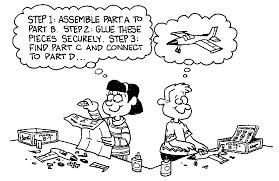
One of the most frustrating trends in education is the lack of support given to visual learners. Whilst visual learners constitute over 60% of the student population, many are mistakenly thought of as developmentally slow or suffering from a learning difficulty. The truth is, many teachers either have little idea how to cater for a visual learner or simply find it difficult to adequately accommodate them.

Below are some tips that may prove useful:

  • provide visual cues or prompts to aid memory of visual learners
  • help visual learners by providing a visual cue at the same time as another learning style cue (such as auditory or kinesthetic)
  • provide visual learners with displays of information that they can take in as their eyes stroll around the room while you are speaking (posters, displays, language learning tip sheets)
  • provide extensive practise and recall opportunities to encourage learners to consolidate their learning into their long term memory, regardless of the learning styles they prefer
  • talk to students about learning styles, and making them aware of the different ways that people often prefer to take in information
  • remember that any good lesson, regardless of learning styles, includes reminders about what has been covered previously, an outline of upcoming content, and ample revision and practise of skills.


Click on the link to read Student Rant Goes Viral

Click on the link to read Could This be the Most Violent High School Test Question Ever?

Click on the link to read Six Valuable Steps to Making Positive Changes in Your Teaching

Click on the link to read 10 Art Related Games for the Classroom

Click on the link to read 5 Rules for Rewarding Students

Click on the link to read Tips for Engaging the Struggling Learner