
Tips For Kids in Dealing With Exams

September 30, 2013

exam2I must confess to being quite overwhelmed when sitting for exams. I often froze and perhaps occasionally sabotaged a few times by allowing the mental demons to overcome me.

I hope these tips help others to manage their exam stresses:


Dr Friedland explains that in order to fail forward, people need to learn from their so-called failures and use them as stepping stones to future success.

“I’d advise students to throw away all thoughts of a number and change their definition of success, so instead they strive to give their studies their all and know they’re going to walk away having learned something,” he says.

“Don’t be driven by self-esteem. Instead let yourself have some self-compassion. Look after yourself, treat yourself well – success comes from that.”

Encourage them to look at the bigger picture

Ask a student to identify the most important thing they hope to achieve from an exam, assessment or the academic year, and they’ll say a good mark.

Dr Friedland admits it can be hard for young people to see the wood for the trees because getting a good score can seem like the most important thing in the world – their defining achievement.

He advises parents to gently help their kids see how other aspects of their life are important and he alludes to that oft-quoted mantra that it’s about the journey, not the destination.

“Encourage them to reflect on what truly matters in their life. Help them see that getting a great big number won’t necessarily lead to happiness and fulfilment, but the process of trying to get it might if they’re learning along the way and also nourishing themselves,” he says.

“Going into an exam with a ‘do or die’ attitude is counter-productive. The stress will become overwhelming and few people can thrive if they’re feeling like that. Give each exam the importance it deserves in the whole bigger picture.

“We all need to focus on taking care of ourselves – mind, body and soul.”

Click on the link to read The Harmful Effects of Yelling at Students

Click on the link to read First Prize for a Primary School Raffle: A Rifle

Click on the link to read Another Reason why Television is Unealthy for Children

Click on the link to read The Spoiled Twins with their £70k First Birthday Party (Photos)

Click on the link to read 5 Tips to Help Children Cope With Stress

Click on the link to read Seven Valuable Tips for Raising Your Child’s Self-Esteem

Click on the link to read Top Ten Compliments Your Children Need to Hear

Discussing Mental Illness with Children

September 29, 2013


mental


Valuable information courtesy of aacap.org:


Kids are naturally curious and have questions about mental illnesses. Understanding mental illnesses can be challenging for adults as well as for children. Myths, confusion, and misinformation about mental illnesses cause anxiety, create stereotypes, and promote stigma. During the past 50 years, great advances have been made in the areas of diagnosis and treatment of mental illnesses. Parents can help children understand that these are real illnesses that can be treated.

In order for parents to talk with a child about mental illnesses, they must be knowledgeable and reasonably comfortable with the subject. Parents should have a basic understanding and answers to questions such as, what are mental illnesses, who can get them, what causes them, how are diagnoses made, and what treatments are available. Some parents may have to do a little homework to be better informed.

When explaining to a child about how a mental illness affects a person, it may be helpful to make a comparison to a physical illness. For example, many people get sick with a cold or the flu, but only a few get really sick with something serious like pneumonia. People who have a cold are usually able to do their normal activities. However, if they get pneumonia, they will have to take medicine and may have to go to the hospital. Similarly, feelings of sadness, anxiety, worry, irritability, or sleep problems are common for most people. However, when these feelings get very intense, last for a long period of time and begin to interfere with school, work, and relationships, it may be a sign of a mental illness that requires treatment.

Parents should be aware of their child’s needs, concerns, knowledge, and experience with mental illnesses. When talking about mental illnesses, parents should:

  • communicate in a straightforward manner
  • communicate at a level that is appropriate to a child’s age and development level
  • have the discussion when the child feels safe and comfortable
  • watch their child’s reaction during the discussion
  • slow down or back up if the child becomes confused or looks upset

Considering these points will help any child to be more relaxed and understand more of the conversation.

Pre-School Age Children

Young children need less information and fewer details because of their more limited ability to understand. Preschool children focus primarily on things they can see, for example, they may have questions about a person who has an unusual physical appearance, or is behaving strangely. They would also be very aware of people who are crying and obviously sad, or yelling and angry.

School-Age Children

Older children may want more specifics. They may ask more questions, especially about friends or family with emotional or behavioral problems. Their concerns and questions are usually very straightforward. “Why is that person crying? Why does Daddy drink and get so mad? Why is that person talking to herself?” They may worry about their safety or the safety of their family and friends. It is important to answer their questions directly and honestly and to reassure them about their concerns and feelings.

Teenagers

Teenagers are generally capable of handling much more information and asking more specific and difficult questions. Teenagers often talk more openly with their friends and peers than with their parents. As a result, some teens may have already have misinformation about mental illnesses. Teenagers respond more positively to an open dialogue which includes give and take. They are not as open or responsive when a conversation feels one-sided or like a lecture.

Talking to children about mental illnesses can be an opportunity for parents to provide their children with information, support, and guidance. Learning about mental illnesses can lead to improved recognition, earlier treatment, greater understanding and compassion, as well as decreased stigma.


Click on the link to read Tips to Help Parents Control Their Kids’ TV Habits

Click on the link to read 10 Steps Parents Can Take if their Child is Being Bullied

Click on the link to read School Holidays are Very Hard for Many Parents (Video)

Click on the link to read 20 Reassuring Things Every Parent Should Hear

Click on the link to read 10 Tips for Nurturing Independence Among Children

Click on the link to read 4 Tips for Getting Your Kids up in the Morning

Click on the link to read Seven Valuable Tips for Raising Your Child’s Self-Esteem

Click on the link to read Top Ten Compliments Your Children Need to Hear


Teaching Kids to be Competitive Often Leads to Needless Pain

September 24, 2013

hand

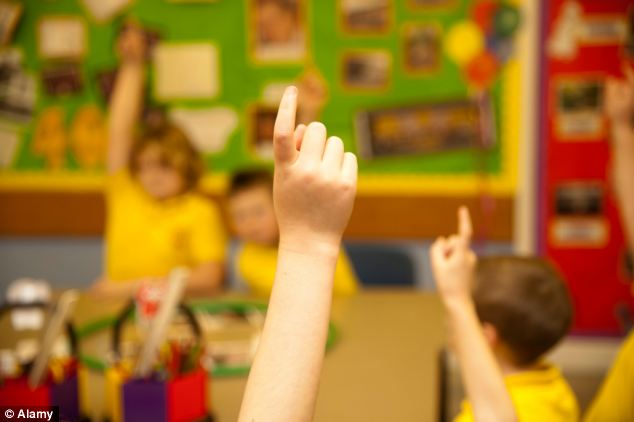
Some say that competition is good.  It is character building, it prepares the child for the competitiveness of the real world and motivates the child.  I am skeptical when it comes to competition in the classroom.  My experience tells me that many teachers resort to grades and levels in elementary level when the content of what they are teaching isn’t particularly interesting and requires a bit of superficial stimulus. I also feel that whilst some thrive in such an environment, many more flounder due to the negative and pressure charged vibe:

Parents who have agonised over getting their children into the best school may have been wasting their time and effort.

Surrounding a child with brighter peers could actually damage his or her education, researchers warn.

They said constantly being outshone in the classroom by brainboxes could shatter their confidence so much that they end up doing worse academically.

So weaker students – both boys and girls – might be better off at a less competitive school as they have the psychological advantage of being a ‘bigger fish in a smaller pond’.

Being a competent pupil in such a setting can help ‘motivate’ children and lead to ‘confidence, resilience and perseverance’, according to the findings.

Bright children, however, tend to thrive as they move through their school careers because they are already filled with self-confidence.

This positive side of the phenomenon affects both sexes although it is far more pronounced in boys, according to the paper from the London School of Economics.

The gain was said to be similar to a child who is the best in their street at football and ‘becomes more confident and spends more time playing and so further improves’.

Dr Felix Weinhardt, a post-doctoral research fellow in economics, said: ‘Our findings go against the common assumption that having better peers is always the best for children. Previously we thought there were no negative effects.

‘But just making it into a better school and being at the bottom end of the ranks can have a negative effect.’

The research looked at almost 2.3million English pupils taking National Curriculum tests in maths, English and science.

Assessments for those aged 11 (Key Stage 2) were used as a benchmark of ability while those for  14-year-olds (Key Stage 3) were used to rate how well they did at secondary school.

The project also used a survey on confidence taken by 15,000 pupils.

The data revealed those near the top of their class in primary school continued to improve while those who struggled often did worse.

The upward trend was stronger for boys but the same for both genders in pupils from deprived backgrounds. The ratings for both boys and girls in the bottom quarter of performance at primary dropped at secondary level.


Click on the link to read Two High School Athletes Brawl During Race (Video)

Click on the link to read Tips for Teaching Your Children How to Lose

Click on the link to read Preparing Students for the Real World

Click on the link to read Is Competition in the Classroom a Good Thing?


Scaring Our Children About Climate Change is Poor Education

September 24, 2013

gore


This post is not about the legitimacy of climate change. I personally believe in climate change but require more evidence as to the extent of how our actions will cause ‘dangerous’ ramifications,

There is a campaign to teach children climate science following a certain ‘consensus’. Only trouble is, education doesn’t and should never operate using a consensus model. Education is about an exchange of ideas and the search for truth. It isn’t about hammering one line of thinking at the exclusion of others.

The worst byproduct of the ‘consensus technique’ of teaching children is that educators realise that many children won’t understand the science of it, so they have resorted to alarmism and outrageous prognostications instead. This not only scares children, but is phoney and grossly insensitive.


One of the most shameful aspects of the scare-mongering over “global warming” (sic) is the way that children are exploited and frightened.

Save the planet for the sake of our children and our grandchildren, goes the line. Over and over again. Children will be hardest hit, and so forth.

There is anecdotal evidence that young children are being seriously frightened by this event, an event that may in fact not be happening, may not have very serious consequences, and probably cannot be stopped.

A young child wrote to the website of UK magazine Country Living, saying she was scared because she had read a report that “global warming” (sic) would bring more and poisonous spiders to her garden.

A four year old boy had to receive psychological treatment because he had become irrationally and uncontrollably frightened into believing the end of the world was nigh and that he was about to die.


Surely instead of frightening kids with stories about dead polar bears and melting ice caps we can teach the positive aspects about looking after our environment, such as recycling and conserving electricity and water.  After all, positive behaviours are best brought about by positive messages.


Click on the link to read Our Children and the Disgusting Climate of Fear

Tips for Teaching Gifted Students

September 22, 2013

gift

Courtesy of celebratingourgifts.com:

1. LET THEM SHOW YOU WHAT THEY KNOW/COMPACT THE CURRICULUM –  Generally, the work that we plan for our students is really “our work,” according to Dr. Joseph Renzulli. It doesn’t become “their work” until it represents true learning for them. Give all students the opportunity to write a pretest- if they do not get an “A” it does not count (some will choose not to – give them small group instruction while the others are writing the pretest). Students who get an above 83% choose to do a higher level thinking activity that represents meaningful learning to them (can or cannot be related to the topic).
2. MOST DIFFICULT FIRST – Gifted students can learn new concepts more quickly than their age peers. They need much less practice than your average students. Allow students complete about 5 of the most difficult problems or exercises first before doing rest of assignment. If they understand it they are free to choose activities that interest them (ongoing project, reading, enrichment or anything that doesn’t disturb others). Evaluation: when they meet the criteria set by you, their “A” for that work becomes their letter grade for entire assignment.
3. DIFFERENT, NOT MORE – Research shows that 40% to 50% of the content might be adapted for gifted students. It is important for educators to provide alternative challenging activities for them to do instead of grade level work. Discover what their interests are and build projects around those interests. Encourage them to self select topics on a conceptual rather than a factual basis.
4. OFFER THEM CHOICES BASED ON THEIR INTERESTS AND TALENTS – Thrill them with choices, choices and more choices. When you’re establishing learning opportunities, provide more than one choice for them to demonstrate understanding. Let them write a brochure or create a dramatization if they find that more interesting. Trust them to learn in non-traditional ways.

Gifted students are passionate about topics that are not connected to the curriculum, which is one reason why school can be frustrating for them. Once they have shown you they understand the concepts, allow them the opportunity to learn something they are interested in.

5. CHANGE YOUR APPROACH – Become “the facilitator.” Rather than just “giving” them information, help them to discover it! Let go of the idea of normal. Think outside the box.
Drill and practice may cause boredom which escalates into unacceptable behaviours. Keep them challenged. Provide ongoing challenging activities with a problem solving focus. For instance, instead of saying, “What is the perimeter of this 4 x 3 rectangle?” Pose it this way: “How many different rectangles can you make with a perimeter of 14 units?” Give them dot paper or geoboards to discover the solutions. Ask if they’ve found all of the rectangles and do they know if the have.

Read the rest of this entry »

YouTube Clip of High School Student Getting Slapped by Teacher

September 21, 2013


I hope all those misguided souls that believe that the answer to the behavioural problem in our schools is to allow teachers to engage in physical violence watch the video above.

Teachers should never be trusted to meter out physical punishment and it is abhorrent that Western democratic countries still allow this awful practice.


Click on the link to read 19 US States Still Allow Corporal Punishment in their Classrooms

Click on the link to read The Disgusting Act by a Teacher that Drove a Schoolgirl to Attempt Suicide

Click on the link to read Legalised Corporal Punishment = Legalised Physical Assault

Click on the link to read The New Form of Spanking

Click on the link to read Teachers Who Beat Kids Should Be Put Away!


Tips to Help Parents Control Their Kids’ TV Habits

September 17, 2013


bears

One of the most original and innovative ideas my mother had came about when she realised that I was spending far too much time watching TV and the problem required a change of policy in form of a proposal. The proposal was that I could watch 3 episodes a week on a school night as long as it the show had educational merit. So instead of watching a chat show or sitcom, I watched documentaries and current affair programs. I  remember watching shows on criminology, science, politics and history – all of which would have been ignored were it not for the rule. To this day, my TV tastes have been radically altered because of that rule.

Of course not all children would respond to such an arrangement. So courtesy of parentsforhealth.org, here are 12 more tips:

1. Get the TV out of the Bedroom!

Having a TV in the bedroom may keep your kids quiet, but you lose control over what and how much they watch. A recent study found that children who had a TV in their bedroom watched more TV and performed worse in school tests.

If your child already has a TV in their bedroom, you may have a job on your hands to get it out. We recommend that you just remove the TV and explain your reasons to your child. Be prepared for protests, but remember that you are acting in the best interests of your child, and that you are the boss!

2. Don’t have the TV on in the Background

If no-one’s watching it, turn the telly off! TV has an amazing effect on us. We instinctively pay attention to moving images, so when a television is on it is difficult to concentrate on other things. Remember, the “off” button is there for a reason.

3. Don’t Allow Unsupervised Access

Do you really know what the kids are watching? Many studies have shown that children can be exposed to violent and sexual imagery that is inappropriate for their age. Keep track of what your kids are watching, and avoid having loads of TV sets around the house.

4. Agree Programmes

Buy a TV guide, and agree in advance which programmes your children will watch. This won’t take long, and will save your children from hours of zombie-like channel surfing. Most Sunday newspapers have a weekly TV guide included. Set rules for acceptable programmes together, and develop a list of programmes to be watched.

5. Agree TV Time

Agree with your children how much time the family will spend watching TV during the week. Remember to be firm during the negotiations. Your kids need to know that you are the boss – much easier with younger children.

If your children are massive telly addicts, you will need to reduce their screen time gradually. The most important thing for telly addicts is to replace TV time with something else, so you might need to think about active hobbies for your kids.

6. Assess the Situation

Keep a TV log for a week, and work out how much time you and your children spend in front of the box. Just write down the number of hours of TV you’ve watched – you may find this surprising.

7. Record Programmes

Record movies and programmes that you like, and watch them at convenient times. This can help to minimise the effect that TV has on your family’s sleeping and eating patterns.

8. Discuss the Plan

Explain to your children the reason why too much TV is a bad idea, and get their opinions. This is crucial, since you want your children to develop good TV habits that they will take with them into adulthood. Don’t be too dictatorial, and explain your actions. Your children will get into the habit of being discerning viewers.

You’re the boss, and you need to take a lead, but you have to bring your children with you. If your children are very young, this will not be a problem – they will just accept your rules as being normal.

9. Encourage Rebellion!

Your kids are going to rebel against something so why not make this rebellion a positive process? Point out to your child or young adult that the TV keeps them passive and under control. Your children probably won’t like the idea of being passive zombies controlled by others.

10. Cut the Cable…

…or get rid of the dish. Why not get rid of your satellite TV and with the money you save, rent the odd movie that you’re really keen on? You’ll be able to watch your movie at a more convenient time, you won’t be bombarded with adverts, and you will probably save money.

11. TV Dinners

Don’t eat in front of the telly! When you are looking at the box, you find it harder to keep track of how full you are. For this reason people tend to overeat when they are watching television.

When children routinely eat meals in front of the TV they are more likely to become overweight. The odd bit of popcorn during a movie is OK, but in general don’t let your family eat meals in front of the TV.

12. Keep Perspective

You don’t have to ditch the TV completely, although believe it or not some people take this option and live perfectly normal lives. TV isn’t all bad…you can see great movies, there are fantastic educational documentaries, and there are great comedy and entertainment shows. Just make sure that you control the TV, and the TV doesn’t control you!


Click on the link to read 10 Steps Parents Can Take if their Child is Being Bullied

Click on the link to read School Holidays are Very Hard for Many Parents (Video)

Click on the link to read 20 Reassuring Things Every Parent Should Hear

Click on the link to read 10 Tips for Nurturing Independence Among Children

Click on the link to read 4 Tips for Getting Your Kids up in the Morning

Click on the link to read Seven Valuable Tips for Raising Your Child’s Self-Esteem

Click on the link to read Top Ten Compliments Your Children Need to Hear

 

10 Steps Parents Can Take if their Child is Being Bullied

September 17, 2013

wall

Courtesy of education.com:

  1. Make it safe for your child to talk to you. When your child comes to you to talk about a bullying experience, try to avoid having an emotional reaction. It can be scary for a child to hear that a parent is planning to lash out at a peer or parent. Calmly ask questions until you feel you completely understand the situation (Is it bullying, a peer conflict, or a misunderstanding?). Try not to leap into action right away, but instead focus on making sure your child feels taken care of and supported. Without blaming the bully, remind your kid that everyone has a right to feel safe and happy at school, and applaud the courage it took to take a stand and talk to you. Make a commitment to work with both your child and the school administration to resolve the issue.
  2. Teach your child to say “Stop!” or go find an adult. Research shows that most bullies stop aggressive behavior within 10 seconds, when someone (either a victim or a bystander) tells the perpetrator to stop in a strong and powerful voice. You, as the parent, can role-play an assertive response. Demonstrate the differences between aggressive and assertive and passive voices, as well as body language, tone of voice, and words used. If staying “stop” with an assertive voice does not work, teach your child to find an adult right away.
  3. Talk with your child’s principal and classroom teacher about the situation. Make it clear that you are committed to partner with the school in being part of the solution. Also emphasize that your expected outcome is that your child’s ability to feel safe and happy at school is fully restored. Ask the principal to share the school’s bullying policy, and make sure any action plan begins with notifying other teachers, recess aids, hallway monitors, and cafeteria staff so that everyone who comes in contact with your child can be on the lookout and poised to intervene should the bullying be repeated.
  4. Arrange opportunities for your child to socialize with friends outside of school to help build and maintain a strong support system. Try reaching out to neighborhood parents, local community centers with after-school activities, and your spiritual community. The more time your child can practice social skills in a safe environment, the better. Children who have friends are less likely to be bullying victims—and, if your child is bullied, friends can help ease the negative effects.
  5. Don’t go it alone. When supporting a child through a bullying situation, parents often discover previously unnoticed issues that may contribute to the child’s vulnerability. In addition to working with the school to help resolve the immediate issue, parents should also consider reaching out to physical and mental healthcare providers to discuss concerns about diagnosed or undiagnosed learning issues, depression, anxiety, eating disorders, etc.
  6. Encourage your child to stick with a friend (or find someone that can act as a buddy) at recess, lunch, in the hallways, on the bus, or walking home. Kids are more likely to be targeted when they are alone. If your child doesn’t have a friend to connect with, work with the school to help find someone to act as a safety partner.
  7. If cyberbullying is an issue, teach your child to bring it to the attention of an adult, rather than responding to the message. Many children fail to realize that saying mean things about someone on the Internet or through text messaging is a form of bullying. Make sure your child knows that you take cyberbullying seriously, and that you’ll be supportive through the process of handling the situation.
  8. Help your child become more resilient to bullying. There’s a lot parents can do to help “bully proof” their kids. Here are two biggies: first, provide a safe and loving home environment where compassionate and respectful behavior is modeled consistently. Second, acknowledge and help your child to develop strengths, skills, talents or other positive characteristics. Doing so may help your kid be more confident among peers at school.
  9. Provide daily and ongoing support to your child by listening and maintaining ongoing lines of communication. When your child expresses negative emotions about peers, it’s helpful if you acknowledge these feelings and emphasize that it’s normal to feel this way. After actively listening to the recounted bullying incident, discuss the practical strategies in this article together, especially the ones your child thinks will be most helpful.
  10. Follow Up. Even after your child’s bullying situation has been resolved, be sure to stay in touch with your child and the school to avoid a relapse of the issues. Keep the lines of communication open with your child, and learn the signs of bullying so that if another issue arises, you’ll be prepared to get involved early and effectively. Although a last resort, consider moving your child out of the current school or social environment. This may be a necessary action, and it sends the message that your child truly does not have to tolerate such treatment. Once established, social reputations among peers can be very difficult to eliminate. A fresh start in a new school environment may be a viable solution.


I would like to add another three steps of my own. Watch and discuss the following films with your child:


Click on the link to read The Devastating Effects of Bullying (Video)

Click on the link to read Sickening Video of Girl Being Bullied for Having Ginger Hair

Click on the link to read Our Young Children Shouldn’t Even Know What a Diet Is?

Click on the link to read Charity Pays for Teen’s Plastic Surgery to Help Stop Bullying

Click on the link to read Most People Think This Woman is Fat

Click on the link to read It’s Time to Change the Culture of the Classroom

50 Things You DON’T Have to do to Maintain Classroom Management

September 15, 2013


manage

Courtesy of the brilliant site smartclassroommanagement.com:


1. You don’t have to lecture, yell, or scold.

2. You don’t have to micromanage.

3. You don’t have to ignore misbehavior.

4. You don’t have to be unlikable.

5. You don’t have to tolerate call-outs and interruptions.

6. You don’t have to use bribery.

7. You don’t have to walk on eggshells around difficult students.

8. You don’t have to give false praise.

9. You don’t have to send students to the office.

10. You don’t have to implore your students to pay attention.

11. You don’t have to say things you don’t truly believe.

12. You don’t have to be humorless, stern, or overly serious.

13. You don’t have to repeat yourself over and over again.

14. You don’t have to work on building community.

15. You don’t have to beg or coax or convince your students into behaving.

16. You don’t have to waste time and attention on difficult students.

17. You don’t have to do more or say more to have better control.

18. You don’t have to show anger or lose your cool.

19. You don’t have to lower your behavior standards.

20. You don’t have to talk so much, so often, or so loud.

21. You don’t have to have an antagonistic or demanding relationship with difficult students.

22. You don’t have to shush your students or ask repeatedly for quiet.

23. You don’t have to give frequent reminders and exhortations.

24. You don’t have to show hurt or disappointment to get your message across.

25. You don’t have to guide, direct, or handhold your students through every moment of the day.

26. You don’t have to be thought of as a “mean” teacher.

27. You don’t have to use threats or intimidation to get students to behave.

28. You don’t have to have friction or resentment between you and any of your students.

29. You don’t have to use behavior contracts to turn around difficult students.

30. You don’t have to give over-the-top or gratuitous praise.

31. You don’t have to plead with your students to follow your directions.

32. You don’t have to use different strategies for different students.

33. You don’t have to tolerate a noisy, chaotic, or unruly classroom.

34. You don’t have to talk over your students or move on until you’re ready.

35. You don’t have to accept being disrespected, cursed at, or ignored.

36. You don’t have use complicated classroom management methods.

37. You don’t have to be fearful of holding your students strictly accountable.

38. You don’t have to hold time-consuming community circles or hashing-out sessions.

39. You don’t have to be negative or critical to motivate your students.

40. You don’t have to cover up your personality or hold back from having fun.

41. You don’t have to tolerate arguing and talking back.

42. You don’t have to ask two or three times or more for your students’ attention.

43. You don’t have to offer praise for expected behavior.

44. You don’t have to rely on parents, the principal, or anyone else to turn around difficult students.

45. You don’t have to be overbearing or suffocating to have excellent control.

46. You don’t have to give incessant talking-tos to difficult and disrespectful students.

47. You don’t have to ask students why they misbehaved or force assurances from them.

48. You don’t have to have a boring, no-fun classroom to keep a lid on whole-class misbehavior.

49. You don’t have to be tense, tired, and sick of dealing with misbehavior.

50. You never, ever have to be at the mercy of your students.


Click on the link to read Ten Tips to Minimise Classroom Distractions

Click on the link to read 6 Methods For Getting Kids to Cooperate

Click on the link to read 10 Important Steps to Stop Yelling at Kids

Click on the link to read Classroom Management is Getting Harder

Click on the link to read The Dog Eat Dog Style of Education

Click on the link to read Problem Kids, Suspensions and Revolving Doors

This is What I Think of the No Hugging Rule at Schools

September 14, 2013


hug1


It is becoming all the rage to ban children from hugging each other at recess. This is what I think of the rule:


hug2


hug3


hug4


hug5


hug6


hug7


hug8


hug9

Click on the link to read Political Correctness at School

Click on the link to read What Are We Doing to Our Kids?

Click on the link to read Stop Banning Our Kids From Being Kids

Click on the link to read Banning Home-Made Lunches is a Dreadful Policy

Click on the link to read School Using Bomb As Bell