4 Ways to Identify a Great Teacher

September 8, 2014

poetAuthor Dana Goldstein has compiled 4 characteristics of a great teacher. I don’t agree with them. My four would be patience, caring, engaging and self-motivated.

Perhaps you agree with Ms. Goldstein’s 4:

• Have active intellectual lives outside their classrooms.
Economists have discovered that teachers with high SAT scores or perfect college GPAs are generally no better for their students than teachers with less impressive credentials. But teachers with large vocabularies are better at their jobs because this trait is associated with being intelligent, well-read and curious.

In 1903, W.E.B. Du Bois, who once taught in a one-room schoolhouse in rural Tennessee, wrote that teachers must “be broad-minded, cultured men and women” able to “scatter civilization” among the next generation. The best teachers often love to travel, have fascinating hobbies or speak passionately about their favorite philosopher or poet.

• Believe intelligence is achievable, not inborn.
Effective educators reject the idea that smarts are something that only some students have; they expect all children to perform at high levels, even those who are unruly, learning disabled or struggling with English.

How can you tell if a teacher has high expectations? Ask your child if he or she has learned anything new today. Research suggests that most students already know almost half of what is taught in most classes. Lame teachers—like one I watched spend a full 10 minutes explaining to a class in a Colorado Springs middle school that “denominator” refers to the bottom half of a fraction—spend too much time reviewing basic facts and too little time introducing deeper concepts.

• Are data-driven.
Effective teachers assess students at the beginning of new units to identify their strengths and weaknesses, then quiz students again when units end to determine whether concepts and skills have sunk in. Research from the cognitive psychologists Andrew Butler and Henry Roediger confirms that students score higher on end-of-year exams when they have been quizzed by their teacher along the way.

• Ask great questions.
According to the scholar John Hattie, when teachers focus lessons on concepts that are broader than those on multiple-choice tests, children’s scores on higher-level assessments—like those that require writing—increase. How can you identify a high-quality question in your child’s schoolwork? It tests for conceptual, not factual, understanding—not “When did the Great Depression occur?” but “What economic, social and political factors led to the Great Depression?”

Parents shouldn’t be the only ones looking for these four traits. Principals and policy makers should focus less on standardized test scores than on these more sophisticated measures of excellence. Together, we can create a groundswell of demand for great teaching in every classroom.


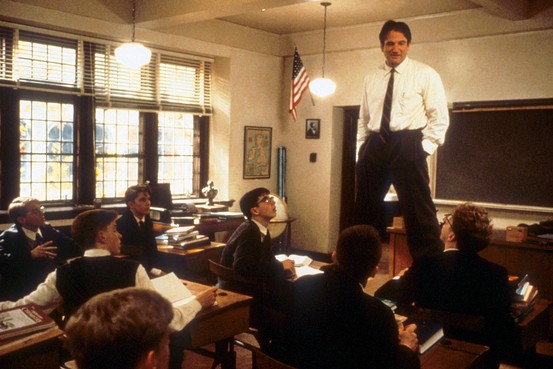
Click on the link to read 3 Examples Why Robin Williams Would Have Made a Great Teacher

Click on the link to read Failure is Part of Success

Click on the link to read Apparently Cool Kids Really Do Finish Last

Click on the link to read Is there Any Better Feeling than Graduating? (Video)

Click on the link to read Stunning Homeless Experiment Revealed (Video)

Abusing the Privillege of Teaching Children

September 7, 2014

survivalI continue to me amazed at some of the awful teaching methods exposed in the media.

It is absolutely vital that we teachers understand that we are teachers, not parents, not moral guardians of the world and definitely not survivalists:

A sadistic Brooklyn day-care teacher locked terrified toddlers alone in a tiny, dark storage closet — and laughingly claimed it was a lesson in “how to survive,” according to the facility’s owner.

In shocking security-video footage at Pinocchio Children’s Palace in East Flatbush, teacher Shandra Fallen, 25, and her assistant, Amellia Samuda, 34, are captured ushering 2-year-olds into the classroom closet.

Day-care owner Tatiana Ilyaich said she discovered the solitary confinement in June, when she heard crying coming from Fallen’s classroom across the hall from her office.

She found the teachers in the room and most of their young charges taking naps on their cots — and sobs coming from the supply closet.

She opened the door and saw a scared young boy inside.

The teachers “started laughing,” Ilyaich recalled.

“It’s kind of a game we’re playing with the kids,” Fallen said, according to Ilyaich.

The owner said she immediately scoured security-camera footage for signs of similar incidents. Images taken on May 14 chilled her.

In the footage — viewed by The Post — Fallen can be seen putting one small child into the closet, which is packed with supply-stuffed shelving, and leaving him there alone for three minutes before releasing him.


Click on the link to read Teacher Allegedly Has Cocaine Delivered to School

Click on the link to read Dealing Softly with Bad Teachers Sends the Wrong Message to Students

Click on the link to read Up to 1 in 10 US Students Have an Inappropriate Relationship With Their Teacher

Click on the link to read Teacher Claims he Didn’t Think Sex Abuse Was a Crime

Click on the link to read The Classroom Incident that Isn’t Seen as Child Abuse but Actually Is

11 Valuable Digital Media Tips for Students

September 5, 2014

kidsCourtesy of Justin Boyle at teachthought.com:


1. Use Privacy Settings

Let’s talk Facebook, shall we? Chances are pretty good that your students can be counted among the 1.3 billion monthly active users of the social media giant, and there’s practically no other website that contains such a breadth and depth of personal information.

Encouraging students to put all of their social media accounts, including Facebook, on a short leash might be the most important step toward helping them manage their digital footprint. Look into Facebook’s proprietary privacy tips or get the works from Lifehacker.com with it’s “Always Up-to-Date Guide to Managing Your Facebook Privacy,” then inform students about the steps they can take. Better yet, just pass the links along.

Complete privacy on Twitter is simple — you just choose to protect your tweets under “security and privacy” on the account settings page — but encouraging students to do so might do more harm than good. Some teachers have gotten great results using Twitter in education, and a class full of students with protected tweets might interfere with that.

2. Keep A List Of Accounts

Then delete the ones you no longer use. That myspace page you signed up for? Don’t just forget about it–find it and delete it.

3. Don’t Overshare 

Perhaps the best tip for helping students maintain privacy on Twitter is one that can be applied across the whole spectrum of social networking tools: Don’t overshare. As much of an alien concept as it may be to students these days, the only sure-fire way to avoid digital footprint trouble is for them to keep quiet about anything they wouldn’t want to share with everyone in town.

This includes usernames, aliases, passwords, last names, full-names-as-usernames, pictures, addresses, and other important information.

4. Use A Password Keeper

This is more of a security thing, but the worst kind of footprint is the one you didn’t make that contains all of your sensitive information. It’s too much work to remember 50 different passwords, and every site has their own unique rules. Until someone solves this problem, the best solution is likely a password keeper

5. Google Yourself

You may be surprised what you find.

6. Monitor Linking Accounts

When you link your facebook or twitter account to that new site (whatever site that might be), you may not realize–or care at the moment–what you’re giving it access to. It’s usually safest to use a secondary email address to sign-up for new sites rather than granting this kind of access.

7. Use A Secondary Email

Whether you’re communicating with someone new, or signing up for a new social media platform, it can be useful to have a secondary email address.

8. You Don’t Need 12 Email Addresses

That said, you don’t need 12. Keep it manageable.

9. Sending Is Like Publishing–Forever

Every time you send a message, post, or picture, you’re publishing it the same way CNN does a news story. And the internet never forgets.

10. Understand That Searches Are Social

There’s another side to your digital footprint, too — it’s not always information that you choose to make public. Remember: Privacy controls or no privacy controls, Facebook still records and uses every scrap of information it gets to better determine its users’ marketing demographics.

Google pulls the same trick with search and browsing habits. If a student is logged into their Google account, the service tracks every keyword they search, every Web page they visit and every time they visit Youtube.

There are ways, however, to control the bits of deep data that we leave strewn around. First of all, even though Google is practically an official synonym for “Web search,” it isn’t actually the only game in town. Less profit-motivated search engines like DuckDuckGo.com and Ixquick.com may take a little getting used to, but they do make explicit policy of protecting users’ browsing privacy.

11. Use Digital Tools To Manage Your Footprint

A host of browser extensions and app add-ons can also limit the surreptitious capture of personal information. Disconnect (Disconnect.me), DoNotTrackMe (Abine.com) and Ghostery (Ghostery.com) are examples of cross-platform extensions that block tracking cookies and give users control over site scripts.


Click on the link to read The 10 Best Educational Apps for Children

Click on the link to read The Must Have iPad Apps for the Classroom

Click on the link to read Using Videogames in the Classroom

Click on the link to read Five Great Technology Tools for the English classroom

Click on the link to read 5 Great Spelling Apps for Tablets and Smartphones

Click on the link to read Are Educators Being Conned by the i-Pad?

Guess Why this Girl Was Sent Home from Kindergarten

September 3, 2014

sent home


She kicked a teacher? No.

Slapped a student? Nope.

Brought a box of matches to school? Try again.

Surely it wasn’t because she has long hair?

Unfortunately, it was precisely for that reason:


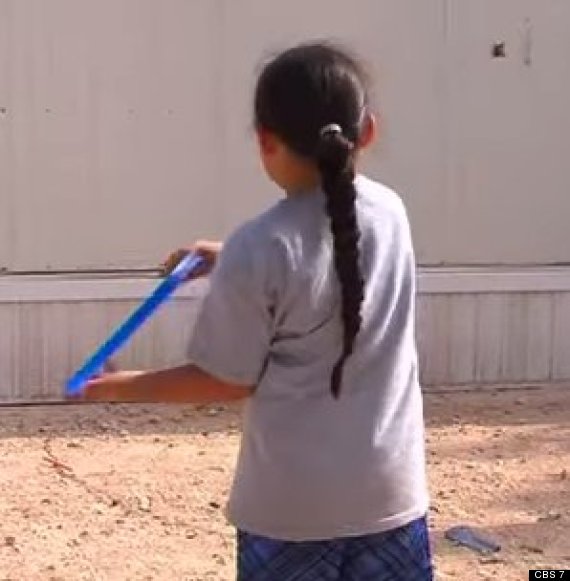
A Native American child was reportedly sent home early from his first day of Kindergarten last week because officials said his long hair conflicted with the school’s dress code.

Malachi Wilson, 5, does not receive haircuts because it is against his religion as a member of the Navajo Nation, the child’s mother told a local CBS affiliate. Apparently though, this religious rule conflicts with F.J. Young Elementary School’s dress code, which says that, “Boys’ hair shall be cut neatly and often enough to ensure good grooming.”

When the child showed up for his first day of Kindergarten at the Texas school he was sent away. The principal told April Wilson, Malachi’s mother, that he would not be able to attend class until his hair was cut, reports Native News Online.

School officials reportedly told April Wilson that she had to prove that Malachi was Native American. After the family provided official Navajo Nation documentation, the district said Malachi could return to school, and he went on to attend class the next day, reports the outlet.

“I enrolled him back in June so I thought we were all set for Malachi to attend school on Monday,” Wilson told the outlet. “I checked the ‘Native American’ box on the enrollment form.”

Representatives for the school told the CBS affiliate that they followed procedure “one hundred percent,” and pointed to the district handbook, which states that, “religious or spiritual beliefs may qualify for an exception from provisions of the dress code. However, any exceptions must receive prior approval by the campus administrator.”

Seminole Independent School District superintendent Doug Harriman, told The Huffington Post that he thinks the incident was overblown. He confirmed that the district initially told April Wilson that Malachi’s hair was a dress code violation, and that once she provided documentation that Malachi was Navajo, it was not a problem.


Click on the link to read The Disgraceful Decision to Fire a Teacher for Trying to Break Up a Fight

Click on the link to read One of the Greatest Teacher Pranks Ever Recorded

Click on the link to read Don’t Fire Caring Teachers

Click on the link to read Should Teachers Allow Students to Call Them by Their Christian Names?

Click on the link to read Let’s See if you Can Work Out Why This Teacher was Suspended

Click on the link to read Why Healthy Eating Laws in Schools Don’t Work

Classroom Display Tips for Teachers

September 2, 2014

disp1


Courtesy of The Guardian:


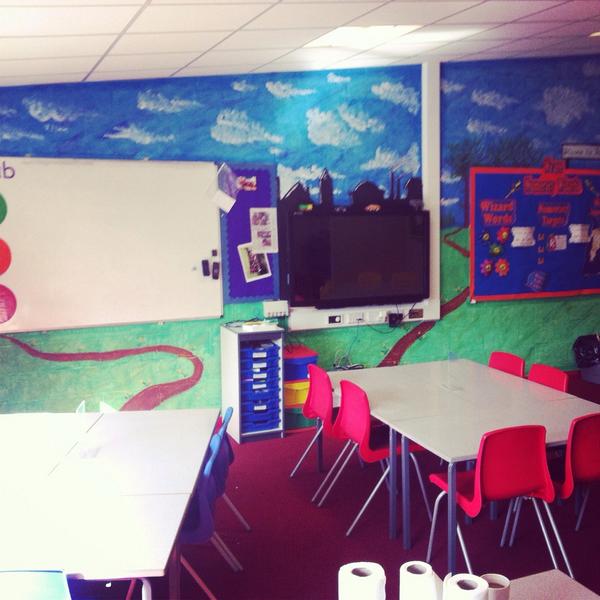
disp2This display was posted by @piesatthekippax. He said: “I only moved into year 6 in December last year (I’m still a newly-qualified teacher). I wanted to create a mural that would create a real wow-factor and I have had idea for a landscape for a few months now. My plan is to add details throughout the year. This will mainly include literary characters that we look at throughout the year. I also plan to include inspirational quotes. The children will also decide what they want to add to it themselves.”


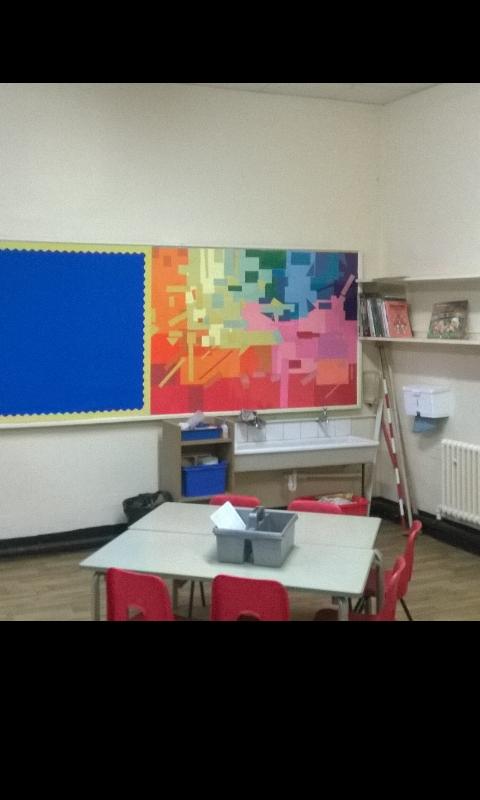
displ3Vincent Rice (@MiloVent24), a year 5 teacher from Lord Street primary school, sent us this. It’s the background for his class’s art display, and Rice says it took him hours. “It’s focusing on colours, the classroom was a state when I got in there; it was dark, dingy, dusty and not child friendly. Five days, 16 bin bags and lots of laminating later we have my new class.” Rice said he had heard that the children in his new class were interested in art deco so he created the wall to inspire them. Around this wall they will have an “artist of the month” display, focusing on both well-known and lesser-known work.

“As a young teacher working in a deprived northern town, I like to wow kids, interest them, and make sure learning isn’t a chore,” he said.


disp4Jen English, a geography teacher at Wellington school in Cheshire, sent us her words display after finding the idea on Twitter and Pinterest. “I have spent the last year telling students to be more specific in their writing. Fed up of having to correct words like “people” and “place” I have decided to ban these words in writing.

I challenge my pupils to look for an alternative word when doing peer marking or teacher marking. I get students to highlight any banned words when they are used, and replace them with another word. “Then I use my display in class activities to get students to post their alternative words on the display.”


disp5Rebecca Franks, curriculum leader of computing at The Kingswinford school, sent us this display. “The smoothie hut was designed to get the students to understand the word ‘algorithm’,” she said. Franks looked up “tiki hut” on the internet for inspiration and built it up from there. “I think that the best displays should simply ask a question that gets the students to think of their own answer.”

Franks also sent us another display she made which is designed to get students to think about where they are going. It’s displayed in the school’s inclusion room. And a magic themed display about algorithms.


Click on the link to read Classrooms the Swedish Way

Click on the link to read Tips For Supersizing a Cramped Classroom

Click on the link to read Stricken With Self-Doubt

Click on the link to read Do You Suffer From Classroom Envy?

Click on the link to read The Classroom of the Future


20 Primary School Students a Day Sent Home for Violence Against a Teacher

September 1, 2014

attackWhat are the lawmakers doing to protect teachers from their students and deter violent children from attacking their teachers?

Increasing numbers of children in the first years of primary school are being suspended for attacking their teachers, shocking statistics show.

More than 4,000 children aged four to seven were sent home for violence against those teaching them last year, according to most recent figures.

Suspensions for attacks on teachers of Reception, Year One and Year Two classes rose by nearly 50 per cent in the last five years – with 20 pupils now being sent home every day over the issue.

In the 2008/2009 school year, just over 2,880 four to seven-year-olds were sent home for attacking their teacher – but that had jumped to 4,210 youngsters by 2012/13.

The figures, published by The Sun, lay bare the increasingly violent classrooms of England and Wales’ youngest schoolchildren.


Click on the link to read The Difficult Challenge that is Starting Your Teaching Career

Click on the link to read Getting Your Teacher Fired Has Become a Popular Sport

Teacher Allegedly Has Cocaine Delivered to School

August 31, 2014

coke


I must admit that I once had running shoes I purchased online sent to my school for convenience, but I certainly never sent what this teacher is alleged to have sent:


A Kentucky middle school teacher has been indicted on a felony charge of prohibited acts related to a controlled substance after being accused of having her drug dealer bring cocaine to her on school property. This is why you don’t mix business and pleasure. Or schoolkids and hard drugs, whichever.

Earlier this month, Arin Staples resigned from her position at Holmes Middle School in Covington, Kentucky, after being questioned by the Drug Enforcement Agency. She could face up to five years in prison according to Kenton County Commonwealth attorney, Rob Sanders. Via USAToday:

“There are multiple instances of her obtaining cocaine … (and) receiving it from a drug dealer on school property, among other places,” Sanders said.

Apparently a security assistant at the same school was arrested and charged with drug trafficking just over a week ago, and in an e-mail to the school staff, Holmes superintendent Alvin Garrison stated the DEA talked to two other employees of the school. They have either resigned or been suspended. That’s a lot of commotion for one middle school, don’t you think?

Sanders declined to comment about the “larger drug-trafficking organization” the DEA is investigating.

“I can say it is not related to the school, (but) I can’t comment on the specifics because it is part of an ongoing federal investigation,” he said.

While Sanders did say that there are no accusations or evidence to suggest that students are involved with this, the proximity of all this illicit drug activity to a middle school is definitely worrisome.


Click on the link to read Dealing Softly with Bad Teachers Sends the Wrong Message to Students

Click on the link to read Up to 1 in 10 US Students Have an Inappropriate Relationship With Their Teacher

Click on the link to read Teacher Claims he Didn’t Think Sex Abuse Was a Crime

Click on the link to read The Classroom Incident that Isn’t Seen as Child Abuse but Actually Is

Click on the link to read A Cautionary Tale for Frustrated Teachers

Click on the link to read Teacher Sought Dating Advice from Her Fourth Graders

Click on the link to read Teacher Suspended for 10 Days for Grabbing a 6-Year-Old By the Neck (Video)

25 Ways to Approach the Dreaded ‘How was School Today?’ Question

August 30, 2014

faceb

A great list courtesy of blogger Liz Evans:


1. What was the best thing that happened at school today? (What was the worst thing that happened at school today?)

2. Tell me something that made you laugh today.

3. If you could choose, who would you like to sit by in class? (Who would you NOT want to sit by in class? Why?)

4. Where is the coolest place at the school?

5. Tell me a weird word that you heard today. (Or something weird that someone said.)

6. If I called your teacher tonight, what would she tell me about you?

7. How did you help somebody today?

8. How did somebody help you today?

9. Tell me one thing that you learned today.

10. When were you the happiest today?

11. When were you bored today?

12. If an alien spaceship came to your class and beamed someone up, who would you want them to take?

13. Who would you like to play with at recess that you’ve never played with before?

14. Tell me something good that happened today.

15. What word did your teacher say most today?

16. What do you think you should do/learn more of at school?

17. What do you think you should do/learn less of at school?

18. Who in your class do you think you could be nicer to?

19. Where do you play the most at recess?

20. Who is the funniest person in your class? Why is he/she so funny?

21. What was your favorite part of lunch?

22. If you got to be the teacher tomorrow, what would you do?

23. Is there anyone in your class who needs a time-out?

24. If you could switch seats with anyone in the class, who would you trade with? Why?

25. Tell me about three different times you used your pencil today at school.


Click on the link to read Learning to Let Go

Click on the link to read Things Teachers Wish Parents Knew Before the School Year Begins

Click on the link to read The Worst Parent in the World May be an Australian

Click on the link to read 10-Year-Old’s Marriage Advice to His Teacher

Click on the link to read The Science of Parenting

Click on the link to read Why the Call to Fine Parents for Not Reading to Their Children is Utter Stupidity

Dealing Softly with Bad Teachers Sends the Wrong Message to Students

August 28, 2014

newark

Our impressionable students need to understand the importance of taking responsibility for one’s actions. When they see us do something terrible, yet get nothing more than a reprimand, it sends the message that one can always say “sorry” and it will go away.

But sorry doesn’t always cut it. It certainly shouldn’t have been enough to let this reluctant teacher keep her job:


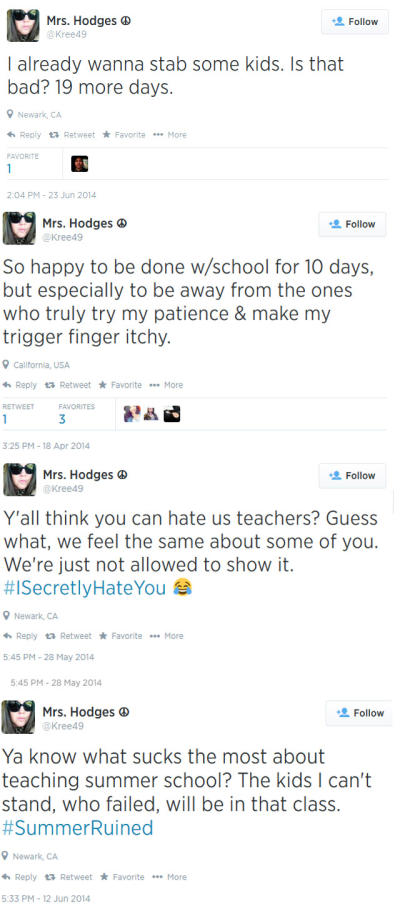
On her Twitter feed, a Newark Memorial High School teacher described in explicit terms her desires for her students. She wanted to pour coffee on them. She wanted to stab them. Some of them, she said, “make my trigger finger itchy.”

Alerted by one of her colleagues to the tweets — which are laced with profanity and racist remarks — the district disciplined teacher Krista Hodges with a written reprimand, and she continues to teach. Hodges has apologized, saying she meant none of it seriously. But some in the school community are stunned by the turn of events, given the alarming sentiments the teacher expressed.

mrs hodges


Every Science Teacher’s Worst Nightmare (Video)

August 27, 2014


This demonstration probably wont make the Science Teacher’s Handbook:


A teacher in Thailand has accidentally set his classroom alight during what appears to be an experiment with fire that goes horribly awry.

Footage uploaded to LiveLeak this week shows the male teacher flail his arms as he enthusiastically explains the experiment.

On the bench in front of him sits a small beaker of flammable liquid.

It appears he is about to run his hand through the flame when he accidentally knocks it over.

Several students in the classroom can be seen filming their clumsy instructor, almost pre-empting what will happen next.

Within seconds metres-high flames engulf the workspace and the student body lets out a collective panicked cry.

Luckily the teacher is quick to act and the fire is soon extinguished, leaving a thick cloud of smoke in its wake.

Little information is known about when the video was shot or what was the purpose of the experiment.