Tips for Teaching Kids to use Technology Safely

July 31, 2012

Courtesy of The Washington Post are useful tips for helping to educate kids about safe use of technology:

1. Encourage parent leadership, within the PTA, PTO or other parent communities at your school to begin the discussion about safe and responsible online use by students at school and at home.  Gather an advisory group to determine how to get started.  Invite an expert guest speaker to kick things off.  Thankfully, there are many free, reputable resources available to parent communities through organizations such as Common Sense Media and through PTO Today’s Internet Safety Night program (sponsored by my organization, Trend Micro). Make it clear that it is an on-going dialogue versus a one-time event, as technology is constantly changing.

2. Communicate regularly to parent communities about how you are using technology in the classrooms, at each grade level, and how you ensure kids are learning to be savvy online citizens at the same time.  Make it part of open-house and parent-teacher nights.

3. Be clear with parents on how appropriate technology use is enforced through the school’s Code of Conduct and Acceptable Use Policies (AUP), which students (or parents) typically have to review and sign at the beginning of each school year.  Parents should understand what constitutes a transgression of the policy, how it will be handled, and how/if it will be reflected on your child’s school record.  It should also be clear how personal technology can or cannot be used on school grounds.

4. Be creative with ways to help parents and their kids use technology together.  Ultimately, schools and parents should not limit the discussion to being safe and responsible with technology. We want kids to also be successful users of it.  Find ways to use technology with families or encourage them to use it together through school-driven activities, events, fund-raisers, or other projects.  Have families research their genealogy together. Establish a blog contest or raise awareness or funds for a school activity using social media.  Or encourage family engagement in programs like the ‘What’s Your Story?’ campaign (sponsored by companies like Facebook, Trend Micro, Twitter, and Yahoo!) a program specifically designed to get youth, schools, and families talking about matters concerning the safe and responsible use of technology.

5. Recognize the positive use of technology in your schools through a formal or informal but public way.  Parents can be invited to be part of such a program, or at least encourage the right behavior with their kids at home.  Awards or acknowledgement can be given to individual students or groups of students, classrooms, or even families.  You can do this through a yearly or monthly “call out” in the school newsletter, website, or at a live school event.  If possible, showcase the activity that is being acknowledged (If it’s a blog, link to it in your online communications).

Technology can be intimidating to those of us who were introduced to it later in life.  The job of teaching kids how to use it appropriately can feel daunting when often times they seem better at it than we do.  But we cannot sidestep our obligation to make technology a tool our kids use safely and responsibly.

And while we do not have years of documented best practices to help schools and parents through this yet, anything you do today can help.  Thankfully, there are simple, low investment ways to start today.  It just takes a willingness to embrace what is already here, and a little courage to take the first step.

Click on the link to read 10 Best Websites for Teaching ICT

Click on the link to read New Tablet Being Designed Specifically for the Classroom

Click on the link to read Top 10 Educational i-Pad Apps

The Meth Lab that Doubled as a Playroom

July 31, 2012

The moral of the story is never let your children play in your illegal drug lab:

Five children, the youngest just two years old, have tested positive for illegal drugs after playing in their father’s kitchen lab, a court has heard.

The man, who cannot be named, is the first person in Australia to face court for the offence of exposing an individual under 14 years to danger from unlawful manufacturing.

He pleaded guilty on Tuesday in the Supreme Court in Brisbane to five counts of the offence, and will be sentenced on Wednesday.

He faces a maximum sentence of nine years in jail.

The court heard the man, 32, ran a drug lab at his home at Loganlea, south of Brisbane.

When police raided the address in April 2010 they found him in the kitchen using caustic soda to extract ephedrine from cold and flu tablets.

The court heard his five children, aged between two and eight, were at home at the time and were not prevented from entering the kitchen.

Police found chemicals on the floor next to one of the children’s teddy bears and discovered acids were stored on low shelves within reach of small hands.

The five children had samples of their hair analysed and all tested positive for methylamphetamine, the court was told.

Click on the link to read The Most Effective Anti-Smoking Ad Ever Conceived

Click on the link to read Middle-Class Children and Alcohol

Click on the link to read Student Finds a Bag of Cocaine in Her Amazon Textbook Order

Oops, We Seem to Have Lost Your Exams

July 31, 2012

I am a little absent-minded myself, but this is slightly more serious than misplacing your car keys.

Doing those blasted standardised tests once is bad enough. Imagine having to go through the whole process again!

More than a dozen New York City students will have to retake state mandated standardized exams after the city lost their answer sheets.

Students at Brooklyn’s Franklin D. Roosevelt High School’s night school are already considered at risk of dropping out. The program helps struggling students work toward graduation, but the mix-up is affecting 17 students, whose answer sheets were not included in a packing list to be scored, NY1 reports.

The city doesn’t know what happened to the U.S. history exams, which disappeared as they were being transferred to another school as part of an effort to curb cheating by having teachers grade exams for students at other schools. About 107,000 tests from 162 schools were exchanged for grading, according to The Wall Street Journal, and are required for graduation.

Four students were not able to graduate on time as a direct result of the missing answer sheets, while the other students still had other requirements to meet. They must retake the exam during the August test administration.

Click on the link to read Standardised Testing Meets Spin City

Click on the link to read Pushy Parents and those Awful Standardised Tests!

Click on the link to read Too Many Tests, Not Enough Teaching

Click on the link to read I’m Just Gonna Say It: Standardised Tests Suck!

Tips for Teaching Your Children How to Lose

July 31, 2012


The Olympic Games is not about winning but about competing. In every competition there are winners and losers. Our athletes have the potential to show our children how to win with dignity and humility and how to deal with the disappointment of losing. I think its fair to say swimmer James Magnussen could have reacted with more class after his performance in the relay team proved underwhelming.

Courtesy of momtastic.com below are five tips for teaching children how to lose:

Putting the emphasis on giving your best.

While everyone wants to win, shift the focus from winning to giving your best and to having fun. Explain that playing the game is like the cake and winning is like the frosting on top. It’s sweet, but the cake can be enjoyed without the frosting too.

Providing your child with opportunities to lose.

While it can be tempting to let your child win at board games and other games, don’t. When he genuinely wins, model how to lose gracefully and we he loses, guide him through losing gracefully by encouraging him to be a good sport.

Valuing good sportsmanship.

Teach your child to always say “congratulations” to the winner and to shake his hand. Explain the importance of not throwing a fit when you lose and not boasting when you win. Model good sportsmanship with you are watching games together and take the time to point out and explain when you see others displaying both good and bad sportsmanship.

Praising your child when he handles loss well.

Offer lots of positive purposeful praise when your child plays hard and handles loss well.  A “Wow, you really ran hard after the ball. I’m so proud of you” will go a long way to lessen the sting of the loss.

Talking to your child about why he lost.

Talk openly about the game and experience. Teach your child that sometimes we lose because our skills aren’t as good as our opponents, sometimes we lose because of bad luck or a bad call, and sometimes we lose because we didn’t play our best. Giving rational reasoning for losing can help making losing less emotional.

Make an effort to teach your child to lose gracefully. If you do, your child and those who play, coach and teach him will thank you.

Click on the link to read Preparing Students for the Real World

Click on the link to read Is Competition in the Classroom a Good Thing?

Click on the link to read Discussing Weight Issues with Your Children

The Need to Blame Anything and Everything for the Colorado Shootings

July 30, 2012

Newsflash: There is only one figure that should be blamed for the devastating and tragic shooting of innocent moviegoers – the gunman himself!

I am sick of reading about all the non-violent, peaceful people held to account for something that had absolutely nothing to do with them.

I have read a condemnation against the parents that let their kids stay up to watch a midnight screening. How dare they try and make grieving parents feel guilt for this tragic events. As if they are not going through enough as it is! Aren’t parents allowed to treat their children every so often without having to feel responsible for the actions of madmen!

I have read that killer, James Holmes, must have been bullied as a child, and if society was alert to the bullying we could have stopped this incident from happening. What message does this sad and sorry excuse send? That victims of bullying can be in some way excused for taking out their aggression on innocent people?

Now I read that the movie theater should have provided better security. Since when was a movie theater ever a security threat? Imagine if an incident happened somewhere else in town and the police response was hampered because police numbers were low due to a movie opening. Can you imagine the outrage? People would be scathing, calling it a misallocation of personnel.

The Colorado movie theater complex that was the scene of a gunman’s massacre this month didn’t have any uniformed security guards on duty the night of the shooting, even though other theaters operated by the same company did provide such protection for the busy premiere of the Batman film “The Dark Knight Rises.”

It’s impossible to know whether guards – often off-duty police officers – at the Aurora Century 16 would have spotted the suspected gunman, James Holmes, and thwarted the attack that left 12 moviegoers dead and dozens wounded on July 20.

Officers hired as guards are generally armed and usually spend their time roaming the complex, checking bags or dealing with minor disputes.

Cinemark provided off-duty police guards at the Aurora theater on busy Friday and Saturday nights. As for other nights of the week, theater operators decide on a case-by-case basis whether to hire security, depending on the likelihood of trouble. The attack came early Friday, shortly after the midnight screening of the Batman film began.

Click on the link to read Don’t Even Try to Huminise James Holmes

Click on the link to read Insensitive ‘Parent Bashers’ Take Aim at Grieving Colorado Parents

Click on the link to read Explaining the Colorado Movie Theater Shooting to Children

Click on the link to read How Can Facebook Allow James Holmes Tribute Pages?

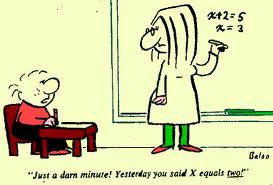
Should We Stop Teaching Algebra?

July 30, 2012

If teaching the skill of algebra is seen as unimportant, I have no problem with a proposal to remove it from the curriculum. But I don’t believe in scrapping a skill just because students are finding it difficult. What message does that send?

This week’s feature story in the NY Times Week In Review is one from Andrew Hacker, emeritus professor of political science at Queens College, who throws down the gauntlet that America should stop teaching kids algebra, “A typical American school day finds some six million high school students and two million college freshmen struggling with algebra. In both high school and college, all too many students are expected to fail. Why do we subject American students to this ordeal? I’ve found myself moving toward the strong view that we shouldn’t.”

Now, Hacker explains, “I’m not talking about quantitative skills, critical for informed citizenship and personal finance, but a very different ballgame,” and lists extremely depressing statistics: “To our nation’s shame, one in four ninth graders fail to finish high school. In South Carolina, 34 percent fell away in 2008-9, according to national data released last year; for Nevada, it was 45 percent. Most of the educators I’ve talked with cite algebra as the major academic reason… The City University of New York, where I have taught since 1971, found that 57 percent of its students didn’t pass its mandated algebra course. The depressing conclusion of a faculty report: ‘failing math at all levels affects retention more than any other academic factor.’

Click on the link to read Maths Teachers Who Can’t Pass Maths

Click on the link to read Children Exposed to Poor Maths Teachers

Click on the link to read Maths is Taught So Poorly

Thje Unions are Great at Protecting Our Worst Teachers

July 30, 2012

Surely it is not the job of the union to prevent schools from ensuring that those charged with sexual misconduct never teach again:

Even Hollywood, famously sympathetic to organized labor, has turned on unions with the documentary “Waiting for ‘Superman'” (2010) and a feature film, “Won’t Back Down,” to be released later this year. But perhaps most damaging to the unions’ credibility is their position on sexual misconduct involving teachers and students in New York schools, which is even causing union members to begin to lose faith.

In the last five years in New York City, 97 tenured teachers or school employees have been charged by the Department of Education with sexual misconduct. Among the charges substantiated by the city’s special commissioner of investigation—that is, found to have sufficient merit that an arbitrator’s full examination was justified—in the 2012-12 school year:

• An assistant principal at a Brooklyn high school made explicit sexual remarks to three different girls, including asking one of them if she would perform oral sex on him.

• A teacher in Queens had a sexual relationship with a 13-year old girl and sent her inappropriate messages through email and Facebook.

If this kind of behavior were happening in any adult workplace in America, there would be zero tolerance. Yet our public school children are defenseless.

The union continually stands in the way of proper reform. Instead of protecting the rights of teachers who need and deserve more support, too much time and resources is devoted to teachers who should never be allowed to teach again.

Click on the link to read If Teachers Were Paid More I Wouldn’t Have Become One

Click on the link to read Pressure in the Workplace

Click on the link to read Sick Teachers Need to be Arrested not Fired!

Charity Pays for Teen’s Plastic Surgery to Help Stop Bullying

July 30, 2012

Plastic surgery will never be the answer to bullying. It only sends the message that the bullies were justified in picking on a child with big ears or a hook nose. It says that unless you do something about your looks you deserve the bullying that comes your way:

Nadia Ilse is looking forward to the new school year, when she will no longer be called “Dumbo” by her peers for her “elephant ears.”

To ward off school bullies who began taunting her in the first grade for her ears, Nadia begged her mother at the age of 10 for an otoplasty — an operation to pin her ears back.

The teen, now 14, was recently granted her wish by the Little Baby Face Foundation, a charity that provides free corrective surgery to children born with facial deformities.

Nadia told CNN that the bullying turned her talkative self into a withdrawn, antisocial girl. The taunting “hurt so much,” she told CNN’s Dr. Sanjay Gupta.

When the Little Baby Face Foundation was contacted by Nadia’s mother, the organization brought the duo to New York City from Georgia and did more than just pin her ears back. The organization’s founder, Dr. Thomas Romo, III. also performed reduction rhinoplasty, reducing the size of the nose, and mentoplasty, altering the chin.

The foundation covered the estimated $40,000 cost of surgery.

I worry about the message sent here. Girls have such a hard time dealing with body image issues. Plastic surgery shouldn’t be the answer to bullying – teacher intervention should.

Click on the link to read Television and Body Image

Click on the link to read Our Children Must be Taught About Society’s Lie

Click on the link to read Most People Think This Woman is Fat

Teaching About the Olympics: A Teacher’s Resource

July 29, 2012

The Guardian compiled a useless list of Olympics resources and websites for teachers:

The Olympic Games: a short animated history – video
It’s a bit cheeky in parts, but this witty and sweetly animated potted history of the Olympic games takes us from Ancient Greece’s nude athletes and the first Paralympic gold medalist to present day.

London Olympics in charts: from medals to competitors, how do the 1908, 1948 and 2012 games compare?
A bit more sport history here. What kind of Olympics were London’s events in 1908 and 1948 – and how have they changed since? In the first of our series of articles based on a unique collection of parliamentary data, we show how London’s third Olympics compares.

London 2012: Olympic bodies – interactive
This is a fascinating insight into what it takes to build an Olympic body. From what they eat to how they train, athletes including Andy Murray, Jessica Ennis, Mo Farah and Victoria Pendleton reveal the physical and mental challenges of Olympic sport.

Could you be a medallist? Find out with our brilliant retro interactive
Here, our interactive team has used race times data to bring athletic achievement to life. In this game-style interactive (inspired by the beloved 8-bit games of my childhood) students can see how their personal best in the 100m, 10km, 100m freestyle swim and bicycle road race compares against the all-time greats – and whether their time would have earned a place on the podium. Could be fun follow up for sports day? For the ICT teachers among you, here’s some info on how it was built too.

Poetry Parnassus interactive map: verse from each Olympic nation
A wonderful English resource inspired by the Poetry Parnassus, and tied into the Cultural Olympiad, this interactive map takes you on a tour of the world’s finest poetry with works from competing Olympic nations. We particularly enjoyed the Marshall Islands’ Kathy Jetnil-Kijiner’s moving piece history project.

Click on this link to see more Olympic lesson ideas.

Click on the link to read Slacklining – The Latest Teen Craze

Click on the link to read The School Kids Evicted From 9/11 Memorial are Symptomatic of a Broader Problem

Click on the link to read UK Kids Don’t Know Where Milk or Bacon Comes From!

Imagine if Teachers Were Caned for Their Own Incompetence

July 29, 2012

I am vehemently against corporal punishment in all cases. Teachers should never have the right to enforce physical punishment on their students.

But to the those that do, I wonder, how would they feel if their superiors were legally allowed to inflict corporal punishment for their own incompetence?

How would they feel if they were caned for failing to complete their planners on time?

How would they feel if they were caned for overlooking bullying issues in their classroom?

How would they feel if they were caned for failing to cover the curriculum?

Children, for all their weaknesses, are no different to adults. We all make mistakes and we all have our lapses in judgements. Caning a student for not reading aloud is tantamount to a teacher being caned for not responding to a parent email:

A seven-year-old girl student of a private school here was hospitalised after being beaten by her class teacher for not reading her English lesson aloud in class.

The girl’s mother got to know of the incident from the school bus driver when he called her to take her daughter from the vehicle, police said.

The child then told her mother that the teacher had beaten her with a ruler because she did not read aloud in class.

The girl was admitted to a hospital last evening. Police have registered a case against the woman teacher on a complaint from the girl’s father.

He alleged that the principal had not taken any action against the teacher despite parents bringing the incident to her notice and instead asked them to give a written complaint.

Click on the link to read Teachers Who Beat Kids Should Be Put Away!

Click on the link to read Corporal Punishment Reveals the Worst School Has to Offer

Click on the link to read Calls To Allow Teachers To Use “Reasonable Force” on Students