Posts Tagged ‘Parenting’

Things Children can Teach us About Happiness

September 3, 2013


kids


Courtesy of Melissa Sher:

1. They go with their gut. Small children don’t spend a lot of time fretting over whether they made the right decision. They’d much prefer to spend time fretting over whether you gave them the right color of cup at lunch.

2. They live in the moment. They don’t dwell in the past. They don’t worry about the future — unless they are being told that it’s almost bedtime.

3. They believe. Little children believe in the Tooth Fairy, Santa Claus and the power of Band-Aids. If nothing else, trying to peel the backing off the adhesive distracts kids from what ails them. When all else fails, put a Band-Aid on it.

4. They make stuff. They draw. They sculpt. They glue. They paint. They cut anything they can get their hands on. Seriously, keep your scissors hidden and don’t say you weren’t warned.

5. They dance. Do you know the expression, “Dance like nobody’s watching”? They do that. Except for the all the times when they want to make damn sure that someone is watching.

6. They sing. They break into song at the drop of a hat. Anytime. Anywhere. Even in the bathroom. Who are we kidding? Especially in the bathroom.

7. They hum. Little children hum to themselves quite a bit. Why do they hum? Because they can’t whistle.

8. They say what they mean. They speak their mind. They don’t need to get anything off their chests because they’ve already said everything they needed to in the first place. If adults did that, there would be a lot less drinking at Thanksgiving.

9. They get excited. They get so excited! (But have a hard time understanding the “future,” so be careful when you tell your son his birthday is coming up… in a couple months.)

10. They don’t care if it’s new. A child’s favorite movies are the ones she’s seen again and again. Her favorite books are the ones she’s been read over and over. And if she has a favorite dress, she’ll want to wear it every day. But adults? We’re obsessed with new. We want to be the first to eat in a new restaurant, see a new movie or wear a designer’s new “It” bag. Adults are really annoying like that.

11. They stop and smell the roses. They’re big on smelling things. Of course, the irony is that so many small children aren’t potty trained and don’t seem to give a sh*t about their own you-know-what.

12. They don’t discriminate. Until taught otherwise, they’re accepting of everyone. Well, everyone except babies. The number one insult from a small child is being called a “baby.”

13. They admit when they’re scared. This lets us help them alleviate their fears. Sometimes, the solution is as easy as turning on a night-light. If only all of our fears could be solved by turning on a night-light.

14. They accept compliments. When you give a child a compliment, she’ll probably answer with either “thank you,” or “I know.”

15. They nap. They may go into it kicking and screaming, but most little children nap and wake up new-and-improved. We’d all be a little better off if we napped. (And richer, too, since we’d spend a whole lot less money at Starbucks.)

16. They go to bed early. But it’s not by choice and it takes a lot of effort on our part because they actually believe the expression “you snooze, you lose.”

17. They engage. Psychologist Mihaly Czikszentmihalyi calls immersing oneself fully into an activity the secret to happiness. He calls it “flow.” Children often become so deeply engrossed in what they’re doing that they don’t hear you when you call them. Tip: If they don’t answer to their name, try whispering the words “chocolate chip cookie.”

18. They march to the beat of their own drum. Literally. Little kids can often be found marching around their houses banging on things.


Click on the link to read School Holidays are Very Hard for Many Parents (Video)

Click on the link to read 20 Reassuring Things Every Parent Should Hear

Click on the link to read 10 Tips for Nurturing Independence Among Children

Click on the link to read The Spoiled Twins with their £70k First Birthday Party (Photos)

Click on the link to read 4 Tips for Getting Your Kids up in the Morning

Click on the link to read Seven Valuable Tips for Raising Your Child’s Self-Esteem

Click on the link to read Top Ten Compliments Your Children Need to Hear


School Holidays are Very Hard for Many Parents (Video)

August 29, 2013


I love spending time with my children and have taken a year off to look after my baby son, but there are times when the school holidays seems to go on for a bit too long.


Click on the link to read 10 Tips for Nurturing Independence Among Children

Click on the link to read The Spoiled Twins with their £70k First Birthday Party (Photos)

Click on the link to read 4 Tips for Getting Your Kids up in the Morning

Click on the link to read Seven Valuable Tips for Raising Your Child’s Self-Esteem

Click on the link to read Top Ten Compliments Your Children Need to Hear

Click on the link to read Tips For Parents of Kids Who “Hate School”

Click on the link to read 20 Reassuring Things Every Parent Should Hear


Another Reason why Television is Unealthy for Children

August 28, 2013

remote


Beyond the obvious physical health ramifications, it seems that excessive television watching among children can impact their mental health as well:

Children are becoming increasingly anxious due to too much time in front of TV and computer screens, according to a Government briefing paper.

Inactive lifestyles are also to blame for the negative impact on children’s wellbeing, said the document from Public Health England.

It said higher levels of TV viewing are having a negative effect on children’s wellbeing, including lower self-worth, lower self-esteem and lower levels of self-reported happiness.

Children who spend more time on computers, watching TV and playing video games also tend to experience higher levels of emotional distress, anxiety and depression, it said.

Last week, a study found half of all seven-year-olds do not get enough exercise – and girls are far less active than boys.

Only 51 per cent of all seven-year-olds in the UK achieve the recommended hour of exercise every day, with the figure being just 38 per cent in girls compared with 63 per cent in boys.

Half of this age group is also sedentary for an average of 6.4 hours or more every day, experts found.

Click on the link to read The Spoiled Twins with their £70k First Birthday Party (Photos)

Click on the link to read 5 Tips to Help Children Cope With Stress

Click on the link to read Seven Valuable Tips for Raising Your Child’s Self-Esteem

Click on the link to read Top Ten Compliments Your Children Need to Hear

Click on the link to read Tips For Parents of Kids Who “Hate School”

Click on the link to read 20 Reassuring Things Every Parent Should Hear

Click on the link to read Parents and Teachers Should Not Be Facebook Friends

10 Tips for Nurturing Independence Among Children

August 26, 2013


self

Courtesy of drfranwalfish.com:

1.  Balance nurturing, setting limits, and holding boundaries.  Kids can only become independent if they have been given structure and internal guidelines as foundation.

2.  Encourage healthy expression of anger.  You will help your child develop excellent communication tools that include conflict resolution skills.  Your child needs to know he is acknowledged, validated, and accepted flaws and all!

3.  Nurture and praise your child’s incremental steps toward separation.  To be a good parent you must prepare and equip your child to deal with life and then let them fly on their own.

4.  Encourage your child’s unique and individual ideas, thoughts, and opinions.

5.  Built self-esteem by using words that support and motivate with empathic attunement, rather than criticize.

6.  Equip your child with coping skills to deal with disappointments.  We cannot protect or prevent life’s disappointments.  The best we can do is equip our children with coping skills to deal with inevitable letdowns.

7.  Reward your child’s demonstration of good judgment and good behavior with incremental amounts of increased independence and freedom.

8.  Do not allow yourself to be pressured by your child.  What her friends are allowed or what her brother was allowed has nothing to do with her individual level of readiness for independence.

9.  Have individual one-on-one special time with each child.  Begin when they are young and continue to implement this quality uninterrupted time with your son or daughter.  This is your opportunity to build upon the first year of attachment.  True independence can only come out of a healthy secure bond.

10.  Create a support system for yourselves, Moms and Dads.  It’s hard to let go of your child.  The psychological goal of toddlerhood is for the youngster to claim himself as a separate being from Mommy and Daddy.  The psychological goal of adolescence parallels that of toddlerhood.  The teen’s goal is to resolve the separation process.  This means your adolescent must emerge into adulthood with his own ideas and opinions about relationships, religion, morals, ethics, sex, character, and values.  There is life ahead for empty-nest parents.


Click on the link to read The Spoiled Twins with their £70k First Birthday Party (Photos)

Click on the link to read 4 Tips for Getting Your Kids up in the Morning

Click on the link to read Seven Valuable Tips for Raising Your Child’s Self-Esteem

Click on the link to read Top Ten Compliments Your Children Need to Hear

Click on the link to read Tips For Parents of Kids Who “Hate School”

Click on the link to read 20 Reassuring Things Every Parent Should Hear

Click on the link to read Parents and Teachers Should Not Be Facebook Friends


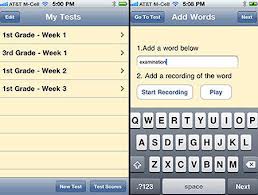
5 Great Spelling Apps for Tablets and Smartphones

August 24, 2013


spell

Courtesy of howtolearn.com:

  • Alpha Writer, by Montessorium

Alpha Writer is a stylish and effective Montessori-style app teaches kids letters and how they form words in four activities.  Kids can practice reading, writing, and spelling in the first two activities, create and read their own stories, and play the Alpha-Spy game (an interactive I-spy game).  This app teaches kids to:

✴ Read, write, and spell phonetically

✴ Pronunciation and composition of letters and words

✴ Fine motor skills

✴ Identification of letters as consonants or vowels

✴ Creativity as they write, create, and read their own stories

Users can also choose between three internationally acclaimed artists, Zeptonn, Mike Lowery and Marloes de Vries, for the graphics and illustrations.

  • C is for Cow by Forge

C is for Cow is a simple but effective app that is perfect for your youngest children.  This is the second of the 5 best spelling apps for smartphones and tablets and it teaches basic letter and word recognition, phonetics, and draws a connection to corresponding animals.  Choose from two modes: alphabetical  (which goes through animals in alphabetical order) or random (animals are tested in a random order, which helps kids exercise their knowledge).  Children are able to see and hear letters and words while enjoying the animal fun!

  • TeachMe: Kindergarten & TeachMe: 1st Grade by 24x7digital LL

The two TeachMe apps are sophisticated, award-winning apps that cover math, sight words, and spelling.  Each subject has five levels that children can advance through as they can handle the increased difficulties.  The interactive teacher, Mimi Mouse gives feedback and instructions to fully interact with kids and make learning fun.   Parents can even set the app to give out virtual rewards whenever children get a certain number of questions correct!  In addition, unique user accounts can be made for up to twenty different children.  Once children have mastered TeachMe: Kindergarten, they can advance to the next level of TeachMe: 1st Grade which is why this is one of the five best spelling apps for smartphones and tablets.

  • Montessori Crosswords by L’Escapadou

This award-winning app helps kids develop reading, writing, and spelling skills with activities that use phonics and graphics to create words.  Young children learn the fundamentals of writing and spelling while older children are challenged with complex crosswords in the three more difficult levels.  Customizable in many different ways, the app uses animations, interactive effects, and sounds to keep kids interested while a bank of over ten thousand words is available throughout the different levels.

  • The Electric Company Wordball! by PBS Kids

The Electric Company Wordball is certainly one of the 5 best spelling apps for smartphones and tables as well as an interactive phonics game that is based off of the popular PBS show, The Electric Company.  The app uses a series of educational videos that allow kids to interact as kids collect wordballs of letters.  In the second part of the game, kids use their previously collected wordballs to complete and create words for points.  The level of difficulty and need for dexterity makes this app better for kids who are at a higher level.  The Electric Company Wordball! is available for iPhone, iPad, and iPod Touch and is completely free!


Click on the link to read Are Educators Being Conned by the i-Pad?

Click on the link to read The Best Phonics Apps for iPads

Click on the link to read Should Teachers be able to Text Students?

Click on the link to read 50 Ways To Use Skype In Your Classroom

Click on the link to read Top 10 Educational i-Pad Apps

Click on the link to read Top 10 Math Apps for Children


The Spoiled Twins with their £70k First Birthday Party (Photos)

August 19, 2013

party1


All that money and the children involved will grow up without ever remembering enjoying it:

He’s created everything from ice castles to oriental palaces and numbers Simon Cowell and Elton John among his clients – and now well-heeled parents are asking celebrity event planner Steven Duggan to create equally lavish parties for children too young to have a clue what’s going on.

Last month, Duggan created an Alice in Wonderland and Peter Pan-themed event for a pair of twins celebrating their first birthday – and charged the parents £70,000 for the privilege. The party took place in a marquee erected in the family’s garden in London.

While it might sound extravagant, Duggan says it’s by no means an unusual event (‘we do about one a month’) and revealed that non-celebrities tend to splash out far more on private parties than their A-list counterparts.


party2

party3

party4


Click on the link to read 4 Tips for Getting Your Kids up in the Morning

Click on the link to read Top Ten Compliments Your Children Need to Hear

Click on the link to read Tips For Parents of Kids Who “Hate School”

Click on the link to read 20 Reassuring Things Every Parent Should Hear

Click on the link to read Parents and Teachers Should Not Be Facebook Friends

Click on the link to read Introducing the App that will Give Parents Nightmares

7 Tips for Building a Better School Day

August 11, 2013


yay

Courtesy of parade.com:

1. Begin the Day “Over Easy”—with Breakfast

At Ellis Elementary in Denver, teachers are reinventing homeroom as a morning meeting over eggs and toast. “When students eat a good, nutritious breakfast, they can hit the ground running,” said Mayor Michael Hancock during a visit to the school last year—yet a 2011 survey found that though 77 percent of young children eat breakfast every day, only 50 percent of middle schoolers and 36 percent of high schoolers get a regular morning meal. According to nutrition researcher Gail C. Rampersaud of the University of Florida, “breakfast consumption may improve cognitive function and school attendance,” and Ellis principal Khoa Nguyen notes that tardiness and missed school days have dropped off significantly since the program began. And he’s noticed other benefits. “Both the kids and teachers know that they will have a few minutes every morning where they can eat, chat about what’s happening that day, and not be rushed,” he says.

2. Emphasize Learning, Not Testing

As a result of government policies like No Child Left Behind—which requires schools to improve on students’ standardized test performance year over year—educators are overwhelmed with testing and test prep. And that has contributed to an increasingly dysfunctional public school system, says Diane Ravitch, Ph.D., research professor of education at New York University and author of the upcoming book Reign of Error. “Schools and teachers are under so much pressure to get students to pass that most of the school day is spent teaching to the test. Subjects that don’t appear on the tests—art, foreign languages, even science and history—are being dropped from the curriculum,” she says. The result, says journalist Paul Tough, author of How Children Succeed, is that we’re producing many grads who are great test takers but not great learners. “Students don’t know how to deal well with confrontation, bounce back from defeat, see two different sides of a problem,” he says, “things that are essential not just in adulthood but in continuing your education past high school. It turns out the students who are most likely to graduate from college aren’t necessarily the ones who do best on the standardized tests, but the ones who are able to develop these other qualities.”

3. Teach 21st-Century Skills

In a Gallup poll this year of 1,014 young adults, those who said they had learned “21st-century skills” (like developing solutions to real-world problems) during their last year in high school were twice as likely to describe themselves as successful in the workplace. How can we get students to develop such talents?

Three ideas:

a. Emphasize long-term projects. Consider the way most professional jobs work, says Tough. “You’re probably not working on one assignment today, and another one tomorrow, and another one the day after that. Instead, you’re working on a project over a period of time—revising it, perfecting it, presenting your findings to others.” Those are precisely the skills that students need to develop, he says.

b. Use technology. How can schools get kids to embrace technology inside the classroom the way they do outside of it? According to former teacher Will Richardson, author of Why School?, “it’s got to be in service of answering big questions.” For example, at the Science Leadership Academy, a public magnet high school in Philadelphia, 10th graders studying chemical engineering asked: How can we make an efficient biodiesel generator that people in developing countries could use to create their own electricity? “And they did it!” says Richardson. “Technology was able to augment the students’ work, allowing them to connect with leading engineers or create 3-D computer models.”

c. Make classes multidisciplinary. At New Technology High School in Napa, Calif., classes combine different disciplines (think: digital media arts/geometry). Last year, in bio-fitness, ninth grader Haley Kara used deductive reasoning to diagnose a mystery illness; and in chemistry, 10th grader Brian Shnell designed a bio-dome that could sustain life on another planet. “Splitting subjects into slots is easier for us,” says Richardson. “But that’s not what the real world looks like. It’s much messier.”

(more…)

The Explosion of Online Bullying

August 7, 2013

hannah

Some very worrying numbers as a result of possibly the most difficult form of bullying to eliminate:

British children are suffering thanks to an epidemic of online bullying – with the number of calls to ChildLine from victims almost doubling in just one year.

In 2012/13, a total of 4,507 children – around 12 a day – rang the helpline to complain they were being abused by peers on social networking sites.

That is up a startling 87 per cent from the 2,410 calls the year before, with the head of the NSPCC revealing many were ringing in ‘utter panic’ after suffering months of ‘torment’.

Girls are three times more likely to call than boys and, worryingly, one in six calls are received from children aged 11 or younger.

The revelation follows the death of 14-year-old Hannah Smith, who hanged herself on Friday after months of abuse on the internet.

Her father said he had found bullying posts on his daughter’s ask.fm page from people telling her to die.

She had been urged to ‘drink bleach’ by her anonymous tormentors and taunted over her weight, the death of an uncle and an apparent propensity to self-harm.The notorious ask.fm website – described as a ‘stalker’s paradise’ – has been linked to at least four teenage deaths over the past year.

Now an analysis of calls received by ChildLine show that these victims are far from alone – and that cyberbullying is now one of the fastest growing issues young people contract them about.

4 Tips for Getting Your Kids up in the Morning

August 1, 2013

bed

Getting children ready for school on time is a real and extremely difficult challenge for many parents. Below are some tips courtesy of blogger Sue Kirchner”

1. Wake up, Little Susie 

    Analyze your kids’ morning routine. Some kids need time to come awake while others snap to it. For those sleepy heads, you may need to set the alarm early enough to accommodate some sitting-and-staring-into-space time. Or, try setting two alarms, one on the opposite side of the room. Having to physically get up and turn off the clock means your child is that much closer to being awake. Play around with the alarm itself. See if setting the alarm to a radio station works better at encouraging your kids to get up than just a buzzer. Experiment to see which method works best and then overestimate the time your child needs to get ready so there are no last minute morning panic attacks. That’s no way to start the day.

2. Rise and Shine                                        

    Try waking your kids up with their nose. Use favorite smells to lure them out of bed, such as cinnamon-raisin toast, crispy bacon frying, or maybe even coffee brewing for teens. I’m not above bribing my kids to get out of bed with one of their favorite breakfast meals. Sure, I may need to get up a little earlier to cook something, but it’s worth it to get everyone to willingly show up to breakfast and skip the nagging.

While I personally am not this dedicated, I did read a tip from a Mom who on cold winter mornings would throw her kids clothes into the dryer for a few minutes. She felt pulling on warm clothes helps inspire her kids to leave their warm bed. Try it and let me know if it works.

3. Early to bed, early to rise 

Tell your child that you will keep pushing bedtime earlier and earlier in the evening, until they are able to wake up on time. The thought of having to go to bed at 7:30 p.m. may be just the thing to motivate them to wake up in the morning. Getting a good night’s sleep, as simple as it sounds, may solve the problem, too. Get the family into a routine to guarantee a good 8 – 10 hours of sleep for your child.

4. Eliminate distractions

Your kids need to wind down and relax so they can fall asleep faster and feel rested. So, give your kids the opportunity to relax and unclutter their mind before bed. When they are young, read a goodnight story together. As they get a little older, have them read chapter books to you or read on their own. Don’t schedule activities too late in the evening so they are too wired to sleep. For tweens and teens, have them plug their cell phones into the charger in the kitchen before going to bed and leave them there. No texting until all hours late at night! According to this article from MSNBC and the BBC, teens texting at night causes sleep deprivation and memory loss. Sleep deprivation is very dangerous for teens, according to this article by the Mayo Clinic.

Same thing is true in the morning. Once your kids are up, no TV, no computers, no cell phones until they are dressed, have eaten breakfast, prepared their lunch, or packed up their backpack. Eliminating distractions before their chores are done can help keep the morning moving smoothly.

Hopefully these tips will help get your kids up and out the door in time for school. Now go have a cup of coffee and a deep breath!


Click on the link to read Seven Valuable Tips for Raising Your Child’s Self-Esteem

Click on the link to read Top Ten Compliments Your Children Need to Hear
Click on the link to read Tips For Parents of Kids Who “Hate School”

Click on the link to read 20 Reassuring Things Every Parent Should Hear

Click on the link to read Parents and Teachers Should Not Be Facebook Friends

Click on the link to read Introducing the App that will Give Parents Nightmares

5 Internet Safety Rules to Share With Your Kids

July 29, 2013


cyber

Courtesy of Millionaire Hoy:


1. Never give out any personal information

The internet can be a very misleading place for a child. When they think of the internet, they think of games, funny video and pictures, and having a great time; not internet predators. Internet predators leverage the happy perception children have of the internet and come off as nice people in order to pry information from unsuspecting children. Let your children know that they should never share their real name, address, school, city, parent’s information, or any clues that can lead an identity thief or pedophile to your child.

2. Downloading is off limits without supervision

Downloading is one of the most popular activities on the internet, but it can be dangerous. Make sure your children understand that while downloading wanted files, they might be downloading unwanted things as well. Virus authors, identity thieves, and online con artists know that parents are hip to most of their tricks and are now targeting free children’s gaming sites, because they can easily fool children. Let your children know that they never allowed to download files unless you are there to monitor their downloading.

3. Strangers are still strangers even if they are online

As I stated earlier, children look at the internet in a very different way than adults and children make friends very easily. It’s likely that your children know not to talk to strangers in the real world, but online adults can pose as children. It may be hard for your children to understand this and they might not even be aware why an adult would want to pose as a child. Let your children know to be suspicious when making friends online and tell them to let you know any time they make a new friend.

4. Keep your passwords private

If your child makes a friend online, they might be led to do things that they wouldn’t do, if not for the sake of friendship. A child might feel that they are betraying their child if they don’t do what’s asked and online predators will take advantage of this situation. It’s important that your child never reveal their online passwords because online scammers can compromise their accounts and gain private information associated with the account.

5. Bring any suspicious or uncomfortable information to your parents

If your child encounters something online that makes them feel uncomfortable or someone that makes them feel pressured, it’s important that they know to bring it to your attention immediately. If your child is sent pictures in poor taste, contacted by someone that’s asking uncomfortable questions, see something disturbing online, or are linked to a strange website, they need to know to stop what they are doing immediately and let you know about the situation.


Click on the link to read Introducing the App that will Give Parents Nightmares

Click on the link to read Teachers Who Rely on Free Speech Shouldn’t be Teachers

Click on the link to read Bullying is Acceptable when it’s Directed to a Teacher

Click on the link to read Punish Bullies and Then Change Your Culture