Posts Tagged ‘Body Image’

Overweight Doctors and Nurses ‘Should Undergo Stomach Stapling Surgery’

December 31, 2012


staple

The best rolemodels are the ones that act with integrity and treat others with respect. The best doctors and nurses take pride in what they do, give an excellent standard of care and are generally superb at what they do. I don’t care if they are fat, skinny, have a long nose or bushy eyebrows.

A recent report wants to point the finger at overweight medical professionals as if it’s easier for good doctors and nurses to stave off the difficulties of maintaining a trim physique. I don’t care what field you are in or what level of education you have maintaining a slim body is hard work and takes great discipline.

It beggars belief why a rolemodel must be slim before being kind, generous, caring and gratious:

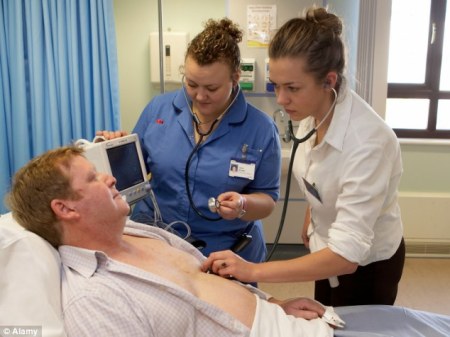
Doctors and nurses who suffer from weight problems should be offered gastric surgery in order to retain credibility with patients on weight loss treatments, a report will say.

Overweight NHS staff ought to be given dietary advice and counselling as well as stomach stapling operations as they are setting a bad example for patients, the Royal College of Physicians said.

Over half of medical staff within NHS organisations are likely to be overweight, in accordance with statistics for the British population.


Click on the link to read Self-Esteem Crisis Even More Serious than the Obesity Crisis

Click on the link to read Our Young Children Shouldn’t Even Know What a Diet Is?

Click on the link to read Charity Pays for Teen’s Plastic Surgery to Help Stop Bullying

Click on the link to read Most People Think This Woman is Fat

Click on the link to read It’s Time to Change the Culture of the Classroom

Click on the link to read Sparing Young Children the Affliction of Body Image


Self-Esteem Crisis Even More Serious than the Obesity Crisis

December 9, 2012

esteem


The focus on our obesity issues are becoming less interested in helping develop a healthier and fitter society and instead seem slanted towards shaming and belittling people who are struggling because of their weight issues.

This issue will not be properly addressed through stigmas and assumptions.

This shocking story is a case in point:

After a nice meal out, you might expect the check to hurt your wallet.

But you don’t expect it to hurt your feelings.

However, that’s exactly what happened to three California women on Thursday night, when their receipt came with the words ‘Fat Girls’ written across the top.

Christine Duran, Christina Huerta and Isabel Robles were having a good time at the Cameo Club Casino restaurant in Stockton but when they asked for the check they couldn’t believe their eyes.

‘I got the bill, and I was like, why does the receipt say, “fat girls?”‘ Duran told News 10.

She said her pals thought she was joking at first.

‘I was laughing at her, and she was like, “I’m serious.” I’m like, “No, it does not say fat girls, let me see it,”‘ Huerta said.

Duran showed the receipt to her friends who finally believed her.

‘I’m looking at it. I was like, “Oh, heck no,”‘ Robles said.

The ladies quizzed their waiter when he returned to their table but he denied any involvement.

He said that Jeff, whose name was on the receipt, must have typed the offensive slur into the computer as he was taking their order. But he said Jeff had gone for the night.

The three women, upset and outraged, demanded to see a manager.

‘He had a smirk on his face, like it was funny, but he was trying not to laugh,’ Huerta said, describing the manager.

The manager told the women he was sorry for what happened and offered to discount their bill by 25 per cent. But the ladies were unimpressed by the offer.

‘He was like, “Well, I can do 50 per cent,” and we were just like, “Are you serious?”‘ Huerta said.

bill

Our Young Children Shouldn’t Even Know What a Diet Is?

November 28, 2012

Message: Negative imagery painted with words like these are looked at by 500,000 people per year, a study has found

Our generation took body consciousness to a whole new level, with quite devastating results. We were taught to judge others not by the breadth of their character but by the size and shape of their bodies. It saddens me that this obsessive desire to look a certain way has seemingly overridden the desire of being a good person, resisting to gossip, being truthful and loyal to the people around us and acting with integrity. We live in a society where people would sell their souls for a preferred dress size and confidence is based on form and complexion over character development.

What has this philosophy provided us with?

Depression, peer pressure, cosmetic surgery addiction, diet crazes, suicide, bullying, anorexia and bulimia.

And what are we doing about it?

Passing the sickness on to our very young:

The internet is awash with pro-anorexia websites which thousands of girls – some as young as six – are using to compete against each other in deadly starvation games, a study has found.

More than 500 of these ‘gruesome’ sites exist and encourage vulnerable young women to barely eat and just drink coffee, smoke and take diet pills to look like a ‘goddess’.

Using the phrase ‘starving for perfection’ they say users should eat no more than 500 calories a day – the recommended level is 2,000 for women and 2,500 for men.

They also include ‘thinspiration’ sections with images of super-slim women and in the last year 500,000 girls have admitted visiting them, and one in five were aged between six and 11.

University Campus Suffolk in Ipswich has carried out research into the issue and found than many of these websites are set up by people with anorexia and other eating disorders.

‘It starts with an individual who wants to share their experience and as they get a following they set themselves up as almost Goddess-like,’ researcher Dr Emma Bond, senior lecturer in childhood and youth studies said.

‘When I started this research last January I came across a website set up by a girl who was disgusted with herself because she had put on a few pounds at Christmas. She planned to fast for three days and regain control.

‘In under two hours, she had 36 followers saying things like “You’re wonderful, you’re an inspiration to me, I’m only fasting because of you”.’

Some of the people are even posting pictures of themselves in very few clothes on thousands of blogs and on social media like Twitter.

Official figures show that one in 200 women and one in 2,000 men have anorexia – which means they starve themselves or exercise excessively to stay slim – although some experts believe the true number is much higher.

Around eight per cent of women and one per cent of men develop bulimia at some point. They binge on excessive amounts of food then make themselves sick or use laxatives to stop gaining weight.

Many sufferers of eating disorders hide their problem from family and friends by pretending they have already eaten to avoid meals and wearing baggy clothes to conceal their skeletal shape.

Doctors believe that anorexia or bulimia is more common in people who are perfectionists, tend to worry a lot or are often depressed.

Click on the link to read Charity Pays for Teen’s Plastic Surgery to Help Stop Bullying

Click on the link to read Most People Think This Woman is Fat

Click on the link to read It’s Time to Change the Culture of the Classroom

Click on the link to read Sparing Young Children the Affliction of Body Image

JK. Rowling in Body Image Controversy

October 2, 2012


JK Rowling deserves a bit of slack for this latest controversy. Whilst the reference to a ‘mustachioed’ girl is regrettable, Rowling has done amazing things for children with glasses and scars and has inspired orphans to rise above their situation:

Now it appears the book, called The Casual Vacancy, has also angered religious leaders in India because of its portrayal of a Sikh girl  as ‘mustachioed, yet large-mammaried.’

The book, about social tensions in a small village in South West England, features a Sikh family, including female student Sukhvinder.

One of the characters, Fats, describes Sukhvinder, his classmate, as ‘mustachioed, yet large-mammaried’, adding that ‘scientists remain baffled by the contradictions of the hairy man-woman’.

Sikh believers are forbidden from shaving or trimming their hair, and the passage was condemned by India’s Shiromani Gurdwara Parbandhak Committee (SGPC), which manages places of worship in India.

Sikh leaders are now closely scrutinising the novel with a view to having the offending passages removed from Indian editions.

SGPC chief Avtar Singh Makkar described Miss Rowling’s choice of words as ‘a slur on the Sikh community’, adding: ‘Even if the author had chosen to describe the female Sikh character’s physical traits, there was no need for her to use provocative language, questioning her gender. This is condemnable.’

He added: ‘If anything is written against the Sikh maryada (dignity), we will write to [India’s] prime minister Manmohan Singh and urge him to take up the matter with the government in the United Kingdom for action against Rowling.

Click on the link to read Charity Pays for Teen’s Plastic Surgery to Help Stop Bullying

Click on the link to read From 0 to 100 in 150 Seconds

Click on the link to read It’s Time to Get New Role Models

Ginger Beer Ad is Neither Funny nor Clever

August 2, 2012

I realise that this ad was aiming for controversy, but I can guarantee that kids will be bullied because of it:

An advertising campaign from a New Zealand company telling customers to swap their “ginger children” for ginger beer has been criticised on social media.

A media release from Hakanoa Handmade Ginger Beer yesterday gave “unfortunate” parents with red-haired children the opportunity to exchange them for ginger beer, starting today and running until the end of August.

“Parents with ginger spawn will be able to bring them into The Little Grocer on Richmond Road, Grey Lynn, where they will be able to swap them for a six-pack of ginger beer.”

However, people on the company’s Facebook page said the campaign was offensive.

Ross Ronald said: “Awful – who’s next? Kids with glasses? You’ve totally missed the point and have maybe created the world’s most un-inclusive ad campaign. Humour is best left to those who have some.”

“This is a disgusting but of bullying – towards children – and I hope you have some human rights complaints coming your way,” said William Robertson.

Click on the link to read Charity Pays for Teen’s Plastic Surgery to Help Stop Bullying

Click on the link to read You Don’t Fight Bullying With More Bullying

Click on the link to read It’s Time to Get New Role Models

Charity Pays for Teen’s Plastic Surgery to Help Stop Bullying

July 30, 2012

Plastic surgery will never be the answer to bullying. It only sends the message that the bullies were justified in picking on a child with big ears or a hook nose. It says that unless you do something about your looks you deserve the bullying that comes your way:

Nadia Ilse is looking forward to the new school year, when she will no longer be called “Dumbo” by her peers for her “elephant ears.”

To ward off school bullies who began taunting her in the first grade for her ears, Nadia begged her mother at the age of 10 for an otoplasty — an operation to pin her ears back.

The teen, now 14, was recently granted her wish by the Little Baby Face Foundation, a charity that provides free corrective surgery to children born with facial deformities.

Nadia told CNN that the bullying turned her talkative self into a withdrawn, antisocial girl. The taunting “hurt so much,” she told CNN’s Dr. Sanjay Gupta.

When the Little Baby Face Foundation was contacted by Nadia’s mother, the organization brought the duo to New York City from Georgia and did more than just pin her ears back. The organization’s founder, Dr. Thomas Romo, III. also performed reduction rhinoplasty, reducing the size of the nose, and mentoplasty, altering the chin.

The foundation covered the estimated $40,000 cost of surgery.

I worry about the message sent here. Girls have such a hard time dealing with body image issues. Plastic surgery shouldn’t be the answer to bullying – teacher intervention should.

Click on the link to read Television and Body Image

Click on the link to read Our Children Must be Taught About Society’s Lie

Click on the link to read Most People Think This Woman is Fat

It’s Time to Get New Role Models

July 18, 2012

Unfortunately sports stars are idolised by children. I say unfortunately, because all too often they let themselves and their followers down by insensitive behaviour and poor decisions.

Take this story from my country, Australia, for example:

A YOUNG girl claims she was told by a St Kilda football player that the club saved themselves for ”hot chicks” and that ”there should be a no fat chicks section” in their contracts.

The girl, who has not been named, said the comments were made last week at Melbourne airport while she was trying to get a photograph for her friend.

She told the Herald Sun she was horrified by the experience.

“Instantly my eyes filled up with tears,” she said.

“Body image and how I look is important, so that comment, coming from someone who is in the public eye, made me feel like a monster.

“Now I think everyone around me is thinking those things.”

And what about this for a lackluster response?

St Kilda’s head of football Chris Pelchen confirmed the club had acted on the incident.

In a statement he said: ”The St Kilda Football Club can confirm we received a complaint from the mother of a young lady alleging comments were made by the players at Melbourne airport on Friday that upset her daughter.

”The Club has spoken to the playing group, and while there is some conjecture about the comments, the Club is mindful that sensitivities need to be respected.

”The family involved have indicated their appreciation for the professional way the St Kilda Football Club has managed the matter.”

The team made a donation to the Butterfly Foundation and also provided a guernsey to the young girl.

The sport’s body (the AFL) should step in and demand stronger consequences. This is beyond unacceptable behaviour.

Click here to join in the discussion on body image and our youth.


Discussing Weight Issues with Your Children

July 2, 2012

I am of the opinion that one shouldn’t need to discuss ‘weight’ with issues with your children. I prefer a more positive approach where healthy food and exercise is promoted rather than “negative talk” which is likely to make the child even more self-conscious.

A new report says parents are concerned that talking to their child about their weight will lead to an eating disorder.

This figure rises to 65% of parents who identify their child as being overweight or obese.

More than 1,000 parents with a child aged 5-16 responded to the Let’s talk about weight survey on Netmums and shared how they feel about bringing up the topic of weight with their child.

I do understand that the problem is more complicated than just advocating health over weight loss. I also realise that children are too smart not to realise that healthy lifestyle measures are a result of their weight issues.

What is your opinion? How should parents discuss weight issues with their children?

Click on the link to read my post, ‘Sparing Young Children the Affliction of Body Image‘.

Most People Think This Woman is Fat

June 3, 2012

This morning’s newspaper asked readers to comment on whether or not they thought this woman was fat. Whilst I don’t think this woman is fat at all, it is the question itself that got me worked up.

It reminded me about how obsessed we are about weight, and how this obsession is going to ensure that our children will spend more time aspiring to fit a certain look rather than to become good people.

Nobody seems to care anymore whether a person is caring, selfless, charitable or kind. These are attributes of losers. Surveys that ask what we would prefer to be, beautiful or kind, favour beautiful every time. The rationale being, that nobody is jealous of a kind person in the way they are of a good-looking one.

How are our children supposed to make sense of this?

It upsets me to see Primary aged children so conscious of their weight. It bothers me no end that 8-year olds know everything there is to know about the perfect body size and shape, but have no insights on the correct protocol for offering ones seat to an elderly person on a crowded train. The thought would never have entered their mind.

Haven’t we learnt our lesson? Did we not realise that an obsession with looks leads nowhere. It doesn’t make one happy. Why are we creating kids that follow our sick ways? Why are we perpetuating the message that there’s nothing wrong with gossiping, fakery and selfishness, but eating ice-cream is a sin?

So, no, I don’t find the woman fat. But guess what? I don’t care whether she is fat or not. I care whether she is a good woman, a kind wife, a loving mother, a loyal friend, a friendly co-worker etc. And ultimately, that’s what I want us all to look for.

There are frumpy, unfit people out there, with pale complexions who have unpopular taste in clothes. Some of these people are also tremendously kind and good-hearted. It would be criminal for us to marginalise these people, as some of them are the real beautiful people!

The Impact of Social Media on Kids

May 13, 2012

I agree with many of Jim Steyer’s points in regard to the need to educate children about using the personal setting on Facebook, as well as the addiction issues relating to children and social media. I am a big fan of his suggested “erase” button, which would enable children to delete any uploaded information they regretted putting on their pages.

Facebook’s big stock offering on Wall Street must be followed by an intensive debate on Main Street about social media’s powerful impact on children, an expert on the topic says.

Jim Steyer, founder of Common Sense Media, a San Francisco think tank focusing on media and families, said the technology that Facebook represents is having “an enormous impact” on youngsters, families and schools worldwide.

“We need to have a big national, if not global conversation about the pros and cons of that,” Steyer, a father of four who is also a civil rights lawyer and Stanford University professor, told AFP in an interview.

While social media such as Facebook, Google Plus and Twitter offer “extraordinary possibilities” in such areas as education, he said, “there are also real downsides in a social, emotional and cogitative development way.”

Steyer was in Washington to promote his just-published book “Talking Back to Facebook: The Common Sense Guide to Raising Kids in the Digital Age,” which argues for greater parental involvement in their children’s online lives.

“Whether we like it or not, kids are now spending far more time with media and technology than they are with their families or in school,” – as much as eight hours a day on average in the United States alone, he wrote.

Children face the triple peril of what Steyer calls RAP – relationship issues, attention and addiction problems, and privacy issues – as well as cyberbullying, online pornography and, for girls, body image fears.

“There is an arms race for data, and to build things as fast as possible … but that’s not a great strategy when you’re talking about kids,” he said, accusing tech outfits for “not respecting the concept of privacy.”

Earlier this week, a Consumer Reports survey found nearly 13 million US Facebook users – out of 157 million, and 900 million worldwide – do not use, or are not aware of, the site’s privacy controls.

Girls are especially vulnerable, Steyer said, with studies indicating that many body-conscious teens are photoshopping images of themselves so as to look thinner and score more “likes” among their friends.

On a governmental level, Steyer suggested the United States follow Europe’s lead in privacy regulation and introduce an “eraser button” enabling users to wipe off anything they might have posted in the past.

“We need clear and simple rules (around privacy) for the tech companies, too, because right now they’ve dominated the debate and they’ve set the rules themselves,” he said.

But the immediate responsibility, he said, falls on moms and dads.

“It’s part of parenting 2.0 today, so you have to do your homework,” he said.

“You have to actually learn the rules of the road… and then you have to set clear and simple limits for kids, set clear rules of behaviour – and you have to be a role model.

“If you’re constantly addicted to your cellphone or your ‘CrackBerry’ then that’s not sending a very good message to your kids.”