Parody of Oscar Nominated Movies Featuring a Cast of Adorable Kids

February 25, 2013


Click on the link to read Hilarious Parenting Checklist

Click on the link to read 7 Rules for Raising Kids: Economist

Click on the link to read Dad’s Letter to 13-Year Old Son after Discovering he had been Downloading from Porn Sites

Click on the link to read Mother Shaves Numbers Into Quadruplets Heads So People Can Tell Them Apart

Click on the link to read A Joke at the Expense of Your Own Child

Horrible Video of Young Girls Forced to Fight Goes Viral

February 24, 2013

These poor children deserve much, much better than this.

Click on the link to read A Case of Parenting at It’s Worst

Click on the link to read The Most Popular Lies that Parents Tell their Children

Click on the link to read Dad’s Letter to 13-Year Old Son after Discovering he had been Downloading from Porn Sites

Click on the link to read A Parent that Means Well Doesn’t Always Do Well

Click on the link to read A Joke at the Expense of Your Own Child

Do You Vet Who Your Children Play With?

February 21, 2013

kids

I think it’s entirely appropriate to try to have your children playing with friends that will be a good influence on them. What might not be so appropriate is judging children based on jewelery, gadgets, lateness to school and grades.

Katie Hopkins has taken things way too far and let her controlling and apparent judgmental instincts get the better of her good intentions.

What troubles me greatly with her flawed system is that she has confused ‘under performing’ kids with’ bad influences’. This mistake is extremely offensive to good-natured, highly respectable and courteous children from loving homes who are discriminated by her due to their Maths average. Similarly, it might have been best for the families of her children’s classmates, that they were left in the dark about her scheme:

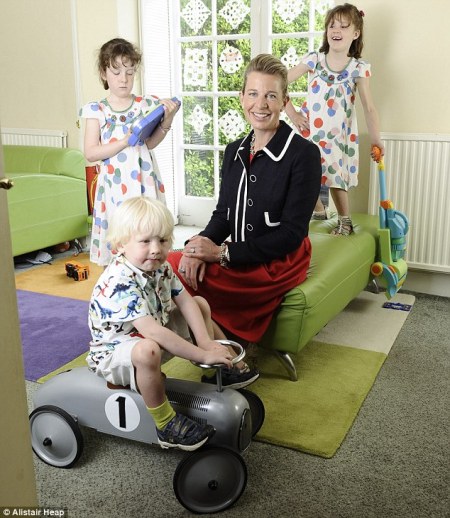
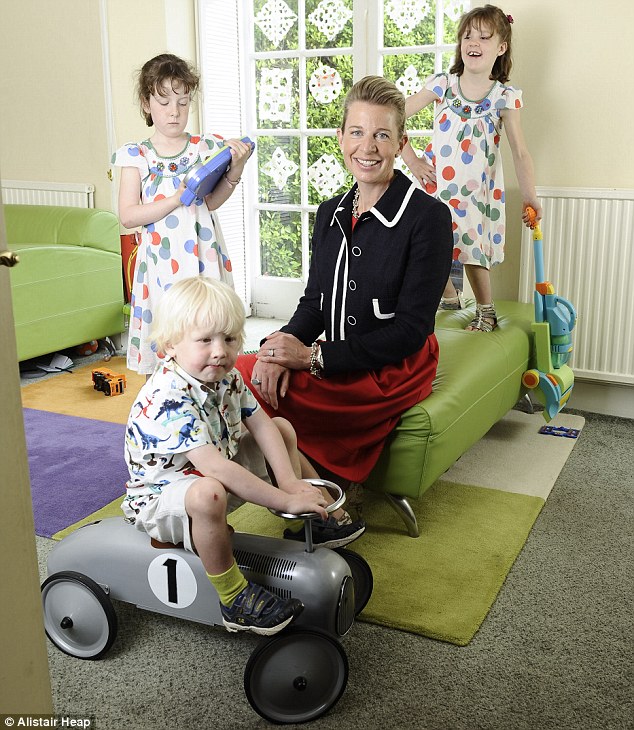
Call me controlling, call me ruthlessly aggressive. But I’m convinced one of the best things I can do for my children – India, eight, Poppy, seven, and Max, four – is to choose their friends for them.

I target children that I think will be a good influence and curtail friendships with children I think will drag them down.

I know I’m not alone, either. If they’re honest, I think most caring mothers do exactly the same.

They’re just too embarrassed to admit it.

So I wasn’t a bit surprised to learn last week that a study confirms exactly what I  have always believed. Academic success is infectious. Pupils ‘catch’ cleverness from their friends.

I have absolutely no intention of letting my two precious daughters get dragged down into the quagmire of underperforming children. So I work hard at targeting the right sort of friends for them.

From the moment they started school, I have kept an ear out for little snippets of information about their classmates. I know who is falling behind and who is clearly not interested in their work or study.

My state primary school doesn’t stream children academically but you don’t need to be a genius to work out who is clever and who, most definitely, is not. For example, hearing that a child has finished their home learning book (we used to call it homework) and asked for another is music to my ears. It means the parents are investing time and trouble in their child’s education.

When one of my girls came home last week and announced that a classmate had filled up her star sheet for good behaviour, I made a mental note of the child’s name for future reference.

She is clearly the type of child who is eager to learn, ambitious and wants to work hard in order to be rewarded with success. And that is the type of child I want my daughters to play with and to learn from.

This brings me back to a problem I’ve had regarding the influx of parenting advice and parenting themed self-help books. The industry has been hijacked by do-gooders who wish to spend less time showcasing their strategies and more time criticising other parenting methods. Take this excerpt from the same article for example:
If his parents can’t be bothered to get him into class on time, they clearly don’t care about the  education of their child – and, worse still, are hindering the learning of others. My girls are as frustrated with this continual tardiness as I am. Is it beyond the wit of a parent to get their child to school on time?

When I hear my daughters talking about children who have all the latest gadgets – whether it’s an iPhone or iPad – I’m instantly on my guard because they definitely won’t have time to devote to homework. As a result, I will discourage any friendship.

At the risk of sounding snobbish, I also favour children who have good old-fashioned Victorian names such as George, Henry and Victoria. And, if a child has a name with a Latin or Greek derivation such as Ariadne or Helena, all the better. It indicates the parents are well educated.

And then there is this …

I am convinced that my tactics are paying off. Recently I asked India which children she liked to play with.

‘The children who come to school on time and wear proper school uniforms are the nicest and the most fun,’ she told me. ‘If children don’t put any effort in, I don’t want to play with them.’

My younger daughter, Poppy, is attracted by the wild side and I have no doubt that, left to her own devices, she would choose friends who would be a bad influence on her.

When she was four she asked if she could have her ears pierced like a (male) classmate. I, of course, said no. I cannot understand why the parent of this child would think it was acceptable.

Recently she asked for a Nintendo after she played on one during a class trip. The boy sitting on the coach next to her had sneaked it into his bag.

‘But you know that children aren’t supposed to bring in electronic games equipment,’ I said. ‘So what on earth were you doing sitting next to him when you knew he was doing the wrong thing?’ That hammered my message home.
Would You Want Your Teacher Chair Replaced by a Yoga Ball?

February 21, 2013

yogball

I try to use the following principle when reflecting on my students’ comfort:

If it isn’t comfortable for me, it probably isn’t for them

This is why I happily deviated from the time honoured tradition of having students sit on the mat. I once tried to sit with them on the mat and my back couldn’t tolerate it for more than two minutes. How are children supposed to maintain concentration when they are subjected to long arduous mat sessions?

The same goes for the latest fad – yoga balls. I know some find them extremely comfortable and they are meant to be great for posture, but my question is, would you swap your teacher chair for one?

In 11 years of teaching, ditching students’ desk chairs in favor of yoga balls is one of the best decisions Robbi Giuliano thinks she ever made.

Replacing stationary seats with inflatable bouncers has raised productivity in her fifth-graders at Westtown-Thornbury Elementary School, making students better able to focus on lessons while improving their balance and core strength, she said.

“I have more attentive children,” Giuliano said. “I’m able to get a lot done with them because they’re sitting on yoga balls.”

The giant rubber spheres, also called stability balls, come in different sizes, colors and degrees of firmness. By making the sitter work to stay balanced, the balls force muscle engagement and increased blood flow, leading to more alertness.

The exercise gear is part a larger effort to modernize schools based on research linking physical activity with better learning, said John Kilbourne, a professor of movement science at Grand Valley State University in Allendale, Mich.

Traditional classroom setups are being challenged as teachers nationwide experiment with yoga balls, footrests and standing desks, which give children outlets to fidget without disrupting class.

“It’s the future of education,” Kilbourne said.

If yoga balls really are the future of education, beware of some of this type of activity in your classroom:

Click on the link to read Worst Examples of Teacher Discipline

Click on the link to read Why Students Misbehave

Click on the link to read Being a Teacher Makes Me Regret the Way I Treated My Teachers

Click on the link to read Useful Resources to Assist in Behavioural Management

Click on the link to read When Something Doesn’t Work – Try Again Until it Does

The Courage of Overcoming Multiple Failures

February 20, 2013

drive

I suspect that this news article is intended to belittle a man who has failed his drivers test 107 times. Be that as it may, I prefer to look at it as an inspiring account of a person with incredible resilience and stamina who is determined to overturn an endless cycle of failures:

Many of us know someone who has struggled to pass their driving test. But spare a thought for the hapless learner who has set a record for failure.

The unnamed 28-year-old, from London, has flunked the car theory test 107 times and is still yet to pass.

They have so far spent £3,317 trying to pass the exam, which costs £31 a time. The test includes a 57-minute multiple choice exam, with a pass mark of 43 out of 50, and a hazard perception test with a pass mark of 44 out of 75.

Once you’ve passed both parts of the theory, there’s still the practical to overcome.

One determined 40-year-old logged a record number of practical driving tests – passing on his 37th attempt. The unnamed man, from Stoke-on-Trent, forked out at least £2,294 trying to pass – which could have paid for a reasonable second-hand car.

The practical test costs £62 to take on a weekday or £75 for a test on an evening, weekend or bank holiday.

An AA Driving School spokesman said: ‘This is an unusually high number of test attempts, but it is important to remember that everyone learns at their own pace. Their determination to pass highlights how important learning to drive is to most people.

‘It is a milestone that many people aspire to achieving because of the freedom and independence it brings.’

Hilary Mantel Should Be Ashamed of Herself!

February 19, 2013

mantel

I’m absolutely sick and tired of reading attacks over the size and shape of certain celebrities. I don’t care whether a person has put on weight, lost weight or is unhealthily thin.

You may argue that a celebrity is a rolemodel and therefore their body shape is our right to deconstruct, criticise and comment on. I disagree. Our children deserve better.

They need to see us desist from judging people based on looks. These judgements do enormous damage, as it teaches them that body image is the defining characteristic of a person. It tells them that a person can be legitimately criticised for looking a certain way. It tells them that unless they look that same way, they aren’t good enough.

Hilary Mantel has broken this very rule by unleashing her vile and poisonous attack on Kate Middleton. By mercilessly pillaging Kate’s body size and public persona she has helped perpetuate the habit of judging people by externalities alone:

She is a double Booker Prize winner, the darling of the literary establishment.

And Hilary Mantel has used her position among the novel-writing elite to launch an astonishing and venomous attack on the Duchess of Cambridge.

Mantel, whose latest books are set in the Tudor court, dismissed Kate as a ‘machine-made’ princess, ‘designed by committee’.

Mantel, 60, also scorned her as a personality-free ‘shop window mannequin’ with a ‘plastic smile’.

She compared Kate unfavourably to both Anne Boleyn – one of her historical heroines – and to Princess Diana, insisting both had more personality.

She said Kate had gone from being a ‘jointed doll on which certain rags are hung’ to a woman whose ‘only point and purpose’ was to give birth.

Mantel said Kate ‘appeared to have been designed by a committee and built by craftsmen, with a perfect plastic smile and the spindles of her limbs hand-turned and gloss-varnished’.

She said the Duchess was quite unlike Anne Boleyn, who was ‘a power player, a clever and determined woman.’

Mantel contrasted her appearance to Prince William’s mother, Diana, ‘whose human awkwardness and emotional incontinence showed in her every gesture’.

Mantel said that when she first saw Kate Middleton, she struck her as ‘a shop-window mannequin, with no personality of her own, entirely defined by what she wore.’

Ms Mantel’s comments on the Duchess of Cambridge’s appearance comes shortly after she spoke about having body issues of her own.

Ms Mantel went from a size ten to a size 20 in nine months after she was diagnosed with severe endometrosis at the age of 27.

The treatment, which included surgery removing her womb leaving her infertile, caused her to gain four stone.

The 60-year-old author said she sometimes dream of being thin again.

Prince William’s wife-to-be was as ‘painfully thin as anyone could wish, without quirks, without oddities, without the risk of the emergence of character’.

She added: ‘Presumably Kate was designed to breed in some manners.

‘She looks like a nicely brought up young lady, with “please” and “thank you” part of her vocabulary.’

Mantel spoke of Kate’s appearance in her first official portrait since marrying William, painted by Paul Emsley, which was unveiled last month.

She said: ‘Her eyes are dead and she wears the strained smile of a woman who really wants to tell the painter to bugger off.’

Mantel went on to say that female Royals were ‘at the most basic… breeding stock, collections of organs.’

St James’s Palace last week criticised a magazine for printing pictures of Kate’s baby bump taken during a break on the Caribbean island of Mustique.

And they were furious last year when pictures of her topless on holiday were printed in Italy – saying ‘a red line had been crossed.’

But Mantel suggested Kate could have few complaints about private pictures of her being taken on holiday – observing: ‘The royal body exists to be looked at.’

‘Some people find them endearing; some pity them for their precarious situation; everybody stares at them, and however airy the enclosure they inhabit, it’s still a cage.’


Click on the link to read School Official’s Solution to Harassed Teen: Get a Breast Reduction

Click on the link to read Self-Esteem Crisis Even More Serious than the Obesity Crisis


Fourth Graders Quizzed about Infidelity in Homework Assignment

February 18, 2013


gilbert

Apparently one is never too young to delve into the issue of infidelity:

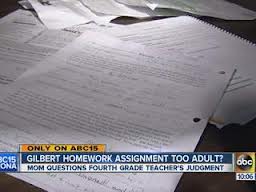
Arizona fourth grader Kyera McCloskey got an accidental lesson in infidelity earlier this week.

According to ABC15, McCloskey and her fellow students at the Playa Del Rey Elementary School in Gilbert, Ariz. were given a very grown-up homework assignment on Monday. The students were prompted to read about various situations, describe what was happening in them and then offer a response or solution. One such “situation” was about a woman finding a hair clip underneath her bed with another woman’s hair in it.

McCloskey suspected the question had to do with cheating, but consulted her mother for clarification.

“I kinda had my mom help me with the answer a little bit because I didn’t want to go too deep into what it was trying to ask me,” she said.

After McCloskey’s mother called the school, the teacher quickly apologized, admitting she had not read the assignment carefully.

“That’s not a subject matter the school needs to bring up to my child,” McCloskey’s mother said.

But this isn’t the first time elementary school students have received an inappropriate homework assignment. In February 2012, parents of a Queens kindergartner were up in arms over a spelling worksheet that included violent images, such as a gun and an armed robber.


Click on the link to read Young Child Shows Dissatisfaction with his Homework (Photo)

Click on the link to read Why I Changed My Mind About Homework

Click on the link to read Leave Parents Alone When it Comes to Homework

Click on the link to read Parents Urged to do the Job of a Teacher

Click on the link to read This is What You Get for Doing Your Homework

Click on the link to read Experts Call For Homework to Be Abolished

Click on the link to read The Case in Favour of Homework

4 Signs of a Great Teacher: Dr. Marvin Thompson

February 18, 2013

marvin

Courtesy of the star of the new docu-series, ‘Blackboard Wars‘:

1. The students in the classroom are doing more talking than the teacher. “In today’s classroom, learning should be inquiry based, not teacher directed,” says Dr. Thompson. “A good teacher sets the stage for students to investigate, inquire and create an engaging learning environment. A meaningful, class-wide discussion is a positive sign.”

2. He or she shares ideas with other teachers. “The sharing of ideas actually helps the teacher hone his or her skills and incorporate best practices from other teachers,” Dr. Thompson says. “Just as doctors consult one another on patients, teachers should engage in the same type of dialogue with one another.”

3. The teacher knows the intent of the curriculum. “Learning is not just about what the subject matter is,” says Dr. Thompson, “but [about] what the students are meant to master through the learning process. It is not enough to teach students how to multiply and divide, but to ensure they also understand the skills behind the lesson. If a student can’t relate what they are doing to real-world activities, it often limits the relevance of the lesson — which in turn diminishes engagement and interest.”

4. The teacher recognizes and rewards student effort, even for the small stuff. Says Dr. Thompson, “If students are doing something positive — and every child is capable of something positive — recognize them for their effort. Sometimes all a student needs is a little encouragement. A great teacher focuses on what his or her students are doing, even if they’re just showing up for class — because you never know what learning fears they have. You never know what challenges they are facing outside the classroom. A great teacher shows students that they matter. Sometimes, it’s as simple as that.”


Click on the link to read The Short Video You MUST Watch!

Click on the link to read Dying Teacher on Journey to Find Out if he Made a Difference

Click on the link to read School Shooting Showcases the Heroic Nature of Brilliant Teachers

Click on the link to read Meet the Armless Math Teacher

Click on the link to read The Case of a Teacher Suspended for Showing Integrity

Click on the link to read Teaching is Worth It!

I Also Had a Student Hold a Toy Gun to my Face

February 17, 2013

toy

This story is vaguely similar to something that happened to me in my first year of teaching. Whilst I was teaching a maths class, a student from another class barged into my classroom and aimed an uncannily genuine looking toy gun at my face from the close range. He then joined in the hilarity that ensued when I covered my face with my hands, obviously petrified by the ordeal.

The student later got a measly one day in-school suspension for the prank.

I sympathise with the teacher who had a similar experience:

A VICTORIAN teacher who had a toy gun pulled on her by a pupil in a misguided prank is claiming hundreds of thousands of dollars in compensation from the Education Department and the former student.

Suzanne May Tyson, 54, claims she may never work again due to stress after believing the $2 plastic gun pointed at her by then 16-year-old Mooroopna Secondary College student Adam Tyler Dorsett was real.

On March 4, 2009, Ms Tyson was teaching in the library when Mr Dorsett held a replica gun to her head in close proximity and pulled the trigger, a writ filed in the Supreme Court earlier this month states.

The court document alleges Mr Dorsett fled, but then returned to the library and verbally threatened the terrified teacher.

Ms Tyson allegedly suffered post-traumatic stress disorder, anxiety and depression as a result of the incident, and has been unable to return to work.

The writ states she was rendered incapable of any employment, perhaps indefinitely.
There will be some who disapprove of Ms. Tyson’s lawsuit. Some will accuse her of gold digging and question if her conditions could possibly have occurred from such a mild incident. Whilst I have neither suffered post traumatic stress nor depression from my similar experience, I wouldn’t recommend it to my worst enemy.

Click on the link to read Who is Going to Stand Up For Bullied Teachers?

Click on the link to read 12 Tips for Managing Time in the Classroom

Click on the link to read If Teachers Were Paid More I Wouldn’t Have Become One

Click on the link to read Different Professions, Same Experiences

Click on the link to read Our Pay Isn’t the Problem

Primary Children Caught Playing ‘The Raping Game’

February 17, 2013

stan

When we used to play it, we called it ‘tag’:

Primary school children have been banned from playing a new break time game they called ‘the raping game’.

The playground activity had been named after a violent video game which depicts violent sexual assaults on a mother and two daughters.

More than a dozen boys, some as young as nine, were caught playing the ‘the raping game’ at Stanford Junior School in Brighton, East Sussex.

The school confirmed it had been taking place and headteacher Gina Hutchins said she had spoken to children about the vile name. It has now been called ‘the survival game’ following the head’s intervention.

Mrs Hutchins said: ‘As soon as we found out that this inappropriate word was being used, we spoke to the children concerned and they now no longer use it.’

The game has been played mainly by boys in Year 5 at the school for the past two to three weeks.

It involves one person being ‘on’ who has to catch others until only one is left uncaught and that person is the winner.

About 13 boys, aged nine and ten, played the game in the school playground but have since changed the title.

One concerned parent said: ‘I was horrified that my son had learnt that word.

‘He is only nine. Thankfully he did not know what it meant but it was that horrible thought he might use it elsewhere.

‘Most people assume children learn these words at home.’

The parent added she did not blame the school saying it is almost impossible to stop children bringing words into the playground.

They commended the headteacher for her swift actions in taking decisive action and stamping out the use of the word.

It is unsure what video game led to the naming of the game, but several on the market contain scenes of rape.

One game called Rapelay sees the main character try to rape a mother and two daughters.