There is Nothing Wrong With Testing Young Children

July 17, 2013

testing

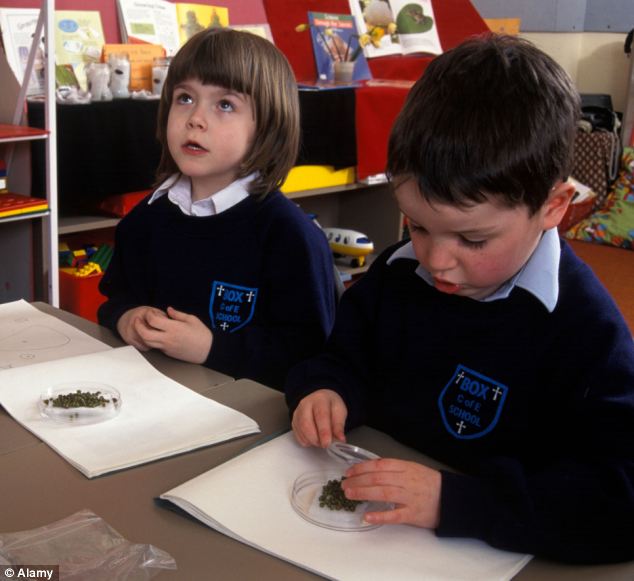
Whilst I am critical of the size and formal nature of standardized testing, I fully approve of assessing student development from a very early age. As long as the tests are conducted in a non-threatening manner and the results are used to assist the child rather than judge the quality of their teacher I have no problem with it.

Children’s academic ability could be tested as soon as they start primary school aged four or five under plans unveiled by Nick Clegg.

Pupils are currently tested at seven to set a ‘baseline’ for measuring their progress in school.

But details of plans to do this during reception year emerged in a consultation document launched by the Deputy Prime Minister, which also includes plans to rank primary school pupils against their peers across the country.

This would see primaries having to ensure 85 per cent of pupils are ready for senior school or risk triggering an Ofsted inspection.

Pupils could also be ranked against their peers across the country, being put in 10 per cent achievement ‘bands’, showing, for example, if they are in the top 10 per cent.

Click on the link to read The Negative Effects of Standardized Testing are Exaggerated

Click on the link to read Standardized Tests for Teachers!

Click on the link to read Oops, We Seem to Have Lost Your Exams

Click on the link to read I’m Just Gonna Say It: Standardised Tests Suck!

Click on the link to read Too Many Tests, Not Enough Teaching

Girl Banned from Museum because Her Wheelchair May Dirty Their Carpet

July 16, 2013


lexi

What a terrible thing to do to a young child with a disability. Much credit must be given to the girl’s parents for accepting the apology. Many wouldn’t have:

An 11-year-old girl was barred from a museum’s exhibits because an employee said her wheelchair would dirty the carpet.

Lexi Haas of Charlotte, N.C., was visiting the Ships of the Sea Museum in Savannah, Ga., with her family on July 7 when a woman at the desk said Lexi would have to use a museum wheelchair, WBTV reports.

However, since Lexi is unable to sit up on her own, she was unable to use the museum’s strapless wheelchair, according to the station. The museum then proposed that Lexi watch a video outside while the rest of the family checked out the displays, but the family declined.

“We didn’t get to see the museum and my daughter’s feelings were hurt,” Lexi’s dad, Ken Haas, told The Huffington Post.

The museum confirmed the incident and issued a public and private apology for the employee’s behavior and misunderstanding of museum policy.

Instead of filing a complaint, the father said he accepted the apology and used the encounter to raise awareness.

“I’m happy people are more aware of disability rights and that’s plenty for me,” he told HuffPost. “I didn’t want anybody to get fired. I wanted them to update their policy and their way of thinking.”

Lexi has Kernicterus, a condition in which yellow pigment collects in brain tissue and causes neurological impairment. Lexi cannot speak well but can communicate “yes” or “no,” Haas said, and she was fully aware of what transpired.

“She’s not thinking about this,” he said, reiterating that “there wasn’t any real damage.”

“We like museums. We just want them to include everybody,” he added.


Click on the link to read my post on Disabled Children: A Missed Opportunity for Us All

Click on the link to read my post on Meet the 14-Year-Old on his Way to Becoming a Nobel Prize Winner (Video)

Click on the link to read my post on Treatment of Autistic Children Says a Lot About Our Failing System

Click on the link to read Our Real Heroes are Not Celebrities or Athletes

An 8-Year-Old’s Take on Body Image

July 15, 2013

What a wonderful self-assessment this young girl has produced:

image

Jeniah, 8: “I like my body. I like my eyes because they help me see different things. I also like my hands because they help me write different things. I also like my feet because they help me walk and have fun. My name is Jeniah and I’m 8 years old!”

Click on the link to read A Father’s Advice to His Daughter About Beauty

Click on the link to read The Call to Stop Telling Your Children they are Beautiful

Click on the link to read School Official’s Solution to Harassed Teen: Get a Breast Reduction

Click on the link to read Our Young Children Shouldn’t Even Know What a Diet Is?

Click on the link to read Charity Pays for Teen’s Plastic Surgery to Help Stop Bullying

Click on the link to read Most People Think This Woman is Fat

Who Needs the Right Answer When You Can Think Like a Child

July 11, 2013


The clip above demonstrates more than just cuteness. It captures children who are not yet interested in wealth, answer with creativity and insight and are not afraid of being wrong. You ask those same questions to teenagers and you will possibly find cynicism and insecurity on show.

Cuteness has a short shelf life but confidence is of eternal significance. We must help our young maintain their confidence and creativity long after their ‘cute’ period is behind them.

Click on the link to read Teaching Perfectionists
Click on the link to read Teaching Children to be Honest Yet Respectful
Click on the link to read The Children of Today Show a Lack of Respect For Authority
Click on the link to read Our Real Heroes are Not Celebrities or Athletes

How Much Privacy Does a 6-Year-Old Need?

July 10, 2013

phone


Surely young children require supervision and boundaries far more than they need privacy!

Parents of children as young as six fail to keep tabs on their mobile phone use for fear of ‘invading their privacy’, according to a new survey.

Almost 60 per cent of mothers and fathers questioned said they did not monitor their child’s mobile phone activity.

Of those, one in four said they chose not to check in order to respect their infant’s privacy.

The majority of parents – 42 per cent – said they never got around to checking what their youngsters were using their phones for, while 13 per cent said they trusted their child with the device.

Over 2,000 parents of children aged 10 or younger who owned a mobile phone were questioned for the survey, which was carried out by mobileinsurance.co.uk.

The survey revealed there are children as young as six in possession of a mobile phone.

Nearly 80 per cent of parents whose child had a phone with a lock or pass-code on it admitted they would not know how to access it.

This is despite the fact that children could be using their smartphone to access the internet.

The firm behind the survey urged parents to ensure their child’s access to online content was suitably restricted.

According to website director Jason Brockman, mothers and fathers should monitor children’s mobile phone use as a means of ‘keeping them safe’.

Click on the link to read Seven Valuable Tips for Raising Your Child’s Self-Esteem

Click on the link to read Top Ten Compliments Your Children Need to Hear

Click on the link to read Tips For Parents of Kids Who “Hate School”

Click on the link to read 20 Reassuring Things Every Parent Should Hear

Click on the link to read Parents and Teachers Should Not Be Facebook Friends

A Father’s Advice to His Daughter About Beauty

July 9, 2013

body


Father Chris Cook penned this wonderful letter to his young daughter Susan:

Dear Susan,

Right now your biggest concern in life is figuring out how to get around the child-proof locks on the kitchen cabinets, but one day you will deal with much bigger issues. Being a woman, one of these will be the problem of beauty and the emphasis put on it by nearly everyone in the world.

You will soon learn that the world is obsessed with beauty. As a woman, you will be bombarded with magazines, ads and commercials full of beautiful people telling you that you’re not pretty enough as you are. I wish I could tell you to ignore all of that, but it’s naïve of me to think you can go the rest of your life immune to the barrage of “beauty tips” thrown out by complete strangers.

There are lots of clichés out there about beauty. “Beauty is only skin deep,” “Beauty is in the eye of the beholder,” and so on, but as with most clichés, they say a lot but don’t mean much. So here is some real, practical advice about beauty.

The definition of beauty is intentionally vague. Find your own meaning for it. Don’t let somebody else define it for you.

From the day you were born, your mother and I have tried to tell you how beautiful you are. We have also tried to tell you how kind and caring you are. We value the last two much more than the first one.

One day somebody – it may even be one of your best friends – will tell you that something about you is ugly. Remember that just because one person says something negative about you doesn’t mean everyone in the world feels that way. That works both ways, though. If you think somebody else is ugly, keep your mouth shut. Just because you think so doesn’t mean somebody doesn’t think he or she is the most beautiful person in the world.

Also, whether you tell them to their face or not, calling someone ugly or fat reveals an ugliness in your soul that not even the prettiest smile can erase.

There may come a time when a boy breaks up with you and starts dating a girl you think is prettier than you. Don’t sweat it. People like that are never satisfied with what they have, and there’s no use trying to change them. Let him go chase the next best thing for the rest of his life.

Yes, beauty will get you certain things in life, mostly attention. Sometimes it’s not good attention, and sometimes all it does is call attention to what you glaringly lack in other areas. Like personality.

There has never been a perfect person. NEVER. Everybody has something about their appearance they want to change, and there are lots of people out there who claim to have a way to correct those things. All those people want is your money. Don’t part with your hard-earned cash just to buy a cure for what someone else labels an imperfection.

There’s nothing wrong with throwing on a nice outfit and doing whatever you feel like to make yourself feel pretty. Just make sure that what you see in the mirror is what you like and not what somebody else will like.

When you ask your husband/fiancé/boyfriend the question, “Do I look pretty?” his answer should always be, without hesitation, “Yes” or some form of that. If he says anything else, he probably isn’t right for you.

Do not end or begin a friendship based on that person’s looks or style. Do not think that surrounding yourself with popular, attractive people will make your life any easier. Befriending people of different backgrounds who have a range of outlooks and goals in life, however, will make you a well-rounded person capable of connecting with folks from all walks of life. That’s called a life skill.

Do not choose your role models based on looks, either. Or the fact that they’re on TV all the time. One of your mother’s role models is Ruth Bader Ginsburg. She is an amazing lady. Google her.

If you can get up every morning, look in the mirror and be happy with how you look, you will have achieved something that few people in the world ever will. If you can look at your friends and see what makes each of them beautiful, you will wind up with more friends than you can count.

You should also know that your mother and I are not immune to any of these things. We have both broken several of these rules at some point in our lives, and if you ask, we will tell you how stupid we were and how negatively those decisions affected us. Yes, we have learned and grown from those mistakes, but sometimes the lessons are very hard and have irreparable consequences. I have at least one friendship that ended because I was unable to overlook how that person chose to dress.

Our hope is that you never have to experience that. But remember – no matter what you look like, what clothes you wear, what color your hair is, whether you have the expensive new shoes everyone else does or the cheap imitations, we love you.

And for the record, your mom’s Jack Rogers aren’t real. They’re from Payless.

Love,

Dad


Click on the link to read The Call to Stop Telling Your Children they are Beautiful

Click on the link to read School Official’s Solution to Harassed Teen: Get a Breast Reduction

Click on the link to read Self-Esteem Crisis Even More Serious than the Obesity Crisis
Tips For Teachers for Managing Stress

July 8, 2013


stress


Stress has become an unavoidable part of a teacher’s life. The demands on a teacher are growing every year and the conditions are far harder than ever before. Psychologist Marc Smith gives some useful tips to teachers for managing stress:

Despite much discussion concerning the nature of workplace stress, our jobs are getting more and not less stressful. While stress certainly isn’t unique to the teaching profession, working in schools does throw up a number of situations that are unique to education while the current climate of uncertainty and criticism further undermines the professionalism and confidence of many hard working teachers. Ofsted inspections, changes to pay and conditions and new appraisal systems all add to the feeling that we are far from in control. Identifying those things that we can control and those that we cannot could help to prevent daily hassles from becoming major problems; but we can’t do it on our own.

Stress is a natural biological response and back in the day when wild animals roamed freely and early humans spent much of their time hunting and gathering the body’s response to stress was vital for our survival. Stress allows our biological system to prepare itself to do something – either attack (fight) or run away (flight). Acute stress represents that immediate panic which drives the fight or flight response but if this stress continues we begin to suffer from a more chronic condition, this can not only impact on us psychologically but can also lower our immune system, making us more vulnerable to physical illness.

Psychologically, the stress we feel is often based on our individual perception of a situation and this is why some people appear to suffer more than others. American psychologist Julian Rotter describes this as our ‘locus of control’ or the extent to which an individual feels that they have control over a situation. Locus of control can be internal, in that we believe we have control over our lives, or external, where we believe that the environment controls events. Realistically most of us fall between these two dimensions but we may favour a particular one. Unfortunately, our locus of control is very difficult to change because it probably developed through a combination of genetics and early socialisation.

Read the rest of this entry »

We Must Allow Parents to Parent

July 8, 2013

caf

The proposal to ban parents from packing a lunch for their children is sheer lunacy. Whilst some packed lunches clearly contain too much sugar and fat, this is none of our business.

What’s next? The Government providing consequences for children just in case parents spoil their children by not setting parameters? The Government recruits personal trainers to switch off family television sets and take the children for a run?

And anyway, the lunchbox ban will be limited to lunch. What about breakfast? What about dinner? What about snacks and weekend restaurant visits and holidays?

Why can’t we just allow parents to parent without them being restricted, judged or lectured? Surely, a much better approach is to educate and work with parents rather than taking away their ability to do what they think is right for their own children:

Parents who make packed lunches for their children should stop, as it is making them fat, government food advisers warn.

Restaurateurs Henry Dimbleby and John Vincent argue school dinners are healthier than packed sandwiches, crisps and fizzy drinks, in a report to be published next week.

The report will also suggest that take-up must rise to at least 50 per cent to improve nutrition in meals and to save school dinners.

The pair’s school lunch plan, which will be launched this week alongside education secretary Michael Gove, also puts it down to head teachers to improve quality and take-up of school lunches.

‘A lot of heads will feel exasperated by this,’ Ian Bauckham, head of Bennett Memorial Diocesan school in Tunbridge Wells, Kent told The Sunday Times.

‘Many focus on a limited number of high priorities and we already have a big agenda to raise academic standards.’

As reported earlier this year, cooking lessons at school will become compulsory for children ages seven to 14 from September as the Government aims to ensure they can make up to 20 dishes before taking their GCSE exams.

And don’t get me started with compulsory cooking lessons at school. Remember when teachers were charged with the responsibility of helping students to read, write and become numerate? Boy, times have changed!


Click on the link to read my post on Tips For Parents on Packing a Healthy Lunch Box

Click on the link to read my post Exercising Wont Help Overweight Children: Study

Click on the link to read my post School Weigh-ins Are an Insult Rather Than a Solution

Click here to read my post ‘Considered Too Obese to Keep His Kids‘.

Click on the link to read Charity Pays for Teen’s Plastic Surgery to Help Stop Bullying

Click on the link to read my post, ‘Sparing Young Children the Affliction of Body Image‘.

Seven Valuable Tips for Raising Your Child’s Self-Esteem

July 7, 2013


myself

Courtesy of education.com:

  1. Remember that we all make mistakes. It is important to remember that no one is perfect. Demanding perfection from your children causes them to be anxious and depressed. They feel like they will never be good enough. Start a new rule in your home: it is more important to try to be good enough, than to try and then feel badly about not being perfect.
  2. Pay attention to what you say. Pay attention to what you say to yourself around your children. The negative things you say about yourself will be remembered by your children, and your children may in turn repeat that about themselves. Always talk to yourself nicely when your children are around. (Talk nicely to yourself when they aren’t around, too.)
  3. Teach respect. Treat your children and your spouse with respect. That doesn’t mean you give in to them, it means you don’t interrupt when they are talking and you listen attentively. Address them lovingly. No matter how old your child is, he needs to be talked to respectfully.
  4. Hug your child. Affection tells your child you love him, and he is worthy of love. Remember, teens need as much if not more hugs than small children do.
  5. Keep your promises. Parents who are never on time or change plans constantly raise children who don’t trust. If you cannot trust others, you cannot feel good about yourself. If you grew up in a home where no one followed through, change that for your child.
  6. Give your child responsibility. Parents must give chores and follow through with consequences if they aren’t done. This teaches your child he is part of the family and his work is necessary to help the family. Parents who don’t give their children chores raise kids who think they really don’t matter to the family. This leads to disengagement of the family.
  7. Show interest in your child’s interests. Any interest your child expresses is an opportunity to raise her self-esteem. Talk to her in regards to her interest. Listen to her. Buy her books, take her to appropriate museums, or join a group with other people who share that interest. When you show interest in your child’s interest, you make your child feel valued and important. This encourages her to be more curious. Children with healthy self-esteem are more curious because they aren’t afraid to take risks. They believe they will not fail and if they do they will be okay.


Click on the link to read Top Ten Compliments Your Children Need to Hear

Click on the link to read Tips For Parents of Kids Who “Hate School”

Click on the link to read 20 Reassuring Things Every Parent Should Hear

Click on the link to read Parents and Teachers Should Not Be Facebook Friends

Meet the School Consisting of Only 1 Teacher and 1 Student

July 4, 2013

one

At least the teacher to student ratio is healthy:

The primary school in the Kallarkudi tribal settlement in Valparai is a one-of-a-kind institution in many ways. It’s probably the only school that employs one teacher and has an attendance of one student.

Though it may sound preposterous, the only teacher, Kalaiselvi, treks through the treacherous jungle, braving everything from elephant attacks to leech bites to reach the school and tutor her class II student.

The tribal settlement is situated 20 km from Valparai town and about 100 km from Coimbatore.

The school’s headmaster, Muruganandam, and teacher Kalaiselvi walk nearly 2.5 km to reach the Kallarkudi Panchayat Primary School and at the end of the day too, they return on foot. They are met by the tribals every day at the bus stand and escorted to the settlement.

“We have to be careful while walking through the forest as the elephant population is high in the area and attacks from the pachyderms are quite common,” P Muruganandam, head master of the school told Express.

And, it’s not enough to keep one’s eyes open for the gigantic creatures, one has to watch out for the tiny bugs on the forest floor as well. “Leeches are common along the trail and if you’re not careful, you could be left with bleeding wounds before you reach your destination,” the headmaster added.

Sources said the strength of students at the school dwindled in the last few years, thanks to the migration of tribals to the plains.

“On the instructions of higher officials, we explained to the local tribal families the various government welfare schemes for students attending the government schools. Many have promised to admit their wards and convince their relatives to admit their children as well,” he said.

“We have to wait till August, when the chance of more students joining the school is high,” said Muruganandam, adding, “two years ago the school had four students.”

The number of school-going children is low in Kallarkudi as several families from the settlement migrated to Tirupur and Coimbatore for employment, said Muruganandam.

Similarly, the student strength is low in six other tribal settlements in and around the Valparai.

The Kavarakkal tribal settlement panchayat primary school also has just one student, the Nedungkundru panchayat primary school has seven pupils, Karumutti tribal school has eight, Vellimudi tribal settlement school has nine, Poontachi tribal settlement school has 5 and the Palakkinar tribal settlement school has 4 students.

However, department officials said there were no plans to close these schools.


Click on the link to read Classroom Free Schools

Click on the link to read Teaching 150 Students in the One Classroom!

Click on the link to read What is the Perfect Class Size?