School Holidays are Very Hard for Many Parents (Video)

August 29, 2013


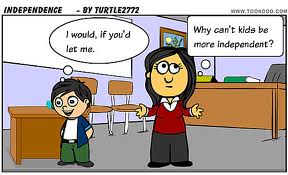
I love spending time with my children and have taken a year off to look after my baby son, but there are times when the school holidays seems to go on for a bit too long.


Click on the link to read 10 Tips for Nurturing Independence Among Children

Click on the link to read The Spoiled Twins with their £70k First Birthday Party (Photos)

Click on the link to read 4 Tips for Getting Your Kids up in the Morning

Click on the link to read Seven Valuable Tips for Raising Your Child’s Self-Esteem

Click on the link to read Top Ten Compliments Your Children Need to Hear

Click on the link to read Tips For Parents of Kids Who “Hate School”

Click on the link to read 20 Reassuring Things Every Parent Should Hear


Another Reason why Television is Unealthy for Children

August 28, 2013

remote


Beyond the obvious physical health ramifications, it seems that excessive television watching among children can impact their mental health as well:

Children are becoming increasingly anxious due to too much time in front of TV and computer screens, according to a Government briefing paper.

Inactive lifestyles are also to blame for the negative impact on children’s wellbeing, said the document from Public Health England.

It said higher levels of TV viewing are having a negative effect on children’s wellbeing, including lower self-worth, lower self-esteem and lower levels of self-reported happiness.

Children who spend more time on computers, watching TV and playing video games also tend to experience higher levels of emotional distress, anxiety and depression, it said.

Last week, a study found half of all seven-year-olds do not get enough exercise – and girls are far less active than boys.

Only 51 per cent of all seven-year-olds in the UK achieve the recommended hour of exercise every day, with the figure being just 38 per cent in girls compared with 63 per cent in boys.

Half of this age group is also sedentary for an average of 6.4 hours or more every day, experts found.

Click on the link to read The Spoiled Twins with their £70k First Birthday Party (Photos)

Click on the link to read 5 Tips to Help Children Cope With Stress

Click on the link to read Seven Valuable Tips for Raising Your Child’s Self-Esteem

Click on the link to read Top Ten Compliments Your Children Need to Hear

Click on the link to read Tips For Parents of Kids Who “Hate School”

Click on the link to read 20 Reassuring Things Every Parent Should Hear

Click on the link to read Parents and Teachers Should Not Be Facebook Friends

10 Tips for Nurturing Independence Among Children

August 26, 2013


self

Courtesy of drfranwalfish.com:

1.  Balance nurturing, setting limits, and holding boundaries.  Kids can only become independent if they have been given structure and internal guidelines as foundation.

2.  Encourage healthy expression of anger.  You will help your child develop excellent communication tools that include conflict resolution skills.  Your child needs to know he is acknowledged, validated, and accepted flaws and all!

3.  Nurture and praise your child’s incremental steps toward separation.  To be a good parent you must prepare and equip your child to deal with life and then let them fly on their own.

4.  Encourage your child’s unique and individual ideas, thoughts, and opinions.

5.  Built self-esteem by using words that support and motivate with empathic attunement, rather than criticize.

6.  Equip your child with coping skills to deal with disappointments.  We cannot protect or prevent life’s disappointments.  The best we can do is equip our children with coping skills to deal with inevitable letdowns.

7.  Reward your child’s demonstration of good judgment and good behavior with incremental amounts of increased independence and freedom.

8.  Do not allow yourself to be pressured by your child.  What her friends are allowed or what her brother was allowed has nothing to do with her individual level of readiness for independence.

9.  Have individual one-on-one special time with each child.  Begin when they are young and continue to implement this quality uninterrupted time with your son or daughter.  This is your opportunity to build upon the first year of attachment.  True independence can only come out of a healthy secure bond.

10.  Create a support system for yourselves, Moms and Dads.  It’s hard to let go of your child.  The psychological goal of toddlerhood is for the youngster to claim himself as a separate being from Mommy and Daddy.  The psychological goal of adolescence parallels that of toddlerhood.  The teen’s goal is to resolve the separation process.  This means your adolescent must emerge into adulthood with his own ideas and opinions about relationships, religion, morals, ethics, sex, character, and values.  There is life ahead for empty-nest parents.


Click on the link to read The Spoiled Twins with their £70k First Birthday Party (Photos)

Click on the link to read 4 Tips for Getting Your Kids up in the Morning

Click on the link to read Seven Valuable Tips for Raising Your Child’s Self-Esteem

Click on the link to read Top Ten Compliments Your Children Need to Hear

Click on the link to read Tips For Parents of Kids Who “Hate School”

Click on the link to read 20 Reassuring Things Every Parent Should Hear

Click on the link to read Parents and Teachers Should Not Be Facebook Friends


5 Great Spelling Apps for Tablets and Smartphones

August 24, 2013


spell

Courtesy of howtolearn.com:

  • Alpha Writer, by Montessorium

Alpha Writer is a stylish and effective Montessori-style app teaches kids letters and how they form words in four activities.  Kids can practice reading, writing, and spelling in the first two activities, create and read their own stories, and play the Alpha-Spy game (an interactive I-spy game).  This app teaches kids to:

✴ Read, write, and spell phonetically

✴ Pronunciation and composition of letters and words

✴ Fine motor skills

✴ Identification of letters as consonants or vowels

✴ Creativity as they write, create, and read their own stories

Users can also choose between three internationally acclaimed artists, Zeptonn, Mike Lowery and Marloes de Vries, for the graphics and illustrations.

  • C is for Cow by Forge

C is for Cow is a simple but effective app that is perfect for your youngest children.  This is the second of the 5 best spelling apps for smartphones and tablets and it teaches basic letter and word recognition, phonetics, and draws a connection to corresponding animals.  Choose from two modes: alphabetical  (which goes through animals in alphabetical order) or random (animals are tested in a random order, which helps kids exercise their knowledge).  Children are able to see and hear letters and words while enjoying the animal fun!

  • TeachMe: Kindergarten & TeachMe: 1st Grade by 24x7digital LL

The two TeachMe apps are sophisticated, award-winning apps that cover math, sight words, and spelling.  Each subject has five levels that children can advance through as they can handle the increased difficulties.  The interactive teacher, Mimi Mouse gives feedback and instructions to fully interact with kids and make learning fun.   Parents can even set the app to give out virtual rewards whenever children get a certain number of questions correct!  In addition, unique user accounts can be made for up to twenty different children.  Once children have mastered TeachMe: Kindergarten, they can advance to the next level of TeachMe: 1st Grade which is why this is one of the five best spelling apps for smartphones and tablets.

  • Montessori Crosswords by L’Escapadou

This award-winning app helps kids develop reading, writing, and spelling skills with activities that use phonics and graphics to create words.  Young children learn the fundamentals of writing and spelling while older children are challenged with complex crosswords in the three more difficult levels.  Customizable in many different ways, the app uses animations, interactive effects, and sounds to keep kids interested while a bank of over ten thousand words is available throughout the different levels.

  • The Electric Company Wordball! by PBS Kids

The Electric Company Wordball is certainly one of the 5 best spelling apps for smartphones and tables as well as an interactive phonics game that is based off of the popular PBS show, The Electric Company.  The app uses a series of educational videos that allow kids to interact as kids collect wordballs of letters.  In the second part of the game, kids use their previously collected wordballs to complete and create words for points.  The level of difficulty and need for dexterity makes this app better for kids who are at a higher level.  The Electric Company Wordball! is available for iPhone, iPad, and iPod Touch and is completely free!


Click on the link to read Are Educators Being Conned by the i-Pad?

Click on the link to read The Best Phonics Apps for iPads

Click on the link to read Should Teachers be able to Text Students?

Click on the link to read 50 Ways To Use Skype In Your Classroom

Click on the link to read Top 10 Educational i-Pad Apps

Click on the link to read Top 10 Math Apps for Children


5 Tips to Help Children Cope With Stress

August 22, 2013


stress

Courtesy of stressfreekids.com:

1. Help children put words to their feelings. Ask them if they feel nervous, scared, or worried. Ask them what is making them feel that way.

2. Acknowledge your child’s feelings and encourage the use of positive statements. Often children do not understand the outcome of an action or change. Instead of realizing their favorite teacher will be back tomorrow..they might think she is gone forever. Create positive statements for the situation.

“I am safe. My substitute teacher is fun. My teacher will be back soon.

3. Introduce stress management techniques to  children. Parents and teachers can easily teach and use techniques like breathing, positive statements, and visualizing on a regular basis. Lesson Plans are available.

4. Establish a bedtime routine that helps kids relax. Soothing music or relaxing stories.  Indigo Dreams: Kids Relaxation Music promotes sleep and relaxation.

5. Spend reassuring quality time with children. Parents and teachers can  laugh and play together. Singing songs like The More We Get TogetherThis Is The Way We Laugh And Play and If You’re Happy And You Know It can be a liberating and fun stress reliever that you and your children can enjoy together.


Click on the link to read The Spoiled Twins with their £70k First Birthday Party (Photos)

Click on the link to read School Introduces a Virginity Test for its Students

Click on the link to read Seven Valuable Tips for Raising Your Child’s Self-Esteem

Click on the link to read Top Ten Compliments Your Children Need to Hear

Click on the link to read Tips For Parents of Kids Who “Hate School”

Click on the link to read 20 Reassuring Things Every Parent Should Hear

Click on the link to read Parents and Teachers Should Not Be Facebook Friends


School Introduces a Virginity Test for its Students

August 21, 2013


indon

What a vile, sexist and invasive initiative!

Indonesian officials on Tuesday dismissed as excessive and unethical a proposal by an education official on Sumatra island that would require female senior high school students to undergo virginity tests to discourage premarital sex and protect against prostitution.

Muhammad Rasyid, head of the education office in South Sumatra’s district of Prabumulih, said he wants to start the tests next year and has proposed a budget for it. But other officials and activists have criticized the plan, arguing it is discriminatory and violates human rights.

Social media sites such as Twitter and Facebook lit up with outrage, with some people calling the tests a form of child abuse that could emotionally scar the students.


Click on the link to read The Spoiled Twins with their £70k First Birthday Party (Photos)

Click on the link to read 4 Tips for Getting Your Kids up in the Morning

Click on the link to read Seven Valuable Tips for Raising Your Child’s Self-Esteem

Click on the link to read Top Ten Compliments Your Children Need to Hear

Click on the link to read Tips For Parents of Kids Who “Hate School”

Click on the link to read 20 Reassuring Things Every Parent Should Hear

Click on the link to read Parents and Teachers Should Not Be Facebook Friends


The Top 10 Mistakes Teachers Make

August 20, 2013

mistake


Courtesy of Richard M. Felder:


Mistake #10. When you ask a question in class, immediately call for volunteers.

You know what happens when you do that. Most of the students avoid eye contact, and either you get a response from one of the two or three who always volunteer or you answer your own question. Few students even bother to think about the question, since they know that eventually someone else will provide the answer. We have a suggestion for a better way to handle questioning, but it’s the same one we’ll have for Mistake #9 so let’s hold off on it for a moment.

Mistake #9. Call on students cold.

You stop in mid-lecture and point your finger abruptly: “Joe, what’s the next step?” Some students are comfortable under that kind of pressure, but many could have trouble thinking of their own name. If you frequently call on students without giving them time to think (“cold-calling”), the ones who are intimidated by it won’t be following your lecture as much as praying that you don’t land on them. Even worse, as soon as you call on someone, the others breathe a sigh of relief and stop thinking. A better approach to questioning in class is active learning.1 Ask the question and give the students a short time to come up with an answer, working either individually or in small groups. Stop them when the time is up and call on a few to report what they came up with. Then, if you haven’t gotten the complete response you’re looking for, call for volunteers. The students will have time to think about the question, and-unlike what happens when you always jump directly to volunteers (Mistake #10), most will try to come up with a response because they don’t want to look bad if you call on them. With active learning you’ll also avoid the intimidation of cold-calling (Mistake #9) and you’ll get more and better answers to your questions. Most importantly, real learning will take place in class, something that doesn’t happen much in traditional lectures.2

Mistake #8. Turn classes into PowerPoint shows.

It has become common for instructors to put their lecture notes into PowerPoint and to spend their class time mainly droning through the slides. Classes like that are generally a waste of time for everyone.3 If the students don’t have paper copies of the slides, there’s no way they can keep up. If they have the copies, they can read the slides faster than the instructor can lecture through them, the classes are exercises in boredom, the students have little incentive to show up, and many don’t. Turning classes into extended slide shows is a specific example of:

Mistake #7. Fail to provide variety in instruction.

Nonstop lecturing produces very little learning,2 but if good instructors never lectured they could not motivate students by occasionally sharing their experience and wisdom. Pure PowerPoint shows are ineffective, but so are lectures with no visual content-schematics, diagrams, animations, photos, video clips, etc.-for which PowerPoint is ideal. Individual student assignments alone would not teach students the critical skills of teamwork, leadership, and conflict management they will need to succeed as professionals, but team assignments alone would not promote the equally important trait of independent learning. Effective instruction mixes things up: boardwork, multimedia, storytelling, discussion, activities, individual assignments, and group work (being careful to avoid Mistake #6). The more variety you build in, the more effective the class is likely to be.

Read the rest of this entry »

The Spoiled Twins with their £70k First Birthday Party (Photos)

August 19, 2013

party1


All that money and the children involved will grow up without ever remembering enjoying it:

He’s created everything from ice castles to oriental palaces and numbers Simon Cowell and Elton John among his clients – and now well-heeled parents are asking celebrity event planner Steven Duggan to create equally lavish parties for children too young to have a clue what’s going on.

Last month, Duggan created an Alice in Wonderland and Peter Pan-themed event for a pair of twins celebrating their first birthday – and charged the parents £70,000 for the privilege. The party took place in a marquee erected in the family’s garden in London.

While it might sound extravagant, Duggan says it’s by no means an unusual event (‘we do about one a month’) and revealed that non-celebrities tend to splash out far more on private parties than their A-list counterparts.


party2

party3

party4


Click on the link to read 4 Tips for Getting Your Kids up in the Morning

Click on the link to read Top Ten Compliments Your Children Need to Hear

Click on the link to read Tips For Parents of Kids Who “Hate School”

Click on the link to read 20 Reassuring Things Every Parent Should Hear

Click on the link to read Parents and Teachers Should Not Be Facebook Friends

Click on the link to read Introducing the App that will Give Parents Nightmares

Ten Tips to Minimise Classroom Distractions

August 19, 2013


cell

Courtesy of retired teacher J. Fedder:

1. Whether it is too hot, too cold, or too humid, classroom temperature can affect student comfort. When a student (or teacher) is uncomfortable, focus for that individual shifts from attention to lesson material to finding a way to reduce discomfort. Teachers need to be aware that different areas of the same classroom can have differing temperatures.

2. Classroom lighting is another important factor that can cause a student to wander off task. Both dim light and glare make reading difficult. A wise teacher pays attention to the amount and source of classroom lighting, including glare given off whiteboards or posters. Again, different areas of the same classroom can have differing light. Teachers need to check the quality of light from all areas of the classroom.

3. Visual stimulation works both ways–it can motivate learning or it can disrupt it. Visually stimulating items in a classroom grab student attention. This is helpful when items are used for instructional purposes, but not so helpful, otherwise. Removing an assortment of visually stimulating posters, charts, and doodads from classroom walls, shelves, or desktops, helps minimizes student distraction.

4. Finding a place for student bags and coats that is off to the side, helps minimize distraction. It keeps students from pawing through belongings at inappropriate times. What is not outwardly visible has less power to grab a student’s attention away from the lesson at hand.

5. Row seating may offer an advantage over cluster seating. There are fewer opportunities to talk face-to-face with other students. Rows also allow teacher access to every student. A teacher can move in close and make eye-contact with a single student who needs behavior modification and not need to address or distract a group of students.

6. Minimizing classroom distractions applies to teacher’s clothing choices, as well. Tight-fitting garments, deep-necklines, or busy patterns can distract students. Dangle bracelets and hard-heeled shoes create auditory distractions. The smell of a teacher’s cologne, perfume, or hand fragrance may also prove distracting to a student.

7. Students create classroom noise from coughing, sniffing of runny noses, scooting chairs up to desks, and so on. Having background music or fan noise may help cover some of these sounds, as well as cover sounds coming from nearby classrooms or the hallway. Tennis balls on the bottom of chair legs may help reduce the racket of chairs on hard floor surfaces.

8. Personal wireless devices in a classroom are disruptive. It is best to have students turn off devices during class time or to have devices inaccessible. This minimizes both visual and auditory disruption from wireless devices and curbs cheating.

9. High-traffic areas create a steady stream of distractions. These areas are doorways, around the teacher’s desk, at the pencil sharpener, and at the garbage can. Seating easily distracted students away from high-traffic areas or between students who are less distractible, should lessen distractibility. In some cases, seating a distractible student near the teacher’s desk allows teacher to handle behavior modification without interrupting other students.

10. Facing student desks away from exterior windows, hall doorways, and the teacher’s desk, may be effective in reducing student distraction. Placing garbage cans and pencil sharpeners in areas that already receive high traffic, allows other areas of the classroom to be places of less disruption.


Click on the link to read my post on Disabled Children: A Missed Opportunity for Us All

Click on the link to read my post on Meet the 14-Year-Old on his Way to Becoming a Nobel Prize Winner (Video)

Click on the link to read my post on Treatment of Autistic Children Says a Lot About Our Failing System

Click on the link to read Our Real Heroes are Not Celebrities or Athletes

Click on the link to read Girl Writes Cute Note to the Queen

Click on the link to read Instead of Teaching a Baby to Read, Teach it to Smile

Click on the link to read The 15 Most Commonly Misspelled Words in the English Language

Click on the link to read Who Said Grammar Isn’t Important?

The Commercial Directed at Kids that Promotes Bullying

August 17, 2013


Surely JC Penny could have come up with a more positive marketing campaign than this one.


Click on the link to read Tips for Parents of Bullied Children

Click on the link to read The Devastating Effects of Bullying (Video)

Click on the link to read Sickening Video of Girl Being Bullied for Having Ginger Hair

Click on the link to read Our Young Children Shouldn’t Even Know What a Diet Is?

Click on the link to read Charity Pays for Teen’s Plastic Surgery to Help Stop Bullying

Click on the link to read Most People Think This Woman is Fat

Click on the link to read It’s Time to Change the Culture of the Classroom