Things Middle School Students Wish We Knew

December 15, 2014

middle

Courtesy of weareteachers.com via  :


1. I was not trying to get attention by falling off the chair. I am approximately infinity inches bigger than I was yesterday and I just lost track of how to balance. I felt like an idiot so I made falling into a joke. Crying was the other choice. And I’d rather cut off my arm than cry in school.

2. I did that homework. I am almost positive I did it. Getting it from done to folder to backpack to school to you is like seven extra homeworks. That is too many. It’s also possible I forgot to do the homework. I honestly have no idea where my planner is. Or maybe the homework was completely confusing and if I asked for help people might think I am stupid now when that used to be my best subject.

3. That time I called you Mom was the most humiliating moment of my life. It’s one thing in second grade but middle school? Ugh. How does this stuff still happen to me?

4. When you force us to get up—do stuff, act it out, test our ideas—it wakes us up and makes the lesson so much more fun and easy to remember.

5. Sometimes I just can’t focus. I’m buzzy, jumpy, pumped with electricity. Somebody suddenly looks distractingly attractive, across the room, which is fully that other person’s fault, not mine. Or I don’t get what we’re discussing and the pain of not understanding is so excruciating I just have to take a break from paying attention.

6. It feels awesome when you notice something special about me. When you value a skill or interest of mine, you give me a route in to subjects I didn’t think I’d like—and make me feel like I have something worth sharing.

7. What you tell me about myself matters way more than I hope you know. When you tell me I am something—smart, brave, kind, stupid, a trouble-maker, creative, a writer, a mathematician, funny, hard-working—I believe you.

8. I like it when you’re sarcastic but not when you’re harsh. When you say something ironically and I get it, I feel smart and mature. But when you’re mocking in a sharper way, it feels mean and a little scary.

9. Respect me. There are lots of things I already know about myself. Some I want to talk about, A LOT, and it means so much to me when you find time to include me (and it) in class. But lots of other things about me, I’m not ready to discuss, and especially not in class.

10. If you call on me and I am flat-out wrong, please don’t humiliate me. I’m already praying for a hole to open up in the floor and swallow me. It’s hard for me to believe that not knowing isn’t shameful but is instead a good starting point for learning. Help me.

And one bonus extra thing: You are suddenly one of the most important adults in my whole world. How you respond to me affects everything. Please be tough. Please be gentle. Especially when I am neither.


Click on the link to read Watch a Classic Argument in Action (Video)

Click on the link to read 7 Things a Quiet Student Wishes Their Teacher Knew

Click on the link to read Skills That Aren’t Taught But Should Be: #1 People Skills

Click on the link to read Top 10 Most Unusual School Bans

Click on the link to read Rules that Restrict the Teacher and Enslave the Student

Teacher Forced to Defend Moving a Child to the Front of the Class

December 14, 2014

front

A complaint to the Anti-Discrimination Board against a teacher for doing nothing more than sitting a child to the front of the classroom is a move that should concern all teachers. What teacher hasn’t moved unfocused or unsettled children to the front of the classroom? Discrimination?  I would argue that it is discriminatory not to do anything one can to help your students receive the best possible education.


A mother of a year 5 student in NSW complained to the Anti-Discrimination Board because his teacher made him sit up the front of the classroom and referred him to ESL classes.

Ling Mei Zhong complained that the state Department of Education and Communities had discriminated against her son because he is Chinese and wears glasses.

The President of the ADB declined to take action, saying the complaint of direct race discrimination lacked substance.

Ms Zhong took the matter to the NSW Civil and Administrative Tribunal. During a hearing last month the boy’s teacher said she placed him at the front of the classroom so she could monitor him because he was distracting other students and was easily distracted himself.

The Tribunal heard the boy commenced at the unnamed government primary school in 2012 and was selected for an “opportunity class”. In May that year he was diagnosed with myopia (shortsightedness) and four months later he began wearing glasses.

Ms Zhong claimed the seating arrangement “adversely affected” and had a “bad effect” on her son. Additionally, she said it would have been a waste of time for him to attend ESL (English as a second language) classes because his English language skills were good.

At Ms Zhong’s insistence, the teacher changed the location of the boy’s desk in term 3 but Ms Zhong was not satisfied. She pulled him out of the school and enrolled him elsewhere.


Click on the link to read 10 Tips for Teachers on how to Improve Their Work/Life Balance

Click on the link to read News Flash: Teachers Make Mistakes!

Click on the link to read Is There a More Undervalued Career than Teaching?

Click on the link to read Tribute to the Fallen Teachers

Click on the link to read  You Can’t Expect Your Students to be Flexible If You Aren’t

Click on the link to read How Many Teachers Does it Take to Change a Light Bulb? (Part 1)

The Questions that Great Teachers Ask Every Day

December 11, 2014

question

Courtesy of the wonderful Mark Barnes. I particularly like question 3:


1-What if my homework assignments are a waste of time?

Facebook is rife with parent complaints about homework. There are numerous Facebook pages and groups dedicated to abolishing the horrible homework practices that contribute nothing to learning and ignite a hatred of school in many children. Here is one example of traditional homework that a friend recently posted; oh, it’s worth noting that this homework was for a seven-year-old:

Tuesday homework: 1. Math worksheet 2. Read aloud 1 page story, answer 3 comprehension questions and have it signed 3. Put 14 spelling words in ABC order 4. Sort all spelling words by noun, verb, adjective, or “other” 5. Pick a word from each category and write a sentence, underlining the spelling words 6. Read 26 page storybook aloud, have sheet signed 7. “Optional homework” read silently for 20 minutes.

Great teachers recognize that burying a second grader in piles of senseless homework serves no purpose. Spelling homework is one of the biggest wastes of time in the history of bad homework. The only useful part of the above assignment is the optional part–voluntary reading. This homework assignment is a crutch for either an ill-prepared newbie or a tired veteran who lives in a that’s-the-way-I’ve-always-done-it world.

2-What if my students use mobile devices?

A fantastic, fearless teacher understands that learning simply can’t be measured.

Today’s classrooms are filled with iStudents. Kids who come to school with billions of resources in the palms of their hands, only to be told by teachers and school administrators to leave these powerful assets in their lockers or, worse, at home. Great teachers realize that we live in the digital age, and they are not threatened by the idea that students can become amazing independent learners, using mobile learning devices, web tools and social media. The best teachers realize that embracing mobile learning is the future of education.

3-What if my planned class activity is boring?

Far too many teachers rely on ancient textbooks, dusty worksheets, canned lectures, and last year’s multiple choice tests as their go-to teaching tools. “Kids need discipline, and learning doesn’t have to be fun,” they argue. Great teachers, though, say “Learning should always be fun.” Great teachers envision lessons and class activities and say, “If it isn’t going to be engaging and fun,” I’m throwing it out.

4-What if my room is noisy and chaotic?

A teacher walked into my classroom one day and said, “Wow! It’s kind of crazy in here.” When I informed her that we liked it this way, she shrugged, shook her head and quickly disappeared. For a very long time, my classroom was quiet and orderly. Students wouldn’t dream of leaving their seats without permission, and most would consider peeing their pants before asking me for a bathroom break. Fear and control were the order of the day, and learning was at best a rumor. After one amazing summer of change, I rebuilt my attitude and my classroom. Students worked collaboratively, moved about freely, talked openly, laughed, jumped, shouted and, best of all, had fun. Show me a silent room, and I’m betting it’s a place that is bereft of real learning.

5-What if I don’t grade this?

The thought of a class without traditional grades makes many teachers shudder and scoff. A fantastic, fearless teacher understands that learning simply can’t be measured. It’s impossible to effectively assess with numbers, percentages and letters. The best teachers give their students objective feedback. They observe and ask questions; they provide alternatives. Most important, they encourage students to revisit prior learning and rework activities in an effort to achieve mastery. The best teachers help kids understand that failure is necessary and should never be punished with a low mark.

6-What if the Common Core is just another bad idea concocted by bureaucrats?

Even if they think the Common Core might be a good thing (there’s no evidence right now that it is), the best teachers question Common Core State Standards and high stakes testing every day of their lives. Great teachers may see how the Common Core can be successfully integrated into some classes, but they always wonder if their own standards and learning outcomes that their students want are the best standards for our children. The best teachers know how to teach. They don’t need a prescription dreamed up by nonprofits to tell them what is right for their students.


Click on the link to read Learning as an Experience

Click on the link to read I Love it When Teachers are Excited to Come to Work

Click on the link to read Every Science Teacher’s Worst Nightmare (Video)

10 Tips for Teachers on how to Improve Their Work/Life Balance

December 10, 2014


tired

For most of my working life I have been a full time teacher and primary caregiver for my dear children. The immense workload has forced me to become more organised and has necessitated a high level of routine. Still, striking a fair balance is a problem I have yet to conquer sufficiently.

My number one rule is to avoid doing any planning, marking or reporting while my children are awake. This does mean that I push those things off until very late at night, but it is important to me that my children have my undivided attention.

Here are some other tips courtesy of theguardian.com:


Give students word limits to ease marking

When I taught English I found it worked well sometimes to give pupils a word limit. If they couldn’t write at too great a length, they were far more selective and thoughtful about what they included, the quality of their writing went up and my marking load went down – a win-win situation. Also, writing succinctly and within constraints is a good life skill for students to have in the future.

Jill Berry is former headteacher of Dame Alice Harpur school in Bedford and an education consultant.

If you’re fit and healthy you’ll perform better in class

Things like having a hobby or making sure you get a good eight hours’ sleep a night can make the world of difference. What makes teaching unique is that teachers personally invest in their students and the success of their school, which can make it harder to switch off. But we strongly believe that healthier teachers can lead to higher marks. Abesenteeism is costly but presenteeism is also a growing problem. So don’t feel guilty about taking time for yourself. If you are fit and healthy – physically and mentally – you will be able to perform better in the classroom and do the best for your pupils.

– Julian Stanley is chief executive of the Teacher Support Network.

Think about when you work best

Think about the quality of time as well as the quantity available. About 20% of a working day is prime time and, used well, should produce 80% of your best work. The rest of your time will be nowhere near as productive, so it’s worth recognising which part of the day is best for you and maximising it to get something demanding done rather than flogging yourself when you’re tired.

– Sara Bubb works in the Department of Early Years and Primary Education at the Institute of Education.

Change your mindset

Stepping out of the “victim” mindset and being more assertive about what you can and can’t do, and will and won’t do, is one way of achieving a better work-life balance.

The only thing is, there is always something more you can do. You can always put a little bit more effort into supporting a child with special educational needs, trying to close the gap between boys and girls, or pupils on free school meals and others. There is no limit to what you can do and it’s probably that that prevents teachers from switching off after work.

– Agnieszka Karch is a research team leader at The Key for School Leaders.

Don’t take your work home with you

Work professional hours (I get to school at 7am and leave around 4.30pm) and if it’s not done within those hours it cannot be that important. Have a prioritised to-do list and stick with it. Planning for progress and providing feedback to the children should always be at the top of this list. This will lead to improved outcomes for pupils and if your results stack up then the powers-that-be will have nothing to throw at you.

Joe Durham is a qualified secondary teacher and co-founder of the Timemanagement4teachers website.

Make time to socialise

When we feel stressed, anxious or depressed we may shy away from social events. However, connecting with the people around you (your family, friends, colleagues, neighbours) and actively building these relationships/creating a support network is extremely important for your mental health.

– Nicola Kershaw is a mental health and wellbeing advocate working with a number of charities including Mind and Time to Change.

Support others and be supported

Work with the strengths of the people around you and actively seek support from them, if you need it. Actively give support too: someone needs to start a change of direction and you could be the one to do it.

Andrew Staples is a primary teacher working four days a week in school with targeted intervention groups across key stage 1 and 2.

Look at things mathematically

I often look at teacher workloads mathematically. In the US, we see a lot of folks complaining about paperwork because lots of our time is occupied by things that seem unrelated to what’s actually happening in our day-to-day. For example, why have all these meetings to talk about pedagogy when we could easily grade a set of papers so we don’t have to take them home?

Remarks about “spurious data entry and analysis” are critical too; we really have to start looking at what data matters and what information we glean from it. Unfortunately, that gets lost in trying to become data managers.

– José Luis Vilson is a maths teacher for a middle school in New York City.

If you’re struggling speak out

What’s most important is that all teachers feel confident to speak out if they feel overwhelmed. Don’t shy away from showing what you fear might be considered weakness and share your concerns with supportive leaders. We need to be at our best to make a difference.

– Oliver Beach is a 2012 Teach First ambassador and appeared in the BBC documentary Tough Young Teachers.


Click on the link to read News Flash: Teachers Make Mistakes!

Click on the link to read Is There a More Undervalued Career than Teaching?

Click on the link to read Tribute to the Fallen Teachers

Click on the link to read  You Can’t Expect Your Students to be Flexible If You Aren’t

Click on the link to read How Many Teachers Does it Take to Change a Light Bulb? (Part 1)

Click on the link to read The Classroom Shouldn’t be a War Zone for Our Teachers

Hugging Students Should be a Crime Not an Excuse

December 9, 2014


hugger

If I was a lawmaker or judge I would look to enforce 2 laws regarding teachers who act inappropriately with their students. Firstly, I would have a minimum jail term for a teacher found to have sexual relations with their primary/high school students. A teacher would be imprisoned even if the relationship was consensual and the child was  of legal consenting age. And secondly, I would create explicit guidelines for how teachers should act towards their students. In these guidelines I would ban hugging and kissing and provide protocols for teachers to ensure that when they are alone in the classroom with a student the door is left open. Some may find these rules too tough and unfair, but I am sick of hearing about cases of teachers molesting their students. It makes me sick.

And to use the unacceptable act of hugging as a justification or excuse has to be stamped out for good:

He’s a hugger.

A former teacher at a Brooklyn elementary school who’s charged with fondling nine girls as young as 8 told cops he “gives and receives hugs from his students,” court records revealed Monday.

Omil Carrasquillo, 36, pleaded not guilty to a 22-count felony indictment that upped the number of alleged victims, which stood at five when he was arrested in September.

“This is a disturbing case in which a teacher allegedly groped young girls,” said Brooklyn District Attorney Kenneth Thompson. “This defendant is an alleged predator who surrounded himself with vulnerable victims. What should have been a safe haven instead became a parent’s worst nightmare.”

A science teacher at Public School 249 in Kensington, Carrasquillo is accused of inappropriately touching the girls, ages 8 to 11, on numerous occasions between November 2012 and September 2014.

“He will give the girls and boys a hug if they have done something good or they will come and hug him,” a detective wrote in a police report following the Sept. 24 arrest. “Mr. Carrasquillo states that it is possible that when he touches the children it may have been misunderstood how he touches them.”

The former teacher also said he sometimes stood behind the kids when explaining class work and “will put my arms on their backs or on their shoulders.” He added that he broke up a fight that week and “probably touched” a girl in the process of restraining her, the report said.

A judge raised his bail in light of the new allegations to $200,000 from $50,000. The defendant later made bail and was released.


Click on the link to read PE Teacher Caught on Camera (Video)

Click on the link to read Sometimes You Need to Expect Rudeness

Click on the link to read Do We Learn Enough From Children?

Click on the link to read Kids as Young as 7 Diagnosed with Anorexia

Click on the link to read The Destructive Impact of the “Fashion Police” Brigade

High School Bullying Victim Gets Even! (Video)

December 8, 2014


This story reminds me of the famous shopping scene from Pretty Woman:


A former victim of high school bullying was asked on a date by one of her taunters only to stand him up with an excellent note that has seen her showered with praise from all over the world.

It all started eight years ago when UK student Lousia Manning, now 22, was bullied at high school where she was called fat and nicknamed “man beast” for having hairy legs.

Years later at Oxford University, she had a chance encounter with one of the bullies who asked her out to dinner, setting an elaborate plan in motion.

Instead of turning up at the restaurant as planned, she arrived early and left a note with a waitress.

“Hey sorry I can’t join you tonight,” it read.

“Remember year eight when I was fat and you made fun of my weight? No? I do — I spent the following three years eating less than an apple a day. So I’ve decided to skip dinner.”

“Remember the monobrow you mocked? The hairy legs you were disgusted by? Remember how every day for three years you and your friends called me Manbeast? No perhaps you don’t or you wouldn’t have seen how I look eight years later and deemed me f***able enough to treat me like a human being.”

“I thought I’d send you this as a reminder. Next time you think of me, picture the girl in this photo because she’s the one who just stood you up.”

Needless to say, the story received a huge response with anyone who has ever been bullied punching the air all around the world.


Click on the link to read Police Charges for Teen Bullies is More than Appropriate

Click on the link to read African Children Bullied at School Because of Ebola

Click on the link to read Another Vicious Schoolyard Fight Video Emerges

Click on the link to read Bullying from a Teenager’s Perspective

I Give Myself an F for Classroom Design

December 7, 2014


I have a terrible case of classroom envy.

Whilst my colleagues dazzle with their colour coordination and classroom layout, I am extraordinarily inept in this department. Although an appreciative parent once said after I apologised about the look of my classroom, “I love what you’re doing with my child, I don’t give a stuff what your classroom looks like”, I feel like I am letting down my students. I also realise that the look of a classroom is a reflection of the amount of pride the teacher has for his/her room. I am ashamed at how badly my classroom’s look reflects what I really feel about the room and my wonderful students.

A video like the one above depresses me. I accept it was made to help teachers like me, but I know that copying these wonderful ideas would take me weeks if not months to carry out and the finishing product would be vastly inferior.

Is there any other teacher out there who finds setting up a classroom as stressful as I do?


Click on the link to read Would You Want Your Teacher Chair Replaced by a Yoga Ball?

Click on the link to read Worst Examples of Teacher Discipline

Click on the link to read Why Students Misbehave

Click on the link to read Being a Teacher Makes Me Regret the Way I Treated My Teachers

Click on the link to read Useful Resources to Assist in Behavioural Management

Teachers Deserve Blame for Maths Disaster

December 6, 2014


cat


Teachers almost always come from a humanities background. It therefore doesn’t surprise that they tend to feel more comfortable teaching English, History and Geography more than Maths and Science.

A very experienced curriculum coordinator recently told me that it is very common for primary teachers to skip fractions because they aren’t confident with the topic to answer some of their own text book questions let alone explain it to their students.


TYPICAL student teachers have the maths ability of a 12-year-old child, leaving them ill-equipped to teach the subject — let alone even pass a Year 9 ­NAPLAN test.

The warning comes from leading univer­sity maths lecturer Stephen Norton, who said that half his students would not pass the Year 9 national numeracy test, even after three or four years of tertiary study.

“Every year I test my students and they’ve got the understanding of a Year 7 or Year 8 kid,’’ the senior lecturer in mathematics education at Griffith University told The Weekend Australian. “They struggle with fractions and proportional reasoning and anything to do with algebra. They should have mastered this by the end of primary school. I believe it is our responsibility in univer­sities to make sure we can remediate that.’’

Dr Norton tested the maths ability of all 125 students who enrolled in a Griffith University graduate diploma of education — a one-year course for those who have a bachelor degree in another field — last year and this year, as well as 40 students in the third year of a bachelor of education course in 2013. Barely half the would-be teachers knew how to convert 5.48km into metres — and 17 per cent failed to convert 6kg into grams. Only 16 per cent could convert temperatures from degrees Celsius to Fahrenheit, using a formula written on the test paper. Just one in four knew how to convert a fraction to a percentage.

Barely one in five students could find the highest common factor of the numbers 28 and 70, and just 13 per cent knew the lowest common multiple of the numbers 40 and 140. More than half the students could not answer the question: “If the total cost of three tickets is $5.64, how much will 10 tickets cost?’’

Just one in three students knew how to calculate the areas of rectangles and triangles.

The alarming results of the only publicly available tests of student-teacher numeracy in Australia will fuel calls to reform the teaching of mathematics at schools and universities.

Federal Education Minister Christopher Pyne has already flagged the introduction of compulsory literacy and numeracy tests for aspiring teachers. The most recent OECD Program for International Student Assessment test reveals that four out of 10 Australian teenagers lack basic maths skills.

The federal Education Department’s newly released 2013 teacher survey shows that only two-thirds of primary teachers and a quarter of high school teachers were trained at univers­ity to teach maths. Five per cent of the nation’s high schools had at least one ­unfilled vacancy for a maths teacher during 2012.

The official survey found that almost a third of teachers involved in teaching numeracy wanted more professional development on the job.

Queensland’s Auditor-General has found that one in three maths teachers in Years 8 to 10 lack a tertiary qualification in mathematics. Dr Norton said half the students he taught flunked his entry test — although their results improved by 30 per cent after they completed eight weeks of maths study, including 32 hours of face-to-face instruction.

“Most prospective primary teachers struggle with upper primary mathematics upon intake,’’ he said.

“It is interesting that the third and fourth-year undergraduate students were on par with the entry postgraduate students.

“Inability to carry out accurate division and convert a decimal to a percentage, or to carry out basic whole-number problem solving, prior and post learning, was cause for concern.

“Most students found any mathematics associated with fractions, proportional reasoning and algebra challenging and in many instances this was only partly remediated over the study time.’’

Dr Norton — who has a PhD in mathematics education and a master of science, and taught maths and science for a decade at Brisbane high schools — called for more face-to-face maths instruction for all trainee teachers.

He said he believed he was the only academic who tested trainee teachers’ maths ability before and after their maths instruction.


Click on the link to read Proof that Maths Can be Cool (Video)

Click on the link to read How Kids Learn Maths

Click on the link to read A Father’s Priceless Reaction to his Son’s Report Card (Video)

Click on the link to read Maths is a Very Poorly Taught Subject

Click on the link to read The Obstacle Course that is Teaching Maths

Meet the School With Paid Staff But No Students

December 4, 2014

llanfynydd

With all the under resourced and under staffed schools that exist, one wonders how this situation could ever have been allowed to happen:


Like all schools, it has a head teacher, governors, and a caretaker.

But unlike any other school, Llanfynydd Primary has not a single pupil.

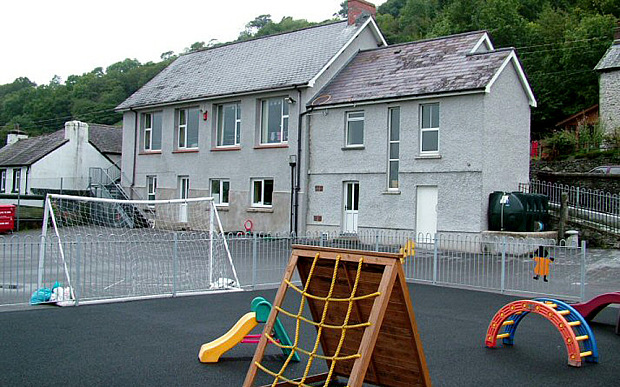
The “phantom” village school near Carmarthen in South Wales remains open despite this, and will remain so for another seven months.

Red tape means it cannot be closed for lessons even though all 11 pupils have left for other school.

No children have been taught there since last July, when it cost taxpayers £50,000 to run.

But the “statutory process” by the Labour-led Welsh government dictates that it cannot officially close until a consultation has been carried and a formal decision is made.

The consultation on the closure of the school began in 2012 after it was hit by falling pupil numbers in a village with a population of 580.

At the beginning of the spring term last year, there were 16 pupils being taught at the school, but that fell to 11 by the beginning of the autumn term.

The remaining children were then removed by their parents and sent to other schools rather than waiting for Llanfynydd to close.

Click on the link to read my post on If Teachers Were Paid More I Wouldn’t Have Become One

Click on the link to read my post on Pitting Private vs Public Schools is Bad for Education

Click on the link to read my post on The Education Version of “Moneyball”

Click on the link to read my post on Treating Teachers Like Livestock

Click on the link to read my post on Finally, a Voice of Reason!

Tips for Tackling the Mental Health Stigma in Your Classroom

December 3, 2014

depression

I must admit that I have never been formally trained on how to teach a child suffering from mental health issues or even how to bring the topic up in the classroom.

Whilst these tips by Martin Williams are all within the realms of common sense, it is good to get the reassurance that you can deal with something effectively even if you were never trained to do so:


Talk about mental health

“Mental health was never mentioned at school at all,” says Charlotte Walker, who now writes a blog on mental health issues. “I found out I had depression aged 12 from a teenage health guide.”

Now a mother, Walker is acutely aware that there is still a worrying lack of discussion about mental health in schools. It’s a problem that can not only lead to stigmatisation, but also cause health issues to go undiagnosed. “My son’s experience is that schools focus on the ‘safer’ feeling topics, such as insomnia and exam stress, but don’t dare go into the realms of bipolar or schizophrenia.”

Walker suggests that teachers should tackle the problem by simply trying to be more candid about mental health when chatting to children. “We’ve seen that sex and relationship education doesn’t always work because it’s in dedicated sessions,” she explains. “I think it’s important to have a general spirit of openness.”

It’s also important to talk openly about what support is in place for children who are experiencing difficulties, she says. “It tends to be that you only find out what’s on offer once you’ve declared your child is having problems,” Walker says. “If the information is given out to everyone, no one is singled out for stigma or discrimination.”

But tackle derogatory language

While it’s important to encourage discussion of mental health, research has shown that the use of pejorative terms about mental health problems are common in many children’s everyday language. While this is reflective of a wider societal problem, teachers can do their bit by cracking down on language when it is used in a derogatory or abusive way.

“Discriminatory language needs to be challenged,” says Walker. “Schools have come a long way with this on homophobia, but we need challenge the use derogatory words like ‘psycho’ or ‘schizo’ and the devaluing of clinical terms.”

Consultant psychiatrist Arun Chopra has said previously that misuse of terminology leads to misunderstandings about mental health. “You would never hear it used in relation to a physical condition,” he says. “You wouldn’t hear someone being described as a bit diabetic.”

Importantly, however – as has been pointed out before – language is just the visible surface of a deeper discrimination, so tacking language alone can never be the full solution.

Be aware

Unlike physical problems, some mental illnesses aren’t so obvious. “Only a couple of teachers and a handful of friends knew I was anything other than totally fine because I hid it,” says Lorraine Davies, who suffered from anxiety and depression at school. “If I’d been schizophrenic or suicidal maybe it would have been more noticeable, so, weirdly, I might have found more support and less whispering from friends behind my back as they tried to work out why I was being ‘weird’.”

For teachers, the key is to be on the look out for warning signs, according to Dr Raphael Kelvin, the clinical lead for Minded, a website designed to help pupils and teachers understand mental health issues. He suggests that teachers brush up on their knowledge of symptoms and never ignore a child whose behaviour fluctuates.

“If teachers understand that depression can strike not just when someone is saying they’re depressed, but also with someone who’s concentration and motivation has changed, they might be able to help them.”

Kelvin says teachers need to be alert, but do not need to become psychiatrists to help. If in doubt, he says, share your concerns with parents and other teachers to get to the root of the problem.

Help children tell their story to friends

“It’s very important to have a narrative about these things,” says Dr Kelvin, “people need a story to explain how things are. When kids come to the clinic after a period of difficulty, I often try to encourage them to have a story about their experience to explain what they’ve been through to their peers and friends.

“Often they either want to tell everybody or nobody, and the responses vary. The kid who tells everybody can become the butt of insensitive remarks; but the ones who tell nobody end up feeling very isolated. So how do they talk about it to their friends and how much do they want to say? What words do they need to tell their story in a way that’s not too painful? I think those are the kind of things that teachers can support pupils with. If you hear the story of why someone is behaving in a certain way you get a depth of understanding.”

Don’t alienate them further

A child who is experiencing mental health discrimination is such a delicate issue that approaching it clumsily or ignoring it all together can intensify the problem.

Davies says that a lack of understanding among certain teachers pushed her further outside the protection school should provide. “I was asked never to attend one teacher’s classes ever again as I was often late to his 9am because my anxiety was too high for me to get the school bus. Another went out of his way to provoke me – I think he thought I was a drama queen who needed a firm hand.”

Even teachers who are trying to help need to be careful, says Wilson. They should listen closely to pupils’ social concerns and approach issues with huge sensitivity.

“For instance, there are an awful lot of children who will have nothing to do with their classroom assistant because their friends laugh at them,” he says. “You’ve got to take that on board because their self-esteem is often at such a low ebb that anything will set them off. It’s all very finely balanced.”


Click on the link to read A Lack of Proper Sleep Does a World of Damage to a Child’s Attention Span

Click on the link to read What an ISIS School Looks Like

Click on the link to read Using Children as Bait is Abhorrent

Click on the link to read The Outrageous Pro-Gun Picture Book for Kids

Click on the link to read Sousa’s Techniques to Build Self-Esteem