Posts Tagged ‘Writing’

The Free Resource That Could Change Your Teaching Career

July 12, 2026

If you are a caring teacher who is struggling with classroom management, I want to tell you about something that is completely free and might be the most useful thing you read this year.

It is called the CALM Method guide. And I built it because I spent twenty five years in education watching good teachers leave the profession for a reason that had nothing to do with their ability or their passion.

They left because nobody gave them the right system.

What is the CALM Method guide?

It is a single, practical document that takes you from a struggling classroom to a managed one. Step by step. No jargon. No academic theory that falls apart the moment you walk through the door on Monday morning.

It is built around four strategies I developed over twenty five years of teaching and school leadership, including time as Head of High School. Four strategies designed specifically for caring, relationship-first teachers who were never given a classroom management system that worked with their personality rather than against it.

The four strategies are these.

C. Claim the Start. The first five minutes of every lesson set the emotional temperature for everything that follows. The guide shows you exactly what those five minutes should look like and why getting them right changes everything.

A. Arrive Prepared. Predictability is not the enemy of great teaching. It is the foundation of it. The guide shows you how to create a classroom environment so structured and consistent that even your most difficult students begin to feel safe enough to learn.

L. Leverage Key Relationships. Your genuine care for your students is your greatest asset. The guide shows you how to make that care work for you rather than against you, and how to use your key relationships strategically to shift the culture of your entire class.

M. Mean It Every Time. Consistency is not about being harsh. It is about being the same teacher on Monday as you are on Friday. The guide shows you exactly what that looks like in practice and why the room notices every exception.

Who is this for?

It is for the teacher who lies awake on Sunday night dreading Monday.

It is for the teacher who has been told to just be stricter and knows that is not the answer.

It is for the teacher who got into this profession because they genuinely love young people and cannot understand why that love is not translating into a classroom that works.

It is for the teacher who is thinking about quitting and has not quite made that decision yet.

If any of that sounds like you, this guide was written for you.

Why is it free?

Because I remember what it felt like to be in that classroom without the right system. And I remember what it felt like when things finally started to shift.

I do not want money to be the reason a good teacher does not get the help they need.

The guide is free. It always will be. Download it, use it, share it with every teacher you know who is struggling.

What teachers are saying

Teachers who have downloaded the guide describe it as the first classroom management resource that actually speaks to who they are rather than who they are supposed to become. Practical. Honest. Immediately usable.

Not a list of tips. A system.

Download it now

You have nothing to lose and potentially everything to gain.

The free CALM Method guide is waiting for you at the link below. Download it today and start using it tomorrow morning.

Download the free CALM Method guide here:
https://confidentteachingacademy.com

It is free. It is practical. And it might be the thing that keeps you in the profession long enough to discover the teacher you are capable of becoming.

Nice Isn’t Kind: What Every Teacher Needs To Hear

July 10, 2026

There is a mistake I made for years as a teacher that I am almost embarrassed to admit.

I thought I was being kind.

I was giving unlimited chances. Rolling back consequences. Avoiding the difficult conversation with the parent I knew would push back. Telling myself it was patience. Telling myself it was compassion.

It was not. It was niceness. And there is a difference that nobody in education ever explained to me, and that I think is quietly destroying the classroom management of some of the best teachers in the profession.

Nice avoids discomfort. Kind accepts discomfort because that is sometimes what the people in your care actually need.

Nice keeps the peace. Kind builds the person.

When you let something go because you are tired, because the parents are difficult, because it just feels cruel to escalate, the room does not experience that as compassion. It experiences it as an opening. There is a chance. And once that seed is planted, every student in that room will test whether the chance is still there.

That is not a character flaw in your students. That is just what happens in any room where the standards depend on the mood of the person enforcing them.

The hardest thing I ever did as a teacher

When I was Head of High School, I introduced a rule that stopped Year 11 and 12 students from leaving campus during free periods. The backlash was immediate. Parents furious. Students calling it a prison. I went from respected to despised in a matter of weeks.

Nice Michael would have backed down.

But I held the line. And by the end of that year, the turnaround in results was extraordinary. The students who had fought me the hardest were the ones who benefited most.

At the end of the year I took them to the shops out of my own pocket and bought them whatever they wanted. We had a party in their common room. Because I wanted them to understand that the harshness was never the point. The results were the point. And they had earned them.

That is the moment I understood what kindness actually requires. Not warmth alone. Not patience alone. Courage. The courage to hold the line even when it costs you something.

What this means for you

If you are a caring teacher who is struggling with classroom management, I want to say something directly.

You are not failing because you do not care enough. You are almost certainly operating on a belief that feels like kindness but is actually niceness. And the distinction matters enormously for your students and for your sanity.

You do not need to become a harsher teacher. You do not need to become a different person. You need a system that your warmth and empathy can work through rather than against.

That system is the CALM Method.

I developed it over twenty five years in classrooms and school leadership specifically for caring teachers. It is not about toughening up. It is about becoming more consistent, more predictable, and more purposeful in how you show up every single day.

The free CALM Method guide

The single most useful thing I can offer you right now is the free CALM Method guide. It contains the complete framework in one document. Everything I have learned about what actually works for relationship-first teachers, laid out clearly and practically so you can start using it tomorrow morning.

Thousands of teachers are downloading it. Teachers who were on the verge of walking away. Teachers who had been told to just be tougher and knew that was not the answer. Teachers who needed a system that respected who they are rather than asking them to become someone else.

If that sounds like you, download it here. It is completely free and it might be the most useful thing you read this year.

Watch the full video here: https://youtu.be/lkfVMmDDPpQ

Download the free CALM Method guide: https://confidentteachingacademy.com

Also worth watching:

Video One: This Didn’t Work: The Classroom Management System I Wish Someone Had Taught Me
https://youtu.be/C8yOzE3Hn1c

Video Two: Thinking About Quitting Teaching Because of Classroom Management? Watch This First
https://youtu.be/_Oe3eUh7dDE

Why I Started Confident Teaching Academy

July 7, 2026

For most of my career, the work I was most proud of happened quietly.

Not in front of a class. Behind the scenes. Sitting with a teacher who was struggling, helping them find their footing, watching something shift in the way they carried themselves into a room.

Early on I was identified as someone who could do that. Develop teachers. Draw out what was already there. Help good people become more confident in the work they had chosen. It became the thread running through everything I did in twenty five years of education, including my time as Head of High School.

The problem was scale.

One teacher at a time is meaningful. But I kept seeing the same thing happening everywhere. Caring, talented, relationship-first teachers walking into classrooms without the right system. Getting worn down. Starting to doubt themselves. Eventually leaving, not because they lacked passion, but because nobody had given them what they actually needed.

The advice available to them was not built for their personality type. It was built for someone else. And so they either tried to become someone they were not, or they concluded that teaching was simply not for them.

I do not believe that.

I started Confident Teaching Academy because I wanted to reach the teachers I could never get to in a staffroom or a leadership meeting. The ones at home on a Sunday night dreading Monday. The ones googling whether they should quit at eleven pm. The ones who still love teaching but are running out of reasons to stay.

The framework I developed, the CALM Method, is the distillation of everything I learned about what actually works for caring teachers. Not despite their warmth and empathy. Through it.

That is why I am here. And if any of this sounds familiar, you are exactly who this is for.

I have made three videos so far. Each one addresses a different part of the problem.

Video One: This Didn’t Work: The Classroom Management System I Wish Someone Had Taught Me
https://youtu.be/C8yOzE3Hn1c

Video Two: Thinking About Quitting Teaching Because of Classroom Management? Watch This First
https://youtu.be/_Oe3eUh7dDE

Video Three: Being Nice Isn’t Being Kind: Every Teacher Needs To Hear This
https://youtu.be/lkfVMmDDPpQ

And if you want the full CALM Method framework in a single document, you can download the free guide here:
https://confidentteachingacademy.com

5 Things That Are Quietly Destroying Your Classroom Management (And What To Do Instead)

July 6, 2026

If you are a caring teacher who is struggling with classroom management, I want to say something before I say anything else.

You are not failing because you do not care enough. You are almost certainly failing because nobody gave you the right system.

After twenty five years in classrooms and school leadership, I have watched the same patterns destroy good teachers over and over again. Not lazy teachers. Not indifferent teachers. Caring, committed, relationship-first teachers who got into this profession for exactly the right reasons and were let down by advice that was never designed for their personality type.

Here are the five things I see most often. And what to do about each one.

1. You are letting things go that should never go unnoticed

Every time you overlook something that should have a consequence, the room reads it as an opening. Not as kindness. Not as flexibility. As an opportunity.

There is a chance.

And once that seed is planted, every student in the room will test whether the chance is still there. Sometimes consciously. Often not. But the testing will happen.

The reason caring teachers let things go is almost always grounded in something that sounds reasonable. The parents are difficult. The student is going through something. It feels cruel to escalate. But the cruel irony is that the act of compassion in that moment, the giving of benefit of the doubt, is the exact thing that makes the room harder to manage tomorrow.

What to do instead. Identify your non-negotiables before the lesson starts. The three or four behaviours that cannot go unaddressed regardless of the circumstances. And deal with them every single time, calmly, consistently, without exception.

2. You believe rapport is enough

Rapport is essential. It is the foundation everything else is built on. But it is not a system.

A student who likes you will behave for one lesson, for one day, sometimes for one week. But the brief is to behave for an entire year, day in and day out. And warmth alone does not hold a room across two hundred lessons.

What to do instead. Use your rapport as the reason students trust your system, not as a substitute for having one. When students understand that your procedures come from a place of genuine care for their learning and their future, they are far more likely to buy into them.

3. You are optimising for the wrong unit

This is the mistake I made for years and it is the hardest one to see when you are inside it.

You are trying to manage one student at a time. Being patient with the difficult one. Giving them more chances. Adjusting your approach for their specific needs. And all of that sounds like good teaching.

But you are not a tutor. You are a classroom teacher. And the patience that would be exactly right for a one on one session becomes a liability in a room of thirty. Because the other twenty nine are watching every decision you make.

What to do instead. Think in terms of the room, not the individual. What does this classroom need to function well for every student, from the easiest to the hardest to reach? That question will often give you a different answer than the one you get when you focus only on the most challenging student in front of you.

4. You are starting your lessons too late

By the time you have settled the room, dealt with the students who came in hot from recess, handled the ones who are still talking, and finally gotten everyone facing forward, five minutes have gone. Sometimes ten.

And those are not neutral minutes. They are minutes where the emotional temperature of the room has been set by whoever was loudest. Not by you.

What to do instead. The first five minutes of every lesson need to be intentional, structured, and calm. Not exciting. Not a hook designed to grab attention. Calm. A quiet, self-directed task waiting for students when they arrive. Something low stakes enough that even your most overwhelmed student can engage with it without feeling threatened.

The first five minutes set the temperature for everything that follows. Get them right and the rest of the lesson becomes significantly more manageable.

5. You are waiting for the system to fix this for you

The most painful truth about classroom management is this. Most of what is making teaching brutal right now you cannot fix by yourself. The pay. The admin culture. The lack of support. The complexity of what students are bringing into your classroom from their home lives.

But there is one part of this that belongs entirely to you. What happens inside your classroom. And when that one variable changes, your relationship to everything else changes with it.

Caring teachers who are struggling tend to wait. For better support. For a different class. For the difficult student to move schools. For something outside themselves to shift.

What to do instead. Start with what you can control. Today. Tomorrow morning. The first five minutes of your next lesson. One non-negotiable held consistently. One relationship invested in strategically. Small changes compounded over weeks become the difference between a classroom that works and one that does not.


If any of this resonates, I have made two videos that go deeper on these ideas.

The first video walks through the full CALM Method, the classroom management framework I developed over twenty five years specifically for caring teachers.
Watch it here: https://youtu.be/C8yOzE3Hn1c

The second video is for teachers who are thinking about quitting. Before you make that decision, watch this.
Watch it here: https://youtu.be/_Oe3eUh7dDE

And if you want the complete CALM Method framework in a single document, you can download the free guide here: https://confidentteachingacademy.com

Thinking About Quitting Teaching Because of Classroom Management? Read This First.

July 6, 2026

In my first year of teaching, a student walked into my classroom and pointed what looked like a real gun at my face and pulled the trigger.

It was a toy. The class laughed. I laughed too. And inside I was shaking.

I reported it to my principal. He looked horrified. And then gave the student an in-house suspension that barely inconvenienced him. The parents were barely notified. The student never apologised.

That day I learned something I wish I had never had to learn. The system would not always protect me. And I had become a soft target.

If you are thinking about quitting teaching right now, I want you to read this before you do anything else.

The hidden cost nobody talks about

Every time a teacher quits, the conversation focuses on what they are leaving behind. The stress. The difficult students. The unsupportive administration. The impossible workload.

Nobody talks about what they are walking away from.

The years of university training. The assignments and exams. The teaching rounds. The student debt. The rejected applications before the first job. The sacrifices made to get to that point.

When a caring teacher quits because of classroom management, they are not just leaving a job. They are writing off everything they invested to get there. And what comes next is not guaranteed to be better paid, more fulfilling, or less draining.

You deserve to find out if this can work before you walk away from it.

The supervision gap

I am currently studying counselling. One of the first things you learn in the counselling profession is that you cannot do this work alone. Every counsellor, no matter how experienced, is required to have a supervisor. Someone they can debrief with, think alongside, and stay grounded with. It is not optional. It is a professional obligation.

Because the counselling profession understands something the teaching profession has not yet acted on.

Without that structure, burnout is not a risk. It is a prediction.

Counsellors sit with one person at a time in a quiet room for fifty minutes.

Teachers stand in front of thirty students carrying trauma and are handed a timetable and told to be resilient.

That gap is not your fault. But it is your reality.

The one thing that belongs to you

Most of what is making teaching brutal right now you cannot fix by yourself. You cannot fix your pay. You cannot fix admin culture. You cannot fix what is happening at home for your most difficult students.

But there is one part of this that belongs to you. What happens inside your classroom. That is the one variable you can change without waiting for anyone else’s permission. And when that one variable changes, your relationship to everything else changes with it.

Mia

I want to tell you about a teacher I will call Mia.

When Mia got her first teaching job she came in during the holidays to set up her classroom. Made it look pristine. Put her own personal spin on things. Her face lit up the day she got the job.

Six months later she was gone. And as far as I know she never went back to the classroom again.

I got some colleagues together. We met after school once a week. A small reflection circle. Just teachers talking honestly about what we were all dealing with, in the hope that she would feel safe enough to do the same.

She came. She talked. We tried to help.

It was already too late. The loneliness had already done its work.

All those years of training. All that potential. All that genuine love for the work. And she never got the chance to discover the teacher she might have become.

Two possible futures

You might be six months from becoming Mia.

Or you might be six months from turning the corner.

And in my experience the difference between those two futures is not talent. It is not passion. It is not how much you care about your students. You have all of those things already.

It is whether somebody gives you the right system before exhaustion and loneliness convince you that you were never meant for this work.

I wish somebody had told me in my first year that struggling with classroom management did not mean I was failing. It meant I needed a system. And that is what I want to give you.

Watch the full video here: https://youtu.be/_Oe3eUh7dDE

And grab the free CALM Method guide at the Confident Teaching Academy website: https://confidentteachingacademy.com

Nobody’s a Nobody: An Original Poem

January 20, 2020

nobody


NOBODY’S A NOBODY by Michael Grossman

I used to be so popular,

When I was back at school.

The teacher’s used to love me.

The kids thought I was cool.


I used to be so pretty,

And very good at sport.

Used to think I was quite special,

Or at least that’s what I thought.


I used to hang with cool girls

Who knew the latest trends.

Everyone looked up to us,

And wanted to be friends.


So many kids we just ignored

I regret it in a way,

They may have seemed like nerds back then,

But look at them today.


I remember this one girl,

Big Stella Green

With these ugly, awkward glasses

And a huge nose in between.


We used to tease and tease her,

Before and after school.

Once old Tommy McNoughton

Shoved her in the abandoned pool.


If only he would have known

That later, in a time of strife,

Stella Green would operate on his fiance,

And all but save her life.


What about Kayoko Kishimoto?

Our only Japanese student.

She was brilliant at science,

But at English – not so fluent.


We would never come and talk to her.

No one would even try.

They just left her all alone,

Supposing she was shy.


Did she end up learning English?

Well, what can you say

About the winner of an Oscar,

For Best Original Screenplay.


There was Dante Ferretti,

Who was the ‘school geek’,

With his great boofy hair,

And pimples for each cheek.


So tired of getting abused

And so embarrassed with his looks,

He used to hide his spotty face,

Inside a range of different books.


Who would have thought

That this reserved, avid reader,

Would go on to become

Our new State Opposition Leader?


Everyone used to fear

Max Stockwell “The Freak”.

Rumour had it he ate live snails,

And showered once a week.


The girls thought he was mad,

The boys thought he was weird.

He’d come walking through a corridor,

And the corridor all but cleared.


I hear he’s no longer weird,

And no longer is he ‘mad’;

Instead, he’s changing nappies

As a loving, stay-home dad.


I was never better than them.

I used to be so lame.

If I only understood,

That we are all the same.


I used to be “cool”,

But never was I happy,

Until the day I realised

NOBODY’S A NOBODY.


Special Announcement:

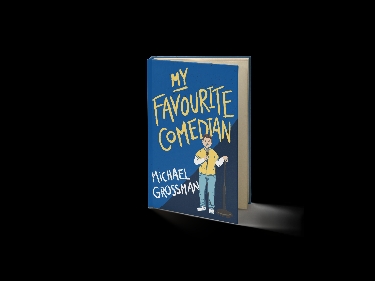
I am donating 100% of the royalties of my hilarious new children’s book, My Favourite Comedian, during the month of January to those affected by the devastating bushfires in my country, Australia. This book is perfect for children aged 9 to 14 and the ideal class novel for Upper Primary students. Please leave a comment to indicate your purchase. You can buy a copy by clicking on this link.


All Students Can Achieve Reading Success

January 8, 2020

Some readers take their time to reach their breakthrough moment whilst others are hampered due to a lack of practice at home.

Phillis C. Hunter reminds us all that every child can succeed in their pursuit to become confident readers. Here she gives a brilliant speech that has inspired many a teacher.

One of the chief motivators in writing my novel, My Favourite Comedian, was to publish a book specifically designed to ignite disenchanted readers. I believe that a book that is both relevant to a child’s everyday experience and is packed with suspense and comedy is a good chance to engage even the fussiest readers. Additionally, the book should be suited to reading aloud and ensure that the dialogue isn’t swamped by descriptive overkill.


Special Announcement:

I am donating 100% of the royalties of my hilarious new children’s book, My Favourite Comedian, during the month of January to those affected by the devastating bushfires in my country, Australia. This book is perfect for children aged 9 to 14 and the ideal class novel for Upper Primary students. Please leave a comment to indicate your purchase. You can buy a copy by clicking on this link.

My Latest Book Interview

December 29, 2019


It has been a great thrill for me to publish my debut novel. Below is the transcript of my latest interview.


What is your e-reading device of choice?
The Kindle is now waterproof, which is perfect for me as I love to read in the shower. I hope the next edition is shampoo and conditioner proof.
What book marketing techniques have been most effective for you?
I have found that not taking no for an answer has been the best strategy. That tactic worked to finally persuade my wife to read the book.
Describe your desk
My desk happens to look a lot like a kitchen table. In fact, it is a kitchen table. Used cereal boxes make for great mouse pads.
Where did you grow up, and how did this influence your writing?
I grew up in Melbourne, Australia which is a lot like Melbourne, Florida aside from the beautiful climate and great beaches. Australians are fun-loving and easy-going people. I’m surprised they haven’t deported me yet.
When did you first start writing?
I once wrote a letter of appeal for a traffic violation. I wrote a very convincing letter. I knew then that I could make it as a struggling writer.
What’s the story behind your latest book?
This book was never supposed to be written. What started as a summer project that was abandoned after just two chapters slowly turned into a completed work. And the credit goes entirely to my students.
Back in 2002, whilst I was a mere student teacher, I noticed that kids weren’t utilising their quiet reading time very well. In fact, they were staring off into space. I decided to print off the two chapters as a means to provide the students with another reading option. Not only were they suddenly engaged in what they were reading, but they brought it home to their parents. I was getting messages from parents requesting the next chapter. And this started my journey towards completing the novel. This certainly wouldn’t have happened were it not for the support and encouragement of my wonderful students over the many years!
What motivated you to become an indie author?
It is the perfect career move for me at the moment as I transition to my ultimate dream job – telemarketer!
What is the greatest joy of writing for you?
Sharing your story and the characters you love with the world. That, and getting off parking fines.
What do your fans mean to you?
My uncle means the world to me.
What are you working on next?
I am working on two titles:
The A-Z Guide to the Alphabet; and
Mannequins for Dummies
What inspires you to get out of bed each day?
A nice, warm Kindle shower.
When you’re not writing, how do you spend your time?
I am a social justice warrior. The other day I protested against cuts to the police force by handcuffing myself to a policeman.
How do you discover the ebooks you read?
I use the same method of discovery as Christopher Columbus – Google.
Do you remember the first story you ever wrote?
I was 4 years old and got myself in heaps of trouble. Permanent marker is hard to get off wallpaper.
What is your writing process?
Sit at the kitchen table. Turn on the computer. Brainstorm. Give up and watch a YouTube cat video. Reward myself with chocolate.
Do you remember the first story you ever read, and the impact it had on you?
War and Peace. It totally changed my life. I loaned a copy to Kim Jong Un, but as of yet, he’s only read the first half.
How do you approach cover design?
I get someone else to do it. I can’t even make my stick figures symmetrical.
What are your five favorite books, and why?

How to Win Friends and Influence People – How I got my wife to read my book

The Art of the Deal – Pure comedy. One of the funniest books ever written.

The Achievements of Kim Kardashian – Available in pamphlet form

The Mueller Report – I once had insomnia. No more.

Grease – Not the movie, just a Jewish cookbook.

What do you read for pleasure?
The television guide.
What was your greatest achievement?
I once got the lead part in my school’s production of Fiddler on the Roof. Unfortunately, I didn’t get to perform it. I got injured during rehearsals. I fell off the roof.
spotlight
Michael Grossman is the author of the hilarious new children’s book, My Favourite Comedian. You can buy a copy by clicking on this link.

Things Your Teachers Taught You That Are Wrong

January 4, 2017

teacher-myths

A great list compiled and written by Misty Adoniou:


1. You can’t start a sentence with a conjunction

Let’s start with the grammatical sin I have already committed in this article. You can’t start a sentence with a conjunction.

Obviously you can, because I did. And I expect I will do it again before the end of this article. There, I knew I would!

Those who say it is always incorrect to start a sentence with a conjunction, like “and” or “but”, sit in the prescriptivist camp.

However, according to the descriptivists, at this point in our linguistic history, it is fine to start a sentence with a conjunction in an op-ed article like this, or in a novel or a poem.

It is less acceptable to start a sentence with a conjunction in an academic journal article, or in an essay for my son’s high school economics teacher, as it turns out.

But times are changing.

2. You can’t end a sentence with a preposition

Well, in Latin you can’t. In English you can, and we do all the time.

Admittedly a lot of the younger generation don’t even know what a preposition is, so this rule is already obsolete. But let’s have a look at it anyway, for old time’s sake.

According to this rule, it is wrong to say “Who did you go to the movies with?”

Instead, the prescriptivists would have me say “With whom did you go to the movies?”

I’m saving that structure for when I’m making polite chat with the Queen on my next visit to the palace.

That’s not a sarcastic comment, just a fanciful one. I’m glad I know how to structure my sentences for different audiences. It is a powerful tool. It means I usually feel comfortable in whatever social circumstances I find myself in, and I can change my writing style according to purpose and audience.

That is why we should teach grammar in schools. We need to give our children a full repertoire of language so that they can make grammatical choices that will allow them to speak and write for a wide range of audiences.

(more…)

Student Writes Nasty Letter to Teacher and Teacher Corrects it!

April 10, 2014


correct

Never mess with an English teacher!


Click on the link to read The Telegraph’s Best Children’s Book of All Time

Click on the link to read The New York Public Library’s 100 Most Requested Children’s Books

Click on the link to read Stunning Photographs of the Most Beautiful Libraries in the World

Click on the link to read The Call to Stop Kids From Reading Books they Actually Enjoy

Click on the link to read The Classic Children’s Books they Tried to Ban

Click on the link to read How Spelling Mistakes can Turn a Compliment into Something Quite Different.

Click on the link to read Why Spelling is Important at Starbucks