It’s the first day of a new school year tomorrow and I’m suffering from my annual bout of self-doubt. I get very anxious before a school year starts. I worry about whether or not I will succeed at helping my students. I worry about whether my style of teaching will work on a new bunch of kids.
The week leading up to the start of the school year doesn’t help. It’s a week that is set aside for preparing the classroom. This involves displays, fancy name tags and innovative ways to use a small space to enhance learning. The female teachers I work with put a lot of emphasis on the look of their classrooms. Borders are replaced around noticeboards, name tags are put on everything (and I mean everything!) and the fear of death is reserved for the poor laminator who cops the brunt of all this activity.
When it comes to developing fun lessons, I am very comfortable. When it comes to decorating a classroom, I am completely out of my league! I have been getting comments ever since I started about the plainness of my classroom compared to the other teachers. My bosses have pointed out that my classroom looks far less inviting and colourful. This year I put up a beautiful piece of red material to cover my noticeboard, before being told that children don’t learn well in a room of red. Apparently the colour red has a negative effect on concentration and creativity. The comments certainly made me see red!
Then there’s the endless diatribe from those in charge about new responsibilities and expectations that all staff need to adhere to. These usually involve devoting a great deal of extra time. If there is something all teachers have in common, it is the absence of any extra time.
Handover isn’t much fun either. As the previous teacher reads each name from the class list, every child is presented as difficult to teach. There’s behavioural issues, Aspergers, ADHD, ADD, Oppositional disorder, social issues, anger management issues, language disorders etc. What is it with psychologists today? They have turned every personality type into a disorder. Why is every second child on a spectrum? What is this spectrum, and how did it get to be so big? In today’s age, the one kid who can’t manage to get on the spectrum of any modern psychological condition probably ends up feeling left out and abnormal.
All this makes me very uneasy. I get very frightened. I desperately don’t want to let my students down.
I find the ADHD trends highly frustrating. I am not a doctor or medical professional of any kind so it’s not for me to speculate whether or not ADHD exists. What bothers me, is the rapid increases in children being diagnosed (and more importantly, medicated) with the syndrome. To me Ritalin and other types of ADHD medication must be the last resort. It’s side-effects are often quite pronounced and sometimes quite sad to experience. Kids with larger than life personalities and great bursts of creativity can often be left following their own shadows (I have personally witnessed this!)
When I first entered into the profession I was given medical forms to fill out about a particular student. A previous teacher must have recommended that this student be assessed due to the belief that she may have some ADHD symptoms. In my view she was just a child with poor self-esteem who lacked concentration. In my assessment of her I made it clear that I felt that beyond her concentration being poor there was no other reason to suspect that she may have ADHD.
It didn’t help. Unfortunately, within weeks of being presented with this patient, the doctor prescribed her with Ritalin. No suggestions of a change of diet, no therapy to examine if there is any cause for her low self-esteem and no evidence that she was sent to have her language skills tested. Just the “go to” method, the “one pill fits all” strategy – the blasted pill!
I am proud to say that this child is now off the medication. Her parents decided it was not something they wanted her to be on permanently so they eased her off it. Doctors would be shaking their heads right now and accusing the parents of being irresponsible. But the parents were right. She is now a happy, focussed, non-medicated young teenager.
SIMPLY eating healthier may improve the behaviour of children with attention deficit hyperactivity disorder (ADHD) if therapy and medication fail, says a study published in the journal Pediatrics.
Nutritional interventions should therefore be considered an alternative or secondary approach to treating ADHD, not a first-line attack, said the review by doctors at Northwestern University Medical School in Chicago, published on Monday.
What they mean by that is first pop the pills and then consider your sugar intake. This is ridiculous. What is the big deal about investigating diet and other possible causes before, as a last resort, prescribing the medication?
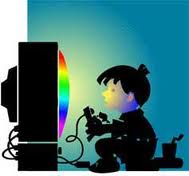
I am not one to use therm “addiction” lightly. Many would dismiss video game addiction as merely a bad habit or a product of an anti-scocial personality, but it is very real.
Video game addiction can take over a child’s life and deeply affect their relationships, schoolwork and daily routine. With role-playing games such as World of Warcraft now in vogue, the video game addiction has become far more serious. Because these games have no designated end point, the game goes on indefinitely. This means that kids struggle to put the controller down in order to eat, sleep or even go to the toilet!
In fact, in 2007, a Harris poll found that 8.5% of youths between the ages of 8 – 18 in the United States could be classified as video game addicts.
“The excitement, the thrill and the challenge, for some people gets greater and greater, and then it takes on a life of its own.” Dr. Anna Bacher, a therapist in Sarasota, treats patients with addictions — including those who have a hard time putting down the controller. “It can go to the extreme, where they stop sleeping, they stop eating, the person becomes irritable, lethargic, depressed, highly anxious and very difficult to be around.”
It is absolutely essential that parents are aware of the consequences of an addicted child before the odd game of World of Warcraft and games of its type, become an obsession. Parents should not feel that copious hours in front of the computer amounts to innocent fun.
Yes, gaming addiction is better than drugs. But not as much as some parents may think.
We are currently living in the age of “the hamstrung teacher’. Never has it been so hard for teachers to gain control, receive respect and maintain some semblance of authority.
Blogs and staff rooms are replete with dispirited and powerless teachers struggling with unruly and defiant students. It wasn’t long ago that teachers were able to meter out tough and effective consequences for bad behaviour. Unfortunately, it is so much harder now than it ever was to find the right penalty for inappropriate and insubordinate behaviour.
Why not send them to the Principal?
The Principal used to be an imposing figure. – someone you didn’t want to meet, even to get a certificate or compliment. Students used to avoid the Principal like a plague. Principal’s used to concern themselves with discipline issues and take charge when students overstepped the mark. But nowadays a visit to the Principal’s office is not all that dissimilar to a trip to the fun park. A Principal’s job now is to keep parents and students happy and leave the real disciplining to the teachers.
“Next time try not calling the teacher those names.”
What about suspending them?
Nine hundred students are suspended every day in England. In Australia it is 100 per day. Being suspended used to be a humiliation. It would involve notifying the students’ parents, who would be none too happy to receive the phone call. Now suspensions presents just another opportunity to get back to the Playstation or X-Box. Parents often reassure their kids and allow them to go home and vegetate. Hardly a real punishment!
What about taking away their recess?
Don’t tell the civil libertarians about this mode of punishment! According to law, students can only be kept in for some of recess, not the entire playtime. And anyway, why should the teacher be punished? Teachers rely on their lunch breaks to recharge and re-energize. Monitoring detention just isn’t fair.
What about ringing the parents?
Parents used to be on the side of the teacher. When a teacher called a parent, that parent would take stock of what the teacher was saying and become partners in helping manage the problem. Nowadays, parents are likely to become defensive, make excuses and become unwitting enablers for their children’s poor behaviour.
Please note, that I am not tainting all parents. On the contrary, the parents I work with have been incredibly open and supportive. I am merely pointing out that trends are changing and punishments that used to make students squirm and think twice before acting, are now no longer a deterrent.
It is also important to note that most teachers are not trigger happy when it comes to punishments. We don’t like punishing students. We try to command respect rather than demand it. But there are times when all semblance of control is lost and students are purposely trying to sabotage the class and undermine their teacher.
In those cases, the teacher is often left to raise their arms skyward and ponder what it is they can do to remedy the situation.
It is the responsibility of parents and teachers to protect children and educate them on the dangers that exist in the ‘real world’. However, in attempting to prepare children for incidents and scenarios that are unlikely to happen we have seemingly created a fear and paranoia that has proven quite destructive to the same children we are trying to protect.
A surge in reports of men acting suspiciously near schoolchildren has triggered urgent talks between schools and police, who fear the ‘‘stranger danger’’ message has gone into overdrive.
Police say heightened fears of children being stalked on Gold Coast streets are unfounded, and the increase in reports is the result of people jumping at shadows after a rash of incorrect media stories.
Regional Crime Coordinator Dave Hutchinson says some incidents are made up, and others are cases of children taking fright for no good reason.
I am a bit concerened at how scared and anxious our children are becoming, and teachers are slightly to blame. Besides stranger danger and other programes that inhabit fear in students, many teachers in Australia have been scaring children with doom and gloom predictions about global warming. No matter what your position is on this issue, it is important that teachers instruct, educate and empower children, instead of frighten or demoralise them.
There is a huge difference between helping students become perceptive, instinctive and responsible and helping them to become fearful and paranoid.
At the end of the day, the importance of the message is lost when it inspires an irrational and overpowering fear.
Just when you thought that respect for girls and women was on the marked improve comes yet another reminder that things are not what they seem:
During the 2010-11 school year, 48 percent of students in grades 7-12 experienced some form of sexual harassment in person or electronically via texting, email and social media, according to a major national survey being released Monday by the American Association of University Women.
The harassers often thought they were being funny, but the consequences for their targets can be wrenching, according to the survey. Nearly a third of the victims said the harassment made them feel sick to their stomach, affected their study habits or fueled reluctance to go to school at all.
The survey, conducted in May and June, asked 1,002 girls and 963 boys from public and private schools nationwide whether they had experienced any of various forms of sexual harassment. These included having someone make unwelcome sexual comments about them, being called gay or lesbian in a negative way, being touched in an unwelcome sexual way, being shown sexual pictures they didn’t want to see, and being the subject of unwelcome sexual rumors.
The survey quoted one ninth-grade girl as saying she was called a whore “because I have many friends that are boys.” A 12th-grade boy said schoolmates circulated an image showing his face attached to an animal having sex.
In all, 56 percent of the girls and 40 percent of the boys said they had experienced at least one incident of sexual harassment during the school year.
After being harassed, half of the targeted students did nothing about it. Of the rest, some talked to parents or friends, but only 9 percent reported the incident to a teacher, guidance counselor or other adult at school, according to the survey.
In my view there are two main reasons for this disturbing set of figures:
1. Schools have become hamstrung when it comes to access to appropriate and effective consequences for infringements such as bullying and harassment. Call the parents? No big deal. They gave up long ago. Suspensions? Nowadays you get a suspension for talking out of turn. Suspensions have lost their impact because they are metered out out too readily. In the end, no punishment given seems to come close to matching the crime.
2. Schools have been notorious at turning a blind eye to incidents. I am not talking about all schools, yet in truth, plenty goes under this category. Teachers have been taught not to get emotionally involved with their students. The result being, an emotional distance which inhibits the teachers capacity to pick up on these things, Teachers must have enough of a connection with their students (within the obvious professional parameters of course), as to notice when things are not right with their them. They are intrusted to look after their students and must do so by being proactive. Kids are told from an early age not to dob on a classmate. If teachers wait around for things to get reported to them, they will miss the opportunity to intervene and change a potentially abusive situation.
We must expect schools to be proactive with harassment. They must be able to use tough and uncompromising punishments and show enough of an interest in students as to detect a problem before it gets completely out of hand.
How sick and utterly selfish do you have to be to name your beautiful children “Adolph Hitler” and “Aryan Nation”? What an absolute disgrace! These parents can’t understand why their children were taken away from them. It’s a shame that they haven’t as yet worked out that by naming their children after despicable tyrants and murderous regimes they are in fact scarring their children for life.
A COUPLE who named one of their children after Adolf Hitler should not regain custody of their three children, an appeals court has ruled.
Heath and Deborah Campbell’s three small children were removed from their home in Phillipsburg, New Jersey, by the state in January 2009, myFOXphilly.com reported.
The family drew world-wide attention after a store refused to decorate a birthday cake for their son, Adolf Hitler Campbell.
Adolf and siblings JoyceLynn Aryan Nation and Honszlynn Hinler Jeannie have been in foster care since then.
The appeals court ruled last week that sufficient evidence of abuse or neglect existed because of domestic violence in the home. The court sent the case back to family court for further reconsideration.
A gag order remains in place and the parties refused to discuss the decision.
In January 2009, the Campbells told myFOXphilly.com that Adolf Hitler Campbell was just like any other three-year-old boy.
“It’s not like he’s growing up to be a killer or nothing like that,” said mother Deborah Campbell.
How dare they do this to their beautiful children! Sure, it is claimed that the children have been taken out of their parents’ custody because of domestic abuse and not because of their names, but what if there was no other reasons? Should the names be enough to warrant a claim of child abuse.
If these people want to continue rearing their precious children they better smarten their act. This includes thinking of more appropriate names for their kids … quick smart!
Critics of the way our generation of parents rear children tell us that we spoil kids senseless. They say that we go out of our way to protect our children from failure. They admonish us for not allowing children to deal with disappointment, a crucial life skill in the real world.
But as much as I agree with these critics, I can’t help but sympathise for children that are not ready for the battering that can come about from being singled out amongst their peers.
When I was studying to become a teacher, my Art lecturer made us do a sketch of a fellow classmate, who was made to pose leaning against a ladder. I can’t draw for my life. Even my stick figures look shabby! At the end of the activity, the students wandered from drawing to drawing, inspecting the works of art that our creative class had accomplished. Then there was mine. An absolutely horrendous, ghastly mess, that looked nothing like the poor subject. I wanted to crawl into the art supplies cupboard and remain there for at least thirty years!
When we were expecting our first child, we attended parenting classes. On one of our weekly lessons, the instructor got all the fathers up in front of the class to do a demonstration of how cloth nappies/diapers are applied to a newborn. We were each given a cloth nappy and a doll and were given quick instructions before being put to work. I have never been great with verbal instructions. I am a visual person, relying on generous amounts of time and clear descriptive pictures before I can follow even the simplest of instructions. Needless to say, my nappy ended up looking more like a paper airplane.
And I’m an adult with relatively good self-esteem. Imagine how kids feel?
Imagine how uncoordinated and unfit children feel during physical education classes. Imagine how traumatic it is for a child who finds maths difficult to demonstrate an answer on the board in front of the class.
I totally agree that these are problems children should be able to deal with, as they are problems that exist in the real world.
I’m just not sure I’m emotionally ready to teach it to them.
I read a brilliant article in The National about the lies we tell our children and when is the right time to confess that the Easter Bunny they are so fond of isn’t real.
Below is just an excerpt of the article. I strongly encourage you to read the entire piece by following this link.
The world is a confusing place for small children, particularly as they only learn to distinguish between reality and fantasy between the ages of three and five. Jacqueline Woolley, a psychology professor at the University of Texas in the US, found that by the age of four, children learn to use the context in which new information is presented to distinguish between fact and fiction. So, before long, your little one will be figuring out that the tooth fairy isn’t who you said she is. Which begs the question: at what age should we tell our children that their beloved magical characters aren’t real? Or, should we even claim that they’re real in the first place?
Last Christmas I witnessed the most heated debate I’d ever come across on Facebook. It didn’t involve politics, religion or money. No; it was Santa Claus who caused the divide. One friend posed the question: “Should I tell Sophie Father Christmas is real?” What followed was a polarised debate between those who wanted their children to enjoy a magical gift-giving time and those who believed that perpetuating the story of Santa was being dishonest with their offspring. “I was devastated when I found out it was my mum, not Santa, who hung the stocking on the end of my bed,” admitted one father. Whereas others regretted never having the chance to believe in Santa because older siblings had spoilt it for them.
“I make a point of always being honest with my daughter and now she has turned six I’m feeling increasingly uncomfortable with perpetuating the lie of Santa Claus,” admitted Rosie Cuffley, a mother of two.
According to Carmen Benton, a parenting educator and educational consultant at LifeWorks, Dubai, Rosie shouldn’t worry. “Sharing the world of fantasy characters with our children is not a lie, but rather a playful way of storytelling and connecting as a family to fun events. Think about the joy and excitement that thoughts of characters such as Santa Claus can induce. You have the power to create a magical world of dreams, wishes and storytelling for your kids and I believe these are part of being a playful parent.”
It’s a different scenario when children ask directly whether Santa Claus, for example, is real. Most psychologists agree that children need to know they can trust their parents to tell them the truth, even about magical characters. “The majority of children will let go of a fantasy after the age of eight, and most would be happy for the years of the imaginary world they had been able to enjoy,” says Benton.
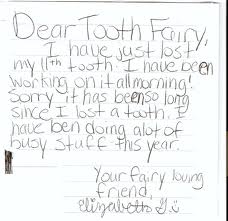
I feel terrible that my daughter still believes in the Tooth Fairy. I don’t like perpetuating a lie (especially one I know will be uncovered sometime soon). I have a feeling, irrational or otherwise, that when she does find out, her first thought will be, “What else is he lying to me about?”
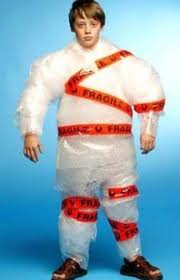
I am an over-protective father and proud of it. I am hesitant when my daughter takes any risks and hate to see her in discomfort. Yet, at the same time, I realise that cuts and grazes are part of life and growing up. You can’t shadow your child in the playground to prevent them from tripping and you can’t ban them from low-risk activities on the off-chance that something might occur.
That is why I am so opposed to the persistent interference by Governments and local councils in banning everyday activities. It is not their place to decide what toy my child should play with. They may choose to advise me about the risks and encourage me to supervise my child with graet care, but the constant banning is taking things too far.
The EU toy safety directive, agreed and implemented by Government, states that balloons must not be blown up by unsupervised children under the age of eight, in case they accidentally swallow them and choke.
Despite having been popular favourites for generations of children, party games including whistles and magnetic fishing games are to be banned because their small parts or chemicals used in making them are decreed to be too risky.
Apparently harmless toys that children have enjoyed for decades are now regarded by EU regulators as posing an unacceptable safety risk.
Whistle blowers, that scroll out into a long coloured paper tongue when sounded – a party favourite at family Christmas meals – are now classed as unsafe for all children under 14.
As well as new rules for balloons and party whistles, the EU legislation will impose restrictions on how noisy toys, including rattles or musical instruments, are allowed to be.
All teddy bears meant for children under the age of three will now have to be fully washable because EU regulators are concerned that dirty cuddly toys could spread disease and infection.
The EU and other Government bodies will continue to come up with irrational and overbearing legislation, but no matter how hard they try they will never be my child’s parent.









 Topical Teaching