Teaching is a profession that involves a great deal of responsibility and requires a high level of trust. But that trust is easily eroded.
The risks of teaching for many males outweigh the obvious benefits. It is a noted fact that prospective male primary teachers often decide not to join the profession because of the fear of a false allegation. And it’s not only males. Female teachers are also the subject of malicious accusations.
Figures from the Department for Education show that around 44 per cent of claims made by pupils and their parents were “unsubstantiated, malicious or unfounded”.
In one-in-five cases, teachers were automatically suspended while investigations into allegations were carried out, despite widespread concerns over a wave of false claims.
Fewer than one-in-20 allegations levelled at staff resulted in a criminal conviction.
The Government warned that false allegations had a “devastating impact” on teachers’ lives.
Nick Gibb, the Schools Minister, said: “Every allegation of abuse must be taken seriously, but some children think they can make a false allegation without any thought to the consequences for the teacher concerned.
“When these allegations are later found to be malicious or unfounded, the damage is already done. It can have a devastating impact and ruin a teacher’s career and private life.
“This research shows why the Coalition Government’s plan to give teachers a legal right to anonymity when allegations are made by pupils is so important.”
The Government obtained data from 116 out of 150 local authorities in England.
It found that 12,086 allegations of abuse had been made by schools in 2009/10.
Almost a fifth resulted in teachers being suspended while allegations were investigated. More than half of investigations took longer than a month to complete – beyond the target limit identified by the Government.
Whilst I am a huge advocate for encouraging victims of abuse to go public with their allegations, I am mindful that many innocent teachers tend to be implicated for crimes they never committed.
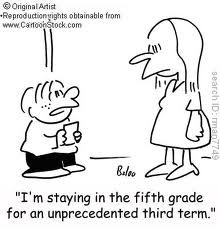
OECD figures released this year found about 8 per cent of Australian students were repeating grades at school, often with the intention of helping them catch up and get better educational outcomes.
But a University of Sydney study of more than 3,000 students in eight different New South Wales schools has found repeating a child could have the opposite effect.
Professor Andrew Martin says the research found the students who repeated did not only suffer academically, but they also struggled in other ways.
“We found that students who repeated a grade tended to be less likely to do their homework, they had more days absent from school, they tended to be a bit lower on the academic engagement and motivation scale, they were lower in academic confidence and they were lower in their general self-esteem,” he told ABC News Online.
“In many cases, it seems what educators and parents were hoping for does not quite happen.
“It seems that simply pressing the pause button does not get at the issues that might have led to the decision to repeat a child.”
WhilstI respect the findings of this study, the trend of promoting students for no other reason than to protect their self-esteem is quite challenging for teachers. It means that the child is often far behind, is often missing basic skills and therefore cannot understand advanced concepts and sometimes disrupts the other students. It means that there will be students that can’t read or write properly entering into high school.
How is that beneficial to the child? How does being set vastly different work to ones classmates make that child feel any less of a failure?
Teachers will generally do anything they can to accelerate the divide between struggling students and the rest of the class. The last thing they would ever want is for any of their students to suffer emotionally.
At the same time, the current closed mindedness of education experts when it comes to repeating year levels is a concern. Surely, at some point, the child has a better chance repeating a year than they do being promoted on the back of under developed skills?
I am in no way an advocate for making children repeat year levels. But I am also mindful that gaps can grow, and the result of a skills divide in the classroom can have a lasting effect on both class and struggling student.
I suppose it just goes to show the importance of good teaching in the early years, alertness in spotting any learning problems or difficulties and a well run and resourced Special Education/Remedial Education department.
It is my belief that cyber-bullying is often based on “dominance” and “popularity” rather than “hate”. I don’t think most cyberbullies hate their victims. Instead, I think they see them as stepping-stones to wider acceptance from their peer group. Often the victims are minorities or outcasts. The pressure to be in the “in group” has always been high. For an “in group” to exist there needs to be a clearly defined “out group”. It is often seen as a sort of right of passage for someone seeking popularity to kick the easy target.
A new study commissioned by CNN’s “Anderson Cooper 360°” found that the stereotype of the schoolyard bully preying on the weak doesn’t reflect reality in schools.
Instead, the research shows that many students are involved in “social combat” — a constant verbal, physical and cyber fight to the top of the school social hierarchy.
“Kids are caught up in patterns of cruelty and aggression that have to do with jockeying for status,” explains Robert Faris, a sociologist whom “Anderson Cooper 360°” partnered with for the pilot study. “It’s really not the kids that are psychologically troubled, who are on the margins or the fringes of the school’s social life. It’s the kids right in the middle, at the heart of things … often, typically highly, well-liked popular kids who are engaging in these behaviors.”
Faris, along with the co-author of the study, Diane Felmlee, also found that bullies, whom they call aggressors, and victims are not defined roles, but in many cases, they can be the same person. The higher students rise on the social ladder, the more they bully other students, and the more other students bully them.
“When kids increase in their status, on average, they tend to have a higher risk of victimization as well as a higher risk of becoming aggressive,” Faris says.
The study was conducted this spring at The Wheatley School, a nationally top-ranked high school on Long Island, New York. More than 700 students at the school were given a survey with 28 questions on aggressive behavior four separate times throughout the semester. They were also given a roster of the entire school in which every student had an identification number and kids were asked to write down specifically who did what.
This is part of the reason why I am so critical of the way bullies are handled at some schools. So often the emphasis is on the actions of the bully and not on the social environment that encourages bullying behaviour in the first place. That is why so much of my energy is devoted to changing the social fabric of my class.
After all, bullying isn’t a priority – it is THE PRIORITY. As a teacher, I am entrusted not with people’s money or belongings but with the most important and precious things they have – their children. It is my responsibility to ensure that they are safe and secure. Sure, I have to teach them and help them grow academically, but even more so, I have to do my best to make sure that the child they dropped off at my classroom is going to come back in as good if not better emotional shape than when they arrived.
When I speak to my class at the beginning of the year, I tell them there is a sure-fire way for them to have to repeat the year a second time. It’s not if they find the work difficult or are struggling to pass assessments – it’s if they are not treating their classmates with respect. Because if they are not ready to treat others with respect, they are not emotionally ready to go up a year level.
I’m not joking. I really do mean it.
There is a lot of talk about ‘child centered learning’ vs ‘teacher centered learning’. I prescribe to neither. Instead, I believe in what I call “class centred learning”. The main focus of my teaching is that everyone in the class must respect each other. It is the fundamental rule for assessing my own performance. They don’t have to be best of friends, but they absolutely must respect each other. And ultimately, it is my duty to empower the class and create an environment of closeness and mutual respect.
Does it mean that there is no bullying in my classroom? Absolutely not. I wish. I’m only an ordinary teacher. What it means is, I take more interest in the welfare of my class than any other consideration.
On the topic of bullying, I again strongly recommend (not for the last time) this most brilliant anti-bullying film developed by young students in their own free time. It is the best of its kind by a long, long way!
I am an over-protective father and proud of it. I am hesitant when my daughter takes any risks and hate to see her in discomfort. Yet, at the same time, I realise that cuts and grazes are part of life and growing up. You can’t shadow your child in the playground to prevent them from tripping and you can’t ban them from low-risk activities on the off-chance that something might occur.
That is why I am so opposed to the persistent interference by Governments and local councils in banning everyday activities. It is not their place to decide what toy my child should play with. They may choose to advise me about the risks and encourage me to supervise my child with graet care, but the constant banning is taking things too far.
The EU toy safety directive, agreed and implemented by Government, states that balloons must not be blown up by unsupervised children under the age of eight, in case they accidentally swallow them and choke.
Despite having been popular favourites for generations of children, party games including whistles and magnetic fishing games are to be banned because their small parts or chemicals used in making them are decreed to be too risky.
Apparently harmless toys that children have enjoyed for decades are now regarded by EU regulators as posing an unacceptable safety risk.
Whistle blowers, that scroll out into a long coloured paper tongue when sounded – a party favourite at family Christmas meals – are now classed as unsafe for all children under 14.
As well as new rules for balloons and party whistles, the EU legislation will impose restrictions on how noisy toys, including rattles or musical instruments, are allowed to be.
All teddy bears meant for children under the age of three will now have to be fully washable because EU regulators are concerned that dirty cuddly toys could spread disease and infection.
The EU and other Government bodies will continue to come up with irrational and overbearing legislation, but no matter how hard they try they will never be my child’s parent.
The same laws that seek to protect children are being severely undermined by a total lack of common sense.
Australia has a sexual offender registry which was designed to assist the government authorities to keep track of the residence and activities of sex offenders. You don’t have to be Einstein to realise that being on that list is detrimental to that person’s ability to get a job, loan, sense of freedom and quality of life.
The registry is a vital tool in dealing with pedophiles. That is why I was astounded to read that children caught ‘sexting’ photos of themselves or friends have been put on this very list:
HUNDREDS of teenagers have been charged over producing or distributing child pornography amid growing concern that “sexting” has reached epidemic levels.
In the past three years, more than 450 child pornography charges have been laid against youths between the ages of 10 and 17, including 113 charges of “making child exploitation material”.
More than 160 charges were laid in 2010 alone – 26 more than in 2008.
Parents and communities continue to grapple with the issue of “sexting”, where sexual images are exchanged via SMS.
Teens who engage in sexting not only risk child pornography charges, but can also be listed alongside serial pedophiles and rapists on sexual offender lists.
Police confirmed that some juvenile offenders appear on Queensland’s sex offender registry.
Child psychologist Michael Carr-Gregg said “a lack of parental supervision” was a key factor.
“They’re ignorant of the law and no one’s ever sat them down and said ‘When you take a picture of yourself and send it, that’s child pornography’,” he said.
Dr Carr-Gregg said a conviction would have a “catastrophic” effect on a teenager’s future.
“If a young person is put on the sex offenders registry, they have to notify police every time they change their hair colour and wouldn’t easily get visas to places overseas, and it’s going to make employment difficult,” he said.
Don’t get me wrong, I am totally against the practice of “sexting”. I don’t like it one bit. But these kids are not sex offenders. One of the reasons children shouldn’t be ‘sexting’ in the first place is to make sure those images don’t get in the hands of a real sex offender.
The application of this law does 2 very serious things.
1. It paints children wrongly as sex offenders. This may have dire consequences down the track; and
2. Having ‘phony’ sex offenders on a sex offender registry completely undermines the registry in the first place. This is a very serious list, dedicated to sick and evil people. It shouldn’t be undermined by including silly kids who made poor choices.
It is time the Government stepped in and amended the law so common sense can be restored.
At present schools have been able to turn a blind-eye to cyberbullying. As the offence occurs out of school hours, schools have been only too happy to handball the problem to the parents of the bully. Whilst I believe that parents are ultimately responsible for the actions of their children, I ask that schools do more to help deal with this ongoing problem.
The reason why I feel schools should involve themselves more actively with this issue is that most cases result from pre-existing schoolyard bullying. Having started in the playground and classroom, the bullying then gets transferred online. Whilst the school isn’t liable for what goes on after school, the problem is often a result of what started during school hours.
To me, the best schools are the ones that work with the parents in a partnership for the wellbeing of their students. For a school to excel it needs to show that it cares about its students beyond its working hours. That is why a teacher or staff member that is aware of cyberbullying must be able to do more than discuss the issue with the class. They must be able to contact parents, impose sanctions and actively change the situation at hand.
We also have to understand what cyberbullying is and why kids do it.
Suicides from cyberbullying are extreme cases that draw attention. Media and government attention are creating a panic around the wrong issue. The issue isn’t so much that a child killed himself because he was cyberbullied. He did it because he was subjected to hate crime — harassment based on sexual preference, race and the like — couldn’t get it to stop, and felt hopeless, eventually leading to suicide. Thus, the attention needs to go to the source. How do you teach young people to be kind, open, or at the very least accepting of kids different from them?
If we are to ever put a stop to bullying — wherever and however it takes place — we must step back for a moment and think of what we have done for many years before “cyber” became an indelible part of our language.
I am reminded of this lesson my father taught my brothers and me as we were growing up. Like many kids do, we would say we “hated” something or someone. Perhaps it was a certain food or a person in our school. My father always reminded us not to hate by not allowing us to use the word “hate.” We could simply express our feelings by talking about what we didn’t like about a thing or agree with about a person.
As we adopted this house rule, we found ourselves talking about things and people we liked more than the things and people we didn’t like. Today I find myself sharing the same lesson with my own children. I am hearing them talk about things they like about a person or thing without mentioning hate. The lessons that strengthen tolerance begin in the home, “cyber”-connected or not.
It is my belief that cyber-bullying is often based on “dominance” and “popularity” rather than “hate”. I don’t think most cyberbullies hate their victims. Instead, I think they see them as stepping-stones to wider acceptance from their peer group. Often the victims are minorities or outcasts. The pressure to be in the “in group” has always been high. For an “in group” to exist there needs to be a clearly defined “out group”. It is often seen as a sort of right of passage for someone seeking popularity to kick the easy target.
If my theory is right, there is even more reason for schools to see cyberbullying as a problem that they have a significant share in.
I have been reading about the dramatic increases in suspensions as a response to schoolyard violence and unruly behaviour. A few months ago I wrote about the 900 British students reportedly suspended per day.
VIOLENT schoolyard attacks have marred the start of Term 4 as figures show more than 100 suspensions were handed out every school day last year for physical misconduct.
A 14-year-old girl was hospitalised at Tara, west of Dalby, on Wednesday after she was stabbed in the head allegedly by another student, 14, with a steak knife during a lunchtime scuffle.
Tara Shire State College went into lockdown shortly after 1.30pm and police were called.
A 14-year-old girl has been charged and will be dealt with under the Youth Justices Act. She has also been suspended. The injured student required stitches.
The question has to be asked: Are suspensions working?
In my day the threat of a suspension was extremely effective in moderating our behaviour. But with so many seemingly disregarding the inevitable consequences of violent or unruly behaviour, I am of the opinion that suspensions are not working. It seems an opportune time to consider an alternate form of action.
What has been your experience with suspensions? Do they work in your school?
People who don’t know me well assume that I fell into teaching because it pays my bills. They look at a male primary teacher and think that I must have been low on choices to pick a profession that the average man wouldn’t opt for in a million years.
Their impressions are all wrong. In fact, I did have choices, but all I wanted to do was to teach. It’s hard to explain to those who associate teaching with low pay, long hours, high stress, immense pressure and classroom management headaches.
I read a brilliant piece by student teacher Stephanie Vincent, entitled ‘Why I Really Shouldn’t Be a Teacher‘. She lists 3 reasons why she shouldn’t go down the path she is going – the workload, lack of recognition and the challenges stemming from difficult parents.
Yet, with all those detracting factors, she is very happy with her choice:
By becoming a teacher I will be lucky enough to spend every day doing something that I’m passionate about. From the first day of my teaching practicum I felt as though I had entered a sacred world, and I can confidently say that I want to spend my future there. Quite simply, I love teaching and children.
Luckily, I don’t seek recognition or a prestigious job. I want a job that excites me. Every day students remind teachers why they teach. This was made clear to me throughout my practicum experience. When I was able to connect with students or when I saw students’ eyes light up when they finally understood a difficult concept, I felt deeply rewarded. Students are why teachers teach.
But what about those difficult parents I mentioned? Although I have not yet had to deal with upset parents, I did deal with an upsetting experience. I worked with one student in particular in a one-on-one setting, and we developed a close bond. During my practicum her entire life was essentially flipped upside down, and she reached out to me. It was devastating to know what she was going through. I was helpless and questioned my ability to deal with it. I discussed my fears with my teaching associate, and as always, she was amazing. She reminded me that, as a teacher, I could help this student. Teachers are in a unique position in that they can provide every child in their class with a positive environment, for at least part of their day, and show them that someone cares.
Suddenly those three reasons I talked about above for not becoming a teacher seem far away. I cannot think of anything that I would rather do. I want to learn how to teach so that I can spend every day with students and so that we can learn from each other. Each and every student brims with energy and unrealized possibility. I want to help them release that energy and realize their potential. In the end, teaching is the most rewarding and enjoyable job anyone can do.
This was just a pleasure to read. There is so much negativity surrounding this great profession, it is a joy to read from a passionate and driven teacher. I wish Stephanie all the best during her training and beyond. She presents as the type of teacher you’d want looking after your child. She reminds disillusioned teachers that if they don’t feel the same way as she does, they should perhaps consider a change of career.
Nearly every day there is some expert quoting some study about how important it is to talk about sex with your children. Whilst I have no problem with the message, I wonder why it is constantly being regurgitated.
Why is it always, “teach your children about sex”? What about teaching your children about manners, selflessness, hard work and respect for others? Why aren’t these messages seen as important as the “birds and the bees”?
Now they’re telling parents they should talk to their 5-year olds about sex. My child is 6 and she just discovered that the fish you eat is the same as the fish that swim. Is this really the time to be discussing sex?
CHILDREN have sex for the first time between the ages of 14 and 15 says a new study, which also suggests that parents should talk to them about their sexuality from as early as the age of five.
I think I will shelve plans of having the “sex” talk for the time being. I’ve got more pressing problems to tend to – like getting my daughter to eat fish again!
The message to parents has been clear: Monitor your child’s Facebook page to ensure that they maintain their page in a safe and responsible way. But there are parents who think they are doing a meticulous job of supervising their children, only to come undone by a loophole being heavily exploited to ward off protective parents:
Are you a parent who keeps an eye on who posts what on your child’s Facebook account? Perhaps you know their password and sneak a look at their messages from time to time? You may even enjoy the trusted privilege of being a “friend”.
Whatever the situation, social networking sites are a source of anxiety for parents, and now the latest trend will only add to their alarm. Children are staying way ahead of attempts by parents and schools to police their online activity And the latest ruse is a secret, fake-name Facebook account.
“Some kids will have two or even three,” says Dr Barbie Clarke, of the youth research agency Family Kids and Youth, who monitors online trends among schoolchildren in the UK.
“Their habits change and we’re seeing them progress from the obvious lie about their age – allowing them to use Facebook in the first place – to this second or third identity. It’s usually driven by Mum picking up on something from their page and raising it with them. They want privacy and they want a secret world.” She is very relaxed about Facebook use by children, saying she thinks they are generally more sensible and supportive of each other than they get credit for. “A second identity can be used for nastiness, to anonymously bully, but generally it’s about secrecy – like a secret diary, or dialogue they can have away from parents and other family members.”
Many children use school facilities to access their fake accounts. “I have two,” admits Harriet, 14.
I feel sorry for today’s parents. With new and highly specialised technological advances flooding the market, parents are finding it much harder to adapt than their children. No matter how hard they try to supervise and protect their children, sometimes it must feel like hitting your head against a brick wall.









 Topical Teaching