Posts Tagged ‘Parenting’

11 Valuable Digital Media Tips for Students

September 5, 2014

kidsCourtesy of Justin Boyle at teachthought.com:


1. Use Privacy Settings

Let’s talk Facebook, shall we? Chances are pretty good that your students can be counted among the 1.3 billion monthly active users of the social media giant, and there’s practically no other website that contains such a breadth and depth of personal information.

Encouraging students to put all of their social media accounts, including Facebook, on a short leash might be the most important step toward helping them manage their digital footprint. Look into Facebook’s proprietary privacy tips or get the works from Lifehacker.com with it’s “Always Up-to-Date Guide to Managing Your Facebook Privacy,” then inform students about the steps they can take. Better yet, just pass the links along.

Complete privacy on Twitter is simple — you just choose to protect your tweets under “security and privacy” on the account settings page — but encouraging students to do so might do more harm than good. Some teachers have gotten great results using Twitter in education, and a class full of students with protected tweets might interfere with that.

2. Keep A List Of Accounts

Then delete the ones you no longer use. That myspace page you signed up for? Don’t just forget about it–find it and delete it.

3. Don’t Overshare 

Perhaps the best tip for helping students maintain privacy on Twitter is one that can be applied across the whole spectrum of social networking tools: Don’t overshare. As much of an alien concept as it may be to students these days, the only sure-fire way to avoid digital footprint trouble is for them to keep quiet about anything they wouldn’t want to share with everyone in town.

This includes usernames, aliases, passwords, last names, full-names-as-usernames, pictures, addresses, and other important information.

4. Use A Password Keeper

This is more of a security thing, but the worst kind of footprint is the one you didn’t make that contains all of your sensitive information. It’s too much work to remember 50 different passwords, and every site has their own unique rules. Until someone solves this problem, the best solution is likely a password keeper

5. Google Yourself

You may be surprised what you find.

6. Monitor Linking Accounts

When you link your facebook or twitter account to that new site (whatever site that might be), you may not realize–or care at the moment–what you’re giving it access to. It’s usually safest to use a secondary email address to sign-up for new sites rather than granting this kind of access.

7. Use A Secondary Email

Whether you’re communicating with someone new, or signing up for a new social media platform, it can be useful to have a secondary email address.

8. You Don’t Need 12 Email Addresses

That said, you don’t need 12. Keep it manageable.

9. Sending Is Like Publishing–Forever

Every time you send a message, post, or picture, you’re publishing it the same way CNN does a news story. And the internet never forgets.

10. Understand That Searches Are Social

There’s another side to your digital footprint, too — it’s not always information that you choose to make public. Remember: Privacy controls or no privacy controls, Facebook still records and uses every scrap of information it gets to better determine its users’ marketing demographics.

Google pulls the same trick with search and browsing habits. If a student is logged into their Google account, the service tracks every keyword they search, every Web page they visit and every time they visit Youtube.

There are ways, however, to control the bits of deep data that we leave strewn around. First of all, even though Google is practically an official synonym for “Web search,” it isn’t actually the only game in town. Less profit-motivated search engines like DuckDuckGo.com and Ixquick.com may take a little getting used to, but they do make explicit policy of protecting users’ browsing privacy.

11. Use Digital Tools To Manage Your Footprint

A host of browser extensions and app add-ons can also limit the surreptitious capture of personal information. Disconnect (Disconnect.me), DoNotTrackMe (Abine.com) and Ghostery (Ghostery.com) are examples of cross-platform extensions that block tracking cookies and give users control over site scripts.


Click on the link to read The 10 Best Educational Apps for Children

Click on the link to read The Must Have iPad Apps for the Classroom

Click on the link to read Using Videogames in the Classroom

Click on the link to read Five Great Technology Tools for the English classroom

Click on the link to read 5 Great Spelling Apps for Tablets and Smartphones

Click on the link to read Are Educators Being Conned by the i-Pad?

25 Ways to Approach the Dreaded ‘How was School Today?’ Question

August 30, 2014

faceb

A great list courtesy of blogger Liz Evans:


1. What was the best thing that happened at school today? (What was the worst thing that happened at school today?)

2. Tell me something that made you laugh today.

3. If you could choose, who would you like to sit by in class? (Who would you NOT want to sit by in class? Why?)

4. Where is the coolest place at the school?

5. Tell me a weird word that you heard today. (Or something weird that someone said.)

6. If I called your teacher tonight, what would she tell me about you?

7. How did you help somebody today?

8. How did somebody help you today?

9. Tell me one thing that you learned today.

10. When were you the happiest today?

11. When were you bored today?

12. If an alien spaceship came to your class and beamed someone up, who would you want them to take?

13. Who would you like to play with at recess that you’ve never played with before?

14. Tell me something good that happened today.

15. What word did your teacher say most today?

16. What do you think you should do/learn more of at school?

17. What do you think you should do/learn less of at school?

18. Who in your class do you think you could be nicer to?

19. Where do you play the most at recess?

20. Who is the funniest person in your class? Why is he/she so funny?

21. What was your favorite part of lunch?

22. If you got to be the teacher tomorrow, what would you do?

23. Is there anyone in your class who needs a time-out?

24. If you could switch seats with anyone in the class, who would you trade with? Why?

25. Tell me about three different times you used your pencil today at school.


Click on the link to read Learning to Let Go

Click on the link to read Things Teachers Wish Parents Knew Before the School Year Begins

Click on the link to read The Worst Parent in the World May be an Australian

Click on the link to read 10-Year-Old’s Marriage Advice to His Teacher

Click on the link to read The Science of Parenting

Click on the link to read Why the Call to Fine Parents for Not Reading to Their Children is Utter Stupidity

The 10 Best Educational Apps for Children

August 21, 2014

tablets


As brought down in the Adjust Report:


1.Bugs and Buttons

2.Kids Puzzles Puzzingo

3.Preschool EduKitty-Amazing

4.Heidi on the Alp

5.Shape-O ABC’s

6.TeachMe: Kindergarten

7.Monkey Math School Sunshine

8.Green Eggs and Ham — Dr. Seuss

9.Endless Alphabet

10.Dr. Seuss’s ABC


Click on the link to read The Must Have iPad Apps for the Classroom

Click on the link to read Using Videogames in the Classroom

Click on the link to read Five Great Technology Tools for the English classroom

Click on the link to read 5 Great Spelling Apps for Tablets and Smartphones

Click on the link to read Are Educators Being Conned by the i-Pad?

Click on the link to read The Best Phonics Apps for iPads

Learning to Let Go

August 20, 2014


After watching this fabulous clip I wondered if there could be a ceremony for other habits that children are reluctant to give up. The one that causes me some consternation are those students who are obsessed with being the first at line-up.

Some challenges just can’t be solved with a balloon.


Click on the link to read Things Teachers Wish Parents Knew Before the School Year Begins

Click on the link to read The Worst Parent in the World May be an Australian

Click on the link to read 10-Year-Old’s Marriage Advice to His Teacher

Click on the link to read The Science of Parenting

Click on the link to read Why the Call to Fine Parents for Not Reading to Their Children is Utter Stupidity

Click on the link to read Children are Precious!

Click on the link to read Is it Ever OK to Lie to Your Kids?

Up to 1 in 10 US Students Have an Inappropriate Relationship With Their Teacher

August 16, 2014

andrea connersSurely there aren’t as many student/teacher relationships as suggested in this article. If it is anywhere near as bad as that, it is a terrible indictment on our profession:


Critics suggest that as many as one in 10 U.S. public school students — or about 4.5 million children — are involved in some kind of inappropriate teacher-student relationship.

But it’s not easy to identify — accusations involve everything from physical contact to inappropriate comments or looks — and can have a crippling effect not only on those involved but on the student body and their parents and educators.

“It’s devastating to the rest of our students,” said Dan Unger, president of the Northwest Local School District Board of Education. Two of the three teachers from his district have already been convicted and this year imprisoned. The third case is pending.

“When (the other students) think about the accomplishments of the class of 2014, they’ll think about that. This is what they will remember,” Unger said.

It’s become easier in a digital world where smart phones can dominate conversation, for teachers and students to communicate. That’s good when it’s used to discuss school work. But sometimes it can turn criminal.

“The biggest reason this occurs now is social media,” Abbott said.

A text, Facebook post, Instagram or Snapchat message can give teachers and students greater access to each other than ever before. All three of the Northwest Local School educators relied heavily on Snapchat, Facebook and text messages to communicate with the victimized students.

“It seems to be when the conversation goes private like that, the teacher says and does outrageous and outlandish things they’d never say in person,” Abbott said.

Those private contacts allow predatory educators to exploit students, enhancing the control teachers have over their students. Students want to be liked by or get attention from the educator.


Click on the link to read Facebook Exposes Yet Another Bad Teacher

Click on the link to read Why I Won’t Be Celebrating Facebook’s 10th Anniversary

Click on the link to read If You Ever Wondered How Some Kids Become Bullies …

Click on the link to read The Researchers into Cyberbullying Should Review Their Findings

Click on the link to read The Use of Facebook in Cyberbullying Activity

Click on the link to read A Positive Approach to Tackling Cyberbullying

Things Teachers Wish Parents Knew Before the School Year Begins

August 13, 2014

great listA great list courtesy of Lisa Flam:

1. Happy parents make happy teachers.

“Keeping parents happy is definitely the hardest part of the job for teachers,” said Adam Scanlan, who teaches fifth grade at E. W. Luther Elementary School in South Milwaukee, Wisconsin. “We have 25 sets of parents in our classes, many of whom want different outcomes from one another.” The need to please parents, more than anyone else, he says, is “constantly in the back of your mind,” he said. “I think a lot of parents expect perfection from teachers but in reality, we’re humans, too, and we do the best we can.”

2. Give new teachers a chance.

Have you crossed your fingers wishing your child would not get the newbie teacher? Kristina Hambrock was nervous as she made her teaching debut a year ago. She was often still working in her classroom until 9 p.m., hoping to create an environment where parents would be happy to send their children every day. “What I lack in experience, I can make up in the amount of time I can dedicate to your student,” she said, adding that newbies like her bring enthusiasm, motivation and excitement to their jobs. “Trust them, give them the benefit of the doubt,” she urges parents. “As hard as it is, they’re going to work twice as hard to earn your trust and respect.”

3. Embrace new ways of teaching.

The way kids are taught today is different from how it was even several years ago, let alone how different it was when their parents went through school. Teachers wish parents would embrace the changes more. “Our kids don’t bring home folders because they’re all on the computer,” says Laura Kerrigan, who teaches at Bay Lane Middle School in Muskego, Wisconsin. Supporting your child today means reading a classroom blog or checking your child’s Google Drive. “Embrace those avenues of learning,” Kerrigan says. “Sometimes it’s hard for parents to wrap their minds around.” She urges parents to “get comfortable with this changing environment. It’s not going away.

4. It’s okay for kids to fail (especially in middle school). 

Parents don’t want kids to fail, period. But teachers say there is time and place for that: middle school. “This is a safe place to fail because we’re here to support it,” Kerrigan said. “Let’s teach them how to get back up for when they don’t have as many support systems in places like high school and college.” But just as kids need to learn to pick themselves back up, they also need to speak up for themselves more often. Students “should be the ones to ask the questions or tell me they’re stuck, instead of the parent because the parent has already gone through seventh grade.”

5. Testing is not the end-all be-all.

As a former teacher who is starting his first year as a principal, Todd Nesloney wants parents to know that for him, education is about much more than a test score. “Sometimes, with the constant conversation of testing and scores and accountability, parents begin to think that we are just here to get their kid to pass a test.” Yes, the principal of Navasota Intermediate School in Navasota, Texas, does want his students to do well on state tests. But his overall goal is to encourage kids to enjoy learning. “We just want parents to know that we deeply care about their children, and we are trying to prepare them for a crazy world out there, and that’s not all about this testing.”

6. Be a good listener.

It can be hard for parents to hear that their child is having a social or academic problem, but Scanlan urges parents to be willing to listen. “Know that every child and adult, myself as well, needs improvement and not to come in thinking it’s teacher against parents,” he said. “It’s not a battle. It’s trying to work together to help the child succeed.”

7. Your child’s homework is not your responsibility – it’s theirs.

Scanlan heaps on the praise when his students take responsibility for something like forgetting to bring their homework, rather than shifting the blame. He urges parents to stop making excuses for their kids by saying things like homework didn’t get done because of football practice. “You’re not modeling good acceptance of responsibility,” he says. “You’re telling your kid there’s always an excuse for something.” 

8. Stay involved, even when your kids are in high school.

Parents may have dutifully attended every back-to-school night and stayed in close contact with teachers when their kids attended elementary and middle school but find themselves pulling back during high school. Don’t, advises Michael Woods, a special education science teacher at Santaluces Community High School in Lantana, Florida.

High schoolers may tell their parents they don’t need them, but Woods says, “That couldn’t be further from the truth.

“Everything in high school is credit-driven, test-driven,” Woods says. “It’s a lot of pressure, and they need a team — the parents and teachers.” He urges parents to meet the teachers and get in touch before progress report or report card time. “I celebrate when a parent calls me or emails me,” says Woods, who is starting his 22nd year as a teacher.

9. Teachers get sick, too.

No parent is happy to hear that a child’s teacher was out — again. But teachers need to be operating at “110 percent,” Hambrock says, and don’t take sick days lightly. “It’s way more work to get a sub and plan for the sub because you want your kids to be taken care of,” she says. “When we get sick, we’re really sick.”

10.  Shhhh  don’t let kids hear negative talk.

When you’re dishing about school, make sure your kids are out of earshot. “Your child’s opinion is affected by yours,” Weidmann says. “So please make sure that if you discuss any negative feelings toward classmates or teachers, that your child is not listening. We can always tell when it’s coming from the parents.”


Click on the link to read The Worst Parent in the World May be an Australian

Click on the link to read 10-Year-Old’s Marriage Advice to His Teacher

Click on the link to read The Science of Parenting

Click on the link to read Why the Call to Fine Parents for Not Reading to Their Children is Utter Stupidity

Click on the link to read Children are Precious!

Click on the link to read Is it Ever OK to Lie to Your Kids?

4 Tips for Encoraging Healthy Competition in Kids

August 10, 2014

tug

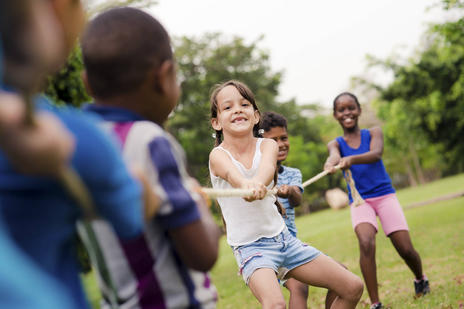
I am much more comfortable avoiding competition in my classroom. I know some see competition as a motivator and others see it as a skill extremely useful for dealing with the competitive realities of the real world. I worry about its effect on classroom unity and friendships. I want my classroom working for and with each other instead of ‘dog eat dog’.

I am very grateful to have stumbled on a useful article that gives 4 ways to encourage healthy competition:


1. Don’t focus on winning

Not everyone can win every competition, whether it be athletic, academic, or just for fun. By focusing on the event itself, rather than the outcome, children can both try to do their best and not be devastated if they lose.

“It’s not all about winning,” Kenneth Barish, a clinical associate professor of psychology at Weill Medical College at Cornell University, told NPR. “It’s also about teamwork. And it’s about effort … becoming a better player.”

David Johnson, professor emeritus of educational psychology at the University of Minnesota, suggested that parents, coaches and teachers not inflate the benefits of winning or coming in first.

“If the stakes are low, the emphasis is placed upon sheer enjoyment of the activity,” Johnson told the Deseret News.

Those who didn’t win the game, score the most points or come in first should still feel like they had an enjoyable experience and got something valuable out of the activity.

2. Let kids learn from failure

Since life will inevitably bring failure at some point, experts recommend letting kids develop coping skills in a low-risk situation.

“Parents see failure as a source of pain for their child instead of an opportunity for him to say, ‘I can deal with this. I’m strong,’ ” says Madeline Levine, Ph.D., author of “The Price of Privilege: How Parental Pressure and Material Advantage Are Creating a Generation of Disconnected and Unhappy Kids,” in a Parent.com article.

While it can be devastating to watch your child suffer, teachers like Jessica Lahey have learned that children perform better when given the chance to fail and accept the consequences.

“Year after year, my ‘best’ students — the ones who are happiest and successful in their lives — are the students who were allowed to fail, held responsible for missteps, and challenged to be the best people they could be in the face of their mistakes,” Lahey wrote in The Atlantic.

3. Don’t make your love conditional on their success

While this may seem like a no-brainer, parents can inadvertently send the wrong message to their kids.

A recent Deseret News article discussed a study by Harvard University that found children and teenagers are three times more likely to agree with the statement, “My parents are prouder if I get good grades in my classes than if I’m a caring community member in class and school.”

“It’s good for kids to value excellence as long as they don’t feel valued only for their excellence,” Sylvia Rimm, director of the Family Achievement Clinic in Cleveland, wrote for the clinic’s website. “Parents’ messages that ‘we like children who win, who are the smartest, and who excel,’ should be changed to ‘we like children who try, who are responsible, and who make positive and sincere efforts.’ ”

Rimm pointed out that highly competitive families can sometimes instill a belief in the child that winning is associated with their self-worth, which can make future failures impossible to handle positively.

4. Have fun and focus on priorities

Parents don’t need to protect their kids from the stress of competition or the failure of losing, but they should make sure that the situation — a soccer game, a spelling bee, a board game or simply getting good grades — is a fun and positive experience.

“When asked whether they would rather be warming the bench on a winning team or playing regularly on a losing team, nearly 90 percent of children chose the latter,” reported the Deseret News, referencing a Michigan State study.

Kids will compete naturally, and want to be the best, but parents can help children understand that competition is not just about winning; it’s about having fun and learning important skills, psychologist David Johnson told the New York Times.

“By taking the emphasis off winning and putting it on mastery,” Johnson said, “the individual and the team — classroom, country, world — will grow in the process.”


Click on the link to read Proof that the Goodness of Our Youth Cannot be Underestimated (Video)

Click on the link to read Teaching Kids to be Competitive Often Leads to Needless Pain

Click on the link to read Two High School Athletes Brawl During Race (Video)

Click on the link to read Tips for Teaching Your Children How to Lose

Click on the link to read Preparing Students for the Real World

Click on the link to read Is Competition in the Classroom a Good Thing?

Bullying from a Teenager’s Perspective

August 6, 2014

bullying

Courtesy of clinical psychologist Barbara Greenberg:


Hello Parents,

Your teens are getting ready to head back to high school and some of them are just beginning as freshmen. All summer long, I have been working with focus groups of teens and they have been talking to me and to each other and have been quite candid about their thoughts about bullying. They have shared their most intimate experiences, their concerns and their very creative ideas about how to deal with bullies.

This is what your kids want you to know about the bullying experience, but might never tell you. You see, they don’t want to upset you, disappoint you, worry you and are even concerned that you might not be interested. They are wrong. I know that but they don’t. Here is what they are not telling you:

1. The majority of your teens report that while they may not have been bullied, they have witnessed a peer being bullied.

2. They have not always been sure how to intervene at these times, but they have ideas.

3. They frequently and in large numbers report that an adult should be told about bullying incidents, but feel that even when they tell adults the adults are NOT likely to intervene effectively. They report that adults look the other way, don’t take bullying seriously enough and even give meaningless consequences to the bully.

4. By and large, the well-spoken and passionate teens feel that the adults are letting them down in this arena. YIKES. I know that no adult in a position to help teens wants to be seen as ineffective and dismissive.

5. Your kids have some very creative ideas about how to handle bullies including:

a. attempting to befriend them in the hope that a bully can become an ally.

b. making the bully laugh so that the bully learns a different style of interacting.

c. letting the bully know the impact that they are having on others. Many teens feel that bullies are clueless about their painful impact on others.

d. asking them about their lives. Many teens feel that bullies are probably hurting. It’s amazing isn’t it that teens feel empathy for bullies?

AND

e. they have even expressed that you raise your kids to have empathy so that they are less likely to act in a socially aggressive and emotionally painful manner. These large groups of male and female teens have been telling me all summer long that they are concerned that some parents may inadvertently be raising bullies.

Your teens would also like you to know that:

1. They see many parents acting as bullying role models for their kids. They worry that you may be encouraging exclusivity, cliquey behavior and even physical aggression. Teens are and always have been watching the adults around them.

2. They think that adults should curtail gossiping because kids mimic them and gossiping is one of the worst and most hurtful forms of social bullying. They are on to something here; aren’t they?

3. They worry that you are bullying your kids in the privacy of your homes and that your kids are going to school upset, frustrated and looking for a place in which to practice what they have learned at home.

AND

4. They are concerned that you might not even have given consideration to the idea that your own kid may be the bully. They think that you should consider this idea and work with your teen to be a kinder and more empathic individual.

I do not want to leave you with the impression that teens all blame the adults in their lives for the bullying behaviors of teens. Many teens reported learning empathic and pro-social behaviors from their parents. Amen to the child-rearing style in those homes. We need more of that. We need parents to realize that you are your teens’ most important role models. I have been saying this for years. Take this important opportunity in your life to teach your kids that their words and behaviors can either soothe and comfort or destroy the hearts and souls of their peers. Do not ever rule out the thought that your own child may be the bully at times and if you suspect this then work with your child to change this behavior.

We all remember own experiences being both the bullies and the bullied. None of us flourished from these experiences. In fact, many of us became emotionally and physically sick during these times. Your kids and I are calling upon you to be aware of your role and power in helping to both raise good kids and to become even more aware of the terrible interactional cycle of bullying that continues to persist in high schools all over.

Good luck.

Own your power.

Help your kids.

XO

Dr. BG


Click on the link to read Girl Gets taped and tied to tree and ‘sexually assaulted’: Where Were the Teachers?

Click on the link to read Start Being Proactive When it Comes to Bullying
Click on the link to read The Real “Mean Girls”

Click on the link to read Anti-Bullying Song Goes Viral

Click on the link to read Some Schools Just Don’t Get it When it Comes to Bullying

Click on the link to read The Bystander Experiment (Video)


The Outrageous Pro-Gun Picture Book for Kids

August 6, 2014

my parents open carry

I’ve seen it all! A picture book aimed at children with the intention of making kids aware of their constitutional right to bear arms.

Can we stop using picture books as a means to pedal propaganda? Can we instead use literature to foster kids’ imagination and understanding of people and their place in society. Keep the propaganda for spam and leaflet drops:


A new “wholesome” picture book by two Michigan-based authors aims to show children the benefits of having parents who openly carry handguns.

The authors of My Parents Open Carry say their goal is to provide “a wholesome children’s book that reflects the views of the majority of the American people, ie that self-defence is a basic natural right and that firearms provide the most efficient means for that defence”.

The book depicts a day in the life of the not-so-subtly named Strong family – Dick, Bea and daughter Brenna.

As the blue-eyed trio leave the house for a fun Saturday out, Dick and Bea “retrieve their handguns from the locked gun safe and check them to make sure they are loaded. They place the handguns in their holster … in plain sight on their hips.”

Going about their weekend chores, the pistol-packing pair bump into various townsfolk who admire their decision to “open carry”, including neighbour Mr Wright.

“I see you are both packin’ as usual, good for you,” he says, cheerily. “You just never know when you might need to protect yourself and loved ones … It’s best to be prepared I always say.”

Brian Jeffs, president of a pressure group called Michigan Open Carry, co-authored the book with Nathan Nephew, a founder of MOC.

On the MOC website, Jeffs sets out the benefits of displaying a large-calibre pistol while shopping and socialising.

“It’s true that open carry has many advantages: a faster draw, a larger calibre handgun and greater round capacity; sure it’s been shown to deter crime, and it is immensely more comfortable to carry in warm weather, but it is much more than that,” he writes. “Open carry brings gun ownership out of the closet. It shows your friends and neighbours, your state and your country that you are not afraid of taking on the responsibility of protecting yourself and the ones you love from evil.”

The MOC website also carries a list of positive comments apparently from sources including James Towle, host of American Trigger Sports Network (“Outstanding, outstanding…every person should buy five copies of this book…”) and Alan Korwin of gunlaws.com (“I love it…boy does this fill a vacuum!”)


vegetables


Click on the link to read Sousa’s Techniques to Build Self-Esteem

Click on the link to read Why I Believe Classrooms Should Be Fitted With Video Cameras

Click on the link to read Are We Doing Enough to Make Our Children Happy?

Click on the link to read  Stop Pretending and Start Acting!

Click on the link to read  Some Principals Seem to Be Ignorant About Bullying