Posts Tagged ‘India’

Do You Vet Who Your Children Play With?

February 21, 2013

kids

I think it’s entirely appropriate to try to have your children playing with friends that will be a good influence on them. What might not be so appropriate is judging children based on jewelery, gadgets, lateness to school and grades.

Katie Hopkins has taken things way too far and let her controlling and apparent judgmental instincts get the better of her good intentions.

What troubles me greatly with her flawed system is that she has confused ‘under performing’ kids with’ bad influences’. This mistake is extremely offensive to good-natured, highly respectable and courteous children from loving homes who are discriminated by her due to their Maths average. Similarly, it might have been best for the families of her children’s classmates, that they were left in the dark about her scheme:

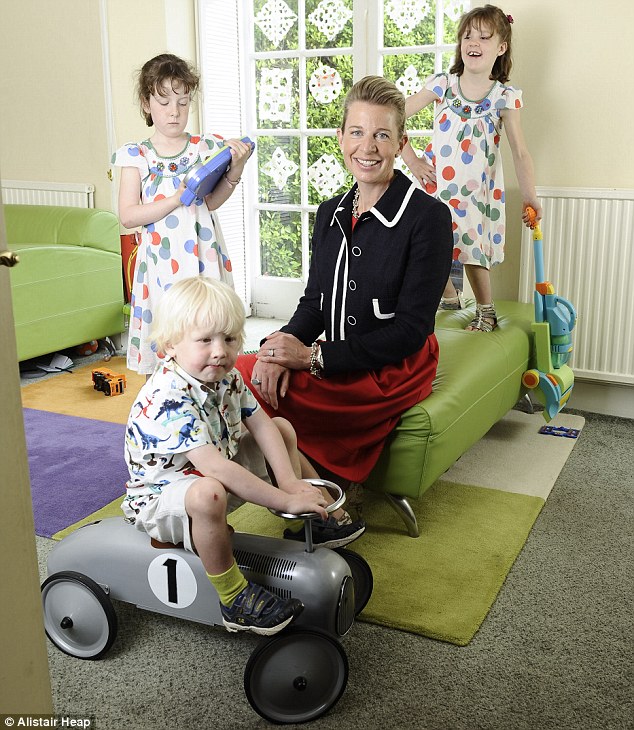
Call me controlling, call me ruthlessly aggressive. But I’m convinced one of the best things I can do for my children – India, eight, Poppy, seven, and Max, four – is to choose their friends for them.

I target children that I think will be a good influence and curtail friendships with children I think will drag them down.

I know I’m not alone, either. If they’re honest, I think most caring mothers do exactly the same.

They’re just too embarrassed to admit it.

So I wasn’t a bit surprised to learn last week that a study confirms exactly what I  have always believed. Academic success is infectious. Pupils ‘catch’ cleverness from their friends.

I have absolutely no intention of letting my two precious daughters get dragged down into the quagmire of underperforming children. So I work hard at targeting the right sort of friends for them.

From the moment they started school, I have kept an ear out for little snippets of information about their classmates. I know who is falling behind and who is clearly not interested in their work or study.

My state primary school doesn’t stream children academically but you don’t need to be a genius to work out who is clever and who, most definitely, is not. For example, hearing that a child has finished their home learning book (we used to call it homework) and asked for another is music to my ears. It means the parents are investing time and trouble in their child’s education.

When one of my girls came home last week and announced that a classmate had filled up her star sheet for good behaviour, I made a mental note of the child’s name for future reference.

She is clearly the type of child who is eager to learn, ambitious and wants to work hard in order to be rewarded with success. And that is the type of child I want my daughters to play with and to learn from.

This brings me back to a problem I’ve had regarding the influx of parenting advice and parenting themed self-help books. The industry has been hijacked by do-gooders who wish to spend less time showcasing their strategies and more time criticising other parenting methods. Take this excerpt from the same article for example:
If his parents can’t be bothered to get him into class on time, they clearly don’t care about the  education of their child – and, worse still, are hindering the learning of others. My girls are as frustrated with this continual tardiness as I am. Is it beyond the wit of a parent to get their child to school on time?

When I hear my daughters talking about children who have all the latest gadgets – whether it’s an iPhone or iPad – I’m instantly on my guard because they definitely won’t have time to devote to homework. As a result, I will discourage any friendship.

At the risk of sounding snobbish, I also favour children who have good old-fashioned Victorian names such as George, Henry and Victoria. And, if a child has a name with a Latin or Greek derivation such as Ariadne or Helena, all the better. It indicates the parents are well educated.

And then there is this …

I am convinced that my tactics are paying off. Recently I asked India which children she liked to play with.

‘The children who come to school on time and wear proper school uniforms are the nicest and the most fun,’ she told me. ‘If children don’t put any effort in, I don’t want to play with them.’

My younger daughter, Poppy, is attracted by the wild side and I have no doubt that, left to her own devices, she would choose friends who would be a bad influence on her.

When she was four she asked if she could have her ears pierced like a (male) classmate. I, of course, said no. I cannot understand why the parent of this child would think it was acceptable.

Recently she asked for a Nintendo after she played on one during a class trip. The boy sitting on the coach next to her had sneaked it into his bag.

‘But you know that children aren’t supposed to bring in electronic games equipment,’ I said. ‘So what on earth were you doing sitting next to him when you knew he was doing the wrong thing?’ That hammered my message home.

The Disgusting Act by a Teacher that Drove a Schoolgirl to Attempt Suicide

November 26, 2012

Not only doesn’t humiliation work in promoting and nurturing good citizens but it is an absolutely appalling practice. To strip a student naked and parade her in public amounts to disgusting conduct regardless of her infringement.

This story upsets me no end:

The scale of cruelty and corporal punishment in Indian schools was highlighted yesterday by the attempted suicide of 13 year girl who was paraded naked by a teacher for ‘stealing’ £15.

The girl was forced to remove her clothes by a female teacher at a school in north-west Delhi after being accused of stealing money and a mobile phone from a classmate. She returned home after school and jumped off the balcony of her four-storey block of flats. Her relatives said she had been distraught by her public humiliation.

Her case emerged amid a series of reports of brutal attacks on children by teachers throughout India. A four year old boy was forced to drink his own urine by his nursery teacher in Andhra Pradesh to punish him for wetting himself. A five year old boy in the same state was beaten up by a grammar school principal, while a seven year old Dalit girl was thrashed by her mathematics teacher for failing to solve a problem. A teacher was arrested in Madhya Pradesh for partially scalping an eight year old girl .

After reading this, I want even one person to come forward and explain to me how corporal punishment can be legal in some civilised countries.  How is it possible that we can allow any kind of harassment, humiliation or physical consequences, often in the hands of a person who have a clear emotional detachment of the child in question?

Click on the link to read Legalised Corporal Punishment = Legalised Physical Assault

Click on the link to read The New Form of Spanking

Click on the link to read Teachers Who Beat Kids Should Be Put Away!

Click on the link to read Corporal Punishment Reveals the Worst School Has to Offer

Click on the link to read Calls To Allow Teachers To Use “Reasonable Force” on Students

Teacher Humiliates Student For Not Doing Her Homework!

July 6, 2011

If proven, this is a horrible case of teaching at its worst.  To strip a student naked and make her clean the toilets all because she didn’t complete her homework is just shocking!  The fact that the parents couldn’t get a proper response when they took the matter up to the relevant authorities just makes matter worse.  Not to mention the allegation that other teachers watched the poor girl and didn’t intervene in any way:

The Gujarat government has ordered an inquiry into the affairs of a minority institution in Ahmedabad where a six-year-old student of class one was reportedly paraded naked in the all-girl school and made to clean toilets. All because she had not completed her home work and the class teacher found her handwriting to be “too bad.”

The class teacher was arrested after the parents lodged a police complaint against her and some of the trustees of the private high school in the minority-dominated area of Shahpur in the heart of the city.

The incident occurred on Friday, but the girl kept quiet and, under threat from the class teacher, did not even inform the incident to her parents till one of her schoolmates spilled the beans on Monday after the girl showed reluctance to go to school.

As the word spread in the neighbourhood, the enraged parents first tried to meet the trustees of the school and, after failing to get a satisfactory answer, lodged a complaint with the Shahpur police.

According to District Education Officer R.H. Patel, though the school was unregistered, the government had taken cognisance of the incident and would go to the root of the problem.

According to the father of the girl, she was stripped naked, made to do sit-ups, paraded in the school naked, was forced to clean the toilets and was locked in there for a few hours.

Though it is an all-girl school, some of the class four staff members are male and her parents felt outraged that she was watched by some male staff when paraded naked in the school. The trustees, however, claimed that only her veil was removed by the teacher.

This, however, is reportedly not the first such incident in the school. Another guardian complained that his daughter was given a similar punishment by the same teacher in March. When he tried to lodge a complaint against her with the trustees, he, in turn, was named in a police compliant lodged by the trustees.

I am appalled by this story.  It gives teachers a bad name.

Corporal Punishment Reveals the Worst School Has to Offer

April 24, 2011

Imagine finally taking the important and highly necessary measure of banning corporal punishment only to take on another absurdly simple-minded strategy in its place.  That is what India’s Sindhi Vidyalaya matriculation Higher Secondary School is guilty of:

Candy or cane? City schools seem to have dumped the primitive notion of spare the rod and spoil the child. Instead of wielding the stick, they are now offering chocolates to kids to encourage them in academic excellence and enforce discipline.

“We are strictly against corporal punishment. We hand out chocolates to students if they score good marks and behave well in school. We have realised that it greatly motivates our students,” said Gouri Ramarathinam, Principal, Sindhi Vidyalaya matriculation Higher Secondary School.

Why go from one extreme to another?  Is it so difficult to replace a terrible educational policy for a sensible one?

Meanwhile, in Johannesburg banning corporal punishment didn’t change a thing:

Corporal punishment is still common in South African schools even though it was banned more than a decade ago. Recent research showed that up to 70% of primary school and 50% of high school pupils were still subjected to corporal punishment.

In Louisiana corporal punishment is here to stay.  But don’t be concerned. They have come up with a foolproof measure for its responsible use – a checklist!:

Corporal punishment is here to stay in Rapides Parish public schools, and members of the Disciplinary Policy Review Committee on Wednesday discussed ways parents can inform a principal if they don’t want their children paddled for infractions.

“Corporal punishment is an acceptable discipline procedure by law … We try and use it as little as possible,” said Ruby Smith, the Rapides Parish School District’s director of child welfare and attendance. “When I was a child in school, corporal punishment worked like butter on toast. I receive few calls from parents saying that they don’t want their child to receive corporal punishment.”

Louisiana House Resolution No. 167 was passed last year that requires principals to fill out a “Corporal Punishment Incident Checklist.”

“Principals will send the checklist to the (School Board office), and once a month, it will be sent to the state Department of Education,” Smith said. “Our first reporting was due in Baton Rouge on the 11th of April, and principals will have to turn one in every month, regardless if they have an incident or not. The officials in Baton Rouge will probably do some study on the checklist.”

Corporal punishment never worked like “butter on toast” for students as it may have for teachers, Ms. Smith! I am sorry to tell you but your checklist isn’t worth the paper it’s written on.

To conclude my thought for the day on this awful means of disciplining kids, I will quote from an article entitled “Schools Under Pressure to Spare the Rod Forever,” Dan Frosch tells the story of one case, and then puts it into larger context:

When Tyler Anastopoulos got in trouble for skipping detention at his high school recently, he received the same punishment that students in parts of rural Texas have been getting for generations.

Tyler, an 11th grader from Wichita Falls, was sent to the assistant principal and given three swift swats to the backside with a paddle, recalled Angie Herring, his mother. The blows were so severe that they caused deep bruises and the boy wound up in the hospital, Ms. Herring said.

While the image of the high school principal patrolling the halls with paddle in hand is largely of the past, corporal punishment is still alive in 20 states, according to the Center for Effective Discipline, a group that tracks its use in schools around the country and advocates for its end. Most of those states are in the South, where paddling remains ingrained in the social and family fabric of some communities.

Each year, prodded by child safety advocates, state legislatures debate whether corporal punishment amounts to an archaic form of child abuse or an effective means of discipline.

This month, Tyler, who attends City View Junior/Senior High School, told his story to lawmakers in Texas, which is considering a ban on corporal punishment. The same week, legislators in New Mexico voted to end the practice there.

Texas schools, Ms. Herring fumed, appear to have free rein in disciplining a student, “as long as you don’t kill him.”

“If I did that to my son,” she said, “I’d go to jail.”

Teachers in Uniform?

March 6, 2011

I can see why some schools would take a likening to the idea that teachers should wear a uniform just like their students. Ultimately, I think it has the potential to undermine the very reason such an initiative was conceived. Still, it has been trialled in India with some positive results:

There is nothing new in students of Zilla Parishad schools wearing uniforms but in Buldhana district of central Maharashtra, teachers wear them too.

The concept was introduced by S J Koche, Buldhana Zilla parishad Chief Executive Officer, soon after he returned from a training programme for IAS officers, in South Korea last year.

“We were in South Korea for 15 days and in the schools we visited, I saw that even teachers wore uniforms,” said Koche. “The sight was very impressive and I made it a point to implement the same back home,” he said.

“If students can come in uniform, why not teachers, because students imbibe discipline from teachers,” he said.

His novel scheme met with stiff opposition initially, Koche said. However, later on, everything fell in place.

Now, besides 2.30 lakh students, around 8,000 teachers in 1840 zilla parishad schools in the district, wear uniforms. “The idea has been lapped up by families of teachers, Koche said.

The villagers have also appreciated the concept, Koche said. “They say they now know who the teacher is.” The colours for teachers are white shirt and black pant while for students it is blue pant and white shirt, he said.

I personally am against this idea. I have already worn a uniform throughout my own school days, and would not like to revisit the days of itchy woolen jumpers and terrible looking grey trousers. I truly sympathise with the students for what they have to wear. It would be uncomfortable to have to comply to a uniform of my own. I also feel that teachers will not be taken as seriously when forced to wear a uniform. Rather than see it as a case of setting an example, I fear that students will see it as a bit of a joke.

I am all for dressing in a professional manner. But a uniform? I think I’ll pass.