Posts Tagged ‘Education’

How My Teachers Taught Me To Catch

August 10, 2012

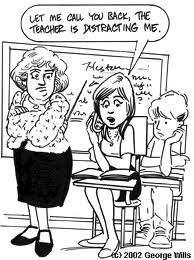
My teachers loved throwing blackboard dusters at students who weren’t concentrating. As a professional daydreamer, I was frequently met by a stray duster. I always wondered whether duster throwing was a compulsory unit in teacher training courses.

It seems like my teachers weren’t the only ones plying their duster throwing trade:

A HIGH school teacher has been banned for dishing out more than seven years of abuse to students – including swearing at them, calling them names and throwing a chalkboard duster.

The Queensland Civil and Administrative Tribunal recently ordered the suspension of David Geoffrey Mears’ teacher’s registration, saying his teaching “fell well below the standard of behaviour generally expected”.

QCAT presiding member Paul Kanowski, in a just-published nine page decision, said Mears offensive behaviour toward students occurred between July 2003 and March 31 last year.

Mears, who has been banned for 15 months, first slapped a Year 8 student on the head in March 2003 and continued to either swear at or make “physical contact” with pupils up until he “threw a duster in the direction of a male Year 10 student last year.”

“Mr Mears has sworn at students on a number of occasions,” Mr Kanowski said.

“He also made physical contact, such as pushing students without a valid educational purpose.”

The tribunal was told Mears swore at numerous students, telling them to “piss off,” “(expletive) off,” calling them everything from an “(expletive) idiot” and dickheads and threatening them that “if anyone (expletive) up their job, they will get a kick up the arse.”

Mr Kanowski cited 11 instances in which Mears swore or made physical contact with one or more students during his 11-year career.

“On 10 May 2010, Mr Mears swore in a Year 9 class … (and) said to a female student: Get your a*** over here,” he said.

“On a date … (in) February 2011, Mr Mears called a male Year 10 student a (expletive) idiot … and told the student to (expletive) listen and pushed him into a whiteboard.

“On or about 22 February 20001 Mr Mears … said to one male student: You need a kick up the arse. You’re a dickhead and you (expletive) up, didn’t you?”

Click on the link to read Why Can’t Teachers Touch Kids any More? :O’Brien

Click on the link to read Teachers Who Have Sex with Students Must be Imprisoned

Click on the link to read The Classroom isn’t the Best Place to Rectreate Famous Movie Moments

Student Walks By Without Helping Injured Janitor

August 9, 2012

This video shows a student bystander who chooses to walk past a janitor who had taken a nasty fall. I am very disappointed to see this kind of behaviour.

Click on the link to read Father Builds Roller Coaster for his Children in his Backyard

Click on the link to read Teachers Should Stop Blaming Parents and Start Acting

Click on the link to read The Benefits of Reality TV on Kids

Click on the link to read Study Reveals Children Aren’t Selfish After All

Antipsychotics With a Side Serving of Fries

August 9, 2012

Anyone else get the feeling that psychiatrists are prescribing ADHD drugs far too carelessly?

Antipsychotic drugs are prescribed during almost one in three of all visits kids and teens make to psychiatrists in the United States, according to a new study, up from about one in eleven during the 1990s.

Much of that increase, researchers say, is from doctors prescribing the drugs for disruptive behaviors, such as attention deficit/hyperactivity disorder (ADHD). There are, however, no antipsychotics approved by the U.S. Food and Drug Administration to treat those disorders in kids.

“They’re approved for schizophrenia and bipolar disorder and irritability with autism. None of them are approved for use with ADHD,” said Dr. Mark Olfson, the study’s lead author and a professor of clinical psychiatry at Columbia University in New York.

Olfson and his colleagues, who published their work Monday in the Archives of General Psychiatry, found that for kids and teens, roughly 90 percent of the antipsychotic prescriptions written during office visits between 2005 and 2009 were “off label,” which means the drugs are being prescribed for something other than for what they’re approved.

Click here to read my post, Who Needs Quality Teaching or Parenting When You Have Medications?

Click here to read my post, Get Your Kids on Ritalin Before Their Grades Suffer

Click here to read my post, It is Doctors Not Teachers Who Are Helping Children Get Good Grades

Click here to read my post, Doctors Create a New Normal by Over-Prescribing Drugs

What our System Does to Children Without Attention Spans

August 7, 2012

Why is it alright for children to be tone deaf  at music or fail at sport but it’s not acceptable for children to struggle to maintain concentration?

Why do educators believe that if you easily lose concentration you have a disability that must be fixed. Remember, these are the same teachers whose minds wander during professional development sessions and who stare into space during staff meetings. Yet, when their students gaze out the windows while they’re teaching a maths skill – it’s time to get the child assessed!

Talk about hypocrisy!

Teachers are obsessed with fixing the attention spans of children. They call for hearing tests, speech analysis, psychological examinations, occupational therapy sessions, language disorder checks and if you are really unlucky start the ADHD ball rolling.

Do they ever consider that children are not all meant to have endless attention spans? Just like every child can’t draw a landscape, every child cannot sustain a 20 minute mat session. What is it with mat sessions anyway? When is the last time a teacher tried to sit on a floor without so much as back rest to lean on for an extended period of time? It’s unbelievably uncomfortable! Yet you get teachers complaining all the time about children not sitting still or failing to pay attention. Try paying attention when your back feels like it was just hit by a rolling pin!

And have teachers ever contemplated that it might be their dry and boring style of teaching and their failure to properly communicate to children that has their class zoning off completely? Worksheet dense, talky, stagnant lessons result in inattentive students – guaranteed!

So a recent study shows that children with better concentration spans have a better academic success rate. In my view this study tells us more about the way we teach than the virtues of concentration:

Toddlers who are better at concentrating, taking directions and persisting with a game even after hitting difficulties have a 50 per cent greater chance of getting a degree when older, a two-decade long experiment found.

The study tracked 430 kids from pre-school to 21-years-old, monitoring academic and social development, behavioural skills and behaviour at home and in the classroom.

Parents were asked to watch how long the children would play with one particular toy while at home, while teachers were instructed to give the class a task and then monitor which toddlers gave up and which ones kept persevering until they had completed it.

Results of the study by Oregon State University were published in the online journal Early Childhood Research Quarterly.

The children most likely to go through further education were those who, at an early age, persisted in tasks and paid attention in pre-school sessions, said researchers.

Perhaps if classroom conditions changed we wouldn’t have to worry so much about the student without the super-human concentration endurance.

Click on the link to read Kids Don’t Need Gold Stars

Click on the link to read Experts Push for Kids to Start Driving at 12

Click on the link to read Kids as Young as 3 are Getting Tutors

Misplaced Lego is Often Found in the Strangest Places

August 7, 2012

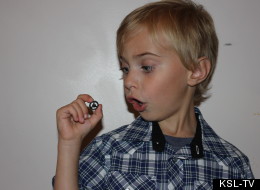
Cleaning up after a Lego session can be an intricate task. Often there will be a piece or two hiding somewhere you least expect. But one place I haven’t looked for Lego is in a child’s nose:

Isaak Lasson can finally breathe easy after three years of sinus problems.

The cause? A single wheel-shaped Lego piece that he got stuck up his nose back when he was 3.

At least that’s what his dad, Craig Lasson, said he thinks. His son started having a hard time breathing back then.

“I felt so bad,” the father told KSL-TV. Isaak “was sleeping with his mouth open, trying to breathe.”

Numerous doctors looked at isaak’s nose and prescribed antibiotics.

But last week, a new doctor noticed that Isaak seemed to have something foreign stuck up his schnozz and asked what it might be.

“I put some spaghetti up there, but that was a long time ago,” Isaak told the doctor, according to KTLA-TV.

But it wasn’t pasta that was up Isaak’s nose, just a ball of fungus encasing a Lego wheel.

“We think he bent it in half — it’s pretty flexible — and that it opened up once it got into his sinuses,” Isaak’s father told reporters.

Although Craig Lasson momentarily worried he was a bad parent for needing three years to figure out the Lego problem plaguing his son’s sinuses, he said he is happy that Isaak is eating and sleeping better than he has in years.

Click on the link to read The School Campaign Against Milk

Click on the link to read Teachers Should Stop Blaming Parents and Start Acting

Click on the link to read The Benefits of Reality TV on Kids

Click on the link to read Study Reveals Children Aren’t Selfish After All

Teaching Children about the Curiosity Mars Landing

August 7, 2012

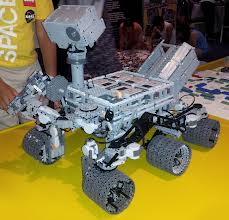
Courtesy of The Guardian is a list of teacher resources for teaching children about the Curiosity landing on Mars:

Landing on the Curiosity rover on Mars
This brilliant interactive tells us what’s going to happen on Monday (everything crossed for that landing) and beyond if all goes well. An innovative “sky crane” will lower the Curiosity Mars rover on the surface of the red planet. Explore the exact stages of the landing sequence and the what’s next when the Curiosity reaches its destination at the foot of a mountain inside Gale Crater. One of the hypothesis Curiosity is due to investigate is how a bunch of light-toned rock in this area could have got this colour – was it by interacting with flowing water perhaps billions of years ago? If all goes well Curiosity will be able to give us some answers.

Essential guide to Mars rover Curiosity
More information on the timings and the project as a whole, which is part of the Mars Science Laboratory mission.


Curiosity rover’s seven minutes of terror

Oooh this stuff is exciting… the Nasa ship carrying the space agency’s Curiosity will bear down on the red planet at more than 8,000 miles per hour (Wiggo eat your heart out) and attempt to land the rover. This article explains how the manoeuvres the spacecraft must execute are so complex that the slightest mistake could notch up just another grim statistic in the history of failed missions to Mars. Mission scientists are instead hoping Curiosity will follow in the footsteps of Spirit and Opportunity which touched down in 2004 (Opportunity is still operational eight years later!).

Animated preview of the landing
You can also check out this computer-animated preview of the planned landing.

Free downloadable game from Nasa
More info on Nasa’ s free game to simulate the descent of Curiosity through the red planet’s atmosphere on the journey that has been dubbed the “seven minutes of terror”.

Nasa’s Curiosity Mars rover the stakes couldn’t be higher
If this summer’s landing fails America’s and possibly the whole world’s exploration of the surface of Mars could stop for a decade or more.

Alien life on Enceladus?
If you and your students need an alternative to fantasizing about a trip to Mars, why not find out a bit more about Enceladus? It’s an icy moon of Saturn, which many scientists believe is a much better bet for finding alien lifeforms in our solar system

A “Goldilocks” planet
Another potential target for life is Kepler 22-b, a newly discovered new planet in the “Goldilocks zone” of its own solar system. It’s about 2.4 times the size of Earth with a temperature of a comfy 22C (72F). Only downside is it’s a bit of a trek at 600 light years away from Earth and experts aren’t sure if it is made mostly of rock, gas or liquid!

Habitable alien worlds
The Habitable Exoplanets Catalogue ranks alien worlds suitable for life. So far they’ve found only 15 planets and 30 moons that are potentially habitable.

Space images
This month’s pick of the best space-related images includes the likeness on a distant planet of Disney’s most famous creations.

Women hold up half the sky
China’s first female astronaut Liu Yang – part of the Shenzhou 9 crew taking China one step closer towards building a space station.

Gagarin and the space race
A Powerpoint aimed at key stage two illustrating Gagarin’s incredible voyage and other major milestones in the stages of space exploration and an associated lesson plan to go with it.

The Earth is space
An online science lesson on the position of the planets in the solar system and the concept of gravitational pull.

Human adaptation to extreme environments
How would our bodies cope with an extreme environment change? This lesson investigates

The solar system
An online lesson for key stage three.

Planets
Some lovely graphics for primary aged children exploring the position of the planets in our solar system, the phases of the moon and how the moon orbits the Earth.

Nasa’s Mars Science Laboratory Mission
Everything you need to know about Curiosity and Nasa’s mission to Mars. The site explains how determining past habitability on Mars gives scientists a better understanding on whether life could have existed on the red planet and, if it could have existed, as idea of where to look for it in the future.

Spirit and Opportunity
Nasa’s Mars rovers Spirit and Opportunity were a huge success, let’s hope Curiosity can build on that! Opportunity is still sending in info and Spirit only gave up the ghost in 2010.

Online catalogue of habitable exoplanets
A cosmic directory listing the planets and moons most likely to harbour alien life pulled together by the Planetary Habitability Lab at the University of Puerto Rico at Arecibo – so far 15 planets and 30 moons have been labelled potentially ripe for life.

Science Museum space galleries
The next best thing to going to space is a visit to London’s Science museum.

Kepler
Nasa’s Kepler space telescope is working to spot more exoplanets.

Enceladus images
Awesome pictures of the Enceladus flumes captured by Cassini during its close flyby in November 2009 posted up with commentary by Emily Lakdawalla, planetary geologist from the Planetary Society.

Solar Dynamics Observatory
Stunning pictures from Nasa.

Hubble
Hubble is constantly sending us fascinating images and news – just last month astronomers using the NASA/ESA telescope found a fifth moon found orbiting icy dwarf planet Pluto. Here’s some guidance on using the Hubble images specifically in schools and also a series of astronomical exercises for secondary school aged students.

ARGOS
If we are going to go to Mars – or anywhere else in space – we are going to need some serious training, so check out ARGOS, no not that Argos, we’re talking about the Active Response Gravity Offload System designed to simulate gravity reduced environments such as Lunar, Martian or microgravity.

Click on the link to read Teaching Fractions: The Musical

Click on the link to read Six Tips For a Happy Classroom

Click on the link to read  Proposal to Adopt Shooting as Part of the Curriculum

Raising Successful Kids Without Reading a Book

August 7, 2012


Clinician Madeline Levine has written an extremely compelling book entitled “Teach Your Children Well: Parenting for Authentic Success.” Based on her column in The New York Times this book has a lot to offer. Below is just a snippet:

The central task of growing up is to develop a sense of self that is autonomous, confident and generally in accord with reality. If you treat your walking toddler as if she can’t walk, you diminish her confidence and distort reality. Ditto nightly “reviews” of homework, repetitive phone calls to “just check if you’re O.K.” and “editing” (read: writing) your child’s college application essay.

Once your child is capable of doing something, congratulate yourself on a job well done and move on. Continued, unnecessary intervention makes your child feel bad about himself (if he’s young) or angry at you (if he’s a teenager).

But isn’t it a parent’s job to help with those things that are just beyond your child’s reach? Why is it overparenting to do for your child what he or she is almost capable of?

Think back to when your toddler learned to walk. She would take a weaving step or two, collapse and immediately look to you for your reaction. You were in thrall to those early attempts and would do everything possible to encourage her to get up again. You certainly didn’t chastise her for failing or utter dire predictions about flipping burgers for the rest of her life if she fell again. You were present, alert and available to guide if necessary. But you didn’t pick her up every time.

You knew she had to get it wrong many times before she could get it right.

My problem with parenting books is that they often take an all encompassing approach. Parenting isn’t a “one size fits all” exercise. Each child is different, with their own particular needs and unique talents.

It’s the same in the classroom. I can’t afford to teach every student in the same way. Some require more independence, some need more attention. I can challenge some more than others. Some thrive on competition others achieve better results without having to worry about winning or losing.

It is my firm belief that parenting, like teaching, is about understanding the child, connecting with them, setting achievable goals and monitoring their progress  against whatever approach you have identified as the best. It is a parents job to constantly reflect on how they are going and making adjustments along the way.  If you parent your first and second child in exactly the same way, you are likely to find that the results are sometimes very different.

This approach could never be properly written about in a book.

Click on the link to read Insensitive ‘Parent Bashers’ Take Aim at Grieving Colorado Parents

Click here to read ‘It’s Time to Get New Role Models’.

Click here to read ‘Schools Invite Kids to Parent-Teacher Meetings to Subdue Angry Parents’.

The Cell Phone will be the New Pencil Case

August 7, 2012

With schools now permitting the use of cell phones in the classroom, it’s only a matter of time before cell phones will be seen as a pivotal student learning tool.

Below are some strategies for teaching with cell phones:

  • 1

    Create a cell phone usage contract. Before an educator can begin to use cell phones in her class, she must obtain parental agreements. While potentially educationally beneficial, cell phones in the hands of irresponsible children can lead to a world of trouble. From creating excessively high phone bills to engaging in inappropriate contact with peers or adults, children can do a lot of damage with a simple cellular telephone. In your cell phone usage agreement, explain how you would use the cell phones in school and ensure that parents agree to allow their children to use personal cell phones in the fashion that you describe.

  • 2

    Lay down the law. Cell phones in the classroom are ineffective if they are not used properly. Discuss proper and improper cell phone usage practices with your students. Explain that cell phones in class are an educational tool and should be used as such, not as a toy or for surreptitiously contacting friends during class. Write up the rules of cell phone usage and post them prominently in the class. Remind students that if they are caught breaking the cell phone usage rules, they will lose their classroom cell phone privileges.

  • 3

    Introduce cell phones with a game. To help students become acclimated to the somewhat unorthodox concept of using cell phones in class, ease them into the usage of the phone by having them engage in a practice that they likely partake in regularly: text message voting. After student presentations or the reading of a collection of student stories, ask students to vote for their favorite of the bunch by texting in their vote. A variety text voting services allow you to create and implement your own poll. Many of these services are free if you select to open your poll up to a limited number of respondents. Check the resource section below for a listing of several text voting systems that you can use in your classroom.

  • 4

    Take pictures with cell phones. As the old adage goes, a picture is worth a thousand words, and a cell phone is a readily available means with which to take a picture. Create a lesson in which students capture pictures. They could take pictures of plants or animals for science class, people who could become characters in their stories for English or geometric figures. Download the pictures from the students’ phones and print, allowing students to use the images in a classroom assignment.

  • 5

    Communicate with individuals outside the class. Take full advantage of the easy communication that cell phones allow. Create situations in which students can use their cell phones to call people and seek information. If you want students to write about a geographic location, allow them to use their cell phones to call a visitor’s bureau in that area. If students are writing about an event that occurred in their family, encourage them to call a relative to seek information which they can incorporate into their written work.

  • 6

    Utilize the research capabilities of cell phones. Many cell phones allow for Internet access. Use this helpful feature as a research aid. After presenting a question in class, allow the students to use their cell phones and surf the Internet to find the answer to the posed question. This will help students develop the skills necessary to hunt for and find information independently. Before asking students to use their phones’ Internet features, clear the activity with parents as expensive charges can be incurred if the phone is not part of a data plan.

Click on the link to read The Top 50 Best Apps for Children
Click on the link to read The Problem With IT in the Classroom

The Pressure to be a Perfect Parent

August 6, 2012

There has never been greater pressure on parents to be perfect than there is today. Mothers, in particular, struggle with judgmental comments and unhelpful stigmas. It should not come as a surprise that parents have resorted to lying in order to seem more in control than they are:

A study found new mothers are under increasing pressure due to children waking up in the night, meaning they are not getting enough sleep.

However, parents are lying about their children’s disrupted sleep patterns, fearing it will make them look like bad parents.

A fifth of those who admit lying about it pretend their child is sleeping through the night, the survey by Netmums found.

Parents also frequently cover up how badly they were coping with sleep deprivation – 62 per cent of the third who lied, and one in 50 mums and dads are so desperate for sleep they have hired a specialist to help them – costing £1,000 a week.

The Netmums report showed a quarter of all UK kids wake up before 6.30am everyday – meaning their parents never get enough sleep.

Click on the link to read Insensitive ‘Parent Bashers’ Take Aim at Grieving Colorado Parents

Click on the link to read Mother Films Her Kids Fighting and Posts it on Facebook

Click on the link to read It’s Not Spying on Your Children, It’s Called Parenting

The Toy that Stopped a Child Porn Ring

August 5, 2012

The child porn network that was exposed by a stuffed bunny rabbit:

The men came from different walks of life on two continents: a children’s puppeteer in Florida, a hotel manager in Massachusetts, an emergency medical technician in Kansas, a day care worker in the Netherlands. In all, 43 men have been arrested over the past two years in a horrific, far-flung child porn network that unraveled like a sweater with a single loose thread.

In this case, the thread was a stuffed toy bunny.

The bunny, seen in a photo of a half-naked, distraught 18-month-old boy, was used to painstakingly trace a molester to Amsterdam. From there, investigators made one arrest after another of men accused of sexually abusing children, exchanging explicit photos of the attacks and even chatting online about abducting, cooking and eating youngsters.

Authorities have identified more than 140 young victims so far and say there is no end in sight as they pore through hundreds of thousands of images found on the suspects’ computers. They are also trying to determine whether the men who talked about murder and cannibalism actually committed such acts or were just sharing twisted fantasies.

Click on the link to read Why are so Many Teachers Child Predators?

Click on the link to read Drunk Lecturer Forces Students to Sit 23-Hour Exam Without Toilet Breaks

Click on the link to read Shocking Video of a Student Being Beaten Up by a Teacher