Posts Tagged ‘Education’

Strategies for Improving Classroom Interactions

September 16, 2012


Courtesy of facultyfocus.com:

Make the class interactive: Do everything possible to transform the students from passive observers to active learners. Get the students out of their seats frequently to work in twos or threes on analyzing an issue. Students learn more and retain more when they are actively involved. Working in pairs at the start of every class gets everyone engaged, not just the people who raise their hands. Plus, then students share their thoughts with each other first, the class discussion will be of a higher quality.

Call on students constantly to answer questions: Make a habit of calling on individual students by name to answer questions without first asking for volunteers. This keeps the whole class awake and alert. Never go for more than three or four minutes without getting one of the students to speak. You want your students to be on their toes, knowing that you might call on them at any time to answer a question.

Reassure students you will come back to them: If two or more students raise their hands at the same time, reassure those not selected that you won’t forget to come back to them for their questions in a moment.

Find a student’s strength: If one student is particularly adept at a particular skill set, point it out and have an expectation for the student to be the “expert.” This raises the student in the esteem of classmates and encourages the student to stay abreast of the topic. Try to find a dozen students like this in your class for a variety of topics by being specific in your praise. Don’t just say, “That was a well-written paper,” but indicate exactly what about the ideas, or wording, or structure of the paper you felt made it stand out.

Encourage shy students to speak:Protect the soft-spoken and encourage shy students to speak. Don’t allow long-winded or loud students to dominate the classroom discussion. Call on those who don’t speak much so everyone is heard from. I had one student who was shy and hated to come to the front of the class to talk. At the same time, she was an excellent student and wanted to overcome her fear of public speaking. I worked out a plan with her to allow her, for the first few times, to present from her seat instead of coming to the front of the class. This helped and she made great progress talking in class. Another idea is to pose a question and give the students a few moments — this allows students to formulate their thoughts before the discussion begins [McKeachie 34].

Listen actively to students during discussions: During discussions, maintain strong eye contact with the student speaking so he/she has your complete attention. Students want to be heard. By nodding, smiling or otherwise acknowledging the student, you show that you are totally committed to listening and understanding what each student has to say. Give critical feedback, but look for ways to compliment the student for the observations so the student feels encouraged. Guide class discussions so they don’t wander too far off-mission.

Incorporate peer review: When students make presentations, which they should do frequently, encourage peer review. Get students to teach each other and to learn from each other. It engages them more than the professor doing a solo act.

Do a networking exercise: In some of the early classes in the semester, give students a three-minute “networking” exercise. Before it starts, stress the importance of networking (making contacts and meeting key people) to their careers. Then tell them to stand up, move around the room and find a student they don’t know or know very little. Give them an exercise (such as a question relevant to the class or finding out something unique about the person) and then have them report back to the whole class on what they learned from each other.

Ask early for feedback from students: One month into the class (about the 4th or 5th class) ask for feedback. Three possible questions to ask are: What is helping you learn in this class? What is getting in the way of your learning? What are your suggestions for the rest of the semester? Give them a leisurely ten minutes of silence to write their answers. Tell them they are welcome to hand the answers anonymously if they’d prefer. Repeat this exercise about two months into the class. It will give you valuable information about what is and is not working, allowing you to change, modify or tweak what you are doing.

Always report back to the class on what you learned from the feedback and the changes you intend to make as a result. Make it clear that you welcome candid and constructive feedback from students and make sure you implement the changes you promise to make. This exercise will empower your students and send the message that you care about how they are doing in the course, and that you are open to making changes for their benefit.

Click on the link to read The Ultimate Classroom Resource for Teaching About Comics

Click on the link to read Why Spelling is Important

Click on the link to read Tips for Engaging the Struggling Learner

Click on the link to read the Phonics debate.

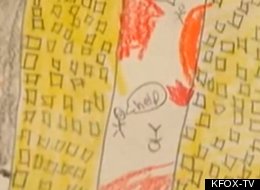
Filling Our Children With Hate and Negativity

September 16, 2012

This picture makes me worry about the rising number of extremists and their indoctrination of our precious young. Our children need to see the positive aspects of humanity and be reminded of all the good there is in the world.

School Instructs Students on How to Become Prostitutes

September 15, 2012


A most unconventional form of education:

A Spanish firm offering a professional course in prostitution which it says ‘guarantees a job offer on graduation,’ has survived its first legal challenge to be closed down. 

For €100, students are taught the history of the world’s oldest profession, how to use erotic toys and the most popular positions contained within the Kama Sutra.

The school began advertising the course in May, but within weeks the Valencian regional government filed a case with prosecutors, alleging that the school promoted prostitution, which is illegal in Spain.

Click on the link to read Proof You Can Be Suspended for Anything

Click on the link to read The Case of a Teacher Suspended for Showing Integrity

Click on the link to read Primary School Introduces Insane No-Touching Policy

Who Corrects Our Spelling Mistakes?

September 14, 2012

Um … I think that should read “public education“.


Click on the link to read This is What Happens When You Rely on Spell Check

Click on the link to read The 15 Most Commonly Misspelled Words in the English Language

Click on the link to read Who Said Grammar Isn’t Important?

Click on the link to read Why Spelling is Important

Students Allegedly Asked to Draw 9/11 Devastation Pictures in Class

September 14, 2012

The teachers allegedly involved in conjuring up this activity have made a very poor judgement call:

Hughey Elementary School Parents in El Paso, Texas are furious over a questionable class assignment that asked students to draw pictures depicting the September 11 terrorist attacks.

According to KDBC, the fourth graders were told specifically to “draw the boom clouds, the planes hitting the towers, and people jumping out of windows.

That’s something that kids should get in trouble for drawing,” parent Ivie Gremillion told KFOX-TV. “That’s people being murdered, committing suicide.”

Student drawings portrayed the heart-wrenching images, some with speech bubbles saying, “help,” “I love you” and “one way ticket to heaven.” Gremillion tells KFOX-TV that the classroom teacher also told her students that “the Afghans did this because they hate all of us and want to kill all of us.”

One student, Gremillion says, was under the impression that the tragedy occurs every September 11 and was too afraid to leave his house to go to school.

Talk about a dangerous dose of stupidity!


Click on the link to read Coloring Book of the 9/11 Tragedy is in Bad Taste

Click on the link to read Don’t Even Try to Huminise James Holmes

Click on the link to read How Can Facebook Allow James Holmes Tribute Pages?

Click on the link to read The Need to Blame Anything and Everything for the Colorado Shootings

This is What Happens When You Rely on Spell Check

September 14, 2012


Our children are abandoning spelling skills in favor of a very dubious system known as auto correct:


Click on the link to read The 15 Most Commonly Misspelled Words in the English Language

Click on the link to read Who Said Grammar Isn’t Important?

Click on the link to read Why Spelling is Important

Click on the link to read No Wonder Children Hate School

Click on the link to read the Lenient Punishments for Teachers Who Have Sex With Under-Aged Students

Parenting Advice that Hits the Mark

September 13, 2012


I am usually quite reluctant to post advice on parenting. I find parenting advice quite preachy and just because something has worked for one child doesn’t mean it will work for another.

But having stumbled upon ‘s brilliant list of ‘don’t’ rules for parents, I thought I would make this an exception to my rule:

*Don’t Worry About the Things You Can’t Control: What’s out of your control you can’t put too much thought into. You can only keep track of your own actions or thoughts. So focus on what is possible.

*Don’t Forget to Pee: This is one of those sayings that rings true for parents. We are so focused on the kids that we completely forget about ourselves. All of a sudden, five years go by and you wonder what happened. It’s important to have balance and not forget about what you need in the wake of your children’s needs.

*Don’t Follow Anyone Else’s Lead: Everybody will have their own take on what good parenting is. Don’t follow anybody else’s lead. It’s important to hear people out and see what may work and not work for them as a parent, but listen to your own gut and follow your own path. Being a leader will take you far as a parent.

*Don’t Be Complacent: Mix things up for you and your kids as much as you can. When we get too comfortable is when things get boring. Try your best to keep things exciting on all levels for everyone.

*Don’t Miss Out On Daily Meditation: It is vital to keep a calm state of mind as a parent. One way to do this is to get re-centered on a daily basis. I suggest doing some soul-searching meditation every day. This will get you through the rest of your day.

*Don’t Underestimate the Influence of Other Kids: A bad apple has been known to spoil the bunch. As your kids get older, keep a watchful eye on who they are hanging out with. If your child is acting up all of a sudden, look to see what may be the cause. If it’s due to the influence of a buddy, try to cool that relationship off.

*Don’t Carry Guilt: It’s important not to carry guilt as a parent. Whether it’s an argument with your spouse, picking up your child late from soccer practice or sleeping in on a Saturday morning, don’t feel guilty. No parent is perfect. Let go of the guilt and make tomorrow a new day.


Click on the link to read Potty Training at a Restaurant Table!

Click on the link to read Mother Shaves Numbers Into Quadruplets Heads So People Can Tell Them Apart

Click on the link to read The New Form of Spanking

Click on the link to read This is What You Get for Doing Your Homework

Why is it Always the Teacher That Gets Punished?

September 12, 2012


Should a teacher put his/her hands on a student? Absolutely not. If a student is aggressive with a teacher, does the teacher have a right to retaliate? No way!

But what about the aggressive student? He gets to boast how he helped sack a teacher. We are talking about a teacher who is likely to have a family and a mortgage. A teacher who would find it almost impossible to get another teaching job.

Whenever a teacher receives a punishment for retaliation , the offending student requires an equivalent punishment.

In this case – expulsion!

A teacher was sacked for grabbing a pupil who threw a milkshake over him even though nobody made a complaint about the incident, a tribunal has heard.

After being soaked by the drink and suffering a torrent of abuse from the 16-year-old boy, Robert Cox held the teenager’s arms and pinned him to his chair.

The business studies teacher said he feared the boy was about to throw the chair at him and just seconds after he let the teenager go, the pupil picked up the furniture and threw it across a school canteen.
 
No complaint was made by the boy or his parents, but the confrontation was captured on CCTV and brought to the attention of school bosses.

Weeks later, governors sacked Mr Cox, claiming his behaviour was to blame because he had “frustrated” the teenager and escalated the incident.

The married father-of-two’s 13-year teaching career has been ended by the episode at Bemrose School in Derby.

The 59-year-old said he had been left “unemployable” and has twice attempted suicide.

He told a tribunal his treatment sent out a worrying message to teachers and pupils and launched a scathing attack on the management of the school.

“In all other public buildings you see posters saying abusive language and behaviour will not be tolerated,” he said.

“That is not the case at Bemrose. Instead, if you act within the school guidelines to protect yourself, to protect other students and to prevent an escalation of the situation, you are penalised.”

Call me naive, but I am very sympathetic to this teacher. Whilst I am very much opposed to his reaction, I too would have been rattled if a student acted like that towards me.

That same student shouldn’t get the satisfaction of staying on at the school. His aggression and unacceptable behaviour is symptomatic of a system which is soft on unruly students and brutal on unsupported teachers.

Schools Putting Spy Cameras in Toilets and Change Rooms

September 12, 2012

Under no circumstances should a school be able to spy on students in change rooms and toilets:

School pupils are being watched by an astonishing 100,000 spy cameras, a report revealed yesterday.

CCTV surveillance has been set up in playgrounds, classrooms and even toilets and changing rooms.

Some schools have a camera for every five children in the name of controlling violence, vandalism and theft. In fact, the average secondary now has 24 cameras and an academy 30.

In a development that has already provoked outrage among some parents, more than 200 schools have CCTV operating in changing rooms or toilets.

Top of the list for camera/pupil ratio is the Christ the King Catholic and Church of England Centre for Learning in Knowsley, Merseyside.

Cameras have been placed in changing rooms and toilets by 207 schools, which have 825 cameras in all trained on areas where pupils might expect to have a degree of privacy. Radcliffe Riverside School in Bury has the highest number of changing room cameras, with 20.


Tips for Engaging the Struggling Learner

September 12, 2012

Courtesy of Andrew Marcinek comes this fabulous list:

1. Have fun

I hope that this project will make writing a paper a more engaging process. Many times, students go through the motions in pursuit of the grade while missing out on the learning. This is where I hope this project will take us in a different direction. Too many times in higher education grades are obtained and learning is left behind. This is where that routine changes. I want you to become an expert on the issue you are covering and enjoy the process of research and writing.

2. Learn beyond the walls

Every week we enter our classroom and shut the door. There are no windows, one computer, and eight outlets. However, most of you possess devices that connect you to the outside world and to numerous contacts. Some of you are probably reading this on a mobile device. What is wrong with this picture? It is a skewed vision of what learning should be. Therefore, this project will take our class beyond the walls and windowless concrete and carry us into a world that is constantly connected and moving.

3. Expand your audience

I read your paper. I edit your paper. I grade your paper. Yawn. While I am an objective, worthy audience, I am simply one person. Today’s student has the ability to reach out to millions on a daily basis and simply ask, “Is this good?” This project will present many windows to your work and engage you in a learning community beyond the walls of the Science Center. Learning should be transparent and open. Please allow others to collaborate with you as we engage in a new learning community.

4. Collaborate

One of our best resources as learners is our ability to connect. We can connect like never before and have the opportunity to engage with others from around the world on a daily basis. If we can learn anything from the web 2.0 generation it is that the ability to share and learn from each other is limitless.

5. Deconstruct an issue transparently

This project will open up your research and allow others to see how you are progressing. This project will model an environment of constructive criticism and intellectual discourse. There is no room for bullying or inappropriate criticism. This environment will employ transparency so that we can share and learn from each other.

6. Make many mistakes along the way

Unlike traditional assignments where mistakes are marked wrong, this project will mark your mistakes as learning steps. I encourage you to take risks and seek out information beyond what you think may or may not be right. In this forum, being right is hardly the end goal. Rather, the pursuit of greater understanding while exercising all of your options within a moral and ethical framework.

7. Share

What happens when you take notes within a notebook? You eventually close that notebook and put it into a bag, or drawer. Only you possess that information. This is hardly the way our world works today and hardly the way we will conduct our research for this project. By conducting research that is transparent, it will allow us to use a variety of sources and learn from each other.

8. Provide Constructive Criticism

One of the benefits of transparent learning is the ability to not only receive feedback from the instructor but to seek feedback from a much larger audience. This community we are creating will allow us to bounce ideas and critique work as we progress. While I will also take part in this critique, I urge you to consult your classmates for feedback and suggestions.

9. Eat a sandwich

A sandwich is like a well-constructed argumentative essay. It contains many layers but is constructed in a central…Ok, I can’t continue with this nonsense. Just make a sandwich and enjoy it.

10. Engage Others

This type of work will require you to engage an audience and be a participatory learner. It is hard to sit back and coast in this format and will require each student to be an active participant in the learning process. I look forward to learning from each of you and creating a community of resources.

Click on the link to read The Ultimate Classroom Resource for Teaching About Comics

Click on the link to read Why Spelling is Important

Click on the link to read Captain Phonics to the Rescue!

Click on the link to read the Phonics debate.