Posts Tagged ‘Classroom Management’

The Reason Why New Teachers Often Struggle

October 31, 2011

Ofsted is wrong. Teacher training doesn’t need to be tougher, it needs to be smarter. The reason why our new teachers find it so hard is not because they cruised through their training but because their training didn’t prepare them for the classroom.

Tougher teacher training is not going to achieve anything:

Tougher training should be given to teachers in a bid to raise standards in the classroom, an education watchdog has proposed.

The guidelines, drawn up by Ofsted and published on Monday, would see a greater emphasis on teachers’ behavioural management and ability to teach pupils to read, including those with special educational needs.

The ways in which trainee teachers are currently assessed would also change; inspectors will rate trainees’ effectiveness in few categories but according to a tougher criteria. The inspection will include an increased focus on trainees’ subject knowledge and the quality of training.

My University course was as tough as they come, but it was too steeped in the theoretical.  I needed far more exposure to classrooms than 5 weeks in year one and 9 in the second and final year of my degree.  I needed to see how different teachers and different schools operated. I needed to be in touch with resources that was shown to work and methods that I could employ later on.

Instead, I was treated to mindless theory and useless advice.  It was an extremely tough course, but one that offered me precious little in terms of real experience and practical insight.

Teacher Left Out in the “Cold”

October 1, 2011

Let’s face it,  most of us respond, “Bless You” to a sneeze simply because it’s a tradition, not because of any religious reasons.

I’ve always wondered why one gets a “Bless You” for a sneeze but nothing for a cough.

I’m sure poor Steve Cuckovich wished his students had a cough rather than cold.  Perhaps none of the circus act to follow would have eventuated:

Teacher Steve Cuckovich docked his students’ scores after they said “bless you” in the middle of class. He says talking of any kind is disruptive and takes time away from class.

Cuckovich teaches health at William C. Wood High School in Vacaville.

Some parents were furious with the teacher, claiming his rule was anti-religious.

Cuckovich apparently listened to the parents. He says he will no longer deduct points from assignments for the disruption, but he added he will continue to control his classroom.

On Thursday, the district made it first comments on the issue. Superintendent John Niederkorn said that Cuckovich thought the students were sneezing in dramatic fashion with the intent of disrupting class.

“It was brought to the District’s attention a few days ago that students were disciplined for being disruptive in class. The teacher believed that students were dramatically sneezing and responding in repetitive fashion “Bless You”. One of the concerns is the social convention of saying “Gesundheit”, “God Bless You”, or “Bless You” after someone sneezes. Of question is whether a series of these repeated remarks by several students constitutes freedom of speech or a classroom disruption and merits student discipline. Vacaville Unified’s Administration is continuing its investigation of this reported classroom disruption. We are reviewing the impact of this disruption and the student grading policy. Certainly a blessing by one individual to another after a sneeze is a welcomed acknowledgement of a social norm. Hopefully it is not abused as a disruption of classroom instructional activities.” Dr. John Niederkorn, Superintendent.

Let’s get this straight.  Students erupted in a chorus of “Bless You” designed to disrupt Mr. Cuckovich class for their own enjoyment.  He responds with a consequence (albeit a harsh one) and the parents, instead of seeking the teacher or Principal for a clarification, go right to the top with their protest.

And instead of taking responsibility for the poor conduct of their children they decide to make this into a religious scandal.

And what does the superintendent do? Does he:

a. Redirect the parents to the teacher or school?

b. Tell the parents not to take this minor issue out of proportion?

c. Defend the teacher in question?

Nope.  None of the above.  I’m afraid he takes the criticisms extremely seriously and conducts a full investigation.

What’s wrong with an investigation?

This whole ugly story shows how powerless and unsupported many teachers are.  Here is a teacher who wants to do his job without disturbance.  That is every teacher’s right.  He isn’t a religious bigot or necessarily a bad teacher.  But where was his defence?  Where was the instruction to consult with the teacher before taking it to the superintendent?

How would the parents like to have such disturbances in their workplace?  How would they like it if I turned up at their desk every 5 minutes screaming “Bless You”?  How would they like it if while they were conducting a meeting I waltzed in screaming “Bless You”?.

I’m sure they wouldn’t like it.  But they wouldn’t be able to stop me.  That would be anti-religious!

Soldiers Encouraged to Take Up Teaching to Improve Discipline

September 2, 2011

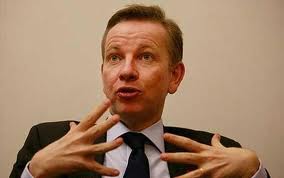
Are you out of your mind Michael Gove?  I understand that there are times when teachers have no choice but to physically restrain kids, but the way you have encouraged teachers to take the law into their own hands without even having to document it later is just plain lunacy.  Teachers should always be compelled to write an incident report in instances when physical restraining takes place.

But the lunacy doesn’t stop there.  An idea to encourage soldiers to take up teaching because their physically intimidating presence may improve classroom discipline is a big slap in the face of this great profession.  To even consider replacing professional teachers for glorified bodyguards says little for Michael Gove and our hope for better educational outcomes in Britain.

MICHAEL Gove yesterday told teachers to have no fear of using physical force to restrain unruly pupils as he launched a blitz on classroom chaos. It came as the Government unveiled plans to encourage soldiers to take up teaching to improve kids’ discipline. 

The Education Secretary said it was time to show disruptive kids “who’s boss” because “the rules of the game have changed”.

Under plans to bolster staff and undermine school yobs who hide behind human rights rules, teachers will no longer have to record each time they restrain a violent pupil.

Mr Gove said: “The last thing teachers need is another piece of regulation inhibiting their judgment.” He spoke of a “step-by-step” move of the “ratchet” back in teachers’ favour, adding: “We need to ensure we send a single, consistent, message that teachers are there to be respected, listened to, obeyed.

“Let me be crystal clear, if any parent now hears a school say, ‘Sorry, we can’t physically touch the students’, then that school is wrong. Plain wrong. The rules of the game have changed.”

Teaching isn’t about intimidation, it is about patience, care, dedication and insight.  Perhaps we should encourage our fine, brave soldiers to take up politics.

I hear Mr. Gove is keen to explore life as a soldier.  Perhaps a straight swap could be arranged.

Meet the Classroom Management Guru

August 11, 2011

Below are two clips from a film made by Australia’s behaviour management guru, Bill Rogers.  I think all teacher’s will find this useful regardless of experience.

Clip 1

Clip 2

Please share these clips with your colleagues.  I’ve attended a Bill Rogers seminar and found it very useful.

Blaming the Teacher for an Unruly Class

July 20, 2011

I read an unfortunate review of a BBC documentary entitled “Classroom Secrets” (yet to be televised in my country). The BBC website describes the documentary as a TV first:

In the first experiment of its kind on TV, parents in a primary school in Leicester are given a unique opportunity to see how their children really behave behind the classroom door.The film shows the challenges teachers face and the effect, on all pupils, of low-level disruption – estimated to cost schools across Britain three weeks of teaching every year. The usually secret life of a Year 4 class is filmed by fixed cameras over the course of one week, after which some of the parents are invited to see what their child has got up to. The film shows surprising – sometimes shocking – results for both teachers and parents and asks – who’s really responsible for how our children behave in class?

Sandra Parsons from the Daily Mail puts all the blame for this unruly class on the teacher.  First, there’s the crass and highly simplistic headline:

It’s teachers who need a lesson in discipline to control these unruly students

Her simplistic and naive statements continue with this observation:

When the teacher watched the footage of her class, she said what she’d learned was that ‘where she placed herself in the classroom’ was of vital importance. At which point, I practically wept.

Sadly, she was utterly oblivious to the fact that one of the fundamental causes of her pupils’ bad behaviour was not where she sat, but where her pupils sat.

Instead of having individual desks, they were grouped around tables scattered about the room. Most of the children faced each other, not the teacher. There was no structure and no discipline. Unsurprisingly, they were bored and disruptive.

Seating arrangements, whilst relevant to student participation and conduct is certainly not the most important ingredient in classroom management.  The poor teacher is likely to have used it as an excuse for her shortcomings, not because it would have solved the problem entirely.

Parsons goes on to write:

Witness, by way of contrast to the Leicester school, the traditional teaching methods that have been espoused by headmaster Sir Michael Wilshaw at Mossbourne Community Academy in Hackney, East London.

At Mossbourne, pupils are sent home even for wearing the wrong colour shoes. If they arrive late or without their school planner, they have to stay in at break or lunch.

Mobile phones are banned, substantial homework is set, and any pupils who disrupt a lesson or are rude to staff have to stay behind until 6pm.

Teachers work 15-hour days because they recognise that many pupils are unlikely to be returning to a home where they’re encouraged to do their homework, so stay after hours to help them do it at school.

And when the children do go home, teachers and a few ‘heavies’ line the route to the bus-stop so no one gets beaten up for wearing a smart uniform.

Why do people always point to these types of schools as the answer to all our education problems?  I would hate to teach in a school like this?  I would never want a child of mine to have to suffer a system that keeps them in to 6pm for the slightest infringement.

Why can’t schools impose boundaries and high expectations without being a dictatorial, prison-like institution?  Is the aim that students have some enjoyment of school so offensive?  Why can’t we trust that children can adhere to basic rules and display respect without beating it into them with a raft of unpleasant and highly suffocating regulations?

And Ms. Parsons is being unfair to teachers by accusing those who are not maintaining order in their class as lacking dedication.  Has she ever taught a class?  It’s not that easy.

Below are other reasons why teachers can’t be fully blamed for an unruly class:

– The standard of teacher training is very poor.  Often student-teachers are not given the tools to be able to overcome these challenges;

– An out-of-control class is often a symptom of poor leadership and an unhealthy school culture;

– Where is the support for a teacher when they need it?

– Some classes are just plain difficult to teach regardless of the experience, passion or dedication of the teacher.

It is not fait to be so simplistic and narrow-minded when judging a teacher’s performance.  There is often many factors and reasons for a teacher’s inability to maintain oder.  It’s not always solely the teacher’s fault.

(Please note that my above comments were not refering to the Mossbourne Community Academy in Hackney.  I am not familiar with that school so I can’t comment on them directly).

Calls To Allow Teachers To Use “Reasonable Force” on Students

July 13, 2011

Students should never be physically disciplined under any circumstances.  Whilst a majority of teachers care very much for the wellbeing of their students, there are teachers around who are more concerned with quiet compliant classrooms than the needs of their pupils.  Giving these teachers the opportunity to use force is asking for trouble.

Telegraph journalist, Bertie O’Brien disagrees:

Here’s hoping that the Government’s plans to allow teachers to use “reasonable force” to control disorderly pupils in the classroom is the beginning of a turnaround in our society. The culture of child protectionism – developed in tandem with health and safety and political correctness – is preventing children from entering the professional world as well-developed adults.

It’s about time teachers were lawfully allowed to regain control over pupils. Let’s get back to the purpose of being young: becoming a well-rounded adult, not having a good laugh or being “empowered”. Young people have to learn to lose out sometimes, and to follow orders. It is necessary that they learn to live in a world which won’t continue to worship them when they do grow up.

What does “reasonable force” mean anyway?  What is reasonable for one teacher may not be reasonable for other sections of society.

The argument that corporal punishment will help students become well-rounded adults is plain wrong.  Teachers help their students become well-rounded by understanding, connecting and appreciating their students, by setting a good example and high but fair expectations, imposing fair and consistent consequences, making their lessons engaging, fostering their students’ talents, creativity, critical thinking and independence as well as offering support and guidance.

I bet any teacher wishing to inflict corporal punishment on their students has in fact failed their students.  I would encourage them to spend less time worrying about using reasonable force and instead concentrate on their own performance.

Why Be Flexible When You Can Be Politically Correct?

April 5, 2011

There used to be a time when educators were self-directed.  They could decide how to teach, when to discipline and were given the opportunity to do their job according to their own unique style.

Not any more.

Everything is dictated and imposed, so little is left up to the educators.  There is such a lack of trust in the gut instincts and methodology of teachers and school communities, that Governments feel they must intervene.  What we are left with is political correctness gone mad!

Take this story for example:

CHILDCARE workers who send tantrum-throwing toddlers to “time out” risk hefty fines under national childcare laws to come into force next year.

New regulations will expose childcare centres to penalties if children are required to take part in religious or cultural activities, such as Christmas tree decoration or Easter egg hunts.

Childcare supervisors risk personal fines for the first time, under the national legislation being adopted by state and territory governments.

Centres could be fined as much as $50,000, and supervisors $10,000, for failing to ensure children are adequately supervised, or for using “inappropriate discipline” to keep order.

Centres will be banned from using …  “any discipline that is unreasonable in the circumstances”.

The Education and Care Services National Act, which has been passed by Victoria as the “host jurisdiction” and will be replicated by other states and territories, does not define “unreasonable” discipline.

But draft regulations with the legislation show childcare supervisors risk $2000 fines for “separating” children.

Supervisors must “ensure that a child being educated and cared for by the service is not separated from other children for any reason other than illness or an accident”, the regulations state.

Herein lies the problem.  Governments know precious little about education.  Here is just a few examples of how they’ve got it wrong:

  1. “Separating children” is often an essential method of conflict resolution and discipline.  If a child is threatening another child/children, they must be separated.  You can’t allow a child (regardless of age) who is in an irrational or heated frame of mind to be among other children. It is simply a safety imperative.
  2. Similarly, separation can be quite effective for teaching students that every action has a consequence.  When a child misbehaves and is forced to sit out of a game or activity for a period of time, it teaches the child that privileges come with responsible behaviour.
  3. To not define “unreasonable” discipline is just ridiculous.  How can you pass a law about something that isn’t even defined?  How can you have already thought up the fine before you have properly defined the offence?
  4. What is wrong with giving childcare centres the opportunity to decide for themselves whether or not to conduct Easter egg hunts?  They are not stupid.  If they have a large non-Christian demographic, there is no way they would ever consider such an activity.  But what if they were entirely Christian in make-up?  What if the parents were uniformly comfortable with their children taking part in Easter Egg Hunts?  No,  the Government says they will fine you  regardless.

Political correctness stifles those in the know from doing their job properly.  It stops teachers from injecting their own personal style and prevents innovators from providing our educational system with much-needed positive change.  It says that all childcare centres and schools must be run in the same way, with the same harsh and uncompromising rules without any thought given to the makeup or cultural uniqueness of the institution.

Political correctness is useless and counter productive.  Instead of these harsh and illogical rules, teachers and childcare workers need to be encouraged to be flexible, sensible and sensitive to the welfare of their students and their families.

Asperger’s Teacher Must Be Penalised for His Comments

April 1, 2011

I don’t know enough about Asperger’s Syndrome to be considered an expert on the condition.  Regardless, I am sure of this – a teacher who has a reputation for saying demeaning and insulting things to his/her students with some level of frequency needs to find another profession whether they have Asperger’s Syndrome or not.

I am a deep critic of the general lack of understanding and support given to students with autism and other related conditions, so I want to make it clear that I am not insensitive to the difficulties that such a condition poses on a person’s social skills.

Having said that, it is my belief that Robert Wollkind, if indeed it is proven that he did do what is alleged, needs to be fired for his behaviour:

A Connecticut high school teacher faces the loss of his job after asking a student, who is overweight, if he had eaten his homework. According to the Hartford Courant, officials in the Brookfield school district want to fire Robert Wollkind who, they say, has made a ‘string of inappropriate remarks over his 32-year career.’ Wollkind, a math teacher at Brookfield High School, was diagnosed in 2002 with Asperger’s Syndrome, an autism spectrum disorder in which individuals have normal or above intelligence but struggle with social, communicative and sensory skills. Wollkind has been on administrative leave since the November 2010 incident.

Lawyers representing the school district says that Wollkind has ‘used abusive language to others, including telling one student that he hated him.’ According to the News-Times:

The student, identified as “Student 21,” had been previously teased by peers about his weight, said the school district’s attorney Patrick McHale.

Wollkind’s personnel file also contains reported incidents of him screaming at a student, grabbing a student, and using “abusive and foul language” with students.

Wollkind counters that ‘many of those incidents have been described inaccurately.’

The fact that more than 1,000 Brookfield parents and students have signed a petition supporting him suggests he has some fine qualities as a teacher and that the parents of Brookfield are very understanding.

My issue is with his behaviour.  Teachers have an important role to fulfill that goes beyond the teaching of skills and knowledge.  They are there to build up the confidence of their students, empower them to take responsible risks and help them to realise their full potential.

Comments that hurt and strike at a child’s self-esteem do not belong in a teacher’s repertoire.  It hurts enough in the schoolyard by peers, but to get teased by your teacher is simply not acceptable and potentially destructive to the child.

Whilst I can understand that Mr. Wollkind’s jibe’s were a product of Asperger’s Syndrome, and I am deeply sympathetic to it’s likely influence over his actions, I am not sure I would want him teaching my child.


Losing the Control of Your Class and Sanity

February 25, 2011

One of the most important qualities of a good teacher is patience.  Teachers, no matter how experienced or adept they may be, struggle at times with behaviour management issues in the classroom.  The loss of control at the hands of cheeky and disobedient students happens to the best of us.  It’s just a matter of how well we deal with it.

The trick is to keep your emotions settled, think calmly and find an appropriate way to address the issue as well as administer a consequence that fits the infringement.  Unfortunately, for some, all clarity and common sense goes out the window when faced with classroom management stresses.  Take this unfortunate case for example:

A TEACHER at a primary school was sacked after ordering pupils to wear a picture of a child with a noose around its neck as a punishment.

Ama Bankah, 31, had been working as a supply teacher in class of children – many with special educational needs – at Shaw Primary School, South Ockendon, Essex, England, when the practice came to light.

The General Teaching Council‘s professional conduct committee heard Ms Bankah claimed the placard was used as a “behaviour management technique”.

Every time she rang a bell, all the children had to sit quietly and those who didn’t would be “caught” by the “hangman” which was the name of the picture on the placard.

The GTC heard the image on the placard was of a child dressed in the colours of the school uniform. When Ms Bankah did this to one of the boys on February 1, 2008 he burst into tears and the matter was brought to the attention of the headteacher Linzi Roberts-Egan.

She then quizzed Ms Bankah, who had been in the post for three months, before asking her leave the school.

“Ms Bankah’s behaviour on 21 February 2008 was demeaning to the pupil concerned, caused him some harm, and had the potential to harm other pupils,” GTC committee chair Sashi Sivaloganathan said.

The committee also heard that some parents were so concerned about what had happened that they considered taking their children out of the school.

Whilst a story like this illustrates a teacher using terribly bad judgement, I can’t help but consider the difficulties she must have been facing to come up with such a desperate and inappropriate response.  Teaching is a difficult profession, and no formal training prepares you for unruly and disrespectful students.

Structures need to be put in place to support the teacher well and truly before they lose their mind and make terrible judgement calls like this one.

Worst Examples of Teacher Discipline

December 10, 2010

After reading about two recent cases of discipline gone wrong, I couldn’t help but reflect on some terrible instances of terrible disciplinary methods inflicted on me by my teachers.

A few weeks ago I wrote a post about an Australian teacher who was accused of sticky-taping some of her students lips together as a response to their unruly behaviour.

Unfortunately, it gets worse.

Today I read about the British teacher given a 3-year suspension for forcing autistic pupils to run on a high-speed treadmill as a punishment.

Glenda Partridge, 35, was also alleged to have taken food away from youngsters if they misbehaved and dragged them across the floor by their collars.

Whilst I never experienced anything as horrific as that, it did bring back some memories from my youth – three incidents in particular:
1.  I was caught chewing gum and was forced to sit in front of the class  with my hands in the payer position, chewing gum firmly entrenched between my palms.  It took hours for the chewing gum to wash off.
2.  After being caught speaking out of turn, the teacher coloured in a circle on the board and made me stand at the chalkboard, with my nose placed on the circle.
3.  I got caught writing lines in class for another teacher.  My teacher spotted me and approached me angrily.  I went to put the lines away, and in doing so dropped them on the floor.  As I attempted to pick it up my teacher slapped me on the back of the head.
I was wrong on all three occasions, but the punishments were a bit too excessive.  I was actually a very well-behaved child, so these incidents really stood out in my memory.
What was the worst examples of student discipline handed out to you?