Posts Tagged ‘Behaviour Management’

The Free Resource That Could Change Your Teaching Career

July 12, 2026

If you are a caring teacher who is struggling with classroom management, I want to tell you about something that is completely free and might be the most useful thing you read this year.

It is called the CALM Method guide. And I built it because I spent twenty five years in education watching good teachers leave the profession for a reason that had nothing to do with their ability or their passion.

They left because nobody gave them the right system.

What is the CALM Method guide?

It is a single, practical document that takes you from a struggling classroom to a managed one. Step by step. No jargon. No academic theory that falls apart the moment you walk through the door on Monday morning.

It is built around four strategies I developed over twenty five years of teaching and school leadership, including time as Head of High School. Four strategies designed specifically for caring, relationship-first teachers who were never given a classroom management system that worked with their personality rather than against it.

The four strategies are these.

C. Claim the Start. The first five minutes of every lesson set the emotional temperature for everything that follows. The guide shows you exactly what those five minutes should look like and why getting them right changes everything.

A. Arrive Prepared. Predictability is not the enemy of great teaching. It is the foundation of it. The guide shows you how to create a classroom environment so structured and consistent that even your most difficult students begin to feel safe enough to learn.

L. Leverage Key Relationships. Your genuine care for your students is your greatest asset. The guide shows you how to make that care work for you rather than against you, and how to use your key relationships strategically to shift the culture of your entire class.

M. Mean It Every Time. Consistency is not about being harsh. It is about being the same teacher on Monday as you are on Friday. The guide shows you exactly what that looks like in practice and why the room notices every exception.

Who is this for?

It is for the teacher who lies awake on Sunday night dreading Monday.

It is for the teacher who has been told to just be stricter and knows that is not the answer.

It is for the teacher who got into this profession because they genuinely love young people and cannot understand why that love is not translating into a classroom that works.

It is for the teacher who is thinking about quitting and has not quite made that decision yet.

If any of that sounds like you, this guide was written for you.

Why is it free?

Because I remember what it felt like to be in that classroom without the right system. And I remember what it felt like when things finally started to shift.

I do not want money to be the reason a good teacher does not get the help they need.

The guide is free. It always will be. Download it, use it, share it with every teacher you know who is struggling.

What teachers are saying

Teachers who have downloaded the guide describe it as the first classroom management resource that actually speaks to who they are rather than who they are supposed to become. Practical. Honest. Immediately usable.

Not a list of tips. A system.

Download it now

You have nothing to lose and potentially everything to gain.

The free CALM Method guide is waiting for you at the link below. Download it today and start using it tomorrow morning.

Download the free CALM Method guide here:
https://confidentteachingacademy.com

It is free. It is practical. And it might be the thing that keeps you in the profession long enough to discover the teacher you are capable of becoming.
5 Things That Are Quietly Destroying Your Classroom Management (And What To Do Instead)

July 6, 2026

If you are a caring teacher who is struggling with classroom management, I want to say something before I say anything else.

You are not failing because you do not care enough. You are almost certainly failing because nobody gave you the right system.

After twenty five years in classrooms and school leadership, I have watched the same patterns destroy good teachers over and over again. Not lazy teachers. Not indifferent teachers. Caring, committed, relationship-first teachers who got into this profession for exactly the right reasons and were let down by advice that was never designed for their personality type.

Here are the five things I see most often. And what to do about each one.

1. You are letting things go that should never go unnoticed

Every time you overlook something that should have a consequence, the room reads it as an opening. Not as kindness. Not as flexibility. As an opportunity.

There is a chance.

And once that seed is planted, every student in the room will test whether the chance is still there. Sometimes consciously. Often not. But the testing will happen.

The reason caring teachers let things go is almost always grounded in something that sounds reasonable. The parents are difficult. The student is going through something. It feels cruel to escalate. But the cruel irony is that the act of compassion in that moment, the giving of benefit of the doubt, is the exact thing that makes the room harder to manage tomorrow.

What to do instead. Identify your non-negotiables before the lesson starts. The three or four behaviours that cannot go unaddressed regardless of the circumstances. And deal with them every single time, calmly, consistently, without exception.

2. You believe rapport is enough

Rapport is essential. It is the foundation everything else is built on. But it is not a system.

A student who likes you will behave for one lesson, for one day, sometimes for one week. But the brief is to behave for an entire year, day in and day out. And warmth alone does not hold a room across two hundred lessons.

What to do instead. Use your rapport as the reason students trust your system, not as a substitute for having one. When students understand that your procedures come from a place of genuine care for their learning and their future, they are far more likely to buy into them.

3. You are optimising for the wrong unit

This is the mistake I made for years and it is the hardest one to see when you are inside it.

You are trying to manage one student at a time. Being patient with the difficult one. Giving them more chances. Adjusting your approach for their specific needs. And all of that sounds like good teaching.

But you are not a tutor. You are a classroom teacher. And the patience that would be exactly right for a one on one session becomes a liability in a room of thirty. Because the other twenty nine are watching every decision you make.

What to do instead. Think in terms of the room, not the individual. What does this classroom need to function well for every student, from the easiest to the hardest to reach? That question will often give you a different answer than the one you get when you focus only on the most challenging student in front of you.

4. You are starting your lessons too late

By the time you have settled the room, dealt with the students who came in hot from recess, handled the ones who are still talking, and finally gotten everyone facing forward, five minutes have gone. Sometimes ten.

And those are not neutral minutes. They are minutes where the emotional temperature of the room has been set by whoever was loudest. Not by you.

What to do instead. The first five minutes of every lesson need to be intentional, structured, and calm. Not exciting. Not a hook designed to grab attention. Calm. A quiet, self-directed task waiting for students when they arrive. Something low stakes enough that even your most overwhelmed student can engage with it without feeling threatened.

The first five minutes set the temperature for everything that follows. Get them right and the rest of the lesson becomes significantly more manageable.

5. You are waiting for the system to fix this for you

The most painful truth about classroom management is this. Most of what is making teaching brutal right now you cannot fix by yourself. The pay. The admin culture. The lack of support. The complexity of what students are bringing into your classroom from their home lives.

But there is one part of this that belongs entirely to you. What happens inside your classroom. And when that one variable changes, your relationship to everything else changes with it.

Caring teachers who are struggling tend to wait. For better support. For a different class. For the difficult student to move schools. For something outside themselves to shift.

What to do instead. Start with what you can control. Today. Tomorrow morning. The first five minutes of your next lesson. One non-negotiable held consistently. One relationship invested in strategically. Small changes compounded over weeks become the difference between a classroom that works and one that does not.


If any of this resonates, I have made two videos that go deeper on these ideas.

The first video walks through the full CALM Method, the classroom management framework I developed over twenty five years specifically for caring teachers.
Watch it here: https://youtu.be/C8yOzE3Hn1c

The second video is for teachers who are thinking about quitting. Before you make that decision, watch this.
Watch it here: https://youtu.be/_Oe3eUh7dDE

And if you want the complete CALM Method framework in a single document, you can download the free guide here: https://confidentteachingacademy.com

If My School Approved of Corporal Punishment I Would Resign Instantly

July 16, 2014

punish


Corporal punishment in schools is a horrible idea!

Not only is it demeaning and degrading to children (the very children we are served with the responsibility to protect and nurture), but in my view, teachers do not even deserve the trust that goes with such a task.

There is an idealised notion in the wider community that all teachers act with the best interests of their students. I wish this were true. Sadly, it isn’t. Some teachers, a minority but still enough to make you worry, think very selfishly when it comes to administering consequences for student infractions. They just want whatever and whoever is bothering them to go away, the pain or discomfort inflicted on the child is an afterthought at best.

Don’t believe me? Click on this link.

If corporal punishment was allowed, the very best teachers would refuse to practice it. Some of those that would implement it would inevitably include tired and worn out teachers, low on patience and with a distinct anger problem. These teachers are incapable of administering punishment properly whether by force or any other means, but especially by force.

I’m sick of the radicalisation of education! Why does it have to be a case of hit the child or spoil the child? Why can’t we seize the middle ground and offer a school experience that is positive and vibrant, that makes each child feel valued for who they are and who they can become, but at the same time build high expectations for proper behaviour and attitude?

I think the thoughts of Dr. Donnelly (a man whose views I often agree with) are quite regressive and disappointing:


The head of the Abbott government’s national curriculum review has backed the use of corporal punishment for ill-disciplined children in schools if it is supported by the local school community.

Kevin Donnelly, co-chair of the national curriculum review and a widely published commentator on educational issues, said on Tuesday that corporal punishment was effective during his childhood and still has some merit.

“What would you, as you’ve been involved with this for so long, describe as the best punishment you can come across even if it is one that has gone away?” asked 2UE host Justin Smith. “I’m not alluding to the strap here. I don’t think you would ever resort to that. You would never advocate bringing that back surely?”

Dr Donnelly responded by saying, “Well” followed by a pause – an answer that surprised Mr Smith.

Dr Donnelly continued: “I grew up in Broadmeadows, a housing commission estate in Melbourne, and we had a Scottish phys-ed teacher.

“Whenever there were any discipline problems he would actually take the boy behind the shed and say, ‘We can either talk about this or you can throw the first punch’.

“That teacher would probably lose his job now but it was very effective. He only had to do it once and the kids were pretty well behaved for the rest of the year.”

Dr Donnelly went on to say “those days are gone”. But questioned further on the merits of corporal punishment, he said: “If the school community is in favour of it then I have got no problem if it’s done properly.


Click on the link to read A Message to Those that Advocate Corporal Punishment

Click on the link to read YouTube Clip of High School Student Getting Slapped by Teacher

Click on the link to read 19 US States Still Allow Corporal Punishment in their Classrooms

Click on the link to read The Disgusting Act by a Teacher that Drove a Schoolgirl to Attempt Suicide

Click on the link to read Legalised Corporal Punishment = Legalised Physical Assault

Click on the link to read The New Form of Spanking

School Builds Prison Block for Troublemaking Students

September 11, 2012


At least this school doesn’t pretend it’s not a prison:

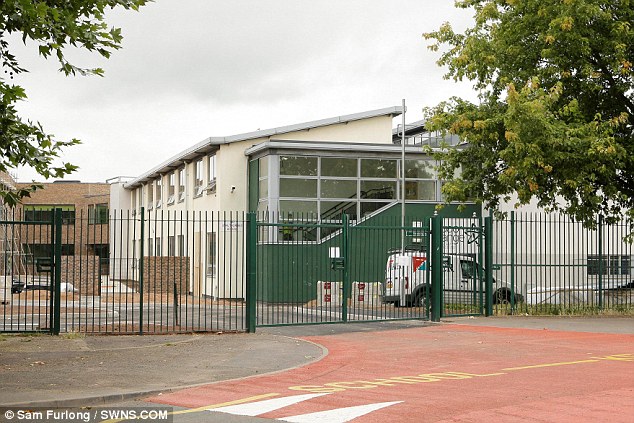
Furious parents and local councillors today blasted a school after it unveiled plans to build a ‘prison-style’ block for 12 of its most notorious troublemakers.

Tudor Grange Academy in Worcester, West Midlands – which has the second highest expulsion rate in England – has applied to convert a disused office block into an ‘alternative education’ facility.

Anyone else think we have all but given up?

Click on the link to read Being a Teacher Makes Me Regret the Way I Treated My Teachers

Click on the link to read Problem Kids, Suspensions and Revolving Doors

Click on the link to read Useful Resources to Assist in Behavioural Management

Click on the link to read When Something Doesn’t Work – Try Again Until it Does

Dealing With the Abusive Child

September 6, 2011

A number years ago I had a very difficult student who possessed a huge temper.  His volcanic-type eruptions usually came with a tirade of expletives, threats and thrown classroom items.  In short, the class and even some teachers were intimidated of him.

One day, in my first year of Primary teaching, I made him upset.  I can not recollect what I did, but you can be rest assured that it was very minor.  He was extremely livid with me and let me know all about it in a letter in which he threatened to beat me up.  In this letter he also cursed repeatedly, claimed that I treated him worse than the other students and it also contained other threats.

He left the note on my desk to read, which I did soon after he placed it on my table.  Although a bit shaken by the emotive language and violent imagery, I maintained my calm and instantly decided that he was looking for a reaction from me.  I figured that he wanted me to be angry or emotional in some way, and if I was, he would get some satisfaction from that response.

Instead, I pinned his letter on a noticeboard behind my desk in the company of thoughtful cards and messages I’d received from students.  There, front and center, amongst all these colourful “Thank You” cards, was his malicious letter.

I’m not certain how long it took him to notice the letter up there, but what I do know is that the next time I looked up at my noticeboard the letter had disappeared.  In its place was a new card, written by the same kid, thanking me for teaching him and helping him with his work.

Clearly this method wont work every time.  But I still think there is great value in keeping calm, avoiding the emotional payoff of getting angry or making threats of your own.

Meet the Classroom Management Guru

August 11, 2011

Below are two clips from a film made by Australia’s behaviour management guru, Bill Rogers.  I think all teacher’s will find this useful regardless of experience.

Clip 1

Clip 2

Please share these clips with your colleagues.  I’ve attended a Bill Rogers seminar and found it very useful.