Kids and Celebrities: A Reality Check

February 23, 2014

charlotte dawson

“Academy Award winning actors have it all.”

“I’d die to become a TV star.”

“That sports star has it all. Money, a gorgeous partner, a mansion …”

“I’d be so happy if I had that model’s looks.”


Our children grow up believing that fame and fortune comes without its price. That the celebrities adorning their bedroom walls are the definition of happiness and that being well known equates to being well liked.

It’s all a lie.

Unfortunately, the events of the past month prove how false this theory is. First there was the giant of an actor, Phillip Seymour Hoffman, whose potential for further groundbreaking performances was destroyed at the hands of a drug addiction.

This morning I heard the sad news of the death of local model and television star, Charlotte Dawson. Apparently, she died as a result of debilitating chronic depression which she had experienced for some time.

Our celebrities are human. They make mistakes, they have bad habits and they have their ups and downs like we all do.

Instead of setting children up to believing that happiness lies in a bank balance or a golden statue, let’s show them how they can find some real happiness for themselves.


Click on the link to read Athletes Can Set a Better Example for Our Kids

Click on the link to read Classroom Resources for Teaching About the Life of Nelson Mandela

Click on the link to read Nine-Year-Old Stands Up for His School (Video)

Click on the link to read Inspiring Kids who Look After a Sick Parent

Click on the link to read The Perfect Example of Courage and Self-Respect

Five Great Technology Tools for the English classroom

February 20, 2014

technology in the classroom


Courtesy of English teacher, Sarah Findlater:


Google Drive

Google Drive is a free online storage cloud that has Google’s version of Word, Powerpoint and Excel built into it. It allows students to create documents for free on the go. They can access and edit these documents on a tablet device or computer from various locations with their Google account login. They can share the documents they are working on with other students and can even work in one document at the same time to co-create pieces of work. They can also share the document with their teachers while they work or once they’ve finished to get instant feedback.

Teachers can help students with the creative writing process by getting them to share their stories as they write so you can feedback live without stopping their creative flow. You can give them quick and easy targets through the chat facility or highlight specific sections and create a comment – they have to respond to these otherwise the comment alert won’t disappear. You could also get students to co-create a presentation with one another on an element of the social or historical context of a text you’re studying, for example. Once finished, they can share the document with you, close down their computers and come up one at a time and simply click on their presentation now housed in your drive for instant feedback.

Edmodo

Edmodo is a free social learning platform for students, teachers and parents. It looks a little bit like Facebook so it is a familiar format for students to use. But before you run for the hills, it is very different to Facebook in that it’s completely controlled by the teacher and specifically designed for educational purposes – one of my classes has affectionately named it “Fakebook”. It has a shared timeline as a homepage where you and your students can interact and you can allow students to interact with one another, if you wish. Both teachers and students have a library where they can store documents and share them with others if they want to. The teacher can set assignments, students hand in assignments and teachers feedback on the work all within Edmodo. Two particularly useful functions are the quizzes and polls, and there’s also a built-in grade book that houses your teacher-assessed grades and quiz results for each student.

It really is a very useful all-round tool. You could consider saving essential documents – such as mark schemes, poems being studied and teaching presentations – in the class library to give students easy access to these at any time. You could also post photos of classwork completed by groups of students or individuals so all the students can see it for best practice. You could schedule weekly spelling tests – set as multiple choice quizzes – through Edmondo which will automatically collate the results so you can easily see trends within the class’s performance.

Screen casting

There a loads of tools out there that capture your computer or device screen and allow you to record your voice while you do so. Two that are often used are ScreenR which is free and Explain Everything, which is quite cheap. The idea is that you can take a picture of your computer or device screen and then set your voice against the website or pre-prepared powerpoint. If you collate these in one place, you have a bank of instructional videos.

A simple way to use this tool is to create short instructional videos to help your students study independently or revise a topic. For instance, you might create clips outlining different writing styles or perhaps your team can work together to create clips on themes you all think are important. You could get students involved and ask them to prepare a short videos explaining poems that you have been studying as a revision tool.

YouTube

One way to collate the videos created by a screencast tool is to start a YouTube channel and upload them all there. This is simply your own YouTube home page – you can style the background, upload profile information and follow other channels of interest. You can also create playlists within your channel to organise videos into topics and allow students to find them easily. If creating your own videos is not for you then you can create playlists of videos that are already out there that relate to the topics you are studying.

What about creating a channel for your department? Create a playlist for each topic on your curriculum map from myths and legends to war poetry and creative writing. All you would need to do is to drop in videos of your choice. The videos could be created by your students, staff or just found from educational sources around the web. The clips could help students get more from the topic or encourage them to read and research around the subject – a wonderful resource for years to come that you can regularly update.

Blogging

There are many blogging platforms around but the two that are most popular are WordPress and Blogger. If you’re looking for the easier of the two then Blogger from Google is the one. If you want a more sophisticated platform then WordPress is probably a better choice. A basic blog allows you to have a rolling front page of updating posts and static pages accessed via tabs, often along the top of the page. It is a great record of the year for the students to look back over.

Get your students to create their own blogs and use them as digital portfolios for the year, posting up their best work. Getting feedback from a real audience as well as peers, parents and teachers is a great opportunity for development. How about creating a blog for your class? You could update the main page with homework tasks, recommended reading and updates from your classroom. Try creating a post with a task or question based on the topic you’re studying and get the students to use the comments facility to respond. They could even extend their answers by responding to one another’s comments. You could use the blog as a record of lessons by uploading presentations and photos. If a student is ever absent, this is an invaluable tool to enable them to keep up.


Click on the link to read 5 Great Spelling Apps for Tablets and Smartphones

Click on the link to read Are Educators Being Conned by the i-Pad?

Click on the link to read The Best Phonics Apps for iPads

Click on the link to read Should Teachers be able to Text Students?

Click on the link to read 50 Ways To Use Skype In Your Classroom

Finally, a Step Forward in Education

February 19, 2014

pyne

I have been saying over and over again that something has to be done about the poor quality of teacher training. I have written to education ministers and tried to sell the message through this site, that improved teacher training was a must. Even though I was certain that an overhaul of our teacher training courses would bring immediate results, I felt that no politician would have the courage to even look at this area, let alone actively take the project on.

I am overjoyed to be proven wrong:

Federal Education Minister Christopher Pyne will announce on Wednesday a far-reaching review into teacher training in a bid to make education degrees less ”faddish” and ”ideological”.

Australian Catholic University vice-chancellor Greg Craven – a vocal opponent of minimum entry scores for teaching degrees – will chair an eight-member advisory panel to report to Mr Pyne by the middle of this year.

An eight-member ministerial advisory group will report by the middle of the year on how education degrees at universities can better prepare new teachers.

“There is absolutely no reason at all why Australia, as one of the wealthiest countries in the world … shouldn’t have the best teacher training in the world,” Mr Pyne told reporters in Adelaide on Wednesday.

“I want it to be more practical, I want them to have better experiences in the classroom rather than in universities and I want it to be less theoretical.”

Mr Pyne said the only way the federal government could influence teacher quality was by looking at university courses.

He suggested the standard was too low because very few people failed teaching degrees.

But he said imposing minimum entry scores for teaching degrees was a “blunt instrument” that would not guarantee quality.

Instead he wants the advisory body to have a particular focus on in-classroom training.

“My instinct is that the more a teacher is in the classroom learning on the job about how to teach people how to count and to read, the better,” he said.

Amen to that!

Click on the link to read my post Tips For New Teachers from Experienced Teachers

Click on the link to read, ‘Teachers Trained Very Well to Teach Very Poorly

Click on the link to read my post 25 Characteristics of a Successful Teacher

Click on the link to read my post 10 Important Tips for New Teachers

15 Famous People Who Used to be Teachers

February 18, 2014


morris

In honour of former teacher David Morris’ incredible feat of winning a silver medal at the Sochi Winter Olympics, here is a list of 15 famous former teachers courtesy of mentalfloss.com:

1. Gene Simmons
The tongue-flicking bassist of Kiss taught sixth grade in Harlem before he became the world’s most famous bass-playing demon. Simmons later revealed in interviews that his superiors canned him for replacing the works of Shakespeare with Spiderman comics, which he thought the students were more likely to actually read.

2. Alexander Graham Bell
The telephone pioneer got his start teaching Visible Speech at the Boston School for Deaf Mutes. He developed a bond with a student named Mabel Hubbard, and when she was 19 the two married.

3. Sting
Before he became a star with The Police, Sting taught English, music, and soccer at St. Catherine’s Convent School. Sting later said of working at a convent school, “I was the only man on the faculty. In fact, I was the only teacher not in a habit.”

4. Robert Frost
Robert Frost worked as a teacher to supplement the income from his fledgling literary career. He worked as both a farmer and teacher at the Pinkerton Academy in Derry, New Hampshire. His students called him “the Hen Man” because the poet was afraid of chickens, and Frost allegedly had trouble remembering to milk the school’s cows on time.

5. Lyndon Johnson
The man who would later become the 36th president got his start as a principal at the Mexican-American Welhausen School in Cotulla, Texas. He later finished his teaching degree and landed gigs teaching public speaking at Pearsall High School in Pearsall, Texas and Sam Houston High in Houston. The debate team he coached at Sam Houston lost the Texas state championship by a single point; Johnson supposedly had to vomit backstage before he could bring himself to congratulate the winners.

6. Art Garfunkel
We can’t speak for Paul Simon, but at least half of Simon and Garfunkel was really, really good at math. Garfunkel nearly earned a doctorate in the subject and was teaching math at the Litchfield Preparatory School in Connecticut when “Bridge Over Troubled Water” soared to the top of the charts.

7. John Adams
The second President of the United States spent a few years working as a schoolteacher in Worcester, Massachusetts. Teaching didn’t suit Adams, who thought his students were nothing more than a “large number of little runtlings, just capable of lisping A, B, C, and troubling the master.” He eventually gave up the job to go to law school.

8. J.K. Rowling
The Harry Potter author worked as an English teacher in Portugal as she plotted out the early adventures of her young wizards.

9. Mr. T
It was hard for Chicago students to be fools when it came to gym class in the mid-1970s. You’d pay attention if Mr. T told you to do jumping jacks, wouldn’t you?

10. Sylvester Stallone
Did you know you were seeing a matchup of tough-guy teachers when you watched Rocky III? When Sly was attending the American College in Switzerland during the 1960s, he worked as a gym teacher to earn extra spending money.

11. Andy Griffith
Before he was a sheriff, before he was Matlock, Andy Griffith was a teacher. After graduating from the University of North Carolina, Griffith taught English at Goldsboro High School.

12. Billy Crystal
The comedian worked as a junior high substitute teacher on Long Island while he waited for his career to take off. Among the classes he subbed for: girls’ gym, which must have been a great source of material.

13. Kris Kristofferson
The country star was a Rhodes Scholar who studied literature at Oxford before joining the Army and rising to the rank of captain. Toward the end of his tour of duty, Kristofferson took a job as an English teacher at West Point, but he decided against the professorship at the last minute. Instead of heading to New York, he resigned his commission and moved to Nashville in 1965.

14. Stephen King
Although he initially had to work in an industrial laundry after his college graduation, the horror master eventually found a teaching job that paid a cool $6,400 a year at the Hampden Academy in Hampden, Maine. King wrote Salem’s Lot while living in a trailer and working this job during the day.

15. Sir William Golding
The author’s experiences as a teacher helped inform the novel that made his career. He once allowed a class of boys to debate with complete freedom, and the classroom quickly devolved into such disorder that it inspired Golding to write Lord of the Flies.


Click on the link to read Teachers Need to Have High Expectations for all of Their Students

Click on the link to read The Most Common Questions Teachers Are Asked at Job Interviews

Click on the link to read The Profession You Choose When You Don’t Want to Get Fired

Click on the link to read The School They Dub the “Worst Primary School in the World”

Click on the link to read Education New Year’s Resolutions 2014

Would they Have Let the Pedophile Teach Their Child?

February 17, 2014


abuse

A pedophile teacher was allowed to continue working even though the school principal and student protection officer were aware of sex abuse cases against him.

This leads me to a most obvious question:

Would the Principal have intervened if this teacher taught his child?

May I answer? Of course not!

And this leads me to one of my biggest gripes against the current education system. Teachers and Principals are trained not to be emotionally involved with their students. This destructive advice leads them to becoming emotionally distant.

We must become emotionally involved with the needs and rights of our students. We must treat them, at times, as if they were our own (of course within the proper professional boundaries). I often refer to my students as my kids. Of course, I know they are not literally “my kids”, but it’s just an expression illustrating my general concern for their best interests.

If teachers and school staff are taught to become less distant and to fight for the well being of their students, these types of issues just do not arise:

A pedophile teacher continued to work and abuse girls at a Catholic primary school despite both the principal and the student protection officer knowing about child sex abuse complaints against him.

Gerard Byrnes was eventually jailed in 2010 after pleading guilty to 44 counts of abusing 13 girls between 2007 and 2008.

School Principal Terence Hayes and student protection officer Catherine Long first heard a complaint from a schoolgirl, who said Byrnes touched her breast, in September 2007.

The Royal Commission into Institutional Responses to Child Sexual Abuse heard in Brisbane on Monday that during a meeting with the girl’s father, Mr Hayes said he would deal with Byrnes internally.

But neither Mr Hayes nor Ms Long told police or parents about the allegation.

Ms Long said Byrnes regularly gave girls lollies and had them sit on his lap, and girls were “hanging off him” when he was on playground duty, but she thought he was just a popular teacher.

Meanwhile other parents began to find out that their daughters had been abused from police, who had been told by other victims.

A mother, known as KP, told the inquiry that after police swooped on Byrnes, the Catholic Education Office and the school denied any knowledge of allegations against him.

“I found out later, through media reports and court processes, that this was not even true – Mr Hayes was aware of complaints about Mr Byrnes for over a year but did not report them to police,” KP told the inquiry by videolink.


Click on the link to read Kids Have Never Felt More Stressed

Click on the link to read Where is the Deterrent For Teachers Who Have Sex With Their Students?

Click on the link to read 6 Tips for Kids Who Worry Too Much

Click on the link to read Since When is Trying to Sell Your Baby a “Joke”?

Click on the link to read A World Where Sex Offenders Have “Human Rights” and their Victims Have None

The Snow Day Song that Has Gone Viral (Video)

February 15, 2014


The Holderness family are back!


Click on the link to read Is Tiger Mom a Racist?

Click on the link to read 44 Things Parents Say to their Kids to Get them to Eat

Click on the link to read Should Teachers be Able to Tell People they Are Bad Parents?

Click on the link to read Loving Parents Are Allowed to Take Some Time Out

Click on the link to read How Life Changes When You Become a Parent (Video)

Hilarious Examples of Kids Telling It As It Is

February 13, 2014

truth1


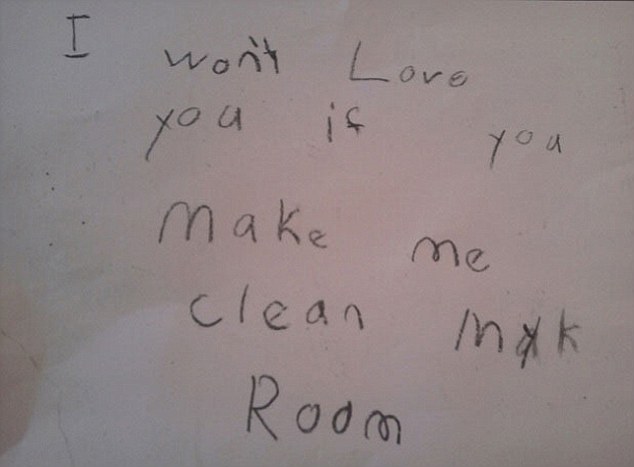
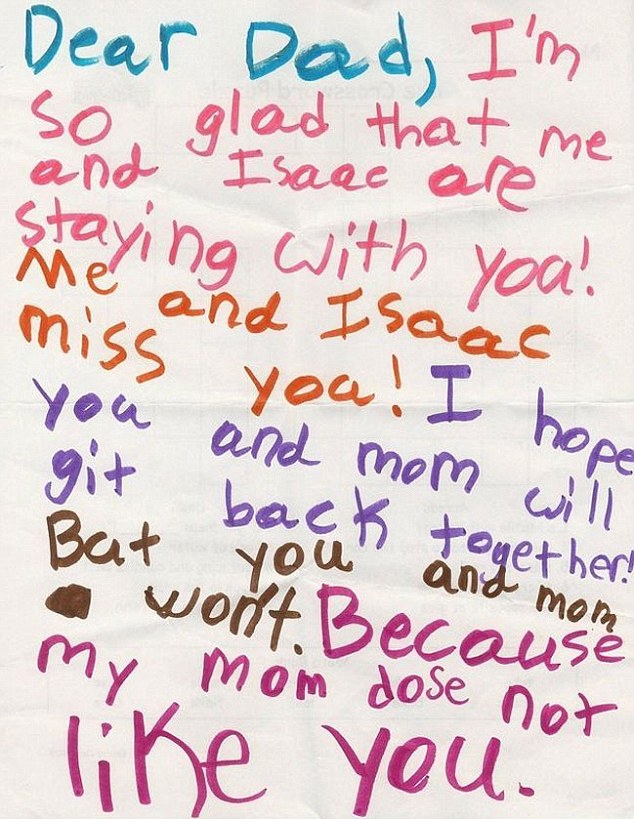
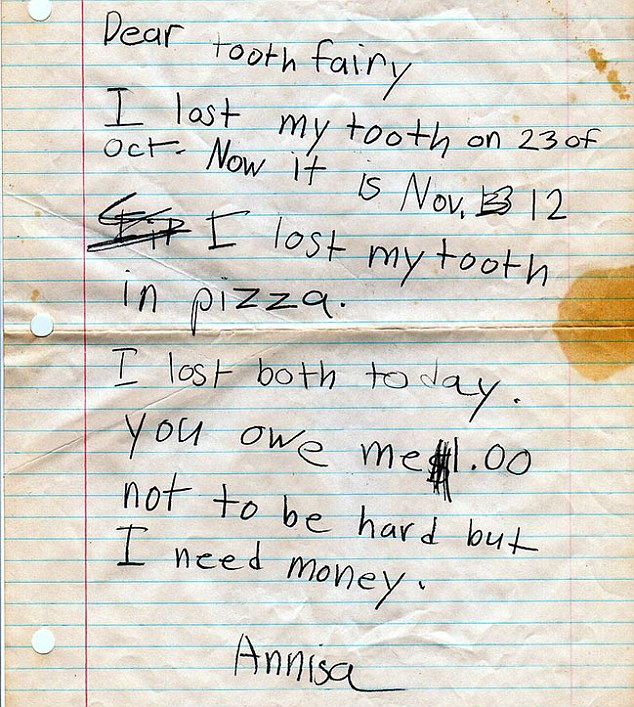
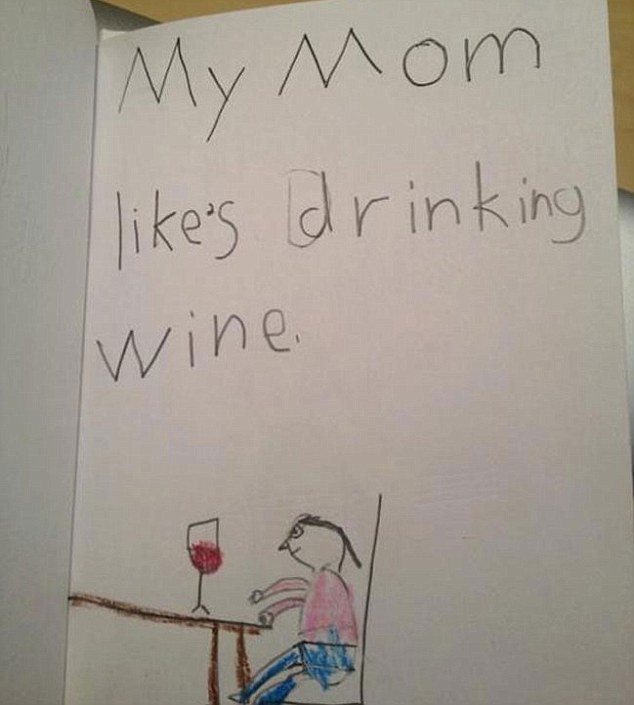
Fantastic examples of children being brutally honest:


truth 2


truth3


truth4


truth5


truth6


truth7


Click on the link to read Kids Can Operate an iPad but Can’t Tie their Shoelaces

Click on the link to read What is the Difference Between Over-Praising Children and Lying to Them?

Click on the link to read The Skills Kids Can Learn from Traditional Board Games

Click on the link to read Our Impressionable Children are Desperately Looking for Positive Rolemodels

Click on the link to read The Plus Sized Barbie Debate Misses the Point


Are Violent Video Games Worse for Children than Violent Movies?

February 13, 2014


grand theft

Growing up, one of the more popular video games around was a shooting game where you were a soldier charged with the responsibility of locating and killing Nazis. The fact that the villains were Nazis was a clear stunt by the game’s makers to disguise the mindless violence of their game.

Even as a youngster, I found the game very troubling. Whilst I have always hated Nazism, I didn’t feel comfortable with pointing a gun, pulling the trigger and killing. It might not be real, but the video game designers are fully aware that the person playing their game is meant to feel as if they are actually on a killing rampage.

Nothing I ever experienced from watching violent movies compared with the emotions of going on a video game shooting spree.

It’s even worse today. Nowadays, video games designers don’t bother with Nazi’s – they provide children with police and innocent bystanders as their targets instead:

Primary school pupils as young as six are re-enacting drug and rape scenes from Grand Theft Auto in the playground, a headteacher has warned.

Young children have been initiating games involving ‘simulating rape and sexual intercourse’ as well as having playground chats about ‘drug use’, according to Coed-y-Brain Primary School head Morian Morgan.

Staff at the school in Llanbradach, Caerphilly, blame the behaviour on the 18-rated and violent computer game series Grand Theft Auto, which sees players take on the role of criminals in America.

Latest instalment GTA V is thought to be one of the best-selling video games of all time, having sold more than 32 million copies worldwide.

A letter sent to parents said children were ‘acting out scenes from the game which include the strongest of sexual swear words’, ‘having conversations’ about sexual acts and ‘play acting extremely violent games that sometimes result in actual injury’.

Click on the link to read The 10 Best Road Trip Apps for Children
Click on the link to read Parents Shouldn’t Be in Denial Over This Very Real Addiction

Click on the link to read Video Game Addiction is Real and Very Serious!

Click on the link to read Internet Addiction and our Children

Click on the link to read Issues Relating to Kids and Video Games

Teaching History: A More Enjoyable Affair With Visual Tools

February 11, 2014

child ipadd
Photo courtesy of flickingerbrad via Flickr Creative Commons

Reader and prolific blogger Jennifer Birch was kind enough to submit an article especially written for us. History is a subject that seems to turn off students, but as Jennifer writes, that doesn’t have to be the case:

 
If there is a subject that benefits the most from visual medium, then it has to be History. It’s not a secret that many students find this particular field of study uninteresting, dull, and irrelevant. Of course, to us educators, that is not the case. But because history is comprised of entangled events that stretch endlessly from the time of the Neanderthals, it is hard for teachers to avoid the pitfall of history teaching for young learners –boredom.

Forget the tiresome dates and trivial facts; what’s more important is that the students realize the importance of these events and their relevance to the present. There is a reason why the History Channel is such an engaging piece of the television – it’s interesting. In this age of smartphones, tablets, and the rise of visual media, we can transfer the same charm that the History Channel creates for us into the classroom. Here are some of the best tech tools that take advantage of 21st century technology, helping out teachers to get students more interested:

American History in Video

This app is a cornucopia of historical footage, comprised of over 5,000 (and counting) videos on demand for free. It offers a wealth of archival footage, newsreels, olden broadcasts, images of important events and many other visual aids. Rather than letting students read up on a boring wall of text, American History on Video will show them exactly how it happened and how people at that time reacted. Hook up your laptop on your iPad and play the most exciting videos for the class. Expect many raised hands when the question and discussion time comes.

Event-specific Apps

Whenever a historical event is being discussed, know that there is a good chance that a dedicated app is already made for that. For schools that employ the BYOD model, it is recommended that teachers guide their students in downloading these apps for a better understanding of the lesson. For example, the Gettysburg 150 app “acts as a Gettysburg Battlefield assistant for visitors.”

Sheldon Jones, Verizon’s Public Relations Officer, said in his article that other historical apps such as the Civil War Trust Battle App and the Historic Gettysburg Walking Tour app are perfect for discussing the American Civil War.

Secret Builders

Role-playing games are great tools for teaching history, especially on topics that tickle the imagination of young kids such as the Greek and Roman era. Secret Builders enable children to do just that – create a virtual world where they can participate in the economy, talk to prominent people, create art and many other things. Recommended for students on the first to fourth grade, they will get a clearer picture of how it was to live during the romantic era.

Time Tube

This website is the epitome of engaging students through visual means. With Time Tube, students can type in a moment in history; and a series of related videos will be laid out on a timeline. Very easy to use and informative, this tool is even recommended for teachers to expand their knowledge on a particular historical event. Teachers can also create a custom timeline which students can access, acting as a learning aid and lecture guide.

Chrono Zoom

Created by Microsoft Research, the app contains massive amounts of curated content about thousands of topics including most of those in the curriculum of a history teacher with the help of international researchers. Middle-school teacher Samantha Shires vouches on the effectiveness of the tool. “Chrono Zoom breathes life into history,” she said.

The main brain behind Chrono Zoom is Professor Walter Alvarez from the University of California Berkeley. He was one of the proponents of the theory that an asteroid was the cause of the extinction of dinosaurs.


History is far from boring and dull. It’s our job as educators to present this fascinating subject to learners in an interesting and engaging manner. With tools such as the ones mentioned above, it is easy to create an enjoyable history class. What other tech tools for history did we miss? Tell us your favorites in the comment section below.

 
About the Author

myMINIavy


Jennifer Birch was a volunteer teacher and Ed-tech researcher. She spends most of her time writing and reading. Read more of her musings on Techie Doodlers. Contact her on Twitter or Google+.