The Excuses for Sex With Students Make Me Sick

July 10, 2015


nicole-mcdonough


There is no excuse for having sex with a student. It is illegal, a breach of trust and a complete blight on our wonderful profession.

I don’t care who propositioned who or if it was consensual – there is not acceptable for a teacher to bed a student.

That’s why excuses like this one make me so angry:


The lawyer for a New Jersey high school English teacher accused of having sex with one student and propositioning others said Wednesday her crimes were ‘victimless’ and that the students would agree.

What’s more, 32-year-old mother of two Nicole McDonough from Mt. Olive faces special hardships, like being a single mom with a heroin-addicted ex, that would make a mandatory five-year sentence unduly harsh, her attorney Timothy Smith argued. 

And then there’s irresponsible comedy sketches like this one that makes matters even worse.

Click on the link to read Teacher Allegedly Encouraged Students to Jump Off Cliffs

Click on the link to read How a Teacher Shouldn’t Stop a Fight (Video)
Click on the link to read 50 Shades of Stupidity

If Adults Act Like Kids, How Are Kids to Act?

July 8, 2015

https://www.youtube.com/watch?v=7s3eXZXw-FE

Before we start judging children, we should be looking at their so-called rolemodels. There is no point criticising kids today without first shining the light on us adults. Case in point:

There’s loud talking and phones ringing but theater etiquette might have taken a turn for the worst last week when a theatergoer climbed onstage to charge his dead cellphone.

The patron tried to recharge his mobile device in what looked like an outlet just before the production of Broadway’s Hand to God on July 2 in New York.

The attempt to recharge was, in the end, pointless – the onstage outlet was just a prop, created by Tony Award winner Beowulf Boritt, whose set is a realistic depiction of a basement of a church in Texas.

Click on the link to read The Benefits of Telling Lies Click on the link to read How Babies Learn (Video) Click on the link to read Celebrating Our Mistakes Click on the link to read Is Guilt a Motivator of Children?

Bullying Victim Teaches His Attackers a Lesson!

July 7, 2015
gavin Joseph could have insisted his attackers felt the full force of the law - instead he chose something far more effective  Source: Facebook

gavin Joseph could have insisted his attackers felt the full force of the law – instead he chose something far more effective Source: Facebook

A teenager gets beaten by his bullies and has the opportunity to have his attackers charged.

But no, he thought of something even better!


Gavin was tricked into meeting the group, who then surrounded him. He was ‘choked, punched, and left laying on the pavement so he would “learn his lesson”‘, explained mum Cortnie Stone on Facebook, in a post from family friend Susan Moffat that’s now been shared almost 130,000 times.

Gavin was left with mild concussion, a bruised esophagus, a fracture to the tip of his nose, and hematoma in his eye.

However, when his attackers were identified, rather than press charges, he choose to teach the bullies a lesson of his own, a lesson about what it’s like to walk in another person’s shoes.

Cortnie explains: ‘He did not press charges, but requested their community service be disability related, that they write a paper on Asperger’s, and that they watch a 20 min video statement he taped while their families were present so they could see the damage they did and hear the event from his perspective.’

She adds: ‘I am so proud of him, and I hope a lesson will come of this to all that hear about it.’


gavin-revenge


Click on the link to read Horrific Bullying Attack Caught on Video

Click on the link to read Are Kids Really More Aggressive Nowadays?

Click on the link to read I Thought Sport Was Supposed to Bring People Together (Video)

Click on the link to read The Rampant New Trend of Bullying Red Headed Boys

Mindless Theory Not Benefiting Young Teachers

July 7, 2015

modern-teacher

It pains me that our young teachers are filled with theory , yet are totally unprepared for the realities of the classroom.

Yes, it’s great to know how to understand the importance of open-ended questions and Blooms taxonomy is very interesting to discuss, but if you don’t know how to engage students, communicate properly, act quickly under pressure, demonstrate patience and deal with misbehaving students what hope do you have?

When a student bullies another student before your eyes, consulting Vygotsky wont provide you with the answer you’re looking for.

When your students look disinterested and hand in poorly thought out and badly structured writing pieces channeling Skinner wont achieve all that much.

It’s time we help our young and emerging teachers gain the practical skills they need for the classroom. Put the theory to a side and give them as much classroom observation time as you can secure for them. Provide them with mentors, connect them with successful teachers, open their eyes to the realities of working in the classroom. No gloom and doom is necessary, but pie in the sky is also deeply unhelpful. As rewarding as the profession is, it also comes with a fair amount of stress. Our student teachers should be made aware of this and have the tools to manage all areas of future stress.

I say get rid of Vygotsky and instead fill them with as many practically based scenarios to work through such as difficult parents, ADHD students, dealing with different learning styles, understanding autism and developing engaging lessons.

How badly unprepared were you for the classroom? I know I was.


Click on the link to read my post Care About Your Students or Find a Different Career

Click on the link to read my post I Can’t Recall Anything Useful About My Teaching Course

Click on the link to read my post Why Principals Overlook Young Teachers

Click on the link to read my post The Bizarre Call to Train Teachers Specifically for Left-Handed Students


Would You Ever Want to Visit Your Old High School?

July 6, 2015

schumer-visits-school

I have no ineterest going back to visit my old classrooms or speak to my old teachers.

Follow the link to watch as comedian Amy Schumer visits her old school.


Click on the link to read Middle School Student Bought Teacher Thong Underwear as a Gift by Accident

Click on the link to read Even a Ladybird Prank Can Get You Arrested

Click on the link to read Why Teaching May Be For You (Video)

Click on the link to read The Worst Prank Ever (Video)

Reasons for Encouraging Our Students to Blog

July 5, 2015

student-blog-reasons

Courtesy of


Click on the link to read Tips for the Use of 3D Printers in the Classroom

Click on the link to read Why Schools Shouldn’t Block YouTube

Click on the link to read iPads are Not the Solution

Click on the link to read 7 Key Characteristics of a Digitally Competent Teacher

Teacher Allegedly Encouraged Students to Jump Off Cliffs

July 4, 2015

teacher-cliff


The teacher is supposed to be the adult in the room:


A teacher who encouraged students to jump off cliffs in Vanuatu, hosted hikes through surging creeks and took excursions that warranted the aid of emergency services has admitted he might have been “over-confident” in his outdoor education experience.

The teacher is a principal of a private school that provides primary and secondary distance education.

He came before the Queensland Civil and Administrative Tribunal (QCAT) in May accused of endangering students’ welfare.

He had, the Queensland College of Teachers claimed, demonstrated reckless behaviour that made him unsuitable to teach.


Click on the link to read How a Teacher Shouldn’t Stop a Fight (Video)
Click on the link to read 50 Shades of Stupidity


It’s Time to Scrap Sex Ed in Schools

July 3, 2015


peter-leigh-citylife

After the latest sex ed scandal, I think it’s high time we made a distinction between teaching that belongs at school and teaching that is best handled by parents at home.

I am not a prude and I understand that there are some bad parents out there who refuse to meet the basic expectations of their role, but the overcrowded school system should not be expected to take on the slack left by parents. It is the responsibility of parents to teach their children about sex, drugs, alcohol, gambling and body image. By handballing these all important life lessons to the classroom, we are enabling parents to continue to act inert and unresponsive.

The comments that caused this latest furor were quite shocking and deeply inappropriate. It was also an attempt to teach girls about having self respect. But you cant teach children how to love themselves. You have to show them they are special, prove to them they are worthwhile and try to extoll their virtues whilst building on their weaknesses. It is extremely unlikely a program or classroom lesson will ever get a child who hates themselves to change the way they perceive themselves.

As I’ve argued before, these programs are essentially boring, preachy, expensive and a burden to teachers trying to cover a crowded curriculum. To students they are just an extension of everything else they dislike about school. In other words, not inspiring at all!


Year 7 girls have been warned not to have multiple sex partners or risk becoming like overused sticky tape, in a Christian sex education program at a public Victorian high school.

The students at Fairhills High School, in Knoxfield in Melbourne’s outer east, were also told that a chemical released in females’ brains made them more needy than boys.  

A booklet titled ‘Science & Facts’, that was given to the students, said that “girls are needier than guys in a relationship and always want to be close”.

It said that a chemical called oxytocin, is released when “two people touch”, and was produced by women more than men, making them needier. 

“If a woman becomes physically close and hugs a guy for 20 seconds it will trigger the bonding process, creating a greater desire to be near him. Then if the guy wants to take the relationship further it will become harder for her to say no,” the booklet said.

It warned that having too many relationships could break “this special chemical bond” and harm a woman’s capacity to form future relationships.

“Having multiple sex partners is almost like tape that loses its stickiness after being applied and removed multiple times. So the more you have the harder it is to bond to the next,” it said.

The booklet was given out during a weekly youth program run by Epic Youth, which is part of a Melbourne Pentecostal megachurch called CityLife, and was delivered during school hours in June.


Click on the link to read Teacher Takes Class on a Field Trip to a Sex Shop

Click on the link to read The Five Day School Trip that Resulted in 7 Students Getting Pregnant

Click on the link to read School Distributes Condoms to 6th Graders

Click on the link to read Should High Schools Install Condom Vending Machines?

The Dawn of a New Punctuation Mark

July 2, 2015

exclamation-comma

Meet the exclamation comma!


World, meet the exclamation comma — the punctuation mark you didn’t know existed, but that you almost certainly need in your life.

The exclamation comma is, as its name suggests, a symbol that looks like an exclamation point, only with a comma instead of a period at its base. As the Grammarly blog noted this week, it’s used just like an exclamation mark “to denote excitement, add flourish, and generally lend a statement a certain degree of emotion and emphasis,” but it’s to be placed within sentences rather than at the end of them.

For example:

“That velociraptor is so scary [insert exclamation comma] but don’t worry, he’s not going to eat you.”

“I’d love to use a new punctuation mark [insert exclamation comma] yet the others might get jealous.”


The exclamation comma was reportedly created by American inventors Leonard Storch, Haagen Ernst Van and Sigmund Silber in 1992, who also lobbied for its widespread adoption. However, their patent for the symbol lapsed in 1995, and their effort to popularize it ultimately failed.

Interest in the exclamation comma has surged this week after the Grammarly blog’s post on it, but it’s not the only obscure punctuation mark that deserves attention.

For instance, there’s the question comma (the exclamation comma’s inquisitive cousin), the SarcMark (short for “sarcasm mark”), the irony mark and the wonderfully-named Interrobang (which looks like what would happen if an exclamation point and a question mark jumped into bed together).


Click on the link to read Meet the UK Classroom Where Every Student Speaks English as a Second Language

Click on the link to read Feminist Icons in Children’s and Teen Books

Click on the link to read Long Lost Dr. Seuss Book Set for Release

Click on the link to read The Oscars for Children’s Writing Has Been Announced

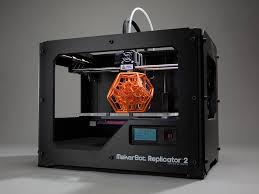
Tips for the Use of 3D Printers in the Classroom

July 2, 2015


3d-printer-classroom

Written by elementary and middle school educator Karen Winsper courtesy of  fractuslearning.com:


1. Designing a unique product for 3D printing can be tricky for 10 and 11 year olds.

Students had to identify a problem and then create something using SketchUp to solve their problem. Ideas ranged from pencil holders to earbud organizers to knitting needle guides. Creativity wasn’t an issue with my students. What was more challenging was using the software to actually design their products. I observed many students having to simplify their designs or make changes based on their comfort level with the program. Expert users did emerge in each of my 8 classes and they were eager to help their classmates as needed. I must explore other 3D modeling programs that may be simpler to use or more appropriate for my elementary students. Maybe just spending more time exploring within SketchUp is needed to truly grasp the tools. In the very least, I will revisit the expectations for both grade levels and determine if adjustments should be made based on the student feedback I received.


2. 3D Design and printing takes a long time from start to finish.

Because I only see my students biweekly, the challenge was getting each of them to complete a design and then print it within a timely manner. The first steps in the process, identifying a problem and brainstorming ideas, took one class period of 60 minutes to complete. The next step of actually designing the product using the 3D modeling software took another one or two class sessions to complete (60-120 minutes). I worked with approximately 180 students on this project and most of them didn’t actually see their own concept being printed. This is because their projects often took two to three hours to print! On a good day, I could print three or four designs. Sometimes, I was lucky if one finished before the end of the school day. Needless to say, I had to develop a system for printing (save files by student name/color choice, group colors together on SD cards, have multiple SD cards available for saving/printing) and even then I didn’t finish everyone’s prints. It didn’t help that the printer wasn’t working for several weeks. I truly felt I failed the students who didn’t leave with their tangible product. Next year, one of two things must happen: students’ creations will either have to fit a specific size criteria before printing or we start earlier in the school year to allow more time for printing.


3. The 3D design challenge is real-world application of skills at its best.

By combining problem solving with project based learning, students used logical, spatial, design thinking and math skills to develop their products. Students were engrossed in this project! From the moment I set up the 3D printer in the tech lab, students wanted to print something, anything. When I posed the design challenge to these fourth and fifth graders, every single one of them tried their very best to design a cool, yet useful, product. They manipulated shapes on a plane to get their design just right. They measured their designs using millimeters, centimeters, and/or inches using the virtual tape measure. They scaled their designs up or down. Some had to go back into the program and revisit the measurements if they had a “design flaw.” I was so impressed with their determination to get their designs just right and I think it was because it truly meant something to them.

4. One must not be afraid of the 3D printer.

I consider myself to be pretty tech savvy. I can figure out a program or online tool without reading directions. I’m like the kids and will search for a YouTube video to help guide me along. Inevitably, the 3D printer will have an issue and you will need to troubleshoot or take it apart to address it. The support team at MakerBot was awesome and helped me via Twitter, email and even over the phone. I can’t say enough about their patience with a newbie like me! I would absolutely recommend that you contact your 3D printer support team if/when you have an issue. These are the problems that arose during this project:

  • The filament jammed in the extruder. I had to take the extruder motor apart on several occasions and now can do it without asking for help from MakerBot Support. I know that the telltale “clicking” requires me to unload the filament and remove whatever is jammed in the motor. You can’t be leery about this task as it is very common and happened weekly during our design challenge.
  • Humidity caused havoc with filament. I work in a 100-year-old building in a lab with no air conditioning. The least bit of humidity in the air causes the filament to swell and not work through the extruder. After realizing this, I had to adjust my printing schedule around the weather. I’d get to school super early just to get a print started before the change in the tech lab environment stopped our production. Maybe winter and spring in New England is the best time for 3D printing!
  • The thermal barrier tube became blocked. This was a bit trickier to fix than the simple filament jam. After unsuccessfully trying to clear the blockage, I actually had to request a replacement part. This presented us with an unforeseen delay in printing.
  • Prints weren’t printing correctly on the build plate or were difficult to remove. Blue painters tape is a 3D printer’s best friend. The full sheets of tape are great but a roll of 2-inch tape works just fine too for covering the build plate and making prints easier to remove. I would also suggest getting a putty knife or similar tool for aiding in the removal of the prints. I learned rather quickly to set all designs to print with a raft as well.  It is super important that you take the time to level the build plate at least daily; maybe even after each print. All of these things will help with the final prints.
  • One of the plastic pulleys and belt wore out and needed to be replaced. This was very challenging to fix. Although MakerBot was great about sending me the X-axis belt, gantry bracket, idler pulley, dowel pin, and PTFE grease needed to fix the problem, it was hard to do! It turned into a two-person job with help from my building’s custodian. I can only suggest keeping up with regular maintenance in hopes of not running into this same problem. It took me several days to fix!
  • The printer made a dreadfully loud noise when the extruder went to its “home” position. This issue was apparently caused by a glitch with the stop end cable. Although not as difficult as the pulley and belt replacement, this fix scared me the most! I actually had to deal with the motherboard and feeding the cables through the machine and making sure everything was attached correctly. It doesn’t sound like much but it sure did intimidate me initially!

You may have a district computer technician who you can rely on when something needs to be fixed with your printer. I would suggest checking your district’s policy on this prior to getting a 3D printer. This way you’ll know if you’re on your own or not. If you are, like I was, don’t hesitate to reach out to the support team to help guide you through whatever issues arise.

5. The benefits of 3D printing far outweigh any potential problems!

There are so many awesome reasons to try 3D printing with your students. The levels of enthusiasm and engagement as well as the multitude of skills used by my students during the process were exciting to observe. The daily collaboration among students and the way they could view me as a learner too were results I hadn’t anticipated.

The pure joy and pride on each student’s face as I took their picture with their completed design was priceless. My students became designers and makers and were super proud of themselves!


Click on the link to read Why Schools Shouldn’t Block YouTube

Click on the link to read iPads are Not the Solution

Click on the link to read 7 Key Characteristics of a Digitally Competent Teacher

Click on the link to read The 10 Best Educational Apps for Children