Posts Tagged ‘School’

Tips for Helping Your Child Adjust to a New School

April 29, 2012

Many parents don’t realise just how difficult it is for children to adjust to a change of school. School cultures can vary radically and the look and feel of a new school (not to mention the rules) can be completely different to what the child has experienced before.

Jason Ladcock from healthguidance.org has compiled a list of helpful tips for assisting children in managing the transition to a new school:

• Before the first day of school, make an appointment to meet with the school principal. Introduce your child to the principal and his new teacher. By doing this, you are helping the child feel comfortable because they feel like they already know someone in their new school on their first day.

• When the child isn’t present, talk to the teacher, and discuss your child’s strengths and weaknesses. This will prevent the child from being placed in classes that are too difficult or easy for them. Trying to keep up in a class that is too hard for your child can add extra stress for them at a time when they don’t need it. Being placed in a class that is too easy has its own problems. Your child may become bored and act out or just not fit in with the other children. Talking with the teacher and ensuring proper placement will ease the transition into a new classroom.

• Be positive. The parent’s attitude has more affect on the child than all the other factors put together. If you have a negative attitude about the move or show nervousness, it will affect your child. Be positive and talk about what a good experience it is to have the “opportunity” to move to a new city and school. Explain that it offers all sort new experiences that they will enjoy.

• Acknowledge your child’s feelings and let him express them. Be sure to tell your child that he can talk to you at any time about problems he is having at school or feelings that he is having. Knowing that you’re there for him will take a lot of stress away.

• Make the first day at school as smooth as possible. Prepare everything the night before – clothes, lunches, school supplies, etc. Rushing on the first day at his new school will make the child nervous before he ever enters the school.

• Let your child know that he is welcome to invite new friends home from school.

• Host an activity at your home for your child’s classroom. This is a great way for your child to get to know the other kids.

• Help your child join extracurricular activities at school. When your child has a common interest with other kids, it is easier to get to know them.

I hope these tips prove helpful. I would love to get your feedback about what has worked for you.
Cyberbullied Teen Fights Back

April 28, 2012

Well done Alex! Good on you for bypassing a useless system that tacitly allows cyberbullies to wreak havoc and for standing up for yourself. Your school should have protected you, but instead, reportedly hid behind the old “it happened off campus” excuse. I am sick to death of this excuse. Kids are taking their own lives because of cyberbullying. It takes a heartless school not to intervene when clear cases of cyberbullying come to light.

When the police and her school failed to act, it was great to see that Alex and her parents found a more effective avenue. They slapped the bullies with a lawsuit:

When a Georgia middle school student reported to police and school officials that she had been bullied on Facebook, they told her there was not much they could do because the harassment occurred off campus.

So the 14-year-old girl, Alex Boston, is using a somewhat novel strategy to fight back: She’s slapping her two classmates with a libel lawsuit.

As states consider or pass cyberbullying laws in reaction to high-profile cases around the country, attorneys and experts say many of the laws aren’t strong enough, and lawsuits such as this one are bound to become more commonplace.

“A lot of prosecutors just don’t have the energy to prosecute 13-year-olds for being mean,” said Parry Aftab, an attorney and child advocate who runs stopcyberbullying.org. “Parents are all feeling very frustrated, and they just don’t know what to do.”

Almost every state has a law or other policy prohibiting cyberbullying, but very few cover intimidation outside of school property.

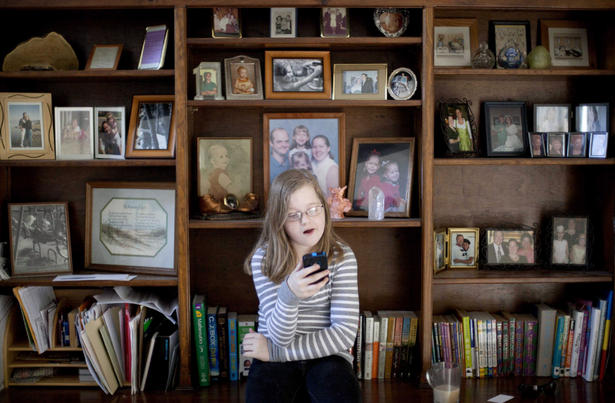
Alex, who agreed to be identified to raise awareness about cyberbullying, remembers the mean glances and harsh words from students when she arrived at her suburban Atlanta middle school. She didn’t know why she was being badgered until she discovered the phoney Facebook page. It was her name and information, though her profile picture was doctored to make her face appear bloated.

The page suggested Alex smoked marijuana and spoke a made-up language called “Retardish.” It was also set up to appear that Alex had left obscene comments on other friends’ pages, made frequent sexual references and posted a racist video. The creators also are accused of posting derogatory messages about Alex.

“I was upset that my friends would turn on me like that,” she told The Associated Press. “I was crying. It was hard to go to school the next day.”

Alex learned of the phoney page a year ago and told her parents, who soon contacted administrators at Palmer Middle School and filed a report with Cobb County Police.

“At the time this report was taken in May 2011, we were not aware of any cyberbullying law on the books that would take her specific situation and apply it to Georgia law,” said Cobb County police spokesman Sgt. Dana Pierce.

Police encouraged the Boston family to report the fake account to Facebook. Alex’s family said despite requests to Facebook to take the page down, the company did not do so. The website was taken down around the time the lawsuit was filed a week ago.

We keep on hearing about Facebook’s determination to stop bullying, and that they are vigilant when concerns are raised over cyberbullying. To refuse to delete this page (as has been alleged) is disgraceful. Only when the lawsuit was filed did they respond. What message does that send?

I hope this story puts some major stakeholders on notice. First there are the bullies who hide behind their computer screens as they attempt to dismantle a classmate’s self-esteem. Then there are the police who could at least advocate on behalf of the victim that Facebook take down the offensive material.

My strongest admonition goes to schools. Enough with the excuses! If you are not willing to get involved in serious cases of bullying, regardless of where the bullying takes place, you don’t deserve the privellege of looking after our children. Smarten up!

Are Parents Creating a Generation of Spoilt Children?

April 4, 2012

I think teachers should be very careful when criticising parents. Whilst I have no doubt that parents who don’t demand help around the house often breed lazy kids who lack independence and motivation, school isn’t necessarily the place to gauge whether or not a child is spoilt.

Teachers have been instructed for many years to become emotionally distant. This philosophy has become very prevalent and the results are as gloomy as the methodology. No teacher adopting this style of teaching can ever compare themselves to a parent. When parents set boundaries they do it with love and deep concern. If a teacher decides to become emotionally distant, they lead their students to believe that their boundaries are set without a deep-rooted connection to the child. The child comes to believe taht the rules were set for selfish reasons, because “it’s not as if my teacher cares about me anyway!”

That’s why I am not sure the connections made in this article are necessarily accurate:

Some middle class parents are turning their children into “little Buddhas” by “waiting on them hand and foot” at home, a teachers’ leader has said.

Association of Teachers and Lecturers general secretary Dr Mary Bousted warned spoilt children had “disproportionate” consequences for behaviour in schools.

Parents needed to be confident in saying no to their children, she said.

It come as the union debated calls for tough behaviour sanctions in school.

The ATL conference in Manchester earlier heard that measures such as detention, suspension and exclusion, were failing to deal with behavioural issues.

But Dr Bousted laid the blame firmly with poor parenting in both poor and middle class homes.

While acknowledging most parents did a good job, she told reporters: “Children without boundaries at home resent boundaries imposed at school.

“We need to be confident in saying we can go so far but no further we need to be more confident in what we think is reasonable.

“How many parents ask their children regularly to contribute to the running of the house?

“Far too many children are waited on at home hand and foot. They don’t do the washing up and they don’t do the hoovering and the don’t have to make their own beds.

“We are not doing them any favours if we make them into little Buddhas at home,” she said.

“And it certainly doesn’t do them any favours in school”.

I also don’t agree that this style of parenting is more prevalent in lower and middle class families than wealthy families.

At the end of the day, until our teachers uniformly dispense with strategies that preach distance rather than concern, we can never connect symptoms in the classroom to habits taught from home.

Boundaries are more likely to be respected when the child feels that the person setting them respects them.

New Website Launched Gives Bullied Children Support

March 16, 2012

I embrace anything that will help victims of bullying to overcome, or at least manage their situation:

The Bullying No Way! site was launched today as part of the national day of action against bullying and violence.

It offers facts about bullying for children and their parents and tips on how to deal with it or who to talk to.

The site will also have a choose-your-own-adventure game for students to learn how to deal with bullying and moderated forums where children can discuss their problems with peers.

West Australian education minister Elizabeth Constable said the website would promote strategies to help different jurisdictions and education authorities develop ways to address bullying.

“School communities are working hard to make school environments safer, more supportive and respectful for all young people and adults – places where everyone is free from bullying, harassment, discrimination and violence,” she said.

“The new Bullying No way! website contains the latest information on bullying and violence and is a useful resource to support school communities in this important venture.”

Dr Constable chairs the council of Australian education ministers, which launched the website.

The council will also launch an iPhone app which will let students access instant information about bullying and what to do about it.

The new website is at www.bullyingnoway.gov.au.

Teacher Publicly Humiliates Kissing Teens

March 13, 2012

It’s bad enough this teacher made a shocking spur of the moment decision to break up a school corridor kiss between teen students by dousing them with a bucket of water. To then go on Facebook to justify it and call for the support of others is just horrible. Surely the teacher in question has enough sense to see that the punishment did not in any way match the crime. Public humiliation is a very serious offence.

Suspending this teacher was certainly an appropriate course of action:

A US teacher has been suspended after throwing a bucket of water on two students he thought were kissing and hugging in a school corridor.

The unnamed teacher was unapologetic despite being placed on administrative leave by John Overton High School in Nashville while the incident is being investigated, WKRN-TV reported.

The teacher reportedly posted afterwards on Facebook that his actions “seemed to work”.

“Got in trouble at school today,” he wrote.

“Threw a bucket of water on two kids hooking in the hallway of the high school where I plan to send my oldest daughter next year.

“It seemed to work and they stopped. Keep me in your prayers peeps.”

A mother of one of the students told WKRN-TV that there was no excuse for the teacher’s treatment of her 16-year-old son and his 17-year-old girlfriend.

Maggie Tiefenthal said her teenage son, who she claims was only hugging his girlfriend, was “embarrassed and upset” after the incident.

“They are not dogs. That is what you do to dogs and they are not animals,” she said.

Ms Tiefenthal said the principal had seen CCTV footage of the incident, but she had yet to see it.

“The administrator said based on the video, the kids did nothing inappropriate,” she told WKRN-TV.

Ms Tiefenthal said the girl’s parents were also upset by the incident.

She added that the teacher’s Facebook post had only made it worse.

School spokeswoman Olivia Brown said that the school had never had problems with the teacher before and he had a “good standing”.

Pitting Private vs Public Schools is Bad for Education

February 22, 2012

The fallout of the Gonski Report into educational spending has resulted in the typically predictable bashing of private schools. There is a misguided notion that by funding private schools, Governments are robbing the needs of struggling public schools.

This is simply not the case.

I stand by my remarks from last year:

The continued debate between private and public school funding tires me out. I am a big believer of a well-funded (i.e. wisely funded) public school sector as well as a thriving private school sector. There is no reason why parents can’t be given choice and why supporting private schools must come at the expense of quality public education.

This is where the “Moneyball” analogy fits in.

Moneyball is the true story of Oakland A’s GM Billy Beane. Oakland is severely restricted due to the lowest salary constraints in baseball. Winning means beating teams with much better infrastructure and player payment capacities. Billy is presented with the unenviable task of finding a winning team with the miniscule budget offered. Together with a Harvard economics major, a system is devised that uses statistical data to analyse and value players they pick for the team.

Public schools need to take the same approach. Just like the big baseball teams of the time, plenty of money is spent on public schools, but much of it is wasted money. I look at education in a very traditional way. Whilst it is ideal to have the best sporting fields, technologies and building designs, none of these ingredients has been proven to be essential for teaching and learning the curriculum. The school across the road may be able to give each child their own i-Pad, but that shouldn’t explain a marked difference in maths, science or english results. A teacher should be able to deliver on the curriculum with or without such devices.

Whilst many get worked up when Governments subsidise private schools, there is a good reason why they do it.

1. It takes billions off the budget bottom line. This saves Governments money, resulting in reduced taxes and smaller class sizes in public schools.

2. It allows private schools to lower their fees. This is crucial for parents who are by no means wealthy, but are prepared to scrimp and save (and sometimes take on multiple jobs and a second mortgage) to get their children into private schools. These people should be commended. They work long hours, weekends, give up overseas travel and big screen TV’s, just to give their kids the best education possible. Government subsidies allow that to happen.

In Australia, the Government gives $13,000 to every public school per student. Private schools get $5,000. Factor in to the equation that many private schools are not elite schools with truck loads of money and resources (I work in such a private school, where I earn considerably less than a public school teacher), and you realise that the subsidy shouldn’t detract from a thriving public education system.

By constantly drawing attention to private schools, we risk bringing the private school system down to the public level. What we should be doing instead is trying to get the public school system improved to the level where it gives its private school equivalent a run for its money. That way, you have a private school that sets the bar for top quality education and a public school system that is structured to be able to go toe-to-toe with them based on prudent spending, good decision-making and a workforce of supported and fairly paid teachers.

Would You Notice if Your Child Was a Bully?

February 21, 2012

Psychologist Jodie Benveniste thinks parents are so blinded by the belief that their child is perfect that they are startled when confronted with the possibility that their child has been bullying others:

Psychologist Jodie Benveniste says most parents don’t – until they get a call from their child’s school.

“That’s often the first time you hear about it because you’re not there to observe the behaviour,” she says.

Youth worker and school chaplain Nigel Lane says in his experience parents are usually in “total shock” or “total denial” when they learn their child is a bully.

The experts agree there are tell-tale signs parents can look for, including very aggressive behaviour towards siblings, talking aggressively and negatively about other children and coming home with money or items that don’t belong to them.

Lane, who has written several books and is working on another about how to recognise a bully, says most parents eventually accept there is a problem.

 “Generally I say to parents that the first thing they should do is listen. Listen to the accusation, don’t deny and ignore it,” he says.

“Then do exactly the same with your child. Sit down with your son or daughter and just listen. Ask broad questions, such as, ‘School gave me a ring today to tell me something happened at lunch time, what was it?’ rather than saying, ‘You’re a bully’, which could make them defensive.”

Lane says this “gentle” approach is more likely to bring out the truth or a version close to it.

The bullying stigma has become a massive one. It is essential that we don’t label people as bullies haphazardly. What that does is unnecessarily complicate the issue, while it also puts children who are involved in one-off incidents in the same basket as perpetual offenders.

Parents should be open to the fact that their children acts differently at school than they do at home. Schools must realise that such a disparity often comes as a result of the unnatural array of clicks and the deep social segregation that are a common fixture in many schools.

The reason why parents may be surprised to know that their child is bullying isn’t just due to their lack of objectivity, it’s also due to the ‘dog eat dog’ environment rampant in many schools. Kids are presented with an environment that is often vicious, unrelenting and difficult to navigate through.

This of course doesn’t excuse their behaviour. What it does do, is make schools equal partners with the parents in reforming bullying children.

Maths Teachers Who Can’t Pass Maths

February 19, 2012

Sometimes I wonder how well Primary school maths teachers would go if they were forced to sit a basic skills maths examination. I fear many of them would stumble, especially in skills such as fractions.

How much worse it would be to have specialist maths teachers in the high school system with gaps in their maths knowledge. This may or may not be a reason for the inability for some teachers in getting the desired results from their students:

New Westminster parents are pressing their school district to investigate what they say is an exception-ally high failure rate over many years for high-school students enrolled in math classes taught by a particular teacher.

But they say the district has brushed aside their finding that three out of four students in those New Westminster secondary school math classes failed last semester. And recently, in response to their freedom-of-information request for math marks for all Grade 8-12 students in the school, the district told them they would be charged $1,385 to cover the cost of research and photocopying.

One of the parents, Lisa Chao, said she was shocked by the bill and highly doubts that much work is required to produce the information parents believe would back their contention that the teacher has been unsuccessful in teaching the lessons for many years. “This is information … they should have been gathering at the end of every semester,” she said in an interview. “It shouldn’t take more than three hours to print off.”

Parents deserve the right to information when they suspect that a teacher is letting down their children. Schools shouldn’t shy away from being open and transparent, because when they use tactics like the one referred to above, they look like a party to a major cover-up. I have no problems with schools supporting their teachers, but sometimes even the school needs to take an impartial view.
This teacher should be given every opportunity to defend the allegations. However, the doubts about his/her effectiveness seem valid and require a response.

5 Tips to Better Connect with Students

February 16, 2012

I stumbled upon an extremely useful guide for improving the teacher/student relationship. The following are 5 tips for assisting teachers in reaching out to their students more effectively:

 
1- Pay attention to your students’ interests
Now that I’ve been teaching 10 years and I’ve mastered my subject area and the pedagogy of how to teach and reach every child’s learning style, I’m able to focus on the interpersonal things that make a big difference.

Administrators, school boards, and districts may see numbers, but numbers are not children. No child is a number. Children have names and hobbies and interests and family lives. Children are individuals and it is my job as a teacher to help them find their unique talents. I want to be the one that helped them on their journey of self-discovery.

2- Tell your students what they need to hear not what they want to hear.
I’m not here to be popular, I am here to teach. I am here to love these kids and to do what is right by their future selves. I believe I have succeeded when my students come back in 10 years and thank me. Sometimes they think I’m tough now and they groan, but I know that I’m doing right by them.

3- Take time to think about individual students
.
One of my heroes is the director of our learning lab here at Westwood, Grace Adkins. Every weekend she carries home a folder with the learning profiles, test results, and current work of 3 children who she works with in the lab, and she has been doing this for 60 years. She studies her students like a college student studies a textbook. She has doctors, lawyers, and bankers who credit her with helping them learn how to learn.

4- Learn to teach using many modalities.
Lecture may be ok some of the time, but it is never ok to do this all the time. Good teachers learn about pedagogy, the methods used to teach. Yesterday, I had a student dress up in a chef’s outfit with a mixing bowl and a recipe book with labels on everything to teach how microprocessors work. When I finished, my students said, “that is easy to understand.” A good teacher can demystify a complex topic and make it simple to understand.

5 – Let your passion come through.
If you love your topic, it will come through in your voice, your body language, and everything you do. There are times I’ve loved one subject more than another, but I can always get excited about teaching a child something for the first time that I know is valuable. I think it is important to let your own personality come through in your teaching.

The greatest challenge of teaching is reaching as many children as possible. Touching every student is an impossible task — but every moment in our lives as educators brings new opportunities.

I absolutely love this list. I think they have nailed some of the most essential methods for maintaining a strong connection between teacher and student.


Stricken With Self-Doubt

January 31, 2012

It’s the first day of a new school year tomorrow and I’m suffering from my annual bout of self-doubt. I get very anxious before a school year starts. I worry about whether or not I will succeed at helping my students. I worry about whether my style of teaching will work on a new bunch of kids.

The week leading up to the start of the school year doesn’t help. It’s a week that is set aside for preparing the classroom. This involves displays, fancy name tags and innovative ways to use a small space to enhance learning. The female teachers I work with put a lot of emphasis on the look of their classrooms. Borders are replaced around noticeboards, name tags are put on everything (and I mean everything!) and the fear of death is reserved for the poor laminator who cops the brunt of all this activity.

When it comes to developing fun lessons, I am very comfortable. When it comes to decorating a classroom, I am completely out of my league! I have been getting comments ever since I started about the plainness of my classroom compared to the other teachers. My bosses have pointed out that my classroom looks far less inviting and colourful. This year I put up a beautiful piece of red material to cover my noticeboard, before being told that children don’t learn well in a room of red. Apparently the colour red has a negative effect on concentration and creativity. The comments certainly made me see red!

Then there’s the endless diatribe from those in charge about new responsibilities and expectations that all staff need to adhere to. These usually involve devoting a great deal of extra time. If there is something all teachers have in common, it is the absence of any extra time.

Handover isn’t much fun either. As the previous teacher reads each name from the class list, every child is presented as difficult to teach. There’s behavioural issues, Aspergers, ADHD, ADD, Oppositional disorder, social issues, anger management issues, language disorders etc. What is it with psychologists today? They have turned every personality type into a disorder. Why is every second child on a spectrum? What is this spectrum, and how did it get to be so big? In today’s age, the one kid who can’t manage to get on the spectrum of any modern psychological condition probably ends up feeling left out and abnormal.

All this makes me very uneasy. I get very frightened. I desperately don’t want to let my students down.