Posts Tagged ‘Politics’

Education New Years Resolutions 2012

January 3, 2012

Below are some New Years resolutions I suggest the Education sector should take on for 2012:

1. Schools Should Become More Involved With Cyber Bullying –  At present schools have been able to turn a blind-eye to cyberbullying.  As the offence occurs out of school hours, schools have been only too happy to handball the problem to the parents of the bully. Whilst I believe that parents are ultimately responsible for the actions of their children, I ask that schools do more to help deal with this ongoing problem.

The reason why I feel schools should involve themselves more actively with this issue is that most cyber bullying cases result from pre-existing schoolyard bullying.  Having started in the playground and classroom, the bullying then gets transferred online. Whilst the school isn’t liable for what goes on after school, the problem is often a result of what started during school hours.

To me, the best schools are the ones that work with the parents in a partnership for the wellbeing of their students.  For a school to excel it needs to show that it cares about its students beyond its working hours. That is why a teacher or staff member that is aware of cyberbullying must be able to do more than discuss the issue with the class.  They must be able to contact parents, impose sanctions and actively change the situation at hand.

2. Governments Should Stop Pretending and Start Doing – Every time the curriculum changes I think of the movie Groundhog Day. I’ve only been a teacher for a short time, yet already I have seen the curriculum change 3 times. First it was the CSF, then it became the CSF 2, followed soon after by VELS. And the curriculum is about to change yet again!

Why do they do it to us? Just when you get used to one curriculum, they change it from another.

In my view, the Government is bereft of ideas and would rather pretend to be do something than actually making the tough decisions. They know that education outcomes are underwhelming, that there isn’t much satisfaction in the quality of schools and performance indicators are not painting a rosy picture. Yet, they don’t have a clue what to do about it. They neither have the money, vision or gumption to make any real change, so they go for the obvious alternative – perceived change.

When asked to reflect on their achievements in Education, the Government will proudly point to overhauling the curriculum. In Australia’s case, they will triumphantly declare that by introducing a national curriculum, they have been able to do what previous administrations couldn’t.

But they will know the truth all along – you can’t change the fortunes of a countries academic performance by altering and renaming a curriculum. In fact, from my experience you can’t expect any change at all.

3. Schools Should Fight Problems Instead of Investing in Worthless Programs – Every week a new program is being established for schools throughout the world. If it’s not Sex-Ed it’s suicide prevention, bullying, cyber bullying, cyber safety, hygiene, traffic safety, Stranger Danger etc.  Whilst all these initiatives have good intentions and are worthy causes (with perhaps the exception of Stranger Danger), it causes a great strain on teachers already struggling with time constraints.  The more programs undertaken by schools the harder it is to cover the curriculum.

If schools have a bullying problem in particular, they ought to be doing a lot more than relying on their flimsy anti-bullying programs. Schools have got to ramp up their responses. Programs, procedures and policies is not enough. They will not work and never have. Appealing to kids to improve their communications wont work either.

4. It’s Time To Stop Blaming Teachers For Everything – Education is supposed to be a team effort.  All parts of the system are supposed to work with each other and for each other.  Yet, it always seems to be that the teachers get singled out for blame.  Poor testing results – blame the teachers, a bullying problem – blame the teachers, lack of classroom control – yep, let’s blame the teachers for that too.

The question has to be asked: At what point do we focus our attention on the administrators when handing out the blame? It seems to me that whilst there is always going to be poor teachers in the system, nowhere near enough focus is directed to policy makers as well as those in management positions and on school counsels.

5. Stop Banning Innocent Things and Let Kids Enjoy School – From banning hugging, ball sports and cartwheeling to making play equipment devoid of anything to climb or swing from, kids are becoming even more restricted at school. What measures like these do, is transform schools which are already unnatural places for children and make them even more dreary and dictatorial.

What’s next – banning students from complimenting each other?
It’s about time we started matching school bans on children by imposing bans on schools.  I would love to ban schools from implementing rules inspired by political correctness gone wrong!

The Education Version of “Moneyball”

December 23, 2011

The continued debate between private and public school funding tires me out. I am a big believer of a well-funded (i.e. wisely funded) public school sector as well as a thriving private school sector. There is no reason why parents can’t be given choice and why supporting private schools must come at the expense of quality public education.

This is where the “Moneyball” analogy fits in.

Moneyball is the true story of Oakland A’s GM Billy Beane. Oakland is severly restricted due to the lowest salary constraints in baseball. Winning means beating teams with much better infrastructure and player payment capacities. Billy is presented with the unenviable task of finding a winning team with the miniscule budget offered. Together with a Harvard economics major, a system is devised that uses statistical data to analyse and value players they pick for the team.

Public schools need to take the same approach. Just like the big baseball teams of the time, plenty of money is spent on public schools, but much of it is wasted money. I look at education in a very traditional way. Whilst it is ideal to have the best sporting fields, technologies and building designs, none of these ingredients has been proven to be essential for teaching and learning the curriculum. The school across the road may be able to give each child their own i-Pad, but that shouldn’t explain a marked difference in maths, science or english results. A teacher should be able to deliver on the curriculum with or without such devices.

Whilst many get worked up when Governments subsidise private schools, there is a good reason why they do it.

1. It takes billions off the budget bottom line. This saves Governments money, resulting in reduced taxes and smaller class sizes in public schools.

2. It allows private schools to lower their fees. This is crucial for parents who are by no means wealthy, but are prepared to scrimp and save (and sometimes take on multiple jobs and a second mortgage) to get their children into private schools. These people should be commended. They work long hours, weekends, give up overseas travel and big screen TV’s, just to give their kids the best education possible. Government subsidies allow that to happen.

In Australia, the Government gives $13,000 to every public school per student. Private schools get $5,000. Factor in to the equation that many private schools are not elite schools with truck loads of money and resources (I work in such a private school, where I earn considerably less than a public school teacher), and you realise that the subsidy shouldn’t detract from a thriving public education system.

By constantly drawing attention to private schools, we risk bringing the private school system down to the public level. What we should be doing instead is trying to get the public school system improved to the level where it gives its private school equivalent a run for its money. That way, you have a private school that sets the bar for top quality education and a public school system that is structured to be able to go toe-to-toe with them based on prudent spending, good decision-making and a workforce of supported and fairly paid teachers.

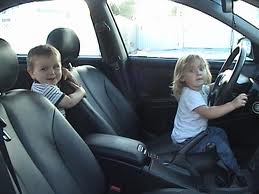
Let’s Teach 4-Year Olds How To Drive

December 20, 2011

Before you disagree with my proposal let me explain the rationale. At some point people need to know how to drive. We all want capable drivers on our roads, so what better time to teach them the intricacies of driving than when they are young.

Right?

Of course not.

Not only are 4-year olds too young to drive but they are also too young to learn other important life skills such as cyber safety. Why the Government expects kinder teachers to educate their young pupils on proper use of internet and the dangers of purchasing goods online beats me.

KINDERGARTENS will be urged to teach cyber safety to four-year-olds amid fears they could fall prey to online predators and bullies.

The Gillard Government will write to state education heads to encourage the take-up of cyber safety programs that teach children not to be mean online and keep their private information to themselves.

It comes amid revelations Victorian primary school children are “sexting” their friends and posting hate messages about their teachers on social networking sites.

A parliamentary committee report earlier this year recommended the Government consider the feasibility of helping deliver programs in preschools and kindergartens.

The Government yesterday accepted the recommendation in principle, but was waiting for a paper on cyber issues to be released in mid-2012 to give a detailed answer.

 In the meantime, it will encourage use of Australian Communication and Media Authority programs, including Cybersmart for Young Kids.

It features a bottlenose dolphin called Hector Protector and his friends teaching young children to keep “special information” private and tell mum or dad if they see anything scary or upsetting online.

It also encourages children to share passwords with their parents and to “be nice” to others.

And parents can download a “safety button” that children can click on to cover up anything upsetting they see online with a friendly picture.

Cyber safety expert Susan McLean said flexible, compulsory education should begin as soon as children switched on a computer, from kindergarten onwards.

“I’ve seen cyber bullying in grade 2. I’ve seen kids buying things on the internet at age seven after their parents have told them not to. That’s commonplace.”

Teaching kids skills too early is like not teaching them at all. I can’t see the value of making young children endure a program that will surely be too advanced for them and doesn’t relate to their present day lives.

Whats next? Teaching four-year olds how to work an electric drill?

Encouraging a Nation of Cheats

December 11, 2011

I am very much opposed to cheating in every form. Teachers are entrusted with the responsibility of imparting the lessons of integrity and honesty. It is absolutely vital that they are practising what they preach.

is right when she argues that the current narrow, test dominated view of education is bringing about dishonest behaviour. This further encourages students to continue the trend of dishonesty. This also prevents students from developing skills in persistence and motivation:

This week, the heads of the four main examination boards and officials from Ofqual, the exam regulator, are in for a testing time. They will be required to explain to MPs why some of their profession have indulged in behaviour that prompted Michael Gove, the education secretary, to call the examination system “discredited”.

The revelations of the past week have only reinforced a profound unease on the part of many that while we may be educating our children, are they actually learning anything useful (except, perhaps, that cheating definitely does not come cheap)? Useful, that is, not just for their future employment prospects, but also to equip them to become rounded human beings who desist from giving up the first time they taste failure or hit a hump on the bumpy road to maturity ?

As Mick Waters, a former director of the government’s exam regulator says: “We need to strip back to the bone and decide what education is for. There are children who learn paragraphs all day, every day, in year 11, just so they can write them one day in June.”

Sadly, stagnant teaching methods anchored in the 19th century are not in the dock this week. Instead, MPs want to learn more about examiners’ “tip offs” to teachers on which questions might or might not figure in exams; the perennial issue of dumbing down of standards and grade inflation and the extent to which the pressure of league tables on headmasters is causing them to bend the rules in ways that Mr Chips could never have envisioned.

Qualifications matter, but our neglect of other facets of learning makes us look moribund for a modern society. Better than obsessing about teaching to the test, why aren’t we probing what stokes motivation? Ask any teacher and he or she will tell you a dozen stories of bright pupils who can’t or won’t stick at it; stymied by their own lack of grit. Given that we have thousands of disengaged young people mouldering in school, why are we not more curious about the positive deviants? Those boys and girls, some with low IQs, and against all the odds, who power ahead of their brighter peers for the simple reason that they refuse to give up?

Why aren’t we telling teenagers, captive in the classroom, an alternative story? Why isn’t there a stronger challenge to a child’s belief that they have been labelled “thick” – by implication, at an early age by a well-intentioned graduate teacher, often from a distinctly different background? And to make them realise that judgment may be far from true and certainly shouldn’t mould a lifetime’s choices?

The rest of her article is well worth reading. She has nailed a major issue which our dysfunctional system has to take more seriously. After all, a system that revolves around a test can be exploited.

A system that revolves around quality education outcomes, engaging lessons, a focus on questions, inquiry and everyday, real life experiences can not be exploited so readily.


Instead of Cutting Teachers, Cut the Bull!

December 7, 2011

Teacher bashing has become the new sport of the day and nobody is better at blaming teachers than elected officials.

The latest politician to lash out at teachers is New York City’s mayor. Michael Bloomberg. He believes that only half of New York’s teachers are effective:

“Education is very much, I’ve always thought, just like the real estate business: there are three things that matter: location, location, location is the old joke. Well in education, it is: quality of teacher, quality of teacher, quality of teacher. And I would — if I had the ability, which nobody does really, to just design a system and say, ‘ex cathedra, this is what we’re going to do,’ you would cut the number of teachers in half, but you would double the compensation of them, and you would weed out all the bad ones and just have good teachers. And double the class size with a better teacher is a good deal for the students.”

If I was teaching an education course in university the quote above would be written on the board for all to see. This is what young teachers are up against. A tirade of simplistic, ill-informed, ill-considered and non sensical ideas that would, if enacted, ruin hard-working teachers’ lives without any benefit to the educational cause.

Teaching has nothing to do with real estate. Politics does. Politicians and real estate agents take it upon themselves to make the gloomy look positive and the impossible seem realistic. Teaching isn’t like that at all. Teachers know they can achieve a great deal, but are also aware that there are many factors that are involved with a child’s education.

Unlike mayor Bloomberg who thinks that education wholly rests with the teacher, teachers are aware that they are one of many stakeholders in the education system. Mr. Bloomberg should consider the following players:

1. Parents – Teachers can not achieve to their potential if parents are against them or uninvolved.

2. Administrators – If school Principals and councils are poor, then schools will be run poorly.

3. Teacher Training – If the teachers are a product of poor training, you can hardly blame them for their output.

4. School Culture – Teachers who inherit poor school cultures are bound to find it harder than otherwise.

5. School Funding – A school that is either underfunded or is a product of wasted or misallocation of funds is at a clear disadvantage.

Mayor Bloomberg’s idea of cutting jobs in half and doubling class sizes is a policy so simplistic that a ten year-old could have come up with better. His love affair with standardised tests is even more concerning.

Standardised tests cause more problems than they solve. Yet politicians love them. It’s the same reason they love to “bash” teachers – it takes the heat off them.

If Mr. Bloomberg wants to cut some thing I suggest he cut the tests.

I suggest he cut the wastage too.

I also suggest he cut the teacher bashing.

While his at it, I suggest he cut his policy advisor.

And most of all, I suggest he cut the bull!

The Stigma of the School Dropout is Sometimes Unfair

November 28, 2011

For some reason, society seems to have an issue with “dropouts” who choose a trade over completing high school.  Whilst I am not in favour of someone chosing to drop out without a legitimate Plan B, I highly respect people who make the choice to become plumbers, builders and electricians, even when it’s at the expense of finishing high school.

Australia’s Opposition Leader, Tony Abbott, is right to push for the opening of trade schools in preference to virtually paying students off for completing school. School and University is not for everyone. There are teenagers much more adept at taking on a practical trade than writing essays, working through trigonometry problems and making sense of chemistry.

Paying students just to finish school (it’s the parents that get the money) achieves a lot less than it sounds. Often it doesn’t translate into higher education training and it doesn’t guarantee that there will be marked differences in the takeup of the dole.

Mr Abbott wants to investigate a return to the former Coalition Government’s scheme for technical high schools and school-based apprenticeships.

Mr Abbott declined to endorse a Labor Government election promise to pay families $4000 to help keep teenagers in school longer, saying the spending would have to be appropriately targeted.

“The other point I want to make is that it’s all very well keeping kids at school past year 10 but they’ve got to be the right kids being kept at school past year 10,” Mr Abbott told Sydney radio 2UE.

“A lot of kids would probably be better off in the long run leaving school at year 10 and getting an apprenticeship rather than staying on doing an academic or quasi-academic time at school when in the end it’s the practical trades that we need.

“I mean, one of the great initiatives of the Howard Government was to try to foster these school based apprenticeships to try to get back to a considerable extent towards, if you like, technical high schools.

“And I guess I’d want to carefully study this and make sure that the right kids are getting the money and that we really were keeping the right kids at school because if you’ve got the wrong kids at school it can end up like a glorified occupational therapy basically.”

He told reporters later: “It’s important that some kids stay at school and go on to university, it’s also important that other kids get a good technical education.”

I don’t like the “pigeonhole” mentality society seems to employ. Such thinking makes it hard for people to take different routes and make changes that are right for them. The popular opinion isn’t always the right one for the individual. All countries need active and educated members of society, but they also need good tradespeople.
School is not for everyone. If you have a passion for a trade, don’t hesitate, go for it!

Anti-Bullying Legislation Criticised for Allowing Bullying

November 6, 2011

You know you’ve messed up completely when the father of the child you’ve named your legislation after publicly denounces it.

The legislation, called “Matt’s Safe School Law,” was named after Matt Epling, an honor-roll student who killed himself at the age of 14 in 2002 after being assaulted by anti-gay bullies at his school.

The draft law, which passed the state Senate with 26 Republican votes against 11 Democratic votes and now advances to the lower house, includes language inserted before the vote that says the bill “does not prohibit a statement of a sincerely held belief or moral conviction” of a student or school worker.

Activists say that the provision gives bullies license to prey on other students — especially those who are gay, lesbian or transgender — and, at least as important, gives bystanders who should be trying to stop bullying an excuse not to intervene.

The real story here is not the amendment which undermines the whole essence of the legislation, but it is the value of the legislation to begin with.  The essence of this legislation is to “push each school district in the state to write their own anti-bullying policy.”  Australian schools have been mandated for some time to have their own anti-bullying policies.  These policies are wonderful at preventing schools from being targets of litigation.  They can simply point to their vague and fickle policy and ward off most lawsuits.  But when it comes to its ability to prevent bullying behaviours it has been completely useless.

Bullying legislation has never and will never have a marked impact on bullies and bullying behaviour.

In the name of Matt Epling and all others who have been subjected to malicious bouts of bullying, stop pretending to do something and actually devise something that actually works!

False Allegations Ruin Teachers’ Lives

October 16, 2011

Teaching is a profession that involves a great deal of responsibility and requires a high level of trust. But that trust is easily eroded.

The risks of teaching for many males outweigh the obvious benefits.  It is a noted fact that prospective male primary teachers often decide not to join the profession because of the fear of a false allegation.  And it’s not only males.  Female teachers are also the subject of malicious accusations.

Figures from the Department for Education show that around 44 per cent of claims made by pupils and their parents were “unsubstantiated, malicious or unfounded”.

In one-in-five cases, teachers were automatically suspended while investigations into allegations were carried out, despite widespread concerns over a wave of false claims.

Fewer than one-in-20 allegations levelled at staff resulted in a criminal conviction.

The Government warned that false allegations had a “devastating impact” on teachers’ lives.

Nick Gibb, the Schools Minister, said: “Every allegation of abuse must be taken seriously, but some children think they can make a false allegation without any thought to the consequences for the teacher concerned.

“When these allegations are later found to be malicious or unfounded, the damage is already done. It can have a devastating impact and ruin a teacher’s career and private life.

“This research shows why the Coalition Government’s plan to give teachers a legal right to anonymity when allegations are made by pupils is so important.”

The Government obtained data from 116 out of 150 local authorities in England.

It found that 12,086 allegations of abuse had been made by schools in 2009/10.

Almost a fifth resulted in teachers being suspended while allegations were investigated. More than half of investigations took longer than a month to complete – beyond the target limit identified by the Government.

Whilst I am a huge advocate for encouraging victims of abuse to go public with their allegations, I am mindful that many innocent teachers tend to be implicated for crimes they never committed.

Protecting Kids From Living Freely

October 10, 2011

I am an over-protective father and proud of it.  I am hesitant when my daughter takes any risks and hate to see her in discomfort.  Yet, at the same time, I realise that cuts and grazes are part of life and growing up.  You can’t shadow your child in the playground to prevent them from tripping and you can’t ban them from low-risk activities on the off-chance that something might occur.

That is why I am so opposed to the persistent interference by Governments and local councils in banning everyday activities.  It is not their place to decide what toy my child should play with.  They may choose to advise me about the risks and encourage me to supervise my child with graet care, but the constant banning is taking things too far.

It is such a shame that we live in an age where children are being banned from blowing balloons and playing with whistles:

The EU toy safety directive, agreed and implemented by Government, states that balloons must not be blown up by unsupervised children under the age of eight, in case they accidentally swallow them and choke.

Despite having been popular favourites for generations of children, party games including whistles and magnetic fishing games are to be banned because their small parts or chemicals used in making them are decreed to be too risky.

Apparently harmless toys that children have enjoyed for decades are now regarded by EU regulators as posing an unacceptable safety risk.

Whistle blowers, that scroll out into a long coloured paper tongue when sounded – a party favourite at family Christmas meals – are now classed as unsafe for all children under 14.

As well as new rules for balloons and party whistles, the EU legislation will impose restrictions on how noisy toys, including rattles or musical instruments, are allowed to be.

All teddy bears meant for children under the age of three will now have to be fully washable because EU regulators are concerned that dirty cuddly toys could spread disease and infection.

The EU and other Government bodies will continue to come up with irrational and overbearing legislation, but no matter how hard they try they will never be my child’s parent.


Laws That Seek To Protect Our KIds Fail Them

October 9, 2011

The same laws that seek to protect children are being severely undermined by a total lack of common sense.

Australia has a sexual offender registry which was designed to assist the government authorities to keep track of the residence and activities of sex offenders.  You don’t have to be Einstein to realise that being on that list is detrimental to that person’s ability to get a job, loan, sense of freedom and quality of life.

The registry is a vital tool in dealing with pedophiles.  That is why I was astounded to read that children caught ‘sexting’ photos of themselves or friends have been put on this very list:

HUNDREDS of teenagers have been charged over producing or distributing child pornography amid growing concern that “sexting” has reached epidemic levels.

In the past three years, more than 450 child pornography charges have been laid against youths between the ages of 10 and 17, including 113 charges of “making child exploitation material”.

More than 160 charges were laid in 2010 alone – 26 more than in 2008.

Parents and communities continue to grapple with the issue of “sexting”, where sexual images are exchanged via SMS.

Teens who engage in sexting not only risk child pornography charges, but can also be listed alongside serial pedophiles and rapists on sexual offender lists.

Police confirmed that some juvenile offenders appear on Queensland’s sex offender registry.

Child psychologist Michael Carr-Gregg said “a lack of parental supervision” was a key factor.

“They’re ignorant of the law and no one’s ever sat them down and said ‘When you take a picture of yourself and send it, that’s child pornography’,” he said.

Dr Carr-Gregg said a conviction would have a “catastrophic” effect on a teenager’s future.

“If a young person is put on the sex offenders registry, they have to notify police every time they change their hair colour and wouldn’t easily get visas to places overseas, and it’s going to make employment difficult,” he said.

Don’t get me wrong, I am totally against the practice of “sexting”.  I don’t like it one bit.  But these kids are not sex offenders.  One of the reasons children shouldn’t be ‘sexting’ in the first place is to make sure those images don’t get in the hands of a real sex offender.

The application of this law does 2 very serious things.

1.  It paints children wrongly as sex offenders.  This may have dire consequences down the track; and

2. Having ‘phony’ sex offenders on a sex offender registry completely undermines the registry in the first place.  This is a very serious list, dedicated to sick and evil people.  It shouldn’t be undermined by including silly kids who made poor choices.

It is time the Government stepped in and amended the law so common sense can be restored.