Posts Tagged ‘Parents’

Tips For Kids in Dealing With Exams

September 30, 2013

exam2I must confess to being quite overwhelmed when sitting for exams. I often froze and perhaps occasionally sabotaged a few times by allowing the mental demons to overcome me.

I hope these tips help others to manage their exam stresses:


Dr Friedland explains that in order to fail forward, people need to learn from their so-called failures and use them as stepping stones to future success.

“I’d advise students to throw away all thoughts of a number and change their definition of success, so instead they strive to give their studies their all and know they’re going to walk away having learned something,” he says.

“Don’t be driven by self-esteem. Instead let yourself have some self-compassion. Look after yourself, treat yourself well – success comes from that.”

Encourage them to look at the bigger picture

Ask a student to identify the most important thing they hope to achieve from an exam, assessment or the academic year, and they’ll say a good mark.

Dr Friedland admits it can be hard for young people to see the wood for the trees because getting a good score can seem like the most important thing in the world – their defining achievement.

He advises parents to gently help their kids see how other aspects of their life are important and he alludes to that oft-quoted mantra that it’s about the journey, not the destination.

“Encourage them to reflect on what truly matters in their life. Help them see that getting a great big number won’t necessarily lead to happiness and fulfilment, but the process of trying to get it might if they’re learning along the way and also nourishing themselves,” he says.

“Going into an exam with a ‘do or die’ attitude is counter-productive. The stress will become overwhelming and few people can thrive if they’re feeling like that. Give each exam the importance it deserves in the whole bigger picture.

“We all need to focus on taking care of ourselves – mind, body and soul.”

Click on the link to read The Harmful Effects of Yelling at Students

Click on the link to read First Prize for a Primary School Raffle: A Rifle

Click on the link to read Another Reason why Television is Unealthy for Children

Click on the link to read The Spoiled Twins with their £70k First Birthday Party (Photos)

Click on the link to read 5 Tips to Help Children Cope With Stress

Click on the link to read Seven Valuable Tips for Raising Your Child’s Self-Esteem

Click on the link to read Top Ten Compliments Your Children Need to Hear

Monitoring Children’s Social Networking Activities Proving too Difficult for Parents

March 20, 2013

social

It is very easy to advise a parent to take an active interest in their children’s online activities. It is much harder to put that advice into action:

After Friendster came MySpace. By the time Facebook dominated social media, parents had joined the party, too.

But the online scene has changed – dramatically, as it turns out – and these days even if you’re friends with your own kids on Facebook, it doesn’t mean you know what they’re doing.

Thousands of software programs now offer cool new ways to chat and swap pictures. The most popular apps turn a hum-drum snapshot into artistic photography or broadcast your location to friends in case they want to meet you.

Kids who use them don’t need a credit card or even a cellphone, just an Internet connection and device such as an iPod Touch or Kindle Fire.

Parents who want to keep up with the curve should stop thinking in terms of imposing time limits or banning social media services, which are stopgap measures.

Experts say it’s time to talk frankly to kids about privacy controls and remind them – again – how nothing in cyberspace every really goes away, even when software companies promise it does.

‘What sex education used to be, it’s now the “technology talk” we have to have with our kids,’ said Rebecca Levey, a mother of 10-year-old twin daughters who runs a tween video review site called KidzVuz.com and blogs about technology and educations issues.

More than three-fourths of teenagers have a cellphone and use online social networking sites such as Facebook, according to the Pew Research Center’s Internet and American Life Project.

But Facebook for teens has become a bit like a school-sanctioned prom – a rite of passage with plenty of adult chaperones – while newer apps such as Snapchat and Kik Messenger are the much cooler after-party.

Even Facebook acknowledged in a recent regulatory filing with the Securities and Exchange Commission that it was losing younger users: ‘We believe that some of our users, particularly our younger users, are aware of and actively engaging with other products and services similar to, or as a substitute for, Facebook,’ the company warned investors in February.

Educators say they have seen kids using their mobile devices to circulate videos of school drug searches to students sending nude images to girlfriends or boyfriends. Most parents, they say, have no idea.

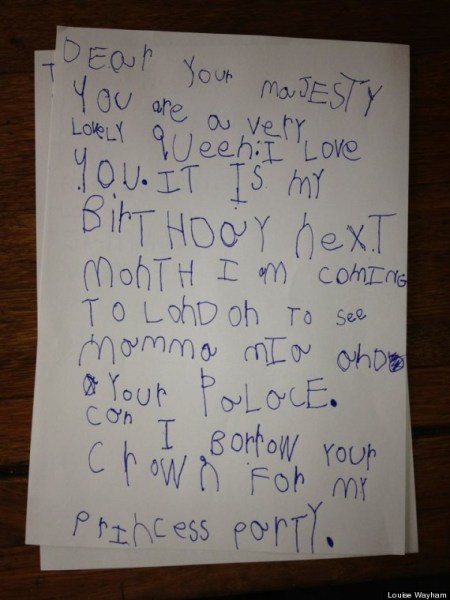
Girl Writes Cute Note to the Queen

December 7, 2012

I love a bit of assertiveness. To a child, even the Queen of England is only a letter away.


queen

Click on the link to read Teachars Cant Spel

Click on the link to read This is What Happens When You Rely on Spell Check

Click on the link to read The 15 Most Commonly Misspelled Words in the English Language

Click on the link to read Who Said Grammar Isn’t Important?

Click on the link to read Why Spelling is Important


Teaching Children How to Argue

June 19, 2012

I noticed while teaching students about persuasive writing how difficult they find it to form opinions of their own. It is almost as if children today do what they have learned to do without ever reflecting on the reasons why. This poses a significant problem when it comes to peer pressure. If you don’t have the tools to work out right from wrong, positive from negative, you can be very easily lead.

This unfortunate consequence was part of the findings of a recent study undertaken by the University of Virginia:

WHILE parents have been teaching their kids not to argue with adults for generations, new research shows it may have its benefits.

A study by the University of Virginia shows that young teenagers who are taught to argue effectively are more likely to resist peer pressure to use drugs or alcohol later in adolescence.

“It turns out that what goes on in the family is actually a training ground for teens in terms of how to negotiate with other people,” said Joseph Allen, psychology professor and lead author of the study, results of which were published in a recent edition of the journal Child Development.

Prof Allen said that parents are often “scared to death about peer pressure” but also frustrated by argumentative children.

“What we’re finding is there’s a surprising connection between the two,” he said.

Prof Allen said that teens “learn they can be taken seriously” through interactions with their parents.

“Sometimes, it can be counterintuitive to tell parents to let their teens argue with them,” said Joanna Chango, a clinical psychology graduate student who worked on the study.

In fact, learning effective argumentation skills can help teenagers learn to “assert themselves and establish a sense of autonomy”, she said.

I don’t agree with the assertion that we should encourage our children to argue with us. Instead, teachers and parents alike, should encourage students to question everything, to feel confident to form their own opinions and not to follow a crowd just for the sake of safety in numbers.
Click on the link to read my post on beating peer pressure.

Primary School Introduces Insane No-Touching Policy

June 15, 2012

As a teacher it distresses me greatly that schools are becoming less progressive, less inviting and less humane. Problems are dealt with in nonsensical extreme measures.  The political correct police have all but taken over and the fear of lawsuits prevails in place of a desire to accommodate the true needs of its student population.

Introducing a no-contact rule as a means to prevent schoolyard injuries isn’t just reactionary, it’s insane!

Guess what? Children hurt themselves. It’s a fact of life! To ban contact sports, hugging and high fives as a result of incidental knocks and bruises reduces the playground atmosphere to that of a doctor’s waiting room. Is that what we want for our children?

Parents claim they were not told directly of the new rule, which extended a ban on contact sports to a ban on any physical contact at all, such as playing “tiggy”, hugging or giving each other high-fives.

They claim the new rule was explained to pupils over the public address system, and students were left to tell their parents.

One parent, Tracey, said her son was winded on the playground yesterday and, when his friend tried to console him by putting his arm around his shoulder, the friend was told his actions were against the rules.

The friend then had to walk around with the teacher on playground duty for the rest of lunch as punishment, Tracey told radio 3AW.

“I’m just a bit outraged that it has come to this. There must be other ways,” Tracey said.

Another parent, John, said his children were told they could not high-five each other.

“I have a couple of children, and they have been told that if they high-five one another that’s instant detention, and if they do it three times they will be expelled,” John said.

“I mean, what are they actually trying to teach?”

One child was reportedly told that if students wanted to high-five, it would have to be an “air high-five”.

Principal Judy Beckworth said it was “not actually a policy, it’s a practice that we’ve adopted in the short-term as a no-contact games week”.

She said the new practice was introduced yesterday after students suffered a number of injuries on the playground in recent weeks, and the new no-touching rule was only due to last for one week.

However one parent, Nicole, claimed that the school was backpedalling because some parents were told by the school that the new rule would be in place for a minimum of three weeks, which would be extended if the children did not behave themselves.

What’s next? Soon schools will ban chairs because students sometimes lean back dangerously. Staples and scissors will have to go, as will monkeybars, sharp pencils, bunsen burners, glass bottles, electrical sockets, polls, doors and polished floors. Soon the only activity that students will be allowed to engage in is high fiving each other. No, wait! That’s banned too.

It is Doctors Not Teachers Who Are Helping Children Get Good Grades

June 12, 2012

A big thank you must go out for all overprescribing doctors who are doing their bit to have children improve their grades. Thanks to your desire to see children succeed and your devotion to health, you have made amphetamine readily available to all those in need (and even for those not in need).

He steered into the high school parking lot, clicked off the ignition and scanned the scraps of his recent weeks. Crinkled chip bags on the dashboard. Soda cups at his feet. And on the passenger seat, a rumpled SAT practice book whose owner had been told since fourth grade he was headed to the Ivy League. Pencils up in 20 minutes.

“No one seems to think that it’s a real thing — adults on the outside looking in. The other kids in rehab thought we weren’t addicts because Adderall wasn’t a real drug. It’s so underestimated,” said a recent graduate of McLean High School in Virginia, who was given a diagnosis of A.D.H.D. and was prescribed Adderall.

Adderall and similar drugs are not hard to obtain at high school, many students say. They can also be found online.

The boy exhaled. Before opening the car door, he recalled recently, he twisted open a capsule of orange powder and arranged it in a neat line on the armrest. He leaned over, closed one nostril and snorted it.

Throughout the parking lot, he said, eight of his friends did the same thing.

The drug was not cocaine or heroin, but Adderall, an amphetamine prescribed for attention deficit hyperactivity disorder that the boy said he and his friends routinely shared to study late into the night, focus during tests and ultimately get the grades worthy of their prestigious high school in an affluent suburb of New York City. The drug did more than just jolt them awake for the 8 a.m. SAT; it gave them a tunnel focus tailor-made for the marathon of tests long known to make or break college applications.

“Everyone in school either has a prescription or has a friend who does,” the boy said.

At high schools across the United States, pressure over grades and competition for college admissions are encouraging students to abuse prescription stimulants, according to interviews with students, parents and doctors. Pills that have been a staple in some college and graduate school circles are going from rare to routine in many academically competitive high schools, where teenagers say they get them from friends, buy them from student dealers or fake symptoms to their parents and doctors to get prescriptions.

Of the more than 200 students, school officials, parents and others contacted for this article, about 40 agreed to share their experiences. Most students spoke on the condition that they be identified by only a first or middle name, or not at all, out of concern for their college prospects or their school systems’ reputations — and their own.

“It’s throughout all the private schools here,” said DeAnsin Parker, a New York psychologist who treats many adolescents from affluent neighborhoods like the Upper East Side. “It’s not as if there is one school where this is the culture. This is the culture.”

Thank you doctors! What would the educational fraternity do without you?

Toddlers are Using Bad Language. Should we Really Care?

June 11, 2012

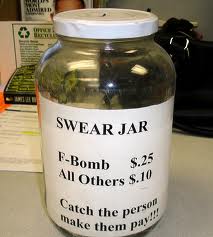
Unfortunately swearing has become part of our vernacular. Curse words are no longer seen as rude or unsociable and parents are less conscious of avoiding sprouting certain words around their children. Many will not see this as a problem. They will argue that swearing is harmless and a popular fixture of everyday conversation.

I do not find swearing offensive per se, but I am grateful that my parents brought me up to express myself in a more dignified way. It would greatly upset me if my children swore, like many children are nowadays:

CHILDREN as young as three are swearing – and it’s not just “bloody” coming out of the mouths of babes either.

“F—” and “s—” are the first naughty words that toddlers usually let fly.

They pick up swear words from the playground, at home and on TV and they do it because it gets them “maximum attention”, linguistics expert Kate Burridge says.

“In the old days they might have had their mouths washed out with soap or been sent to the bedroom with no supper,” Prof Burridge, of Monash University, said.

“But (now) they get maximum attention and learn how potent these word are.”

Parents say almost 60 per cent of children swear by three years of age and that by kindergarten more than 90 per cent of children have uttered their first rude word, an exclusive Herald Sun survey found.

Etiquette expert June Dally-Watkins said the level of swearing on TV and in public was unacceptable.

“I think it is disgusting,” she said.

“Parents should not permit it.”

Most parents agree with Ms Dally-Watkins – 70 per cent believe schools and parents should do more to crack down on swearing.

But parents (52 per cent) admit their children often hear their first curse at home.

Second was the playground (48 per cent) at school or pre-school, followed by TV (31 per cent).

Most parents (78 per cent) still actively discourage swearing.

Prof Burridge advises parents not to panic if their child swears.

She says: “It is probably best to treat these as ordinary words, because they are.

They have always been an important part of the Australian vernacular.”

Teacher Tells Graduating Class they are Not Special

June 10, 2012

There has been an overwhelming amount of approval from the general public following teacher David McCullough Jr’s declaration to his graduating class that they are “not exceptional.”

I can understand why people have agreed with his comments and I, like many, found his speech very entertaining. However, I do not agree with the method of reducing people down to a lowly level.

Sure, the standard graduation speech, like many parenting styles, reveal an untruthful optimism that makes the student/child believe they are more than they really are and are bound to achieve more than they really do.

But don’t replace one extreme viewpoint with another.

Sure, the students at a graduating ceremony may not be exceptional, but that doesn’t mean they can’t be. Who is exceptional anyway? Who has the authority to label someone as exceptional?

I believe that everyone in the world has the capacity to live a life of integrity. Is integrity not an exceptional character trait? Not according to David McCullough Jr . I believe everyone has the potential to make others feel better about themselves. Is that an exceptional character trait? Not according to David McCullough Jr .

According to David McCullough Jr.’s standards we should just all replace our arrogance with something that doesn’t seem especially satisfactory:

A Massachusetts high school teacher who told graduating students in a speech that they were nothing special and should learn to come to terms with it has won widespread approval.

The no-nonsense David McCullough Jr told Wellesley High School’s “pampered” and “bubble-wrapped” class of 2012 that they were “not exceptional” at a graduation ceremony last weekend, the NY Daily News reports.

“Capable adults with other things to do have held you, kissed you, fed you, wiped your mouth, wiped your bottom, trained you, taught you, tutored you, coached you, listened to you, counselled you, encouraged you, consoled you and encouraged you again,” Mr McCullough said.

“But do not get the idea you’re anything special. Because you’re not.”

The English teacher illustrated his point mathematically.

“Think about this: even if you’re one in a million, on a planet of 6.8 billion that means there are nearly 7,000 people just like you,” he said.

The son of Pulitzer prize-winning historian David McCullough told the graduates and their parents that around 3.2 million other students would be graduating from over 37,000 US high schools that year.

“That’s 37,000 valedictorians. 37,000 class presidents. 92,000 harmonising altos. 340,000 swaggering jocks”.

The teacher warned that gestures have taken precedence over deeds and that today people sought to accomplish thing for the recognition rather than the pursuit of a goal.

“As a consequence, we cheapen worthy endeavors, and building a Guatemalan medical clinic becomes more about the application to Bowdoin than the well-being of the Guatemalans,” he said.

Despite his unusual approach the speech was welcomed by students and parents alike who said they appreciated being told “what we need to hear and not necessarily what we wanted to hear,” local newspaper The Swellesley Report commented.

Mr McCullough told FOX News in an interview that parents are often overly protective of their children and this doesn’t help them learn to deal with a tough and competitive world.

“So many of the adults around them — the behaviour of the adults around them — gives them this sort of inflated sense of themselves. And I thought they needed a little context, a little perspective,” he said.

“To send them off into the world with an inflated sense of themselves is doing them no favors.”

I quite liked aspects of the speech and think that it made some very good points expressed with great humour. What I didn’t buy into however, was his version of what life should be like. It seemed almost as unsatisfactory as the things he warned against.

I wish that graduating class well. I hope they grow up to be kind, caring, selfless people who try to enrich the lives of others and resist from judging or ignoring the people around them. I hope they grow up to use their skills for good, be charitable with their time and money and raise children that will do the same.

Is that exceptional? Not according to David McCullough Jr .

Facebook Doesn’t Seem to Care About Kids

June 5, 2012

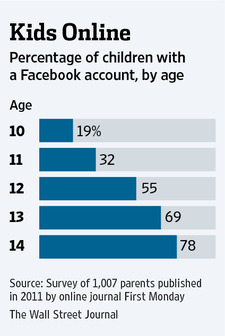
It seems as though Facebook cares more about indoctrinating more young lemmings onto their database than protecting the safety and wellbeing of our children. I have stated before my firm belief that children under 13 do not have the maturity to warrant the privilege of having a Facebook page.

You may argue that many 13 year-olds defy that rule and go and get one anyway. This is unfortunate, and something their parents ought to take an interest in, but at least in this instance there are laws that are being broken. It would be decidedly worse if the age requirement rule was abandoned altogether.

A new proposal to allow children under the age of 13 to have legal access to Facebook is the first step in a concerted effort to rescinding these important regulations:

Facebook Inc. is developing technology that would allow children younger than 13 years old to use the social-networking site under parental supervision, a step that could help the company tap a new pool of users for revenue but also inflame privacy concerns.

Mechanisms being tested include connecting children’s accounts to their parents’ and controls that would allow parents to decide whom their kids can “friend” and what applications they can use, people who have spoken with Facebook executives about the technology said. The under-13 features could enable Facebook and its partners to charge parents for games and other entertainment accessed by their children, the people said.

Facebook currently bans users under 13. But many kids lie about their ages to get accounts, putting the company in an awkward position regarding a federal law that requires sites to obtain verifiable parental consent before collecting personal data from children.

Any attempt to give younger kids access to the site would be extraordinarily sensitive, given regulators’ already heightened concerns about how Facebook protects user privacy. But Facebook, concerned that it faces reputational and regulatory risks from children already using the service despite its rules, believes it has little choice but to look into ways of establishing controls that could formalize their presence on the site, people familiar with the matter said.

Skills Your Child Should Know but Isn’t Taught at School

June 5, 2012

I am not a fan of specialised programs as they tend to clog the school day and leave too few hours for covering the curriculum. Programs such as “Stranger Danger” have been shown in studies to be ineffective and a cause of paranoia and anxiety among students rather than a useful resource for their protection.

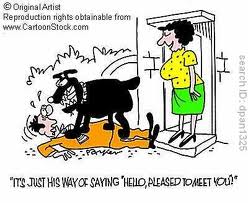
An exception to this rule is training children to be safe around pets. As a father of a young girl who is absolutely petrified of dogs of all shapes and sizes, I am concerned that this fear will prevent her from enjoying animals. I am also aware that dog attacks happen on an all too regular basis, with many of these incidents involving children and proving deadly.

Adults may know that running away from an angry or vicious dog is a recipe for disaster, but do children know that? And if they do, do they have the tools to manage such a situation?

The answer to that question is invariably – no!

That’s why I am grateful to prominent veterinarian, author and blogger, Dr. Vadim Chelom, whose passio for this issue prompted him to release a program for teachers to integrate into their literacy/social studies curriculum free of charge. On his blog is a comprehensive lesson by lesson program which will enable teachers to educate their students about how to stay safe around pets.

I have no doubt that this program has the potential to save lives. I certainly encourage parents to share the information with their children and for teachers to find time in a crowded curriculum to at least dedicating a lesson to this very important issue.

What to do When Threatened by an Angry Dog according to Dr. Chelom:

  • Lie down face on the ground.
  • Pull your legs up to your stomach.
  • Bring your hands close to the body to cover your face with your arms and your chest with your elbows.
  • Don’t move and don’t shout.
  • Lie still until the dog is gone.