Posts Tagged ‘Parenting’

Brilliant Rap Song By Parents About Parenting

August 17, 2012

It’s rap Friday and this one has particular resonance. It’s about the sacrifices parents make and the demands placed on them.

Enjoy!

Click on the link to read Inspirational Dad Competes In Triathlon With Daughter Who Has Cerebral Palsy

Click on the link to read Lessons Learned From Maddy

Click on the link to read 20 Tips to Ensuring Your Kids Find You Embarrassing

Click on the link to read This is What You Get for Doing Your Homework

Shops Should Stop Selling “Sexy” Clothes for Children

August 14, 2012

Target and other stores may try and avoid responsibility for stocking some very inappropriate children’s garments but they must accept their fair share of blame. Yes it’s true that in the end it is the parent that makes the decision to buy these clothes, but that doesn’t mean that these stores should get away with putting profits over integrity.

I commend parents that boycott shops for making this greedy choice:

AUSSIE parents have criticised Target Australia for selling “hooker-style” clothes to young girls.

The last 16 hours have seen a flurry of comments posted on the department store’s Facebook page from parents baulking about the department stores’ fashion range for this age group.

It all started after Port Macquarie mum, and primary school teacher Ana Amini posted that she was not prepared to shop at Target again because it was selling clothes that made young girls “look like tramps”.

“You have lost me as a customer when buying apparel for my daughter as I don’t want her thinking shorts up her backside are the norm or fashionable,” Ms Amini posted.

Unfortunately, Ms Amini’s original post has mysteriously disappeared from the Facebook page. It was replaced last night with a response from Target Australia, inviting all their customers to provide feedback on its childrenswear range.

“We know there is a huge diversity of opinion when it comes to children’s clothing which is why we believe in taking great care in ensuring that our range is both age appropriate and something that your kids will love.”

Click on the link to read Television and Body Image

Click on the link to read Our Children Must be Taught About Society’s Lie

Click on the link to read Most People Think This Woman is Fat

Maths is a Very Poorly Taught Subject

August 13, 2012

Out of all the subjects offered in Primary school, maths strikes me as easily the worst taught. This is for two main reasons:

1. Teachers are almost uniformly from arts and humanities backgrounds rather than maths and science backgrounds. It is staggering to compare those that went down the humanities path in late high school or in their first degree compared to those that have completed major maths units.

2. Maths is often taught in a boring, unimaginative way. Mindless worksheets and excessive reliance on rote knowledge and algorithms are the standard fare in a typical maths classroom.

What many students seem to lose from maths is the practical nature of the subject. We need maths to do the most basic activities in our lives; from counting change, organising our bedroom furniture, telling time, following a map and cooking a meal. This message does not get through to children sick to death of yet another worksheet.

It is the practical reality of maths that provides this truly underrated subject with enourmous scope for creativity. Just take a lesson I invented called “Mission Impossible Maths“, for example.

But as much as I can try to refocus educators about maths, the future looks dire. Policy makers who have invented the killer punch to authentic learning, commonly referred to as standardised testing, are more interested in grades on a formalised test than they are practical knowledge, problem solving and inquiry.

That’s why they continue to push the rote line:

A campaign group promoting maths has attacked plans to overhaul maths teaching in primary schools in England as “undeliverable”.

In a letter to the Education Secretary, Michael Gove, National Numeracy says the draft curriculum is “overloaded” and relies too much on rote learning.

The curriculum, due to come into force in 2014, expects children to know up to the 12-times table by the age of nine.

A government spokesman responded: “It is high time rigour is restored.”

National Numeracy says the plans are “seriously flawed” because they rely too much on rote learning.

The group says that rather than raising standards the new curriculum could in practice prevent pupils from developing a strong underlying understanding of mathematics or from having the confidence to apply mathematical theory to everyday problems.

Click on the link to read The Obstacle Course that is Teaching Maths

Click on the link to read Girls and Maths

Click on the link to read Putting Your Children to Sleep With Math


Should Schools Intervene to Stop Cyberbullying?

August 11, 2012

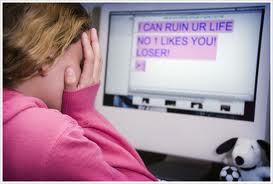
Schools need to decide what they represent. Are they merely a place for learning or are they also a place where students can feel safe and secure. If the latter is true, schools must do everything in their power to protect their students, regardless of whether the fight is online, offline, on school property or in the local mall.

Unfortunately, some school officials see it differently:

In reviewing its existing bullying and cyber bullying policies during Monday night’s meeting, administrators and school board members discussed what role the district should play in cyber bullying, particularly when purported bullying takes place out of school.

“I don’t think we need to be the police and the DA’s office for everybody,” board member Louis Polaneczky said. “Have we done enough to exclude things that really aren’t our jurisdiction?”

A caring school will make it their jurisdiction!

Click on the link to read Psychologist Claims Cyberbullying Concerns are Exaggerated

Click on the link to read Teachers Who Rely on Free Speech Shouldn’t be Teachers

Click on the link to read Bullying is Acceptable when it’s Directed to a Teacher

Click on the link to read Punish Bullies and Then Change Your Culture

Teaching Children to Deal with Embarrassment

August 10, 2012

It is dubbed the “Worst Olympic Dive” ever seen.

Stephan Feck probably didn’t plan on finishing last in the men’s 3-meter springboard diving preliminaries, but he most certainly did not plan on his dive becoming an Internet viral sensation, earning the title of “Worst Olympic Dive.”

Feck’s embarrassing performance at the Aquatics Centre will likely go down as one of the worst flops of the 2012 London Olympics.

Embarrassment happens to all of us (though it’s not usually broadcast all around the world). The following are tips that can be shared with children to help them overcome the effects of public embarrassment:


Don’t show it

Hiding your feelings in order to save face can be the best way of defusing an embarrassing situation.

Acknowledging feelings of humiliation will only make the people around you feel awkward. It is an awareness of this that prompts people to jump up from painful falls, slips and stumbles as if nothing has happened. While it is difficult to mask some physical indications of embarrassment, such as blushing, stammering and sweating, keeping your head held high, your back straight, and maintaining eye contact will help you to look confident.

Don’t beat yourself up

Even if something utterly mortifying happens to you, see it for what it is – an isolated embarrassing incident. While it is natural to feel a wave of shame pass over you, don’t drown in it. It is also important not to let one humiliation feed into a negative thought process – spilling coffee down your shirt before an important business meeting or making a terrible joke in front of someone you fancy does not make you an unlovable mess, for example.

Avoid reliving it

No good can come of thinking over past embarrassments. The mind has masochistic tendencies and, left unchecked, often embellishes humiliating escapades until they become much worse than they actually were. Unlike celebrities, whose embarrassments are routinely recorded for posterity, we civilians can – and should – forget any cringe-making moments.

Laugh it off

A good way of taking the sting out of things is to laugh at ourselves. When we are humiliated, it is usually because something has stripped away our away our pride and pretensions, revealing the bumbling human beneath. While no-one wants to live in a continual state of mortification, this occasional humbling stops us taking ourselves too seriously.

Click on the link to read Children Saved Lives in Milwaukee Sikh Temple Shooting

Click on the link to read Insensitive ‘Parent Bashers’ Take Aim at Grieving Colorado Parents

Click on the link to read Explaining the Colorado Movie Theater Shooting to Children

Click on the link to read The Unexpected Rewards of Parenting

Civil Liberty vs Saving Lives

August 9, 2012

There is a debate going around about whether or not schools have the right to drug test its students. The civil libertarians believe such a measure is an invasion of privacy, whilst school administrators believe it will send a very important anti-drug message to its students. I know which side I think better represents the needs and welfare of our children (and it isn’t the civil libertarian one).

As part of a new policy, The Southport School (TSS) will collect saliva and urine samples from students at the start of each term.

The Southport School is planning to introduce drug testing on students at the start of each term to eliminate weekend and holiday drug use.

AMA federal president Steve Hambleton says saliva tests are used by Victorian traffic police and at mine sites.

“It’s a very effective policy to actually say we are a drug-free workplace and safety goes up,” he said.

“I’m sure in schools if we can keep those risk of drugs entering the school away, certainly even on times that children are not at school it affects their behaviour, it affects their learning, it affects other children at the school, so it’s probably a role that the school’s happy to step into.”

Dr Hambleton says parents and schools need to work together to tackle student drug use.

He says the drug testing could help promote the school’s image.

The Queensland Council for Civil Liberties says it has serious concerns about the policy.

President Michael Cope says The Southport School is acting well outside its duty of care.

“Because it’s random. It’s a breach of their rights to due process,” he said.

“People shouldn’t be subject to tests like this unless there’s some suspicion they’ve done something wrong.

“It will mean a lot of innocent people will be forced to go through this examination.”

Click on the link to read Kids Don’t Need Gold Stars

Click on the link to read Only Closed-Minded Schools Block YouTube

Click on the link to read Experts Push for Kids to Start Driving at 12

Click on the link to read Kids as Young as 3 are Getting Tutors

Student Walks By Without Helping Injured Janitor

August 9, 2012

This video shows a student bystander who chooses to walk past a janitor who had taken a nasty fall. I am very disappointed to see this kind of behaviour.

Click on the link to read Father Builds Roller Coaster for his Children in his Backyard

Click on the link to read Teachers Should Stop Blaming Parents and Start Acting

Click on the link to read The Benefits of Reality TV on Kids

Click on the link to read Study Reveals Children Aren’t Selfish After All

20 Tips to Ensuring Your Kids Find You Embarrassing

August 9, 2012

Courtesy of blogger Jill Smokler comes 20 Creative Ways To Embarrass Your Kids:

20. Blast Broadway show tunes and belt out every last word, with the windows wide open.

19. Send elaborate love letters in lunch boxes.

18. Chaperone a field trip wearing a “Team Lily” t-shirt.

17. Cheer loudly and animatedly at sporting events à la Aly Raisman’s parents.

16. Carry adorable, naked baby pictures everywhere and whip them out to complete strangers.

15. Talk in goofy, made-up foreign accents to their friends.

14. Answer the door wearing a bright green face mask and plastic shower cap.

13. Dance like a crazy person when ’80s music comes on in the grocery store.

12. Dance at all, ever.

11. Use silly pet names in public. Loudly.

10. Force them to wear matching outfits for holiday photos.

9. Label their clothing with smiley face hearts around their names.

8. Shower them in constant kisses, wherever we may be.

7. Pick their noses.

6. Welcome the bus with a fully choreographed cheer.

5. Yell “I LOVE YOU GUYS!!!!” at the top of my lungs as the bus drives off.

4. Use saliva to wipe off their dirty faces.

3. Wear a bathrobe and slippers to school pick up.

2. Maintain my blog.

1. Breathe. (I’m thinking that’s probably enough.)

Click on the link to read Insensitive ‘Parent Bashers’ Take Aim at Grieving Colorado Parents

Click on the link to read Mother Films Her Kids Fighting and Posts it on Facebook

Click on the link to read It’s Not Spying on Your Children, It’s Called Parenting

What our System Does to Children Without Attention Spans

August 7, 2012

Why is it alright for children to be tone deaf  at music or fail at sport but it’s not acceptable for children to struggle to maintain concentration?

Why do educators believe that if you easily lose concentration you have a disability that must be fixed. Remember, these are the same teachers whose minds wander during professional development sessions and who stare into space during staff meetings. Yet, when their students gaze out the windows while they’re teaching a maths skill – it’s time to get the child assessed!

Talk about hypocrisy!

Teachers are obsessed with fixing the attention spans of children. They call for hearing tests, speech analysis, psychological examinations, occupational therapy sessions, language disorder checks and if you are really unlucky start the ADHD ball rolling.

Do they ever consider that children are not all meant to have endless attention spans? Just like every child can’t draw a landscape, every child cannot sustain a 20 minute mat session. What is it with mat sessions anyway? When is the last time a teacher tried to sit on a floor without so much as back rest to lean on for an extended period of time? It’s unbelievably uncomfortable! Yet you get teachers complaining all the time about children not sitting still or failing to pay attention. Try paying attention when your back feels like it was just hit by a rolling pin!

And have teachers ever contemplated that it might be their dry and boring style of teaching and their failure to properly communicate to children that has their class zoning off completely? Worksheet dense, talky, stagnant lessons result in inattentive students – guaranteed!

So a recent study shows that children with better concentration spans have a better academic success rate. In my view this study tells us more about the way we teach than the virtues of concentration:

Toddlers who are better at concentrating, taking directions and persisting with a game even after hitting difficulties have a 50 per cent greater chance of getting a degree when older, a two-decade long experiment found.

The study tracked 430 kids from pre-school to 21-years-old, monitoring academic and social development, behavioural skills and behaviour at home and in the classroom.

Parents were asked to watch how long the children would play with one particular toy while at home, while teachers were instructed to give the class a task and then monitor which toddlers gave up and which ones kept persevering until they had completed it.

Results of the study by Oregon State University were published in the online journal Early Childhood Research Quarterly.

The children most likely to go through further education were those who, at an early age, persisted in tasks and paid attention in pre-school sessions, said researchers.

Perhaps if classroom conditions changed we wouldn’t have to worry so much about the student without the super-human concentration endurance.

Click on the link to read Kids Don’t Need Gold Stars

Click on the link to read Experts Push for Kids to Start Driving at 12

Click on the link to read Kids as Young as 3 are Getting Tutors

The New Form of Spanking

August 7, 2012

I am personally not fond of spanking. I don’t think it works and I personally choose to discipline my daughter by other means. I don’t, however, believe in banning parents from exercising their right to spank.

I was reading a standard article about spanking and couldn’t help but gasp at a new form of spanking:

In an experiment that involved surreptitiously watching parents discipline their kids in public places such as restaurants, researchers found that in 23 percent of cases, mom or dad resorted to “negative touch” to get their child to comply. Negative touch can include anything from restraining and spanking to pinching and hitting.

Restraining? How can you blame a parent for restraining their own child? Just the expression “negative touch” is something I consider repulsive.

It is just completely mind-boggling that it is legal for teachers to inflict corporal punishments in many civilised countries, yet to simply restrain your own child during a tantrum draws the disapproval of so-called child experts.

Click on the link to read Teachers Who Beat Kids Should Be Put Away!

Click on the link to read Corporal Punishment Reveals the Worst School Has to Offer

Click on the link to read Calls To Allow Teachers To Use “Reasonable Force” on Students