Posts Tagged ‘News’

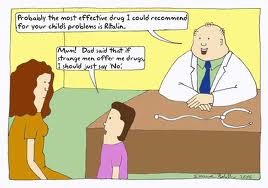
Doctors Prescribing Anti-Depressants to 6-Year olds!

May 31, 2011

It is high time we put pressure on the medical fraternity to explain their actions.  I am no expert, but the increase in prescriptions of anti-depressants to kids as young as 6 seems highly irresponsible.  What on earth do these kids suffer from that warrants prescribing such medication?  How can we sit idly while Governments pretend to investigate the boom in child anti-depressant prescriptions, whilst quietly doing absolutely nothing to deal with the problem?

THE number of children aged six and under being prescribed anti-depressants has soared since the Federal Government pledged to investigate the matter in 2008, new figures show.

The Herald Sun can also reveal that in the past two years, the deaths of five people aged 10-19 have been linked to anti-depressants. Federal Health Department data reveal prescribing rates of the controversial drugs in children aged two to six has risen from 852 in 2007-08 to 1264 in 2009-10.

In Victoria, the number has increased from 156 to 229, and, in the past two years, in the 7-11 age group, from 825 to 1085.

The Government has refused to release details on children under two since 2007-08, claiming the figures are unreliable.

But despite Health Minister Nicola Roxon’s ordering of an investigation three years ago, a Freedom of Information request shows just two meetings were held. 

The Royal Australian and New Zealand College of Psychiatrists said it was alarming that anti-depressants were being prescribed for children and demanded answers from government.

“I would be very very alarmed if these figures were true,” said Dr Phillip Brock, chairman of the Child and Adolescent Psychiatry faculty.

Australian Medical Association vice-president Dr Steve Hambleton said he had given anti-depressant scripts for two six-year-olds, and they had benefited.

A Health Department spokesman said the management of a child’s medical condition, including prescribing anti-depressants, was a doctor’s clinical decision.

The figures show Zoloft and Prozac were among the most prescribed of the drugs in the youngest age group.

Black Dog Institute director Professor Gordon Parker said while not all anti-depressants were used for depressive disorders in children, an investigation was needed to explore why they were being prescribed.

Are the Drug Companies giving substantial donations to the Government?  Is the medical fraternity happy with the reputation they are getting of treating children with prescription drugs before they reach the age of being able to read or write?  What’s next?  Are babies going to be prescribed anti-depressants?

Emeritus Professor John Werry, a child psychiatrist, expressed another opinion – as far as he knows giving SSRI antidepressants to babies would be of no harm to them. However, he acknowledged the medications influence basic bio-cyclic processes.

Does anyone else find this as disturbing as I do?

 

Talk About an Overreaction!

May 27, 2011

A school teacher expects her students to clean after themselves if they urinate on the toilet seat and is forced to take administrative leave!  It turns out that the child was allergic to bleach.  This story should have stayed in-house.  It is certainly not front page news, and even if you were of the belief that the teacher acted negligently, you would have to wonder how this story caused a media sensation and triggered emergency PTO meetings.

An elementary school teacher has been suspended and is being investigated by authorities after allegedly forcing children to scrub the school toilets with bleach.

For two years, Catherine Saur, from Hartford, Connecticut, would make any student who used the bathroom thoroughly clean the room after they were done, parents claim.

Some mothers and fathers said their children would wet themselves during the day to avoid the chore, while one eighth-grader had his hands seriously burned after suffering an allergic reaction to the bleach.

Last night’s emergency school meeting was called after principal Peter Dart sent a letter to parents to inform them the art teacher had been reported to authorities.

Principal Dart said he did not endorse or know about the practice until it came to his attention last week.

He said: ‘It is imperative that we pause, that we take stock in what we are doing. That we learn from this and that we move forward.’

Newsflash: Teacher’s make mistakes.  Some may consider this one to be a bigger one than I do, but for goodness sake, how unfair is it to this poor teacher to have her reputation muddied over what is fairly honest intentions.  Teacher’s should get their students to take an active and responsible approach to cleaning up after themselves from a young age.  Perhaps this teacher took the message a little too far, but she did not deserve the media frenzy she got.  Emergency PTO meetings?  Are you serious?  Seriously burnt?  That’s not what the mother says in the video?  Kids wetting themselves to avoid cleaning after themselves? C’mon media! Get your act together!

And Principal Dart, why don’t you come to the defence of your teacher?  By trying to minimise the negative PR of your school, you seem to be leaving your art teacher out in the cold.  I should be reading about how dedicated this teacher is and how she has a great rapport with her students and a genuine passion for teaching.  I should be reading about how she regrets her actions, has learnt from them and looks forward to resuming the job she loves so much.

Surely a statement like that will have raised the confidence of the public and helped to kill the story in the process.

Brilliant Clip of a Head Teacher Dancing

May 13, 2011

One of the great education clips of the year!  It showcases the best in what this wonderful profession can offer:

Teachers at Bell Baxter High School in Cupar, Scotland shocked pupils by breaking into an impromptu dance routine in the school canteen.

Led by the rector Phil Black, the event was watched by 600 people.

Senior pupils were about to go on exam leave and the teaching staff wanted to give them something to smile about before the hard work began.“They asked if the grumpy old head teacher would lead the way so I was delighted,” Black said.

The routine, which featured The Village People’s YMCA and Michael Jackson’s Thriller had to be rehearsed in secret but according to organiser and student Chloe Simpson, it was time well spent.

“It was crazy,” Simpson said. “The whole school knew something was going to happen but didn’t know what.

“When Mr Black just started dancing, it was amazing … just absolutely incredible.”

Other students said they never expected it get such a reaction overseas – thousands around the world have watched it via the internet – and the BBC coming to the school to interview them.

If only the staff in my school could have done something like that when I was a student.  It certainly beats detention!

Should a Teacher Intervene When a Fight Erupts?

May 12, 2011

What is a teacher to do when a fight erupts in their classroom?  That is the question doing the rounds at the moment, thanks to the case of a Dallas teacher who responded to a fist fight in his classroom by doing absolutely nothing.

Video of a student punching another student in a local classroom has sparked a debate about student safety. More precisely, should teachers get involved to break up fights?

The Dallas Independent School District said it is still investigating a fight that apparently happened this past Thursday at Seagoville High School. The district believes YouTube video of the incident likely tells only part of the story.

The video shows 17-year-old Michael Milczanowksi getting punched over and over during geometry class. His teacher stands by watching as he appears to take several blows to the head.

While it may seem the teacher could have intervened, a teacher’s union president said that is not what teachers are told to do.

“In today’s society which is a violent society, you do not touch the student. That should be left up to the administration,” said Rena Honea of Alliance-AFT. “I believe that that is for the safety of number one the students, but for the individual teacher as well.”

The district said it has no policy on how teachers should handle student fights because every situation is different.

“The altercation on the video shot at Seagoville High School is clearly inappropriate. The district has zero tolerance for violence in the classroom and has responded accordingly,” DISD said in a statement.

DISD said the student who threw the punches in the video has faced disciplinary action and could face assault charges. But the district would not comment on if the teacher was disciplined because “it’s a personnel matter.”

The video of the fight can be viewed by following this link.

The teacher has been supported by both school and union based on the fact that teachers are not covered for injuries incurred from breaking up a fight.  Why not?  Why can’t a teacher in today’s age have insurance cover for injuries, both incidental and reckless, at the hands of students?

And just because he may have the right to refrain from breaking up a fight, how is it excusable for him to sit back and watch as his student is being punched by a classmate?  Why wasn’t the teacher instructing someone to call for help?  Where is the urgency?  Why doesn’t he react in any way?

What is the point of calling yourself a safe and secure environment for children if you are not compelled to actively and decisively do everything in your power to ensure that your students are safe?

It’s time for insurance companies to remove the stumbling block that deters teachers from breaking up fights.  It’s time for schools to improve their culture and hand out severe consequences for bullies and bullying behaviour.  And it’s time for teachers to do what they can to curb bullying and protect victims.

YouTube: The WikiLeaks of Education

May 9, 2011

YouTube is doing to schools what WikiLeaks has done to governments.  It is threatening to blow the lid on the kind of events that used to remain hush-hush.  Yet again, a damaging YouTube clip has surfaced, that exposes the violence in our schoolyard.  No longer can we pretend it doesn’t exist:

Click on the link below to watch the video.

School fight club.

DRAMATIC footage of a punch-up between students at a Melbourne high school will be investigated.

The clip, posted on YouTube, shows two Hampton Park Secondary College students trading blows while being egged on by up to 20 onlookers.

One combatant suffers a bloodied nose, while spectators call “Knock out, knock out”.

Acting principal Sue Glenn said she was shocked by the footage, and would investigate and punish those involved.

“I was completely unaware of this incident or video. However on now seeing it, I am totally appalled,” she said.

“This is not the behaviour we accept at Hampton Park Secondary, which has 1300 students who are well behaved and great kids.

“I will be taking this matter extremely seriously and definitely investigating this incident and then taking the appropriate action.”

Ms Glenn said the two students involved in the fight were no longer at the school, but the involvement of all onlookers would be investigated.

Students are heard calling “Go crazy at him” and “Do it, do it” as blood drips from the nose of one of the fighters.

At least two people filmed the fight last year. It was put on YouTube in January.

Education Minister Martin Dixon said the internet posting of schoolyard fights and bullying was a concern.

“We still have a real issue out there in our schools and we still need to be doing more in terms of educating our children and teachers and parents,” he said.

Mr Dixon said the Government had committed $14.5 million to anti-bullying programs in schools in this week’s Budget.

He said social media had made tackling bullying and schoolyard violence all the more difficult.

“It’s a complex problem, and when we see it manifested in these sorts of videos, it just shows there’s a large degree of misunderstanding (about the consequences),” Mr Dixon said.

“It shows an abject ignorance to what bullying and violence is doing to victims.”

Where do I start?

Firstly, here is another case of a Principal unaware of a major fight in the very schoolyard they preside over.  Where are the teachers?  Who is supervising?  How did this big crowd and the attention this fight would have garnered, go completely under the radar of the authorities?  How was a child with what looks like a broken or at least badly bloodied nose, able to hide his injuries?  And don’t tell me this was the first incident of such a nature.  Those onlookers seem like they have seen it all before.

And what about the minister who shows concern, not for the violence at school, but instead to the filming and public dissemination of the violence:

Education Minister Martin Dixon said the internet posting of schoolyard fights and bullying was a concern.

It sounds like a case of ,” I am not too bothered by schoolyard fights, just as long as they don’t go viral.”

I am very happy to hear that the onlookers are going to get punished for their involvement and I think that filming acts of violence is abhorrent.  However, now that the clip has been broadcast, it is important to use it as an impetus for positive change.

The following is my advice to schools:

Hampton Park Secondary School is now going to have to make swift and decisive changes to its procedures.  It is going to have to improve its quality of supervision, enforce stronger consequences for taking part in acts of violence in the schoolyard and punish passive onlookers.  Take note of what they do, and employ their new policies in your school instead of waiting for something like this to make your school look bad.

As uncomfortable as it is to be exposed in the way that WikiLeaks and schoolyard YouTube clips have been able to do so well, it does teach all involved a very important message.

It’s high time you started lifting your game!


Children’s Books Deemed Sexist

May 6, 2011

It turn out the classic children’s books I have grown up reading have “enforced gender equality.”  Books I appreciated as a child have been among those labeled sexist for featuring a male hero instead of a female one, according to a recent study:

A large-scale study of children’s books published between 1900 and 2000 revealed that they were almost twice as likely to feature a male central character than a female one.

The gender bias was even worse when it came to books with animal characters – often favoured by publishers as ‘gender neutral’ with male animal heroes featuring in three times more books than female animal heroines.

And female characters were even overlooked when it came to star billing – kids’ books were twice as likely to include a male character’s name in their title as a female name.

Researchers from Florida State University, USA, also discovered that while books printed during the 1990s came close to equal representation of male and female human characters, animal characters were twice as likely to be male as female.

In a conclusion that will baffle fans of Alice’s Adventures in Wonderland, Anne of Green Gables and The Wonderful Wizard of Oz, researchers said their findings indicated a ‘symbolic annihilation of women’.

They warned that the role of kids’ fiction as a ‘dominant blueprint of shared cultural values, meanings and expectations’ could send a message that ‘women and girls occupy a less important role in society than men or boys.’

Evidence of this inequality was noted in how readers ‘interpret even gender neutral characters as male’ and in the way mums ‘frequently label gender-neutral animal characters as male when reading with their children.’

And in books where the characters are animals – such as The Tale of Peter Rabbit, Fantastic Mr Fox and Winnie-the-Pooh – leading and positive female roles are scarcer.

The likes of Jemima Puddle-Duck and Mrs Tiggy-Winkle had key roles in just 7.5 per cent of children’s books. Male rabbits, bears, owls, dogs, foxes and toads were more prevalent – they were the lead characters in 23 per cent of books.

The study, results of which are published in Gender and Society journal, looked at almost 6,000 children’s books published between 1900 and 2000.

Books were chosen from three different sources, including those which had won the prestigious Caldecott Medal, awarded annually to American kids’ fiction.

Study author Professor Janice McCabe, professor of sociology at Florida State University said: “We looked at a full century of books.

“One thing that surprised us is that females’ representations did not consistently improve from 1900 to 2000; in the mid part of the century it was actually more unequal. Books became more male dominated.”

And on the problem of animal characters, Prof McCabe added: “Together with research on reader interpretations, our findings regarding imbalanced representations among animal characters suggests that these characters could be particularly powerful, and potentially overlooked, conduits for gendered messages.

“The persistent pattern of disparity among animal characters may even reveal a subtle kind of symbolic annihilation of women disguised through animal imagery.”

The study found that the imbalance has worsened since the turn of the 20th century, when the split was even.

In the early 1900s there was a move away from books about fairytales based on heroines such as Cinderella. But there were numerous strong female characters. Nancy was the captain of the Amazon in Swallows and Amazons, and What Katy Did was a major series. Male characters such as Harry Potter and Alex Rider now dominate.

I have no issue with the general findings, and I fon;t think too many would be suprised that there is a disparity between central male and female characters in children’s story.  What I do have a problem is with two statements:
As a huge fan of The Wizard of Oz in all forms, I find it absolutely mind-boggling that the researchers have called it a ‘symbolic annihilation of women’.  Talk about over analysis!  I find this label deeply offensive.

And then there’s this bold statement“The persistent pattern of disparity among animal characters may even reveal a subtle kind of symbolic annihilation of women disguised through animal imagery.”

Annihilation?  Is that the best word they could come up with for books that didn’t pass the gender test, but surely passed the good intentions test?  Is it not possible that while these classic books are a sign of the times when it comes to gender disparity, they are also largely brilliantly written and conceived stories that were written to entertain and engross children rather than to symbolically annihilate women?

How Do Teachers Answer Questions About Osama?

May 3, 2011

There is no easy way to respond to questions about the death of Osama Bin Laden.  Young kids are clearly confused as to why people are gaining satisfaction from a person’s death.  It is not for a teacher of young children to go in to great detail about Bin Laden and his evil monstrous ways.

The problem then becomes – what do we say?

While many of us are still processing last night’s late-breaking news that Osama bin Laden was killed by a team of Navy SEALs, many teachers had to stand up bright and early this morning in front of a classroom of curious youngsters to field their questions on everything from assassination to terrorism, with little preparation.

“One of my students walked in this morning and said: ‘Osama Bin Laden is dead … is that a good thing?’ Leave it to a six year old to put things in perspective,” a California teacher wrote on Facebook today.

BeAtrice Mazyck, who teaches 11th-grade U.S. history at Lee Central High School in Bishopville, South Carolina, tells The Lookout she had already finished her curriculum for the semester, so she was glad to have a big current event to talk about. Her students had studied the 9/11 attacks earlier in the year, and today were debating the effect bin Laden’s death would have on the U.S. war efforts.

“Some of them were wondering, ‘Is the war over? Can the soldiers come home now?’ Because we live like 20 minutes from the Shaw Air Force Base,” Mazyck said, adding that some of her students have parents who are in the military.

 In Cincinnati, one 9th grade teacher found she had to rehash for her students the events of September 11, 2001–when they were very young–for them to understand the context and significance of bin Laden’s killing.

“Most of these students were in kindergarten or first grade and have very little memory of September 11th,” Oak Hills High teacher Amanda Ruehlmann told the Cincinnati Enquirer. “Many have even less of an idea of how much their lives have been impacted by the results and effects of 9/11. So I’ve shown students information on how bin Laden came to be Public Enemy No. 1.”

Some older students wrote they were glad for a distraction from regular coursework. A senior at Glades Central High School in Florida joked on Facebook that Monday should be a school holiday, and that he planned to “bring up the Osama killing to distract all of my teachers from teaching today.”

Teachers aren’t the only ones getting questions. Parents around the country are going online to talk about how difficult it can be to explain to a child why so many people seem happy that a person has been killed.

“I got to explain to my 7 year old son this morning about the news that osama is dead…. he was instantly happy and in his words ….. so the war is over and daddy doesnt have to go away again? really, how do you answer that?” wrote Kate Harbison in Bangor, Maine. “I explained that we all love daddy, and would love for daddy to be home all the time, but considering all that is going on in this world, daddy and all the rest of the armed forces have alot still to do, and probably always will,” Harbison told The Lookout in a note.

“In explaining who Osama is this morning to my 6 year old, my 8 year old said ‘it’s like he is Voldemort.’ I’m so glad it is clear to them now,” a woman from Coppell, Texas wrote.

Have you been asked any questions about Osama by your students?  What did you say?  Do you have any advice for this slightly tongue-tied teacher who is looking for the right words which stubbornly refuse to come out?

Girls Performing Much Better in the Classroom

May 1, 2011

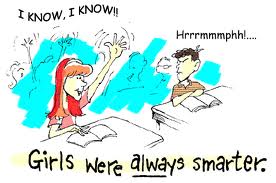
It is no surprise that girls are out doing boys in the classroom.  This has been the trend for quite some time.  But it should focus our energies on how we can teach boys in a more effective manner.

Girls are teaching their male classmates a lesson, blitzing them in almost every subject in Victoria’s classrooms.

Details of NAPLAN tests conducted last May also show Melbourne students narrowly outscore their country cousins, while those with highly educated or professional parents get the best marks.

Girls scored better than boys in 19 of the 20 categories measured in Years 3, 5, 7 and 9.

Nationwide, boys fell behind in almost all categories. Overall, Victoria’s students placed second in half the categories and lead the nation in three.

Year 9 boys were cause for the most worry – 15 per cent failed to meet the writing standard. However, their struggles matched those across Australia, meaning Victoria was still the best in the subject.

There are matters I would like to raise on this topic:

1.  We must do more to engage our boys.  Whether it’s a lack of male teachers or a teaching style that doesn’t work as well with boys, we must get to the heart of the problem and help mend the disparity.

2.  It is absolutely mind-boggling that in todays age we do not have more women in high positions and on multi-national company boards.  It is insane that we even need to talk about employing a quota system to get more female C.E.O’s.  Whilst it isn’t always the choice of women to sacrifice other aspects of their lives for a time-consuming and stressful career, there are many who are keen to get as far as they can go up the corporate ladder.  The argument that positions should be filled by those who are most qualified and capable is true.  However, that should result in females overtaking males in these leadership positions, because they are proving how much better they are in critical areas of learning and thinking.  Unfortunately, I suspect competency has nothing to do with it.

Should Teachers be Dismissed for Leading Double Lives?

April 29, 2011

Whilst I don’t think it’s ideal for a teacher to be involved in the racy novel-writing industry, I’m not sure that the crime befits anything more than a ban on writing future novels.  A teacher caught involved in such activities hasn’t broken laws but they have somewhat tarnished their reputation.  Still, is it really worth more than a slap on the wrist?

Parental complaints have led Midd-West School District officials to investigate a veteran high school teacher who writes erotic romance novels under a pen name.

The teacher, Judy Buranich, of Selinsgrove, has taught at Midd-West for 33 years. Under the pen name Judy Mays, she has been writing novels for a number of those years. Her books include liaisons involving werewolves, aliens and vampires and can be found in the Romance section at Waldenbooks.

Buranich declined to comment about the controversy Wednesday.

On her website, she refers to herself as “a mild-mannered tenth grade English teacher in a small public high school.”

Wesley Knapp, superintendent of the Midd-West School District, said he has received a few complaints, but it was after The Daily Item approached him on April 18 to ask about the connection. Until then, he said, “I didn’t know anything about it.”

Knapp said he has told those making complaints “that we’d look into it.”

He declined to discuss the matter further.

“When it’s a personnel matter, I can’t comment,” he said.

Deanna Stepp, mother of a district student, said: “We are not questioning Mrs. Buranich’s teaching credentials. We are not even questioning her ability as a writer … . What we’re questioning is that the two jobs are not compatible with one another.”

Another parent, Wendy Apple, said she had Buranich as an English teacher in high school.

“I thought she was a top-of-the-line teacher,” Apple said.

But the erotica, she said, “is unethical, totally unacceptable. Period. It just sort of sickens and saddens me to know everybody’s sort of looking at this like, hey, this is OK.”

Apple has received comments and messages on her Facebook page, she said, from people who are attacking her for speaking out.

Apple said she heard the rumor from several students, and started during her own research. Although most of Buranich’s defenders are saying it’s not an issue because she does the writing on her own time, Apple said, “then how did these kids find out? These kids knew what kind of writer she was.”

As a result of her speaking out, which she had contemplated for about a month, Apple said her son, who has Buranich as a teacher, has received backlash at school as well.

“I wholeheartedly believe that more parents are looking at things the same way we are,” Apple said.

Writing as Mays on Facebook on April 22, Buranich said, “The world is full of idiots.”

She also referred to support she has gotten.

“I have a lot of people supporting me, including students and ex-students,” she wrote.

She wrote that she hopes the expose will make the sales of her books go up, and already has.

Meanwhile, a Facebook page titled “Support Judy Mays (Mrs. Buranich)” hit 88 likes by Wednesday afternoon.

Cindy Wagner, manager, at Waldenbooks, said the novels are under the category of “Romance,” not “Erotica” at the bookstore. She said the books are already tagged when they arrive, and she simply places them on the shelves according to those tags.

So should teachers be allowed to lead a double life?  At what point would they be taking it too far?  Do you think that the parents of Ms. Buranich have what to complain about?  Do you agree that she should be advised to quit writing these novels while she is still teaching?

Corporal Punishment Reveals the Worst School Has to Offer

April 24, 2011

Imagine finally taking the important and highly necessary measure of banning corporal punishment only to take on another absurdly simple-minded strategy in its place.  That is what India’s Sindhi Vidyalaya matriculation Higher Secondary School is guilty of:

Candy or cane? City schools seem to have dumped the primitive notion of spare the rod and spoil the child. Instead of wielding the stick, they are now offering chocolates to kids to encourage them in academic excellence and enforce discipline.

“We are strictly against corporal punishment. We hand out chocolates to students if they score good marks and behave well in school. We have realised that it greatly motivates our students,” said Gouri Ramarathinam, Principal, Sindhi Vidyalaya matriculation Higher Secondary School.

Why go from one extreme to another?  Is it so difficult to replace a terrible educational policy for a sensible one?

Meanwhile, in Johannesburg banning corporal punishment didn’t change a thing:

Corporal punishment is still common in South African schools even though it was banned more than a decade ago. Recent research showed that up to 70% of primary school and 50% of high school pupils were still subjected to corporal punishment.

In Louisiana corporal punishment is here to stay.  But don’t be concerned. They have come up with a foolproof measure for its responsible use – a checklist!:

Corporal punishment is here to stay in Rapides Parish public schools, and members of the Disciplinary Policy Review Committee on Wednesday discussed ways parents can inform a principal if they don’t want their children paddled for infractions.

“Corporal punishment is an acceptable discipline procedure by law … We try and use it as little as possible,” said Ruby Smith, the Rapides Parish School District’s director of child welfare and attendance. “When I was a child in school, corporal punishment worked like butter on toast. I receive few calls from parents saying that they don’t want their child to receive corporal punishment.”

Louisiana House Resolution No. 167 was passed last year that requires principals to fill out a “Corporal Punishment Incident Checklist.”

“Principals will send the checklist to the (School Board office), and once a month, it will be sent to the state Department of Education,” Smith said. “Our first reporting was due in Baton Rouge on the 11th of April, and principals will have to turn one in every month, regardless if they have an incident or not. The officials in Baton Rouge will probably do some study on the checklist.”

Corporal punishment never worked like “butter on toast” for students as it may have for teachers, Ms. Smith! I am sorry to tell you but your checklist isn’t worth the paper it’s written on.

To conclude my thought for the day on this awful means of disciplining kids, I will quote from an article entitled “Schools Under Pressure to Spare the Rod Forever,” Dan Frosch tells the story of one case, and then puts it into larger context:

When Tyler Anastopoulos got in trouble for skipping detention at his high school recently, he received the same punishment that students in parts of rural Texas have been getting for generations.

Tyler, an 11th grader from Wichita Falls, was sent to the assistant principal and given three swift swats to the backside with a paddle, recalled Angie Herring, his mother. The blows were so severe that they caused deep bruises and the boy wound up in the hospital, Ms. Herring said.

While the image of the high school principal patrolling the halls with paddle in hand is largely of the past, corporal punishment is still alive in 20 states, according to the Center for Effective Discipline, a group that tracks its use in schools around the country and advocates for its end. Most of those states are in the South, where paddling remains ingrained in the social and family fabric of some communities.

Each year, prodded by child safety advocates, state legislatures debate whether corporal punishment amounts to an archaic form of child abuse or an effective means of discipline.

This month, Tyler, who attends City View Junior/Senior High School, told his story to lawmakers in Texas, which is considering a ban on corporal punishment. The same week, legislators in New Mexico voted to end the practice there.

Texas schools, Ms. Herring fumed, appear to have free rein in disciplining a student, “as long as you don’t kill him.”

“If I did that to my son,” she said, “I’d go to jail.”