Teacher burnout is a significant problem that strike even the very best of teachers. Even the most passionate and dedicated of teachers struggle to see out a term out without getting sick or feeling extremely fatigued.
Research shows the teaching profession has the highest burnout rate of any public service job. What can we do to keep the best and the brightest teachers in the classroom?
In April, the American Federation of Teachers (AFT) and the American Institutes for Research (AIR) released the report, “Workplaces That Support High-Performing Teaching and Learning: Insights From Generation Y Teachers.”Gen Y teachers—that is, those under 30 years of age—account for at least one in five teachers in US classrooms today. They start out intending to make teaching a lifelong profession. However, according to the report, young teachers leave the profession at a rate 51 percent higher than older teachers and transfer to a different school at a rate 91 percent higher than their older colleagues. Studies also show that the national teacher-turnover rate costs school districts approximately $7 billion annually.
In the AFT/AIR report, young teachers say they want:
Feedback on their performance and to be evaluated in a fair way
Time to collaborate with their colleagues
Differentiated pay for high performance
Technology to provide engaging and effective lessons, as well as to support collaboration with other teachers through, for instance, videos and conferencing technology.
I agree with every point, but have a problem with the third one. Whilst I believe Governments should look into a differentiated model of pay for high performers, I don’t believe such an initiative would have any bearing on cases of teacher burnout.
The list of proposed changes by young teachers above is most fair and reasonable. If responded to, the outcomes could be quite positive all around. It’s certainly time to better address teacher burnout. It’s an issue that cannot be dismissed and will not go away.
A BULLYING school head has been banned from the job for life – but can still teach.
Debbie Collinson intimidated and swore at teachers and even gave pupils “Coke and doughnuts” in exchange for information about staff.
She also told teachers to falsely improve attendance records and test scores.
Collinson, head at Harrow Gate Primary School, in Stockton-on-Tees, Co Durham, was found guilty of professional misconduct.
Tribunal chairwoman Dr Barbara Hibbert told the Birmingham hearing: “It is simply unacceptable to manage a school in the manner in which she did, whatever the motivation.”
Collinson, who is in her late 40s, is no longer at Harrow Gate. It is it not known if she teaches elsewhere.
If your boss can match or better Ms. Collinson, I’d love it if you could share it.
Today I was fined by a parking officer for parking in a permit zone. I had only left my car for a few minutes, and clearly that’s all it takes.
On my way back from the shops I noticed a parking inspector processing a ticket by my car. I asked him what I did wrong. I pointed out the 1 hour parking sign. He pointed to another small sign among others that notified those with good eyesight that the spot was a permit zone on weekends but fine during the week.
I told him that I was only gone for a second and that I had made an innocent mistake. He didn’t pay attention. My daughter cried sensing something was wrong and becoming unsettled by the man’s presence. The man ignored her and kept on typing.
$75 – that’s what the tiny mistake cost me!
I realise that the man was doing his job. He probably has a wife and family to take care of and bills to pay. I don’t blame him for his actions or diminish his right to take on this job.
But ultimately, I’m so glad that I am a teacher and not a parking officer.
Parking officers serve no real value to the community. They are employed by council workers who should have enough revenue to waste through our overpriced rates. But no, through parking infringements, they have another steam of revenue they can waste in good measure.
Nobody is glad to see a parking inspector walking around. Nobody goes to lengths to welcome them or engage in small talk. Their job is to prey on people’s mistake and slug for an inordinate amount of money.
Teaching can be so much more than that. We can represent all that’s positive about this world. We can be mentors and role models. We can help children grow to reach their potential.
Unfortunately, we can also do a lot of damage. If we are not good at our job or our heart isn’t in it, we can be the manifestation of what is wrong with this world.
That’s the great challenge for teachers. To be the polar opposite of a parking inspector.
Even the best parents and teachers struggle to get kids doing menial tasks on a consistent basis. From making their beds to putting their lunchboxs back in their bag, it’s amazing how difficult it is to get children to be responsible for small yet important tasks.
That is, until an app was designed to assist desperate and exhausted parents:
You may find this shocking, but getting my 11- and 9-year-olds to do household chores is like pulling teeth. Rotten kids!
That may change now that I’ve got You Rules Chores on my iPhone. This clever new app turns household chores into a game, rewarding each kid a designated number of coins for each completed job. Whoever finishes the week’s chores first is the winner. (Of course, we all know who the real winners are: mom and dad.)
The app features cute graphics and music, and after a parent gets set up as the “referee,” each kid gets to choose an avatar (from only six available, alas).
It seems to be more fashionable than ever to knock teachers. Teachers are being dubbed as lazy and inept.
In truth it is easy to criticise teachers but very hard to be one.
We need more articles like this one by Patricia McGuire to defend teachers and set the record straight.
Yes, teachers should certainly be held accountable for excellence in teaching and for measurable results in the progress their students make each day. Teachers are on the front line of student learning assessment, since they really do know better than anyone else what makes a child successful or lackadaisical, engaged or detached in class. Standardized tests rarely measure the real progress that teachers make with some of the most challenging pupils whose learning styles are far off the normed curves.
The current fashion in education reform treats teachers as lazy slugs who care little about whether their students are learning anything. The assumption behind using standardized testing for teacher evaluation is that the only way to make teachers care about learning is to embarrass them publicly when their students do not perform according to someone else’s idea of norms. This assumption is what is truly preposterous!
For teachers who choose to devote their life’s work to some of the most difficult classrooms in America, such as here in the District of Columbia, the testing imperative becomes a monumental disincentive to stay in the classroom for any length of time, since the opportunities for sustained superior results on standardized tests are rare, while the risks of frequent subpar results are very high. It’s no secret that the widely-hailed Teach for America program has ingrained two-year turnover in its teaching corps. TFA teachers rarely stay to wrestle through the down years, which are frequent among students in marginalized communities.
Governments are so busy trying to find a negatively geared incentive for teachers and a scale that compares their effectiveness that they have lost sight of the most important pieces of the Education reform puzzle:
1. Revolutionise teacher training programs to focus on the practical instead of the theoretical.
2. Have measures in place that allow all teachers (especially new teachers) the support they need.
3. Spend more time critiquing schools with questionable cultures of bullying and harrasment. Give these school’s the support they need to better handle their affairs.
How sick and utterly selfish do you have to be to name your beautiful children “Adolph Hitler” and “Aryan Nation”? What an absolute disgrace! These parents can’t understand why their children were taken away from them. It’s a shame that they haven’t as yet worked out that by naming their children after despicable tyrants and murderous regimes they are in fact scarring their children for life.
A COUPLE who named one of their children after Adolf Hitler should not regain custody of their three children, an appeals court has ruled.
Heath and Deborah Campbell’s three small children were removed from their home in Phillipsburg, New Jersey, by the state in January 2009, myFOXphilly.com reported.
The family drew world-wide attention after a store refused to decorate a birthday cake for their son, Adolf Hitler Campbell.
Adolf and siblings JoyceLynn Aryan Nation and Honszlynn Hinler Jeannie have been in foster care since then.
The appeals court ruled last week that sufficient evidence of abuse or neglect existed because of domestic violence in the home. The court sent the case back to family court for further reconsideration.
A gag order remains in place and the parties refused to discuss the decision.
In January 2009, the Campbells told myFOXphilly.com that Adolf Hitler Campbell was just like any other three-year-old boy.
“It’s not like he’s growing up to be a killer or nothing like that,” said mother Deborah Campbell.
How dare they do this to their beautiful children! Sure, it is claimed that the children have been taken out of their parents’ custody because of domestic abuse and not because of their names, but what if there was no other reasons? Should the names be enough to warrant a claim of child abuse.
If these people want to continue rearing their precious children they better smarten their act. This includes thinking of more appropriate names for their kids … quick smart!
You have got to be kidding me! How can so-called intelligent adults pass a law so downright cruel? Sometimes I think adults take advantage of the resilience of children. They think they can impose great humiliation on poor, naive children, without any long-term cost.
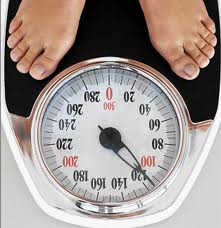
Well I have news for you – children, like adults, don’t like being made to feel ugly, different or unworthy. So why on earth would you pass a law that mandates schools to weigh children so that their weight can be compared with others?
A state law requiring schools to measure a child’s height and weight to find out how they stack up against their peers has generated plenty of controversy, but not a lot of local participation.
School officials say the law’s aim to combat childhood obesity is a worthy cause, but its approach is questionable.
The law measures body mass index, which is calculated from height and weight and given as a percentile. It’s generally a snapshot of a person’s overall body fat, but many argue it doesn’t take into account individual body types or other health risks.
Schools are required to take those measurements for students in kindergarten, third, fifth and ninth grades, then report that data to the Ohio Department of Health and mail the results to parents.
State education officials say similar health screenings, such as hearing and vision tests, have been done for many years with the results kept private.
What if the law was to include Ohio politicians? What if they were forced to step on the scale in front of their peers and were measured for all to see?
Yes, privacy might be assured, but children aren’t stupid. They know why they are being measured, and the humiliation of the procedure will not be lost on the overweight.
This plan is doomed to failure.
My wish, as idealistic as it sounds, is to make our children comfortable with who they are, regardless of their weight. Whilst I strongly advocate educating children about healthy eating choices and encouraging active lifestyles, I am even more concerned about the inner wellbeing of the child. To me, the tragedy is not that there are obese children, but that there are children who feel unworthy, ugly and hopeless because of their weight.
It’s time to get rid of the scales and let our children know that their worth is not the sum total of what they weigh, but rather, who they are and how they treat others.
I read a brilliant article in The National about the lies we tell our children and when is the right time to confess that the Easter Bunny they are so fond of isn’t real.
Below is just an excerpt of the article. I strongly encourage you to read the entire piece by following this link.
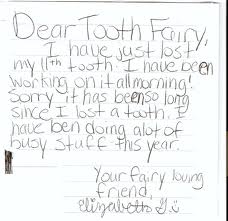
The world is a confusing place for small children, particularly as they only learn to distinguish between reality and fantasy between the ages of three and five. Jacqueline Woolley, a psychology professor at the University of Texas in the US, found that by the age of four, children learn to use the context in which new information is presented to distinguish between fact and fiction. So, before long, your little one will be figuring out that the tooth fairy isn’t who you said she is. Which begs the question: at what age should we tell our children that their beloved magical characters aren’t real? Or, should we even claim that they’re real in the first place?
Last Christmas I witnessed the most heated debate I’d ever come across on Facebook. It didn’t involve politics, religion or money. No; it was Santa Claus who caused the divide. One friend posed the question: “Should I tell Sophie Father Christmas is real?” What followed was a polarised debate between those who wanted their children to enjoy a magical gift-giving time and those who believed that perpetuating the story of Santa was being dishonest with their offspring. “I was devastated when I found out it was my mum, not Santa, who hung the stocking on the end of my bed,” admitted one father. Whereas others regretted never having the chance to believe in Santa because older siblings had spoilt it for them.
“I make a point of always being honest with my daughter and now she has turned six I’m feeling increasingly uncomfortable with perpetuating the lie of Santa Claus,” admitted Rosie Cuffley, a mother of two.
According to Carmen Benton, a parenting educator and educational consultant at LifeWorks, Dubai, Rosie shouldn’t worry. “Sharing the world of fantasy characters with our children is not a lie, but rather a playful way of storytelling and connecting as a family to fun events. Think about the joy and excitement that thoughts of characters such as Santa Claus can induce. You have the power to create a magical world of dreams, wishes and storytelling for your kids and I believe these are part of being a playful parent.”
It’s a different scenario when children ask directly whether Santa Claus, for example, is real. Most psychologists agree that children need to know they can trust their parents to tell them the truth, even about magical characters. “The majority of children will let go of a fantasy after the age of eight, and most would be happy for the years of the imaginary world they had been able to enjoy,” says Benton.
I feel terrible that my daughter still believes in the Tooth Fairy. I don’t like perpetuating a lie (especially one I know will be uncovered sometime soon). I have a feeling, irrational or otherwise, that when she does find out, her first thought will be, “What else is he lying to me about?”
I am glad that I teach both boys and girls in my Grade 5 classroom. I find it more challenging and the social dynamic can be quite fascinating. However, for a while now, there has been a groundswell of support for single-sex classrooms. People believe that they are more beneficial for students.
GIRLS can be “marginalised” and often take a back seat to boys in co-educational classrooms, the head of one of WA’s most elite all-girl schools says.
Methodist Ladies’ College principal Rebecca Cody has reignited the single-sex school debate, saying the “female voice is more likely to be marginalised” in mixed-sex classrooms.
Her comments come amid calls for the state’s public students to be given the choice of single-sex education.
All WA public schools are co-ed.
Writing for the next edition of Whichschool? Magazine Ms Cody said there were many “positive academic, attitudinal and social effects of a single-sex education.
“For example, higher levels of engagement, improved achievement and behaviour are just a few of the notable outcomes.
“Similarly, in this context girls are more likely to excel in non-traditional disciplines such as science, technology and mathematics and without the presence of boys feel more empowered to take responsible risks, for example in outdoor education.
“In a mixed-classroom environment, the female voice is more likely to be marginalised as girls tend to take a back seat, allowing boys to speak up. A girls’ school allows students to relax and interact more readily.”
It has not been my experienced that the boys marginalise the girls in a mixed-classroom. I do however think it is vital for teachers of such schools to do their utmost to ensure that the social dynamic in their classroom is healthy and that all students have the opportunity to express themselves as individuals.
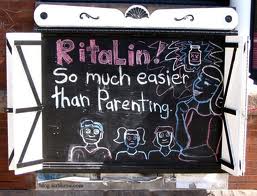
I am not a doctor, so I do not have the expertise to comment on the ADHD diagnosis becoming a regular feature of classrooms across the globe. But I can’t help but get agitated as kids younger and younger are being given these drugs. The cynic in me suspects that this has more to do with pharmaceutical profits and less to do with responsible medicine.
The recommendations, the first in a decade, expand the age range of kids who may be prescribed the drugs from preschoolers through 18-year-olds. Earlier guidelines included children ages 6 to 12. ADHD affects about 8 percent of children and youth and is the most common neurobehavioral disorder in kids, according to the American Academy of Pediatrics.
Expanding the age range will help ensure more children get the appropriate therapy, according to the guidelines. Treating preschoolers may increase their chances of succeeding in school and targeting teens recognizes that ADHD is a long-term condition that may even extend into adulthood.
“Because of greater awareness about ADHD and better ways of diagnosing and treating this disorder, more children are being helped,” said Mark Wolraich, lead author of the report and a professor of pediatrics at the University of Oklahoma College of Medicine in Oklahoma City, in a statement.
For preschoolers with the disorder, it’s recommended that parents and teachers first try to manage children with behavior therapy that uses a system of rewards and consequences. If that doesn’t work, then doctors can prescribe medications, according to the recommendations being presented today at the American Academy of Pediatrics National Conference and Exhibition in Boston.
I have three major issues with the last paragraph in particular.
1. I don’t believe you can determine such a disorder at such a young age with such confidence as to justify prescribing a Ritalin-like drug to them.
2. The idea that some “behaviour therapy” is all that is tried before a child gets a prescription is just shocking. There should be many steps before a child warrants a prescription. Prescribing drugs to a child should be the last resort. And who checks whether the behaviour therapy was properly administered? How many teachers say they have tried everything, when you know they haven’t even come close?
3. This leads me to my third point. Teachers should not have such a big say in the decision to prescribe drugs to a child. Teachers are often too easily motivated by the need to teach a civil and restrained class. Their need to see students calm and manageable often gets in the way of a more considered approach when it comes to the question of ADHD drugs.
Four year olds on ADHD drugs! Do we really want this to become the norm?









 Topical Teaching