Posts Tagged ‘kids’

The Destructive Impact of the “Fashion Police” Brigade

March 9, 2014

Now more than ever, our children feel the strain of living up to the judgmental and often unrealistic expectations of the “fashion police” crowd. Every classroom and every school seems to have them. Magazines thrive on it. Office water cooler discussions is dominated by it.

And like society’s skewed and misguided view of success, the definition for a “body beautiful”shuts so many out of contention from birth. Is this right? Is this fair?

It isn’t. But at the same time, by giving oxygen to shows such as Fashion Police, we are giving permission for the message to harm our children. We can’t make life better for our kids if they feel we are buying into the very lie we wish to protect them from. They wont feel better about themselves if we continue to buy the magazines and watch the disgusting elitist rubbish.

Take this appalling example of how low these shows can go. Imagine poking fun at a woman pregnant with twins?

Click on the link to read The Plus Sized Barbie Debate Misses the Point

Click on the link to read Study Claims that Being Attractive can give you Better Grades

Click on the link to read The Unique Challenges that Body Image Represents for Females

Click on the link to read An 8-Year-Old’s Take on Body Image

Click on the link to read A Father’s Advice to His Daughter About Beauty

The Telegraph’s Best Children’s Book of All Time

March 6, 2014


books

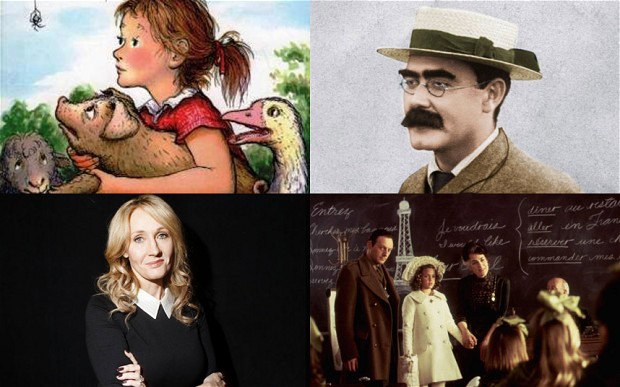
Some absolute classics among this very well compiled list:

Watership Down

Richard Adams (1972)

The full-scale novel about rabbits finding their promised land has the magic of prophecy, idyllic Hampshire locations and the structure of the Aeneid. Adams enjoys parading his scholarship, and this is a lively introduction to brainy books.

The Hobbit

J R R Tolkien (1937)

Here we meet the characters who will make The Lord of the Rings happen, and on a pre-Peter Jackson scale. If anything, Gollum is even more chilling here, because we see him through the eyes of a hobbit – seldom the calmest of travellers.

The Lion, the Witch and the Wardrobe

C S Lewis (1950)

Welcome to the magical land of Narnia, where the White Witch reigns over a snow-girt land peopled by fawns, talking beavers and people eager to put their trust in four kids from Finchley. The Christian allusions come later, but for now this is pure narrative magic.

Charlotte’s Web

E B White (1952)

The New Yorker writer cherished for his elegance of style gives us an altruistic spider with exquisite manners, and a pig to make her proud. There are intimations of mortality, but a plot of fame and legacy thumbs its nose at the inevitable.

The Little Prince

Antoine de Saint-Exupéry (1943)

The Little Prince falls to Earth to meet the author, who has crashed his plane. His quizzical, wise stories of other planets (most of which are inhabited by solitary monomaniacs) lead to the daftest of all – our own.

Pippi Longstocking

Astrid Lindgren (1945)

It’s quite something to live as an orphan with just a horse and a monkey for companions. The heroine has a chutzpah that makes her sound at her most adult when she’s flouting adult conventions, especially at teatime.

Emil and the Detectives

Erich Kästner (1929)

When Emil is robbed of his mother’s hard-earned savings (that were never likely to stretch far), he has help from a scratch squad of child detectives from Berlin. However much this sounds like the best child’s game ever, the real world is seldom far away.

James and the Giant Peach

Roald Dahl (1961)

One of Dahl’s earliest, best, and most fully developed tales. There is no attempt to make the giant insects or articulate clouds seem natural: this is a world of wonder, more marvellous than Wonka’s, even.

Winnie the Pooh

A A Milne (1926)

Characters begin days by visiting one another, and end up shifting houses, learning to fly or surviving floods.

A Little Princess

Frances Hodgson Burnett (1905)

Sara has a privileged background but is now living as a Cinderella figure; and she plays at being a princess. But her response shows that being a princess is less a social ranking than a state of mind.

The Just So Stories

Rudyard Kipling (1902)

How did the leopard get his spots? How was the alphabet made? Why are elephant’s trunks so long? Kipling is the model of the patient parent in the face of constant questions. And who cares about evolution? This is much more fun.

A Journey to the Centre of the Earth

Jules Verne (1864)

Verne uses all the tricks that make Anthony Horowitz so successful – the action-packed chapters that end at just the right time and the sense of deepening mystery – but also a knack for convincing us that there really might be creatures down there.

The Wind in the Willows

Kenneth Grahame (1908)

The idyllic, stylised account of life on the river, with anxious glimpses beyond it, is a masterclass in character-driven comedy – alongside the arriviste Toad is the petit bourgeois Mole, and Rat, the gentleman of leisure.

The Doll People

Ann M Martin and Laura Godwin (2000)

The dolls in your dolls’ house might look inanimate to you, but you clearly have no idea of what they get up to at night. They’re casing the joint, tracking lost relatives and dodging that cruel fate – PDS (Permanent Doll State).

The Child that Books Built

Francis Spufford (2002)

Although this book isn’t written for children, the more reflective might enjoy it as a guide on how to grow into reading; and it’s a wonderfully eloquent take on how growing up happens unexpectedly.

THE BEST OF THE REST

(more…)
Never Take the Dream out of the Child

March 3, 2014

ellis cashmore

It doesn’t matter how far fetched a child’s dreams may be, or how much it seems to distract them from their schoolwork, their dreams are vital to their growth and development.

A child’s dream is indicative of where their passions lie, and too many of us suppress our passions in favor of the socially acceptable and mundane. Not every child can become a pop star or gold medalist, but there is nothing wrong with aspiring to be either.

When I was a teenager I wished to be involved with movie making. I didn’t have to be the star or the director, I would have settled being the personal assistant to the editor.

Fast forward to adulthood and I may not be in the movie industry as such, but my desire to make it in movies was particularly helpful and instructive. It made me aware that what I really wanted was to make a difference. Just like the movies I watched as a child made a difference to me, I wanted to find a career that would allow me to inspire others.

That’s why I am completely at odds with the academic that spoke against allowing children to dream big:

Focusing on sporting success is a waste of time because ‘very, very few children’ are going to make it, an academic has said.

Ellis Cashmore, a professor of culture, media and sport at Staffordshire University, says there is little proof that the Olympic Games create any kind of meaningful sporting legacy.

And he believes it is high time parents realised children are more likely to make the finals of shows like The X Factor and Britain’s Got Talent than become sporting heroes of any sort.

‘We shouldn’t be trying to channel all of our energy into this pursuit of excellence in sports when very, very few children are going to succeed at any kind of level at all,’ he said.

‘My answer to parents who tell me their child might become a leading footballer or athlete is that they are putting them at risk of serious injury or closer to the world of performance-enhancing drugs.

‘I ask them: “Are you happy about that?” and they say: “It won’t happen to my child”.

‘To which I reply: “But it goes with the territory”. The cheats are very often those at the top.

Ellis Cashmore says there is little proof that the Olympic Games create any kind of meaningful sporting legacy

‘Do we want to churn out one-dimensional characters who leave no stone unturned in pursuit of excellence?’


Click on the link to read The Snow Day Song that Has Gone Viral (Video)

Click on the link to read Is Tiger Mom a Racist?

Click on the link to read 44 Things Parents Say to their Kids to Get them to Eat

Click on the link to read Should Teachers be Able to Tell People they Are Bad Parents?

Click on the link to read Loving Parents Are Allowed to Take Some Time Out

Allowing Children to Stand Out From the Pack

February 24, 2014


cell

Not everyone can be a leader.

In every community there are natural leaders and people more comfortable with following. That doesn’t mean that the followers are blind. Their mission is to find the right person or persons to follow.

And even within the system of leaders and followers, it is vital for all concerned to realise that they all have unique gifts and characteristics which they need to harness, even at the cost of seeming different.

But people don’t like being different. They feel it makes them stand out in a negative way and it reduces their opportunities for gaining respect and acceptance from their peers.

In the classroom this is depicted by the academically gifted student who tones down their effort levels so as not to stand out. Commonly classified as a form of peer pressure, it makes children feel like they need to be seen to have the same tastes in movies, clothes, songs and interests as the pack, just to fit in.

I look at the picture above and I feel sad that doing something different looks odd or uncomfortable. Surely, as teachers, we should be working towards creating a classroom environment where each child is made aware of their unique skills and qualities and is able to express themselves without risk of excommunication.


Click on the link to read Hilarious Examples of Kids Telling It As It Is

Click on the link to read Kids Can Operate an iPad but Can’t Tie their Shoelaces

Click on the link to read What is the Difference Between Over-Praising Children and Lying to Them?

Click on the link to read The Skills Kids Can Learn from Traditional Board Games

Click on the link to read Our Impressionable Children are Desperately Looking for Positive Rolemodels


Kids and Celebrities: A Reality Check

February 23, 2014

charlotte dawson

“Academy Award winning actors have it all.”

“I’d die to become a TV star.”

“That sports star has it all. Money, a gorgeous partner, a mansion …”

“I’d be so happy if I had that model’s looks.”


Our children grow up believing that fame and fortune comes without its price. That the celebrities adorning their bedroom walls are the definition of happiness and that being well known equates to being well liked.

It’s all a lie.

Unfortunately, the events of the past month prove how false this theory is. First there was the giant of an actor, Phillip Seymour Hoffman, whose potential for further groundbreaking performances was destroyed at the hands of a drug addiction.

This morning I heard the sad news of the death of local model and television star, Charlotte Dawson. Apparently, she died as a result of debilitating chronic depression which she had experienced for some time.

Our celebrities are human. They make mistakes, they have bad habits and they have their ups and downs like we all do.

Instead of setting children up to believing that happiness lies in a bank balance or a golden statue, let’s show them how they can find some real happiness for themselves.


Click on the link to read Athletes Can Set a Better Example for Our Kids

Click on the link to read Classroom Resources for Teaching About the Life of Nelson Mandela

Click on the link to read Nine-Year-Old Stands Up for His School (Video)

Click on the link to read Inspiring Kids who Look After a Sick Parent

Click on the link to read The Perfect Example of Courage and Self-Respect

Hilarious Examples of Kids Telling It As It Is

February 13, 2014

truth1


Fantastic examples of children being brutally honest:


truth 2


truth3


truth4


truth5


truth6


truth7


Click on the link to read Kids Can Operate an iPad but Can’t Tie their Shoelaces

Click on the link to read What is the Difference Between Over-Praising Children and Lying to Them?

Click on the link to read The Skills Kids Can Learn from Traditional Board Games

Click on the link to read Our Impressionable Children are Desperately Looking for Positive Rolemodels

Click on the link to read The Plus Sized Barbie Debate Misses the Point


Are Violent Video Games Worse for Children than Violent Movies?

February 13, 2014


grand theft

Growing up, one of the more popular video games around was a shooting game where you were a soldier charged with the responsibility of locating and killing Nazis. The fact that the villains were Nazis was a clear stunt by the game’s makers to disguise the mindless violence of their game.

Even as a youngster, I found the game very troubling. Whilst I have always hated Nazism, I didn’t feel comfortable with pointing a gun, pulling the trigger and killing. It might not be real, but the video game designers are fully aware that the person playing their game is meant to feel as if they are actually on a killing rampage.

Nothing I ever experienced from watching violent movies compared with the emotions of going on a video game shooting spree.

It’s even worse today. Nowadays, video games designers don’t bother with Nazi’s – they provide children with police and innocent bystanders as their targets instead:

Primary school pupils as young as six are re-enacting drug and rape scenes from Grand Theft Auto in the playground, a headteacher has warned.

Young children have been initiating games involving ‘simulating rape and sexual intercourse’ as well as having playground chats about ‘drug use’, according to Coed-y-Brain Primary School head Morian Morgan.

Staff at the school in Llanbradach, Caerphilly, blame the behaviour on the 18-rated and violent computer game series Grand Theft Auto, which sees players take on the role of criminals in America.

Latest instalment GTA V is thought to be one of the best-selling video games of all time, having sold more than 32 million copies worldwide.

A letter sent to parents said children were ‘acting out scenes from the game which include the strongest of sexual swear words’, ‘having conversations’ about sexual acts and ‘play acting extremely violent games that sometimes result in actual injury’.

Click on the link to read The 10 Best Road Trip Apps for Children
Click on the link to read Parents Shouldn’t Be in Denial Over This Very Real Addiction

Click on the link to read Video Game Addiction is Real and Very Serious!

Click on the link to read Internet Addiction and our Children

Click on the link to read Issues Relating to Kids and Video Games

The Futility of Teaching a Starving Child

January 28, 2014

healthy

You can have every box ticked when it comes to planning and delivering lessons and it will come to nothing if your students are hungry. They say breakfast is the most important meal of the day. For our students it is absolutely crucial. There is little that can be absorbed by a child who is starving as a result of skipping breakfast.

To read that 1 in 7 children are going to school without breakfast in a country like Australia, is so disappointing. Perhaps, what is more disappointing, is the food wastage by students who dispose of good food from their lunchboxes:

ONE in seven Australian schoolchildren – about 600,000 kids – will skip breakfast when they return to school this week but in contrast others will be throwing out the contents of their lunchbox.

The latest Census At School data from the Australian Bureau of Statistics found children skipping breakfast is equal to about two hungry kids in every classroom across the nation.

But while some go hungry, OzHarvest says the contents of many a lunchbox will be wasted.

“It’s certainly one of the ironies of an abundant society. As we become more affluent, we seem to waste more,” said OzHarvest food rescue founder Ronni Kahn.

As Australian schools open their gates this week for another year, Kellogg’s has pledged to donate a minimum of two million serves of cereal through its Breakfasts for Better Days program, the equivalent of feeding 10,000 kids each school day.

The program aims to provide 12 million serves of cereal and snacks to families and children in need in Australia and one billion serves across the world by the end of 2016.

“Our program exists to support children in need and help to ensure they have the best start to their day possible, but to see one in seven children skipping breakfast remains a concern for the community at large,” said Nitin Vig who leads Kellogg’s free school breakfast program.


Click on the link to read Kids Have Never Felt More Stressed

Click on the link to read Where is the Deterrent For Teachers Who Have Sex With Their Students?

Click on the link to read 6 Tips for Kids Who Worry Too Much

Click on the link to read Since When is Trying to Sell Your Baby a “Joke”?

Click on the link to read A World Where Sex Offenders Have “Human Rights” and their Victims Have None

The Dangerous New Craze Adopted by Kids (Video)

January 19, 2014

smart

What ever happened collector cards and superhero figurines?

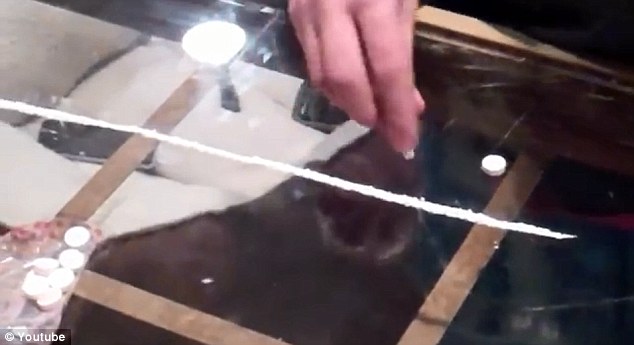
Parents in Rhode Island are being warned of a dangerous craze that involves middle-schoolers snorting Smarties.

According to officials in Portsmouth Middle School, the trend is a ‘widespread phenomenon’ that has been sweeping YouTube in recent years.

A search of the popular video-sharing site has revealed hundreds of clips where kids are seen crushing the beloved round candies into powder before sniffing them. 

The Smarties snorting trend is by no means a new phenomenon; some of the YouTube videos date back to at least 2007.

In one video posted in 2010, young boys are seen making lines of Smarties dust similar to cocaine and snorting the sugary powder through a rolled up dollar bill. 

The clip, which has drawn more than 12,000 views, shows the kids coughing and gasping for air as the residue fills their nasal passages and lungs.

Click on the link to read Robbie Williams Offers to Take Drugs With His Daughter

Click on the link to read Hilarious Parenting Checklist

Click on the link to read Hilarious Video of Twin Toddlers Sleeping at the Table

Click on the link to read The Most Effective Anti-Smoking Ad Ever Conceived

What is the Difference Between Over-Praising Children and Lying to Them?

January 8, 2014


praise

Over-praising children is tantamount to lying to them. If a teacher or parent needs to resort to embellishment then they have misread the child.

Developing trust is absolutely not negotiable when it comes to children. Once you are caught out on a lie or exaggeration you stand to lose the trust of the child, rendering everything else you say as meaningless.

But over-praising isn’t just lying, it is lazy. Every child has unique and interesting aspects to their personality. Every child possesses skills and praiseworthy character traits. If you find yourself over-praising your student, it means that you haven’t yet fully appreciated the child for who he/she is.

One can only love ones self if one understands themself. Self-confidence can only be attained once the person is in tune with his/her true abilities. That’s why genuine praise is so profoundly important. By reminding children of their legitimate positive aspects and traits, you will help them get in touch with who they are and what they can be.  If you lie to them, sooner or later they will work it out and may choose to dismiss or neglect their greatest qualities as a result.

Some would say if you haven’t got anything authentic to say, don’t say anything at all. I say, don’t stop until you have something real to praise a child with.

And then keep on supporting that child to the best of your abilities. They are worth it!


Click on the link to read The Skills Kids Can Learn from Traditional Board Games

Click on the link to read Our Impressionable Children are Desperately Looking for Positive Rolemodels

Click on the link to read The Plus Sized Barbie Debate Misses the Point

Click on the link to read Study Claims that Being Attractive can give you Better Grades

Click on the link to read The Unique Challenges that Body Image Represents for Females