Even the best parents and teachers struggle to get kids doing menial tasks on a consistent basis. From making their beds to putting their lunchboxs back in their bag, it’s amazing how difficult it is to get children to be responsible for small yet important tasks.
That is, until an app was designed to assist desperate and exhausted parents:
You may find this shocking, but getting my 11- and 9-year-olds to do household chores is like pulling teeth. Rotten kids!
That may change now that I’ve got You Rules Chores on my iPhone. This clever new app turns household chores into a game, rewarding each kid a designated number of coins for each completed job. Whoever finishes the week’s chores first is the winner. (Of course, we all know who the real winners are: mom and dad.)
The app features cute graphics and music, and after a parent gets set up as the “referee,” each kid gets to choose an avatar (from only six available, alas).
How sick and utterly selfish do you have to be to name your beautiful children “Adolph Hitler” and “Aryan Nation”? What an absolute disgrace! These parents can’t understand why their children were taken away from them. It’s a shame that they haven’t as yet worked out that by naming their children after despicable tyrants and murderous regimes they are in fact scarring their children for life.
A COUPLE who named one of their children after Adolf Hitler should not regain custody of their three children, an appeals court has ruled.
Heath and Deborah Campbell’s three small children were removed from their home in Phillipsburg, New Jersey, by the state in January 2009, myFOXphilly.com reported.
The family drew world-wide attention after a store refused to decorate a birthday cake for their son, Adolf Hitler Campbell.
Adolf and siblings JoyceLynn Aryan Nation and Honszlynn Hinler Jeannie have been in foster care since then.
The appeals court ruled last week that sufficient evidence of abuse or neglect existed because of domestic violence in the home. The court sent the case back to family court for further reconsideration.
A gag order remains in place and the parties refused to discuss the decision.
In January 2009, the Campbells told myFOXphilly.com that Adolf Hitler Campbell was just like any other three-year-old boy.
“It’s not like he’s growing up to be a killer or nothing like that,” said mother Deborah Campbell.
How dare they do this to their beautiful children! Sure, it is claimed that the children have been taken out of their parents’ custody because of domestic abuse and not because of their names, but what if there was no other reasons? Should the names be enough to warrant a claim of child abuse.
If these people want to continue rearing their precious children they better smarten their act. This includes thinking of more appropriate names for their kids … quick smart!
We all love our internet connections and mobile phones and would find it extremely difficult to live without them. However, addictions are still addictions, and there is no doubt that our children have grown a deep addiction to the internet. So bad is the problem, that children have become more addicted to the internet than to TV:
Just 18% of children would miss TV most, compared to mobile (28%) and Internet (25%), finds Ofcom research
A new research by communications watchdog Ofcom has revealed that more young British teenagers can do without TV but not without mobile and the Internet.
Ofcom research found that just 18% of children aged 12 to 15 would miss TV most, compared to mobile (28%) and the Internet (25%). However, the research suggests that the teenagers are also watching more TV than ever before, with viewing figures increasing by 2 hours since 2007.
In 2010, children aged 4-15 watched an average of 17 hours and 34 minutes of TV per week, compared with 15 hours and 37 minutes in 2007. Nearly one third (31%) of children aged 5-15 who use the Internet are watching TV via an online catch-up service such as the BBC iPlayer or ITV Player, said Ofcom.
Ofcom’s research said that 95% of 12-15 year olds now have Internet access at home through a PC or laptop, up from 89% in 2010 and 77% in 2007.
Social networking is still one of the most popular uses of the Internet amongst 12-15s. Ofcom said that children are visiting social network sites more often on their mobiles. Half (50%) of 12-15s with a smartphone visit them weekly compared with 33% in 2010.
Children aged between 8-11 are more likely to use Internet for gaming, with 51% saying they play games online on a weekly basis, up from 44% in 2010. 8-11s are also spending more time playing on games players/ consoles compared with 2010 (9 hours 48 minutes – an increase of nearly 2 hours), said Ofcom.
In my school days television addiction was a problem. Now we have another addiction which comes with the same side-effects. It creates tired students who have been up so late they can’t concentrate. It has compromised our children’s capacity to have healthy social interaction. Playing with a friend has now become messaging a friend. It’s just not the same.
As soon as people go from the moderate to the obsessive, they lose control of themselves. Children today are certainly showing the signs of a lack of control, to the point where they are smuggling mobiles in their bags so they can reply to Facebook messages as soon as they receive them.
Kids require rules for their internet usage. Rules that outline when, how and where they can use it.
You have got to be kidding me! How can so-called intelligent adults pass a law so downright cruel? Sometimes I think adults take advantage of the resilience of children. They think they can impose great humiliation on poor, naive children, without any long-term cost.
Well I have news for you – children, like adults, don’t like being made to feel ugly, different or unworthy. So why on earth would you pass a law that mandates schools to weigh children so that their weight can be compared with others?
A state law requiring schools to measure a child’s height and weight to find out how they stack up against their peers has generated plenty of controversy, but not a lot of local participation.
School officials say the law’s aim to combat childhood obesity is a worthy cause, but its approach is questionable.
The law measures body mass index, which is calculated from height and weight and given as a percentile. It’s generally a snapshot of a person’s overall body fat, but many argue it doesn’t take into account individual body types or other health risks.
Schools are required to take those measurements for students in kindergarten, third, fifth and ninth grades, then report that data to the Ohio Department of Health and mail the results to parents.
State education officials say similar health screenings, such as hearing and vision tests, have been done for many years with the results kept private.
What if the law was to include Ohio politicians? What if they were forced to step on the scale in front of their peers and were measured for all to see?
Yes, privacy might be assured, but children aren’t stupid. They know why they are being measured, and the humiliation of the procedure will not be lost on the overweight.
This plan is doomed to failure.
My wish, as idealistic as it sounds, is to make our children comfortable with who they are, regardless of their weight. Whilst I strongly advocate educating children about healthy eating choices and encouraging active lifestyles, I am even more concerned about the inner wellbeing of the child. To me, the tragedy is not that there are obese children, but that there are children who feel unworthy, ugly and hopeless because of their weight.
It’s time to get rid of the scales and let our children know that their worth is not the sum total of what they weigh, but rather, who they are and how they treat others.
I read a brilliant article in The National about the lies we tell our children and when is the right time to confess that the Easter Bunny they are so fond of isn’t real.
Below is just an excerpt of the article. I strongly encourage you to read the entire piece by following this link.
The world is a confusing place for small children, particularly as they only learn to distinguish between reality and fantasy between the ages of three and five. Jacqueline Woolley, a psychology professor at the University of Texas in the US, found that by the age of four, children learn to use the context in which new information is presented to distinguish between fact and fiction. So, before long, your little one will be figuring out that the tooth fairy isn’t who you said she is. Which begs the question: at what age should we tell our children that their beloved magical characters aren’t real? Or, should we even claim that they’re real in the first place?
Last Christmas I witnessed the most heated debate I’d ever come across on Facebook. It didn’t involve politics, religion or money. No; it was Santa Claus who caused the divide. One friend posed the question: “Should I tell Sophie Father Christmas is real?” What followed was a polarised debate between those who wanted their children to enjoy a magical gift-giving time and those who believed that perpetuating the story of Santa was being dishonest with their offspring. “I was devastated when I found out it was my mum, not Santa, who hung the stocking on the end of my bed,” admitted one father. Whereas others regretted never having the chance to believe in Santa because older siblings had spoilt it for them.
“I make a point of always being honest with my daughter and now she has turned six I’m feeling increasingly uncomfortable with perpetuating the lie of Santa Claus,” admitted Rosie Cuffley, a mother of two.
According to Carmen Benton, a parenting educator and educational consultant at LifeWorks, Dubai, Rosie shouldn’t worry. “Sharing the world of fantasy characters with our children is not a lie, but rather a playful way of storytelling and connecting as a family to fun events. Think about the joy and excitement that thoughts of characters such as Santa Claus can induce. You have the power to create a magical world of dreams, wishes and storytelling for your kids and I believe these are part of being a playful parent.”
It’s a different scenario when children ask directly whether Santa Claus, for example, is real. Most psychologists agree that children need to know they can trust their parents to tell them the truth, even about magical characters. “The majority of children will let go of a fantasy after the age of eight, and most would be happy for the years of the imaginary world they had been able to enjoy,” says Benton.
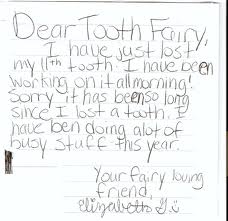
I feel terrible that my daughter still believes in the Tooth Fairy. I don’t like perpetuating a lie (especially one I know will be uncovered sometime soon). I have a feeling, irrational or otherwise, that when she does find out, her first thought will be, “What else is he lying to me about?”
I am not a doctor, so I do not have the expertise to comment on the ADHD diagnosis becoming a regular feature of classrooms across the globe. But I can’t help but get agitated as kids younger and younger are being given these drugs. The cynic in me suspects that this has more to do with pharmaceutical profits and less to do with responsible medicine.
The recommendations, the first in a decade, expand the age range of kids who may be prescribed the drugs from preschoolers through 18-year-olds. Earlier guidelines included children ages 6 to 12. ADHD affects about 8 percent of children and youth and is the most common neurobehavioral disorder in kids, according to the American Academy of Pediatrics.
Expanding the age range will help ensure more children get the appropriate therapy, according to the guidelines. Treating preschoolers may increase their chances of succeeding in school and targeting teens recognizes that ADHD is a long-term condition that may even extend into adulthood.
“Because of greater awareness about ADHD and better ways of diagnosing and treating this disorder, more children are being helped,” said Mark Wolraich, lead author of the report and a professor of pediatrics at the University of Oklahoma College of Medicine in Oklahoma City, in a statement.
For preschoolers with the disorder, it’s recommended that parents and teachers first try to manage children with behavior therapy that uses a system of rewards and consequences. If that doesn’t work, then doctors can prescribe medications, according to the recommendations being presented today at the American Academy of Pediatrics National Conference and Exhibition in Boston.
I have three major issues with the last paragraph in particular.
1. I don’t believe you can determine such a disorder at such a young age with such confidence as to justify prescribing a Ritalin-like drug to them.
2. The idea that some “behaviour therapy” is all that is tried before a child gets a prescription is just shocking. There should be many steps before a child warrants a prescription. Prescribing drugs to a child should be the last resort. And who checks whether the behaviour therapy was properly administered? How many teachers say they have tried everything, when you know they haven’t even come close?
3. This leads me to my third point. Teachers should not have such a big say in the decision to prescribe drugs to a child. Teachers are often too easily motivated by the need to teach a civil and restrained class. Their need to see students calm and manageable often gets in the way of a more considered approach when it comes to the question of ADHD drugs.
Four year olds on ADHD drugs! Do we really want this to become the norm?
I am an over-protective father and proud of it. I am hesitant when my daughter takes any risks and hate to see her in discomfort. Yet, at the same time, I realise that cuts and grazes are part of life and growing up. You can’t shadow your child in the playground to prevent them from tripping and you can’t ban them from low-risk activities on the off-chance that something might occur.
That is why I am so opposed to the persistent interference by Governments and local councils in banning everyday activities. It is not their place to decide what toy my child should play with. They may choose to advise me about the risks and encourage me to supervise my child with graet care, but the constant banning is taking things too far.
The EU toy safety directive, agreed and implemented by Government, states that balloons must not be blown up by unsupervised children under the age of eight, in case they accidentally swallow them and choke.
Despite having been popular favourites for generations of children, party games including whistles and magnetic fishing games are to be banned because their small parts or chemicals used in making them are decreed to be too risky.
Apparently harmless toys that children have enjoyed for decades are now regarded by EU regulators as posing an unacceptable safety risk.
Whistle blowers, that scroll out into a long coloured paper tongue when sounded – a party favourite at family Christmas meals – are now classed as unsafe for all children under 14.
As well as new rules for balloons and party whistles, the EU legislation will impose restrictions on how noisy toys, including rattles or musical instruments, are allowed to be.
All teddy bears meant for children under the age of three will now have to be fully washable because EU regulators are concerned that dirty cuddly toys could spread disease and infection.
The EU and other Government bodies will continue to come up with irrational and overbearing legislation, but no matter how hard they try they will never be my child’s parent.
Why is it that Government and now the courts think it’s appropriate to constantly change our role and responsibilities? Why can’t we do the job we have been doing for centuries without having to take on new unfamiliar duties?
A 14-Year old was acquitted for holding up a service station and stabbing the attendant because the teacher he confided in reported it rather than caution him. Apparently, the teacher had a duty to warn the student about his legal rights. Because the teacher failed to have that discussion, the child got off.
TEACHERS could be forced to warn students as young as 10 about their legal rights before counselling them after a remarkable court decision.
A 14-year-old boy who confessed to his teacher that he robbed a service station and stabbed the attendant with a knife, has been acquitted after the District Court refused to allow the teacher’s statement into evidence because he had not “cautioned” the boy.
It could change the way teachers and students relate to each other, NSW Teachers Federation President Bob Lipscombe said yesterday.
“This is potentially very serious for teachers,” Mr Lipscombe said.
“Teachers are expected to provide advice, assistance and counselling to young people on a daily basis and during the course of that, many things are disclosed to teachers.
“Most are fairly insignificant but often there are matters disclosed that are quite significant and in such cases teachers have never been advised that they can only act on information if they have previously cautioned the student,” Mr Lipscombe said.
The federation was taking urgent legal advice, he said.
“No teacher in the course of their work would caution students in the way this case states,” he said.
“Clearly this teacher did think he was doing the right thing and acting responsibly.”
Last time I checked teachers were neither police officers or lawyers, so why should we be expected to act like them? Surely this teacher acted responsibly, first for consulting his/her superior and then for reporting the matter.
What do they mean by giving a caution anyway?
“Next time, I recommend you not stab the person. He may get hurt.”
Yet another ridiculous and insane development for Australian teachers.
Nearly every day there is some expert quoting some study about how important it is to talk about sex with your children. Whilst I have no problem with the message, I wonder why it is constantly being regurgitated.
Why is it always, “teach your children about sex”? What about teaching your children about manners, selflessness, hard work and respect for others? Why aren’t these messages seen as important as the “birds and the bees”?
Now they’re telling parents they should talk to their 5-year olds about sex. My child is 6 and she just discovered that the fish you eat is the same as the fish that swim. Is this really the time to be discussing sex?
CHILDREN have sex for the first time between the ages of 14 and 15 says a new study, which also suggests that parents should talk to them about their sexuality from as early as the age of five.
I think I will shelve plans of having the “sex” talk for the time being. I’ve got more pressing problems to tend to – like getting my daughter to eat fish again!
The message to parents has been clear: Monitor your child’s Facebook page to ensure that they maintain their page in a safe and responsible way. But there are parents who think they are doing a meticulous job of supervising their children, only to come undone by a loophole being heavily exploited to ward off protective parents:
Are you a parent who keeps an eye on who posts what on your child’s Facebook account? Perhaps you know their password and sneak a look at their messages from time to time? You may even enjoy the trusted privilege of being a “friend”.
Whatever the situation, social networking sites are a source of anxiety for parents, and now the latest trend will only add to their alarm. Children are staying way ahead of attempts by parents and schools to police their online activity And the latest ruse is a secret, fake-name Facebook account.
“Some kids will have two or even three,” says Dr Barbie Clarke, of the youth research agency Family Kids and Youth, who monitors online trends among schoolchildren in the UK.
“Their habits change and we’re seeing them progress from the obvious lie about their age – allowing them to use Facebook in the first place – to this second or third identity. It’s usually driven by Mum picking up on something from their page and raising it with them. They want privacy and they want a secret world.” She is very relaxed about Facebook use by children, saying she thinks they are generally more sensible and supportive of each other than they get credit for. “A second identity can be used for nastiness, to anonymously bully, but generally it’s about secrecy – like a secret diary, or dialogue they can have away from parents and other family members.”
Many children use school facilities to access their fake accounts. “I have two,” admits Harriet, 14.
I feel sorry for today’s parents. With new and highly specialised technological advances flooding the market, parents are finding it much harder to adapt than their children. No matter how hard they try to supervise and protect their children, sometimes it must feel like hitting your head against a brick wall.








 Topical Teaching