Posts Tagged ‘Family’

Students are Continually Treated Like Prisoners

November 29, 2012

One of my biggest goals since entering teaching was that my students appreciate my classes enough to actually want to attend them.

My dream is to have my students wake up on a school morning and say:

“Hey, I’ve got school today, and that’s OK”.

Fundamentally, it is the job of the educator to teach well enough to engage their students. We have to do better than forcing our children to attend school, we have got to find a way to make them feel comfortable with going out of their own volition.

Fitting GPS tracking devices to their IDs is sending the message that our system has given up trying. It has decided that it hasn’t got the time, energy or creativity to make school palatable, so it has no choice but to make prisoners out of the school population.

Students will therefore be getting the following message:

1. School is tedious;

2. The school administration think of us like prisoners;

3. The school administration don’t trust us;

4. We ate just a number. Just a blip on a computer screen. We are not unique, special or important. Just a sheep being watched over by a duty bound shepard.

To 15-year-old Andrea Hernandez, the tracking microchip embedded in her student ID card is a “mark of the beast,” sacrilege to her Christian faith – not to mention how it pinpoints her location, even in the school bathroom.

But to her budget-reeling San Antonio school district, those chips carry a potential $1.7 million in classroom funds.

Starting this fall, the fourth-largest school district in Texas is experimenting with “locator” chips in student ID badges on two of its campuses, allowing administrators to track the whereabouts of 4,200 students with GPS-like precision. Hernandez’s refusal to participate isn’t a twist on teenage rebellion, but has launched a debate over privacy and religion that has forged a rare like-mindedness between typically opposing groups.

Click on the link to read What’s Next? A No Breathing Rule?

Click on the link to read Never Mistake Compassion with the Threat of a Lawsuit

Click on the link to read How About Punishing the Students Who do Something Wrong?

Click on the link to read Potty Training at a Restaurant Table!

Click on the link to read Mother Shaves Numbers Into Quadruplets Heads So People Can Tell Them Apart

Parents Shouldn’t Be in Denial Over This Very Real Addiction

November 28, 2012

As addictions go, internet addiction is relatively new. Since we all love to spend time surfing the net and we see it as a natural and normal form of relaxation many ignore what is becoming a very serious problem. Children are spending far too long in front of a screen, often skipping meals, becoming sleep deprived and sometimes even defecating in their pants in order to avoid missing precious minutes of a peer-to-peer game or social chat session.

ONE in five Aussie kids spend so much time surfing the internet that they miss out on meals and sleep, a study shows.

Edith Cowan University researchers have revealed that “excessive internet use” is twice as common in Australian children as British kids.

A fifth of the Australian children surveyed said they had “gone without eating or sleeping because of the internet”.

More than half confessed they waste so much time online that they “have spent less time than I should have” with family, friends or doing homework.

Sixty per cent said they had caught themselves surfing when they were “not really interested”.

And half “felt bothered” when they could not get online.

Internet obsession appears to peak at the age of 13 to 14, the study shows, as children start high school and use the internet more for homework and social networking with friends.

Click on the link to read Video Game Addiction is Real and Very Serious!

Click on the link to read Internet Addiction and our Children

Click on the link to read Issues Relating to Kids and Video Games

Click on the link to read Are you Addicted to the Internet?

The Most Popular Lies that Parents Tell their Children

November 20, 2012

I make a point of not lying to my children, yet as I posted a while ago, I am guilty of perpetuating the tooth fairy fib.  I am also guilty of hiding vegetables in my daughter’s food without telling her, and if she mistakes quinoa for couscous, who am I to argue?

The ice cream van only plays music when it’s run out of ice cream….there’s a princess in your tummy who can only eat vegetables….and there’s a baby dragon in the hand-drier who needs to practice his fire-breathing on your hands.

These are just some of the white lies parents have admitted feeding to their children to steer them onto the correct path in life, according to new research.

Some 90 per cent of parents have a list of creative tales they tell to their little ones, with other favourites including that you’ll be washed down the plughole if you stay in the bath too long and that eating green food will turn you into a superhero.

The traditional tale of the tooth fairy remained the most popular story, used by 38 per cent of mums and dads, while other prevailing stories include giving different foods more exciting names to get kids to eat them, such as calling broccoli  trees (21 per cent) and feigning phone calls from teachers to tackle reluctance to do homework (16 per cent).

TELL ME LIES, TELL ME SWEET LITTLE LIES

  • 35 per cent of parents disguise vegetables in other foods to get children to eat them
  • A third of parents spell out certain words to each other using letters rather than say the word in full
  • One in seven (14 per cent) parents wind clocks forward to get children to bed on time
  • 2 per cent of parents tell their child that the music played by an ice cream van means they’ve run out of ice cream.
  • Parents surveyed as part of the research admitted to getting creative with their children in order to improve behaviour (58 per cent), encourage them to eat nutritiously (56 per cent), improve imagination (39 per cent) and improve their health and well-being (38 per cent)
  • The traditional tale of the tooth fairy remained the most popular story, used by 38 per cent of mums and dads

Click on the link to read A Case of Parenting at It’s Worst

The Psychological Impact of Divorce on Children

November 8, 2012

Many in society figure that since divorce is very common nowadays that the effects on children are far reduced. This is not the case. A child can be in a classroom full of children from broken homes. It doesn’t make their personal pain any less tangible:

Family breakdown is as devastating for today’s children as it was when divorce was a source of social disgrace, a state-backed report warned yesterday. 

Even though divorce is no longer considered ‘shameful’ – as it was until the 1970s – the children of broken families continue to suffer destructive effects throughout their lives, the report said.

The paper, produced by a team of senior academics, found that the damage caused to a child by divorce continues to blight his or her life as far as old age.

It said parental separation in childhood was ‘consistently associated with psychological distress in adulthood during people’s early 30s’.

The report added: ‘This seems to be true even across different generations, which suggests that as divorce and separation have become more common, their impact on mental health has not reduced.’

It comes a week after figures were published showing that almost half of all children have now seen their parents break up by the time they are 15.

The report said that good health depends on lifestyle conditions that it termed ‘social medicines’. Key among these is a stable family background.

The findings undermine the claims of politicians, lawyers and activists who have argued for years that divorce causes no harm to children if parents part amicably and without conflict.

‘Family life has undergone dramatic changes over recent decades,’ the report, produced by a team led by Professor Mel Bartley, said.

‘Families no longer have to have two parents, they can contain children from different parents, and parents no longer have to be of different genders.’

But it warned: ‘More freedom also means less certainty, and this has led to concerns about the impact of family stability on the health and well-being of both children and adults.

‘Family living arrangements are related to children’s physical health.

Click on the link to read Research Suggests That There’s no Such Thing as a Good Divorce
Click on the link to read The Role of Teacher in Helping Students Deal With Divorce
Click on the link to read Don’t Dismiss the Effect of Divorce on a Child
Click on the link to read Teaching Union Wants Porn on the National Curriculum

Hilarious Parenting Checklist

October 24, 2012

Are you ready to have kids?

Test 1: Preparation

Women: To prepare for pregnancy

1. Put on a dressing gown and stick a beanbag down the front.
2. Leave it there.
3. After 9 months remove 5% of the beans.

Men: To prepare for children

1. Go to a local chemist, tip the contents of your wallet onto the counter and tell the pharmacist to help himself
2. Go to the supermarket. Arrange to have your salary paid directly to their head office.
3. Go home. Pick up the newspaper and read it for the last time.

Test 2: Knowledge

Find a couple who are already parents and berate them about their methods of discipline, lack of patience, appallingly low tolerance levels and how they have allowed their children to run wild.

Suggest ways in which they might improve their child’s sleeping habits, toilet training, table manners and overall behaviour.

Enjoy it. It will be the last time in your life that you will have all the answers.

Test 3: Nights

To discover how the nights will feel:

1. Walk around the living room from 5pm to 10pm carrying a wet bag weighing approximately 4 – 6kg, with a radio turned to static (or some other obnoxious sound) playing loudly.
2.  At 10pm, put the bag down, set the alarm for midnight and go to sleep.
3. Get up at 11pm and walk the bag around the living room until 1am.
4. Set the alarm for 3am.
5. As you can’t get back to sleep, get up at 2am and make a cup of tea.
6. Go to bed at 2.45am.
7. Get up again at 3am when the alarm goes off.
8. Sing songs in the dark until 4am.
9. Put the alarm on for 5am. Get up when it goes off.
10. Make breakfast.
Keep this up for 5 years. LOOK CHEERFUL.

Test 4: Dressing Small Children

1. Buy a live octopus and a string bag.
2. Attempt to put the octopus into the string bag so that no arms hangout.
Time Allowed: 5 minutes.

Test 5: Cars

1. Forget the BMW. Buy a practical 5-door wagon.
2. Buy a chocolate ice cream cone and put it in the glove compartment. Leave it there.
3. Get a coin. Insert it into the CD player.
4. Take a box of chocolate biscuits; mash them into the back seat.
5. Run a garden rake along both sides of the car.

Test 6: Going for a walk

a. Wait.
b. Go out the front door.
c. Come back in again.
d. Go out.
e. Come back in again.
f. Go out again.
g. Walk down the front path.
h. Walk back up it.
i. Walk down it again.
j. Walk very slowly down the road for five minutes.
k. Stop, inspect minutely and ask at least 6 questions about every piece of used chewing gum, dirty tissue and dead insect along the way.
l. Retrace your steps.
m. Scream that you have had as much as you can stand until the neighbours come out and stare at you.
n. Give up and go back into the house.
You are now just about ready to try taking a small child for a walk.

Test 7: Conversations with children

Repeat everything you say at least 5 times.

Test 8: Grocery Shopping

1. Go to the local supermarket. Take with you the nearest thing you can find to a pre-school child – a fully grown goat is excellent. If you intend to have more than one child, take more than one goat.
2. Buy your weekly groceries without letting the goat(s) out of your sight.
3. Pay for everything the goat eats or destroys.
Until you can easily accomplish this, do not even contemplate having children.

Test 9: Feeding a 1 year-old

1. Hollow out a melon
2. Make a small hole in the side
3. Suspend the melon from the ceiling and swing it side to side
4. Now get a bowl of soggy cornflakes and attempt to spoon them into the swaying melon while pretending to be an aeroplane.
5. Continue until half the cornflakes are gone.
6. Tip the rest into your lap, making sure that a lot of it falls on the floor.

Test 10:TV

1. Learn the names of every character from the Wiggles, Barney, Teletubbies and Disney.
2. Watch nothing else on television for at least 5 years.

Test 11:  Mess

1. Smear peanut butter onto the sofa and jam onto the curtains
2. Hide a fish behind the stereo and leave it there all summer.
3. Stick your fingers in the flowerbeds and then rub them on clean walls. Cover the stains with crayon. How does that look?
4. Empty every drawer/cupboard/storage box in your house onto the floor and proceed with step 5.
5. Drag randomly items from one room to another room and leave them there.

Test 12: Long Trips with Toddlers

1. Make a recording of someone shouting ‘Mummy’ repeatedly. Important Notes: No more than a 4 second delay between each Mummy. Include occasional crescendo to the level of a supersonic jet.
2. Play this tape in your car, everywhere you go for the next 4 years.
You are now ready to take a long trip with a toddler.

Test 13: Conversations

1. Start talking to an adult of your choice.
2. Have someone else continually tug on your shirt hem or shirt sleeve while playing the Mummy tape listed above.
You are now ready to have a conversation with an adult while there is a child in the room.

Test 14: Getting ready for work

1. Pick a day on which you have an important meeting.
2. Put on your finest work attire.
3. Take a cup of cream and put 1 cup of lemon juice in it
4. Stir
5. Dump half of it on your nice silk shirt
6. Saturate a towel with the other half of the mixture
7. Attempt to clean your shirt with the same saturated towel
8. Do not change (you have no time).
9. Go directly to work

Parenting Advice that Hits the Mark

September 13, 2012


I am usually quite reluctant to post advice on parenting. I find parenting advice quite preachy and just because something has worked for one child doesn’t mean it will work for another.

But having stumbled upon ‘s brilliant list of ‘don’t’ rules for parents, I thought I would make this an exception to my rule:

*Don’t Worry About the Things You Can’t Control: What’s out of your control you can’t put too much thought into. You can only keep track of your own actions or thoughts. So focus on what is possible.

*Don’t Forget to Pee: This is one of those sayings that rings true for parents. We are so focused on the kids that we completely forget about ourselves. All of a sudden, five years go by and you wonder what happened. It’s important to have balance and not forget about what you need in the wake of your children’s needs.

*Don’t Follow Anyone Else’s Lead: Everybody will have their own take on what good parenting is. Don’t follow anybody else’s lead. It’s important to hear people out and see what may work and not work for them as a parent, but listen to your own gut and follow your own path. Being a leader will take you far as a parent.

*Don’t Be Complacent: Mix things up for you and your kids as much as you can. When we get too comfortable is when things get boring. Try your best to keep things exciting on all levels for everyone.

*Don’t Miss Out On Daily Meditation: It is vital to keep a calm state of mind as a parent. One way to do this is to get re-centered on a daily basis. I suggest doing some soul-searching meditation every day. This will get you through the rest of your day.

*Don’t Underestimate the Influence of Other Kids: A bad apple has been known to spoil the bunch. As your kids get older, keep a watchful eye on who they are hanging out with. If your child is acting up all of a sudden, look to see what may be the cause. If it’s due to the influence of a buddy, try to cool that relationship off.

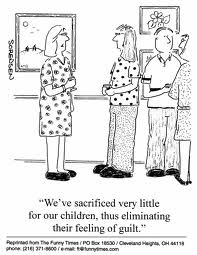
*Don’t Carry Guilt: It’s important not to carry guilt as a parent. Whether it’s an argument with your spouse, picking up your child late from soccer practice or sleeping in on a Saturday morning, don’t feel guilty. No parent is perfect. Let go of the guilt and make tomorrow a new day.


Click on the link to read Potty Training at a Restaurant Table!

Click on the link to read Mother Shaves Numbers Into Quadruplets Heads So People Can Tell Them Apart

Click on the link to read The New Form of Spanking

Click on the link to read This is What You Get for Doing Your Homework

The Courts are Pathetic in Punishing Paedophiles

September 1, 2012

Newsflash: Prison doesn’t just exist to rehabilitate, it is also there to take the scum off the street. A known paedophile should be locked away for a substantial period of time, regardless of whether or not it will ‘cure’ him of his sickness.

A paedophile who downloaded child porn has been spared jail after a judge said locking him up could be more dangerous to society in the long term.

Jason Fairfax, 35, of Bargoed, south Wales, had amassed a collection of around 2,700 indecent images when police raided his home earlier this year.

The photographs and videos were later graded from one to five – with the higher the category, the more serious the offence.

Cardiff Crown Court heard almost a third of the images were at the higher end of the scale – with 786 level four and 29 level five images.

The details of the photographs were so serious, Judge David Wyn Morgan asked the media not to publish their details.

He said: ‘When the police investigated your computer, they found a staggering number of images that were indecent.

‘There was a very large number of them at the top end of the scale, at level four and five.

‘The natural reaction of any decent human being would be that you should go to prison for as long as possible.

‘But when the revulsion has subsided, the court must consider precisely what that would achieve.

‘You would go into prison as sex offender and still come out as one – just as dangerous if not more so than you are at the moment.

‘And the protection of the public must be of paramount concern to the court.’

Instead what does this animal get?
Judge Morgan decided to make the defendant the subject of a sex offenders treatment programme for three years. He will also have to sign the sex offenders’ register until at least 2017 and undertake 250 hours of unpaid work.

Furthermore, Fairfax is not allowed to have any contact with any children under the age of 16 – either in person, on the telephone or via the internet – without the approval of their parents.

He is also banned from deleting the browsing history on his computer as well as erasing any images from a digital camera or camera phone without permission from the police.

This judgement is absolutely terrifying. We must not put up with it.

Click on the link to read Confronting a Teacher Can Be Very Difficult

Click on the link to read Tips for Teaching Children With Depression

Click on the link to read Most People Think This Woman is Fat

If We Accept Dishonesty From Adults, What Hope is There for Our Kids?

August 31, 2012

It bothers me that society has given up on honesty and is now happy to settle for the occasional deceit:

Most women will forgive their partners for cheating once or even twice, but would dump them if they tried it three times, according to a study.

The research found that more than six in ten women would forgive two relationship ‘errors’ – which include infidelity, excessive flirtatious behaviour or romantic neglect. They would, however, dump their man after three.

A full 53 per cent say they would be likely to give their partner another chance even if they found out they had cheated on them, as long as that cheating was a one-off and didn’t involve a pro-longed affair, according to a poll of 2,000 British men and women for laundry specialists Dr. Beckmann.

An incredible 38 per cent of all current British relationships have endured infidelity of some kind, according to the study.
I believe this study represents a negative worldview which is sure to affect the next generations. We must expect nothing less than honesty and loyalty from each other. Forgiveness is a personal choice, but even so, there must be an expectation of trust in every genuine relationship.
Otherwise, what’s the point?

Parenting is Not a Competition

July 14, 2012

The competitive parent can be seen in all countries and across all cultures, but it almost never leads to a happy child. These parents tend to be fixated on outdoing other parents in intellectual and creative pursuits instead of focusing on raising children who are happy and have good character traits.

The following article by Lisa Mayoh captures these misguided and arrogant parents perfectly:

SINCE becoming a parent, I have seen above-average displays of competitiveness – and not from the children, but from their doting mums and dads – the ones old enough to know better.

You know the type. They are quick to claim their child is perfect, a child genius, actually – gifted, talented, advanced and all that jazz.

Oh, speaking of jazz, that’s all they listen to, because little Mary (eight months old) is to be a famous musician when she grows up.

When you ask how they are, their response is “fantastic!” because of how well Billy is thriving in dance class (Billy is 14 months old) or how proud they are that three-year-old Ava is reading at kindergarten level because of the tutoring she’s had for the past few years, and you don’t hear the rest because your imperfect little ears tune out.

They post photos of their five-month-olds sitting on the toilet – sorry, slouching because they are too young to even sit up properly.

But they will be potty-trained in record time and they will tell the world, dammit!

Yes, the mummy race was always bad. But I fear it’s getting worse, and I want out.

We have become a generation of parenting over-achievers, wanting to give our children nothing but the very best opportunities in life, every single minute of every single day, because, don’t you know, 80 per cent of their cognitive brain development happens before they turn three?

If they’re to be geniuses, they have to start right now.

But while they are still in nappies? Come on people, let’s get a grip.

When I saw that there are now schools for six-month-olds – not daycare, actual educational facilities – I thought it far beyond the normal act of wanting the best for your child.

A baby goo-gooing through structured learning-based play, following a curriculum, blowing raspberries while being harassed by flash cards; it seems so far outside normal I became alarmed for my daughter (who is, incidentally, a child genius at 23 months, I’m sure of it).

What chance does she have if everyone around her is all-consumed with turning their toddlers into child prodigies before their second birthdays?

Am I a bad mother for not enrolling her into a trilingual, learning-based playgroup, or because if you ask her what her favourite television show is, she says The Voice not Four Corners?

ONE of the main reasons I stopped going to mothers’ group was because of first-time mummies and their “firsts” club.

Who slept through the night first? Who was the first to say “Mummy”? Who crawled first? Who skipped crawling and went straight to walking because, duh, they are so clever, why would they want to be on the floor?

Who can say the biggest word? Who has the longest day sleep? The longest hair? Who has the biggest birthday cake (sugar, nut, egg and taste-free of course)?

Who wasn’t scared of the cows at the show? Who goes to swimming lessons?

It’s endless, exhausting, and this mummy has had enough.

Yes, I want my beautiful girl to grow and learn with the best of them.

But I don’t want her to feel she has to be the best at everything so I can brag about it.

She may love dancing, she may love painting and she may learn to speak Italian one day, and that’s all great. But I want her to enjoy her years as a baby while she still has them.

It’s OK that she doesn’t know her ABC. It’s OK she wasn’t toilet-trained by 16 months like other superhuman children, and it’s OK that she can’t talk in full sentences.

She is a baby. A child. Can’t she stay one for a little while longer?

All she knows is that someone she loves is sure to take her to the park today, and what else should matter?

Let’s take a break from the rat race and stop competing for the title of world’s best parent, the one who breeds the world’s best children. Because that crown simply doesn’t exist.

No one is perfect, not even that gorgeous little bundle of yours. Or mine, for that matter.

That’s just normal. Isn’t it?

Click here to read, ’10 Things Parents Don’t Understand About Their Teenage Children’.

Click here to read ‘Both a Parents’ Best Friend and Worst Enemy’.

Who is More Important – the Bully or the Victim?

June 29, 2012

The answer of course is they are both equally important. Why then, when the bully is getting a second chance is there so little effort to cater for the needs of his victim?

He’s been pushed down a ski hill, jumped, beaten and pounded so hard that he’s suffered three concussions.

He’s been bullied so badly over the years that he’s twice threatened suicide.

Yet the expelled teen who’s made Fraser Sutherland’s life a living hell is being allowed back into his high school next year. And administrators have told the 15-year-old victim to suck it up and forgive his “reformed” tormentor – or find somewhere else to go in September.

“I shouldn’t have to leave the school when I didn’t do anything wrong. I believe the person that is doing the harm should leave,” said Fraser, who’s just finished Grade 10 at St. Brother Andre Catholic School in Markham, Ont.

“What we’re fearing is this individual is going to come back to finish the job,” his angry dad, Kirk, said. “What’s it going to take? Does he have to be left lying in a puddle of blood in the school bathroom?”

“Suck it up … or find somewhere else to go?” I hope that line isn’t accurate.

You are talking to a child that had to endure terrible hardships at your school due to one of your students – show some respect!