Posts Tagged ‘Education’

Keeping Kids Safe Online

February 5, 2012

I agree with Adam Turner. Cybersafety is something parents need to address. They have the primary duty to ensure that their children are following safe online practices.

As far as I’m concerned cybersafety is primarily a parent’s responsibility, just like teaching about stranger danger or how to cross the road safely. The fundamentals of cybersafety are no different to the real world; don’t wander off, don’t talk to strangers, don’t reveal too much about yourself and call a parent if you’re unsure of something.

Some parents might complain that it’s all too complicated, but it’s not if you take an interest in your children’s activities and take the time to learn the basics. Talk to them about computers and the internet. Ask them what they’re learning at school and what they’re doing at home. Take an interest, just as you should in their other activities. 

Turner suggests ways in which parents can better supervise their children:

A common cybersafety rule is that the computer stays in the living area, positioned in such a way that anyone who walks into the room can see what’s on the screen. If notebooks are permitted in the bedrooms for studying, perhaps it’s on the condition that they recharge on the kitchen bench at night. The same rule can apply for mobile phones, which can also help combat cyberbullying.

You can split cybersafety into two key areas. The first is protecting young children from accidentally stumbling across inappropriate content. This isn’t hard if you can set up a list of appropriate bookmarks and trust your kids not to wander. Installing an ad and pop-up blocker offers an extra layer of protection. If children can’t be trusted not to wander, even by accident, you might consider a whitelist plug-in for your browser, which lets you limit access to a specific list of sites.

The second area of cybersafety is hindering older children who are deliberately seeking inappropriate content. This area is much harder to deal with, as smart and determined kids will find a workaround to just about any security measure (remember, help is only a Google search away).

There’s a big market for desktop filtering software, but don’t walk away and trust it to do a parent’s job. In my experience it tends to cripple your computer, but your mileage may vary. If you do want to restrict internet access, look at services that are independent of your end device – particularly useful if your house contains a variety of internet-enabled gadgets.

It’s worth investigating the filtering options built into wireless routers. Some let you create blacklist and whitelists, or switch off the internet at specific times. You could even run a separate wireless network for the children, making it easier to control their access without affecting your own. Another filtering option is DNS-level services such as OpenDNS. 

Whilst teachers should also take an interest in cybersafety issues, it’s up to the parents to take the lead.

Are High-Tech Classrooms Just a Lot of Hype?

February 4, 2012

There is a current obsession with technology in the classroom. Even so, I would have thought that it was only sensible to bring as much technology as possible into the classroom. After all, we are trying to help children develop life skills. In today’s world technology is all around us. It is integral that our students have a familiarity if not competency with the latest in technology.

Michael Hiltzik of the LA Times disagrees:
Something sounded familiar last week when I heard U.S. Education Secretary Arne Duncan and FCC Chairman Julius Genachowski make a huge pitch for infusing digital technology into America’s classrooms.

Every schoolchild should have a laptop, they said. Because in the near future, textbooks will be a thing of the past.

Where had I heard that before? So I did a bit of research, and found it. The quote I recalled was, “Books will soon be obsolete in the schools…. Our school system will be completely changed in 10 years.”

the nirvana sketched out by Duncan and Genachowski at last week’s Digital Learning Day town hall was erected upon a sizable foundation of commercially processed claptrap. Not only did Genachowski in his prepared remarks give a special shout out to Apple and the iPad, but the event’s roster of co-sponsors included Google, Comcast, AT&T, Inteland other companies hoping to see their investments in Internet or educational technologies pay off.

How much genuine value is there in fancy educational electronics? Listen to what the experts say.

“The media you use make no difference at all to learning,” says Richard E. Clark, director of the Center for Cognitive Technology at USC. “Not one dang bit. And the evidence has been around for more than 50 years.”

Almost every generation has been subjected in its formative years to some “groundbreaking” pedagogical technology. In the ’60s and ’70s, “instructional TV was going to revolutionize everything,” recalls Thomas C. Reeves, an instructional technology expert at the University of Georgia. “But the notion that a good teacher would be just as effective on videotape is not the case.”

Many would-be educational innovators treat technology as an end-all and be-all, making no effort to figure out how to integrate it into the classroom. “Computers, in and of themselves, do very little to aid learning,” Gavriel Salomon of the University of Haifa and David Perkins of Harvard observed in 1996. Placing them in the classroom “does not automatically inspire teachers to rethink their teaching or students to adopt new modes of learning.”

I am a bit in the middle on this issue. I am in favour of all types of technology in the classroom, just not as a replacement for standard teaching. Those schools that are dominated by devises, lose out from the benefits of teacher/student interaction. But that is not to say that i-Pads in the classroom wont make any difference. It just means that those i-Pads are not more important to education than a quality teacher.

5th Graders Caught Playing “Rape Tag”

February 3, 2012

One has to wonder what level of  outside supervision schools have if it overlooks a game involving “dry humping”. For this to be stopped only after a complaint from a parent suggests that some teachers should put down their mugs of coffee and actually observe the children during yard duty.

A disturbing playground activity has parents riled over what is going on during recess at an elementary school.

Washington Elementary School in New Ulm, Minnesota, is at the centre of controversy as it was learned fifth grade students had played ‘rape tag’ during recess.

The game is very similar to freeze tag, except to unfreeze someone, a student would have to simulate a sex act on the frozen person.

A parent reported the incident to school officials after finding their child was talking about the game on Facebook.

So what flimsy excuse does the Principal give for something that should have been banned minutes after it was first trialled in the playground?
The school’s principal, Bill Sprung, told KEYC-TV: ‘This age level of kids – 10, 11, 12—is a time when kids start to mature; start to experiment. 

He added: ‘Part of that experimentation is that they do things we wish they wouldn’t have done.’

There is a great level of trust that parents bestow to teachers and schools. They expect, amongst other things, that respect for women and girls is inherent in all activities both inside and outside of the classroom. These parents have been justifiably let down by a school that overlooked the obvious and acted reactively rather than proactively.

Disruptive Children Learn Better By Shouting Answers in Class

February 2, 2012

A recent study indicates that ADHD students would greatly benefit from shouting their answers in class.

Durham University experts who analysed test results across more than 500 English schools found that, among children with Attention Deficit Hyperactivity Disorder (ADHD), those who shouted out answers scored better results than their peers who remained quiet.

Louder youngsters were about nine months ahead of quieter classmates in reading and maths, researchers from Durham’s Centre for Evaluation and Monitoring discovered. The experts say their findings raise questions about how best to teach youngsters with ADHD.

Professor Peter Tymms, a renowned education expert and the report’s lead author, said: “Managing and responding to pupils’ different needs and abilities within a class is a challenge for teachers.

“We’re not suggesting that classrooms become free-for-all shouting matches but if this positive learning relationship can be harnessed, it could help teachers and learners.”

I really don’t know what to do with these findings. Whilst it is important to accommodate all students according to their learning styles, allowing some to shout could completely alter the tone and civil nature of one’s classroom. Although classrooms should never be treated like libraries, shouting students do have an effect on the way the rest of the class act.

There are times when studies recommend something and teachers are forced to either dismiss them, or in this case, try to find ways where it may work. For example, I wouldn’t be surprised if a study looking into whether or not an ADHD child learns better if they stand on a table, finds that there is a clear improvement when they do. But would a teacher ever consider allowing a student to stand on a table during the lesson? I think not.

As much as I am determined to cater for all children, there are some recommendations that are not easy to integrate into a classroom setting. This one is worth considering, but I’m not sure how I would go about implementing it without disrupting the rest of the class.

Teachers Cautioned Against Venting

February 1, 2012

There is no other job in a democratic country that is legally cautioned against venting or giving political opinions. Unfortunately, teachers have become the focus of regulations that are sensible for the most part, but contain some over-the-top directives.

TEACHERS have been warned against contacting students online amid fears too many are befriending their charges on Facebook.

In a major crackdown on social media use in schools, the State Government has released new guidelines designed to protect teachers’ reputations.

Educators say online smear campaigns by students have put teachers’ careers at risk, with some being forced to move schools.

The Government says the guidelines will also help protect students from inappropriate conduct by teachers.

“That boundary between being a teacher and a friend is one which teachers have to sometimes tread very carefully,” Minister for the Teaching Profession Peter Hall said.

“It’s important to provide parents with the confidence that their teachers have the knowledge available for them to do their job well.”

 Under the online directives launched today, teachers are also cautioned against:

CONTACTING students by mobile phone or email “without a valid educational context”.

POSTING any “offensive or slanderous” material about students, parents or colleagues.

SHARING content from personal social media sites, such as their Facebook accounts, with students.

UPLOADING images of themselves that have “potential to negatively affect their reputation”.

“VENTING” about their work, or posting personal or political opinions.

I have no issue with most of these directives. What I don’t appreciate is being told what I can say and do by somebody else. Teachers have the right to exercise discretion without having to be regulated to do so (I am not referring to inappropriate contact with students). Being told I can’t express my personal or political opinion is not appreciated.

Stricken With Self-Doubt

January 31, 2012

It’s the first day of a new school year tomorrow and I’m suffering from my annual bout of self-doubt. I get very anxious before a school year starts. I worry about whether or not I will succeed at helping my students. I worry about whether my style of teaching will work on a new bunch of kids.

The week leading up to the start of the school year doesn’t help. It’s a week that is set aside for preparing the classroom. This involves displays, fancy name tags and innovative ways to use a small space to enhance learning. The female teachers I work with put a lot of emphasis on the look of their classrooms. Borders are replaced around noticeboards, name tags are put on everything (and I mean everything!) and the fear of death is reserved for the poor laminator who cops the brunt of all this activity.

When it comes to developing fun lessons, I am very comfortable. When it comes to decorating a classroom, I am completely out of my league! I have been getting comments ever since I started about the plainness of my classroom compared to the other teachers. My bosses have pointed out that my classroom looks far less inviting and colourful. This year I put up a beautiful piece of red material to cover my noticeboard, before being told that children don’t learn well in a room of red. Apparently the colour red has a negative effect on concentration and creativity. The comments certainly made me see red!

Then there’s the endless diatribe from those in charge about new responsibilities and expectations that all staff need to adhere to. These usually involve devoting a great deal of extra time. If there is something all teachers have in common, it is the absence of any extra time.

Handover isn’t much fun either. As the previous teacher reads each name from the class list, every child is presented as difficult to teach. There’s behavioural issues, Aspergers, ADHD, ADD, Oppositional disorder, social issues, anger management issues, language disorders etc. What is it with psychologists today? They have turned every personality type into a disorder. Why is every second child on a spectrum? What is this spectrum, and how did it get to be so big? In today’s age, the one kid who can’t manage to get on the spectrum of any modern psychological condition probably ends up feeling left out and abnormal.

All this makes me very uneasy. I get very frightened. I desperately don’t want to let my students down.

The Unique Challange of Teaching Boys

January 31, 2012

There is no doubt in my mind that teaching boys is a more difficult proposition than teaching girls. It is also clear to me that boys have suffered from a traditional classroom setup which has proven far less successful in engaging them than it has for girls.

Currently in Australia, local television station ABC1 is showing a brilliant series entitled, Gareth Malone’s Extraordinary School For Boys. Gareth is a choir master and isn’t qualified to teach, but takes on an 8 week trial with a group of underperforming boys in an attempt to improve their literacy skills.

Mr. Malone draws on his three rules for teaching boys:

1. Make the work feel like play.

2. Have a real sense of competition

3. Have a real sense of risk.

I have just finished watching the first episode and fell in love with his unique and creative style. I also enjoyed watching his colleagues putting down his methods, clearly a byproduct of feeling threatened by this novice.

Below is episode 1 in its entirety. All episodes are available on YouTube.

Student Finds a Bag of Cocaine in Her Amazon Textbook Order

January 29, 2012

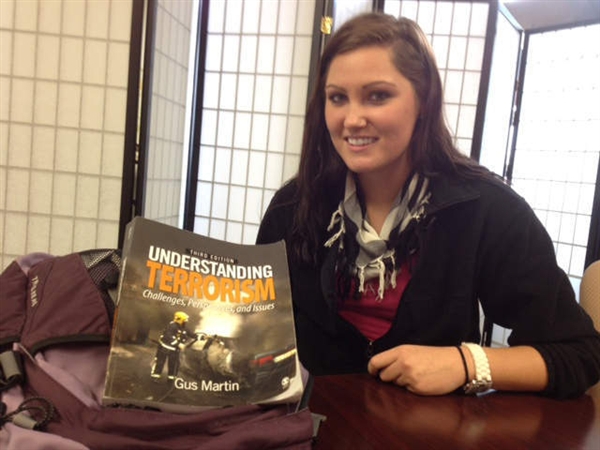
Cocaine isn’t something you’d expect to find in your Amazon textbook order. For one unsuspecting customer, a university textbook about terrorism isn’t the only thing she received in the mail.

Any university student who has ever purchased a used textbook knows that there are sometimes strange surprises hiding between those pages. Usually they come in the form of messy scribbles or perhaps even a forgotten piece of gum, but in one student’s case the unexpected (and unwanted) gift-with-a-textbook-purchase was a bag of cocaine.

WPTV reports that Sophia Stockton — a junior at Mid-America Nazarene University in Olathe, Kansas — recently ordered a textbook from an independent retailer through the Amazon online storefront. The book was intended for a spring course on terrorism and is called “Understanding Terrorism: Challenges, Perspectives and Issues.”

When Stockton flipped through the textbook, she “discovered a bag of white powder had fallen to the ground.” According to WPTV, Stockton feared that the bag contained anthrax and took it to the local police department the next day:

“I told them white powder was in my terrorism textbook and so I put it on the table and they’re like, ‘oh, okay,’ And so he went back and tested it,” Stockton recalls. “ He comes back and says, ‘you didn’t happen to order some cocaine with your textbook, did you?’ And I was like, no!”

This is certainly not the best method of getting disillusioned kids back into reading.

How to Get Kids to Eat From Their Packed Lunch

January 26, 2012

Hazel Keys, the author of The Clever Packed Lunch has come up with a system for getting kids to eat the contents of their lunchbox.

Below is a portion of an interview of Ms. Keys conducted by the Courier Mail:

Q: You’ve run a tuckshop – what’s your take on ensuring kids leave home each day with a properly packed lunchbox?

 A: It’s essential. A healthy nutritious lunch supports learning by allowing children to settle, focus and learn. Processed, refined and sugary foods have been shown to do the opposite.

Q: What motivated you to write The Clever Packed Lunch?
A: My many years of parenting and preparing school lunches resulted a system that I felt could benefit families and I wanted to share that.

Q: What are your three top tips when it comes to creating great packed school lunches?
1. Involve your kids in the preparation; listen to them and try to accommodate their preferences within the guidelines of health and balance.
2. Include plenty of fresh fruit and vegetables, preferably choosing in-season varieties.
3. Choose “whole” foods and ingredients that are as close to their natural state as possible, like seeds and whole grains.

Q: You suggest parents should try to get their children actively involved in making lunchbox choices – what are the benefits?
A: This is a great way to achieve a number of goals, so that:
• children feel empowered
• they’re far more likely to eat their lunch
• they’ll learn how to cook and feed themselves healthily in the process.

Q: Can you give us an example of a delicious and balanced lunchbox that could turn fussy eaters into fans?
A: Kids are attracted to “fast” food, there’s no doubt, and in my experience they love pizza. Pizza can definitely be healthy as long as you use quality ingredients like (some) wholemeal flour, olive oil and organic tomatoes. I serve it with salad, or the mixed potato wedges recipe from the book, which uses sweet potato, a highly nutritious food. And then there’s my healthy chocolate cake recipe!

Q: It’s Sunday night and the fridge is looking bare any lunch items that can be made up from simple pantry staples?
A: Yes! I always keep small tins of prepared salmon in the pantry, along with dried egg (not wheat) noodles, and frozen vegetables like corn and peas. The other items I always have on hand are a wide range of seeds. The noodles, once cooked, can be combined with the salmon, veggies and some sesame seeds, perhaps with a little sesame oil.

Q: Top three sandwich combos?
A: Ooh, yes! For kids I find the following are popular:
– sliced turkey breast, cranberry sauce and sliced green apple
– salmon, chopped gherkin, egg mayonnaise and cucumber
– grated cheddar, creamed corn and diced red capsicum toasted

Q: We automatically think of sandwiches when it comes to packed lunches? Can you suggest three options we could consider instead?
A: Yes, I’ve a recipe in the book I call “Sleeping Dogs”, which is a healthy version of hot dogs or sausage rolls. Home-made dips with wholegrain rice crackers or pappadams are a nutritious gluten-free choice. And my personal favourite, also from the book; the creamed corn puddings, which are rich in eggs and served with sour cream and guacamole. Yummy!

Q: How important is it to include a treat?
A: I think it’s important not to give “treat” foods too much attention, but to demonstrate flexibility by including them now and again, although not in the lunchbox unless the food has a nutritional benefit, like quality dark chocolate. That’s a real win-win treat!

Q: You suggest doubling up lunch box prep with dinner – can you give us a couple of examples to get us thinking on the right lines?
A: When making meatballs I double the quantity and shape some into patties instead. I serve them for dinner in a wholemeal or multi-grain roll with lots of salad. And when I make chicken and corn soup, I add the uncooked chicken to the stock. Chicken cooked this way is both moist and tender and adds flavour to the soup. So I often double the amount of chicken, and once cooked, remove half. Then I freeze it and use it for Asian dishes another day.

Q: What do you think are the main issues facing families in relation to providing healthy lunches for children at school, and what solutions can you offer?
A: It seems to me that families are finding themselves over-stretched, and lacking the time and money to provide really nutritious lunches. I’m convinced that this is contributing to the growing issue of child obesity. My answer is to move away from packaged and processed foods and choose fresh, simple, high quality foods instead. So much of our money goes straight into the bin wasted on fancy packaging and clever marketing, and the ingredients are often inferior. Feeding ourselves properly takes a little effort, but it’s absolutely worth it. Good food, like charity begins at home and offers an opportunity to develop in your children healthy eating habits that will last a lifetime. It’s one of the greatest gifts you can give them. And there are clever systems that can make the process fast and efficient too, such as the one outlined in my book.


The author can be contacted at hazel@lunchideasforschool.com

The Meteoric Rise of the Educational App

January 25, 2012

We are in the midst of an educational app bonanza. The educational app is fast taking over, with the startling statistic that more than a quarter of all parents have downloaded apps for their children to use. In a recent study entitled, iLearn II: An Analysis of the Education Category on Apple’s App Store, the popularity of the educational app was discussed as was recommendations for future growth.

Below are some of the findings of the report:

1. Apps are an important and growing medium for providing educational content to children, both in terms of their availability and popularity.

  • Over 80% of the top selling paid apps in the Education category of the iTunes Store target children.
  • In 2009, almost half (47%) of the top selling apps targeted preschool or elementary aged children.  That number has increased to almost three-­‐quarters (72%).
  • The percentage of apps for children has risen in every age category, accompanied by a decrease in apps for adults.

2. Early learning apps for toddler/preschool are particularly prominent. Developers should consider potential saturation of this market.

  • Apps for toddlers/preschoolers are the most popular age category (58%), and experienced the greatest growth (23%).
  • General early learning is the most popular subject (47%), and there are significantly more general early learning apps than the second most popular subject (math, 13%).

For those interested in a more comprehensive summary of the report please follow this link. If you would like to read the entire report please click on this link.