Posts Tagged ‘Children’

Tips to Get Kids to Eat More Fruit

June 2, 2014


fruit

A well compiled list on a very real challenge courtesy of The Times:


1. Serve children the fruits they like, even if it is at the expense of variety. There is no reason why kids who love bananas shouldn’t have one every day. Eventually, parents can add variety by combining a favorite fruit with new ones.

2. Fruit can be eaten at any time of day as a snack, and not just as a dessert. Consider serving fruit to kids with breakfast, as an after-school snack, or even in a salad with dinner.

3. Set a good example. It is well established that children tend to imitate their parents’ behavior, particularly at mealtimes. So parents should set the example by eating plenty of fruit themselves.

4. Prepare fruit in front of children or involve them in the process. Whether it’s scooping out melon balls for fruit salad, washing berries, or coring apples, giving children a task in preparing fruit will make them more likely to enjoy eating the result.

5. Provide easy access to fruit. Keep a bowl of fruit on the kitchen table and allow kids to help themselves. For children who enjoy eating fruit, sometimes the best way to boost their intake is simply to remind them to eat it when they’re hungry.


Click on the link to read 6 Year Old Suspended for 4 Days Because of Cheese in his Lunchbox

Click on the link to read Invaluable Rules for Getting Kids to Heat Healthy Food

Click on the link to read Tips to get Children to Eat Better and Exercise More Often

Click on the link to read 10 Tips for Promoting Kids’ Healthy Eating

Click on the link to read my post on Tips For Parents on Packing a Healthy Lunch Box

Click on the link to read my post on Getting Kids to Eat Healthy Food

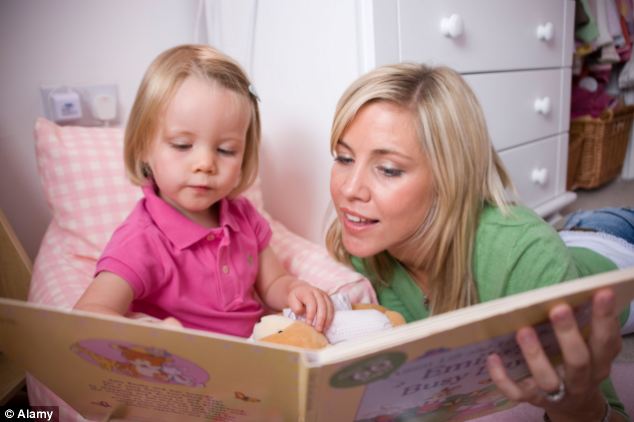
10 Tips to Help Children Enjoy Reading

June 1, 2014

reading

Courtesy of uk.pearson.com:


Make books part of your family life – Always have books around so that you and your children are ready to read whenever there’s a chance.

Join your local library – Get your child a library card. You’ll find the latest videogames, blu-rays and DVDs, plus tons and tons of fantastic books. Allow them to pick their own books, encouraging their own interests.

Match their interests – Help them find the right book – it doesn’t matter if it’s fiction, poetry, comic books or non-fiction. Try our top recommendations.

All reading is good – Don’t discount non-fiction, comics, graphic novels, magazines and leaflets. Reading is reading and it is all good.

Get comfortable! – Snuggle up somewhere warm and cosy with your child, either in bed, on a beanbag or on the sofa, or make sure they have somewhere comfy when reading alone.

Ask questions – To keep them interested in the story, ask your child questions as you read such as, ‘What do you think will happen next?’ or ‘Where did we get to last night? Can you remember what had happened already?’

Read whenever you get the chance – Bring along a book or magazine for any time your child has to wait, such as at a doctor’s surgery.

Rhyme and repetition – Books and poems which include rhyme and repetition are great for encouraging your child or children to join in and remember the words.


Click on the link to read 17 Children’s Books You Still Love as an Adult

Click on the link to read The Telegraph’s Best Children’s Book of All Time

Click on the link to read The New York Public Library’s 100 Most Requested Children’s Books

Click on the link to read Stunning Photographs of the Most Beautiful Libraries in the World

Click on the link to read The Call to Stop Kids From Reading Books they Actually Enjoy

Click on the link to read The Classic Children’s Books they Tried to Ban

Click on the link to read How Spelling Mistakes can Turn a Compliment into Something Quite Different.

Is it Ever OK to Lie to Your Kids?

May 14, 2014


lie

I’m not fond of the idea of lying to your children. The relationship between a child and his/her parents or teacher should be based on trust. When that trust is broken, even for an innocent white lie, it is hard to fully repair.

I know the following list compiled by writer Aaron Gouveia is tongue in cheek, but I couldn’t help feel that some of these innocent white lies are not worth the trouble of telling. Not only did I find this list unfunny but perhaps even objectionable. What do you think?


19. “It’s time for bed.”
Technically, bedtime is in an hour. But since I’ve had a long day, you can’t tell time, and the end of daylight saving time has brought on the sweet merciful darkness, the night-night train is boarding early.

18. “Oh honey, this tastes delicious.”
No it doesn’t. I don’t care that it’s called “Dada’s Surprise,” because I know the surprise is you took a little bit of everything in the house and mixed it together to create this abomination currently accosting my taste buds. I can’t prove you did it on purpose because you know I’m parentally obligated to imbibe it, but we both know you’re old enough to realize milk and orange juice don’t go together.

17. “That drawing is FANTASTIC!”
Look, I’m your dad. I’m never going to tell you something you worked hard on sucks. But why do you insist on playing this game where you make me guess what you drew? If I’m being honest, it looks like a sphincter with three arms — not Batman. In the future, just tell me what you drew so we don’t set ourselves up for mutual disappointment.

16. “No, I don’t know where your art project went.”
Yes I do. I threw it away. Not to be mean, but because I have to. Seriously, buddy, you bring home five art projects a day from school. Our kitchen wall is filled with your creations. If I don’t make at least a little room, we’ll be on Hoarders in a hot second.

15. “My phone is dead.”
Can I play with your phone? Can I play with your phone? Can I play with your phone? Sometimes I give in and placate you, but dammit IT’S MY PHONE AND I WANT TO PLAY WITH IT! So I lie to you and tell you it’s dead in the hopes you’ll get distracted by something shiny and allow me to tweet about how annoying it is when young kids are completely hooked on technology.

14. “Your mom and I are going to bed, too.”
After a certain point, The Bedtime Wars drag on so much that anything is fair game. Which means I will lie to you and say whatever is necessary to put you down. So yes, of course we’re all going to bed. Don’t mind the sound of the TV downstairs, I’m just leaving it on for the dog.

13. “No, I don’t think you’re getting a shot at the doctor’s today.”
Actually, you’re getting four shots. Which means I really didn’t lie.

12. “We can’t have a cat because you’re allergic to them.”
We’ve never had you tested, so technically this might not be a lie either. But I will tell 1,000 lies if it keeps those godforsaken felines out of my domicile.

11. “The dog ate your candy.”
Unlike cats, dogs are fantastic animals and man’s best friend. They are also a great tool for parents to shift blame. Because the truth is, I ate your candy. I’m not even sure how a box of Thin Mints became yours. I paid for the damn things. I should just be able to tell you I ate them because I was hungry and dammit this is my house! But then you hit me with those sad eyes and I have no choice but to do the right thing — blame an innocent and much beloved household pet.

10. “Babies are made when two people really love each other.”
Or when two people have too much wine. Or the condom breaks. Or mommy forgets to take her special pill. Or the vasectomy doesn’t take.

9. “Santa/The Easter Bunny/The Tooth Fairy doesn’t come if you don’t poop in the potty.”
Yeah, we actually told Will this when he was potty training. MJ and I got a six-pack of beer, blocked him in the bathroom, and waited him out. Then, at the end of our ropes, she told him the Easter Bunny would skip his house if he didn’t poop in the toilet. Thirty seconds later, he dropped a few chocolate nuggets in the porcelain basket, and potty training was finished. See? Lying is just good parenting.

8. “I think your favorite stuffed animal is on vacation.”
If by “vacation” you really mean somewhere in the 50-mile stretch between the grocery store, pet store, and toy store, then yes — he’s on vacation. A permanent one. Ultimately, this will end in disaster and tears and crying and refusal to sleep without your old friend, which is exactly why I’m going to lie to you for as long as you’ll buy it. Sometimes parenting is strictly about survival.

7. “The toy store/candy store/Disney World is closed.”
I’ve told you no. Repeatedly. I’ve explained to you with perfect logic and reason why we can’t go to any of the ridiculous places you’re begging me to go. But you don’t care. It’s not your job to care. I get that. But it’s my job to be on time (or at least not ridiculously late), which means it’s a million times easier to lie to you and tell you the place you want to go is closed. Some day you’ll be able to tell time and this ruse won’t work, but today is not that day.

6. “We’re all out of ice cream.”
Until you go up to bed. Then it’s ice cream city up in here.

5. “It’s a tie.”
Bullsh*t! I won. Not only that, I mopped the floor with you. It wasn’t even close. I’m not sure why I have to spare your feelings, since it’ll only be a few years until you’re older, I’m weaker, and you dance on my withered bones once you’re able to defeat me in just about everything.

4. “Caillou isn’t on TV anymore.”
Not on OUR TV, anyway. That bald-headed whiny little sh*t.

3. “Yes, your fish has been very sleepy lately.”
Someday, when you’re older and I’m mentally prepared, I’ll tell you that Nemo now sleeps with the fishes. But in the meantime, your sleepy fish will be totally reinvigorated as soon as the pet store opens.

2. “We won’t let anything happen to you.”
For my money, this is the best (and most necessary) lie on the list. And make no mistake — it is a lie. We can strive to protect our kids all we want, but we’ll never have complete control. If gunmen walk into the school, a driver crosses the double yellow line, or armed robbers break into our house, then parents are hard-pressed to be able to keep this promise. But you can bet your ass I’ll keep promising my boys this until the day I die. Because it’s the right thing to do to make your kids feel safe.

1. “Your mom and I were just… wrestling.”
Mom is on top of me because she’s trying to pin me. No, you can’t play too. Yes, we need a lock on the bedroom door.


Click on the link to read 9 Characteristics of a Great Teacher According to Parents

Click on the link to read 9 Secrets for Raising Happy Children

Click on the link to read Brilliant Prank Photos Show Parenting at its Worst

Click on the link to read Little Girl’s Delightful “Brake Up” Note

Click on the link to read 9 Truths About Children and Dinnertime

Click on the link to read The Most Original Way to Pull Out Your Child’s Tooth Out (Video)

Are We Doing Enough to Make Our Children Happy?

May 6, 2014


stairs


A new survey tells us the same gloomy details about how unhappy our children are. It’s not that I discount their findings or wish to in any way dismiss the issues raised, but where is the companion article with ideas and initiatives for making our children happy.

The internet and other technology are not to blame for the state of our children. Blaming these things both undermines the problem and makes it harder to raise solutions.

So my message is to read this with a desire to make a difference rather than to wallow in the current state of affairs:


Children’s happiness drops after the age of 11 as they get caught up in modern issues such as cyber-bullying, online porn and sexting, a study has found.

Charity and youth workers surveyed almost 7,000 children over three years and found girls were far worse affected than boys.

Their self-esteem, ’emotional well-being’ and satisfaction with their community sank sharply after the age of 11, continuing to get worse up to the age of 16.

Boys’ happiness, meanwhile, remained far more stable.

The researchers blamed the march of technology as one of several factors making teenagers unhappy.

Dr Simon Davey, Programme Leader of the Emerging Scholars’ Intervention Programme, said: ‘Technology and the pace of change have accelerated pressures, made them more extreme and increased competition.

‘Girls in particular are more vulnerable to social pressures affecting their confidence and capability.

‘Measuring well-being – one of the ultimate expressions of confidence and capability – has been difficult for us but [these] well-being tool helps us take a quantitative view for the students we work with.’

The study, carried out over three years by around 50 youth charities, is due to be released on Tuesday.

In total the charities surveyed 6,890 children aged 11 to 16 – 3,176 girls and 3,714 boys – and ranked them on eight measures of happiness.

They were overall satisfaction, self-esteem, emotional well-being, resilience and satisfaction with friends, family, community and school.

Click on the link to read Why Getting Our Kids to Toughen Up is a Flawed Theory
Click on the link to read  Stop Pretending and Start Acting!

Little Girl’s Delightful “Brake Up” Note

May 4, 2014


bu


I hope you enjoy this as much as I did.


Click on the link to read 9 Truths About Children and Dinnertime

Click on the link to read The Most Original Way to Pull Out Your Child’s Tooth Out (Video)
Click on the link to read Father Carries His Disabled Son 9 Miles to School Every Day

Click on the link to read Never Take the Dream out of the Child

Click on the link to read The Snow Day Song that Has Gone Viral (Video)

Click on the link to read Is Tiger Mom a Racist?

Teaching Young Children the 3Rs Could be Damaging: Psychologist

April 24, 2014


reading

Teaching young children the 3Rs may not be the only skills a teacher or parent should be imparting to their young students, but it is hardly damaging. A considerate, patient and skilled person can teach all kind of skills without causing the distress alarmist psychologists make us believe occurs:


Cambridge University lecturer David Whitebread said it was important for parents to play with their children, as these youngsters were more likely to enjoy solving problems, and better equipped to cope with failure.

Former primary school teacher Mr Whitebread also claimed the government was overly concerned with getting children to learn the 3Rs at an ever decreasing age, and said younger children were better off learning to cook alongside their parents.

Mr Whitebread, a developmental cognitive psychologist, said that although learning to read was an important skill, teaching reading, writing and arithmatic to toddlers was a waste of government money and the child’s time.

Mr Whitebread said that learning to read at to young an age could even be damaging for a child.

‘Instead the parent can share something they love, such as making cakes, or tinkering with engines, the key is partly sharing the enthusiasm but mainly the conversations you have with the child while doing it.’


Click on the link to read 7 Ways To Teach Kids Self-Awareness

Click on the link to read Kids Explain the Meaning of Happiness

Click on the link to read 5 Reasons Why It’s Healthy to Encourage Children to Play

Click on the link to read Allowing Children to Stand Out From the Pack

Click on the link to read Hilarious Examples of Kids Telling It As It Is

7 Ways To Teach Kids Self-Awareness

April 8, 2014

helmet

Courtesy of Sherrie Campbell, PhD:


1. Be a good role model.
In order to parent self-awareness, you have to have it yourself. This means that you demonstrate through your own behaviors that you can calm your anxieties and frustrations and not act out in a negative way. If you start to act out, demonstrate that you can call a time-out on yourself and get centered again.

2. Accept and recognize your child’s feelings.
Emotions are emotions. They are temporary energies meant to pass through. If we accept and acknowledge what our children are feeling, the emotions pass through much more quickly and with more understanding. Taking this time to sit with their feelings helps them to not act emotions out in a negative way. Accept the feelings from their viewpoint, and then, if possible, spin them in a positive light.

3. When in doubt, empathize.
Your empathy teaches children their emotional life is not threatening, abnormal or scary. Their emotions are not shameful or defective. They are human and manageable. In this way, you teach your children they are not alone. This helps them see that even the less-than-perfect parts of themselves are acceptable, which helps them to accept themselves and others more wholly.

4. Do not encourage the avoidance of emotions.
Emotions may be uncomfortable, but never minimize them to your children or tell your kids to “move on.” Refrain from telling them what they are feeling is wrong. They may not be ready to move on, and it is important for children to learn to navigate the uncomfortable. This is how they learn and grow. We must teach them that whatever they avoid will return in the form of a similar and harder lesson, so they may as well do their learning now.

5. Encourage communication.
Repressing feelings doesn’t work. Repressed sadness turns into depression; repressed anger turns into rage; repressed envy turns into jealousy; repressed love turns into possession; and repressed fear turns into anxiety/panic. When we reject or ignore our children’s emotions, this causes them to repress, which leads to more severe and chronic emotional problems all throughout life. Let them express freely.

6. Time, attention and listening.
Actively listen to your children. You do not have to agree with what they say or feel, but to argue against it doesn’t allow them to hear or know who they are as unique people. Accept their feelings, repeat them back to them for understanding, and listen. Show that you care and can see their point of view.

7. Teach problem solving.
Most of the time, when children experience that their emotions are understood and accepted, the emotions lose their charge and begin to dissipate. This leaves an opening for problem solving. Sometimes, kids can do this themselves. Ask them how they want or think they should handle the situation which is upsetting them. This helps them to hear themselves out, and to learn to make good decisions from within. Sometimes, they need your help to brainstorm, but resist the urge to handle the problem for them; that gives them the message that you don’t have confidence in their ability to handle the problem on their own.


Click on the link to read Kids Explain the Meaning of Happiness

Click on the link to read 5 Reasons Why It’s Healthy to Encourage Children to Play

Click on the link to read Allowing Children to Stand Out From the Pack

Click on the link to read Hilarious Examples of Kids Telling It As It Is

Click on the link to read Kids Can Operate an iPad but Can’t Tie their Shoelaces

Kids Explain the Meaning of Happiness

April 6, 2014

https://www.youtube.com/watch?v=vbuEbtFjNXk


Click on the link to read 5 Reasons Why It’s Healthy to Encourage Children to Play

Click on the link to read Allowing Children to Stand Out From the Pack

Click on the link to read Hilarious Examples of Kids Telling It As It Is

Click on the link to read Kids Can Operate an iPad but Can’t Tie their Shoelaces

Click on the link to read What is the Difference Between Over-Praising Children and Lying to Them?

The Destructive Impact of the “Fashion Police” Brigade

March 9, 2014

http://www.youtube.com/watch?v=f_XeoAC6f3I

Now more than ever, our children feel the strain of living up to the judgmental and often unrealistic expectations of the “fashion police” crowd. Every classroom and every school seems to have them. Magazines thrive on it. Office water cooler discussions is dominated by it.

And like society’s skewed and misguided view of success, the definition for a “body beautiful”shuts so many out of contention from birth. Is this right? Is this fair?

It isn’t. But at the same time, by giving oxygen to shows such as Fashion Police, we are giving permission for the message to harm our children. We can’t make life better for our kids if they feel we are buying into the very lie we wish to protect them from. They wont feel better about themselves if we continue to buy the magazines and watch the disgusting elitist rubbish.

Take this appalling example of how low these shows can go. Imagine poking fun at a woman pregnant with twins?

Click on the link to read The Plus Sized Barbie Debate Misses the Point

Click on the link to read Study Claims that Being Attractive can give you Better Grades

Click on the link to read The Unique Challenges that Body Image Represents for Females

Click on the link to read An 8-Year-Old’s Take on Body Image

Click on the link to read A Father’s Advice to His Daughter About Beauty

Never Take the Dream out of the Child

March 3, 2014

ellis cashmore

It doesn’t matter how far fetched a child’s dreams may be, or how much it seems to distract them from their schoolwork, their dreams are vital to their growth and development.

A child’s dream is indicative of where their passions lie, and too many of us suppress our passions in favor of the socially acceptable and mundane. Not every child can become a pop star or gold medalist, but there is nothing wrong with aspiring to be either.

When I was a teenager I wished to be involved with movie making. I didn’t have to be the star or the director, I would have settled being the personal assistant to the editor.

Fast forward to adulthood and I may not be in the movie industry as such, but my desire to make it in movies was particularly helpful and instructive. It made me aware that what I really wanted was to make a difference. Just like the movies I watched as a child made a difference to me, I wanted to find a career that would allow me to inspire others.

That’s why I am completely at odds with the academic that spoke against allowing children to dream big:

Focusing on sporting success is a waste of time because ‘very, very few children’ are going to make it, an academic has said.

Ellis Cashmore, a professor of culture, media and sport at Staffordshire University, says there is little proof that the Olympic Games create any kind of meaningful sporting legacy.

And he believes it is high time parents realised children are more likely to make the finals of shows like The X Factor and Britain’s Got Talent than become sporting heroes of any sort.

‘We shouldn’t be trying to channel all of our energy into this pursuit of excellence in sports when very, very few children are going to succeed at any kind of level at all,’ he said.

‘My answer to parents who tell me their child might become a leading footballer or athlete is that they are putting them at risk of serious injury or closer to the world of performance-enhancing drugs.

‘I ask them: “Are you happy about that?” and they say: “It won’t happen to my child”.

‘To which I reply: “But it goes with the territory”. The cheats are very often those at the top.

Ellis Cashmore says there is little proof that the Olympic Games create any kind of meaningful sporting legacy

‘Do we want to churn out one-dimensional characters who leave no stone unturned in pursuit of excellence?’


Click on the link to read The Snow Day Song that Has Gone Viral (Video)

Click on the link to read Is Tiger Mom a Racist?

Click on the link to read 44 Things Parents Say to their Kids to Get them to Eat

Click on the link to read Should Teachers be Able to Tell People they Are Bad Parents?

Click on the link to read Loving Parents Are Allowed to Take Some Time Out