Posts Tagged ‘Books’

The Telegraph’s Best Children’s Book of All Time

March 6, 2014


books

Some absolute classics among this very well compiled list:

Watership Down

Richard Adams (1972)

The full-scale novel about rabbits finding their promised land has the magic of prophecy, idyllic Hampshire locations and the structure of the Aeneid. Adams enjoys parading his scholarship, and this is a lively introduction to brainy books.

The Hobbit

J R R Tolkien (1937)

Here we meet the characters who will make The Lord of the Rings happen, and on a pre-Peter Jackson scale. If anything, Gollum is even more chilling here, because we see him through the eyes of a hobbit – seldom the calmest of travellers.

The Lion, the Witch and the Wardrobe

C S Lewis (1950)

Welcome to the magical land of Narnia, where the White Witch reigns over a snow-girt land peopled by fawns, talking beavers and people eager to put their trust in four kids from Finchley. The Christian allusions come later, but for now this is pure narrative magic.

Charlotte’s Web

E B White (1952)

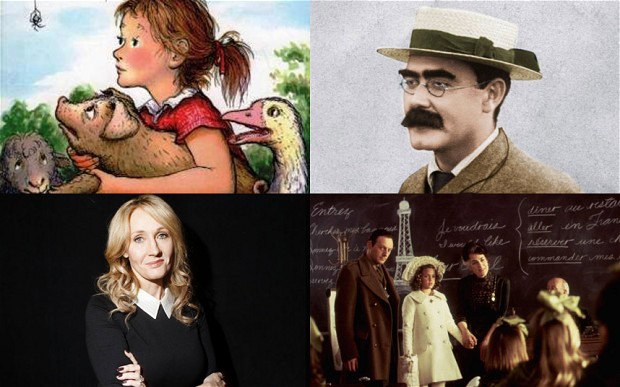
The New Yorker writer cherished for his elegance of style gives us an altruistic spider with exquisite manners, and a pig to make her proud. There are intimations of mortality, but a plot of fame and legacy thumbs its nose at the inevitable.

The Little Prince

Antoine de Saint-Exupéry (1943)

The Little Prince falls to Earth to meet the author, who has crashed his plane. His quizzical, wise stories of other planets (most of which are inhabited by solitary monomaniacs) lead to the daftest of all – our own.

Pippi Longstocking

Astrid Lindgren (1945)

It’s quite something to live as an orphan with just a horse and a monkey for companions. The heroine has a chutzpah that makes her sound at her most adult when she’s flouting adult conventions, especially at teatime.

Emil and the Detectives

Erich Kästner (1929)

When Emil is robbed of his mother’s hard-earned savings (that were never likely to stretch far), he has help from a scratch squad of child detectives from Berlin. However much this sounds like the best child’s game ever, the real world is seldom far away.

James and the Giant Peach

Roald Dahl (1961)

One of Dahl’s earliest, best, and most fully developed tales. There is no attempt to make the giant insects or articulate clouds seem natural: this is a world of wonder, more marvellous than Wonka’s, even.

Winnie the Pooh

A A Milne (1926)

Characters begin days by visiting one another, and end up shifting houses, learning to fly or surviving floods.

A Little Princess

Frances Hodgson Burnett (1905)

Sara has a privileged background but is now living as a Cinderella figure; and she plays at being a princess. But her response shows that being a princess is less a social ranking than a state of mind.

The Just So Stories

Rudyard Kipling (1902)

How did the leopard get his spots? How was the alphabet made? Why are elephant’s trunks so long? Kipling is the model of the patient parent in the face of constant questions. And who cares about evolution? This is much more fun.

A Journey to the Centre of the Earth

Jules Verne (1864)

Verne uses all the tricks that make Anthony Horowitz so successful – the action-packed chapters that end at just the right time and the sense of deepening mystery – but also a knack for convincing us that there really might be creatures down there.

The Wind in the Willows

Kenneth Grahame (1908)

The idyllic, stylised account of life on the river, with anxious glimpses beyond it, is a masterclass in character-driven comedy – alongside the arriviste Toad is the petit bourgeois Mole, and Rat, the gentleman of leisure.

The Doll People

Ann M Martin and Laura Godwin (2000)

The dolls in your dolls’ house might look inanimate to you, but you clearly have no idea of what they get up to at night. They’re casing the joint, tracking lost relatives and dodging that cruel fate – PDS (Permanent Doll State).

The Child that Books Built

Francis Spufford (2002)

Although this book isn’t written for children, the more reflective might enjoy it as a guide on how to grow into reading; and it’s a wonderfully eloquent take on how growing up happens unexpectedly.

THE BEST OF THE REST

(more…)

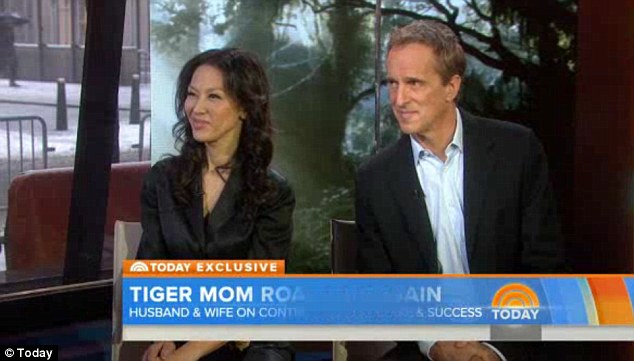
Is Tiger Mom a Racist?

February 4, 2014


CHUA


Whether Amy Chua dubbed the “Tiger Mom” is a racist is not the point. Rather we should be talking about how skewed her thinking is.

Ms. Chua continues to measure success by academic scores, college degrees and careers. This is a very dangerous opinion because it says to all those with only decent grades and moderate salaries that they are not successful. Perhaps even that they are failures.

This is of course rubbish!

We should not be defined by our test scores or our take home pay but on what caliber person we are. Are we happy, generous and selfless? Do we possess integrity and do we try our best? Do we make time for family and friends?

Instead of listing cultures and religions that she thinks achieves what is an unrealistic and superficial version of success, she should be trying to pitch a positive message to her readers. Not everyone can be a Mormon or an Asian or Nigerian. But everyone can contribute to the world in a profoundly positive way. Forget trying to emulate cultures and religions, and instead, try to be your best self!

If we follow the Tiger Mom’s model for success we start to label. We look down at cashiers, house painters, taxi drivers and hairdressers.  We start putting more pressure on our kids to get into prominent colleges rather than concentrating on influencing them to be kind and give charity. In short, we become snobs!

Is Tiger Mom a racist? Personally, I don’t care.

One thing I do suspect though – I suspect she isn’t the success she thinks she is.


Click on the link to read An Obsession With Success Leads Tiger Mother to Failure

Click on the link to read Parenting, Like Teaching is a Balancing Act


14 Books Featuring Inspirational Female Heroines

December 19, 2013


Courtesy of of The Huffington Post


The Paper Bag Princess – Robert Munsch, illustrated by Michael Martchenko
Let’s start at the very beginning, with a picture book that will encourage even very young girls to see themselves as the captains of their own destinies. When the titular heroine’s wedding to a prince is ruined by a dragon who steals away her betrothed, the princess replaces her burned up clothes with a paper bag and sets off to rescue him. That’s right – a princess doing the rescuing! I guess that makes her fiancé a gentleman in distress. Along the way, she learns about self-respect, independence, and being her own person. And for our pink-obsessed toddlers – the word “princess” in the title might tempt them to show some interest.


Ella Enchanted – Gail Carson Levine
This book also makes use of fairy-tale princess tropes – in fact, it’s a retelling of Cinderella. And yes, the heroine does fall in love with a charming prince. But in this book, Ella’s magical appearances at the royal balls comprise only a small part of her adventures. Cursed to be obedient, she spends the book struggling to overcome the enforced subservience that has defined her, and in the process must be rebellious, self-assured, and willing to break all the rules to find her own way in life. She tames ogres with her gift for speaking in tongues, and she refuses the man she loves because she knows he can’t save her from her curse. Actually, she saves his life with her quick wits, and he is the one who shows her tenderness and compassion. In the end, only she can save herself, and she has the force of will to do it. Ella is a funny, clever, brave protagonist who refuses to fit herself into the mold society has created for her.


The Hunger Games – Suzanne Collins
Chances are high that any tween you know has already read The Hunger Games … and seen the two movies. But if not, now’s the time. Our heroine Katniss has taken over the role of breadwinner after her father’s death, and she supports her family in a way women are rarely shown to do – by poaching game from beyond the city’s walls. Her skills with a bow and knife come in handy when she is thrown into the arena for a brutal televised event in which teenagers from the poverty-stricken districts surrounding the Capitol fight to the death. Suzanne Collins does an admirable job creating a cast of characters among which gender is the least defining characteristic. All of the teens, especially Katniss, must find a footing somewhere between ruthlessness and compassion in order to survive. Her ability to fight for self-preservation, with a determination long reserved for male characters, is well-balanced with her humanity.


Divergent – Veronica Roth
The dystopian world of Divergent seems set up to eliminate traditional gender roles. Each person is given a chance, at the age of 16, to choose a faction in which they will spend their adulthood. Factions are defined by the virtue they most value — courage, knowledge, love, selflessness, and honesty. It isn’t the women who are loving and selfless while the men are brave and honest; instead, each faction contains both men and women who exemplify these virtues. Our heroine, Tris, chooses Dauntless, the courageous faction, giving readers a daring, rough-and-ready heroine with action-hero qualities female characters are rarely given. She is adept with weapons, willing to undergo extreme physical pain in order to accomplish her goals, and, most importantly, always an agent. She’s not one to wait around for opportunities to pass by or for opponents to outmaneuver her, meaning she’s almost always in control of the situation.


The Lioness Quartet – Tamora Pierce
Tamora Pierce probably changed my life. She’s written a number of YA fantasy series about strong women, but The Lioness Quartet was the one that started it all. The heroine, Alanna, shatters the gender roles of her fictional world, Tortall, by conning her way into a position as a page in training for knighthood. When her sex is eventually revealed, her accomplishments are too great to deny, and she ultimately ends the restriction against female knights in her kingdom. Alanna is clever, strong, and able to take her destiny into her own hands – and while romance is never at the forefront of the series, the books grant her an unusual amount of sexual agency, which is still sadly uncommon even in books set in the modern day. Alanna’s freedom to experiment with romance and her sexuality is treated with responsibility, sending a great message about safety and protection while allowing her to be empowered to make her own choices.
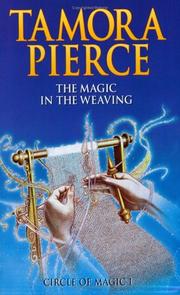

Circle of Magic series – Tamora Pierce
Okay, just one more Tamora Pierce series! The Circle of Magic books are aimed at slightly younger readers, eschewing romantic subplots for straightforward adventure (and heartwarming friendships). The four protagonists, including three girls and two people of color (an unfortunate rarity in YA fantasy), spend the books learning to control their elemental forms of magic – and to use them to battle catastrophic threats to themselves, their loved ones, and even their society. These books emphasize the unique strengths each of us have within ourselves. I know I reread these books over and over, imagining what my special power might be. That’s a mental debate I want my daughters to have someday!


The Hero and the Crown – Robin McKinley
Robin McKinley has written a whole boxful of books perfect for young women – Rose Daughter, The Blue Sword, and Spindle’s End among them. But The Hero and the Crown was particularly inspiring to me. The protagonist, Aerin, is a social outcast despite being the daughter of the king. Her red hair makes her stand out, she can’t perform the magic other royals do naturally, and she hates needlework. But her penchant for more martial arts like sword-fighting ultimately makes her invaluable to the court that once gave her the cold shoulder. Aerin takes on potion-mixing and dragon-slaying over the course of the novel, eventually saving her kingdom from utter desolation. Though the book contains strong men as love interests, Aerin is the unquestioned heroine and leader of the quest – there’s even a fun role reversal in which the wounded princess is tended to after battle by a nurturing male companion!


Enchanted Forest Chronicles – Patricia C. Wrede
Like The Paper Bag Princess, the Enchanted Forest Chronicles turns the princess paradigm on its head by setting the royal heroine next to a dragon. In this version, Princess Cimorene is an independent-minded girl who hates being a princess – so she runs away to keep house for a dragon instead. Of course. Cimorene’s domestic duties showed me, a girl who loved baking, that girly stuff needn’t be entirely incompatible with courage and self-sufficiency. But more importantly, Cimorene is a badass who almost always manages to save the day – even the dragons need her protection! The books are written with a lighthearted wit that sets it apart from more melodramatic epics, making them welcoming to girls who aren’t established fantasy fans.


Caddie Woodlawn – Carol Ryrie Brink
YA novels set in historical times face an extra challenge: They must grapple with the very real restrictions suffered by women and girls in world history. Caddie Woodlawn features a tomboyish frontier girl who chooses a life running wild with her brothers rather than inside dipping candles. The Newbery-award-winning book inspires girls to question the gendered expectations that they live with and to embrace their adventurous, outdoorsy side. Of course, the historical frontier setting presents problems; Caddie’s ultimate need to “grow up” by becoming a subdued, presentable lady, as well as the deeply problematic representations of American Indians throughout the book, both require consideration, and an open conversation with your daughter about these troublesome aspects of the book might allow for a great learning experience.


Little Women – Louisa May Alcott
This beloved children’s classic has four heroines, three of whom don’t seem all that empowering (although we find them quite lovable nonetheless). However, the real protagonist, Jo March, is a real spitfire. Teased for being rough and mannish by her sisters and friends, Jo learns to embrace her bold and outspoken nature. Her ambition, which seems like an unlady-like distraction from domestic duties at first, makes her an asset to the family as she begins to earn money to support them with her writing, and while she somewhat tames her coltish tendencies as she grows into a woman, she never allows pressure to be feminine to change who she really is. As I grew into myself, I found Jo was increasingly my favorite of the little women – she embodies the empowerment we can find by celebrating the strengths and quirks that make us different from those around us.


Little House on the Prairie – Laura Ingalls Wilder
The Little House books, written by the same tomboyish girl who stars in them, offer a window into life in the frontier West – and Laura’s adventurous spirit, like Caddie Woodlawn’s, means she’s always getting her apron dirty running around the prairie, the woods, or the shores of the lake. But she also knows how to help her pa mend a roof and how to get dinner on the table. Like Caddie Woodlawn, these books also speak to a troubled time in America’s history, as we can see in the often stereotypical, othering portrayals of American Indians which should be discussed with young, impressionable readers.


Emily of New Moon – L.M. Montgomery
I’ve documented my adoration for Anne of Green Gables, but there’s just something about Emily Starr, the heroine of L.M. Montgomery’s lesser-known YA series, that really inspired me. Like Anne, Emily is smart, imaginative, and a bit different. Unlike Anne, Emily keeps her career at the center of her life, devoting herself to her writing and eventually becoming a successful novelist. Emily’s character is believed to be semi-autobiographical, as Montgomery herself was (obviously) a career writer. Though Emily’s story culminates in romantic fulfillment, she never wavers from her true self: driven, independent, and strong. She doesn’t change herself for love, and she doesn’t set her dreams of personal glory aside. Instead, she sets out to achieve them with self-confidence, and she continually perseveres in the face of setbacks and easy outs.


A Girl Named Disaster – Nancy Farmer
Nhamo, our protagonist, manages to flee a frightening fate and forge a path through the wilderness to a new life in this engrossing novel. Facing marriage to a cruel man at only 11, Nhamo runs away from the village in Mozambique where she grew up to search for her father across the border in Zimbabwe. Utterly alone, she must overcome the dangers of a treacherous forest, where she ultimately wanders for months, with nothing but her own wits. Such a journey would push anyone to the point of breaking, but Nhamo’s strength and heart keep her alive and moving forward. As a girl who’d read Hatchet and My Side of the Mountain with fascination, it thrilled me to read a wilderness survival story with such a compelling female lead – even girls who hate camping (me) can engross themselves in stories of girl vs. nature.


The Golden Compass – Philip Pullman
Lyra Belacqua stands apart from most girls I read about as a kid. Lyra’s sly, deceitful nature allows her to stay alive throughout the dangers she encounters in the series, but it doesn’t make her morally admirable, or even likable. Reading about a girl who is distinguished by qualities other than her essentially gentle nature is a great reminder that girls, like boys, come in a wide variety of personalities, each with our own strengths and flaws. And Lyra’s scrappiness, will to live, and canny mind make her a compelling heroine to get to know in the course of three epic books every kid should read at least once.
 

Click on the link to read The New York Public Library’s 100 Most Requested Children’s Books

Click on the link to read Stunning Photographs of the Most Beautiful Libraries in the World

Click on the link to read The Call to Stop Kids From Reading Books they Actually Enjoy

Click on the link to read The Classic Children’s Books they Tried to Ban

Click on the link to read How Spelling Mistakes can Turn a Compliment into Something Quite Different.

Click on the link to read Why Spelling is Important at Starbucks

Click on the link to read The Ability to Spell is a Prerequisite for Getting a Tattoo (Photos)

The New York Public Library’s 100 Most Requested Children’s Books

November 24, 2013


tied

Don’t listen to anyone that tells you books no longer make a good Christmas gift. Below are some of the most popular current titles to help you re-engage younger readers:

New York Public Library’s new list of the century’s 100 best kids’ books
“Alexander and the Terrible, Horrible, No Good, Very Bad Day” by Judith Viorst, illustrated by Ray Cruz (1972)
“All-of-a-Kind Family” by Sydney Taylor, illustrations by Helen John (1951)
“Amelia Bedelia” by Peggy Parish, illustrated by Fritz Siebel (1963)
“The Arrival” by Shaun Tan (2006)
“Bark, George” by Jules Feiffer (1999)
“Because of Winn-Dixie” by Kate DiCamillo (2000)
“Ben’s Trumpet” by Rachel Isadora (1979)
“Big Red Lollipop” by Rukhsana Khan, illustrated by Sophie Blackall (2010)
“The Birchbark House” by Louise Erdrich (1999)
“The Book of Three” by Lloyd Alexander (1964)
“The Bossy Gallito / El Gallo De Bodas: A Traditional Cuban Folktale” by Lucia M. Gonzalez
“Bread and Jam for Frances” by Russell Hoban, illustrated by Lillian Hoban (1964)
“Bridge to Terabithia” by Katherine Paterson (1977)
“Brown Bear, Brown Bear, What Do You See?” by Bill Martin Jr., illustrated by Eric Carle (1967)
“Caps for Sale” by Esphyr Slobodkina (1947)
“The Cat in the Hat” by Dr. Seuss (1957)
“Chains” by Laurie Halse Anderson (2008)
“A Chair For My Mother” by Vera B. Williams (1982)
“Charlotte’s Web” by E.B. White, illustrated by Garth Williams (1952)
“Chicka Chicka Boom Boom” by Bill Martin Jr. and John Archambault, illustrated by Lois Ehlert (1989)
“Corduroy” by Donald Freeman (1976)
“Curious George” by H.A. Rey (1941)
“Don’t Let the Pigeon Drive the Bus” by Mo Willems (2003)
“Esperanza Rising” by Pam Muoz Ryan (2000)
“Freight Train” by Donald Crews (1978)
“Frog and Toad Are Friends” by Arnold Lobel (1970)
“From the Mixed-Up Files of Mrs. Basil E. Frankweiler” by E.L. Konigsburg (1967)
“George and Martha” by James Marshall (1972)
“The Giver” by Lois Lowry (1993)
“Go Away, Big Green Monster!” by Ed Emberley (1992)
“Go, Dog, Go!” by P.D. Eastman (1961)
“Goodnight Moon” by Margaret Wise Brown, illustrated by Clement Hurd (1947)
“Grandfather’s Journey” by Allen Say (1993)
“The Graveyard Book” by Neil Gaiman (2008)
“Green Eggs and Ham” by Dr. Seuss (1960)
“Harold and the Purple Crayon” by Crockett Johnson (1955)
“Harriet the Spy” by Louise Fitzhugh (1964)
“Harry Potter and the Sorcerer’s Stone” by J.K. Rowling (1997)
“Hatchet” by Gary Paulsen (1989)
“The Hobbit” by J.R.R. Tolkien (1937)
“Holes” by Louis Sachar (1998)
“Honey I Love, and Other Poems” by Eloise Greenfield; ill. by Leo& Diane Dillon
“Ingri and Edgar Parin D’Aulaires Book of Greek Myths” by Ingri and Edgar Parin D’Aulaire (1962)
“The Invention of Hugo Cabret” by Brian Selznick (2007)
“Joseph Had a Little Overcoat” by Simms Taback (1999)
“Jumanji” by Chris Van Allsburg (1981)
“Lilly’s Purple Plastic Purse” by Kevin Henkes (1996)
“The Lion and the Mouse” by Jerry Pinkney (2009)
“The Lion, the Witch and the Wardrobe” by C.S. Lewis (1950)
#50 Little House in the Big Woods by Laura Ingalls Wilder, illustrated by Garth Williams (1932)
“The Little Prince” by Antoine de Saint-Exupery (1943)
“Lon Po Po: A Red-Riding Hood Story From China” by Ed Young (1989)
“Madeline” by Ludwig Bemelmans (1939)
“Make Way for Ducklings” by Robert McCloskey (1941)
“Matilda” by Roald Dahl, illustrated by Quentin Blake (1988)
“Meet Danitra Brown” by Nikki Grimes, illustrated by Floyd Cooper (1994)
“Mike Mulligan’s Steam Shovel” by Virginia Lee Burton (1939)
“Millions of Cats” by Wanda Gag (1928)
“Miss Nelson is Missing!” by Harry Allard, illustrated by James Marshall (1977)
“Mr. Popper’s Penguins” by Richard and Florence Atwater; illustrated by Robert Lawson
“Mrs. Frisby and the Rats of NIMH” by Robert C. O’Brien (1971)
“Mufaro’s Beautiful Daughters” by John Steptoe (1987)
“My Father’s Dragon” by Ruth Stiles Gannett, illustrated by Ruth Chrisman Gannett (1948)
“My Name is Yoon” by Helen Recorvits, illustrated by Gabi Swiatkowska (2003)
“Olivia” by Ian Falconer (2000)
“One Crazy Summer” by Rita Williams Garcia (2010)
“The People Could Fly” by Virginia Hamilton, illustrated by Leo & Diane Dillon (2004)
“The Phantom Tollbooth” by Norton Juster, illustrated by Jules Feiffer (1961)
“Pierre” by Maurice Sendak (1962)
“Pink and Say” by Patricia Polacco (1994)
“Pippi Longstocking” by Astrid Lindgren (1950)
“Pyramid” by David Macaulay (1975)
“Ramona the Pest” by Beverly Cleary (1968)
“Rickshaw Girl” by Mitali Perkins, illustrated by Jamie Hogan (2007)
“Roll of Thunder, Hear My Cry” by Mildred Taylor (1976)
“Rumpelstiltskin” by Paul O. Zelinsky (1986)
“A Sick Day for Amos McGee” by Philip Stead, illustrated by Erin E. Stead (2010)
“The Snowy Day” by Ezra Jack Keats (1962)
“Stone Soup” by Marcia Brown (1947)
“The Stories Julian Tells” by Ann Cameron, illustrated by Ann Strugnell (1981)
“The Story of Ferdinand” by Munro Leaf, illustrated by Robert Lawson (1936)
“Strega Nona” by Tomie de Paola (1975)
“Swimmy” by Leo Lionni (1963)
“Sylvester and the Magic Pebble” by William Steig (1969)
“Tales of a Fourth Grade Nothing” by Judy Blume (1972)
“Tar Beach” by Faith Ringgold (1991)
“The Tales of Uncle Remus: The Adventures of Brer Rabbit” by Julius Lester, illustrated by Jerry Pinkney (1987)
“Ten Nine Eight” by Molly Bang (1983)
“Tomie dePaola’s Mother Goose” by Tomie dePaola (1985)
“The True Story of the Three Little Pigs” by Jon Scieszka, illustrated by Lane Smith (1989)
“Tuesday” by David Wiesner (1991)
“The Very Hungry Caterpillar” by Eric Carle (1979)
“The Watsons Go to Birmingham, 1963” by Christopher Paul Curtis (1995)
“The Westing Game” by Ellen Raskin (1978)
“When You Reach Me” by Rebecca Stead (2009)
“Where Is the Green Sheep?” by Mem Fox, illustrated by Judy Horacek (2004)
“Where the Wild Things Are” by Maurice Sendak (1963)
“Why Mosquitoes Buzz in People’s Ears” by Verna Aardema, illustrated by Leo and Diane Dillon (1975)
“Winnie-the-Pooh” by A.A. Milne, illustrated by E.H. Shepard (1926)
“A Wrinkle in Time” by Madeleine L’Engle (1962)


Click on the link to read Stunning Photographs of the Most Beautiful Libraries in the World

Click on the link to read The Call to Stop Kids From Reading Books they Actually Enjoy

Click on the link to read The Classic Children’s Books they Tried to Ban

Click on the link to read How Spelling Mistakes can Turn a Compliment into Something Quite Different.

Click on the link to read Why Spelling is Important at Starbucks

Click on the link to read The Ability to Spell is a Prerequisite for Getting a Tattoo (Photos)

Click on the link to read This is What Happens When You Rely on Spell Check


Stunning Photographs of the Most Beautiful Libraries in the World

October 19, 2013

lib1

I love libraries and below are some of the world’s very best as photographed by British academic Dr James Campbell:

The grand Mafra Palace Library, in Mafra, Portugal

lib2

The Codrington Library was built to house the thousands of books at All Souls College in Oxford

lib3

Biblioteca Joanina, in Coimbra, Portugal

lib4

George Peabody Library, Baltimore

lib5

Admont Abbey in Austria

lib6

Click on the link to read The Call to Stop Kids From Reading Books they Actually Enjoy

Click on the link to read The Classic Children’s Books they Tried to Ban

Click on the link to read How Spelling Mistakes can Turn a Compliment into Something Quite Different.

Click on the link to read Why Spelling is Important at Starbucks

Click on the link to read The Ability to Spell is a Prerequisite for Getting a Tattoo (Photos)

Click on the link to read This is What Happens When You Rely on Spell Check

Click on the link to read Hilarious Menu Items Lost in Translation

Click on the link to read The 15 Most Commonly Misspelled Words in the English Language

The Call to Stop Kids From Reading Books they Actually Enjoy

October 7, 2013

The Hunger Games

At a time when just getting kids to read a book is the stuff of small miracles, why would anyone want to make books less accessible to children. I am sure The Hunger Games will never go down a classic of literature but I really don’t care. The objective of books is to entertain, inspire and transport its readers to distant places, cultures, traditions and experiences.  If the children of the day find that The Hunger Games achieves this goal then its up to us, the educators, to get in touch with them rather than the other way around.

I am a literature major at University. I studies every period of literature dating back from Chaucer onwards. And guess what? I find many so-called classics to be utterly tedious. My tutor was gobsmacked when I told him that I found Robinson Crusoe boring.

“How can you not like Robinson Crusoe? It is the most printed book behind the bible!”

His argument didn’t wash. I am never going to like a book just because it is deemed a classic or it has had multiple reprints.

And the same goes with Shakespeare. People are aghast when I say that Shakespeare should not be a compulsory fixture in the high school curriculum. How many people that strongly believe in studying Shakespeare in High School have a copy of one of his plays on their bedside table? How many of them are ever likely to read Macbeth or Hamlet for pleasure? When is the last time you ever had a deep urge to reread The Tempest?

We are hypocrites if we subject children to the types of books we are glad we no longer have to read ourselves. If we are ever going to get children to read we must employ the same criteria for reading as we have when we search for a book. Our students must find the subject matter topical, interesting, amusing, dramatic and most of all – ENTERTAINING:

Joanna Trollope says children should be taught literary classics in school because they spend too much time reading fantasy books, such as The Twilight Saga. 

The novelist said fantasy teen fiction, such as the hugely popular Hunger Games series, fails to give children an insight into reality or guidance in moral dilemmas. 

The Rector’s Wife author said youngsters should be encouraged to read the likes of Jane Austen, George Eliot and the Bronte sisters.

However, she admitted her 12-year-old grandson loves The Hunger Games, about a post-apocalyptic nation in which two children are selected to compete to the death in an annual televised battle.

Trollope told The Sunday Times: ‘I feel children are missing out on an enormous amount.

‘The consolation to be found in the classics is absolutely infinite and greater than fantasy novels. Fantasy doesn’t relate to the real world.’

The author, who used to be a teacher, said using popular culture can be a useful tool to lead children towards the classics.

She said she gave her class The Beatles lyrics to study in one English poetry class before giving them Robert Frost to read.

Last year, the three Hunger Games books were in the top 10 bestsellers list with more than 2.1million sold.

Click on the link to read The Classic Children’s Books they Tried to Ban

Click on the link to read How Spelling Mistakes can Turn a Compliment into Something Quite Different.

Click on the link to read Why Spelling is Important at Starbucks

Click on the link to read The Ability to Spell is a Prerequisite for Getting a Tattoo (Photos)

Click on the link to read This is What Happens When You Rely on Spell Check

Click on the link to read Hilarious Menu Items Lost in Translation

Click on the link to read The 15 Most Commonly Misspelled Words in the English Language

Click on the link to read Who Said Grammar Isn’t Important?

The Classic Children’s Books they Tried to Ban

July 1, 2013


wild

It’s hard to imagine anyone would feel the need to ban any of these classic stories:

Most adults will have fond memories of reading of the adventures of Winnie the Pooh in the Hundred Acre Wood as a child, but few will realize that it was banned because the animals spoke.

The much-loved book by A.A. Milne is among several popular children’s books and a dictionary that have been banned in the U.S. over the years for being anti-Christian, too sexual or damaging to industry.

Important works of literature such as The Diary of a Young Girl by Anne Frank, praised for its insight into the impact of the Second World War on children, was banned by a Virginia school over the ‘sexual content and homosexual themes’ when the definitive edition was released in 2010.

Other schools tried to ban it from reading lists because it was too depressing and last month a Michigan mother complained about its ‘pornographic tendencies’ over passages where Anne describes going through puberty.

Alice in Wonderland came in for similar criticism, with it being shelved in New Hampshire in 1900 for alleged references to sexual fantasies and masturbation. It has also been seen as promoting drug use.

Two books – Shel Silverstein’s The Giving Tree and Dr Seuss’s The Lorax – were both criticized for damaging the foresting industry.

A Colorado library barred the Giving Tree for being sexist in 1988 and in 1989 a Californian school district banned The Lorax incase it put children off a career in the logging industry.

One of the most popular Dr Seuss books, Green Eggs and Ham, was not allowed in parts of California because of suggestions of ‘homosexual seduction’, according to Buzzfeed.

(more…)

7 Reasons Why Reading Aloud To Your Kids Applies to All Ages

May 26, 2013

aloud

Courtesy of babble.com

1. It’s time spent together. Reading time is time when you’re focusing on no one else and nothing else but them. It’s impossible to read to your kid and look at your smartphone or watch TV at the same time. I read to each of my children separately before bed. This lets me spend quality time with them individually. It makes for a longer bedtime ritual, but I don’t care because I love it.

2. It’s a conversation starter. Books always give us a reason to talk with each other, even if we don’t feel like we have anything to talk about. It keeps communication open.

3. It’s a great way to talk about emotional health. We talk about the things that happen in the stories, how we would feel if they happened to us, and how we might deal with such events the same or differently. Books have helped me broach topics that I might not have thought to raise if it weren’t for the subject matter in the story.

4. It’s a great way to honor the individuality in your children. I read different things to my daughter than I do to my son. We go to the bookstore and they pick out books about topics about which they are interested. Through paying attention to what they want to read, I can learn more about what their likes and dislikes are, including what they might want to be when they grow up.

(more…)

Teacher Buys 9th Grader “50 Shades of Grey”

May 5, 2013

shades

Teachers can’t afford to be stupid and irresponsible. Our carelessness and negligence can cost far too much to be tolerated lightly. Even if we are to believe that this teacher had no idea that the book he bought for his student was for mature readers only, the lack of awareness and due diligence to simply read the front cover (let alone doing basic research on the book’s content) is reason enough to hand him a much more severe penalty than a week off:

(more…)

The Pajamas that Reads Bedtime Stories to Kids

April 28, 2013


I know finding the time to read to your kids can be difficult, but surely this is not an activity you would wish to palm off to a garment?

Now, children can “wear their bedtime stories” with these smart pajamas from a US-based company.

The smart pajamas, made by Idaho-based Smart PJs, have printed dots that work like QR codes and unlock stories on a mobile device, Mashable reported.

Using a smartphone, parents can scan the dot patterns on their child’s pajamas, unlocking a story with pictures and words on the screen. What’s more, a free companion app can even recite the tales aloud,” it said.

The pajamas cost $25 each and are available for both boys and girls aged 1 to 8.

But Mashable also cautioned users on using smartphones before bed, saying they can affect the body’s sleep cycle.

Smart PJs described itself as “an innovative company with the distinction of creating the ‘Worlds first and only interactive Pajamas!”

“We have children ourselves and understand how important a bedtime story is for kids, and how important a quality pair of pajamas is for parents, so we have combined them both into one EASY and FUN to use product that every kid and parent will LOVE!” it said.

Click on the link to read Why Spelling is Important at Starbucks

Click on the link to read The Ability to Spell is a Prerequisite for Getting a Tattoo (Photos)

Click on the link to read This is What Happens When You Rely on Spell Check

Click on the link to read Hilarious Menu Items Lost in Translation

Click on the link to read The 15 Most Commonly Misspelled Words in the English Language

Click on the link to read Who Said Grammar Isn’t Important?