Guess What Percentage of Teachers Considered Quitting this Year

December 22, 2013

gove

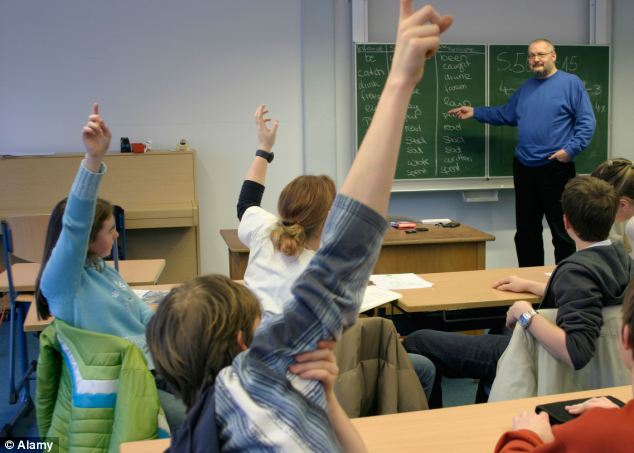
What percentage of British teachers considered quitting their job this year?

10%?

Not even close!

25%?

Keep on going.

35%?

You’re not even trying.

How about 45?

Keep going.

50%?

Correct! According to the Teaching union NASUWT, almost half the teachers in England were considering giving their jobs away. Whilst I don’t take union figures as gospel, the survey results point to two very severe problems.

  • Teachers are not happy. Increased Government funding and standardized testing are not going to sufficiently impact student performance when the most important piece in the puzzle, the teacher, are not committed to seeing the year out. A teacher that isn’t happy is more than an impediment to learning – it is a fatal blow.
  • The latest trend in education policy is to put more pressure on teachers. Paperwork has become ridiculously onerous, constant changes to curriculum have left teachers in a tailspin, the deterioration of classroom behaviour has left many teachers suffering undue stress and assessments by government, school administration, peers, parents and even students have made teaching one of the most critiqued professions around.

My experience with teachers is that they join the profession largely from a desire to make a difference. The fact that so many enter the job with idealism and passion that becomes eroded so quickly is cause for great alarm.

From all the ideas and methodologies surfacing in education there seems to be one crucial policy area that continues to be avoided:

What policies can we put in place to support teachers rather than judge them, to assist them rather than to overwhelm and suffocate them?

If public policy doesn’t show concern for teachers, it stands to reason that many teachers wont get the job done.

Click on the link to read The Classroom Shouldn’t be a War Zone for Our Teachers

Click on the link to read Remember When Teachers Were Shown Respect? (Video)

Click on the link to read If You Think Teaching is so Easy You Should Try it for Yourself

Click on the link to read Teachers are Extremely Vulnerable to False Accusations
Click on the link to read Top 10 Ways of Dealing with Teacher Burnout

Click on the link to read Tips For Teachers for Managing Stress

A Teacher’s Greatest Confidence Boost

December 21, 2013


Is there anything better for a teacher’s self esteem than the genuine appreciation of their students? Below is a letter math teacher Jennifer Davis received from one of her students.


thanks


Click on the link to read If Only All Science Teachers Were Like This (Video)

Click on the link to read Teacher Having a Ball Whilst Grading Papers (Video)

Click on the link to read Top 5 Musicians that Were Once Teachers

Click on the link to read Principal Rewards Students for Reaching Reading Goals

Click on the link to read Proof that Teachers Care

Click on the link to read The Short Video You MUST Watch!

14 Books Featuring Inspirational Female Heroines

December 19, 2013


Courtesy of of The Huffington Post


The Paper Bag Princess – Robert Munsch, illustrated by Michael Martchenko
Let’s start at the very beginning, with a picture book that will encourage even very young girls to see themselves as the captains of their own destinies. When the titular heroine’s wedding to a prince is ruined by a dragon who steals away her betrothed, the princess replaces her burned up clothes with a paper bag and sets off to rescue him. That’s right – a princess doing the rescuing! I guess that makes her fiancé a gentleman in distress. Along the way, she learns about self-respect, independence, and being her own person. And for our pink-obsessed toddlers – the word “princess” in the title might tempt them to show some interest.


Ella Enchanted – Gail Carson Levine
This book also makes use of fairy-tale princess tropes – in fact, it’s a retelling of Cinderella. And yes, the heroine does fall in love with a charming prince. But in this book, Ella’s magical appearances at the royal balls comprise only a small part of her adventures. Cursed to be obedient, she spends the book struggling to overcome the enforced subservience that has defined her, and in the process must be rebellious, self-assured, and willing to break all the rules to find her own way in life. She tames ogres with her gift for speaking in tongues, and she refuses the man she loves because she knows he can’t save her from her curse. Actually, she saves his life with her quick wits, and he is the one who shows her tenderness and compassion. In the end, only she can save herself, and she has the force of will to do it. Ella is a funny, clever, brave protagonist who refuses to fit herself into the mold society has created for her.


The Hunger Games – Suzanne Collins
Chances are high that any tween you know has already read The Hunger Games … and seen the two movies. But if not, now’s the time. Our heroine Katniss has taken over the role of breadwinner after her father’s death, and she supports her family in a way women are rarely shown to do – by poaching game from beyond the city’s walls. Her skills with a bow and knife come in handy when she is thrown into the arena for a brutal televised event in which teenagers from the poverty-stricken districts surrounding the Capitol fight to the death. Suzanne Collins does an admirable job creating a cast of characters among which gender is the least defining characteristic. All of the teens, especially Katniss, must find a footing somewhere between ruthlessness and compassion in order to survive. Her ability to fight for self-preservation, with a determination long reserved for male characters, is well-balanced with her humanity.


Divergent – Veronica Roth
The dystopian world of Divergent seems set up to eliminate traditional gender roles. Each person is given a chance, at the age of 16, to choose a faction in which they will spend their adulthood. Factions are defined by the virtue they most value — courage, knowledge, love, selflessness, and honesty. It isn’t the women who are loving and selfless while the men are brave and honest; instead, each faction contains both men and women who exemplify these virtues. Our heroine, Tris, chooses Dauntless, the courageous faction, giving readers a daring, rough-and-ready heroine with action-hero qualities female characters are rarely given. She is adept with weapons, willing to undergo extreme physical pain in order to accomplish her goals, and, most importantly, always an agent. She’s not one to wait around for opportunities to pass by or for opponents to outmaneuver her, meaning she’s almost always in control of the situation.


The Lioness Quartet – Tamora Pierce
Tamora Pierce probably changed my life. She’s written a number of YA fantasy series about strong women, but The Lioness Quartet was the one that started it all. The heroine, Alanna, shatters the gender roles of her fictional world, Tortall, by conning her way into a position as a page in training for knighthood. When her sex is eventually revealed, her accomplishments are too great to deny, and she ultimately ends the restriction against female knights in her kingdom. Alanna is clever, strong, and able to take her destiny into her own hands – and while romance is never at the forefront of the series, the books grant her an unusual amount of sexual agency, which is still sadly uncommon even in books set in the modern day. Alanna’s freedom to experiment with romance and her sexuality is treated with responsibility, sending a great message about safety and protection while allowing her to be empowered to make her own choices.
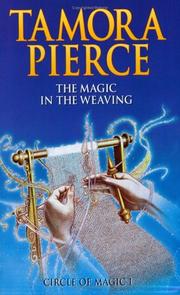

Circle of Magic series – Tamora Pierce
Okay, just one more Tamora Pierce series! The Circle of Magic books are aimed at slightly younger readers, eschewing romantic subplots for straightforward adventure (and heartwarming friendships). The four protagonists, including three girls and two people of color (an unfortunate rarity in YA fantasy), spend the books learning to control their elemental forms of magic – and to use them to battle catastrophic threats to themselves, their loved ones, and even their society. These books emphasize the unique strengths each of us have within ourselves. I know I reread these books over and over, imagining what my special power might be. That’s a mental debate I want my daughters to have someday!


The Hero and the Crown – Robin McKinley
Robin McKinley has written a whole boxful of books perfect for young women – Rose Daughter, The Blue Sword, and Spindle’s End among them. But The Hero and the Crown was particularly inspiring to me. The protagonist, Aerin, is a social outcast despite being the daughter of the king. Her red hair makes her stand out, she can’t perform the magic other royals do naturally, and she hates needlework. But her penchant for more martial arts like sword-fighting ultimately makes her invaluable to the court that once gave her the cold shoulder. Aerin takes on potion-mixing and dragon-slaying over the course of the novel, eventually saving her kingdom from utter desolation. Though the book contains strong men as love interests, Aerin is the unquestioned heroine and leader of the quest – there’s even a fun role reversal in which the wounded princess is tended to after battle by a nurturing male companion!


Enchanted Forest Chronicles – Patricia C. Wrede
Like The Paper Bag Princess, the Enchanted Forest Chronicles turns the princess paradigm on its head by setting the royal heroine next to a dragon. In this version, Princess Cimorene is an independent-minded girl who hates being a princess – so she runs away to keep house for a dragon instead. Of course. Cimorene’s domestic duties showed me, a girl who loved baking, that girly stuff needn’t be entirely incompatible with courage and self-sufficiency. But more importantly, Cimorene is a badass who almost always manages to save the day – even the dragons need her protection! The books are written with a lighthearted wit that sets it apart from more melodramatic epics, making them welcoming to girls who aren’t established fantasy fans.


Caddie Woodlawn – Carol Ryrie Brink
YA novels set in historical times face an extra challenge: They must grapple with the very real restrictions suffered by women and girls in world history. Caddie Woodlawn features a tomboyish frontier girl who chooses a life running wild with her brothers rather than inside dipping candles. The Newbery-award-winning book inspires girls to question the gendered expectations that they live with and to embrace their adventurous, outdoorsy side. Of course, the historical frontier setting presents problems; Caddie’s ultimate need to “grow up” by becoming a subdued, presentable lady, as well as the deeply problematic representations of American Indians throughout the book, both require consideration, and an open conversation with your daughter about these troublesome aspects of the book might allow for a great learning experience.


Little Women – Louisa May Alcott
This beloved children’s classic has four heroines, three of whom don’t seem all that empowering (although we find them quite lovable nonetheless). However, the real protagonist, Jo March, is a real spitfire. Teased for being rough and mannish by her sisters and friends, Jo learns to embrace her bold and outspoken nature. Her ambition, which seems like an unlady-like distraction from domestic duties at first, makes her an asset to the family as she begins to earn money to support them with her writing, and while she somewhat tames her coltish tendencies as she grows into a woman, she never allows pressure to be feminine to change who she really is. As I grew into myself, I found Jo was increasingly my favorite of the little women – she embodies the empowerment we can find by celebrating the strengths and quirks that make us different from those around us.


Little House on the Prairie – Laura Ingalls Wilder
The Little House books, written by the same tomboyish girl who stars in them, offer a window into life in the frontier West – and Laura’s adventurous spirit, like Caddie Woodlawn’s, means she’s always getting her apron dirty running around the prairie, the woods, or the shores of the lake. But she also knows how to help her pa mend a roof and how to get dinner on the table. Like Caddie Woodlawn, these books also speak to a troubled time in America’s history, as we can see in the often stereotypical, othering portrayals of American Indians which should be discussed with young, impressionable readers.


Emily of New Moon – L.M. Montgomery
I’ve documented my adoration for Anne of Green Gables, but there’s just something about Emily Starr, the heroine of L.M. Montgomery’s lesser-known YA series, that really inspired me. Like Anne, Emily is smart, imaginative, and a bit different. Unlike Anne, Emily keeps her career at the center of her life, devoting herself to her writing and eventually becoming a successful novelist. Emily’s character is believed to be semi-autobiographical, as Montgomery herself was (obviously) a career writer. Though Emily’s story culminates in romantic fulfillment, she never wavers from her true self: driven, independent, and strong. She doesn’t change herself for love, and she doesn’t set her dreams of personal glory aside. Instead, she sets out to achieve them with self-confidence, and she continually perseveres in the face of setbacks and easy outs.


A Girl Named Disaster – Nancy Farmer
Nhamo, our protagonist, manages to flee a frightening fate and forge a path through the wilderness to a new life in this engrossing novel. Facing marriage to a cruel man at only 11, Nhamo runs away from the village in Mozambique where she grew up to search for her father across the border in Zimbabwe. Utterly alone, she must overcome the dangers of a treacherous forest, where she ultimately wanders for months, with nothing but her own wits. Such a journey would push anyone to the point of breaking, but Nhamo’s strength and heart keep her alive and moving forward. As a girl who’d read Hatchet and My Side of the Mountain with fascination, it thrilled me to read a wilderness survival story with such a compelling female lead – even girls who hate camping (me) can engross themselves in stories of girl vs. nature.


The Golden Compass – Philip Pullman
Lyra Belacqua stands apart from most girls I read about as a kid. Lyra’s sly, deceitful nature allows her to stay alive throughout the dangers she encounters in the series, but it doesn’t make her morally admirable, or even likable. Reading about a girl who is distinguished by qualities other than her essentially gentle nature is a great reminder that girls, like boys, come in a wide variety of personalities, each with our own strengths and flaws. And Lyra’s scrappiness, will to live, and canny mind make her a compelling heroine to get to know in the course of three epic books every kid should read at least once.


Click on the link to read The New York Public Library’s 100 Most Requested Children’s Books

Click on the link to read Stunning Photographs of the Most Beautiful Libraries in the World

Click on the link to read The Call to Stop Kids From Reading Books they Actually Enjoy

Click on the link to read The Classic Children’s Books they Tried to Ban

Click on the link to read How Spelling Mistakes can Turn a Compliment into Something Quite Different.

Click on the link to read Why Spelling is Important at Starbucks

Click on the link to read The Ability to Spell is a Prerequisite for Getting a Tattoo (Photos)

Have Our Children Stopped Dreaming?

December 19, 2013

spec

AIMEE
I’ve thought it all out. We’re going to
live on a horse ranch, my husband and I.
I’ll work for NASA. And my husband…
he’ll do something completely different.
And we’ll offset each other. Like we’ll
have some things in common but we’ll also
have all these other dimensions that we
bring to the relationship. And that’s how
I know it’ll work.
JOE
(dismissive)
Sounds like a dream.
AIMEE
(right back at him)
It’s good to have dreams. Don’t you
think?

Above is dialogue from the best teenage drama I have seen in many years, The Spectacular Now.

It got me thinking. Do our children have dreams like our parents did? Like we did?

The generation of the moon landing always remind us that the event of man on the moon was not the main cause of celebration – it was the feeling that if we can walk on the moon, we can achieve anything we put our mind to.

Maybe those ambitions and dreams were dashed, leaving my generation feeling less convinced that vision and the determination to see it come to fruition is enough to make it happen. We still had dreams, but perhaps our faith in our capacity to see it through brought on a more lackluster work ethic and more brittle resolve.

Today’s children seem to have taken on our worst habits and abandoned the thirst for achieving something special. They don’t seem to know what they want to be or want to do. They often seem to lack the spark of self-belief to even contemplate achieving something monumental, or at least unique.

You might think I am being pessimistic when it comes to the next generation and their prospects for the future. This is certainly not the case. I have so much faith in our young. They have so much to offer and are extremely willing to learn. They just need to be ignited – to start believing again.

And they don’t need a moon landing or a Mars mission to get them dreaming again. They just need to look at their parents and teachers and role models and feel assured by what they see. If they see us living lives of integrity, taking smart risks, following our dreams, taking pleasure in our lives, they will understand that the hard work required is for a good reason. An achievable reason.We don’t want to raise a generation of children that shelves dreams in preference for the safe and boring road.

It’s up to us.

Study Claims that Being Attractive can give you Better Grades

December 17, 2013

AM4NT6

Does anyone actually believe this happens?

Not being attractive as a teenager may have consequences far more reaching than a bruised ego and scribing the occasional bad poem.

A new study suggests that a pretty face can be a source of lifelong advantage – beginning at secondary school – according to a report prepared for the Council on Contemporary Families.

The report, ‘In School, Good Looks Help and Good Looks Hurt (But They Mostly Help)’ says that from high school onwards, people rate better-looking people higher in intelligence, personality, and potential for success — and this often creates a self-fulfilling prophecy.

The sociologists behind the study, Rachel Gordon (University of Illinois at Chicago) and Robert Crosnoe (University of Texas at Austin) also say women gain an eight per cent wage bonus for above-average looks and pay a four per cent wage penalty for below-average looks.

For men, the bonus is only four per cent. But the penalty for below-average looks is even higher than for women – a full 13 per cent.

Gordon and Crosnoe argue that ‘lookism’ creates inequalities comparable to those created by racism, sexism, and family background.

They wrote: ‘(In high school) youth rated as better looking get higher grades and are more likely to attain a college degree than their peers, setting the stage for better economic outcomes through adulthood.


Click on the link to read Woman Plans to Give ‘Fat Notes’ Instead of Candy to Trick or Treaters

Click on the link to read The Unique Challenges that Body Image Represents for Females

Click on the link to read An 8-Year-Old’s Take on Body Image

Click on the link to read A Father’s Advice to His Daughter About Beauty

Click on the link to read The Call to Stop Telling Your Children they are Beautiful

Click on the link to read School Official’s Solution to Harassed Teen: Get a Breast Reduction

Our Education System Betrays Boys

December 16, 2013

boy

It bothers me when, as a result of girls outperforming boys on standardised tests, the assumption is made that girls are better equipped to succeed as they are inherently more academic.

Perhaps that assumption is true, but has it been thoroughly tested? What, if anything, has been done to change the way boys are being taught?

Dr. Kevin Donnelly, one of the sharpest minds in education policy and analysis is right to raise a few challenges which have, in his view, prevented boys from having an equal chance to shine in the classroom:

As to why our education system discriminates in favour of girls the reasons aren’t hard to find. As argued by the American author Michael Gurian “male and female brains learn differently” with girls maturing before boys in terms of academic ability, being able to socialise and interact with others and being more articulate expressing emotions.

When it comes to teaching primary school children how to read the most popular approach, called whole language where readers are told to look and guess, favours girls.

Boys need a highly structured, systematic model of reading based on phonics and phonemic awareness where they learn the relationship between letters and sounds and combinations of letters and sounds – the very approach no longer taught.

Since the late ’60s and early ’70s, mainly due to the rise of feminism and the fact that there are so few male primary school teachers, the way teachers teach and the way classrooms are structured have been feminised.

Teachers no longer stand at the front of the room and children are expected to direct their own learning in open, mixed ability classrooms. As a result, boys are easily distracted, become behavioural problems and soon fall behind.

The fact that a lot of learning adopts an open-ended, inquiry approach where teachers become guides by the side and facilitate instead of directing what should happen also works against boys’ preferred learning styles.

Boys need clear direction, explicit goals, timely feedback and an orderly classroom environment where they know what they have to do and what constitutes pass and fail.

Boys also need to be taught to respect authority and to have teachers prepared to enforce a disciplined environment where there are consequences for misbehaviour.

While there is no doubt that many women are still discriminated against and that significant issues like domestic violence must be addressed, it’s also true that making education more girl friendly shouldn’t mean that boys lose out.

Click on the link to read  Are Kindergarten Teachers Biased Against Boys?

Click on the link to read Should We Include Feminism in the Curriculum?

Click on the link to read Arguments For and Against Single-Sex Education

Click on the link to read The Perfect Example of Courage and Self-Respect

The Classroom Shouldn’t be a War Zone for Our Teachers

December 15, 2013


up

Yesterday I posted a distressing video showing a teacher being bullied and humiliated by a gang of students. Unfortunately, this behaviour has become more frequent by the year and the perpetrators are getting younger too:

Children as young as four have violently attacked their teachers, new figures suggest.

In one instance, a nursery school teacher was reportedly smacked, kicked and headbutted by a child in Walsall, West Midlands.

Elsewhere, it is claimed a pupil punched and headbutted a staff member after grabbing them by the neck in Houndslow, West London.

One teacher in Derby was stabbed in the arm with a pencil, according to reports.

Teachers across the country were scratched kicked and even bitten by children they were attempting to control, The Sun on Sunday has reported.

Figures published by the newspaper suggested that children as young as four have violently assaulted teachers 21,000 times in the past two years.

On average, there are 55 assaults in school per day.

In the 2011/12 academic year there were 10,000 attacks in classrooms while in 2012/13 there were 10,750.

The figures were obtained from 70 local authorities in England and Wales by the newspaper via a Freedom of Information Act.

A Department for Education spokesman said: ‘Teachers have more power than ever to maintain discipline.’
Click on the link to read Remember When Teachers Were Shown Respect? (Video)

Click on the link to read If You Think Teaching is so Easy You Should Try it for Yourself

Click on the link to read Tips For Teachers for Managing Stress

Click on the link to read I Also Had a Student Hold a Toy Gun to my Face

Remember When Teachers Were Shown Respect? (Video)

December 15, 2013


Watch as a group of students gang up and intimidate their teacher. Absolutely disgusting!


Click on the link to read If You Think Teaching is so Easy You Should Try it for Yourself

Click on the link to read Teachers are Extremely Vulnerable to False Accusations
Click on the link to read Top 10 Ways of Dealing with Teacher Burnout

Click on the link to read Tips For Teachers for Managing Stress

Click on the link to read I Also Had a Student Hold a Toy Gun to my Face

Click on the link to read Who is Going to Stand Up For Bullied Teachers?

Tips for Calming Anxious Kids

December 12, 2013


tee

Courtesy of psychologist Daniel B. Peters, Ph.D:

Step 1: Teach How Our Brain and Body Work When We Are Scared

We all have a “fight or flight” survival response that is designed to keep us alive. We have a tiny ball of neurons called the amygdala (ah-mig-da-la), known as our fear center, that runs our in-body security system. When it senses danger, it sends adrenaline through our bodies to make us run fast and fight with one goal, survival!

Step 2: Identify Body Feelings

When your amygdala gets activated, you will feel the physical sensations of worry and fear in your body, especially your head, chest, stomach, and throat. This is because your heart has to beat super fast to get extra blood from your brain and stomach to your arms and legs so you can fight and run fast. The blood leaving our brain and stomach makes us feel light headed, have headaches, have stomachaches, butterflies, and make us nauseous. These feelings are our signal that the Worry Monster is messing with us! Any of them sound familiar?

Step 3: Externalize the Problem

Label your worries and fears as the “Worry Monster” who is a bully who is responsible for making you (and all of us) think worrisome and scary thoughts. The Worry Monster’s job is to keep us from enjoying life. He gets joy from picking on children (and adults) and making them worried and scared. The more you talk about the Worry Monster and gang up on him with your allies, the weaker he will get and the sooner he will go away.

Step 4: Make a Worry List

Make a list of everything your child (and you) worries about. The Worry Monster doesn’t like us to talk about him or how he works, so the more things you put on the list, the better. Once you have done this, put the worries and fears in order starting with the most powerful (severe) at the top and least powerful (mild) at the bottom of the list.

Step 5: Make a Success Ladder

Choose a behavior from the worry list and make a success ladder by breaking it down into baby steps, or rungs, with the ultimate fear or goal at the top of the ladder and the least scary behavior at the bottom. You will need to decide whether you can start with a single fear like swimming or whether the task needs to be broken into parts (looking at a pool) so that you can gain confidence by becoming used to each baby step along the way to conquering your fear.

Step 6: Identify Worrisome and Fearful Thinking

Think about what the Worry Monster tells you to make you feel worried and scared. Take out your worry list, and expose the Worry Monster’s secrets by writing down what he tells you to make you feel scared and worried. For example, next to the worry “being left alone,” you may write, “I might get left at school.” Uncover what he tells you for all your worries and fears — you are exposing him.

Step 7: Change and Modify Thinking

Next to the list of what the Worry Monster tells you, write down new thoughts that are healthier and more realistic. Ask yourself, “What am I thinking? How can I think about this differently?” For example, “I might get left at school,” gets changed to, “I have never been left before” and “Something bad might happen to my mom,” gets changed to, “My mom is strong and can take care of herself.”

Step 8: Practice, Practice, Practice!

Choose behavioral practice activities to tackle the Worry Monster head on. Go to your Success Ladder and start doing the first thing on the bottom of the list until you are bored of it. For example, if you are afraid of dogs, look at a book about dogs until it is not scary and then go to the next rung on the ladder (looking at dogs from far away). Keep moving up the ladder and work your way to the top. Sometimes it goes quickly and other times you may have to practice something over and over.

Step 9: Develop a Coping Toolbox

Make a personalized toolbox to help you take on the Worry Monster when he shows up. This toolbox usually consists of strategies like deep breathing, understanding where in your body you feel the worry and fear, knowing what makes you start worrying or feeling scared, questions to ask yourself to challenge your thinking (“Is it true?), statements to use against the Worry Monster (“I can do this!”; “Take a hike, you cowardly bully!”; “So what?”), exercise, and activities that distract you and help you relax.

Step 10 — Don’t Give Up!

Like all bullies, the Worry Monster does not give up easily. It takes a ton of courage and persistence to drive him away. You have talents to show the world and lots of life experiences to enjoy. By using these strategies, and working as a team, the Worry Monster doesn’t stand a chance. It is time for him to pick on somebody else. Don’t give up. You are a warrior. You can do this!


Click on the link to read 8 Year Old Indian Girl Divorces her 14 Year Old Husband

Click on the link to read Meet the Ten Year Old Girl Who has had a Thousand Criminals Arrested

Click on the link to read Tips For Kids in Dealing With Exams

Click on the link to read The Harmful Effects of Yelling at Students

Click on the link to read First Prize for a Primary School Raffle: A Rifle

Click on the link to read Another Reason why Television is Unealthy for Children

Kids Films You Might Regret Sharing with Your Children

December 11, 2013


ts3


Courtesy of Betsy Bozdech:

  • Bambi
    Why you should watch out: Bambi’s mother’s death takes place offscreen, but it’s still the first thing most viewers remember, even decades later. Bambi’s subsequent frantic search for her is almost as upsetting. Read the full review.


  • 2
    Dumbo
    Why you should watch out: Dumbo’s mother doesn’t die, but she’s cruelly separated from him after she’s provoked into a scary rampage. The follow-up scene in which she cradles him with her trunk through the bars of her cage window is gut-wrenching. Read the full review.


  • 3
    Finding Nemo
    Why you should watch out: Some parents we know just skip the first scene of this movie altogether until their kids are old enough to handle Nemo’s mom’s untimely demise at the jaws of a menacing predator fish. Read the full review.


  • 4
    The Land Before Time
    Why you should watch out: Young dinosaur Littlefoot’s mother is killed by an aggressive T-rex in this otherwise generally upbeat prehistoric adventure. Read the full review.


  • 5
    The Lion King
    Why you should watch out: Not only does Simba’s dad get trampled to death by a herd of stampeding wildebeests, but Simba unfairly blames himself for the tragedy. Read the full review.


  • 6
    Stepmom
    Why you should watch out: This story about a family dealing with divorce and remarriage takes a tragic turn when the kids’ mom is diagnosed with fatal cancer. Read the full review.


  • 7
    We Bought a Zoo
    Why you should watch out: Here, the mom passed away six months before the movie begins, but the impact on her family is very much in evidence. Sometimes watching characters deal with grief can be even more painful than the death itself. Read the full review.


  • 8
    Up
    Why you should watch out: While Ellie isn’t a parent (which is another emotional aspect of the movie), her death at the end of an extremely poignant montage early in the film has a powerful impact. Read the full review.


  • 9
    Bridge to Terabithia
    Why you should watch out: Anyone who’s read the book that this touching drama is based on knows what’s in store for fearless, imaginative Leslie — misfit Jess’ only friend — but those expecting a fantasy adventure à la Harry Potter should be warned: Tragedy ahead! Read the full review.


  • 10
    Grave of the Fireflies
    Why you should watch out: Beautifully animated but unrelentingly sad, this heartbreaking WWII-set anime tale centers on two children — brother and sister — who sicken and die. Read the full review.


  • 11
    My Girl
    Why you should watch out: The unexpected death of preteen Vada’s best friend (by bee sting, no less) hits many kids very hard, especially since much of the rest of the movie has a sweetly nostalgic feel. Read the full review.


  • 12
    The Odd Life of Timothy Green
    Why you should watch out: Technically Timothy doesn’t die, but he disappears forever, causing pain for those who loved him, which can be just as hard for kids to deal with. Read the full review.


  • 13
    E.T.
    Why you should watch out: No, E.T. isn’t exactly a child, and no, he doesn’t really die — but for a few moments, it seems as if he has, and those few moments can be enough to send young fans of the spunky little alien into a tailspin. Also, plenty of kids who love the little alien are still afraid that he might be living with their stuffed animals in the closet… Read the full review.


  • 14
    Charlotte’s Web
    Why you should watch out: When Wilbur’s dear friend and constant champion weaves her last web after doing so much for others, many kids are caught unprepared. Read the full review.


  • 15
    Marley & Me
    Why you should watch out: Many families decided to watch this based-on-a-true-story tale because of ads featuring silly dog antics… and were left distraught by Marley’s sad death. Read the full review.

Read the rest of this entry »