Instructing Teachers to be Frauds

July 1, 2014

morpurgo

A good teacher relies on a relationship with their students built on trust. Our students will only take appropriate risks and be sufficiently motivated if they trust that the teacher is genuine and dependable.

I don’t care how well intentioned the cause may be, I am not about to pretend, cheat or con my students about anything. If a book I am reading makes me emotional, my students will notice. If it doesn’t resonate with me, I will most certainly not pretend it does:


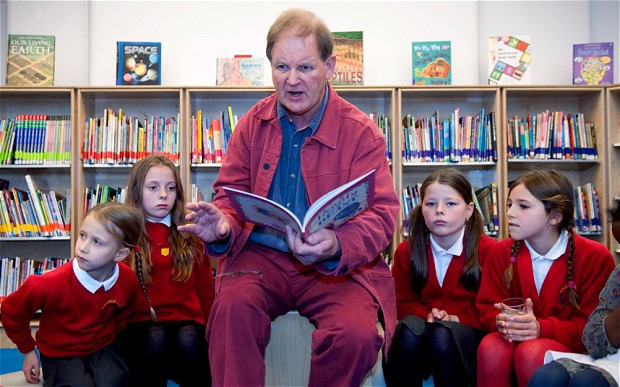
Teachers should let themselves cry in class when reading poignant stories to help teach children that books matter, the author Michael Morpurgo has said.

Morpurgo, the former children’s laureate and writer of War Horse, said showing emotion in schools when reading sad tales should not be avoided, being an essential part of being a “good teacher”.

Speaking at the Chalke Valley History Festival, where he discussed his First World War novels, he added it was important to let children see stories can touch the adults around them, to help them learn the value of literature.

His novels, including War Horse and Private Peaceful, are known for their emotive subject matters and tell the often distressing stories about the First World War.

Speaking in front of an audience of children, Morpurgo argued it was essential to tell them the truth about life, without patronising them by “wrapping everything up in a little pink bow”.


Click on the link to read 10 Questions to Get Kids Thinking Deeper About their Books.

Click on the link to read 24 Books to Get Your Children Reading

Click on the link to read 17 Children’s Books You Still Love as an Adult

Click on the link to read The Telegraph’s Best Children’s Book of All Time

Click on the link to read The New York Public Library’s 100 Most Requested Children’s Books

Click on the link to read Stunning Photographs of the Most Beautiful Libraries in the World
Is There a More Undervalued Career than Teaching?

June 30, 2014

lounge


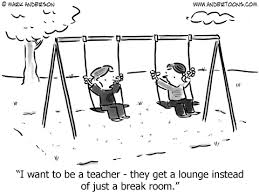
Teaching is not necessarily as difficult as some make out, but it surely is under appreciated:


The survey, by the Organisation for Economic Co-operation and Development, found only 39 per cent of Australian teachers surveyed believed society valued the profession.

The Teaching and Learning International Survey was conducted last year and included 2059 Australian lower secondary school teachers and 116 principals. They were among 106,000 teachers from more than 30 countries and economies who responded to the survey.

However, Keysborough College principal Heather Lindsay said it was little surprise that many teachers surveyed felt society did not value their work. ”It’s easy for others to have a misunderstanding of what’s involved in teaching,” she said. ”Teaching is a very complex job.”

Ms Lindsay said many of her teachers spent at least one or two hours correcting work after school and half a day on the weekends was often given over to work. ”Teachers work through their holidays. They work long hours,” she said.

The report showed that 62 per cent of Australian teachers believed that the appraisal and feedback process was ”primarily an administrative exercise”, which had a detrimental effect on job satisfaction. Nearly half of the Australian teachers surveyed reported that appraisals had little or no impact on teachers in the classroom.


Click on the link to read Tribute to the Fallen Teachers

Click on the link to read  You Can’t Expect Your Students to be Flexible If You Aren’t

Click on the link to read How Many Teachers Does it Take to Change a Light Bulb? (Part 1)

Click on the link to read The Classroom Shouldn’t be a War Zone for Our Teachers

Click on the link to read Remember When Teachers Were Shown Respect? (Video)


The Moment a Father Found Out his Missing Son Was Safe (Video)

June 27, 2014


I am so disappointed that the interviewer seemed more interested in harassing a father so completely overwhelmed by the magnitude of the news than to comfort him. She comes across so cold. Her attempts to paint him as irresponsible and her implication that his sloppiness put out her worried viewers was completely out of order.

Am I reading too much into this?


Click on the link to read Why the Call to Fine Parents for Not Reading to Their Children is Utter Stupidity

Click on the link to read Children are Precious!

Click on the link to read Is it Ever OK to Lie to Your Kids?

Click on the link to read 9 Characteristics of a Great Teacher According to Parents

Click on the link to read 9 Secrets for Raising Happy Children

Click on the link to read Brilliant Prank Photos Show Parenting at its Worst


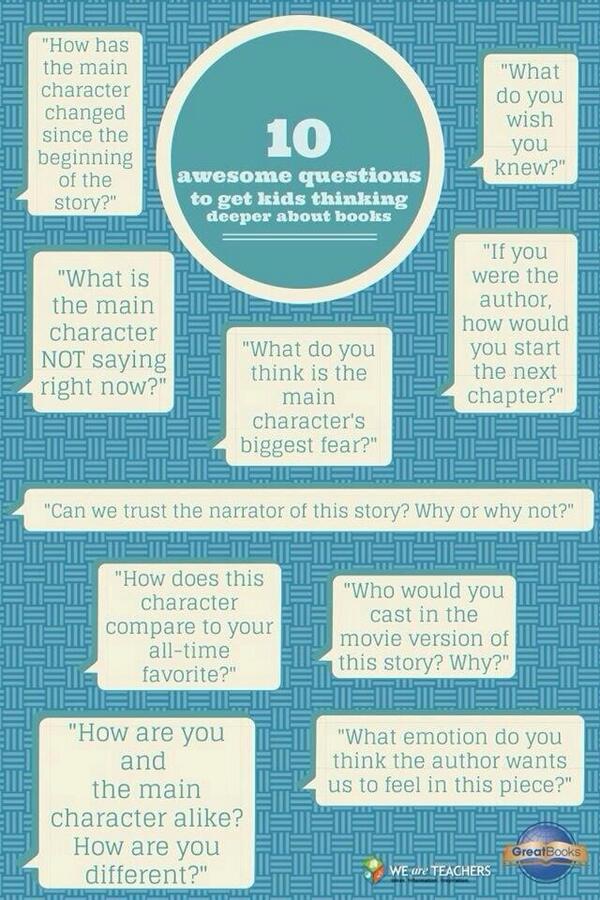
10 Questions to Get Kids Thinking Deeper About their Books.

June 25, 2014


A very worthwhile list:

questions


Click on the link to read 24 Books to Get Your Children Reading

Click on the link to read 17 Children’s Books You Still Love as an Adult

Click on the link to read The Telegraph’s Best Children’s Book of All Time

Click on the link to read The New York Public Library’s 100 Most Requested Children’s Books

Click on the link to read Stunning Photographs of the Most Beautiful Libraries in the World
Click on the link to read The Call to Stop Kids From Reading Books they Actually Enjoy

Smartphones and Tablets Blamed for Stunting Our Kids’ Speech

June 23, 2014


tablet

I find it ironic that some of the best speech pathologists use smartphone and tablet apps as a central plank of their clinical treatment. It seems that these devises are also blamed for creating the problem in the first place.

My view is that the best way to enhance a child’s vocabulary is to speak to them regularly. Unfortunately, many parents don’t have the same time with their kids that previous generations have had. The modern working family often relies on child care, which is not always the best place for kids to get regular conversations.

MORE children are starting school with serious speech problems because parents relying on smartphones and iPads as “babysitting” tools are allowing excessive use, education leaders have warned.

Up to one in eight children in some preschool and Reception classes need speech therapy because they have been starved of conversation and not read to enough at home.

School leaders want more access to speech pathologists to tackle growing numbers of students struggling to make basic phonetic sounds.

Some parents are resorting to private therapy even before their children begin kindergarten.

SA Primary Principals Association president Pam Kent said digital devices were “a fantastic tool” but “they should not be a babysitting device”.

“It’s not that we’re sledging parents but all these (electronic) activities need to be monitored in moderation. They are quite addictive and children can become quite obsessive about them,” she said.

I would like to see teachers modify their expectation of preschool language standards and instead of farming under performing children to speech pathologists, show a greater preparedness to fast track them from within the classroom.

Let’s just assume that children have less than ideal skills in areas such as speech and build a curriculum that meets these challenges rather than sticks up the white flag and reaches for the nearest specialist.


Click on the link to read A Preschooler’s Most Memorable Graduation Speech (Video)

Click on the link to read Is “Bubble Wrapping” Your Child Really Worthwhile?

Click on the link to read The Ease in Which Our Children Can be Brainwashed (Video)

Click on the link to read Teaching Young Children the 3Rs Could be Damaging: Psychologist

Click on the link to read 7 Ways To Teach Kids Self-Awareness

Click on the link to read Kids Explain the Meaning of Happiness

Does ADHD Exist?

June 22, 2014


ritalin

I am not qualified to make a clinical assessment about ADHD. All I know is that a startlingly high number of children are being diagnosed with the condition.

It is interesting to note that within the medical field, as prescriptions for Ritalin are skyrocketing, specialists are now more than ever, starting to speak out against the condition:


Paediatric neurologist Dr Richard Saul, based in Chicago, believes that ADHD simply ‘doesn’t exist’ and is being used as a mask for less serious problems.

Dr Saul argues that children are being misdiagnosed.

‘ADHD makes a great excuse,’ Dr Saul said in his book, ‘ADHD does not exist: The truth about Attention Deficit and Hyperactivity Disorder.’

‘The diagnosis can be an easy-to-reach-for crutch. Moreover, there’s an attractive element to an ADHD diagnosis, especially in adults – it can be exciting to think of oneself as involved in many things at once, rather than stuck in a boring rut.’

Echoing Dr Saul’s views, a group of researchers from Australia and the Netherlands said in November that the diagnosis of ADHD may have become too broad.

A wider classification of symptoms for ADHD in the psychiatric ‘bible’ used by the profession has led to a steep rise in diagnosis and prescriptions for medication, the study warned.

The group of researchers said there was now a risk of over diagnosis which could fuel scepticism about the disorder.

In addition, stretched resources may mean some seriously affected children do not get medical help, or they are undertreated.

Click on the link to read my post on Why Prescribe 1 Medication for ADHD When You Can Prescribe 2?

Click on the link to read my post on An ADHD Epidemic or an Over-Diagnosis Epidemic?

Click on the link to read my post on More than 1 in 10 U.S. Children Diagnosed with ADHD!

Click on the link to read my post on Doctors are Hypocrites When it Comes to ADHD

Click on the link to read my post on Shock Horror: Sleep Deprived Children Diagnosed with ADHD Instead!

Click on the link to read my post on ‘If my Son was a Dog, I’d Have him Put Down’: Mother of ADHD Child


24 Books to Get Your Children Reading

June 19, 2014


reading and children

Courtesy of Huffington Post blogger Devon Corneal:


  • Ninja Red Riding Hood by Corey Rosen Schwartz
    First it was the Three Little Pigs, now Red Riding Hood is studying martial arts! Thank goodness, because how else can she be expected to fend off the Big Bad Wolf? If you liked The Three Ninja Pigs, you’re going to love this new take on an old classic. Get ready — KIYA!
  • Counting has never been so much fun. Detailed pen and ink illustrations splashed with color will keep young readers engaged as they try to spot the adventurous dragon.
  • Troll Swap by Leigh Hodgkinson
    Tabitha Lumpit is loud and messy and doesn’t fit in with her very neat and polite human family. Timothy Limpet is quiet and tidy and doesn’t think he belongs with his scary, mucky troll family. So they do what any two kids would do — they swap places. While it’s fun at first, Tabitha and Timothy soon discover what we all know: there’s no place like home.
  • Little Pear Tree by Jenny Bowers
    Sometimes I recommend books just because they’re beautiful and visually interesting and feel good in my hands. This is one of those times. Little Pear Tree is a gorgeous, eye-catching explosion of color that invites little hands to explore the seasons with an array of images and words tucked behind cleverly designed flaps. Young readers will enjoy searching for the next hidden gem and grown-ups will want to do it right along with them.


  • It’s good to know things about our presidents. Important things. Like whether or not a particular president got himself stuck in a bathtub. These are the sort of facts I wonder about when I’m sitting by the pool drinking lemonade. Maybe you do, too.

Read the rest of this entry »

Teacher Claims he Didn’t Think Sex Abuse Was a Crime

June 18, 2014

marist brothers

I am just too disgusted to even comment:


The former superior of Lismore’s Marist Brothers community and deputy principal Trinity Catholic College the told the child abuse royal commission on Tuesday (June 17) he did not associate child sexual abuse with crime in the ’80s.

The commission is looking at how the Marist Brothers handled accusations against two men later jailed for multiple child sex abuse offences – brothers John Chute and Gregory Sutton.

Brother Anthony Hunt, who led the community to which multiple child abuser Gregory Sutton was attached, said he thought Sutton’s behavior was ‘innocent’.

Br Hunt admitted he had not reported Sutton to authorities despite repeated indications that his behaviour with children at a primary school was ‘inappropriate’.

He said he thought inappropriate behaviour was ‘excessive expressions of affection’ and had not heard the word pedophile.

Commissioner Justice Jennifer Coate asked him, ‘When you give that answer that, as the deputy principal of that Catholic college in the mid to late 80s in this nation, (were you saying) you did not understand that the sexual assault of children was a crime?’

Br Hunt: ‘I would have to say that’s correct at the time’.


Click on the link to read The Classroom Incident that Isn’t Seen as Child Abuse but Actually Is

Click on the link to read A Cautionary Tale for Frustrated Teachers

Click on the link to read Teacher Sought Dating Advice from Her Fourth Graders

Click on the link to read Teacher Suspended for 10 Days for Grabbing a 6-Year-Old By the Neck (Video)

Click on the link to read Middle School Teacher Gives Student a Lap Dance

Why the Call to Fine Parents for Not Reading to Their Children is Utter Stupidity

June 17, 2014


sir michael wilshaw

Every parent should be reading to their kids. We all know that. Even those parents that don’t do it know they should. But should we be fining parents that don’t?

Of course we shouldn’t!

There are two very important points to make on this insane proposal.

1. If we as teachers are any chance of helping our students reach their potential we must work with, not against, their parents. We must be offering support to them whilst also regularly communicating and encouraging them. The best outcomes take place when teachers don’t judge the habits of parents but actively work to help refocus and empower them.

2. Teachers need to stop whinging and making excuses. Our students come to us from all kind of environments and family backgrounds. In any given class a teacher must expect that some students will be well adjusted and well trained whilst others may have issues and complicated home lives. This is the norm, and it is about time we embraced it. It’s part of what makes our job challenging, yet also potentially exciting.  It is because of this reality that teachers should never assume that their set homework will come back complete or that for example, a single mother with multiple kids will have the time to read with all her children on a regular basis. But you know what? That’s OK. We teachers are well equipped to overcome any such deficiency and help that child make up from any lost ground. Whinging and excuse making only serve to prevent the teacher from being accountable for the job they are doing with their struggling students.

“Don’t blame me for Tommy’s lack of progress. His parents don’t read to him!”

That’s why the insane idea of fining parents for not reading to their children is potentially quite destructive. It encourages bad vibes between crucial stakeholders and let’s the very focus, the children, suffer whilst the teacher and parents fight it out:


Parents who do not read to their children should be fined, the chief inspector of schools suggested yesterday. 

Sir Michael Wilshaw also called for headteachers to have the power to punish parents who miss school events or allow their child’s homework to go undone. 

The head of Ofsted railed against ‘bad parents’ who were not supporting their children’s education. 

Sir Michael, 67, accused white working class families of no longer regarding doing well at school as the way to improve their family’s future. 

Instead, pupils from migrant families were outperforming white British counterparts in the classroom because many held a deep cultural belief in the value of education, he claimed. 

Talking about his own days running a school, Sir Michael told The Times: ‘I was absolutely clear with parents; if they weren’t doing a good job, I would tell them so. 

‘It’s up to headteachers to say quite clearly, “You’re a poor parent”. 

‘If parents didn’t come into school, didn’t come to parents’ evening, didn’t read with their children, didn’t ensure they did their homework, I would tell them they were bad parents. 

‘Headteachers should have the power to fine them. It’s sending the message that you are responsible for your children no matter how poor you are.’

Click on the link to read Children are Precious!

Click on the link to read Is it Ever OK to Lie to Your Kids?

Click on the link to read 9 Characteristics of a Great Teacher According to Parents

Click on the link to read 9 Secrets for Raising Happy Children

Click on the link to read Brilliant Prank Photos Show Parenting at its Worst

Click on the link to read Little Girl’s Delightful “Brake Up” Note


Apps for Controlling Your Child’s Smartphone and Tablet Use

June 16, 2014

smartphone

Parents may well consider getting these apps if they have exhausted all other methods of monitoring and reducing their kids’ phone and tablet usage:


Parents struggling to get their children away from smartphones and tablets for meals, homework, exercise and other activities can arm themselves with new apps to remotely block access to the devices.

Usage of smartphones and tablets among children has tripled since 2011, according to Common Sense Media, a San Francisco based non-profit that studies the effects of media and technology on young users.

A new app called DinnerTime Parental Control, for iPhone or Android smartphones, enables parents to restrict when children can use their smartphones and tablets.

With the free app, parents can pause activity on a child’s Android smartphone or tablet so that they can focus on things like homework, exercise and family time. Once a device has been paused, all functions on their device are blocked, including the ability to text and play with apps.

To use the app, parents install it on the child’s device and enter in their phone number to link the two devices. Parents can then set specific break times, ranging from 30 minutes to three hours, when the device will be locked. A countdown screen displayed on the child’s device shows when they can use it again.


Click on the link to read Hilarious Video Showing the Reaction of Children to Old Computers

Click on the link to read New App Encourages Kids to Flush their Teacher Down the Toilet

Click on the link to read Are Violent Video Games Worse for Children than Violent Movies?
Click on the link to read Parents Shouldn’t Be in Denial Over This Very Real Addiction

Click on the link to read Video Game Addiction is Real and Very Serious!