iPads are Not the Solution

November 4, 2014

pad

There is no doubt that iPads do provide the teacher with new and innovative ways of teaching a tired curriculum. But they should be 1 of a variety of different tools in a teacher’s arsenal. The fact that schools are making everything about the iPad is a very sad indictment on other tried and true ways to engage the learner.

As well as this, iPads may well come with some other points of concern:

Swiping a finger on an iPad is as natural to a modern preschooler as turning a page – but little research has been done on the impact of technology on children’s health.

Curtin University’s School of Physiotherapy and Exercise Science wants families for a study into the effects using devices can have on children’s development and posture.

Researcher Erin Howie said many schools used iPads and parents asked Curtin for advice after some children complained of sore necks from bending over them.

The study iMove, iPlay will focus on children from birth to five to find out how often they use technology and what for.

Researchers will observe children aged three to five in a laboratory to measure their physical activity while they play.

In earlier research, the Curtin team found schoolchildren tended to hunch over more when using a tablet but also used a bigger variety of positions.

Dr Howie said it was better to use a neutral posture with neck and wrists straight.

Paul Taylor said sons Michael, 4, and Daniel, 2, were allowed to play educational games on an iPad or smartphone once or twice a week. “We’re more into getting them outside and playing and reading books,” he said.


Click on the link to read 7 Key Characteristics of a Digitally Competent Teacher

Click on the link to read The 10 Best Educational Apps for Children

Click on the link to read The Must Have iPad Apps for the Classroom

Click on the link to read Using Videogames in the Classroom

Click on the link to read Five Great Technology Tools for the English classroom

Teacher Expresses Desire to “Kill all Black People” and Keeps Her Job!

November 2, 2014

camden

If you can’t get sacked for this then what can you get sacked for?


A North Carolina math teacher has been allowed to keep her job despite allegedly saying she wanted to ‘kill all black people.’

Cynthia Ramsey, head of the math department at Camden County High School in North Carolina, allegedly said to a student that if she only had ten days left to live, her bucket list would include told ‘killing all black people’.

The conversation is alleged to have taken place in her classroom this week, following which she was suspended but then reinstated.

Kimberly Ashcraft, the mother of the Camden County High student who reported the teacher’s offensive comments told WAVY: ‘It is very disturbing.’

Ashcraft’s daughter said Ramsey was in her classroom along with several other students who were eating lunch.

In the course of a conversation Ramsey began to talk about what she would do if she knew she was going to die.

Click on the link to read The School Camp Two Teachers Will Never Forget

Click on the link to read We Are Too Soft on Teachers Who Have Sex With Their Students

Click on the link to read Why Teaching and Politics Should not Mix

Learning as an Experience

October 30, 2014

learning

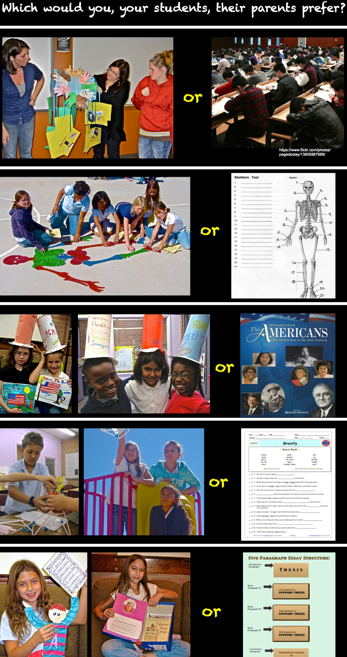
I love this pictorial comparison between traditional modes of teaching and experiential learning. Via


Click on the link to read I Love it When Teachers are Excited to Come to Work

Click on the link to read Every Science Teacher’s Worst Nightmare (Video)

10 Tips for an Effective Parent-Teacher Conference

October 29, 2014

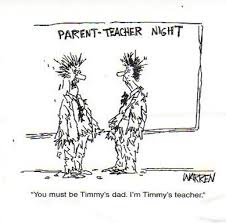
timmyCourtesy of via The Huffington Post:


1. Don’t bring your child with you (unless the teacher requests it): There are times it’s helpful to have a parent/teacher/student meeting, such as when strategizing study skills, organization, or other things where direct communication will facilitate a solution. However, unless you are meeting with that purpose, it doesn’t allow for as much information to be shared between parent and teacher. The dynamic is totally different because when there’s a student in the room, the teacher tends to talk to the student. There may be things I want to say to the parent that I wouldn’t say in front of their child.

2. Ask the teacher how your child is doing socially: A big advantage of attending a school as opposed to home schooling or cyber-school is the social skills that students begin to master only by being forced to interact daily with their peers. For some children, the main stress of school has nothing to do with academics. By middle school, kids aren’t telling you much about their social lives, but their teachers may be able to give you some insight.

3. Come with an open mind: As a parent, I have to remind myself of this often, but my children’s grades and behavior are not a reflection of who I am as a person. They have free will and will make mistakes and decisions that I don’t approve of. It doesn’t make me a bad parent. As a teacher, I remember this too. My goal in working with parents is to be a problem-solver, not a judge. If you are not willing to be open-minded about your child’s challenges, you may walk away from the conference feeling defeated instead of empowered.

4. Bring specific questions or concerns: The toughest opening for a teacher is, “So how’s my kid doing in your class?” Since we only have a few minutes to talk, I’d like to know right away which areas are of concern to you.

5. Share personal information when you can: There are times parents have called to report that a grandparent or a beloved pet recently passed away, there has been a change in home environment for a child, or they are overcoming a serious illness. All of this information helps teachers because students often look or act different in the classroom without explaining what’s bothering them. It’s especially important to tell teachers if your child has been evaluated for learning disabilities or health issues. As a teacher, I have worked as a partner with parents in monitoring kids with food allergies, asthma, and changes in ADHD medication. We are the eyes and ears when you can’t be and can often provide information that will aid you and your child’s health care provider.

6. If your child’s teacher doesn’t provide some positive feedback, please ask for it: The last thing you want is to walk away from a conference feeling sad or hopeless about your child’s school experience. Even kids with the toughest behavioral or academic challenges have redeeming characteristics and good days that we as teachers can point out. If your child is unhappy in school, you may be the emotional dump at home who hears about all the things that went wrong during the day. You didn’t get to witness your children having fun with their friends at lunch or delivering a great presentation to their peers or answering a question that stumped everyone else in the class. We need to focus and build on these little victories together.

7. Tell your teacher what works well at home and what you need help with: You may feel like you’re on your own once your child gets home, but teachers often have tips that may help studying and getting organized at home go more smoothly too. If getting out the door in the morning is an issue, or getting homework done before ten p.m., please ask. Many of your children’s teachers were or are currently raising children. I feel fortunate to have that “insider’s perspective” on how best to work with my children academically and I’m more than happy to share my thoughts because happy, well-prepared students make my workdays pleasant.

8. Take notes: Especially if you are meeting with more than one teacher, you will be hit with a lot of information, too much to process all at once. Taking notes gives you an opportunity to look back on what you learned, possible areas to follow up with the teacher on later, and a chance to see patterns (maybe your child always forgets homework that’s due on Monday, or something else that you may be able to adjust).

9. Tell us what your child loves to do at home: Parents have told me about non-academic skills their children have, unusual hobbies, or passions that lie outside the classroom. When I know these things, I can work to connect them to what I teach, making school more interesting for students and helping them feel like they are essential people in the classroom.

10. Ask your child if he or she thinks there is something you should ask or address: Teachers encourage their students to be advocates for themselves, but there are times kids feel intimidated to talk to a teacher about something. A parent can be the intermediary, at least to get the conversation started.

African Children Bullied at School Because of Ebola

October 28, 2014

RK1_2606.JPG

Please do not excuse these actions as just a case of “kids being kids”. Calling African born students “Ebola” and taunting them in the way this family seems to have been taunted is nothing short of appalling.  How a school can go about its operations blissfully unaware that such a problem exists in its hallways baffles me.


A Bronx man says he brought his two sons to America from Senegal so they could get a good education — but their classmates doled out brutal lessons in bullying and fear-mongering, shouting at the brothers, “Go back home” to Africa amid beatings and chants of “Ebola.”

Amadou and Pape Drame were attacked Friday at IS 318 in Tremont, punched in the face and relentlessly bullied, their father said Monday.

“My name is not Ebola, it’s Amadou,” the younger brother told his tormentors before he was attacked, said dad Ousmane Drame, who urged school officials to do something.

“They call me from the school, tell me come, they’re beating your children,” said Drame, a cab driver who is raising the two kids on his own.​ “​I rush, go there, and my children were very hurt. Amadou was crying, laying on the floor, more than 10 children on top of him, beating him.”

Amadou, 11, and Pape, 13, stood silently by their father’s side on Monday as he, community leaders and elected officials urged parents to talk with their kids about tolerance.

Drame, 62, who has lived in New York for 25 years, said this was not the lesson he had in mind when he brought his sons to America for the opportunity of a better education.

“If they go to the gym, they say​,​ ‘​O​h​,​ you don’t play. Don’t touch the ball,’ ” Drame said. “ ‘You have Ebola. Sit down there.’ For two days, they don’t touch nobody, they just sit down.

“It’s not just them. All the African children suffer this. I spent seven years in college. I went to school all my life. They’re born in a teacher’s family. They have to go to school.”

The shaken father said he met with the school’s principal Monday.

He also reached out to the African Advisory Council of The Bronx, which is pressing the school district for a solution.

“On Friday, while the younger one was in the gym, he was assaulted,” said Charles Cooper, president of the council. “They came to him calling​,​ ‘Ebola, Ebola, get out of here,’ punched him several times all over.

“During lunch, they were outside in the yard, which is supposed to be a safe place . . . The kids were yelling, ‘Ebola​​ Ebola get out of here,’ and they rushed him, threw him on the ground, kicked him, punched him. He was screaming. His brother heard him screaming from across the yard, so his brother ran to him.

“The other kids jumped on him also and started beating on him as well. The school tried to say it was a fight,” Cooper said, “We made it very clear to them. This was not a fight. This is assault. This is bullying.”

​The Department of Education ​did not immediately comment.

Senegal is one of several West African countries where Ebola cases have been reported, but there have been no new cases in that country since late August, according to the Centers for Disease Control.

Amadou has since told his father he wants to go home to Senegal, where their mother lives.

That, Drame said, is not an option.


Click on the link to read Another Vicious Schoolyard Fight Video Emerges

Click on the link to read Bullying from a Teenager’s Perspective

Click on the link to read Girl Gets taped and tied to tree and ‘sexually assaulted’: Where Were the Teachers?
Click on the link to read Start Being Proactive When it Comes to Bullying
Click on the link to read The Real “Mean Girls”

Another Vicious Schoolyard Fight Video Emerges

October 27, 2014


When will these awful incidents be a thing of the past? When will the bystanders stop inflaming situations and instead work to actively prevent further damage from occurring?


Police are investigating a vicious assault on a 13-year-old girl, who was bashed by a classmate in front of a cheering crowd in Sydney’s south-west.

The brutal attack was filmed by a Year 12 student, revealing the horrific ordeal which saw Jaimee-Lee Morecroft kicked, punched and dragged her by her hair by a fellow Year 8 student.

Eagle Vale High School student Jaimee-Lee can be heard pleading with the attacker as she protects her head, insisting: ‘I never said anything about your brother.’

In the lead up to the attack, Nine News reports Jaimee-Lee was receiving threatening messages on social media.

Her family are distressed about the assault and want charges to be laid against the teenager responsible.

‘She could have been killed,’ Jaimee-Lee’s grandmother Shirley Williams told Nine News.

NSW Police confirm they are looking into the incident.

‘Macquarie Fields command have seen the video depicting an alleged assault at Claymore,’ NSW Police told Daily Mail Australia.

‘Police have launched an investigation but no arrests or charges have been laid.’ 

Click on the link to read Bullying from a Teenager’s Perspective

Click on the link to read The Real “Mean Girls”

When Parents Get Busted!

October 25, 2014

lexi

Great letter from a young girl ready for the next phase of her childhood.


Click on the link to read The Inconvenient Truth Kids Style

Click on the link to read The Quality Most Parents Want to Teach Their Children

Click on the link to read Are Our Expectations for Children Too High?

Click on the link to read 25 Ways to Approach the Dreaded ‘How was School Today?’ Question

Click on the link to read Learning to Let Go

Click on the link to read Things Teachers Wish Parents Knew Before the School Year Begins

Celebrities Join Forces to End the Cycle of Bullying

October 24, 2014


And for a even more creative and instructive approach.


Dreams Come True When People Show they Care

October 18, 2014


Blind kids don’t score touchdowns. Or do they?

Justin Olenginski scored his first touchdown on Oct. 11. It was an extraordinary moment for the 15-year-old, who was born blind and has special needs that prevent him from participating in sports.

His Dallas, Pennsylvania, community wanted to give him a memory he’d never forget, ABC News reports. So, the freshman’s high school football team named him captain for that Saturday’s game. After halftime, the announcer called Olenginski onto the field. While the other players watched, he took the quarterback’s handoff and walked down the field — with another player guiding him — to score a touchdown.

When he reached the end zone, the crowd erupted, fireworks were set off and his older brother, Michael, a senior and captain of the team, lifted him into the air as players from both teams crowded around them.


Click on the link to read my post on Hitchens: Dyslexia is NOT a Disease. It is an Excuse For Bad Teachers!

Click on the link to read my post on Valuable Tips for Teaching Children With Autism
Click on the link to read my post on Autistic Boy Gives an Inspiring Graduation Speech

Click on the link to read my post on Girl Banned from Museum because Her Wheelchair May Dirty Their Carpet

Click on the link to read my post on Disabled Children: A Missed Opportunity for Us All


The Inconvenient Truth Kids Style

October 14, 2014


You spend your life trying to teach your kids the importance of telling the truth and then this happens:


truth

Courtesy of Nickmom


Click on the link to read The Quality Most Parents Want to Teach Their Children

Click on the link to read Are Our Expectations for Children Too High?

Click on the link to read 25 Ways to Approach the Dreaded ‘How was School Today?’ Question

Click on the link to read Learning to Let Go

Click on the link to read Things Teachers Wish Parents Knew Before the School Year Begins

Click on the link to read The Worst Parent in the World May be an Australian