This is an invitation to waste money — and groceries, and a lot of us don’t need an invitation. It also makes us especially vulnerable to impulse buying. After all, what’s one more item that’s not on the list? For children, especially, it blurs the line between planned purchases and impulse buys. (And lists in general help people stay organized. Teaching children to use lists can help in many areas of life.)
2.
Buying on impulse.
We don’t do well at teaching delayed gratification. Advertisers make it even harder. Ever seen an Internet “flash sale” that lasts only a few hours? Or notice the price changes on an item you HAVE been watching. It’s frustrating to see that deliberating a bit might mean paying more. Of course, long term, these “flash sales” will tempt you to buy things you probably don’t need and likely didn’t plan for because you couldn’t stand to miss the killer deal. The Internet and TV work hard to tempt us to buy on impulse. Show your child how advertisers try to manipulate us to make decisions that might not be in our best interests long-term. “Sleep on it” is a great habit to encourage.
3.
Teaching entitlement.
Why are we going out to dinner and letting you order anything you want? Because you are a great kid! You… told the truth, got a good grade or got a soccer-participation certificate. Or you didn’t, and now you’re disappointed. Either way, a treat is in order. (Treats are not wrong, by the way. You can explain to your child that treats are in your budget. But the people who are most experienced handling the money and who have the most knowledge of the family’s finances will make the major decisions. Translated, this means the adults pick the restaurant and tell the children which entrees they may choose from or what the price limit is.)
4.
Focusing exclusively on the now.
Even if you are putting away money for vacations, if that is invisible to kids, they are not learning about it. “Let’s eat at home and save the difference in what it would cost for vacation,” can help make your intentions clear. You can even save the money in a jar so they can see it. It’s easier to say “we can’t afford it,” because YOU know that you can’t afford both lots of dinners out and a trip to Disney, but your kid may understand only that you can’t afford to go through the drive-thru, rather than that you are consciously choosing to direct your money toward something else — that you are delaying gratification.
5.
Speaking in terms of dollars, not percentages.
Renick says it’s important for kids to learn that not only is a nickel worth more than four pennies, it’s worth 20 percent more. It’s easy not to care about a penny, but 20 percent seems worth worrying about. And it is. Would they prefer to earn $20 for a chore or just $16? It’s still 20 percent, and it’s worth saving. “The concept is if you get in the habit of taking care of small details (financial choices) the habit and behavior will carry through to larger financial choices,” Renick said. Go ahead and save where you can — and show your kids that little things add up. (And hopefully, when they are in the workforce, that 401(k) match offered by your kid’s employer will seem too big to pass up.)
6.
Giving them “spending money.”
The idea behind this can be smart — hoping they will learn to prioritize. That’s a good goal, certainly. But Renick would suggest giving them money to manage… and rewarding saving if they show some restraint. He gives as an example a child with $100 to spend (or save) at Disneyland. What if you told a child that he or she could KEEP any money not spent at the park? Do you think he or she would care more about getting the most value for the money and would check carefully to see what concessions cost before ordering?
Routinely giving them the money may be a problem as well. Kids can earn money. Renick said his father used to tell him that he could have anything he wanted — as long as he was willing to work for it. Having to work can also help teach the value of money, when you begin to think about whether thing you need or want is really worth the time you’ll spend earning the money to buy it.
7.
Indulging in spendy habits, like a daily Starbucks or cigarettes.
Despite what we say, we show them that the gratification today is more valuable to us than the sacrifice involved in putting some of that money in a 401(k) or saving it for a family vacation.
Rafe Esquith is the worlds most decorated teacher. You would think that in a situation where the the most acclaimed teacher, and longstanding union member, is suspended from the classroom for nothing more than a joke, that the union would go public in support of him.
But where are they?
No representative from the union has gone on record as far as I’ve seen. No union protests. Nothing.
I hear crickets, but no union outrage.
Why?
Surely this is just the sort of high profile case the union longs for. It would provide an opportunity to make telling points about the difficulties and stresses teachers face on a daily basis.
But where are they?
My message to the union is to get on the front foot and give Mr. Esquith the vocal support he needs and deserves.
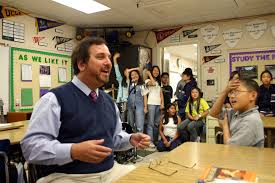
Rafe Esquith is one of the nation’s most celebrated teachers. He teaches fifth grade in Los Angeles. Each year, his class produces a complete play by Shakespeare. They are known as the Hobart Shakespeareans.
From his modest classroom at Hobart Boulevard Elementary School in Koreatown, Rafe Esquith became an education superstar. His teaching techniques brought him worldwide recognition, and his books became models for how to engage young students.
But for the last two months of school, Esquith was sidelined. The Los Angeles Unified School District launched an investigation in March into allegations of misconduct by the popular teacher.
His attorneys said the investigation is related to comments about nudity that he made to students. In addition, they said L.A. Unified also is looking into Esquith’s nonprofit, the Hobart Shakespeareans, a drama group for students.
The decision to put him on leave — and keep him there for so long — has outraged supporters. But district officials have not backed down, saying that regardless of his celebrity, they won’t send him back to school until their investigation is completed.
The standoff comes as the school district struggles to recover after a series of scandals involving teachers and administrators accused of sexual misconduct with students. L.A. Unified last year paid a record $139 million to the victims of a Miramonte Elementary School teacher who was allowed to stay in the classroom even after complaints about his behavior with students.
Some see the Esquith case as part of the district’s effort to reform in the wake of the scandals. But whether it is an overcorrection remains a matter of much debate.
In his first interview since he was pulled from his fifth-grade class, Esquith told The Times on Monday that controversy stemmed from a joke he made in the classroom.
He said he quipped with students that if he could not raise enough money for the annual Shakespearean play, they would all have to perform their parts naked like the king in Mark Twain’s “The Adventures of Huckleberry Finn.”
After another teacher complained, he said he explained the context of the joke to his principal at Hobart Boulevard Elementary. The principal, he said, told him he had nothing to worry about. Nonetheless, Esquith was removed from the classroom in April.
“We overreact to everything. That’s the American way and I’m a victim of that overreaction,” Esquith said. “I want to fix this system. I want to make sure that teachers do not have to go through the same thing that I went through.”
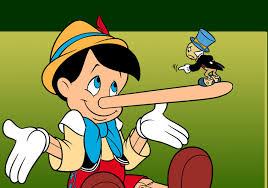
Apparently telling lies isn’t all bad. According to the latest research, children who lie seem to have better memory. Perhaps I should get my students to lie as a lead-up to a spelling test.
Then again, perhaps not.
If your six-year-old is a seasoned little fibber, don’t fret – it probably means he or she is unusually bright.
Scientists have found the first clear evidence that children who are good liars have better verbal working memories.
Psychologist Elena Hoicka, a member of the team from the University of Sheffield, said: ‘While parents are usually not too proud when their kids lie, they can at least be pleased to discover that when their children are lying well, it means their children are becoming better at thinking and have good memory skills.’
The study involved a quiz in which 114 six and seven-year-old children were tempted to cheat by peaking at an answer written on the back of a card.
First the children were given two easy questions: ‘what noise does a dog make?’ and ‘what colour are bananas?’
They were then asked if they knew the name of the cartoon character Spaceboy. Each child was left alone with an upturned card on which the answer was written, and told not to peek.
The answer, Jim, was written on the back of the card in green ink with a picture of a monkey.
Unknown to the children, they were being observed by a concealed video camera, so the scientists knew who had looked at the back of the card.
Children who got the answer right, and claimed they had not cheated, were tested with ‘entrapment questions’ based on the written answer and accompanying picture.
The children were asked if they could guess the colour of the writing or what the picture showed. If they covered their tracks by pretending not to know, or deliberately guessing wrongly, they were classified as good liars.
Children who fell for one or both of the entrapment questions, revealing that they knew more than they should, were rated as poor fibbers.
The results, published in the Journal of Experimental Child Psychology, showed that good liars performed better in verbal working memory tests assessing both mental processing and recall.
The most highly decorated and dedicated teacher in America has been sitting in his lounge room for the past 2 months. He has been stripped of his right to do what he does best, because a colleague dobbed him in to the authorities for a politically incorrect joke.
Since hearing of his suspension I have been in a state of shock. Who would want to take the best teacher out of the classroom? Shouldn’t they be working on getting more Rafe’s instead of finding absurd ways of removing them from classrooms?
After days of soul searching I have come up with some lessons I have learned from this saga:
1. It Could be You – If Rafe can be barred from the classroom, anyone can. Next it could be you.
2. Leave Your Sense of Humour at the Door – Don’t even think of cracking a joke. It could cost you your job. The classroom is not a place for humour. It should be a joyless, lifeless, cold and bitter place. If you want to see kids laugh, become a party clown!
3. A Good Record Counts for Nothing – Teacher of the Year! Who cares? When a jealous co-worker dobs you in to the authorities, a lifelong reputation of excellence and integrity counts for nothing. Leave your references at the door. Educational bureaucrats with an ego the size of Greece’s debt aren’t in the mood to excuse a trivial comment, even if your name is Mother Theresa.
4. Teaching is a Dog Eat Dog Profession – Yes, I am generalizing, but don’t tell me you’ve never experienced it. Why do teachers feel the need to compete with one another? Aren’t the children supposed to be the emphasis. That teacher who snitched on Rafe has a lot of explaining to do. If as I presume, he/she did it out of jealousy, it is yet another example of teachers hurting their own. Our job is difficult enough as it is, why do we need to constantly compete against and judge one another? We should be supporting, not reporting each other!
5. Who wants to be a Male Primary Teacher? – C’mon, you know I’m right. It’s the elephant in the room. Had a female teacher made the same joke as Rafe did (a joke I don’t endorse), would she have been suspended? Absolutely not. You want more male teachers in the younger years? Start by treating us equally.
6. It’s not Just about Rafe’s Reputation, It’s a Reflection on Our Profession – Here was a teacher that absolutely adores what he does. He is a true inspiration. And what do the authorities do to acknowledge his outstanding work? Ban him from the classroom. What message does this send to perspective teachers. Perhaps it’s easier working at Walmart. I’m sure the pay isn’t all that different.
7. Teach at a Private School if You Can – By working at a public school, Rafe’s reputation was greatly enhanced. He was seen as a champion for the downtrodden, the under privileged. But the problem with public schools is that they are often run in a chaotic and cold-hearted fashion. Private schools personally select and invest in you. They choose you because they believe in you, and unless there is ample proof that they were completely wrong about you, they will give you the benefit of every doubt. Public schools on the other hand treat you like a number. Had Rafe made that comment in a private school, his Principal would have backed him all the way. Perhaps, at worst, he would have had to issue an apology, but nothing more than that. It’s great to teach those who need you the most, but not at the expense of your reputation.
It’s time to send the message to those responsible for suspending the greatest teacher working today to offer their own resignations and install the great Rafe Esquith. To suspend him for any more time is to further damage the reputation of a leading teacher and a mentor to myself and many others.
I have read all of Rafe’s books and have used some of his strategies and ideas to wonderful effect in my own classroom. I am deeply upset that his students have been deprived of his vision, energy and creativity since March and that his Shakespeare show has had to be cancelled this year.
And all for what? A passage from the great Huckleberry Finn!
Without providing more details about the allegations against a nationally recognized teacher, the leader of Los Angeles Unified said the district will not rush an investigation into why the instructor was removed from the classroom simply because of his popularity.
Supt. Ramon C. Cortines said the probe into allegations of misconduct against longtime Hobart Boulevard Elementary School teacher Rafe Esquith is “very complex” and must be handled carefully.
He added, “The Los Angeles Unified School District will not be rushed to make a decision and will complete our investigation with the highest level of integrity. The safety and security of every district student will remain our number one priority.”
Esquith’s attorney, Mark Geragos, said earlier this week that the district had 10 days to issue a public apology and return the award-winning teacher to the classroom or he would sue the system.
Parents and former students also are demanding more information about the investigation into Esquith, who has written several books on teaching and received multiple awards for his work. His attorneys said he was pulled from the classroom after a complaint about a Mark Twain passage that he read in class.
On Friday, Ben Meiselas, an attorney who works with Geragos, said, “We now welcome Supt. Cortines as a defendant to our lawsuit if he does not issue an apology during the time frame we provided.”
That 10-day period ends June 26, he said.
“Supt. Cortines’ statement sadly and shockingly confirms what we have said since day one,” Meiselas said. “This is a fishing expedition of the worst kind by bureaucrats who don’t know a thing about the classroom. Apparently, after the ‘initial’ investigation was found to be meritless, LAUSD has taken it upon itself to manufacture new ways to attempt to defame Mr. Esquith.”
Esquith was removed from his classroom in March and is now home waiting for the results of the district’s investigation, which is expected to be completed before school starts in August.
Geragos said the district has not clearly outlined the allegations against the popular teacher, but he learned that the investigation stemmed from a complaint by another teacher after Esquith read to a class a passage from “The Adventures of Huckleberry Finn” by Mark Twain.
The passage, which is much longer, includes this section: “The duke and the king worked hard all day, setting up a stage and curtain and row of candles for footlights. … At last, when he’d built up everyone’s expectations high enough, he rolled up the curtain. The next minute the king came prancing out on all fours, naked. He was painted in rings and stripes all over in all sorts of colors and looked as splendid as a rainbow.”
On Friday, Esquith’s attorneys offered more context about a joke that Esquith made following the reading of the literary passage.
Meiselas said Esquith, who puts on an annual Shakespearean play, joked with students that if he could not raise enough funding, the class would have to perform naked like the king in the book. Meiselas said he learned about the joke Friday after asking Esquith for more details about his use of the passage.
Esquith’s nonprofit, the Hobart Shakespeareans, cancelled 12 performances of “The Winter’s Tale,” which were set to begin April 23.
District officials this month also required Esquith to cancel a trip with students to attend the Shakespearean Theatrical Festival in Oregon.
In a letter to Esquith, officials said the trip had not been authorized or sponsored by the district “as evidenced by the lack of authorization via the proper channels for field trip authorization.”
Esquith, who wrote three books, including “Teach Like Your Hair’s on Fire: the Methods and Madness inside Room 56,” has received national recognition for his teaching abilities. He also has criticized what he considers to be too much testing and scripted teaching methods.
If Mother Teresa was a public school teacher in America, she would have been suspended too!
Instead of looking at ADHD students as a nightmare. Instead of complaining about them in the staff room, see them as an incredible opportunity for personal growth.
Many ADHD students act up when they are bored. Whilst others can contain their impulses when they are disengaged or under stimulated, ADHD students tend to disrupt. Such disruptions should not be seen as bad behaviour, but rather feedback.
Keeping children engaged and excited by their learning is an essential part of what we must seek to achieve. An ADHD student merely heightens the importance of keeping your lessons fresh, well paced, captivating and fun. I promise you that as you invest more in the quality of your lessons, the changes you experience in the behaviour of your ADHD students will become very noticeable.
And before you know it, you’ll be developing lessons fit for an ADHD student even when you don’t have any.








 Topical Teaching