Middle Children More Likely to Become Bullies

June 28, 2011

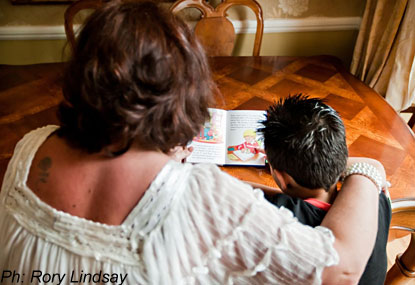
A recent study has explored the so-called “Middle Child Syndrome”, and came to the conclusion that being a middle child increases your likelihood of becoming a bully.

CHILDREN with both older and younger siblings have a higher chance of becoming bullies, according to research.

The Institute for Social and Economic Research at the University of Essex and the University of Warwick conducted the study covering some 40,000 British households.

It was traditionally assumed that the oldest child is likely to dominate or use violence against his or her siblings. However, it turned out that those in between had a higher chance of being involved in physical conflict while striving for parents’ attention, as well as competing for power among siblings.

The study also showed that children who received corporal punishment are more likely to bully siblings or their peers. Of the about 2,000 children researched, about 42 per cent of those who experienced physical punishment resorted to bullying.

‘We know from experience that sibling bullying increases the risk of involvement in bullying at school,’ Professor Dieter Wolke, the co-author of the study told a local media.

‘Children involved in bullying are 14 times more likely to suffer behavioural and emotional problems; they have no place that is safe for them.’ It is known that the manner of bullying at home showed no relationship to the education or economic level of households.

I am surprised by the findings.  I can see how being the oldest or youngest child can draw one into bullying habits, but I am surprised that it is the middle child who is most likely to become a bully.

Sometimes the Unions Don’t Help

June 26, 2011

There are times when the Education Unions just make me shake my head.  At a time when respect for teachers is at an all time low, unions have the opportunity to help promote the good work teachers do.  Instead, they often make things so much worse.  Take this story for example:

Students will not be allowed to enter teacher training in England if they fail basic numeracy and literacy tests three times, under tougher rules to raise teaching standards.

At present students are allowed to take unlimited re-sits while they train.

The Department for Education said one in 10 trainees takes the numeracy test more than three times, while the figure is one in 14 for the literacy test.

The National Union of Teachers said it considered the tests “superfluous”.

The aim is to improve the standard of students entering teaching.

From September 2012, candidates will have to pass the assessments before they are permitted to begin their training courses.

The tests are the same for both primary and secondary school teacher trainees, who must also have achieved a grade C or above in GCSE maths and English.
What is “superfluous” about ensuring that teachers have basic skills in the areas they teach?  What profession would allow trainees to practice without the requisite knowledge or skill?  It’s not as if the questions are so hard.  Here are a sample of the questions on such a test:

SAMPLE QUESTIONS

  • Q: Teachers organised activities for three classes of 24 pupils and four classes of 28 pupils. What was the total number of pupils involved?
  • A: 184.
  • Q: There were no ” ” remarks at the parents’ evening. Is the missing word:
  • a) dissaproving
  • b) disaproveing
  • c) dissapproving
  • d) disapproving?
  • A: d
  • Q: For a science experiment a teacher needed 95 cubic centimetres of vinegar for each pupil. There were 20 pupils in the class. Vinegar comes in 1,000 cubic centimetre bottles. How many bottles of vinegar were needed?
  • A: 2
  • Q: The children enjoyed the ” ” nature of the task. Is the correct word:
  • a) mathmatical
  • b) mathematical
  • c) mathemmatical
  • d) mathematicall
  • A: b

The Classroom Can Be So Unnatural

June 26, 2011

It mystified me how in the modern era that we live in, we still haven’t properly addressed some fundamental issues effecting the comfort of our students.  The following are three examples:

1.  The Mat – The mat serves a clear purpose.  There are times when the mat is ideal for teaching a new concept or skill or for giving opportunities for students to present their work to the class.  But it must be used in short spurts because it is so uncomfortable.  Sitting in a confined space, without a back rest is not fun at all.  Once, whilst teaching a mat session, I tried it.  I sat on the floor with the kids/ In no time, I’d had enough.  Teachers who use the mat for long, drawn out periods of time should not be frustrated at the child that can’t sit still.  It is to be expected that a naturally restless person will find the challenge just too difficult.

2.  The Chair – Even sitting in a chair for long periods of time is too much to expect.  Why is education often so dormant?  Surely the best forms of teaching allow students to move around.

3.  Lack of Engagement – Currently, there is a strong push to bring back traditional teaching.  This involves lines of handwriting practise, together with pages of maths algorithms followed by reading with comprehension questions.  There are always going to be certain students who will enjoy the safe, predictable, routine side to rote learning.  But on the whole, this methods is nothing short of tedious.  It lacks creativity, energy and critical thinking.  It is unimaginative, noninteractive and downright boring.

I hear teachers complain all the time about how poor attention spans are nowadays.  It makes me wonder whether teachers realise that we are partly to blame.  I can’t concentrate unless I’m engaged  and comfortable in my chair.  I need time to move and stretch and I need to feel as if I am able to express myself.

Why should my students feel any differently?


“Fight Club” School Uncovered and the School Defends it!

June 24, 2011

Twenty four students are suspended in South Australian school Stuart High for starting their own version of a Fight Club at lunchtime.

What makes this story so bizarre is that the school knew about it and didn’t take any action until footage was disseminated online.

The school’s principal says fight club had been going on for some time and they’ll now offer army cadet training for students to exercise instead.

Not only did the school know about it, but they initiated the club:

One of the parents Mick says it started off as an organised activity by the school itself.

“It was an organised activity at the school but the teacher never turned up, so the students took it into their own hands to organise their own exhibition.”

So what does the school Principal have to say about the violent exchanges occurring in the schoolyard every day?

School principal Veronica Conley said the fights were based on the movie Fight Club, and some of the students followed the film’s motto “whatever happens at Fight Club, stays at Fight Club”.

“It was not horrible, they were using boxing gloves and if anyone got hurt they stopped the fight and checked if he was all right,” Ms Conley told The Advertiser last night.

“Some of the parents were upset that we suspended everyone we identified on the footage, even those who were watching, but it was not safe, some schools have boxing at their school but it needs to be supervised.

“When you have kids this young and energetic they look to use that energy. We first became suspicious when we noticed they all failed to come to a soccer competition that occurred on the same day.”

You have got to be joking!  At least the Education Minister is horrified, right?  Nope!

“They went into an unused room and in groups, using boxing gloves, carrying out a fight club was, of course, unauthorised and from time to time some students were injured through that,” he said.

“All of the students who participated and all of the bystanders have been suspended by the school and all of the parents have been notified.”

What about the school?  Who is supervising?  Who suggested such a practise?  What about the Principal that seems to be defending her students’ right to box at lunch time?

What an awful response to a unnaceptable episode.

Youth Violence Blamed on Lack of Male Teachers

June 24, 2011

This one wins “The Long Bow Award” for the most absurd theory in education.

A Decline in the number of male teachers is being blamed for rising youth violence.

Adolescent psychologist Michael Carr-Gregg said the lack of male teachers was a major problem.

“We know males give something different to the developing boy than what female teachers give. To some extent we have lost that male narrative and left it to Hollywood to teach boys about masculinity,” he said.

The article is right though in suggesting there are very real reasons why males are not finding teaching an attractive career path:

Low pay, a perception that teaching is “women’s work”, and fears of being labelled a pedophile have been blamed for the reluctance of young men to teach.

As long as males don’t find this career path appealing, we are wrong in believing that we even have a shortage of male teachers to begin with.  There’s nothing worse than a teacher that doesn’t enjoy what he/she does.

I wonder if this frenzy to have more male teachers will inspire a new kind of sexual equality.  I wonder if the following methods will be employed to get potential male teachers interested:

– Pay them more than female teachers

– Offer a university fees rebate for male teachers

– Create quota systems for males in schools and universities.

I believe all these measures would be a mistake.  Essentially what we are looking for are good teachers not male teachers.  Whilst I hope men come to discover what a wonderful profession this is, I wouldn’t push it.

As for the lack of male teachers being blamed for youth violence, I very much doubt it.  Male teachers can have a very strong effect on male students in particular, but the theory is outrageous at best.

The Disappointing Response to the Schoolgirl Fight Saga

June 22, 2011

Yesterday, Australians were horrified when footage surfaced of a fight between Melbourne schoolgirls.  The clip was a reminder at just how ugly bullying can be, from the violent actions of the perpetrators to the feeble and gutless innaction of the bystanders.

To watch the clip please follow this link.

To add salt to the wounds, the response by professionals, ministers and educators have been extremely disappointing.  Take this uninspiring comment from State Education Minister, Martin Dixon:

He said the department also has a zero-tolerance approach to bullying.

All schools are required to have anti-bullying and cyber bullying policies in place that students are made aware of and expected to adhere to.

This extends to appropriate mobile phone use, he said.

Government ministers often coin the expression “zero-tolerance” because it sounds good.  But what does it really mean?  I looked up the department’s so-called “zero tolerance” approach on their website.  This is what it said:

All Victorian government schools are required to include anti-bullying strategies in their Student Engagement Policy (or their Student Code of Conduct).

Schools have a duty of care to take reasonable measures to prevent foreseeable risks of injury to their students.

Does that sound like “zero-tolerance” to you?

And the standard line of schools requiring anti-bullying policies is predictable, but ultimately, it’s just pure spin.  An anti-bullying policy, as I’ve argued here countless times, is just a piece of paper designed to ward off lawsuits.  It’s to show that schools have a plan.  The plan is usually quite vague, so as to avoid instances where they might be caught out not following their plan.  It is also useless in cases where teachers and principals are unaware that bullying is taking place.  Recent incidents have shown how blind schools have been to the bullying that pervades within its walls.

And if that’s not bad enough, psychologists and the media have decided to blame Facebook for this incident. But Facebook doesn’t pull a girls hair or drag them on the ground.  Bullies create bullying behaviours, not social media.  The medium is not the real issue here.  The real issue is that bullying exists, it is absolutely unnaceptable and must be seriously dealt with.  Not by programs or policies, but by a change of mindset and culture.

The very worst response we could have garnered from this awful exhibition of bullying is, “Oh, that’s just because of Facebook.”, or “That’s as a result of an ineffective anti-bullying policy.”

How many more incidents do we need to watch before we dispense with the spin and blame game and start to see this for what it is – a complex and delicate problem that requires much more attention.


Sickening Schoolgirl Fight Caught on Video

June 22, 2011


A terrible fight which erupted between two schoolgirls was caught on camera.  The video headlined tonight’s Channel 9 news broadcast and shows gutless bystanders just watching passively.

To watch this video follow this link.

Unfortunately we are in the age of simplistic answers to major problems.  In this case, it is not a culture of bullying that is blamed, but instead, Facebook:

BULLYING on Facebook has been blamed for a violent confrontation between two Melbourne schoolgirls caught on film by classmates unwilling to intervene.

A 14-year-old, who has remained anonymous, has told Channel 9 she was too afraid to go to school after repeated attacks by a 16-year-old girl from another school.

In the footage, recorded in February, the victim can be seen being dragged by her hair while she refuses to fight. She is then kicked in the head.

Students can be seen doing nothing to help her.

The older girl can be heard taunting her younger victim. When the victim goes to ground, the older girl says: “Just get up.”

The victim was dazed and coughing up blood.

The girl and her mother spoke out after five similar incidents in six months. The girl was terrified and unwilling to go to school or leave her family home in southeast Melbourne.

“When I leave school, if my bus isn’t there then I get petrified because my school is 30 seconds away from the station and she’s always there,” the girl said.

But she isn’t willing to give up hope that life will return to normal.

“Look, there’s always someone out there that loves you – you don’t have to feel like it’s just you – that’s how I felt for a long, long, long time,” she said.

The online jibes began in January, when it is alleged the bully posted insults on her Facebook page.

It escalated to the point where the girl claims bottles were thrown at her and threats were made towards her family.

The police became involved on Monday, but the mother of the alleged bully said there was more to the story. She blamed Facebook culture for an outbreak in bullying.

State Education Minister Martin Dixon said the department would be told to act once the police finished its inquiry.

“I was deeply appalled. … The type of behaviour shown should in no way be tolerated,” he said.

He said the department also has a zero-tolerance approach to bullying.

All schools are required to have anti-bullying and cyber bullying policies in place that students are made aware of and expected to adhere to.

This extends to appropriate mobile phone use, he said.

Facebook doesn’t create bullying incidents, bullies create bullying incidents.  This footage is horrible and the very worst conclusion we can reach is to shift the blame from bullies and passive bystanders to Facebook.  It’s almost as if people expect that if you take Facebook away bullies will stop bullying and start becoming friendly.  Hmmm …

The Expectation of Teaching Cyber-Safety to Pre-schoolers

June 21, 2011

I am all for addressing cyber-saftey and cyber-bullying in schools.  I have written many posts that attest to how important those topics are to me.  But a report that calls on the Government to make educators teach cyber-safety to 3 and 4-year-old children is crazy.  They are simply too young.  At that age, the responsibility of introducing the potential hazards of the web should be left squarely to parents.

Cyber education for children should start in preschool, a major investigation of online safety has found.

More than a year in the making, the High-Wire Act report makes dozens of recommendations to parliament on how to educate children and teenagers on remaining safe in the increasingly complex online environment.

The first recommendation calls on Early Childhood Minister Peter Garrett to consider providing “cyber-safety” lessons in pre-schools and kindergartens.

“It seems sensible that schools introduce cyber-safety when they introduce computers and online access,” the report, released on Monday, says.

“Unfortunately, it is just too late, because children have already developed a set of habits and practices.”

When I read this new Government report, I reflected on an apt comment from reader Anthony Purcell, who wrote:

I am a little frustrated that teachers are being the ones that are to teach children how to be good digital citizens. Where are the parents? They should be helping out as well. Unfortunately, I know that many parents don’t know how to be a good digital citizen. There are sites out there that teachers can build to help students out with this. Should they be on Twitter and Facebook in primary school? No, but we can set up ways to help them begin their good digital citizenship roles.

I find it ironic, that of all the important skills that teachers could be imparting to pre-schoolers, the Government has focussed on an issue that not only doesn’t affect them but also is too complex for them to fully understand.  Surely a program championed by the esteemed veterinarian and author, Vadim Chelom, on dog safety is a much better fit.

“… In fact there isn’t even an Education Department approved set of lesson plans to teach this subject.  This is a catastrophic omission as for the under-7 age group dog attacks account of more injuries than road traffic accidents.”

Teaching cyber-safety to preschoolers poses an unfair challenge on teachers.  It is a program best taught in primary school.


Too Many Struggling Students Lack Support

June 20, 2011

I read a disturbing article about a young boy who struggles with dyslexia, and the trauma his mother has gone through as his school makes little to no effort to assist him.  It is a difficult article for a teacher to read, but a very important one.  There are too many students that fall between the cracks.  Too many that don’t get the attention and support that they so desperately need.  As teachers, we must fight for the social, emotional and academic wellbeing of all our students, whilst ensuring that they are all, without exception, getting the care and attention they need.

Below is an excerpt of the article.  I truly recommend that you read the whole story,

David is an artistically gifted boy with a photographic memory. The 10-year-old’s dining-room table is full of intricately designed Lego battleships, his art displays such originality that his teacher calls him “the next Picasso”, and he has an extraordinary ability to recall facts from the History Channel documentaries he watches on TV.

“The other day,” his 41-year-old mother Margaret recalled, “we were driving along and he said, ‘mummy, you were born in the year the first man landed on the moon’.”

But there is one big problem with David that overshadows his life. He cannot read. He has been assessed as “severely dyslexic” and “having the reading age of a child aged four years and four months”. His schooling has been a disaster and according to educational psychologist reports seen by the Standard, he has progressed “just one month in five years”.

You might assume that David attends a failing, inner-city school, but you would be wrong. His south London state primary is rated “good” by Ofsted, attended almost exclusively by white British-born pupils, and is located in a street of £3million houses. He is also well behaved.

Yet David, his mother said, has been “catastrophically let down by everyone: by his teachers, by the school and by the council”, all of whom failed to give him the specialised help he needs.

Margaret said: “At school the other kids call him ‘odd’ and ‘weirdo’ and he often comes home crying. He is still reading flashcards and has not progressed beyond words like ‘cat’ and ‘dog’. He has no real friends – how can he? He doesn’t get their jokes or their games. To the other kids, he is a misfit who doesn’t understand anything that’s going on because he can’t read.”

“My son was nine and he still couldn’t read a word,” said Margaret. “What were they waiting for? Why didn’t they do something?” 

Finally the school arranged for David to have some specialist teaching – three hours a week at a nearby literacy centre at a cost to the school of £1,000 a term – as well as 15 hours a week one-on-one with the teacher assistant. For the first time he made a glimmer of progress, improving by “one month in a year”. Margaret says the teacher assistant and the literacy centre are not experts in teaching severely dyslexic children.

There is a growing tendency to allow students to pass the year, regardless of their level of skill or maturity.  The reason for this is quite sensible.  Holding a child back can have strong emotional repercussions.  But because such a system exists, not enough questions are asked of students who are languishing.

I am not suggesting for a second that young David should have been kept down.  I am simply suggesting that since teachers no longer have to explain why a child is ready to be promoted, there is less incentive to put the time and energy into children like David.

It is time that we looked into the issue of students being promoted without the basic skills, and ensure that teachers are made accountable for the progress of their students.  David was allowed to fall into the gaps and starved of the support he needed because there isn’t enough pressure on teachers to reach benchmarks.

The story of David breaks my heart because he is a victim to poor teaching, an inept education system and a misnomer that dyslexia renders one academically incapable.


Ten Rules for Getting Kids Fit

June 20, 2011

I found a useful article that gives ten rules for keeping your kid active.  The ten rules are as follows:

Rule #1: Don’t Rely on Organized Sports

Rule #2: Keep Play Fun

Rule #3: Turn off the TV…

Rule #4: …Unless You’re Playing Wii

Rule #5: Never Reward Kids with Food

Rule #6: Instruct by Showing, Not Telling

Rule #7: Know When to Praise

Rule #8: Make a Play Date with Friends

Rule #9: But Don’t Compare Your Kids with Others

Rule #10: Give Them Your Blessing

For an explanation of what each rule means, click on the link at the top of the post.