Treating Children Like Old Shoes

September 19, 2012

Shoes belong in boxes, not children:

An Arizona couple is suing their son’s former school district for allegedly throwing him in a tiny, windowless room for bad behavior they say was caused by officials ignoring his severe allergies and feeding him foods packed with sugar.

Leslie and Eric Noyes of Glendale, Ariz., filed a lawsuit in Maricopa County Court last week against Deer Valley Unified School District No. 97 and Desert Sage Elementary School, where their son attended second grade last year.

The complaint, obtained by Courthouse News Service, charges school officials with assault and battery, false imprisonment, gross negligence and intentional infliction of emotional distress on their son.

The couple is seeking compensation for their son’s medical treatment and transportation costs to send him to a school outside his district as as well as general damages.

The use of cool down rooms in the same county whose controversial sheriff Joe Arpaio has forced prison inmates to wear pink underwear isn’t unique to Arizona. School officials across the country have used seclusion rooms, most often for special education students or those diagnosed as autistic. The practice is controversial. In 2004, a 13-year-old Georgia student hanged himself after his parents said he was traumatized by being put in a time-out room.

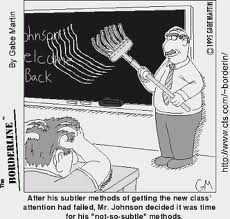
These “scream rooms” are absolutely abhorrent. They should never have been allowed on a school premises. It disgusts me that we are incorporating torture techniques to deal with classroom behaviour issues.

Click on the link to read The Rise of Teacher Approved Bullying (Video)

Click on the link to read Students Allegedly Asked to Draw 9/11 Devastation Pictures in Class

Click on the link to read “Teacher of the Year” Award is a Farce

Click on the link to read There’s a lot You Can’t Do in Ten Days

Getting Kids to Eat Healthy Food

September 18, 2012

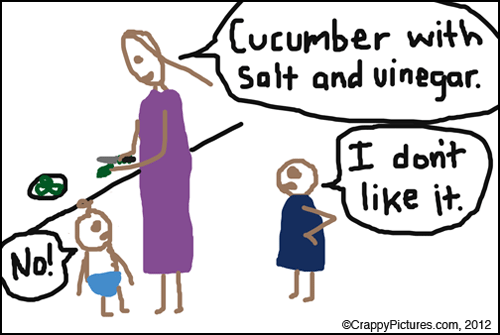
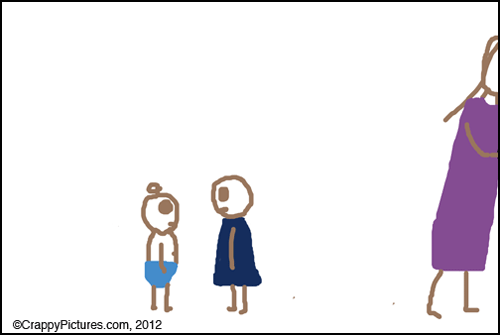
Amber Dusick uses cartoon illustrations to provide us with a strategy that uses reverse psychology to get kids to eat healthy foods.

Click on the link to read my post on A Long School Day With No Time to Eat

Click on the link to read my post on 6 Strategies for Promoting Healthy Food to Kids.

Click on the link to read 5 Ways to Get Kids Active

Click on the link to read Food Giants Marketing Unhealthy Kids Foods as Healthy

Click on the link to read Good Heavens! It’s the Lunch Box Police!

Who Would Let Their Child Play with Gorillas? (Video)

September 18, 2012

Damian Aspinall seems quite comfortable to have his child play with a gorilla. Even if such an activity isn’t as unsafe as it seems, can Mr. Aspinall explain how such an experiment is in the best interests of his child?


Click on the link to read Parenting Advice that Hits the Mark

Click on the link to read Potty Training at a Restaurant Table!

Click on the link to read Mother Shaves Numbers Into Quadruplets Heads So People Can Tell Them Apart

Click on the link to read The New Form of Spanking

Click on the link to read This is What You Get for Doing Your Homework

50 Ways To Use Skype In Your Classroom

September 17, 2012

Courtesy of edudemic.com. Below is the first 17 suggestions:

  1. Meet with other classrooms:
    One of the most common projects educators utilize Skype for is setting up exchanges with classrooms around the world, usually for cultural exchange purposes or working together on a common assignment. The program’s official site provides some great opportunities to meet up with like-minded teachers and students sharing the same goals.
  2. Practice a foreign language:
    Connect with individual learners or classrooms hailing from a different native tongue can use a Skype collaboration to sharpen grammar and pronunciation skills through conversation.
  3. Peace One Day:
    Far beyond classroom collaborations, the Peace One Day initiative teamed up with Skype itself and educators across the globe to teach kids about the importance of ending violence, war, and other social ills.
  4. Around the World with 80 Schools:
    This challenge asks participating schools to hook up with 80 worldwide and report back what all they’ve learned about other cultures and languages.
  5. Talk about the weather:
    One popular Skype project sees participants from different regions make note of the weather patterns for a specified period of time, with students comparing and contrasting the results.
  6. Collaborative poetry:
    In this assignment, connected classrooms pen poetic pieces together and share them via video conferencing.
  7. Practice interviews:
    The education system frequently receives criticism for its failure to prepare students for the real world, but using Skype to help them run through mock-up interviews with each other, teachers, counselors, or professionals will help grant them an advantage.
  8. Gaming:
    Merge the educational power of gaming with the connectivity of Skype for interactive (maybe even international!) role-playing and other competitive delights that educate and engage in equal measure.
  9. Hold a contest:
    Challenge other classrooms to a competition circling around any subject or skill imaginable, and work out a suitable prize ahead of time.
  10. Hold a debate:
    Similarly, Skype can also be used as a great forum for hosting formal and informal debates to help students with their critical thinking and research skills.
  11. Make beautiful music together:
    Build a band comprised of musicians worldwide, who play and practice together over video — maybe even hold digital performances, too!
  12. Who are the people in your neighborhood?:
    All the press about classrooms meeting with one another tend to veer towards the international, but some schools like to stay local. These two Tampa Bay-area kindergartens met regularly via Skype, sharing their current assignments with new friends only 10 miles away.
  13. Highlight time differences:
    But there is something to be said about global exchanges, too, as it provides some insight into the differences between time zones — great for geography classes!
  14. Combine with augmented reality:
    Both at home and in school, Skype provides a communication tool for collaborative augmented reality projects using the PSP and other devices.
  15. Mystery call:
    Link up to a classroom in another region and have them offer up hints as to their true location, challenging students to guess where in the world their new friends live.
  16. Each student works a specific job during calls:
    Divvy up responsibilities during Skype calls so every student feels engaged with the conversation, not just passive participants watching talks pan out. Assign bloggers, recorders, mappers, and any other tasks relevant to the meeting and project.
  17. Play Battleship:
    The classic board game Battleship offers up lessons in basic X and Y axes; plus it’s also a lot of fun. Compete against other classrooms for an educational good time.

Click here to read the rest.

Click on the link to read Top 10 Educational i-Pad Apps

Click on the link to read Top 10 Math Apps for Children

Click on the link to read The Pros and Cons of iPads in the Classroom

Strategies for Improving Classroom Interactions

September 16, 2012


Courtesy of facultyfocus.com:

Make the class interactive: Do everything possible to transform the students from passive observers to active learners. Get the students out of their seats frequently to work in twos or threes on analyzing an issue. Students learn more and retain more when they are actively involved. Working in pairs at the start of every class gets everyone engaged, not just the people who raise their hands. Plus, then students share their thoughts with each other first, the class discussion will be of a higher quality.

Call on students constantly to answer questions: Make a habit of calling on individual students by name to answer questions without first asking for volunteers. This keeps the whole class awake and alert. Never go for more than three or four minutes without getting one of the students to speak. You want your students to be on their toes, knowing that you might call on them at any time to answer a question.

Reassure students you will come back to them: If two or more students raise their hands at the same time, reassure those not selected that you won’t forget to come back to them for their questions in a moment.

Find a student’s strength: If one student is particularly adept at a particular skill set, point it out and have an expectation for the student to be the “expert.” This raises the student in the esteem of classmates and encourages the student to stay abreast of the topic. Try to find a dozen students like this in your class for a variety of topics by being specific in your praise. Don’t just say, “That was a well-written paper,” but indicate exactly what about the ideas, or wording, or structure of the paper you felt made it stand out.

Encourage shy students to speak:Protect the soft-spoken and encourage shy students to speak. Don’t allow long-winded or loud students to dominate the classroom discussion. Call on those who don’t speak much so everyone is heard from. I had one student who was shy and hated to come to the front of the class to talk. At the same time, she was an excellent student and wanted to overcome her fear of public speaking. I worked out a plan with her to allow her, for the first few times, to present from her seat instead of coming to the front of the class. This helped and she made great progress talking in class. Another idea is to pose a question and give the students a few moments — this allows students to formulate their thoughts before the discussion begins [McKeachie 34].

Listen actively to students during discussions: During discussions, maintain strong eye contact with the student speaking so he/she has your complete attention. Students want to be heard. By nodding, smiling or otherwise acknowledging the student, you show that you are totally committed to listening and understanding what each student has to say. Give critical feedback, but look for ways to compliment the student for the observations so the student feels encouraged. Guide class discussions so they don’t wander too far off-mission.

Incorporate peer review: When students make presentations, which they should do frequently, encourage peer review. Get students to teach each other and to learn from each other. It engages them more than the professor doing a solo act.

Do a networking exercise: In some of the early classes in the semester, give students a three-minute “networking” exercise. Before it starts, stress the importance of networking (making contacts and meeting key people) to their careers. Then tell them to stand up, move around the room and find a student they don’t know or know very little. Give them an exercise (such as a question relevant to the class or finding out something unique about the person) and then have them report back to the whole class on what they learned from each other.

Ask early for feedback from students: One month into the class (about the 4th or 5th class) ask for feedback. Three possible questions to ask are: What is helping you learn in this class? What is getting in the way of your learning? What are your suggestions for the rest of the semester? Give them a leisurely ten minutes of silence to write their answers. Tell them they are welcome to hand the answers anonymously if they’d prefer. Repeat this exercise about two months into the class. It will give you valuable information about what is and is not working, allowing you to change, modify or tweak what you are doing.

Always report back to the class on what you learned from the feedback and the changes you intend to make as a result. Make it clear that you welcome candid and constructive feedback from students and make sure you implement the changes you promise to make. This exercise will empower your students and send the message that you care about how they are doing in the course, and that you are open to making changes for their benefit.

Click on the link to read The Ultimate Classroom Resource for Teaching About Comics

Click on the link to read Why Spelling is Important

Click on the link to read Tips for Engaging the Struggling Learner

Click on the link to read the Phonics debate.

Filling Our Children With Hate and Negativity

September 16, 2012

This picture makes me worry about the rising number of extremists and their indoctrination of our precious young. Our children need to see the positive aspects of humanity and be reminded of all the good there is in the world.

School Instructs Students on How to Become Prostitutes

September 15, 2012


A most unconventional form of education:

A Spanish firm offering a professional course in prostitution which it says ‘guarantees a job offer on graduation,’ has survived its first legal challenge to be closed down. 

For €100, students are taught the history of the world’s oldest profession, how to use erotic toys and the most popular positions contained within the Kama Sutra.

The school began advertising the course in May, but within weeks the Valencian regional government filed a case with prosecutors, alleging that the school promoted prostitution, which is illegal in Spain.

Click on the link to read Proof You Can Be Suspended for Anything

Click on the link to read The Case of a Teacher Suspended for Showing Integrity

Click on the link to read Primary School Introduces Insane No-Touching Policy

Who Corrects Our Spelling Mistakes?

September 14, 2012

Um … I think that should read “public education“.


Click on the link to read This is What Happens When You Rely on Spell Check

Click on the link to read The 15 Most Commonly Misspelled Words in the English Language

Click on the link to read Who Said Grammar Isn’t Important?

Click on the link to read Why Spelling is Important

Students Allegedly Asked to Draw 9/11 Devastation Pictures in Class

September 14, 2012

The teachers allegedly involved in conjuring up this activity have made a very poor judgement call:

Hughey Elementary School Parents in El Paso, Texas are furious over a questionable class assignment that asked students to draw pictures depicting the September 11 terrorist attacks.

According to KDBC, the fourth graders were told specifically to “draw the boom clouds, the planes hitting the towers, and people jumping out of windows.

That’s something that kids should get in trouble for drawing,” parent Ivie Gremillion told KFOX-TV. “That’s people being murdered, committing suicide.”

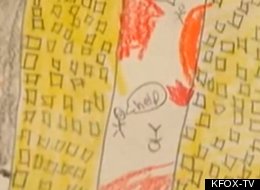
Student drawings portrayed the heart-wrenching images, some with speech bubbles saying, “help,” “I love you” and “one way ticket to heaven.” Gremillion tells KFOX-TV that the classroom teacher also told her students that “the Afghans did this because they hate all of us and want to kill all of us.”

One student, Gremillion says, was under the impression that the tragedy occurs every September 11 and was too afraid to leave his house to go to school.

Talk about a dangerous dose of stupidity!


Click on the link to read Coloring Book of the 9/11 Tragedy is in Bad Taste

Click on the link to read Don’t Even Try to Huminise James Holmes

Click on the link to read How Can Facebook Allow James Holmes Tribute Pages?

Click on the link to read The Need to Blame Anything and Everything for the Colorado Shootings

This is What Happens When You Rely on Spell Check

September 14, 2012


Our children are abandoning spelling skills in favor of a very dubious system known as auto correct:


Click on the link to read The 15 Most Commonly Misspelled Words in the English Language

Click on the link to read Who Said Grammar Isn’t Important?

Click on the link to read Why Spelling is Important

Click on the link to read No Wonder Children Hate School

Click on the link to read the Lenient Punishments for Teachers Who Have Sex With Under-Aged Students