Posts Tagged ‘Teaching’

50 Books Every Child Should Read

March 24, 2011

I stumbled on a wonderful piece by the Independent entitled The 50 Books Every Child Should Read. It was written in response to Michael Gove’s recommendation that children read 50 books a year.  They asked three of Britain’s leading children’s authors and two of their in-house book experts to each pick 10 books, suitable for Year 7 students.”

Below is the list:

Philip Pullman

* Alice’s Adventures in Wonderland and Through the Looking Glass by Lewis Carroll. Indispensable. The great classic beginning of English children’s literature.

* Pinocchio by Carlo Collodi. What effortless invention looks like.

* Emil and the Detectives by Erich Kastner. A great political story: democracy in action.

* Swallows and Amazons by Arthur Ransome. As clear and pure as Mozart.

* Black Hearts in Battersea by Joan Aiken. If Ransome was Mozart, Aiken was Rossini. Unforced effervescence.

* The Owl Service by Alan Garner. Showed how children’s literature could sound dark and troubling chords.

* The Phantom Tollbooth by Norton Juster. Superb wit and vigorous invention.

* Moominsummer Madness by Tove Jansson. Any of the Moomin books would supply the same strange light Nordic magic.

* A Hundred Million Francs by Paul Berna. A particular favourite of mine, as much for Richard Kennedy’s delicate illustrations (in the English edition) as for the story.

* The Castafiore Emerald by Hergé. Three generations of this family have loved Tintin. Perfect timing, perfect narrative tact and command, blissfully funny.

Michael Morpurgo

* The Star of Kazan by Eva Ibbotson.

The heroine is blessed with such wonderful friends who help her through the twists and turns of this incredible journey.

* A Christmas Carol by Charles Dickens. The first few pages were so engaging, Marley’s ghostly face on the knocker of Scrooge’s door still gives me the shivers.

* Just William books by Richmal Crompton. These are a must for every child.

* The Happy Prince by Oscar Wilde. This was the first story, I think, that ever made me cry and it still has the power to make me cry.

* The Elephant’s Child From The Just So Stories by Rudyard Kipling. The story my mother used to read me most often, because I asked for it again and again. I loved the sheer fun of it, the music and the rhythm of the words. It was subversive too. Still my favourite story.

* Treasure Island by R.L. Stevenson This was the first real book I read for myself. I lived this book as I read it.

* The Old Man and the Sea by Ernest Hemingway. A classic tale of man versus nature. I wish I’d written this.

* The Man Who Planted Trees by Jean Giono. A book for children from 8 to 80. I love the humanity of this story and how one man’s efforts can change the future for so many.

* The Singing Tree by Kate Seredy The story of two children who go to find their father who has been listed missing in the trenches of the First World War.

* The Secret Garden by Frances Hodgson-Burnett. I love this story of a girl’s life being changed by nature.

Katy Guest, literary editor for The Independent on Sunday

* Refugee Boy by Benjamin Zephaniah. Story of a young Ethiopian boy, whose parents abandon him in London to save his life.

* Finn Family Moomintroll (and the other Moomin books) by Tove Jansson.

A fantasy series for small children that introduces bigger ones to ideas of adventure, dealing with fear, understanding character and tolerating difference.

* Diary of a Wimpy Kid by Jeff Kinney. It’s rude, it’s funny and it will chime with every 11-year-old who’s ever started a new school.

* I Capture the Castle by Dodie Smith. Written for a teenage audience but fun at any age.

* The Hobbit and The Lord of the Rings by JRR Tolkein. Be warned, these tales of hobbits, elves and Middle Earth are dangerously addictive.

* The Tygrine Cat (and The Tygrine Cat on the Run) by Inbali Iserles. If your parents keep going on at you to read Tarka the Otter, The Sheep-Pig and other animal fantasies, do – they’re great books – also try Iserles’ stories about a cat seeking his destiny.

* Carry On, Jeeves by PG Wodehouse. A grown-up book – but not that grown-up.

* When Hitler Stole Pink Rabbit by Judith Kerr. Judith Kerr’s semi-autobiographical story of a family fleeing the Nazis in 1933.

* Moving Pictures by Terry Pratchett. Elaborate mythological imagery and a background based in real science. If you like this, the Discworld series offers plenty more.

* The Story of Tracy Beaker by Jacqueline Wilson. The pinnacle of the wonderful Jacqueline Wilson’s brilliant and enormous output.

John Walsh, author and Independent columnist

* The Adventures of Sherlock Holmes by Sir Arthur Conan Doyle. Irresistible puzzle-solving tales of the chilly Victorian master-sleuth and his dim medical sidekick.

* The Curious Incident of the Dog in the Night-Time by Mark Haddon. Age-transcending tale, both funny and sad.

* Mistress Masham’s Repose by TH White. Magical story of 10-year-old Maria, living in a derelict stately home, shy, lonely and under threat from both her governess and her rascally guardian.

* Little Women by Louisa May Alcott. Inexplicably evergreen, trend and taste-defying 1868 classic.

* How to be Topp by Geoffrey Willams and Ronald Searle. Side-splitting satire on skool, oiks, teechers, fules, bulies, swots.

* Stormbreaker by Anthony Horowitz. First of the action-packed adventures with 14-year-old Alex Rider.

* Private Peaceful by Michael Morpurgo. “Dulce et Decorum Est” for pre-teens.

* Artemis Fowl by Eoin Colfer. Lively, amoral, wildly imaginative debut (six more followed) about the money-grabbing master-criminal Artemis, 12. The author called it “Die Hard with fairies”.

* The Silver Sword by Ian Serraillier. Inspiring wartime story of the Balicki family in Warsaw.

* Animal Farm by George Orwell. Smart 11-year-olds won’t need any pre-knowledge of Marx, Lenin, Trotsky and 1917 to appreciate this brilliantly-told fable.

Michael Rosen

* Skellig by David Almond. Brings magical realism to working-class North-east England.

* Red Cherry Red by Jackie Kay. A book of poems that reaches deep into our hidden thoughts but also talks in a joyous voice exploring the everyday.

* Talkin Turkeys by Benjamin Zephaniah. A book of poems that demands to be read aloud, performed and thought about.

* Greek myths by Geraldine McCaughrean. Superheroes battle with demons, gods intervene in our pleasures and fears – a bit like the spectres in our minds going through daily life, really – beautifully retold here.

* People Might Hear You by Robin Klein. A profound, suspenseful story about sects, freedom and the rights of all young people – especially girls.

* Noughts and Crosses by Malory Blackman. A book that dared to go where no one thought you could with young audiences because it raises tough stuff to do with race.

* Einstein’s Underpants and How They Saved the World by Anthony McGowan. A crazy adventure set amongst the kids you don’t want to know but who this book makes you really, really care about.

* After the First Death by Robert Cormier. Cormier is never afraid of handling how the personal meets the political all within the framework of a thriller.

* The London Eye Mystery by Siobhan Dowd. A book that allows difference to be part of the plot and not a point in itself.

* Beano Annual. A cornucopia of nutty, bad, silly ideas, tricks, situations and plots.

Top Ten Lists are fun.  What books would you recommend for a Year 7 child?

Teachers Who Beat Kids Should Be Put Away!

March 14, 2011

Please join me on my mission to eradicate legalised corporal punishment from our classrooms.  In Australia a teacher is not allowed to hit, beat or physically handle a student.  It is against the law, and so it should be.  The fact that some other countries don’t practice the same policy mistifies me.  A teacher should never be given the permission to physically discipline their students.  Such an allowance gives bad teachers the right to lash out at any student that gives them a hard time.  That is hardly what you would call “quality education.”

Stories like this one sicken me:

Picture this. It’s 10am in a classroom at a primary school and a teacher is handing out science test marks to the pupils. Among the children sits a 13-year-old boy who is an excellent student and an athlete, generally a boy who could be classified “a good child”.

But he has failed this particular test. The teacher tells him to stay behind after class.

His heart lurches and he gets a knot in his stomach because he knows what that means. He’s going to get a beating. Before spanking him, the teacher tells the pupil, “My daddy beat me and I beat my children, so I’m going to beat you.”

The boy walks away with not only a bruised bottom, but a bruised ego and tears in his eyes.

This scene is not from a school in some small village in “backward Africa”. Nope, this happened in a school in Alabama.

According to the US Department of Education, more than 200,000 school kids encounter corporal punishment every year across the US. And those are just the ones the department knows about. Some cases go unreported. Testimony at congressional hearings has revealed that up to 20,000 kids a year request medical treatment, mostly for bruising and broken blood vessels after being physically punished in school.

That is an awful statistic.  How can this be allowed anywhere, let alone in the United States?  How can teacher’s get away with bruising their students?  For every medical practitioner that is called on to treat a victim of corporal punishment, a policeman should be called on to put the offending teacher away!

But based on the current state of play, that scenario is a long way off for some states:

Corporal punishment in schools by teachers with a paddle (a wooden board), belt or strap is legal in 20 states. While 28 states have outlawed it outright, the US Supreme Court has ruled it legal.

The majority of the states that still allow teachers to spank kids are in the mid-west and in the south of the country. States such as Missouri, Kentucky, Texas, Oklahoma, Arkansas, Louisiana, Mississippi, Alabama, Georgia, South Carolina, North Carolina, Tennessee and, to my surprise, Florida, are said to use corporal punishment more frequently than others.

The mother of the Alabama boy is suing the superintendent of schools and the teacher for her son’s spanking. She’s angry because, by law, you can’t hit a dog and you can’t hit a prisoner, but you are allowed to spank children.

There are guidelines for how teachers can spank kids, which is more than I can say for when I started school in the ’80s, but there are bound to be some teachers who will do whatever they like.

Of course there are teachers that exploit this situation.  Whilst I would like to believe that all teachers care about their students there are enough out there that grow resentful and irrational over the years.  These teachers can not be trusted to make decisions in the best interests of their students.

And to those that think that fear of such a punishment brings out the best in students, I say this.  Fear doesn’t bring out the best in anyone!  If a teacher can’t control their class, they can approach an expert for advice or quit.  If they feel they have to burst their students’ blood vessels to gain law and order, they ought to feel completely and utterly ashamed of themselves.

It’s 2011!  Time to wear our belts, consign paddles to PE lessons and throw away the straps in the bin!

Teaching 150 Students in the One Classroom!

March 11, 2011

pupils

Pupils in an overcrowded classroom at Quarry Heights primary school interact with their teacher.


This story may well stop me from complaining ever again about class size.  I have always been of the opinion that the optimal class size is somewhere between 15 and 25.  Anything less than 15 provides the students with a lack of social opportunities, whilst anything more than 25 prevents the teacher from having sufficient 1-on-1 time with struggling and advanced students.

To think that classrooms exist with up to 150 students is just staggering!

One hundred and fifty Grade 1 pupils crammed into one classroom is the reality of Quarry Heights Primary School near Newlands East in Durban.

The 14 staff members battle to teach the pupils, virtually packed on top of each other, some of whom pass out because of heat exhaustion.

The school – which is made up of seven prefabricated buildings – caters for children mostly from disadvantaged backgrounds. It has only two taps for the 564 pupils, with no electricity, books or stationery.

The school’s governing body secretary and spokesman, Thami Nzama, said that the school lacked basic necessities and received little funding as it was a “no-fee school”, meaning that pupils did not pay school fees.

“The school was built for the poorer people of the community. We have a staff of 14. The Grade 2 class has 78 pupils; the Grade 3, 57; Grade 4, 70 pupils, and we have a joint class of grade six and sevens with 140 children.

“The other pupils are in Grade R. We have one building for a security guard who stays on the property and another that we use as a kitchen, but it does not have running water,” Nzama said.

He added that the staff did not have a staff room in which to meet and organise their work .

“Our staff room will be anywhere we find shade during the day, whether it be under a tree or prefab veranda.”

pupils 1

Teachers at Quarry Heights primary school marking exam scripts outside because they don’t have a staff room.


I can’t imagine teaching 150 six-year olds all day in the one classroom without even having a private staff room to retire to at lunch time.  I love teaching very much, but those conditions would push my level of job satisfaction to the limit. The amazing part of this story is that the teachers involved are loving the experience.

Credit goes out to the dedicated teachers who work in such an environment.  You are a credit to your profession, students and community.  May you continue to inspire us fellow teachers, to make every post a winner and overcome all challenges with a quiet resolve and an ever present smile.

Why Our Young Teachers Leave

March 7, 2011

This is a topic I feel very strongly about and it goes to the heart of the future of our educational system.  Our system is not being fair to our young teachers.  The way they are trained and geared towards teaching is horrendous.  The lack of support they receive upon commencing their first job is even worse.  If the Government really cared about teacher shortages and low retention rates they would do something about it.  But the truth is that they are too clueless to think up a decent policy and too inert to care.

As schools grapple with Australia’s teacher shortage, the race to lure more people into the profession has begun. Governments are scrambling to offer scholarships and other incentives to get more students, mature-age graduates and workers in other professions to consider a career in the classroom. The strategy seems to be working, with education authorities reporting a rise in teacher graduate numbers.

In Victoria, more than 4200 people graduated as teachers last year, an extra 400 compared with the previous year. But what if the focus on stimulating teacher supply is the policy version of pouring water into a bucket riddled with holes?

A team of education researchers who have spent the past nine years interviewing teachers think this is the case. They argue that chronic teacher shortages won’t be solved as long as governments keep failing to confront the reasons why large numbers of teachers desert their jobs early.

“Poor pay is not the reason they’re giving for leaving the profession: it’s the workplace issues of highly stressful, poor working conditions,” says Dr Paul Richardson, who has been working with Monash University colleague Dr Helen Watt since 2002 on Australia’s first longitudinal study tracking the experiences of 1650 teachers from the time they started a university education course through their years in the profession. Twenty-seven per cent of those surveyed planned to quit teaching within their first five years of teaching. Dr Richardson says the finding has big implications for governments trying to entice other professionals to switch to teaching. Many of the teacher recruits planning to quit were people who had experience in other professions.

“These were people who had been in business commenting on conditions in their schools by saying, ‘There’s no support, you can’t get any photocopying done, you’ve got to do it all yourself!’

“One guy said: ‘I’ve been a solicitor and now I’ve got a one-metre desk in a staffroom where you can’t think.’ They were totally shocked by the working conditions and the lack of administrative support.”

Between 25 and 40 per cent of teachers leave the profession within five years of starting, according to estimates in numerous surveys by teacher unions and education academics. An accurate national figure is not publicly available because exit statistics are kept and collated differently by individual education authorities in each state and territory.

Of course teachers aren’t leaving because of the pay.  Our future teachers know that the pay isn’t great, and still sign up to join the profession.  Why?  Because they have a devotion to education, to helping our next generations achieve, to making a difference.  But what they don’t bank on is the lack of sufficient training and support they will get along the way.

I went to one of the elite Australian universities, with a highly distinguished Education faculty.  Only problem is, my university, like so many around the world failed to give me the practical insights and methods necessary for doing my job properly.  They were brilliant at filling us up with the theoretical, terrible at preparing us for the day-today issues that face classroom teachers.  Accountants are prepared for their job straight out of Uni, as are doctors, lawyers and architects.  Why can’t teachers go into their profession with the same amount of confidence and practical nous?  And it’s not just the best universities in Australia.  This applies to abroad as well.

As a first year teacher I was on a one-year contract. I had to show competency straight away or risk losing my job and reputation even before my actual degree arrived in the mail.  I couldn’t ask my colleagues too many questions, for I didn’t want to lose confidence in the people who would help decide whether or not I should be retained at the end of the year.

Teaching is a wonderful profession.  And I’m glad that I had the determination and passion to stick through the uncertain times and develop the skills on my own.  But that isn’t going to cut it for all young teachers.  They deserve better practical training and a true support system that watches over them – not to judge them, but to honestly help them.  Teachers wont leave like they are if they feel adequately supported and nurtured.

Governments are dumb when they respond to the problem by making more places for teaching training at University.  The more places they make available, the more teachers scurry away before making any lasting impact in the profession.  Why should anyone be surprised?  How can you sell the profession to our youth, when in reality they face such an uphill battle for acceptance, confidence and job security?

Wouldn’t it be worth investing in support systems and greater practical experience for our young teachers?  Nurture them, assist them, give them the tools and then watch them thrive.

Teachers in Uniform?

March 6, 2011

I can see why some schools would take a likening to the idea that teachers should wear a uniform just like their students. Ultimately, I think it has the potential to undermine the very reason such an initiative was conceived. Still, it has been trialled in India with some positive results:

There is nothing new in students of Zilla Parishad schools wearing uniforms but in Buldhana district of central Maharashtra, teachers wear them too.

The concept was introduced by S J Koche, Buldhana Zilla parishad Chief Executive Officer, soon after he returned from a training programme for IAS officers, in South Korea last year.

“We were in South Korea for 15 days and in the schools we visited, I saw that even teachers wore uniforms,” said Koche. “The sight was very impressive and I made it a point to implement the same back home,” he said.

“If students can come in uniform, why not teachers, because students imbibe discipline from teachers,” he said.

His novel scheme met with stiff opposition initially, Koche said. However, later on, everything fell in place.

Now, besides 2.30 lakh students, around 8,000 teachers in 1840 zilla parishad schools in the district, wear uniforms. “The idea has been lapped up by families of teachers, Koche said.

The villagers have also appreciated the concept, Koche said. “They say they now know who the teacher is.” The colours for teachers are white shirt and black pant while for students it is blue pant and white shirt, he said.

I personally am against this idea. I have already worn a uniform throughout my own school days, and would not like to revisit the days of itchy woolen jumpers and terrible looking grey trousers. I truly sympathise with the students for what they have to wear. It would be uncomfortable to have to comply to a uniform of my own. I also feel that teachers will not be taken as seriously when forced to wear a uniform. Rather than see it as a case of setting an example, I fear that students will see it as a bit of a joke.

I am all for dressing in a professional manner. But a uniform? I think I’ll pass.

The Heroic Life of a Selfless Teacher

March 4, 2011

If there is something one can get out of the absolutely tragic story of a teacher who drowns in trying to rescue his students, it is the selflessness of teachers, heroically displayed by maths and science teacher Paul Simpson.

A schoolteacher has drowned in an apparent attempt to save his students from a rip at the notorious Bells Beach.

The man, believed to be aged in his 30s, died yesterday while supervising a group of Year 11 and 12 students from Shelford Girls Grammar, in Melbourne’s east.

The girls, aged about 15 years, had been snorkelling at 4.30pm when wild surf and a rip tide turned conditions dangerous.

The group of 19 students and three adults had been walking in knee- to waist-deep water on a reef when a wave knocked them off their feet and into deeper water, Ambulance Victoria spokesman John Mullen said.

Police said it was believed the teacher had been trying to rescue the girls before he drowned.

Paramedics tried unsuccessfully to resuscitate him on the shore of the surf beach near Torquay, 105km southeast of Melbourne.

Several teenagers had to be rescued from the water. One received treatment for an asthma attack. Others had minor injuries.

The distressed students, who were in shock, had to be helped to make their way back up the beach to a car park to be taken back to their camp at Torquay.

The teacher is question works at a school within walking distance of my home.  His bravery and unflinching desperation to rescue his students shows us what sacrifices a brilliant teacher can make for the safety and security of his students.  I extend my condolences to his family, friends, colleagues and students.  May his brief but meaningful life inspire others to strive to make selfless decisions whilst looking out for others.

If you have some time I encourage you to read tributes written by his former students on a special Facebook page dedicated to the memory of this incredible person.

Standing Up For Our Fellow Teachers

March 3, 2011

Never has it been more important to support our fellow teachers.  Unfortunately, for various reasons, none of them rational, teacher’s have been getting some horrible press lately.  They seem to be the scapegoat for a system that isn’t working well.  Meanwhile administrators and politicians are avoiding the heat and leaving the blame for the teachers.

That’s why letters like this, printed in the Edmonton Journal, are refreshing and important:

Many people say teachers are overpaid and underworked. Others sing their praises and tell the world that teachers have one of the most rewarding and responsible vocations. Those who agree say teachers cannot be paid enough for the work they do with our most precious commodity, our children.

This is why the headline, “Teachers gain, students lose,”caused such an emotional reaction within me. Perhaps The Journal thinks teachers should work for free. Maybe The Journal forgets that teachers accepted a five-year contract they didn’t really want, but it was one of the few reasonable alternatives offered to them.

No matter what, teachers will continue to go forth into the future, doing what they always do: making the best of a system that basically works, in a media climate that negates all the hard work they do.

The one thing teachers do not do is bash other people’s professions. I wonder why so many people feel it is OK to denounce teachers and yet, every day, entrust the care of their children and grandchildren to the same.

Linda Klym, Sherwood Park

Well done Linda!  You are spot on!  Teacher’s don’t criticise other professions, yet for some reason get criticised from all quarters.  It’s good to read such an eloquent and well articulated reply to more anti-teacher media propaganda.

Teacher Assistants Now Come in Human and Dog Variety

March 1, 2011

I love this story!  Like yesterdays post, education is at it’s best when interesting and unorthodox ideas are devised to help improve the standard of learning and teaching.  To get kids to read to dogs is just zany enough of an idea to work.  Who needs teachers when you can employ dogs to do the same job?

A “LISTENING” dog has become Staffordshire’s latest teaching assistant – so he can help children improve their reading skills.

Primary school-age pupils will be reading stories to Danny the greyhound to build their confidence and overcome their fears of reading aloud.

Staffordshire County Council is only the second local authority in England to trial the idea and was due to be enlisting the help of its new four-legged recruit today.

The mild-mannered pooch was going to be working with about 30 youngsters at a library in Tamworth.

If successful, the project could be rolled out to other libraries this autumn to benefit schoolchildren across the county.

Danny and his owner, Tony Nevett, are part of the Reading Education Assistance Dogs (READ) programme, which has already proved a huge hit in the U.S.

Tony said: “He loves being read to and loves people.

“He will just be laying there on the floor while children are reading to him.

“Some children even show him the pictures in the books. Danny doesn’t judge them and he doesn’t criticise.

“For children who don’t like standing up in class, it can be a real help.

“We’ve had some fantastic results.”

Therapy dogs are already used to help people recover from illnesses or to befriend the elderly, which is where the idea to use them to aid literacy skills came from.

“It’s called animal-assisted therapy,” said 50-year-old Tony, who is based in Northamptonshire and has a degree in this line of therapy.

“When people stroke a dog, it’s been proven to lower their blood pressure.

“One of the reasons we use a greyhound is their temperament. They don’t bark.

“They are also the only type of dog with one coat of hair, so they are less likely to trigger allergies.”

The listening dog sessions can work in a variety of ways.

Sixteen-month-old Danny might listen to a child read on a one-to-one basis, or work with youngsters in small groups.

Pupils with special needs, such as autism, can draw particular benefits from working with Danny, although Tony is quick to point out that any child can enjoy working with a dog.

The books can tie in with the reading schemes they are using at school.

Staffordshire is following the lead of Kent County Council, which piloted the READ programme last year.

The approach in Staffordshire is especially innovative, because it involves running the sessions in a library.

Councillor Pat Corfield, cabinet member for culture, communities and customers, said: “This may seem like a shaggy dog story, but it has a serious purpose.

“The idea is that children will lose their fear of reading aloud, because the dog is a non-judgmental, friendly audience.”

Despite only being a young dog himself, Danny already has a wealth of experience working with children.

He has a sideline as a ‘Blue Cross’ dog, where he goes into schools to help teach pupils about responsible pet ownership.

There’s an old joke often attributed to teachers that if you pay peanuts, you get monkeys.  Seems that joke can be altered from peanuts to shank bones now.

This is What Teaching is All About!

February 28, 2011

There is so much anti-teacher propaganda in the news at the moment, it is refreshing to come across a story which gives us an example of teaching at its very best.  We’ve all had students that appear shy and struggle to find a voice in the classroom.  Some teachers ignore the problem and allow the student to fall under the radar, others berate the child for not contributing to classroom discussions and activities.  And then there’s this rather unorthodox method:

A 10-year-old student has shaved off his teacher’s hair after completing a dare to overcome his shyness.

Taewoong Jeong, from Korea, could barely speak in front of his classmates at Gems World Academy. His Grade 5 teacher, William Clark, said his bashful nature was holding him back.

“I thought it was perhaps a lack of English language skills,” said Clark. “But then I found out that wasn’t the case because he is a good writer.

“It later dawned on me that the child had a fear of public speaking.”

His classmates came up with a solution. “It began as a joke,” said Mr Clark. “They said, ‘If Taewoong sings in assembly, you should get your head shaved, Mr C’.”

Mr Clark agreed, and the dare was set. If Taewoong worked up the courage to stand up in front of a school assembly and sing the national anthem, he would be allowed to shave off his teacher’s hair.

The Taewoong Project, as it came to be known, included posters plastered around the school, urging Taewoong to go through with the dare.

Mr Clark recalls: “Every Thursday I would ask him, ‘Is today the day Taewoong?’. We could see that every week he would muster up a little more courage for it.

“His classmates would constantly motivate him too.”

“What he did last week, though, has made him my hero.”

It took three months, but last week Taewoong overcame his fears and got up in front of the school.

“I just did it,” said Taewoong. “I definitely feel more confident and think I can do it again.”

True to his word, Mr Clark brought out the shaver for Taewoong. “I told him, this is a life long deal.  If you cannot do it during your time at school, send me a video of your achievement from wherever you are and even if I am in Antarctica, I will send across a video with my head shaved off.”

For Taewoong this was the fun part: “I felt really happy and weird at the same time.”

Mr Clark believes this experience will help Taewoong get through other difficult situations.

“Noting will be that hard for him anymore,” he said. “Whenever he is faced with an audience and fear grips him, he will have to memory to help him through.”

Taewoong’s father, Simon Jeong, said he appreciates the effort put in by his class teacher: “It was a unique style adopted by Mr Clark where my son was pushed to taking a risk. I think it will make Taewoong a go-getter.”

I just love this story.  It goes to show that the best way to deal with challenges in the classroom is to think outside the box, build your students up, instill a support group feel amongst the group and build a fun and lively atmosphere. Whilst I’m not sure I have it in me to have my hair shaved off, this story inspires me to work even harder to ensure that no child is left out, ignored or unsupported.

Homeschooling is Not the Enemy

February 25, 2011

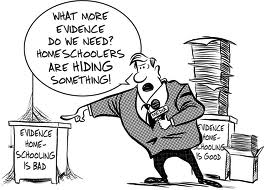
Whilst I am not a proponent of homeschooling and I see the virtues of the traditional school system, I am very frustrated by the lack of tolerance given to parents who decide that homeschooling is their prefered option.  To knock homeschooling is to ignore the many serious flaws inherent in the traditional school system.  Even though I think these flaws can be corrected and better practice can be implemented, until that is the case, parents will always look at their options.

That’s why I was particularly disappointed to read a recent article regarding the 12,000 children, aged 16 or under who are classed as “missing” from school in England.

The figures prompted warnings about the safety of those allowed to slip through the net. Children allowed to drop out of school could be at “serious risk” of physical, sexual or mental harm, charities said.

A Commons Education Select Committee inquiry in October reported that thousands of children as young as 11 who were “lost” to the education system may be turning to lives of crime, drugs and prostitution.

At this pont of the article I was naturally concerned about these kids who are so young, yet are not receiving education.  Then I read the following sentence:

Children may go “missing” due to being forced to wait for a school place or being kept at home by their parents…

How are those scenarios considered “missing?”  What if a child is being homeschooled?  Are they missing then?  Surely children waiting for a school place and being kept home by their parents aren’t necessarily “missing”.

Luckily I read another article which focussed on ending home-school stereotypes:

Despite successes with the ACT, spelling bees and math contests, home-schooled children battle a stereotype that they’re social misfits leading sheltered lives that fail to prepare them for the real world. Or worse yet, home schooling is depicted as brainwashing by parents pursuing a narrow political or religious agenda.

Nebraska law is friendly to home-schoolers, requiring basically that parents submit a form affirming their intent to home-school and provide a copy of their curriculum. The state doesn’t require state testing or home visits by state personnel.

Several parents interviewed said they cope with public misconceptions about home schooling even as the Internet and creative teaching arrangements give parents new ways to broaden their children’s education and further challenge the stereotypes.

Home-schooled students play on Little League teams, join Boy Scouts, perform in public school bands, participate in cooperative academic classes and, when necessary, take classes at local high schools and colleges, parents say. Students participate live in classes via the Internet.

Mike and Tricia Croushorn of Omaha home-schooled their children, Abi, 22, Tyler, 20, and Sam, 16, to give them a well-rounded education that included a religious component.

The Croushorns got interested after getting to know parents who home-schooled.

“We would meet these other children and they were always polite and respectful, and they could carry on a conversation with adults,” Tricia Croushorn said.

Homeschooling is not the enemy of education.  Bad teaching and poorly run schools are the enemy of education.  Until traditional schools really do offer the kind of support, care and safety that they claim to, then loving parents will always explore their options.  Because ultimately it’s not about tradition, it’s about the best needs of our children.  The only people who should be making that call are the parents.

I love being a school teacher and I see great value and potential in traditional school education, but I admire the selflessness and sacrifice that homeschooling parents make and the intentions behind their decision.  Instead of picking on the unconventional, make the conventional much better than it currently is.